
HOPE: A HAIKU!

Hope it’s you and me
it’s a light so bright so bright
it is a pure gold.

HOPE: A HAIKU!

Hope is like a light
It’s a little light you can see
Hope is Happiness

By Aurora Brown, age 9, 3rd grade,
Alexandria, Virginia
Category Archives: CHAOS
Poetry from Leticia Garcia Bradford
On Days Like These

On Days Like These
On days like these
Be the change
Change What
Our tears
Our children
NPR
There aren’t enough words
On radio
On social media
On television
Are newspapers read anymore
Words to comfort the grieving
Words to comfort our hearts
Words to comfort the masses
Why?
We ask again
And again
Only to write another poem
Again
Synchronized Chaos’ Second May Issue: Human Sensibility
“Matters of the heart make your world worth occupying.”
― Benjamin Percy, Thrill Me: Essays on Fiction

With the state of the world, we’re inviting Synchronized Chaos writers and readers to support various charitable and mutual aid- supporting projects, including efforts to support international writers and anthologies to benefit organizations. Please feel welcome to send in your writing, to purchase these anthologies, or to spread the word on social media.
Support Ukrainian Writers (listing of living authors from the country and their books which can be ordered)
Where to Donate Baby Formula (not literary per se but worth sharing anyway)
Snow Leopard Publishing’s call for short story submissions to anthologies benefiting different nonprofits related to justice and equality, care for veterans, healthcare, and wildlife/ecology.
Amazon wishlist for an organization led by Afghan women (nationals to the country who want to shape their own destiny free of warfare and imperialism and with equal educational opportunities and safety for all).
Beaupre Anthologies (seeking submissions of work related to indigeneity, neurodiversity, or horror, for separate anthologies).
This month’s issue attends to matters of the heart.
Abdulquadir Ibrahim Worubata’s work expresses sorrow at a deeply felt personal loss, while Ian Copestick renders the angry stage of grief, indignation at loved ones’ being taken. Aloysius S Harmon renders the extreme emotions of mourning in his grammatically understated piece.
The two protagonists in David A. Douglas’ short story dream their way into connection with deceased siblings, finding peace at last over their passing.
Sidnei Silva’s piece explores the varied and beautiful dimensions of rain and draws upon them as a backdrop for love between two people. Mahbub also turns to nature as a metaphor for romantic, familial and spiritual connection among people. and pleads for interpersonal peace and understanding.

Ahmad Al-Khatat’s work also cries out for an end to violence among nations and people groups, while also reflecting on love and insomnia. Steven Hill issues a lengthy literary clarion call for racial justice while Chimezie Ihekuna relates the story of an impoverished Nigerian boy determined to get an education. Pathik Mitra explores and advocates for gender justice in a creative short story while Kellie Scott-Reed probes the extent of our responsibilities to protect others in danger as well as our assumptions on the sources of the danger.
Allison Grayhurst’s poems speak of places where we find spiritual nourishment: through practicing faith, compassion, and mindful care of the land and its inhabitants through gardening. K.J. Hannah Greenberg contributes some gentle photos of animals and natural scenes.
Christopher Bernard pokes fun at the popularity-driven culture of social media to contrast with his low-tech, undying love.

Norman J. Olson describes his artistic creative process, most poignantly how his subjects become portraits of people he cares about, seemingly of their own accord.
Robert Fleming writes of love in an unusual way, in a piece where he juxtaposes romantic attraction and calculus. Another of his pieces links the earth’s rotation with that of a disco ball.
Jim Meirose contributes an intriguing tale that consists of internal dialogue and captures place, character, and time. J.J. Campbell presents a photograph in words of middle age and his speaker’s philosophical attitude towards his decline. George Economou reminisces about hazy past days of heavy substance use, old movies and ill-fated romances.
Steven Croft reviews William Walsh’s young male coming of age novel Lakewood and Federico Wardal offers up a preview of the historical film he’s creating about Cleopatra. Wardal’s intent is to portray the ancient queen as an authentic woman of her time with real human feelings and desires.
We hope you enjoy this month’s issue!
Steven Croft reviews William Walsh’s novel Lakewood

Give Me Love (Please): A Review of Lakewood by William Walsh


       In 1973 the United States signed the Paris Peace Accords ending the Vietnam War, the US Supreme Court ruled on Roe v. Wade, OPEC drastically decreased oil production, Billie Jean King defeated Bobby Riggs in the "Battle of the Sexes" tennis match, and, in the new novel Lakewood (TouchPoint Press, 2022) by William Walsh, Robert English began "The Summer Journal of Robert English" on May 14th.  In this journal Robert English will be a close observer of American politics and culture, but his goal is to be an even closer observer of himself.  Robert's reaction to emotional bombshells is to flee -- perhaps learned from his parents -- and at nineteen Robert has recently fled: from Atlanta, GA, to Lakewood, NY, (on Chatauqua Lake) where he is attending college.  This summer is an attempt to ground himself and live more deliberately as he focuses on his life and what he hopes to make of it.  Another diarist once installed himself by a pond for a similar reason, but Thoreau was fittingly called a "hermit saint," and Robert English will prove to be neither, so, except for a Thoreau-like proclivity for making lists, this comparison works only for Robert's diaristic beginning.

       As the novel begins Robert is housesitting in the lakeside home of his history professor, Dr. Laighles, who has gone with his wife Emily to Europe for the summer to research a book on Ireland during WWII.  We learn on the second page of the diary that Robert has a specific reason for taking this house-sitting job that is crucially important to him: "Terrace Avenue—this was my childhood home, before Kimberly died. Once Emily and Dr. Laighles left, I walked the halls of my old house to explore, opening every door...".  Eleven years ago his twin sister died at the house in a freak accident, and his parents chose to sell the house and everything in it and move far away.  They don't know Robert is house-sitting, and he leads his mother to believe he is working an internship at the college for the summer and living in a hotel.  We begin to see Robert is prone to misdemeanor ethical lapses if they will get him what he really wants; earlier, Robert writes, when Dr. Laighles asked in class in an off-hand way if anyone would be interested in staying in his house for the summer, Robert went to his office to find Dr. Laighles gone and a note in his box from Mary Cox accepting the job -- Robert steals her note, replacing it with his own acceptance.  He tells us his parents, who never want to see the house again, would be extremely upset if they knew he was there.  I think of a line from Harold Brodkey's short story "The State of Grace": "And mothers and fathers were dim and far away -- too far away ever to reach in and touch the sore place and make it heal...".  Robert, unable to let go of the trauma of his sister's death, can no longer follow his parents' plan of avoidance and has come back to the very place of sorrow.  As Robert settles into the home, which includes taking care of the Laighles' two Saint Bernards, Harry and Bess, he finds evidence of his sister's presence everywhere.  Both their names carved with Popsicle sticks into a concrete walkway his father poured.  Her name signed with crayon on a column in the attic, signed again in the crawl space below the stairs which he finds while playing a hide-and-seek game with the dogs.  I think it is significant for this important element of Walsh's storyline that the word nostalgia is a derived composite of the Greek words for "return home" and "pain."

       With free reign, like a lone visitor in a museum, Robert spends days, weeks, carefully exploring every space in the house.  In his family's old piano room, he finds Dr. Laighles "has a real cool Motorola Stereo cabinet" with a jazz album and a Del-Tones album left out on it: "Using my skills of deduction and logic, I conclude Dr. Laighles likes the jazz, while Emily likes the surfer music.  I have no proof, but based on their personalities, I'm making a hypothesis."  Robert then makes a list -- one of numerous lists in the diary -- of his favorite songs on the albums.  We learn "Kimberly's old bedroom is locked," and that in the TV room there is "a 1962 World Series pinball machine...a baseball game with a bat instead of flippers."  Also, as he tells us of these investigative discoveries, the temporal compression of each day is expanded by more and more memories of the past he adds into the diary.  We learn he dropped the idea of attending the University of Georgia when he found out his best friend had sex with Robert's girlfriend on the night of their high school graduation, after Robert had refused her sexual advances because they did not have protection, and gone home.  He tells us he has received seven letters from Ashley so far which he refuses to open and read.  In a short time, though, these solitary musings will be interrupted by the appearance at the Laighles' house of a character who will stand third in order of emotional importance to Robert in the novel, Mike, who sits down uninvited on the front steps to pet the dogs, asking in a kind of mumble-mouthed confusion if Steven is home: "'No, it’s just me and the dogs. Who’s Steven?'....His name is Michael Forest, Mike. Something is wrong with him. He’s retarded but doesn’t look retarded. He’s slow and has a hard time getting his words out."  Mike tells Robert Steven is Dr. Laighles's son, and in his first phone call from Dr. Laighles from Europe, the professor mentions: "'A friend of ours might stop by if he hasn’t already.' / 'Yeah, I’ve met him. Mike, right?' / 'Great. Great. About Mike,' he paused, 'he wasn’t born retarded. He was injured in an accident several years ago and has irreversible brain damage.'"  Soon, Robert looks up Steven Laighles on the college library's new, and unique, IBM computer with a search function (reminding us the 1970s was the age of early modern computers) and is directed to an obituary among the stacks in the archived college newspaper:

Steven drowned in 1968 at Kinzua Dam in Allegheny State Park on Labor Day, just a year after the lake was at full capacity....the Chautauqua University Eagle showed his picture. He had blonde hair. It also mentioned Mike and how he tried to rescue Steven but was pulled under by the current. It did not provide any details into his injury other than saying that Edward Proudfoot, a Seneca Indian, drove by the scene and pulled Mike from the water.

As Mike returns to the house daily asking if Steven is home yet, Robert and Mike begin a friendship, playing World Series pinball -- which Mike is surprisingly good at -- and other games like chess which Mike is less skilled at in the beginning, but becomes amazingly good at later in the summer as he works at it.  They go on long trips with Mike on the back of Robert's motorcycle.  So far, we have gleaned a lot of things about Robert from his diary: he is a data nerd, analyzing all the national news, e.g., giving us the vicissitudes of Nixon's burgeoning troubles from the Watergate break-in, liking and analyzing sports, particularly baseball, but also letting us know he lacks physical confidence: at the drug store Robert buys five packs of baseball cards, and the pharmacist asks, "'You must like baseball?' / 'Yes, sir, but I can’t throw it straight to save my life.'" Robert absorbs popular culture of all kinds, e.g., listens to Casey Kasem's American Top 40 and makes lists of his favorite songs -- which he then narrows to his very favorites, like George Harrison's "Give Me Love" and The Carpenter's "Yesterday Once More," begins reading what he considers serious books, like Gravity's Rainbow, starts to teach himself to paint watercolor.  If the definition of a nerd is someone overly intellectual and socially unsure, Robert probably qualifies.  It is when he shows kind, if initially reluctant patience with Mike, that Robert wins the reader over to really liking him.

       Despite his demurral of first-time sex with his high school sweetheart, like all young men Robert is obsessed with sex.  Walsh the author showing us the precociously intellectual and analytical are just as vulnerable to its vital pulse of wanting, wanting, wanting.  Running into a female student named Caroline DeBauché (whom Robert had disparagingly described to a male classmate at the beginning of Lakewood as "The Ice Queen") at the college post office, he asks her out on a date, which he quickly, and slyly, shifts to a non-date.  She is back in town briefly to take a make-up exam to satisfy a previous year's "Incomplete.": "'Are you doing anything tonight?' / 'Yeah, studying. My test’s on Friday. I have two days to prepare.' / 'Let’s go see Paper Moon. It’s playing at The Lakewood Drive-In.' / 'I’m not going to the drive-in with you.' / 'Just come over for dinner. I’ll cook something up and I’ll quiz you. Bring your books.'"  And later at the Laighles' house in front of the fireplace:  "After studying, that’s when I made a move and kissed her. We started making out a little, but she stopped only after a minute of kissing. / 'Show me the house.'"  One of the things they find on their tour is Dr. Laighles' 1961 Corvette in the garage, and Robert says, "'Want to go for a spin?'  And with those six words, my world, my life, has been completely destroyed."  They drive around the lake making several casual stops, one to make out by the dock at Bemus Point: "Near the dock, we kissed under the moonlight, and for a moment, I imagined that more might happen later."  They continue on their drive while listening to the entirety of a brand-new album, Tubular Bells, on WJTN Radio.  And then the most spirited and memorable action in the book begins, with the sudden stochastic horror of the visitation in Hitchcock's movie The Birds:  "Once the music finished, Caroline randomly yelled, 'Don’t touch me. Ever!' / 'What are you talking about? I’m driving the car. I didn’t touch you.' / 'Don’t touch me!' / 'Hey, hey, stop screaming.' / 'I’ll scream my Goddamn head off if I want to. Don’t touch me.'"  Caroline physically assaults Robert with flailing arms, until, yelling at him, "'You tried raping me!'...she caught me in the upper jawbone with a closed fist. At the corner of Cowing and Winch Road, I lost control...".  Both are physically shaken up, bruised and bloodied as the car swerves off the road into a cornfield, which takes an hour for Robert to drive out of.  For me, metaphorically, it is like Robert is destined to hit the rocks Odysseus avoided by strapping himself to the mast, and I think of the short story "Escapes" by Joy Williams where a mother and daughter drive to a magician's show in their convertible, to have the mother suddenly and strangely crawl onto stage begging the magician preparing to cut his assistant in half with a chainsaw to cut her in half instead: "Her lipstick gone. Did she think she was in disguise, I wondered. 'But why not,' my mother said, 'to go and come back, that's what we want, that's why we're here and why we can't expect something to be done you can't expect us every day we get tired of showing up every day you can't get away with this forever....'"  This scene in Lakewood has that kind of iconic literary resonance -- and though not mentioned by Robert who would not know this, Walsh surely knows that Tubular Bells would become the signature music for the movie The Exorcist later that year.  Once Robert gets Caroline back to her hotel in the car that is now a rattletrap, Caroline screams from her bloodied face that she is not going to the hospital, Robert still saying, "I’m taking you to the hospital.” And her replying “I’m not going anywhere, except to the hotel to call my brother. You’re going to wish you’d never touched me."  This incident will hang over the novel's plot and Robert like an invisible trap door, until finally coming down on him later, after the coming weeks of almost pastoral bliss for him, with a vengeance.

       Robert hides the Corvette under a tarp, and worry over it will nag at him, but two weeks after the accident a very consequential event occurs that will push worry away as Robert's is mesmerized by a new and consuming focus: visiting the public library with Mike, he sees Annie for the first time and it is like the vision of a seraph: "Her hair slinking down her shoulders like a sheet of gold....'Mike, look at that girl', I said. 'Look.  Look.' / 'I see her.' / 'God she's pretty. She's absolutely gorgeous.'...I watched as she moved around the library without a clue in the world that she is a goddess, floating from place to place like an angel."  And Mike replies, "'That’s Annie.' / 'You know her?' / 'She’s a friend of mine.'"  Right away Mike introduces Robert to Annie, and soon brings her over to the Laighles' house: "9:50 p.m. Mike and Annie just left. Mike brought Annie over to the house unexpectedly. My nerves are still shaking because the woman I have fallen in love with has asked me over to her apartment tomorrow for dinner. Lord, what wonderful fate has come my way?" The friendly dating that begins the relationship grows into something much more over the course of the summer.  Annie is free-spirited, confident, and intelligent -- older than Robert, she will start a PhD in psychology in the fall.  On the night of their first dinner together, Annie shows Robert a portfolio of nude photos of herself she paid a photographer to take.  Viewing them, Robert -- who manages to keep to himself a titillation reminiscent of Eugene Jerome's at the end of Neil Simon's Brighton Beach Memoirs -- says, "'Aren't you worried about people seeing you?'" And Annie replies: "'You're only the fifth person who's seen them. My sister and her friend have seen them, the photographer who took them, and my best friend in high school, who lives in New York City.  And now, you.'"  She goes on to assure Robert she is not so liberal-minded as having these photos taken might suggest:  "'That's just not the case.  I'm not like that at all.' / 'I wouldn't think that.' / 'I don't believe in fooling around until you're married.' / 'I've never thought about it too much,' I lied."  Also at this point in the novel, Robert takes a job at Chautauqua Indoor Advertising to help pay for the repair of the corvette, lucking into a job where he is paid to read recently published novels and write reports to be used as a means of influencing marketing.  His easy-going boss, Roy, challenges him to chess during work -- both are avid chess buffs -- and Roy even becomes a father-surrogate dispensing advice on life and women (which will become weirdly ironic late in the novel) over their chess board during long games.  Early in his journal, Robert wrote:

I fear being alone as I get older....I have no one else. Kimberly is gone. Ashley is out of my life. If my parents were gone, I wouldn't have anyone to spend Christmas with....Yes, even when I was younger, I always wanted to start a family early....I want a wife to love and who loves me...I want to be surrounded by people who love me.

Now, suddenly Robert is in the middle of a circle of friends that includes Annie, Mike, and eventually Roy and his family.  Picnics, camping, an idyllic outdoor Glen Campbell concert they all attend on the Fourth of July -- at the center of his new sense of contentment is Annie who slowly ameliorates the pain of Kimberly's death, which drew Robert back to Lakewood, with what is obviously love.

       Will the idyll of Robert's summer carry into the fall?  All summer he has given us daily empirical explanations of himself, writing, diligently working to perceive his personal truth, seeking to find his center in order to become aware of his ultimate goals.  All the while, there has been no "fourth wall": he anticipates the diary being read when he concludes it, even imagines the kind of person he would like to read it.  In his life he has been inclined to a self-serving soft ethics at times to get what he wants, but his diary is in part a confessional and a place where he is always as honest as he can be.  The French philosopher Paul Ricoeur called his famous "hermeneutic" structural analysis of written texts a “hermeneutics of suspicion” because discourse, he believed, both reveals and conceals something; and that, in interpreting a text, an analyst must move "from what is said to what is really talked about," i.e. to a more enlightened an intuitive understanding that goes beyond what is said.  It may be that we as readers will gain a more enlightened and intuitive understanding of what Robert really wants than he does?  Will the relationship between Robert and Annie progress easily into something long-lasting?  I will just say that this a serious novel and Walsh's primary intent is character study.  By the end of the novel the characters are connected by fate in a way reminiscent of Dickens.  When the nightmare date with Caroline DeBauché reenters the story -- like the birds in Hitchcock's movie -- Mike will heroically save Robert from being killed, something he was unable to do for his best friend Steven.  When Robert finally finds the key to Kimberly's room as he continues to search the house for her memory, he discovers that it became Steven Laighles' room and is full of pictures of Annie and Steven together.  Annie -- at least we as readers can perceive -- is allowing herself to love again, and when she initiates making her relationship with Robert a sexual one, it means something deeply serious for her.

       Lakewood is a good story, is a serious story, and is an illuminating period story of the early 1970s like Huckleberry Finn is of the late 1830s.  And its story does not end here.  In the press release for the novel, Walsh's publisher tells us this is the first book of a trilogy.  At the end of reading, I am very eager, as I think anyone who reads the novel will be, for the second book, very eager to see where the story goes next.  I recommend Lakewood.


Steven Croft
...
William Walsh is Director of Creative Writing at Reinhardt University. He is a known poet and a very well-known interviewer of famous writers. Here is one of my favorite interviews
he did with Rita Dove.
A US Army combat veteran, Steven Croft lives happily on a barrier island off the coast of Georgia on a property lush with vegetation and home to various species of birds and animals. His poems have appeared in Liquid Imagination, The Five-Two, Ariel Chart, Eunoia Review, Anti-Heroin Chic, Synchronized Chaos, and other places, and have been nominated for the Pushcart Prize and Best of the Net.
William Walsh’s Lakewood is available here from Touchpoint Press.
Poetry from Mahbub

The Red Ribbon Braid

My hidden love lies in your red ribbon braid
The scented dewy morning wind flows from the fringe of your sari
The sun plays in my sky every moment
The rejuvenated, illuminated star I feel like twinkling in the dark
The light in hand I'm standing on your land -the alluring flute from far-reaching path
A piece of my dream lies in your red ribbon bun shinning in the bright morning sun.

Chapainawabganj, Bangladesh
14/01//2021

A Floating Piece of Cloud

I'm a piece of cloud floating in the sun of rain
Wakeful on your eyes in time or out of time
In this play of rain and sun
No sooner had I closed my eyes the cloud went out of sight
Paying no heed I pray for staying some more time
Where does it take place and how it works?
Before my sleep I recollect the scene repeatedly
All I lost in the world of sleep
Possibly the cloud flies like that of egrets or doves
Setting me up to the play of light and love.

Chapainawabganj, Bangladesh
15/01//2021

The Envoy of Peace

You are a drop of my eye's envoy of peace
Flying and flying around you sit on the green field
On the bank of the river, the lake, or the pond
All on a sudden to the branch of the tree
Eyes fixed at to the unknown far-reaching way
That aiming snatches me away from myself
Vibrates the imagination to the distant vatical path
O the migratory flock of birds
You are exposed to the winter light - a heavenly glory
Soothing my eyes all the way I come back with a light
In my hand at the evening or night.

Chapainawabganj, Bangladesh
15/01//2021

Classification

Why is this acute classification in humanity?
Why is this different social status?
Why can't we flow like the waves of the ocean?
The sun rays can't reach the depth of the forest
Yet the heart or conscience shines in humanity
Darkness may be removed for every single hand
The blind eye can find the light
The hungry can have a lump of food
The sick can get treatment
Why people die before eyes in season or out of season?
And the others run through on the dead bodies
Though we all stand in the same line in all prayer houses
Then why is this condition outside?

Chapainawabganj, Bangladesh
16/01//2021

Turning Back

Whenever I take step out of the door
Come back again and my eyes fix to the deep well of yours
Hold your hands, cry so loud
You pull me up and I weighed down on your rosy wings
You keep me so tight in your breast
We can't go away so far leaving each other
In this sweetness of bond
A spring of love feathering from this sight to the limitless unknown
The joy shimmering in the eyes I come back again and again
Dive into the deep well of your eyes.

Chapainawabganj, Bangladesh
16/01//2021
Essay from Chimezie Ihekuna
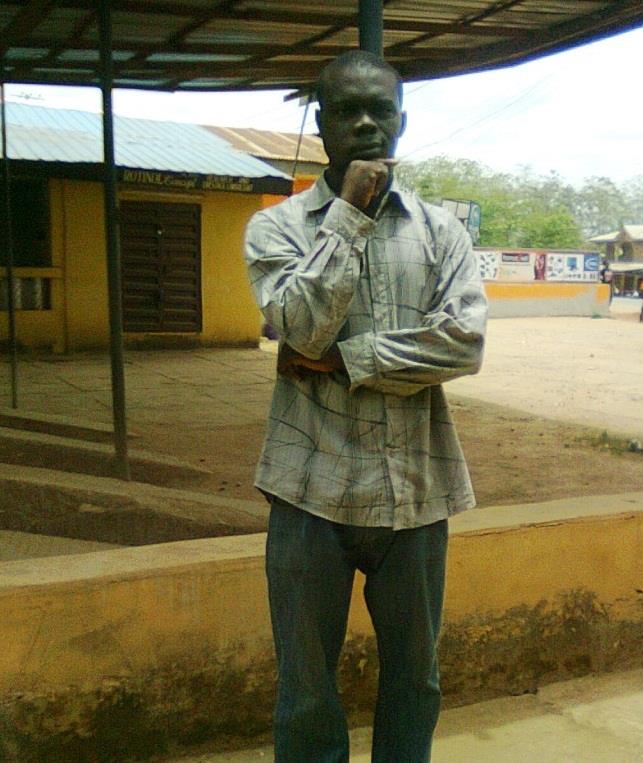
The Making of My Story

Paddling the canoe, I have always wanted to be a doctor. But I am faced with the difficulty of navigating the canoe to its bank where I could board a taxi to school. It has always been the first thing that comes to mind when I wake from sleep.

My parents  are poor. My mother is a fish monger while my dad is a taxi driver whose lifestyle of incessant drinking and smoking would not permit him to discharge his fatherly responsibilities. By the way, I am the only child of my parents.

Going to school late has always been my hobby. Despite that, I have always had the mindset of being the person I have always wanted to be...A qualified medical doctor.

My mother has always been supportive. She works tooth and nail to see that all school fee and related expenses are met. Though she falls sick due to stress and burdens my father pose on her, she takes it as her duty to ensure I am hale and hearty.

On a Saturday afternoon, my mother calls my attention by engaging me in what I call The Motivation.

She begins: ' Be that person you have always wanted to be. You can't be limited by the circumstance I am facing. I am your mother, Jude. I will ensure within my powers and to my last breath that you get to study to the university. I won't fail you, as long as I live, God willing. Jude, you will reach the height of your dream and surpass it'

'Amen' I reply.' Jesus will make a way for us all'

I believe in you. Never give up! Amen to your declaration!'

'Yes mother. I won't give up. My passion has always been to be a medical doctor. And that I shall become'

'Yes, that's the spirit!' She encourages. I can feel that positive vibe rubbing off on me from her.

'Don't mind your father. He can do what he likes. It was my choice I married him. But that's not important, compared to what we are presently facing.'

'But why is father behaving this way?' I ask in interruption. She sees the ugly face of anger in me.

'Don't get me upset' She warns, looking at me sternly. 'I am all out for you, and nothing less. I put my life on the line to ensure you become a better you. What you just asked is none of your business, but mine!'

Noticing her countenance, I had to show remorse. 'I'm sorry'

'No problem. Can I continue uninterrupted?'

'Of course, mother'


'Good!'  She continues: 'But I believe we will live this place and I will leave this business. You know it has not been any easier for me, even your father.'

With tears rolling down my eyes, I hugged her. 'Mother, you're always my sunshine and will never have that light dimmed, even for a split second! You've been my support and pillar. I promise you, I will get us out of this bad situation'

'Of course, my lovely son' She agrees. Unmoved by my tears, she encourage me to 'Be yourself no matter what they say'

She has to go back to her place of trading, a riverine location, not up to a nautical mile to our place.


'Jude, I have to attend to my fishes' She laughs, parting me on the back. 'See you later'

'OK'  I smile. What they great time to be inspired.

Since then, as I paddle the canoe to as part of my side hustle, making some money to support the home and in some way, my education, I am always optimistic that my faith will make me paddle away the challenges I am facing as I climb through the rigors of life tests to become what my dream has always been... A qualified medical doctor.

That has been the making of my story...
Poetry from Steven Hill
The Long and Mischievous Life of Love, Hatred and Fear
					By Steven Hill
			(dedicated to the memory of George Floyd)

		“Out of the crooked timber of humanity, no straight thing was ever made."
					― Immanuel Kant

Now the streets are quiet again, peaceably quiet,
but it is the pause of the reloading,
the stillness of a graveyard;

	it is the morning after
for those without a future,
viewing the hulk of strip malls charred to steel frame,
shuffling through the shattered glass
	of the fragile consensus,
and the melted smell of tear gas, weeping over broken dreams.
It is the same twisted today that looks like the yesterday of a
	hundred or thousand years ago,
for those without a language whose hopes were turned to ash, and
	swept by the aproned shopkeep into the ceaseless star-stream.
The damage is done when the prospect of progress vanishes
	with the dust re-settling,
when we cease plumbing the depths of the human soul to
	find that broad territory in common.
And as the clash of flesh exhausts its insanities,
	as the Us vs Them smashes together like dialectic atoms,
the frantic synthesis arrives in time for the new tumult,
the pieces pick themselves up and recompose,
sneak past the debris to find a way forward again,
	arresting the black hole collapse to the backward,
leading the escape of runaways in search of
		a refuge from this most un-civil war.

But the silenced ones know, oh yes don’t they,
that the interregnum always ends
and the relentless assault on meaning begins again,
leading once more to another round of tweeted reprisals;
across the broken landscape, the tectonic plates crack and separate
	kin from kin,
	ethnic from ethnic,
accord from conversation,
we watch helplessly as words tap the algorithm and
sentences juice the emotion,
	foreboding the passage of night swallowing the day.
History the bloody obituary written by
	the last of the last survivors,
language a vehicle for unconditional surrender,
signed at the Court House adjacent to the ghastly battlefield,
	bearded General to bearded General, victorious to vanquished,
chainreacting all over the weaponized volksgeist,
there are no winners here, only those who lose less.

But what if we re-launched the invention of the feeling?
What if we sought where the tenderness may lie?
What if we weren’t beset by something so sad that it paralyzed?
Or if we listened harder to those who
	had to bite their own tongues until they bled,
	to those who ended with the short end of the loaf of bread,
	those buried beneath the missing tombstones of the mass graves.
What if the pure decision of the Good Samaritan
replaced the pursuit of the Master Race deal,
or if our human desires were not entwined,
		like a crown of thorns,
		inside the political economy of our times?
Here, at the apogee of our history,
the latest Great Leap Forward turns out to be
	a backward fall into more backwardness.
The return to MAGA plantation greatness is exposed
	as another fake story of
	white bwanas sipping lemonade on the porch,
attended by obedient Dark Continent subservience,
such a human thing to do, to love fantasies that never were,
	as they disappear in the rearview mirror.

But the past survivals never stay buried, do they?
They ooze from the muck of the weeping mass graves,
	the Rosewood’s and Tulsa’s and Thibodaux’s and 1919 arise
from the cruel crypt of Hate’s harsh oblivion,
white-world memory tries to delete from the hard drive
	the silenced evidence of ethno-cide, and
the un-banality of evil and the sin of looking away,
	every soul guilty of all the good you did not do,
leaving us still groping toward a recognition of our real lives,
	our real history,
the stipulated record of who really built this country,
	planted its fields, erected its towns and schools and cities,
	and laid the rail tracks to the future,
as the Four Horsemen  howled their overwhelming questions:

Are we here?
Is this real?
Are we sure?
Am I real?
Does here connect to anywhere?

If E = mc2, then how am I still here?
How do I find a reason to put one foot in front of the other?
When will I uncover the words, consonants and vowels needed
	to arrive at the source of Something true,
instead of circling the lonely perimeter with longing,
	for what I cannot have,
	for what I cannot taste and cannot kiss,
	and cannot see except in fleeting glimpses of Beauty,
that elusive Something that vanishes into Nothing.
Yes, I see it in your eyes, my love,
all the disappeared lives that mattered,
reflected a thousand by thousand times,
the ones who looked after the system, previous and present,
blown like dead pollen across the centuries;
I see it in my eyes, reflected in your eyes, my love,
the present is everything and nothing,
utterly reusable in the Grand Mortar and Pestle,
	nothing lives forever, nothing ever will,
not even you and I, my love,
	pawing through the leftovers to hoard what we can,
to return and return as the dust of the double helix,
amidst the un-raveling of the un-civilization and—

	You don’t believe me, you say?
	You don’t believe this is slithering thru our DNA?
Then why, in the realization that we are everywhere and nowhere,
why have all roads led from the many pasts to here?
	Why, for each History’s moment, does the crossroad
	fork yet again, to anywhere but here?
How do we find it within ourselves to arise from the breakfast cereal
	into the urgency of each tangled day?
And why then do we fall down, we millions and billions,
	hearts beating fast like the Ninth in D minor,
contesting the birthright of where we were born,
as the Fear and Confusion plant their jeering flags
	amidst a fireworks of scorn?

No, the streets are calm now, passably calm,
it’s dead quiet out there, beneath the noise;
despite the rumblings of marchings from those who demand a future,
despite the huddled masses barred at the border by the rusted Iron Lady,
despite the divided “e pluribus unum” of this violent mammal trajectory,
	we thought if we plugged our ears it would leave,
	we thought if we clutched our bellies without malice,
	we thought if we arranged the words and paragraphs just so
that we could pacify our death-fear locked inside.

But what if the most feared thing is that which we refuse to confess:
	that Love is the strangest notion of Civilization,
	proven to regularly run amok,
	kneeling at the altar of heartless entropy,
		until one day we run out of luck;
Yet Love is also the molecular force that can bind,
and what’s bound gives the World its arrow-direction,
	in broken search for that more perfect Union,
	you and I, a chance for resurrection,
for in the end, in the very very end,
we are here,
	within the limits of our language,
	within the space between our opposable thumbs,
		stumbling toward governance within the parliament of hysterics,
	straining toward common ground,
resisting the Hate that tries to overrun all representation,
	standing in defiance of the Trumped up charge and
 	the profanity of evil exposed.

And then, as the streets re-explode in their un-poetry of un-justice,
as we gasp over our brutal re-acquaintance
	with the imperfection of it all,
	we discover that something still lives above
that purple bruise behind the stars,
and below the crooked tree limbs, swinging heavy with that strangest of fruit,
our prayers re-locate the ACTG helix,
	replicating with mercy and haloed in pearls,
until finally, we remember, just before we extinguish:

“Our kiss is for the whole world.”
[1] The Great Leap Forward of Chinese leader Mao Zedong was a disastrous economic policy from 1958 to 1962 to reconstruct China’s agrarian and industrial economies thru forced collectivization that led to mass starvation for tens of millions of Chinese.
[1] A 19th century colonial and racist term for the continent of Africa. Sigmund Freud also compared adult women’s sexual life to a “dark continent.”
[1] Racial massacres: in Rosewood, Florida, New Year’s Day, 1923, a white mob of 300 men murdered dozens of black men, women and children, and completely torched the town into oblivion, wiping it forever off the map; in Tulsa in June 1921, whites burned to the ground the prosperous black neighborhood of Greenwood, murdering hundreds and burying them in forgotten mass graves; and in Thibodaux, Louisiana , November 1887, white plantation owners, politicians and their paramilitaries murdered hundreds of black sugar cane workers and their families for going on strike, the most violent labor dispute in US history; in 1919, white massacres and lynchings of blacks took place in more than three dozen US cities, including Chicago, Washington DC, Baltimore and Omaha, after black military veterans returning from World War I asserted their labor rights, resulting in the murder of hundreds of black Americans.
[1] The four Horsemen of the Apocalypse, Death, Famine, War, and Conquest, that arrive in the biblical Book of Revelations as harbingers of the Last Judgment and the end of the world. [1] Albert Einstein’s equation of special relativity. Energy (E) produced equals the mass (m) of a body destroyed times the speed of light (c) squared. That means mass and energy are the same physical entity, and can be changed into each other.
[1] Beethoven’s Symphony No. 9 in D minor, Op. 125, popularly known as the 9th Symphony, or “Ode to Joy.”
[1] The Statue of Liberty is the figure of Libertas, robed Roman goddess of liberty, inscribed with the words “Give me your tired, your poor, Your huddled masses yearning to breathe free.” [1] “We the People of the United States, in Order to form a more perfect Union…”, first words of the U.S. Constitution.
[1] Singer Billie Holiday, Strange Fruit. “Southern trees bear a strange fruit, Blood on the leaves and blood at the root, Black bodies swinging in the southern breeze, Strange fruit hanging from the poplar trees.” [1] ACGT is an acronym for the four fundamental units of the genetic code found in a DNA double-helix molecule: adenine (A), cytosine (C), guanine (G), and thymine (T). They comprise the molecular foundation for all organic life.