Napkin miscellanea

 Following a footnote
 abridged to engross
 Japanese standard
 spellings

 gravediggers translate
 promotional resources
 as autumnal studies

 useless links condense
 their informative
 relations.


 humbled razor sharp

 Zen winter coat symmetric PVC pipe
 head a flowerpot
 earlobe an extension cord

 fleeing flea circus attitude
 adjustment cucumber cart
 telephone bra strap app
 scratching iron shackle papal

 smeared lips volcanic ash
 pile style smile cesspool
 HorroR escape hot RoD


 stone cold malfunction sprain

 backend that burps & slides
 so close to bearing shed
 farther than a ski slope swirl
 salamander can of shoefly pie
 leagues before JULES VERNE
 marathon a con a palm
 swan that sprays to play
    /
       /          /
 /            /          /             /
                                /

 and no other than another
 bundled cut & razor shaped
 well-versed & terse & tenses
 a parody of electronic hearse
 screwing lightbulbs from exterior


 Reside where danger lies

 Geysers originate artificial weaponry
 on the imaginary look of future
 temporarily shares dimension
 shamed Greco-German empiricism

           mainly a latter gift
           aiming inheritance
           into the discourse of
           irredeemable anthropology

 specters pave the epochs
 blind emancipation backwards
 dwell on media theory legacies
 enveloping essential non-endeavors
 conflating forbidden w/ jealousy
 preserving diffuse critique
 the center of the every day


 Pragmatic convolutions

 hotbed of MONARCHY
 the human wart blasted
 feathering itinerant quarrels
 & unleashed furious press
 from their rejected ramparts
 came sighed relief
 hunted by runaway laity
 but one CRITIC presses play
 while another MOUTHPIECE repeats
Joshua Martin is a Philadelphia based writer and filmmaker, who currently works in a library. He is the author of the books Pointillistic Venetian Blinds (Alien Buddha Press, 2021) and Vagabond fragments of a hole (Schism Neuronics). He has had pieces previously published in Coven, Spontaneous Poetics, Ygdrasil, Expat, Selcouth Station. RASPUTIN, Train, Fugitives & Futurists, Otoliths, M58, Punk Noir Magazine, Beir Bua, and Scud among others. joshuamartinwriting.blogspot.com
Three Poems
By Chinese Poet Yuan Hongri
Translated by Yuanbing Zhang

Another Me From The Heavens

If blue is namely white and black is namely red
and gold is transparent as crystal
and light makes the soul smile forgetting the sun moon and stars
and you were filled with wisdom, drunk for thousands of years
and back to the prehistoric giant city
and that giant is just like another me from the heavens
by the lotus throne in the golden palace.

天上的另一个自己

如若蓝即是白而黑即是红
而黄金透明若水晶而光芒令灵魂微笑忘了日月星辰
而汝醍醐灌顶一醉千年而回到了史前之巨城
而那金殿之莲花宝座上的巨人宛然天上的另一个自己

The Azure Sea

Tonight I thought of the platinum city above in distant space
Where there is no day and night and the giants are interstellar travellers by spaceship
Their words have the dignity of God and create the holy Kingdoms
So that the pictures of the soul in the maze of memory lasts a billion years
Standing by the azure sea near the great palace with swirling sweet music in the city of the gold
3.4.2017

蔚蔚之海

今夜我想起那遥远太空之上的白金巨城
那儿没有昼夜巨人们乘坐飞船在星际航行
他们的词语拥有上帝的尊严而创造圣洁的王国
亿万年的时光是一幅幅灵魂的画卷在记忆的迷宫
黄金之城橚矗那飘洒蜜甜乐曲的巨人殿宇之蔚蔚之海
2017.3.4

The Bath of The Cool Breeze

Prehistoric words of the gods are waking up in my body
The platinum city from a strange planet is as if in a fantasy on the blue coast
The giant men and women who walk by the light do not know trouble or sorrow
There where the temple of the gods is in their heads, whose light is like wine flowing in the blood
And the music of the stars sways gently around them, which is like the bath of the cool breeze on the earth
The huge ship of stars which they have ridden can arrive at the other side of time
To let you get a glimpse yourself yesterday in the future and in the divine light of fragrance
12.23.2016

淸风之沐

史前的诸神之词语正在我体内醒来
那陌生星球上的白金之城在蓝色海岸上恍如梦境
那乘光而行的巨人男女不知道烦恼或忧伤
他们的头颅里有诸神的圣殿光芒如酒在血液里流淌
而星辰的乐曲在身边拂荡犹如地球之上的淸风之沐
他们乘坐的星际巨舰可以抵达时间的彼岸
让你一睹昨日未来之你神性之芬郁之光
2016.12.23

Bio: Yuan Hongri (born 1962) is a renowned Chinese mystic, poet, and philosopher. His work has been published in the UK, USA, India, New Zealand, Canada, and Nigeria; his poems have appeared in Poet's Espresso Review, Orbis, Tipton Poetry Journal, Harbinger Asylum, The Stray Branch, Pinyon Review, Taj Mahal Review, Madswirl, Shot Glass Journal, Amethyst Review, The Poetry Village, and other e-zines, anthologies, and journals. His best known works are Platinum City and Golden Giant. His works explore themes of prehistoric and future civilization.


Yuanbing Zhang (b. 1974), is Mr. Yuan Hongri’s assistant and translator. He himself is a Chinese poet and translator, and works in a Middle School, Yanzhou District, Jining City, Shandong Province China. He can be contacted through his email-3112362909@qq.com.


Address:No.18 middle school Yanzhou District ,Jining City, Shandong Province, China Yuanbing Zhang


Phone:+86 15263747339 Email:3112362909@qq.com
 Jean, dansant

 It was a temp-
 oral regression
 from which
 he returned


 singing La
 Marseillaise
 between mouth-
 fuls of an egg &

 lettuce sand-
 wich. Arch-
 ival footage
 shows there


 were times
 when he had
 all four feet
 off the ground.


 Later

 the Holy Roman
 Empire would
 come to be regarded
 as the first
 successful franchise.
 Initially, however, it
 didn't seem to have
 a hope of making it

 until Emperor Constantine
 finally paid attention
 to the local cuisine
 & replaced the
 basic communion wafer
 with bite-sized pide.


 Working on a capsicum farm

 Way before television, up & down
 the main street on a Saturday night.
 Olive oil heated in a large sauce-
 pan, a high energy production.
 Unanimously well received. Great
 feedback for a never say die team.

 "The intention is to allow people
 to stay living in their own homes,"
 Carol explained. "We're hoping
 those people who want to become
 train drivers will wear white on
 the night − lots of lace, no denim.

 "It's so rewarding to see them once
 they step out of their comfort zone."


 Out & About

 When last heard of she was
 said to be running a clinic &
 outreach program for theo-

 dolites made redundant by
 an uptake of GPS devices. No-
 one can pinpoint its location.


 Now

 that the voices
 in my head have
 deserted me,

 who is there
 left to talk to?
This poet, Michael Robinson, writes from his heart, there is no doubt….when reading his poetry, you truly feel the emotions as if they hop off the paper…. A truly gifted poet whose life journey has been difficult, but has made him a true example of how someone can beat the odds and shine as a shining star in the art of poetry….a truly amazing poet….
Lorraine DeMauro, Artist….
You may order a copy of Michael Robinson’s book From Chains to Freedom directly from Michael, at MJROBINSON@rollins.edu
Family
When you graduated, no one
hired draft bait. You lived at home.
Waited for the hungry nation’s letter.
Collected in October. Bus
full of strangers. One, his pockets
full of candy. Another, cigarettes.
No one shared. Guy behind you
was reading Psychology Today.
Now, after four months of training,
you’re trying to use every minute
of this twelve-hour pass slipping
through your fingers. Last freedom
before new orders. Fog cold.
Can’t pull your collar close enough.
Head-down walking. The light without edges.
Can’t see the city through suffocating gray.
No idea how far from the Greyhound depot.
Looking for a place that won’t shun a soldier.
To be among civilians a few hours. But
you’ve wandered into a warehouse district.
The Draft, a law for world war—now part
of the country’s character—has sent you
to learn automatic weapons and explosives;
to build strength to march with heavy packs;
equipment, and ammunition; to carry
an injured comrade out of harm’s way;
to dress wounds; to dig for shelter in the dirt.
It’s taken you for your country’s hardest work.
At the bus depot you bought a San FranciscoChronicle.
First newspaper in four months, now limp in the fog.
Training’s over for your platoon. No longer strangers
uncertain about each other or the Army.
Comrades waiting for orders:
Vietnam on everyone’s mind.
Among steel and concrete buildings, a single light
caved in mist above a store front’s faded letters,
EAT.
Looks like a place out of Jack London. A place
for bearded men in pea jackets, wool caps, heavy boots.
And cheap enough for a $100-a-month Army private.
Brass door handle’s wet, cold. Thumb the latch. Push.
Almost empty. Air heavy with grease.
Cook, with stained apron and tattooed arms,
has spread the classifieds on a table.
Doesn’t look up. Radiator clicks by the door;
coffee urn grumbles. Murmured slap of cards
from the far end of the counter. Her uniform
is faded pink; hair in a bun, pencil stuck in it.
You’re too late for breakfast, she declares.
We got pie and coffee.
Take the seat by the register.
The cup is heavy china; kind that holds blistering heat.
Slip your fingers around it; one through the handle.
She returns to the game. Takes her cards
from her apron pocket. Other players
are pink-faced—gray hair slicked back on one,
fluffy gray ring above the other’s ears.
Black industrial shoes with gym socks.
Their backs toward me.
Students are protesting. San Francisco wants to build the world’s tallest building. Nixon has a plan. Crossword, horoscope,
Goren on Bridge, Ask Abby, sports, want ads.
Pages of another world.
Pay for the coffee. Leave the paper.
Fog’s unchanged. Pull your neck
into your collar. Back to the bus depot.
Back to your platoon. Back to wait for orders.
Unspoken: You’ll be split up.
Singing in the Dark
Few things weight your heart
like men’s voices lifting
in the relief of camp songs,
songs that echo back
from a grove of trees
taller than their sound.
Nothing is more terrible
than men’s voices lifting
to branches leaning down,
keeping to themselves
what lies ahead.
Pride
On the plaza, the Marine Band
struck up the national anthem,
and in the awareness of a ten-year old,
you noticed the changed posture
of the man standing next to you;
how he pulled his feet together,
how he squared his shoulders,
and took the cigarette from his mouth;
how both sleeves ended
in stainless steel hooks.
Bus to the Weekend Market
Hot.
Sun off the concrete so intense,
I have to squint. Digs through
the bottom of my shoes.
No taxis on Sunday—so a bus.
Alone at the stop on Sukhumvit Road,
I’m moving with the shade splatter
under this flaming jacaranda.
Tomorrow, the young woman
with white blouse and blue sarong,
will set her baskets down in the shade,
lean her bamboo pole against the fence,
and roast banana slices on a brazier
for customers waiting for the bus.
She’ll wrap their breakfast
in fresh banana leaf before it arrives.
_______________
Still my first month in Bangkok. Today,
I’m going to the old part of the city.
Have heard of Sanam Luang,
the Weekend Market on the royal public grounds.
I want to see where the food comes in
from the countryside. I’ve heard
you can buy almost anything there:
brass woks, boars’ heads, horseshoe crabs,
and temple offerings—like small birds in cages,
or Siamese fighting fish in plastic bags
of canal water—small animals for making merit
by setting them free.
_______________
A bus at last!
As we pull away, I hand my coin
to the attendant in his khaki uniform.
Can’t be more than ten years old.
With a practiced gesture, he flips back
the hinged lid of the aluminum tube,
drops my fare into its compartment,
and tears my ticket from the tiny roll.
He stays close to me and,
looking up with a shy smile,
touches the top of his crew cut
with the flat of his hand, compares
to its level on my shirt—something
I did at that age. I smile back.
Ah, luck! A seat on the shady side
and an open window with breeze from
our movement. The young mother
in the seat ahead holds her baby up
to look over her shoulder at the farang.
A surprise of black hair spouts up through
a pink bow. I look down a moment,
then up; wiggling my eyebrows.
A giggling reward. Like all babies,
she can’t stop staring. I’m guessing
she’s going to visit grandparents.
They get off at Soi Nana Nua—
just before Ploenchit Road where
we begin heading west.
Near Erawan Shrine, I hear whispers
behind me in a dialect I don’t understand.
I pick out the word American.
A gray-haired woman leans forward
and raises her voice to get my attention.
Her hair is cut short, sarong folded
in the old style. I can’t make out
what she’s saying until she offers me
a kaffir leaf and a scoop from her jar
of betel nut paste. Her daughter,
in western dress and sunglasses, tugs
at her arm, an effort she pulls away from—
eyes bright above her betel-red mouth.
In a country that esteems its elderly,
she’s being generous with her attention.
Respectfully, I decline with a modest
lowering of my head, then a wink and
smile. Her laugh lines are for me.
We ignore daughter.
_______________
As we pass Emerald Buddha Temple,
people start gathering their belongings.
The attendant stands next to the driver
to look out the front. We pull over,
and everyone gets off. So I do, too.
The street stews with weaving vehicles. Taxis,
bicycles, samlors, small trucks, motor bikes and
scooters weave, beep, honk and puff exhaust.
Everyone seems to be unloading baskets or crates
or dropping someone off.
Sanam Luang itself is an uproar of tarps
in all shapes, colors and patterns—
all with their backs to me—obscuring
thirty grass-sparse acres of the royal public grounds.
I retreat to shade beneath the tamarind trees planted
by King Rama V.
How do I get into the Market? There seems
to be no entrance, and everyone’s too busy to ask.
As I watch, a woman with a basket of duck eggs
resting on her hip gets off the back of a motorbike,
and dodging through the traffic, disappears
behind a canopy. Staying under the trees,
I follow and find the opening where she entered.
______________
A path on the battered grass wanders vendor-to-vendor.
I turn left, dodging tent poles and tie-downs,
duck under tarps sagging with the weight of sun,
and stop at crowd around a table
where someone sells small birds
from a tall wire cage. A boy and his father
have made a selection and are watching
the vendor trying to catch it without losing
the others. The birds make small clicking sounds
as they flick perch to perch. Each grab
inspires laughter and encouragement
from surrounding children and adults.
Home has become far away,
New CarPattaya Beach, Thailand Hot Season
I parked my new car last night in a grove of royal jacaranda
for shade over our beach weekend. Tomorrow we’ll walk
to the water through coconut palms rustling in the sea breeze.
At noon, we’ll move into the shade for steamed rice in banana leaf cups,
and chicken satay roasted with a local curry sauce,
drink Amarit or Singha from a chipped-ice cooler.
This morning I find I’d parked in a photographer’s dream—
a theater setting of clustered orange trumpets,
regal fanfare deafening polished metallic blue.
But trees only talk with trees.
They whisper to each other
what pride cannot hear,
I’ve brought a painted toy into paradise.
The book tells the ordeals people go through in life; relationships, marriages and parenting. “An insightful look into situations we could fall into,” Aaryn Smith comments, after reading the book. “Stories of Life Significance” avails readers the opportunity to answer for themselves asked questions in various marriages and relationships they find themselves. Hatter says, “A thinking couple’s love gifts, these stark truths loom over many relationships”. The lessons learnt in the book is, in her words, “Let this then be the crux of life’s truths and possible conversation starter between those seeking to marry”.
Romanticizing Decaying Cities and Embracing the Other
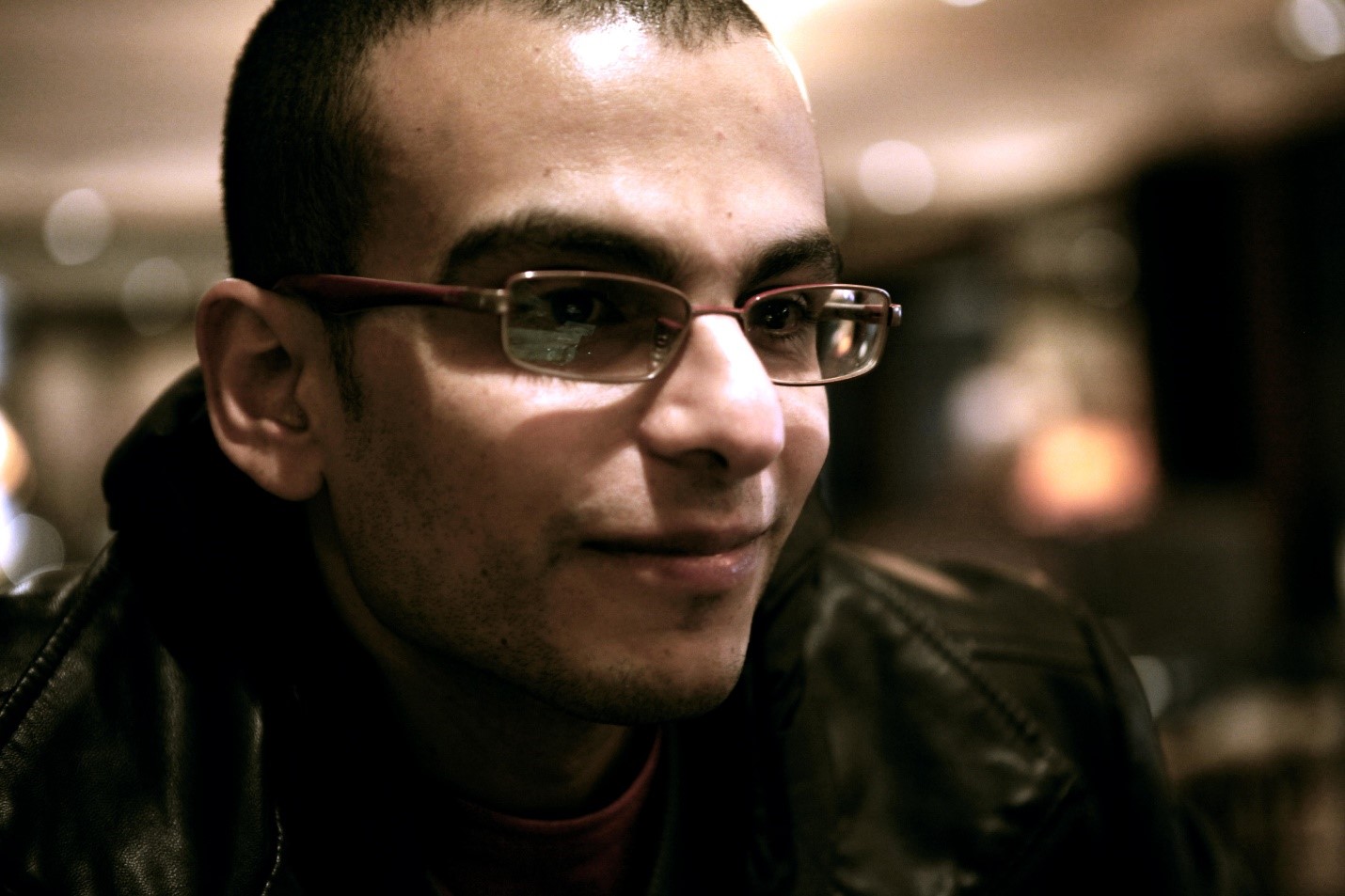
Conversations with Egyptian Director/Auteur Amir Ramses
(Amir Ramses)
When I think of a film director, the stereotype always comes to mind, a neurotic heavy smoker, who speaks incessantly, is socially awkward, and has a fascination with beautiful muses.
Take all that and throw it aside, and witness Egyptian director and auteur Amir Ramses. Ramses studied filmmaking at the Higher Institute of Cinema and worked as assistant director for 5 years with the legendary director Youssef Chahine. He directed multiple short films, documentaries, and features; wrote one novel Song of Songs published in 2010.
Mind you, physically he’s a mix of Woody Allen and Youssef Chahine, but when it comes to his personality, Ramses is the extreme opposite. No stuttering or neurosis, Ramses carefully picks his words, dodges unwanted questions, and navigates his way through the interrogative interview like a pro. His directing style is heavily influenced by what the former two had on him,
“Personality-wise, I am a very demanding director with an attention to detail that sometimes comes as bossy. I see things in a certain way and expect everybody on a film set to see them that way.”
His infatuation with Allen’s dark humor, hopeless romantic males falling for stunning girls in the Big City is obvious, but his string of complex relationships and his interest in the humane side of people and relationships are owed to his work as an assistant director to Chahine who might have given him a deeper outlook on what was at the core of the modern world of relationships in Egypt,
“When it comes to sense of humor, I love sitcoms especially older ones. But I believe that my sense of humor is closer to Woody Allen than any other artist. For example, I love Seinfeld but I find the show’s sense of humor cruel on its characters. My preferred sense of humor is much more empathetic and kinder toward its characters. Woody Allen is the one who comes to mind when describing this trope, even when he makes fun of his characters at the end of the day, he loves them so much. I use the sense of humor in my works as a defense mechanism against the stupidity and cruelty of society. I believe that there are things in life that you cannot express openly without getting in trouble unless you use it in a comedy sketch.”
Does he refer to his spectacular feature Cairo Time an enjoyable drama set over a single day and showing a subtle connection between unrelated characters, only connected through a thin red line of how humanity conquers fear, prejudice, and aggression?
“Woody Allen has been the main inspiration for Cairo Time. The scene inside the girl’s [a girl who wants to have sex with her boyfriend but is afraid because of societal sexual restrictions] head is very Allen-esque, completely absurd, and over the top. I used 3 shots only to construct the scene and relied on the bizarreness of the cop character [played by renowned Egyptian comedian Bayoumi Fouad]. In every shot, I left a space for the actors’ body language and movement. It had the longest, establishing shots throughout the whole movie. Another thing that made this scene stand out was the actor’s improvisation. I know a lot of directors don’t like that but I enjoy actors’ improvisation during rehearsals. Fouad was very creative in this [improvisation] and helped to add layers to his character.”
I had to ask Ramses why improvisation scared off some directors to which he replied that it was not a controlled environment.
“You are not just talking about the character but the rhythm and the pace of the scene and how to fit that with the changes that the actors make. Some actors are great with their creativity but their improvisation is uncontrollable within the scene tempo.”
If there was anything that Ramses learned from Chahine, that would be how the Other might not be that scary if only people learned how to listen and communicate. In one of the interconnected stories in Cairo Time, the character of Layla -played by legendary Egyptian actress Mervat Amin, known for her stellar beauty and sex appeal in the 70s- opts for a conservative lifestyle, denouncing her art and her past accomplishments as an actress. This is no strange to what happened in the entertainment industry in the early 90s when a group of actresses wore the Islamic head covering (hijab) and announced they were born again, away from their superstardom which was lustful and sinful. Layla in Cairo Time represents this kind of thinking, and in her quest for redemption, she hears a fatwa -a nonbinding legal opinion on a point of Islamic law- that states how women who get married on the screen are married in real life, thus should seek divorce whether they intend to get married again. And that’s what Layla does, she seeks divorce from one of her frequent past costars, Sameh -played by another legendary Egyptian star and TV personality, Samir Sabry- and that’s when tensions spark,
“Without expressing that in a comedy, that particular subject matter could have earned me an accusation of Blasphemy. Instead of criticizing this fatwa -which took place in real life- contextualizing it in a comedy made it more approachable and acceptable by the audiences, who found it the source of ridicule rather than grim seriousness.”
Ramses’s Cairo Time was his tribute to two things; the city, and the golden era of Egyptian cinema, through a set of characters that he carefully sketched. Despite all being of a certain age, Ramses was not interested in tackling a non-conventional age group for a movie audience that has been used -especially since the 2000s era- to watching only youthful faces leading films on the big screen,
“I was more interested in the meanness of the city and how that affected my characters. They have all been people betrayed by an old glory, thwarted off to islands rather than taking the front of the city in which they grew up, all because of their age. Whether Layla who gave up her acting career and that made her angry at her past or Sameh whose past caught up to him after he lost his movie star glamour and became a forgotten so-called legendary actor, living in total denial of that fact. As for Yehia, his memory betrayed him and that led to his feeling of isolation in the city. I’ve had this obsession with the power and withdrawal of memory, the ability to retain our stories or feelings after the memories are gone, and reflected that through the character of Yehia. The same goes for all the young characters. I believe they were all victims of how cruel the city is and what it does to our souls. The young man is obsessed with stories about himself and how they give him greater pleasure than his real life. The boy and girl want to have sex but society is suppressing their desires by forcing a moral and emotional compass for them to live through. Their stories reflected what I call the societal castration of our ability to love.”
Multiple themes could be traced in Cairo Time among them was amnesia and our relationship with whoever we deem “different” from us. One of the master scenes in the film was when Yehia -whose memory was decaying throughout the film- pretended to forget his daughter to set her free from his collapsing world,
“In this scene, I was intent on framing actors’ eyes. Eye contact or the lack of it was my focus point while shooting it. Dorra’s [the daughter] eyes following her father all the time. Yehia talking and avoiding eye contact with his daughter at all costs. I shot it in extreme close-ups and depended on a very sensitive scale from both actors, when to look and when to steal a glance. The scene that preceded it was all long shots, but this one was a group of extreme close-ups brought together to form an emotionally charged scene. The framing was very tight. Although the place was spacious, I wanted to block the way for both characters to give the feeling of entrapment. The main take from this scene was not the dialogue but how their eyes stared, looked away, and glanced.”
The character Yehia in Cairo Time is named after one of his mentor’s Chahine’s iconic alter ego Yehia Shokry Mourad, an alias that Chahine used in multiple films to represent a fictional version of himself. In his film Ramses pays homage to the master Chahine through the portrayal of Yehia using the same name, the character was even played by late actor Nour El Sherif who portrayed Yehia Shokry Mourad in one of the original Chahine movies, An Egyptian Tale,
“My favorite Chahine directorial phase was the pre-Emigrant era starting from Cairo Station and so forth, specifically the films that have a running theme of accepting the Other, our ability to understand the difference, and how we relate to others different from us. The Other might not have the same desires, moral codes, cultural backgrounds, or interests but we still have to accept them as we would like to be accepted. This was a recurring theme in Chahine’s films and one of my artistic obsessions as well, even in literature books that discussed these themes were my favorites. I believe that my documentary Jews of Egypt has been made through the same lens of understanding the other.”
Jews of Egypt is a big story. It was one of the most well-received Egyptian documentaries in the past decade, opening the door for multiple ripoffs and works of art that tackle the same topic -but mostly from a less in-depth lens. Ramses followed his subjects all over the world, chasing the remaining Egyptian Jews and attending their ceremonies, investing himself in their lives to give us a lengthy documentary divided into two parts: one follows Egyptian Jews in the first half of the twentieth century until their second grand exodus after the tripartite attack of 1956 and the other Jews of Egypt: End of a Journey examines the lives of the last remaining members of the Egyptian-Jewish communities. But that’s not all that Ramses learned from the Egyptian francophone auteur,
“It’s hard to pin what I learned from Chahine, but mainly the ability to enjoy what you are doing, regardless of the results. Before working as an assistant director with Joe, making short movies and such, I used to care about the end product, and what people might think of them. After working with Chahine, I learned how he “made” films for the sake of the process, not what the results will be. Chahine also, like me, adores his actors. Even the ones making minor roles are seen through a lens of love and compassion. He cocooned his actors with protection that almost seems sacred on set, which bothered as on a technical level -how we catered to actors’ moods and whims as per Chahine’s orders. His movie sets were never a source of nuisance or stress. Yes, sometimes he lost it and got angry but even then, he knew when and how to do it.”
Among his many recurring themes, Youssef Chahine’s infatuation for my hometown, Alexandria, was undeniably omnipresent. I asked Ramses whether this was also a prominent motif in his films,
“I believe that Alexandria is omnipresent in my films as well. Cairo Time starts in Alexandria; I consciously chose to make the main protagonist Yehia Shokry Mourad from Alexandria. In my first feature The Edge of the World, the main plot takes place in Alexandria, and people enjoyed how I shot the movie there. What I love about Alexandria the city no longer exists in our present but has become a part of our past of how we perceive the city. If I were to make a movie about Alexandria, I’d make certain creative choices that would be impossible to achieve visually with the current resources. It would be a fantasy film and need big budgets in terms of graphics and production design to tell the tale that I love. I’m not sure whether this modern version of Alexandria would be plausible to use as the background for the tale I have in mind to honor the city of my dreams.”
Ramses is very tactical. He carefully works the question in his mouth like a rolled cigarette and lets out few, careful puffs. He doesn’t use his words in vain, always concentrating on making himself as clearly understood as possible. Although most of his films were female-centric, definitely passing the Bechdel test, and filled with genuine female narratives, Ramses doesn’t see himself as a feminist director nor does he express a certain yearning to work with a particular actor, unlike many auteurs back in the time such as Youssef Chahine and Yousry Nasrallah, he doesn’t have a muse of sorts,
“I don’t like labels. I don’t see myself as a feminist director, I never put gender as a conscious artistic decision. I believe that the human is oppressed in the society regardless of their gender. I only tell stories that interest me without putting in mind that I want to glorify a certain gender or let it win at the end of the tale. In this corner of the world, women could be more oppressed than men, but at the end of the day, men are also oppressed. I’m more interested in people, although I won’t deny that women are prominent beings in my obsessions, infatuations, and even nightmares. But I’m mainly interested in the story rather than picking a gendered story specifically to tell.
“There is no particular actor with whom I prefer to work with. I believe that every director needs to work with a variety of actors throughout his directorial career. Sometimes even in the same project. Some mental actors approach a character through their analysis and mindsets, others are pure emotions. How you orchestrate that is the core of a director’s work. I hate the term “leading actors”. It’s a communication process that I immensely enjoy. I adapt to communicating with both kinds of actors as I believe this is a director’s job.”
Ramses’s latest film “Curfew” also takes place in one night during the period of a state-imposed curfew in Egypt in 2013; starring legendary 90s sex bomb Elham Shaheen as a mother trying to reconcile with her daughter -played by top-billed actress Amina Khalil- while hiding a dark secret of her own. The film was bold in condemning a taboo subject in Egyptian society; pedophilia and incest. While recording this interview, Ms. Khalil was still a star on the rise, now she has become one of the most revered actresses of her generation, tackling different subjects in her art such as ADHD and female liberation from familial confinement, I had to ask Ramses on the process of creating Curfew, how he viewed Khalil and Shaheen as actresses,
“Curfew was a challenge for me to shoot because it depends on two women trapped in a single place. I tried to make the presence and the environment dominant throughout the movie to encapsulate the audience’s feelings of entrapment, but in the frame, we follow the actresses around. I used wide lenses and the camera was handheld, following the two actresses around as if it was part of their skins. I wanted their features to look realistic and not beautified. The actresses were not posing in any scene. The technique has been harnessed to give the actress the space to not disconnect from their stream of feelings. At the end of the day, Curfew is an acting game more than anything else. Sometimes when you are directing a movie, you might think of something that would look pretty but on the ground, it wouldn’t be suitable for what you have in mind. Curfew is not about breathtaking frames, but the claustrophobia that these two women live together. This was what I aimed at visually. Lighting was another important element and I made sure to have areas of darkness in every frame. Doors and windows were their “acting out” moments.
There’s a spark in Amina [Khalil] and that is her flexibility. She knows how to listen to the director and can come to rehearsals and table reads with her ideas and input. She could in a second take her acting in another direction if you suggest it to her without letting her old thoughts about how a scene is made get in the way. She is not stagnant and her ability to adapt is mesmerizing to me. I saw this in the first rehearsal that we made together. I came out of it [the rehearsal] in awe of Amina. I have never seen an actress able to get rid of their thoughts and intricacies about a character that easily and that was a pleasant surprise for me.
Elham [Shaheen] was a great choice in the role of a mother. She is the only actress I can think of who lets her inner artist triumph above all other considerations. I always compare her to actresses from her generation and even the later ones who are more obsessed with their societal image, maybe social media or the talk shows have caused this to be a major issue but still actresses are always thinking about how their characters would appeal to audiences, whether they would be criticized for playing them, how they would look and what their physical appearance would play into the role. That’s not the case for Elham. She loves the character and plays it as it is. Working with her is smooth. She broke every one of my obsessions and fears regarding the actor’s comfort zone concerning how they look on screen. She has always been bold enough to go wherever the character went, regardless of how that showed her in the real world. She doesn’t put herself as a celebrity on a pedestal and doesn’t care that she looks beautiful on-screen if the role was [like in Curfew] that of a battered, long-imprisoned woman. She doesn’t think of how people would receive the movie because, within its realms, she leaves herself to the experience.”
Death is a recurring theme in most of Ramses’s movies. In Cairo Time, the death of the wife is a catalyst for Yehia’s trip down memory lane. Curfew’s titular murder and the eventual suicide of Yehia Murad -another manifestation of Ramses’s muse Yehia Shokry Mourad as superimposed from his mentor’s original films- meets a tragic ending. Does that ring a bell for Ramses?
“I’m not obsessed with death. Come to think of it, death is absurd apart from aging or the [COVID-19] pandemic. Maroun Bagdadi -famed Lebanese director- died suddenly after an accidental fall down an elevator shaft although he had a lot ahead of him. Theo Angelopoulos -a late influential Greek filmmaker- died in a motorcycle hit and run while shooting his last unfinished film. With that aside, I don’t think I’m a director who has a project but I am a director who enjoys what he does. I prefer to die in the middle of the heat; while doing what I love the most. What horrifies me is the period of having established everything that I had in mind as an artist and living beyond that. I make movies as a way of feeling alive so the point where I would like to die would be any point in my career timeline, regardless of how far I’ve reached it.”
With the Egyptian cinema going through a high-tech phase of creating series of action/superheroes movies, Ramses is one of the few auteurs of our modern times. Just like you would never find his mentor Chahine shooting an action movie a la golden era of cinema style, Ramses is sticking to the same realm of cinematic verses with his focus on dramas and light comedies. I had to ask him whether it was a budgetary choice to remain in the zone he slowly dug a name for himself into or were there other artistic decisions to stir away from the big-budget mania,
“I can’t tell you whether there is a more difficult scene to shoot than the other. Yes, it’s difficult to shoot an explosion or a highly choreographed action scene that would take 5-6 days to execute. At the end of the day, I find what’s difficult is what I can’t control as a director. Action scenes are draining and difficult to execute but controllable. However, controlling an actor’s emotions, savoring their features and their eye contact is more difficult and cannot be compensated if the scene is spoiled.”
Ramses’s Facebook is overflowing with art; his preferred music, his dog, paintings, and movie posters. Among the films that he quotes a lot is the 1998 Lebanese war dramedy “West Beirut”, a film directed by Ziad Doueiri which we both share a keen interest in. As far as his sense of humor goes, Ramses was fully capable of creating a similar film, so I asked him why he hadn’t yet,
“The era of political correctness in which we currently live. Ziad Doueiri himself wouldn’t be able to criticize the war through this lens nowadays. Even his point of view has matured as can be seen in “The Insult” [a film directed by Doueiri in 2017] and yet the liberty of expressing how you see the world as an artist has changed in the time of political correctness.”
Wong-kar Wai, legendary Hong Kong director is another great source of inspiration and obsession for Ramses, and I had to nag him to direct a romance along the way of rich colors, stellar soundtracks, and observant cinematography. His seriousness and tactfulness cracked as he replied playfully -probably for the first time since we started the interview,
“Get me a project like “In the Mood for Love” and I’ll do it in a second.”