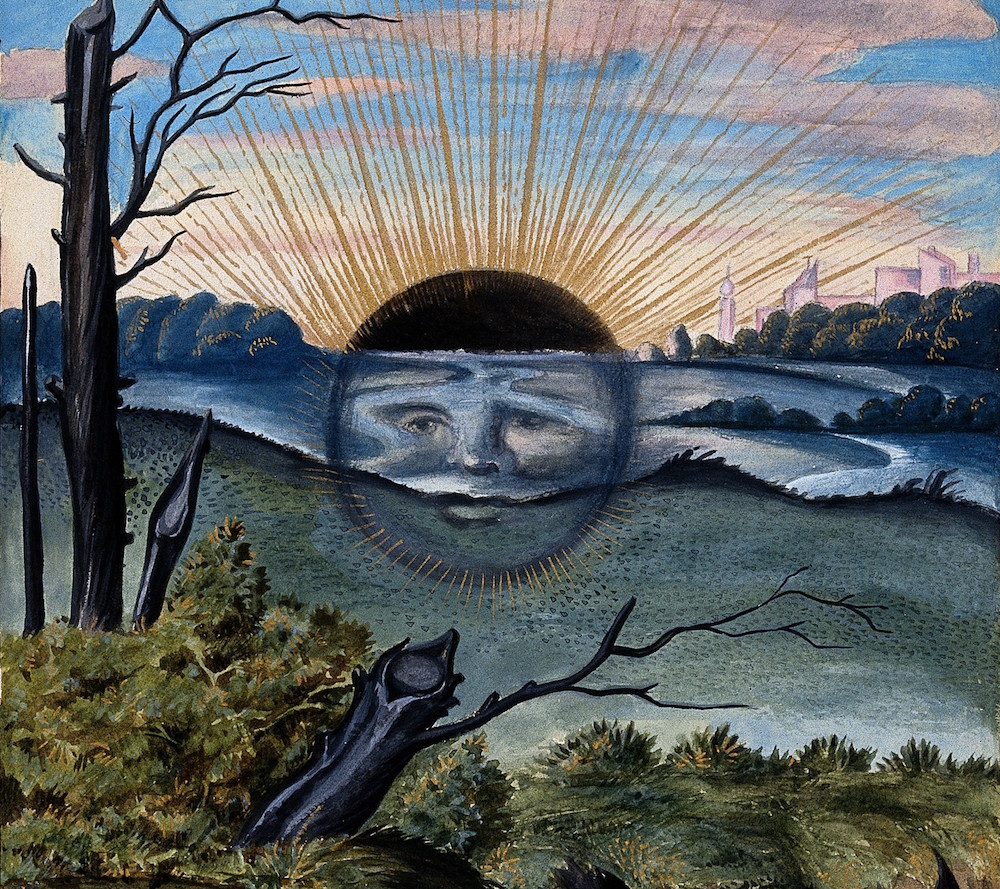
I can’t hear you, Tracy, the sun is in my eyes like a strange portrait of light, and I’m stuck in a seashell, drowning in the sound of the ocean. I am staggering like I’m drunk. Slurring my words. Having a seizure over and over again and I just wanted to smile for you and talk about that day at Peace Valley Park when your clothes were plain and everything was going right. When the sun was my ally and everything was green, even the dirt. This strange sphere of a planet dropped me off on the side of the road when I wasn’t looking. I’m at the graveyard now. My tombstone reads rest in pieces. I can’t hear you, Tracy. I can’t even hear myself. Tip toeing into traffic. Knees all crumpled up. How many shades of blue can one man radiate? The clock ticks like Chinese water torture over me and I wish I knew what you were saying, with your hands in your pockets, walking along the grass somewhere.
‘Wake up, Dream boy!’ explores the ordeals of a young teenage boy, Tom, through a dream he had. It combines geographic names, conceptualized characters, metaphysical locations and various thought realms.
Things turned upside down as Tom, in high school, became obsessed with horror films and books that had satanic themes. Anything scary caught his attention and he hardly paid attention in class. Left alone, he looked out for books flooded with zombies, ghosts and other extra-terrestrial entities. Tom’s friends eventually got tired of hearing about his special interest and kept him at arm’s length so they wouldn’t have to hear all of his evil visions of blood-feasting demons, cannibals and dark voices telling people to commit suicide. He became somewhat of a loner.
His mother, Sarah, whose husband had died shortly after Tom’s birth, tried to distract him from the horror. However, she eventually gave up, since she had two other children.
However, Tom’s nightmares played themselves out. For every action, and every obsession of humankind, there is an equal but opposite consequence.
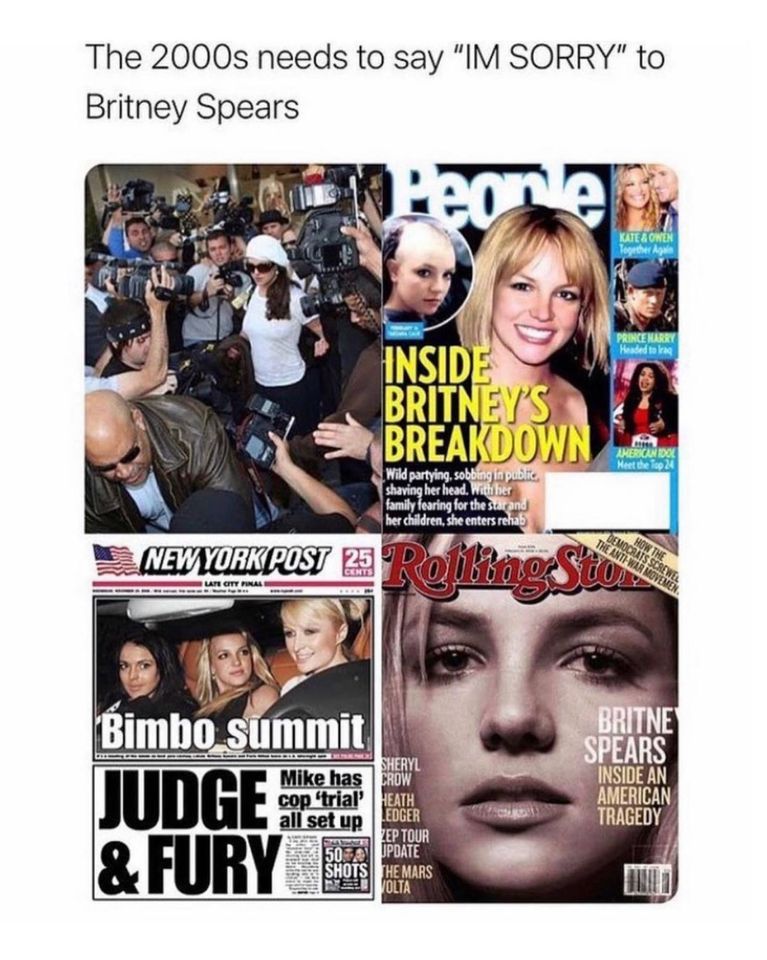
The following is an excerpt from a forthcoming essay by Teresa Smith reflecting on the social and political of the suburban United States between the launch of Britney Spears’ first and second albums.
✵
CW: anti-Indigeneity, murder of Indigenous people, racism, colorism
✵
To my knowledge, there was not a single Black, Latino, or Indigenous student in my graduating class (Issaquah High School, class of 2002). We also didn’t have any teachers, local leaders, or town historians who weren’t white.
In 1997, my last year of middle school, around sixty juniors and seniors from my future high school drove to another city to destroy an Indigenous artifact. It was a totem pole created by a member of the Snoqualmie Tribe. The totem pole had only just been finished and it was slated to be the site of an upcoming celebration over the Tribe’s victory in their long battle to win federal recognition. Prior to the planned celebration, a group of sixty or so Issaquah High School students, led by the football team, drove to the freshly carved totem pole in the middle of the night, chopped it down and set it on fire.
In the weeks that followed, the local newspapers tended to use the term “peep rally” to refer to the incident. The local media also liked to emphasize that the man who carved the totem pole had been an “adopted member” of the tribe, as if the Snoqualmie nation didn’t have the sovereignty to welcome new members, as if this made what the high schoolers did not count.
Our high school’s mascot was “The Indians.”
Following regional media coverage of the incident, outsiders began writing angry letters to the editor of the local paper—perhaps the tokenization of Indigenous people and this hate crime were related? That was the general tone of the letters.
“We’ve been the Issaquah Indians since 1917,” a white woman from the historical society said to me one day, in a huff. “What do these out-of-town liberals know? This is our heritage!”
I began volunteering for the local historical society when I was in middle school (it was a good way to get out of the abusive environment at home) and I would sometimes staff the front desk at the old town hall, which had been converted into a museum. The building was named for the white man who is credited with founding Issaquah, and I would eventually that this man was so famous for murdering members of the Snoqualmie and Sammamish people that, according to legend, once he and his family ran out of bullets so they began to pull nails from the walls of their own home so they could load them into shotguns and keep shooting Indigenous people.
The Issaquah High School mascot was changed to the Eagles in 2003, but there are still hundreds of schools around the country with mascots that depict Indigenous people. When Indigenous kids look around in their daily lives for representation, this is what they see: Some high school mascots are wild animals, others are Indigenous people.
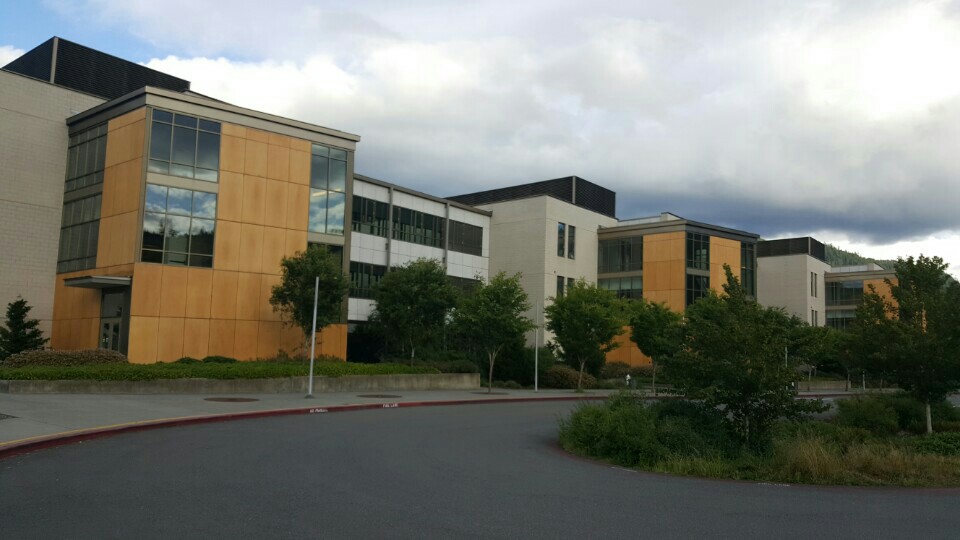
Issaquah High School
✵
In many parts of the country, the White Flight of the 1970s had grafted rather cleanly onto the remnants of earlier white supremacist movements. Our “commuter suburb” had been a known as a Klan haven in the 1930s, and my mom, who was white, didn’t see any problem with this. As for myself, I didn’t pass as white, at least not there, not in Issaquah.
The old ladies at the historical society used to grill me about my origins. They were always smiling, acting cordial as they tried to wrangle the truth from me about “where I was really from,” as if I was intentionally hiding it from them. Their questions didn’t make any sense; I was born in Oregon and had lived in the Pacific Northwest my all my life. Sometimes when I would go to the gas station to buy candy after school, old guys in hunting caps would walk up to me and thrust their big pink noses into my face, demanding to know where my accent was from. Uh…accent?
It wasn’t until I was in my late twenties that I left the Pacific Northwest and learned that in other parts of the country, I read as white. It was like falling into a different universe. I spent so much of my young adult years trying to prove myself to everyone in town—my photo was always being printed in the local paper for things like winning the school walk-a-thon, raising money to rebuild a local playground, running a petition drive to save a nearby wetland. I was just so eager to show that I was that “exceptional person of color.” Even after things fell apart at home and I moved into foster care, I was still actively working on volunteer projects. During my senior year of high school, a plaque was installed at a local mall with my name on it, honoring my service to the community. It was so strange moving to California, and visiting New York, DC, Texas and finding out that in those places, people don’t expect me to constantly prove myself.
Sometimes looking into the mirror feels like gazing at one of those Magic Eye pictures from the early 1990s. If I look at myself one way, all I see is static, whiteness, the markers of colonial privilege. If I turn the other way and squint a bit, this caricature pops out, and I can almost find the features, however faint, that the white supremacists in my hometown used to frame me as an outsider, a sidekick, a suspicious person. Someone always at the periphery, never at the center.
Years later, I would be applying for food stamps in the bigger, safer city of Oakland where I began living in my twenties. I worked full time, but rent was taking up nearly all of my paycheck. The social worker became angry when she found out where I was from. “What are you doing draining our social services here?” she snapped. “Go back home, back to where you belong.”
Just a few months before, I went back to Issaquah for a brief visit and tried to leave a few copies of a brightly colored activist newsletter on a café newsstand. It had become a habit, leaving around little zines and newsletters that my friends and I made in South Berkeley about the dangers of climate change, the 1%.
“Get out of here with that gay trash,” the café owner was suddenly shouting at me. “Go back to Capitol Hill!” At first, I was shocked, indignant. This was my hometown! Didn’t he recognize me? I used to deliver his newspaper. Didn’t he know there is a plaque with my name on it at the mall? I wanted to explain, to make him see who I was, but then I saw him reaching for something and I ran out of there before there was time to see if it was a broom or a gun.
This month’s issue of Synchronized Chaos is anchored in ekphrasis.
I first learned of ekphrastic poetry from one of our contributors, Neil Ellman. According to him, “It sounds more intellectual than it is. It is no more than writing a poem expressing one’s reaction to a work of art.” Ekphrasis, however, is not limited to poetry. Often analogous, ekphrasis prompts a painter to interpret a poem, a photographer to portray a song, and so on. Neil says, “One very common way of explaining it is that ekphrasis involves a “conversation” between two forms of art.” Therefore, it is safe to say that ekphrasis epitomizes the conceptual harmony of “art-on-art”.
Teresa Smith comments on the resurgence of interest in 1990s pop singer Britney Spears and suggests we turn our attention to other neglected people from the period who continue to experience injustice today.
Egyptian diplomat H.E. Moushira Khattab, interviewed by Federico Wardal, emphasizes education as a means of combating human injustice in the midst of national revolutions. She highlights the importance of her involvement in child welfare organizations as an extension of her human rights initiatives.
Mark Young has the innate ability to guide us through not only the art, but potentially the mind of Magritte. Each detail within every artwork seems to speak to our common human experience. In kind, Patricia Doyne poetically dissects the intentions of da Vinci’s Vitruvian Man and ushers us through the dynamic depths of The Great Wave Of Kanegawa.
Michael Lee Johnston likens coronavirus to the crucifixion – the irony of the crown. He then goes on to examine change and movement through the holiness of the Roman god Mercury. Poet Hongri Yuan expands our worldly awareness with bodily translucence and chronological truth. His multisensory lines heighten our self-understanding and existential potential.
this is the secret that the ancient sages have told you.
Listening to the light pass through your body and play Guqin in your bones
noticed an old man, who was 30000 years old, sitting in a palace on the mountains top.
There is an island in the depths of the ocean,
the goddess was so brilliant before the world had been born.
Her eyes will make you forget the sadness,
for an instant, take you through those free and unfettered days outside.
在身体里有一个更大的世界
在身体里有一个更大的世界
这就是古代圣人告诉你的秘密
倾听光线穿过你的身体在骨骼里弹琴
看到一个老人三万岁了坐在山巅的一座宫殿
在海洋的深处有一座小岛
那位女神在世界诞生之前就如此灿烂
她的两只眼睛会让你忘了忧伤
一瞬间带你穿越那天外逍遥的日子
2020.05.12
The World is Just a Lie
The world is just a lie,
truth is on the other side of the world.
We can neither see the light of time
nor know that everything is a shadow on the running water.
There is another me on another planet,
you have never been born or died.
When the maze becomes transparent, the door of time-space opens,
you will shake hands and smile with the giant in the heavens.
The words are both music and the epic of the soul,
Telling you that the palaces of outer space are incomparably lofty,
as if they are as endless as the mountains of gold.
世界只是一个谎言
世界只是一个谎言
真理在世界的另一面
我们看不到时间之光
不知道一切只是流水之上的影子
另外的星球上有另外的自己
你不曾出生也不曾死去
当迷宫透明时空之门敞开
你将和那天上的巨人握手微笑
那词语是乐曲也是灵魂之史诗
告诉你天外的宫殿无比的巍峨
如黄金之山岳连绵而无际
2020.03.17
The Hymn of Sweet Soul
Drape the night over my shoulders like a cloak of the world,
call the birds of the stars from outer space and fly near my city garden.
Sing a song of the giants from huge city of platinum,
awoke the drowsy city of the world with a start.
Oh, the lightnings are in full bloom in the vault of heaven-
the hymns of sweet soul.
Your bones became transparent suddenly,
its light was flickering all over the body like the wings,
in a flash, the body became huge, higher than the large building down the street.
06.12.2020
那甜蜜灵魂的圣歌
把黑夜披在肩上如一件世界之斗篷
召唤天外的星辰之鸟飞临我的城市花园
唱一曲白金巨城的巨人之歌
惊醒这昏沉的人间之城
哦 闪电在天穹盛开 那甜蜜灵魂的圣歌
你的骨骼骤然透明 光芒如翅翼在周身闪烁
一刹那身体巨大 高过了街边的巨厦
2020.06.12
Bio: Yuan Hongri (born 1962) is a renowned Chinese mystic, poet, and philosopher. His work has been published in the UK, USA, India, New Zealand, Canada, and Nigeria; his poems have appeared in Poet’s Espresso Review, Orbis, Tipton Poetry Journal, Harbinger Asylum, The Stray Branch, Pinyon Review, Taj Mahal Review, Madswirl, Shot Glass Journal, Amethyst Review, The Poetry Village, and other e-zines, anthologies, and journals. His best known works are Platinum City and Golden Giant. His works explore themes of prehistoric and future civilization.
Yuanbing Zhang (b. 1974), who is a Chinese poet and translator, works in a Middle School, Yanzhou District , Jining City, Shandong Province, China. He can be contacted through his email- 3112362909@qq.com.
Address:No.18 middle school Yanzhou District ,Jining City, Shandong Province, China Yuan Hongri
I haven’t written you anything lately. I wanted to, but I couldn’t. It’s so hard to put effort into a nicely shaped paragraph. You also know that I wait until things ask to go out, I never push them to.
Generally; I never push. I always wait, I never feel good pushing. Yes; I made this mistake once with some of them, I pushed too hard that it didn’t work, and I lost.
Dear Love,
I am learning that what comes naturally, stays. Also, what goes naturally, doesn’t hurt.
Dear Love,
I miss you; you know that?
Dear Love,
It’s passed midnight already, and I am not able to sleep. The ghosts of my past are chasing me. As I am so glad that I don’t have roommates anymore, as I feel like I need one right now, just to hear the noise around me that distracts me from thinking about you.
Dear Love,
Overthinking kills.
Dear Love,
I miss you so much.
Dear Love,
Last time I saw you, I felt like I didn’t want to see you again. You were different, you have changed and I didn’t expect myself to be going so far away without feeling bad or upset. How come destiny helped me a lot to get over you? How come I don’t feel anything for a long time!
Dear Love,
I haven’t changed yet, I am still loving at most, I am still giving parts of myself, I am still getting over myself for others and I am still a very hard person to get over.
Dear Love,
I receive many letters from all of them, all are sending me their feelings, they still do carry feelings for me. I also still carry feelings, for myself.
Dear Love,
I have discovered that I have too much curiosity to get to know strangers. I am more comfortable around them. Those who you meet and you are sure that you are leaving. I do open up to them as I was opening up to you someday. Someday I don’t know if I want back.
Dear Love,
I really don’t feel anything.
Dear Love,
I want love.
I want love.
I want love.
Dear Love,
I give love to get love.
I am singing that line right now, I liked it. How come I still like myself and like what I do even if it is never enough?
Dear Love,
I still miss you.
Dear Love,
I don’t know you; I don’t know who you are. Am I still in love just with the idea of love?
Maybe I have never loved you and maybe we have never met!
Paris. Replays of Princess Diana’s deadly car crash—
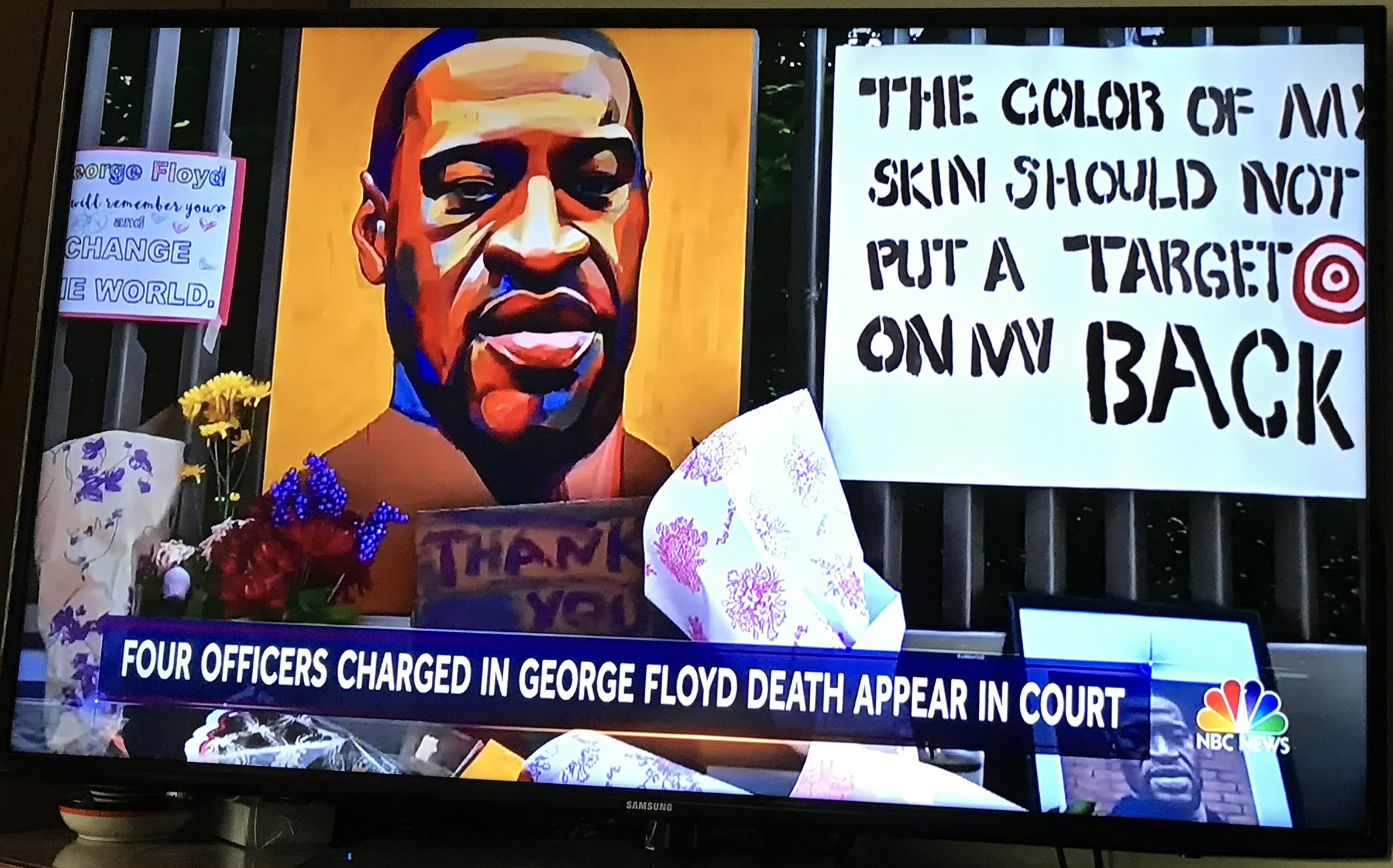
George Floyd died under the knee of a policeman
throngs of people and three officers looked on
Americans wrenched in pain, my hand flew to my lips
He took his dying breath,
“Mama!”
Americans moaned, Ahhh nooo
That happened?
People all over the world witnessed Floyd’s death
It changed the dimensions of America
That day George Floyd died,
so did the brittle transparent bubble
that separated me from society. Snap!
American consciousness changed.
Now, we say we need to learn about African Americans.
We don’t know who they are.
Black conjures slavery, church-going folks, poverty, drugs, urban crime.
Dialogue flies across the airways
the words pile up between us
we’re not really closer,
not as close as that intimate moment
George Floyd drew his last breath.
So, we’re all dealing with this
taking the measure of all things in our lives
What? Jacob Blake?! Police shot him in the back.
Seven times.
Plucked his shirt, stretched as Jacob bent to get in his car
his three young sons in the back seat
Why?
African Americans: Images of Mammy, plantations, cotton picking
People don’t know the amazing things Africans did.
Mansa Musa, the tenth ruler of the Mali Empire
Was richer than Jeff Bezos
Mansa Musa went to Cairo and spread so much gold around
He broke the economy
Amazon smiles
Jacob Blake’s family knew their history.
His parents were educated, enlightened people,
Helped people in Evanston, where Jacob grew up.
Americans didn’t know that or about
All those years of slavery, abuse
Forced labor even after slavery was abolished
All those years
Shackled to a stone blocking the American dream
After all those years, all that education, all that enlightenment
Jacob Blake is in a coma in a hospital in Kenosha, Wisconsin
handcuffed to his bed.
After all those years,
and all that history,
Jacob Blake, the black man,
is still in chains.
August 23, 2020
GEORGE FLOYD
On May 25, the day George Floyd died
at the hands of the Minneapolis police, both CNN and MSNBC
stopped posting the daily coronavirus count. On that day, everything changed.
What does COVID-19 have to do with the anguished cries of a dying man pinned under the knee of a veteran police officer, hands in his pockets, leaning in with determination?
What does 400 years of institutionalized, cultural and systemic racism have to do with a pandemic?
The police stopped and harassed Mama and my father
driving around St. Paul, Minnesota in the ’40s—
a white woman with a black man.
I can see them now, her blonde hair lilting
she snaps her head around, tense,
and my father, cool, a cigarette dangling from his mouth,
asks languidly, what’s the problem, officer?
He was better educated, more articulate than the police,
probably nattily dressed in slacks and sport coat for his lady.
It wasn’t his first time being stopped.
He attended communist party meetings where they discussed
racial prejudice and revolution.
Police abuse is common knowledge in the Twin Cities,
common as wallpaper,
racial tensions have been simmering at a steady burn since forever.
Floyd George was not the only one. There are countless others.
His killing catalyzed demonstrations across the country,
indeed, around the world,
Floyd George was actually the fifth death
at the hands of Minneapolis police since 2018.
A plague and a pestilence.
Sandra is a renegade artist and writer, and the founder of the Genghis Khan Urban Guerrilla Research Society.