Carol Smallwood’s review of Deborah Turner’s poetry collection Sweating it Out

Photo of four young Black women playing basketball, on the cover of Deborah Turner's poetry collection. Title is in red and yellow and the photo is in black and white. Next to that is a photo of poet Deborah Turner, a Black woman with earrings and a green top standing in front of a brick wall.

Sweating It Out

Finishing Line Press

September, 2020

$14.99, softcover, 30 pages

ISBN 978-1-64662-256-6 (paperback)

Smallwood: What is your educational background?

Turner: I earned successive degrees from the Universities of California, Berkeley, Michigan, and then Washington, respectively. I majored in English and minored in Native American Studies and moved on to library studies. I eventually earned my doctorate in Information Science, focusing mainly on library management and talking as a way to exchange information.

Smallwood: When did sports become an important part of your life?

Turner: Very early on. My transition from playing to competing in sports went fairly easily. Likely this reflects how I benefited from Title IX. As a kid, I was very active and played sports. I’ve always been tall for my age. A coach once looked across the school yard and spotted me, head and shoulders above the other sixth-graders. He recruited me for a relay race. Basketball, rowing, softball, and track coaches would later repeat this gesture right up through my undergraduate years.

Smallwood: How did you come up with the theme for Sweating It Out?

Turner: A mentor and later a fellow member of my feminist writing group, Akasha (Gloria) Hull, heard my first sports poem and encouraged me. It used softball to explore the experience of becoming the family matriarch. “Five poems make up a series,” she’d said. Her words motivated me to write additional jock poems, as I called them. That series has become Sweating with its sports poetry.

Smallwood: Some lines in the first poem in your chapbook, “Juneteenth,” caught my attention:

And the children run free

like schools of sardines

lacing the kelp-like crowd in jubilee.

       Please share some other imagery lines using your sports background:

Turner: Ah, thank you for mentioning that line. I do love having been fortunate to have spent several hours mesmerized by marine creatures at the Monterey Bay Aquarium. Such experiences provide wonderful metaphors for poetry.

When elders step in to help right a situation, I feel a reverence that reminds me of the rhythmic tension involved in watching a tennis match (from “Something from Nothin”):

…a cautious serve, slow and inviting, a volley ensued smooth as a grandfather clock tocking…

There’s another instance of imagery in “Double Dutch,” perhaps a symbol of Me Too despite it having been written before that movement began:

…she pretends

It’s her turn to twirl

and the game ends

with rain.

I first experienced and expressed real anger while playing in a basketball game. An 8th grade teammate prevented me from scoring. For the good of the team, I shook a fist at and then one-armed hugged her, tight. Next, I let go of the intense feelings rushing through me and kept playing, certain we could still win. Sports helped me learn how to remain grounded when emotional, while remaining present during challenging situations (“Sidelined”):

She parents like she’s coming in off the bench.

Been coached forever, but the real thing—well…

It can be an incredible sensation to enter into a sporting event tentatively and come out confident—just as it is in life.

Smallwood: In the poem, “My Son’s Avatar” please comment on these very relevant lines:

And I try to recall what a decade of burning bras

and another of fighting, to make our lives matter,

 meant.

Turner: Each generation does what it can, we hope, to make the world a better place. Yet, we have no idea how the next generation will make sense of our efforts. We strive so earnestly. Meanwhile, children are born; young people get old. When working to make sense of the moments we have, I’m moved to anger, sadness, laughter, and—of course—the unexpected. This poem emerges from watching a beautiful, mixed-race boy passionately select a cartoonish, stereotypically sexual girl from among all the available avatars to be his online game piece. His choice gave me pause and reminded me to make careful wishes. It results in a poem that, among other things, conveys a warning and a wish that we work to ensure our ethical and social practices keep pace with our technological advances.

Smallwood: When did you become conscious of feminism?

Turner: Hum, what a good question. It’s hard to pin down an answer. I studied it in college. Yet, I lived it as a kid. My mother was a hippie and a feminist. So, looking back, I recall being introduced to feminist ways of being from how she modeled it with her life choices. But I had no word for it back then. While studying it, I felt a sense of familiarity while reading classical works, like those in Cherrie Moraga’s This Bridge Called My Back. I once shared a stage with her. That was a real honor.

Smallwood: There are not that many librarians who also are accomplished poets. How did it influence you?

Turner: Yes, that’s true. I’m happy to be following in your accomplished footsteps. There’s an interesting anthology on this theme, Poet-Librarians in the Library of Babel: Innovative Meditations on Librarianship. I really relate to one of its poems about finding an especially moving letter in an archival collection and getting completely distracted from my professional responsibilities! As a librarian, I worked mainly in library public services. Doing so allowed me to watch. I’ve listened to Alice Walker, Maya Angelou, and many other poets describe how writers need to observe. I find helping and watching how people learn how to get much-desired information very satisfying. I relate to the showing/teaching side of library work. Enjoyment in such educational activities led me into the library and information science professorate. Since, I’ve realized there is a strong teaching and learning element in poetry. In that way, librarianship enhanced my career as a writer, which predates mine as a librarian.

Smallwood: Distinguished Professor of English Education, Jeffrey D. Wilhelm (Boise State University) observed that your poems deal with “…deep issues of identity and transformation.” Please share some of these lines:

Turner: The concepts of identity and transformation easily bring to mind how we come of age into adulthood. Yet, life is full of many moments in which we fully realize and accept who we are and use it to inform a different way of being.

A professional arrives at a new place of peace and ambition in “Time Out”:

one by one, lessons of assimilating

fly up and out the mediation retreat window,

taking with them the good sense your mama made you

promise to use

Some lines explore lovingly choosing oneself over others you love (“From the Lighthouse”):

May you know my love even as I leave the lighthouse.

Other lines reflect accepting one’s parents (“Black Patriarch”):

She used to think him snake-like, shedding families like skin   

Still others focus on changing roles with one’s parents (“Switch Hitting”):

This time

who has permission

to grant, to deny?

Pondering, she feels eight again

awkwardly switch hitting…

in the last inning

of her mother’s final season.

Smallwood: Please comment on your contributions to two anthologies: Philadelphia Says: Black Lives Have Always Mattered, and Testimony:

Turner: I have a poem and a prose piece in these works. In Philadelphia Stories, my poem, “Young, Gifted, and Back,” speaks to life after completing college. The title plays on Lorraine Hansberry’s famous play. The second work Testimony has quite a sub-title… Young African-Americans on Self-Discovery and Black Identity. My prose contribution to the volume, “Letters to My Sister,” provides a window into the lives of two young women, one in college; another, a mental institution.

Smallwood: What are you working on now?

Turner: I am working on a novel and a memoir. My first novel, Harvesting Her Own Cranberries is set in 1983. Harvesting tells the story of 12-year-old, mixed-race Tink, who goes missing. Readers follow Tink and her blended family, working to get her home safely. As readers learn what becomes of Tink, they’ll journey with her through a cranberry farm that nurtures more than what first appears. It also touches on a theme I mention above, coming of age at different times throughout one’s life. I’m also working on a memoir based on my life in West Philadelphia.

For a reading and discussion guide for Sweating It Out, or to learn more about Turner and her works, please check: http://www.deborahturner.online

Carol Smallwood, MLS, MA, Marquis Lifetime Achievement Award recipient, is a literary reader, judge, interviewer; her 13th poetry collection is Thread, Form, and Other Enclosures (Main Street Rag, 2020)

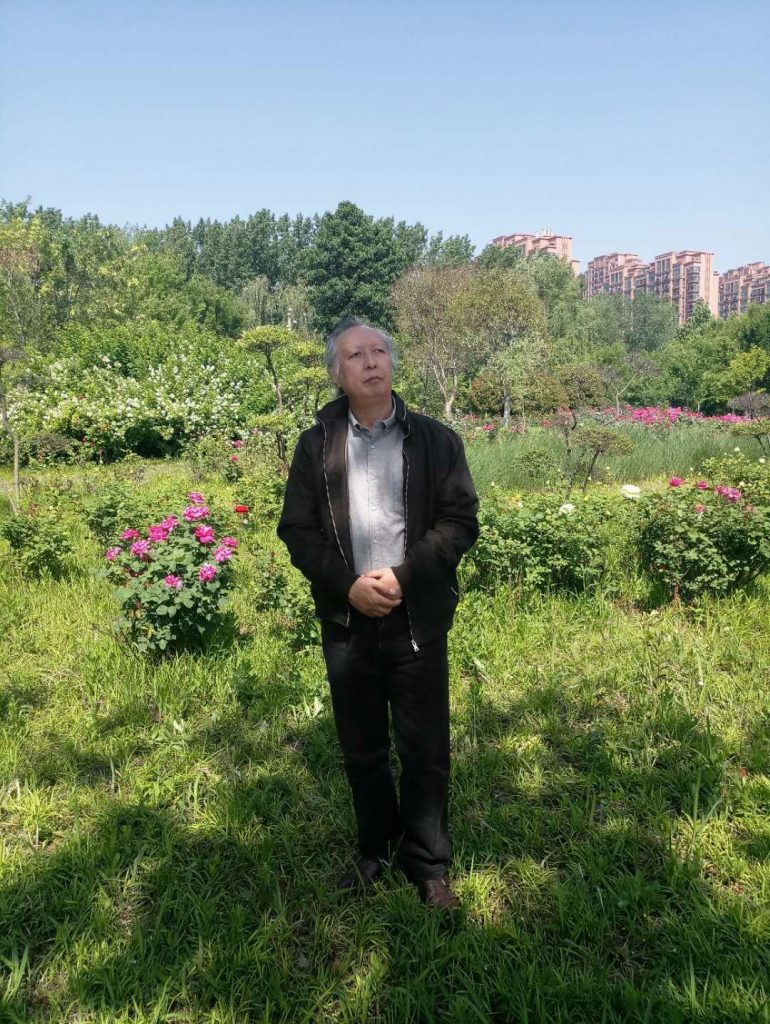
Memoir excerpt from Norman J. Olson

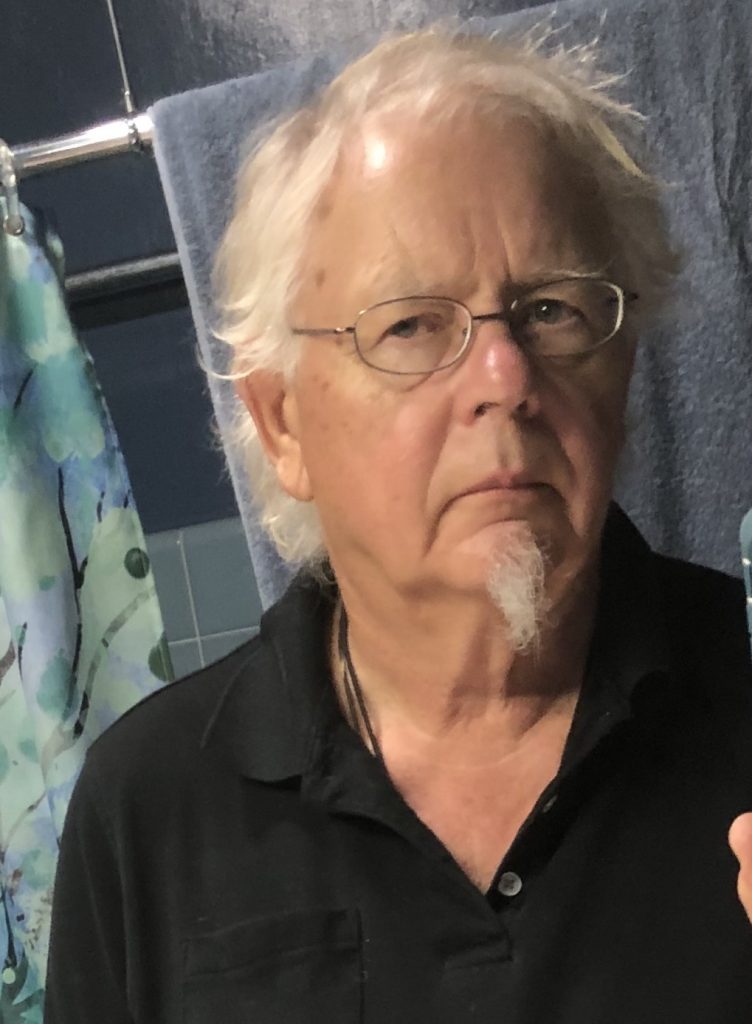
Older white man in a black collared shirt and glasses.
Norman J. Olson

Memoir, a Useful Woods

by:  Norman J. Olson

my childhood was spent in a world far different, not only from the world that I live in today, but also from the world that most baby boomers knew…  I was born in 1948 in Baldwin, Wisconsin and lived the first 11 years of my life on a small failing dairy farm 6 miles south of Baldwin and about 4 miles from Woodville, Wisconsin…  this area had been settled a generation or two before my time by mostly Dutch and Norwegian immigrants… on the streets of Baldwin in the early 1950s, it was still common to hear both Norwegian and Dutch spoken by the old folks and there was much talk about “the old country…” 

the stores had Norwegian and Dutch names, Vandenburg, Rudysal and Erickson, for example… my mom came to the area as a country school teacher from St. Paul, Minnesota, about 40 miles away…  my dad’s family was mostly Norwegian although, my grandma’s brother had married a Dutch woman… which was considered quite unconventional…  the Norwegians considered the Dutch to be wildly eccentric…  the old saying was certainly common among the Norwegians who would exclaim, “well, if that don’t beat the Dutch” whenever something absolutely unbelievable was described…  what little I knew of the Dutch was that they thought the Norwegians were pretty much a bunch of introverted stick in the muds…  well, truth be told, anybody from more than 40 miles away could not have told them one from the other, except some of the Norwegians were red haired…  there was one small grocery store in the town run by Sam Rosen…  who was neither Norwegian or Dutch…  and to me, it seemed very exotic… it was just a small store, much like what would be called a convenience store today, but I remember my parents went there to buy fresh produce… I remember the owner as a smiling, portly gentleman with thin, black slicked back hair…

I remember the old farm houses as being absolutely neat with lace doilies on the arms of the couches and easy chairs, not to mention on every other flat surface…   and the barns were kept clean and fresh with lime and fresh straw…  the farmers seemed to love what they did and there was a sort of reverence for the animals that I have never seen in the modern world…  an animal that was raised for meat and destined for slaughter was treated with kindness and respect until the time came to butcher…  animals were usually not butchered on the farm anymore, although all of the old timers knew how to butcher an animal because it was not too many years since all of that was done by the individual farmers who would help each other out with tasks that required more than one person…

while most of the farms had indoor plumbing and central heat or at least gas or oil heat, our farm never had either…  there was a large wood burning cookstove in the kitchen with a well on the side that was kept full of water and was our source of hot water…  in the summer, the kitchen was very hot when the stove was in use, baking bread or cooking meals, but in the winter, the kitchen was the coziest room in the house…  there was always a pot of coffee on the stove and to me it looked like tar…  especially after it had been sitting most of the day…  but the farmers would drink it on the hottest days, usually half and half with cream…  they would pour the coffee from the cup onto the saucer and slurp it from the saucer if it was too hot to drink from the cup… 

instead of central heat, we had what we called a “parlor furnace”..  this was a big square stove, like a pot bellied stove except squared off, that had an isinglass window in the door which was translucent, and made, I think of mica, so you could see if there was a fire in the firebox or not… I remember cold winter evenings when I was very young, before we had a television, listening to music on the radio and watching the dancing glow of the fire through the isinglass…   

in the winter, this stove was kept going night and day…  they burned oak and maple wood that was harvested from the woodlot across the road from the rest of the farm…  the farm was 120 acres of which 40 acres was wooded…  the wooded area was pasture for the cattle in the summer and was a source of the wood that was used to heat the house…  much of the woods was hard maple which we called “sugar bush” because you could make maple syrup out of the sap…  actually, my brother and I did that for a few years when I was 8 to 11 years old…  we had an old sled that we put some old metal buckets on…  we had an old hand auger, we called a “brace and bit” that we would use to drill a hole in the maple tree…  we had found a box of old wooden taps in the upstairs storage area of the granary…  we would drill a hole in the tree, pound the tap into the hole and then hang a small bucket from the tap…  we did this on a bunch of trees and then every day, in the early spring, we would go around and pour the sap that had collected in the hanging buckets, into the larger buckets on our sled…  this had to be done just at the right time of spring when we were told the sap was rising after the tree had been dormant all winter…

we would then put the sap we had collected in a large boiler and when the season was over and the sap had stopped running, we would build a little fireplace of old discarded bricks and light a wood fire under the boiler, which we would keep watching and stoking until the sap boiled down to the thick consistency of syrup…  I remember that took overnight, but I don’t remember how long it actually took…  we would then bottle the syrup in Mason jars…  in the bottom of the boiler there would be little chunks of maple sugar which we called maple candy and which was so sweet it made our teeth ache…

during the spring, my dad and his cousin Erick who lived on a farm nearby would go into the woods and cut firewood for heating the following winter…  oak and hard maple were the preferred trees for this…  they would select mature trees, fell the trees and cut them into fireplace lengths…  they did this with a long two man saw called a “crosscut” saw…  by the time I remember going with them, Erick had purchased his first chain saw…  this was a huge clumsy two man affair…  but, they loved how much easier it was to put up firewood with the chain saw than the old crosscut…  it seemed like every year Erick got a better chain saw until the last years when the chain saws I remember where much like the modern ones…  when my brother and I were in the woods with them, we had to stay further away from the tree being felled, by a good distance, than the tree was tall…  I remember the men cutting the tree, hammering wedges in to keep the saw from binding and cutting a notch that would control where the tree fell, but that was always an inexact science and I remember them dodging out of the way of an errant tree more than once…

when the tree was starting to fall, it would make a loud cracking noise and the men would yell “timber” and the tree would fall with a whoosh and a roar…  then we would use our axes to help the men trim the small branches from the tree…  the axes were kept sharp and we were taught to use them very carefully as they could be quite dangerous…  once the wood was cut up and loaded on a wagon, it would be hauled across the road to the woodshed which was next to the house…  there, it would be split and stacked and stored to dry for the coming winter…  all of the splitting was done by hand using an axe or a splitting maul which was just an axe with a wide heavy steel head… we sometimes had to pound in steel wedges on the larger pieces… the hard wood split pretty easily but it was all hard heavy work…  swinging the axes, piling the wood, pounding in wedges, etc… 

the woods was also the source of fence posts which were made of green oak…  the men would fell an oak tree but instead of cutting it into stove lengths, it would be cut into about five foot logs…  then each log would be split, using mauls and wedges, into fourths, or more  than four pieces, if it was a thick log…  then the fence posts would be sharpened…  to do this, there was a large circular saw that attached to the front of the tractor and ran on a belt from the pulley on the side of the tractor… the men would use this saw to cut a point on one end of each fence post…  that was a very dangerous operation…  but they were careful as they could be, always trying to stay clear of the saw…  I can still hear the whine of the saw and see the sawdust  flying as a point was ripped onto one of those oak fence posts with a strong man tightly holding the post to keep it from kicking back…  face grim with concentration… and covered with sawdust…

the fence posts were used to make fences around the various fields to keep the cattle in or out…  to put a fence post in, the farmer would use a heavy iron bar of the sort which is called a “digging bar,”  a maybe five foot long heavy steel bar with a wedge point…  the farmer would raise this bar up and drive it into the ground making a hole that was cone shaped…  then the pointed fence post would be set in the hole and pounded in with a heavy sledge hammer…  once the poles were installed, wire would be stretched from pole to pole, barbed wire, electric wire or netting, depending on the kind of fence…  using what we called a “come along” which was a small ratchet device with a handle you could work to pull the wire tight…  my grandpa who was too old to do much of the farm work did much of the fence mending and I remember helping him string the wire and nail it to the fence posts…  after my dad had installed the posts… we would drive out into the field in his old black 38 Chevy…  with wire and fencing tools in the trunk…  Grandpa chewed Copenhagen snuff and he thought it was pretty funny to offer us children a chew…  the look and smell of the stuff was not even a little bit pleasant…  Grandpa was a tall fair haired guy…  I remember him always wearing striped overalls and a fedora hat, working on the fence humming softly to himself…  he was a gentle and kind person and although I worked with him and spent time with him, he was very quiet and I never really got to know him…

that 40 acre woods was sufficient to provide firewood and fence posts on a self sustaining basis…  maple syruping did not hurt the trees and in the fall when all those maples turned fiery red and yellow, on a sunny day, the woods across the old gravel road glowed with color…  it occurs to me that today, that oak and hard maple wood would be so valuable that nobody would think of burning it for heat…  it would be made into guitars, hard wood floors, or fancy furniture…

since cattle were pastured in the woods in the summer, their trampling and nibbling kept the underbrush down, so the woods was open like a park…  we loved to play in the woods and we knew every corner of it from the wetland area where the one basswood tree grew…  to the old birch tree, to the big butternut tree by the pond way at the back corner of the woods…  to the berry patch where an acre or more of wild raspberries grew…  neighbors would come in the summer and pick buckets full of the tiny sweet black berries to make jam…  my brother and I used the old crosscut saw to cut down the small trees that my dad called “ironwood”…  that were considered nuisance… 

we knew where the jack-in-the-pulpit flower grew, there was only one in the whole woods…  we knew that the violets would come up in the spring, among the budding trees, poking through the last of the snow and then later, the woods would be carpeted white with trillium flowers…  we knew the two wet areas where the yellow flowers we called “cowslips” grew…  we could find crayfish in the small man made pond and made small wooden boats that we sailed on the pond…  although we played winter and summer in the woods, there was also, an aloneness, about being in the trees that sometimes seemed scary… 

so, here it is the year 2020…  the old farm has changed almost beyond recognition…  when I go out there and drive by, the only things I really recognize are the hills and fields which have not changed and the old barn which is still standing but has been added to until it is not really the same…  all the sheds are gone along with, I am sure, all trace that I was ever on that land back in the 1950s…  my life took me in 1959, to St. Paul, Minnesota and then to Maplewood, where I live now…  but my dad and his cousin are long dead…  the old trees I knew are probably all gone or at least lost to me in any real way…  I doubt if anybody in the past 50 or 60 years has actually used the trees for heat or fence posts and since the woods is not used for pasture, it is now mostly impenetrable brush, but driving past there in the fall, the scarlet and golden colored maple trees still glow like the inside of a magic lamp… and as the poet said, “something is lost and something is gained in living every day…”

Poetry from Rori Raghda

“Rock and Sand”

Raghda Mouazen, Syria

As rock and sand we live

You so strong cannot be harmed

Taking over the surface, keeping me captive

The pressure goes on and on till I burned

Breakable now I to glass turned

You say sand I used to be I won’t break

There I lay shattered under rocks

They say it was the heat and you made no mistake

“My Sole Sun”

Raghda Mouazen, Syria                

I truly adore
Your dazzling shine
Lovely upon my core
The dreary night you confine
With flames of vitality you always bore.

Stunned, Impassioned I behold
How you can reach
Every one and each
Corner of my world.

I thrive to survive the mighty storm
My roses are worn, my trees are bare
My fields to a cemetery transform
Only death, only despair
To roam!

I see only black, I feel only cold
Weary as I am, I cannot hold
Impossible for life to flower, to grow
Without your blaze, without your warmth
It is not utter darkness though.

A fair gleam can reach
These silky strings of gold
Penetrate through the shadows
Gently laid upon my sorrows.

Look! how the gallows
Turn to buds and blooms
Oh how the rainbow
Defeats the ache and the gloom
As if I were never hollow.
 
The bleak dew
Now on the petals glow
A colourful starry sky
You paint in the morn.

The darkness of the night cannot prevail
Or plot the black death of my soul
For although you have worn your veil
A white glimmer of hope you send keeps me whole.

But how do the stars glitter far?
Perhaps every single one
Has its own universe
To bring life to,
To flicker.

Forever in your care
Under your large wings
I find tenderness, I find love
How I adore you up above,
With your everlasting beauty
And compassionate heart,
How vast my love is for thee,
Mother.

“Overthinking”

Raghda Mouazen, Syria

Filled with all gloomy thoughts

The air enters my lungs

After whispering into my ears

Leaving me between life and death hung.

You shouldn’t have followed the goblins

Staying with humans was best!

But I have to save the tiny butterflies

And give them the burden of my chest.

A snake keeps hissing

In the air spreading its poison

The butterflies are missing

And the snake is plotting with the goblins.

I swallow the poison downwards

The selfish words keep hissing

I look the snake in the eyes

To stone my mind turns

A new sting on my heart

And it burns.

The goblins laugh and party

Drinking the tears,

Dancing on the sobs

Into giant monsters they turn

Feeding on the fears

Bearing a sword reciting them to me.

Only thorns it plants

Horns they have bent

Words that redden they grant

But believe me certainly not meant!

Blood dripping roses they give

To others who won’t live

To say that they have witnessed the giant’s teeth

A smile they show when I pass by

A knife they stab when I turn my eyes.

Bear the pain I can not

I once escaped but no, now I’m not

I had to regret a lot

For forsaking the slaughter

And die quietly among their laughter.

The strong memory of the ears

Did no good for the red weary eyes

Reciting nothing but fears

Generating only sobs and sighs.

In my throat it is still

The bitterness of the poisonous letters

Breaking my bones

Eating up my flesh

Sucking the crimson well

That feeds my heart.

The pillow is fed up with my tears

The night is furious at my sobs

That broke the sacred silence of the ears

Still, darkness is the only friend that never left me.

Elizabeth Hughes’ Book Periscope

Middle aged white woman with glasses, a smile and blonde bangs
Elizabeth Hughes

Without Jenny by Mark Gunther

Barren tree on a hill against a blue background. Without Jenny and the author's name, Mark Gunther, are in white at the top.

Without Jenny is a bittersweet novel about the Jewish Community in San Francisco. It follows the Rosenberg family through their grieving process after a freak accident took the life of their daughter Jenny. Joy and Jenny were on their way to have a mother/daughter outing when Joy pulls across the street from a small store to buy a water for her daughter. While in the store she hears a horrible crash and finds that tons of scaffolding has crushed her car with Jenny inside. The story follows how hard it is to grieve the death of one child while trying to be there emotionally for their younger son. It also shows how the grieving of a child can not only tear a family apart but how hard it is to stay together. It also lets us know how the grieving process is very personal, how a parent never “gets over it” but learns how to cope and learn to live again.

Mark Gunther’s Without Jenny is available here.

Poetry from Alan Catlin

13-

Jellyfish beach bingo.  No Annette.

No Frankie. Men of war. Tentacle

tungsten light house.  What are we

fighting for.  Eric Burden and House

of the Rising.  John O’Hara or Frank.

Aristophanes is out. Brook Farm is

no Utopia. Nowhere. Erewhon. No

matter what Well(e)s says. War of

the Worlds my ass.  Even real life is

a movie. If true, who will direct.

                        14-

A child’s religious experience is a

merry-go-round. The bear comes

over the mountain.  The movie. I

forget. A Child’s Christmas in Wales

Wails. By the Sound.  East Egg red

warning light. Across the vast expanse.

Every night . On the wrong side of

the enchanted toll booth. Cash only.

No passing in this lane. How many axels.

Tool collector’s scam.  Big money that.

Once upon a time. Séance on a Wet

Afternoon. Not a good beach day.

                        15-

Either the aluminum ice cream or

the luminous supermarket eggs.

Inside the Not-So-Friendly’s. Best

job I never got. We’ll call you.

Don’t call. I’m still not holding my

breath. Yale Art gallery steeped

in Americana.  Not DeLillo.  Waiting

for Francis Bacon Express train to

Hartford.  Suicide on the tracks.

The relative importance of beer and

hot dogs. On the beach. After the bomb

drops.  The jelly fish graveyard.

Buried alive in wet sand. No Swimming

Allowed. How to tell the kids.

The Summer is almost over.

                        16-

I need money.  Beatles on the radio.

Not an original to them.  Twist and.

Summertime and the living is. Porgy and.

Peanut Butter and jelly on.  The beach.

Where the kids are. What the kids love.

A Walk in the Sun. The yellow brick road

to hell. It’s all politics. Cape Fear(s).

Fists of Fury, Love and hate tattoos.

Words of God.  Jesus wore sandals.

Walked on water. Was a tough act to follow.

                        17-

Sleeping with Jim Morrison. Not a religious

experience. Said Eve Babitz. She would

know. Knew him when.  New word-Zuihitsu.

means writing by following the brush. How

about by following the thought. Wherever.

Whatever. Along The Narrow Road to the Interior.

I guess. No evident meaning. Asleep, I am, on

my pillow book. Not the movie. Maybe my life.

Definitely not a Draughtsman Contract.

I apologize for the eyes in my head. I dare

you to spell Komunyakaa twice fast. Once.

Oh the trouble I have seen. In my interior

journal. The brush is wet. Light my fire.

                        18-

Can’t wake up. My pillow book is so

aggressive.  Inscribing pictures of Breughel

on my skin. Not tattoos. Not an illustrative

man. A motion picture. Skin movies.

Theaters of the mind. Coming soon.

Not as good as real sex. Or as bad.

Poetry from Stephen Golds

I’ll Never Forget

Wearing the sneakers my mother’d 

got from a catalogue 

smiling on half-price sale for my birthday. 

The kids at school sneered, pointed with 

fingers like pistols. 

Somehow they always knew. 

I never wore them again &

Mother kept paying the layaway. 


15

alone in that old house 

It felt the least haunted then.

Smoking my father’s cigarettes, 

sipping at his whisky. 

knowing I should be at school but 

realizing that was just exchanging 

one kind of isolation for another. 

I’ll Give It Your Name

Right here, I said. I want your mark.

She holding the straight razor, 

couldn’t do it, hurt me that way. 

It wasn’t in her nature, she said. 

She fucked that guy she met 

from the internet instead. 

When It Flares Up 

That vicious stray clawing 

at the door. Rain moving, 

a grey blanket inside this room. 

Counting worthless things lying to 

myself that everything’s going to be alright.

Mercy

A damp Sunday afternoon, 

walking with my father 

through fields.

We found a rabbit 

that was blind and deaf, 

its fur moved like water 

underneath my tiny fingertips.

My father snapped its neck.

The kindest thing, he said.

I was seven years old 

& I cried.

My father shook his head at me,  

the dead rabbit hanging limp from his fist

like so many words unsaid. 

Medicine 

The VD clinic was empty &

the smell of her lingered 

over my hands & fingers. 

Tinny music left small speakers,

my sneakers dancing alone &

the nurse at the reception desk frowning. 

I grinned a little, while I 

waited, thinking if anyone 

had given me a disease,

I was happy 

it was 

her.


Stephen J. Golds was born in London, U.K, but has lived in Japan for most of his adult life. He enjoys spending time with his daughters, reading books, traveling, boxing and listening to old Soul LPs. His novel Say Goodbye When I’m Gone will be released by Red Dog Press in October 2020 and another novel Glamour Girl Gone will be released by Close to The Bone Press January 2021.

Poetry from Hongri Yuan, translated by Yuanbing Zhang

By Chinese poet Hongri Yuan

Translated by Yuanbing Zhang

 Four Poems

The Sea of The Golden Palace

Happiness is the memory of heaven

And the soul is as sweet as the sun.

On the canvas of the death

you daub a smile from the gods.

Oh, that is the light! The light of honey.

If you can hear the heavenly hymns

that is the sea from that golden palace

lapping sapphire over eternal universe.

黄金的宫殿之海

快乐是天堂的记忆

而灵魂是甜美的太阳

在死亡的画布之上

你涂抹诸神的笑容

哦  那是光  光之蜜

如果你听见了天国的乐曲

那是黄金的宫殿之海

在蓝宝石的太空之上

2016.7.30

The Wine of The Soul

I pick up a smiling flower from the future city

To light up your black iron dreams

The new book of the world delivers by the holy lightning

The giant’s body rotates the transparent picture of the faraway stars-cape

The light emanates from the gods

Let you see yourself without any sorrow

The body is high and translucent, each cells are as sweet as the wine of the souls. 

灵魂之酒

我摘取一朵未来之城的笑容之花

照亮你的黑铁之梦

天国的闪电送来新的世界之书

巨人的体内旋转透明的星云之图

那来自诸神的光芒

让你看到那个不知忧愁的自己

身体巨大透明  每一颗细胞甜美如灵魂之酒

2015.3.16

The City of Angel’s Smile

The white and silvery words of the moon kingdom

shone in the dream last night

The king of giants

in the massive cities of ancient times

presented me the gem book of the soul

I will build a garden in the desert

fill the jade vase with the holy spring

Let the rivers and lakes shine

a city of the angel’s smile

天使的微笑之城 

月亮之国的银白词语

在昨夜的梦境闪烁

那位巨人的王

在史前的巨城

赠我宝石的灵魂之书

我将在沙漠上建造花园

用一只玉瓶盛来天国之甘泉

让河流和湖泊映照

一座天使的微笑之城

 2016.5.7

The Interstellar Kingdom

Sometimes I see the sky smiling at me

The limpidity spirit and flower clouds

such as the old soul of mine

watch my shadow on the earth

The ground beneath my feet like a colossal ship

toward the Interstellar Kingdom

Those cities where giants dwell

blossom on the dustless Milky Way.

星际的王国 

有时我看到天空向我微笑

那淸澈的空明  花朵的云儿

仿佛我那古老的灵魂

注视着我在人间的身影

这脚下的大地是一艘巨轮

正在驶向星际的王国

那些巨人们居住的城市

在没有尘埃的银河上绽放

 2016.1.2

Bio:

Hongri Yuan (b. 1962) is a Chinese mystic poet and philosopher. His work has been published in journals and magazines internationally in UK, USA, India, Mexico, New Zealand, Canada and Nigeria. He has authored a number long poems including Platinum City, The City of Gold, Golden Paradise, Gold Sun and Golden Giant. The theme of his works is the exploration about human prehistoric civilization and future civilization.

About the Translator

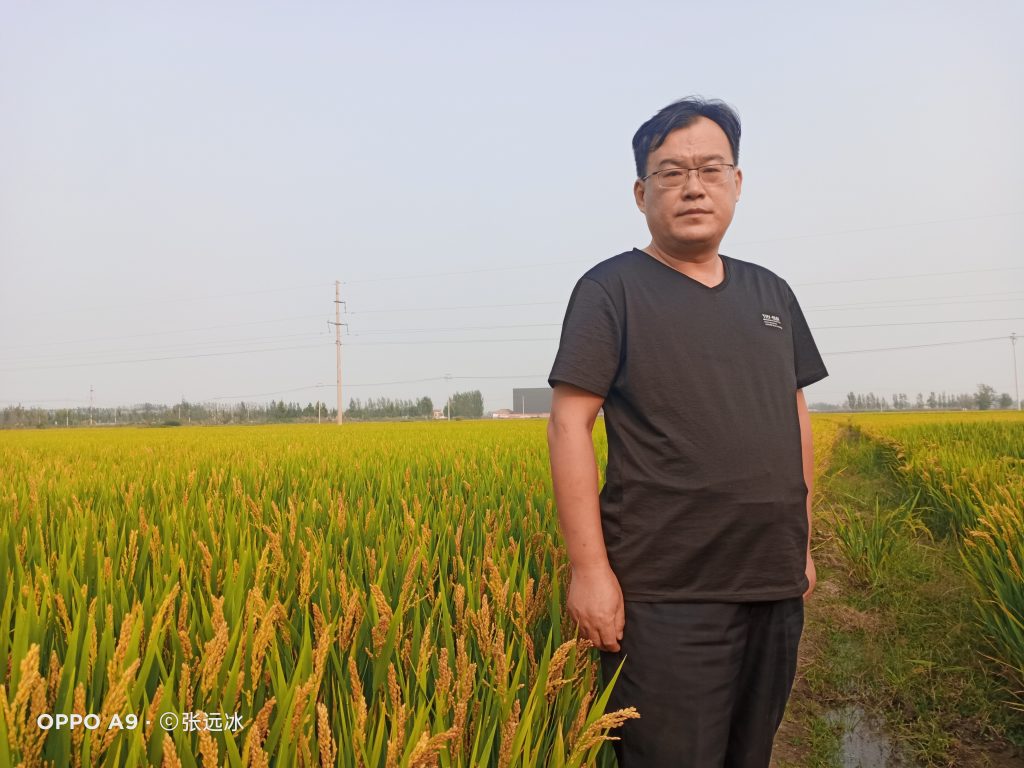
Middle aged Chinese man dressed in all black standing in a green field of grain. He has glasses and short black hair.
Yuanbing Zhang

Yuanbing Zhang (b. 1974), who is a Chinese poet and translator, works in a Middle School, Yanzhou District , Jining City, Shandong Province, China. He can be contacted through his email- 3112362909@qq.com.