This camera has an eye that cannot see
the act of toxic scrolling that can be
an agony of the mind that’s driven me
miles from “amour de soi” that’s all I need
to find my peace and spread prosperity
to those who I see and see me as rarity
These lenses can keep flashing filthy BANKNOT£S
for people who hide behind their idle followers
of photographs they’ve taken to promote
their “soulmates” with whom they’re asymptotes
projecting life as seen by the Kardashians
with selfies in a shell that’s rather porcelain
Insta-society needs velvet antidote
to filter trash and help one to self-love
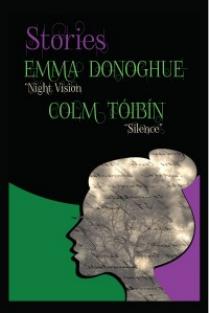
San Francisco’s well-known drama group Word for Word, which for 23 years has been staging short stories with ever-increasing theatrical sophistication, recently brought to the stage two finely wrought tales by Irish writers about Irish writers at SoMa’s Z Below. The results were a pleasure for both lovers of literature and of the stage.
Word for Word’s cunning device is so obvious one wonders why nobody ever thought of it before: take a good short story and stage it as a play, with every word spoken by a character in the story. The opportunities for theatrical magic are patent, and potent, and taken entire advantage of by Word for Word and its talented staff.
Tonight’s embarking (I saw it on April 1st) brought two stories, one by Colm Tóibín, the comfortable, fashionable middle-brow writer (“middle-brow” is sometimes mistakenly taken for a putdown, though it isn’t; a sturdy literary culture needs a strong middle-brow culture to keep the low-brow aspiring and the high-brow honest), based on an anecdote from the notebooks of Henry James. The anecdote was told to him by Isabella August, Lady Gregory—the Lady Gregory—writer, playwright and Irish folklorist, probably most famous in this country for her association with the poet W. B. Yeats and their mutual support of the celebrated Abbey Theater, now the National Theatre of Ireland. Henry James never worked up the anecdote into a story, but Tóibín uses it to draw out a tale about an affair between the unhappy Lady Gregory and the poet and womanizer Wilfred Scawen Blunt, and her long, puzzled savoring of what seems to have been the one great physical passion in her life.
I often think of September 29th, 2001 as my birthday. It was the first time I marched in Washington, DC, and in many ways was the culmination of a process that started about three years earlier when I found out about the School of the Americas (SOA), a Latin American military officers’ training facility located at Ft. Benning, GA. But that day in DC there were two demonstrations against the impending war in Afghanistan, and I participated in both.
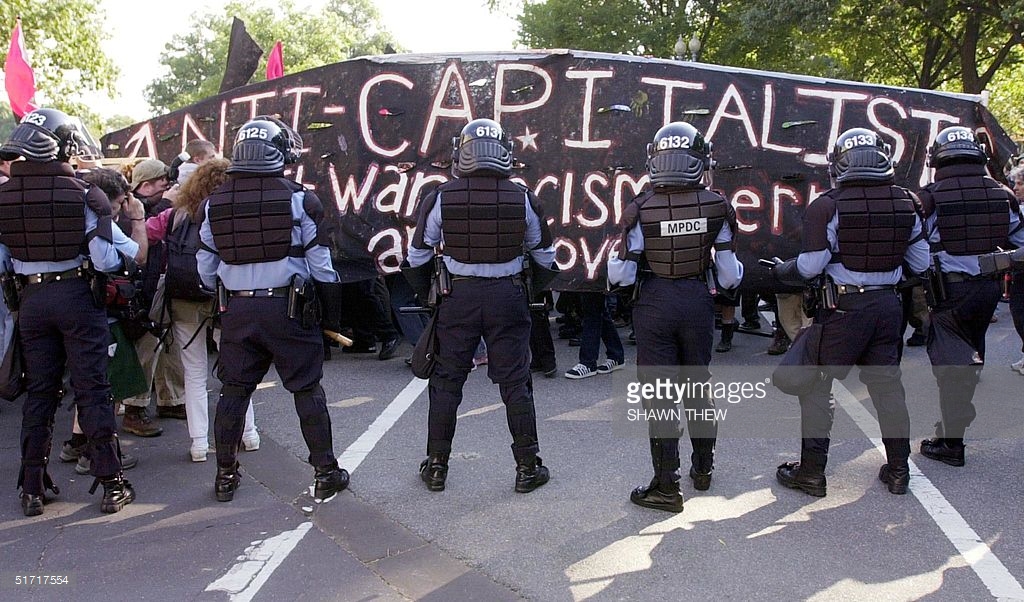
I had been to protests before, but nothing I had experienced in Cleveland, OH (Clevo) prepared me for the tense and sometimes violent Anti-Capitalist Convergence (ACC) march on the World Bank, which ended with hundreds of us getting detained in the plaza in front of the building.
In retrospect, of course, the differences make total sense. What’s demonstrating for the legalization of marijuana with maybe three hundred people mostly too stoned for any sort of serious shenanigans, or participating in a so-called solidarity rally while people on the actual front lines are breaking unjust laws elsewhere?
Tony LongShanks LeTigre a k a “GlamorTramp” here, guest writing this month’s editorial letter for the April 2016 issue of Synchronized Chaos! After a few years as a regular contributor, Cristina asked me to help out with editing duties this month and possibly ongoing. We have in mind a site makeover and enhanced graphics for the near future, as well, so stay tuned for the further evolution of this longrunning international literary webzine!
After mulling over this month’s theme, I sensed a lot of pain, longing for escape in various ways, yearning for the past and for people of the past (our former selves as well as others), the arrow of time that points forward and leaves us often looking mournfully backwards — all of this no doubt reflecting, or enhanced by, the seemingly endless strife that threatens to eclipse the better world we hope the human race can get to!
This month we have inquiries into the nature of poetry by one of the most acclaimed and dedicated American authors working today, Christopher Bernard, and of mathematics and its relation to philosophy by my humble self.
Michael Robinson graces us with three short poems that express yearning for his deceased mother, “dreams of peace without the sounds of gunfire or the cries of death,” and a sepulchral longing for death and escape. His lean lines bristle with dark emotion, inspired also by systemic racism as related to black folks in particular, drug addiction and related dolors of street life.
Nowadays it seems that humans are our own worst enemies much of the time, but an essay by Rui Carvalho covering Alejandro González Iñárritu The Revenant (2015), a film concerning “a frontiersman on a fur trading expedition in the 1820” who “fights for survival after being mauled by a bear and left for dead by members of his own hunting team” (per IMDb), reminds us that there was a time when humans struggled with nature and its animals as much or more than with one another. The theme of The Revenant, as distilled by Carvalho, is that “Life is like a tree: although a branch might be lost, the important is to realize the tree remains strong as long as the trunk remains firm and supports all the other branches.” Carvalho illustrates his review with original artwork, as well.
While others cry into their pillows and long for yesterday, Kristen Caven keeps things lighthearted and upbeat with some retail therapy in “Take a Walk in My Scarpa.” Her ode to the material luxury of Italian leather also raises the interesting issue of language and the dissonance it can cause when a word doesn’t sound the way we think it should.
Joan Beebe, on the other hand, finds that the best things in life are free, like “The rising and setting of the sun,” as she titles her poem celebrating our celestial mother, the way the Sun nourishes us (and never more so than on the threshold of spring, which I for one am very much enjoying right now in the Pacific Northwest of the U.S.A.!)
K.C. Fontaine confers upon us a melancholy painting in the form of a poem, “Slow Suicide,” about a Pakistani painter whose studio is “a shrine to her lost self,” which seems to express a desolate present moment colored by nostalgia and regret.
Finally, we have a prose poem from Bangalore by Aditya Shankar about travel and the mingled pleasure and loneliness of traveling, with reference to art work by painter Abanindranath Tagore, which again expresses a desire for sanctuary, to be safely holed up in control of one’s creative endeavors, and the fine image of home as “a museum of achievement.”
Cristina asked me to choose an image to accompany this letter. I went to the website of the New York Public Library, which recently released 180,000 new digital images from their archive into the public domain, and searched the term “escape.” I went with a racially charged image, as you can see above. The harsh reminder of our not-so-distant past seems to me necessary in light of recent and ongoing events pertaining to systemic racism, police brutality and non-accountability.
Sorry to be so dark… I really believe we’re going to come through all this into a better world! Getting there is just going to be a challenge.
Many dreams drift from cloud to cloud. Dreams of peace without the sounds of gunfire or the cries of death. I watch the moon as it sinks behind the horizon, and I wonder, when will my nightmares of living in the inner-city end? Watching the peacocks’ feathers blooming, I lie quietly in my grave — and peace has found me.
* * *
Black Boys II
Angry at life and angry at a system that keeps them incarcerated to a promise of a life without body piercings and tattoos; but hope is lost from a life spent avoiding the police. Mothers addicted to crack cocaine lie upon urine-strained mattresses. Some escape this life, and climb and climb and climb, and finally reach the safety of the mountains. And it is there that love flourishes; there that sanctuary is found. Beyond the stars that glow at night. A soul no longer thirsts for the safety of home: no longer in the heat of the streets.
* * *
Mother II
I want to send flowers to my mother, but she has passed away. I would like to visit her her grave and let her know that I have finally found the better side of life. There is a place on earth which reflects heaven. No longer do I cry into my pillow.