I’ve waited my whole life for this. It’s the state championship game and we are down by one point. I dribble past the midcourt line while the crowd is counting down the seconds.
“Five! Four!”
Sweat drips in my eye but I can still see Devon open and waving for the pass. He’s supposed to take the last shot, but he doesn’t understand. This is my moment. I can already see that championship ring on my finger.
“Three! Two!”
This is it. I jab step and drive, successfully getting around the defender. With a victorious smirk on my face, I jump in the air, raise my elbow, and release at the top of my jump just like coach taught me. The ball begins its perfect arc towards the rim and I can feel the whole gym watching me in my moment of glory.
“Mark wants to beat your ass,” Julian had warned me at the beginning of the school day.
More like Mark is going to beat my ass. Everyone knows I can’t fight. I sit in my seat wondering what will happen next.
Julian sees my worried face and says, “Relax, I got your back.”
The teacher walks out and I can feel Mark watching me.
Rachel whispers, “It’ll be really funny if you win,” into my ear from her seat beside me.
I turn and Mark is in my face. He pushes me and I instinctively push him back.
He hits me. Then I’m on the ground. Completely disoriented.
I wait for another punch to come but it never does. I finally regain my senses and get up to see Julian holding Mark with his arms pinned behind his back.
“If you are going to do something, do it now,” he says, struggling to hold him.
I hit Mark three times with my left hand then he elbows Julian and breaks free. He charges at me and before I can react his fist connects with my jaw.
i’ve got bumps and bruises
scratches and scrapes
on most every inch of my skin
i’ve got a heart that cracks a bit
with every smile
because it can only take so much
but the cracks aren’t always so malicious
aren’t always seeking to destroy
the cracks
they’re a window
the tears and rips
let a little light in
when i need it most…
“The first person to go to Mars is probably alive today.”
Beth Rogozinski, founding member of San Francisco State University’s multimedia studies program and founder of Transmedia SF, a transmedia agency and studio, and Dr. Jan Millsapps, SFSU professor of cinema, made this bold pronouncement during their July 15th enrichment lecture at Chabot.
Both speakers discussed the history of human space travel. So far 537 people have entered outer space, and 57 of these were women. 12 people have walked on the moon, and all of these were men.
However, the design of some upcoming plans for Mars exploration has different goals than those of the Apollo moon missions. The idea will not simply be to visit the planet for the sake of scientific research or for pride in having reached the destination, but to go with long-term colonization in mind. This will necessarily require welcoming a larger and more diverse group of astronauts and mission support crew.
“Men went to the moon, but everyone will be going to Mars,” said Rogozinski.
From Elsie Augustave, author of the Haitian immigrant family saga The Roving Tree, which is available here: http://www.amazon.com/The-Roving-Tree-Elsie-Augustave/dp/1617751650/
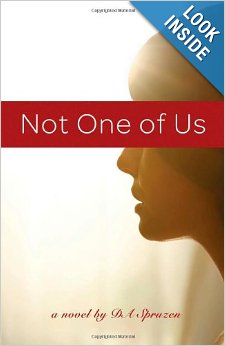
Dorothy Spruzen’s Not One of Us
Life will never be the same for the Salton Slaves after one of them has been murdered and another assaulted. The incident marks the beginning of a life changing experience for the socialite ladies. Not One of Us is the story of a community taken into hostage as they try to determine who is the cold-blooded murderer that kills everyone who gets on his way? The novel is also a story of dualities: Salton and New York, middle-class and low-class, loyalty and betrayal, violence and tenderness, all of which is expressed in the first and third person narration. Dorothy Spruzen has written a novel that provides insights into the mind of a murderer whose life is marked by childhood traumas and the need to be a respected person. It is entertaining and examines humanity in an engaged yet detached manner. Not One of Us is available here: http://www.amazon.com/Not-One-Us-D-Spruzen/dp/146102062X/
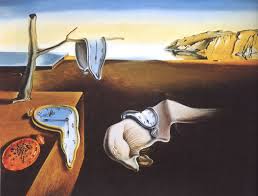
Greetings, readers, and welcome to August 2014’s issue of Synchronized Chaos Magazine. Even as we look to the future, we sometimes find that our pasts cast long shadows. This month, as in Salvador Dali’s famous painting with the melting clocks, we acknowledge the Persistence of Memory.
Elizabeth Hughes, in her monthly Book Periscope review column, describes Lynn Snyder’s play collection Blackmail, whose contents, like the dramas of ancient days, deal with universal themes such as official corruption and tragic romance. Uniquely, though, the works are intended as much to be read in book form as to be performed. Oral performance would be more in keeping with the history of drama as an art form, but Snyder is innovating in order to make her work more accessible to more people, as live performances can be expensive. Her fresh satirical humor also makes her work unique.
Hughes also reviews Mary Mackey’s new poetry collection Travelers with No Ticket Home,which explores Mackey’s recent visits to Brazil in a dreamlike, hallucinatory manner. Mackey evokes the natural beauty of the area and the resilience of the favela town residents while acknowledging the real threats to the area from gang violence and the destruction of the rainforests. She honors Brazil’s past without romanticizing the nation.
Neil Ellman’s poetic responses to modern art pieces stand out within this issue because of how they reflect the theme through contrast. We see what happens when objects and sensations exist on their own, examined in themselves without context. In a somewhat similar vein, Thomas Smith, in his short story “15 Minutes” explores how reality television and instant celebrity status conferred upon random people renders social interactions false by depriving them of their natural context. Within the culture of reality shows and competitions, people are encouraged to aspire to get suddenly ‘discovered’ rather than to build up a career and legacy gradually over time. Then, once discovered, as with Thomas Smith’s protagonist, they find themselves acting in a certain way because people want to see a certain type of character or plot twist rather than having the interaction arise naturally out of their relationships.
Llyn Clague’s new poetry collection, The I in India and Us, as reviewed by Christopher Bernard, illuminates both the ugly poverty and creative beauty of India, as Mary Mackey does for the parts of Brazil she has visited. Also, Clague suggests that not every idea or value we hold has to be completely personal and subjective. Maybe we can adopt some of the ethos of the older days, when, some people, even if they were wrong, were less afraid to have a mission, to decide to be something specific, to say and mean something.
This month’s issue and contributors attempt to become and say something, while reaching into their personal and our collective pasts for inspiration. We invite you to join them in reflecting on how who we were has made us into who we are.