First, a few announcements. Sandra Tabac invites poetry and art submissions for an international Hands of Love anthology.
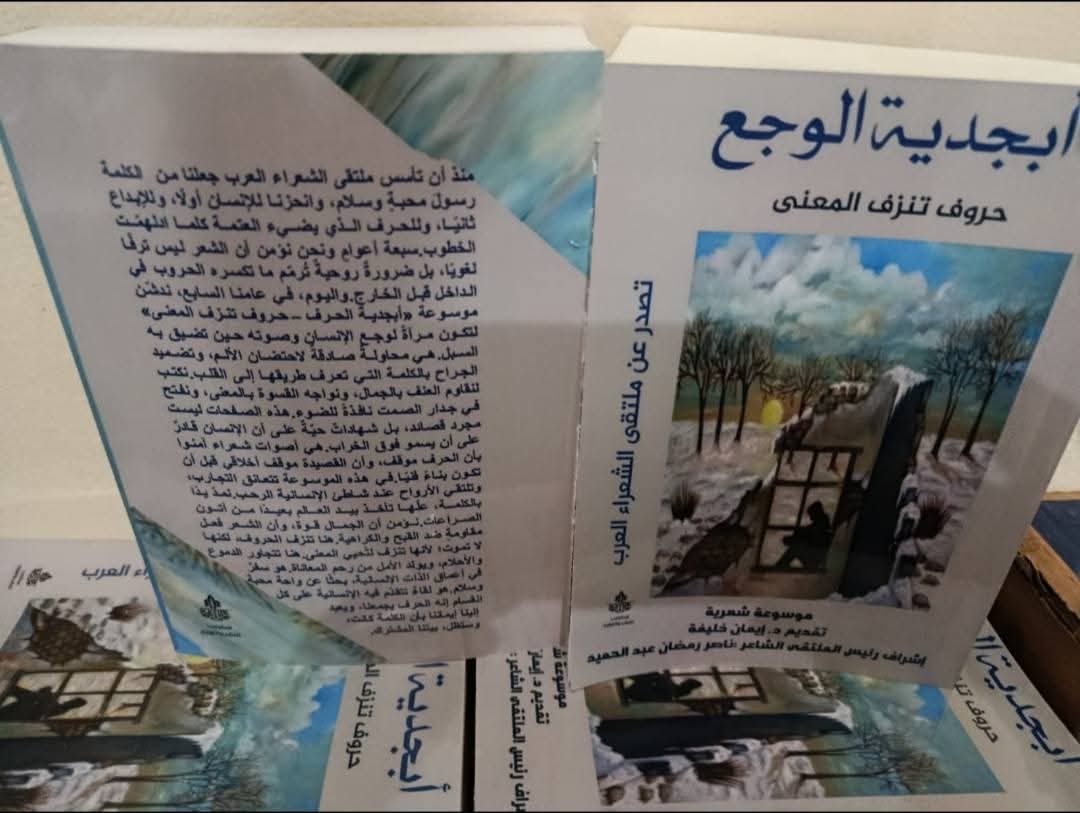
Also, The Arab Poets Forum has recently published the book “Alphabet of Pain… Letters Bleeding Meaning”, a remarkable poetic encyclopedia featuring 212 poets from around the world, presented in two volumes spanning 800 pages.
The cover artwork is created by Iraqi visual artist Nada Askar, and the cover design is by Lebanese artist Layla Beiz Al-Mashghariya. Several Synchronized Chaos contributors, including Taghrid Bou Merhi, Mirta Ramirez, Eva Petropoulou Lianou, Dildora Xojyozova, Binod Dawadi, and Kujtim R Hajdari, are published in this collection.
Now, for this month’s first issue, Where Memory Meets Tomorrow.
Image c/o Yana Ray
This issue is beautiful, rich, and international. There’s a strong throughline of memory, devotion, identity, and renewal running across continents and genres.
For this month’s first issue, we are proud to present a collection of voices that span styles and topics, each offering a meditation on what it means to live, remember, and hope.
Vo Thi Nhu Mai opens with a heartfelt tribute to her mother, honoring the quiet love and lifelong dedication of a teacher. From Uzbekistan, Orzigul Ibragimova calls her people forward with intelligence and determination, while Namozova Sarvinoz Erkin qizi explores the nation’s ongoing transformation toward an eco-friendly, energy-efficient future. Sevara Abduxalilova reflects on the legacy of Mirzo Ul’ugbek, the great Central Asian astronomer whose vision still resonates across time, as Botirova Gulsevar Muzaffar qizi honors political leader and poet Zahiriddin Muhammad Babur, known for promoting education and national development. Munisa Islomjonova celebrates her native Uzbekistan through verse.
The power of words themselves comes into focus in Harinder Cheema’s celebration of poets as messengers of peace and inspiration, echoed by Soumen Roy’s prayer to poetry as a source of healing and transcendence. Jamoliddinova Dilnozaxon Mirhojiddinovna discusses how countries and social groups form communication and speech traditions. Olimova Shahina Botirjon qizi discusses strengths and weaknesses of different methods for teaching foreign languages. Hamdamova Sevara Saidmurodovna outlines modern philological theory about the power of language beyond literal meaning. Türkan Ergör sharpens her focus to highlight the pain of a world without trust and truth. Rev. Dr. Jitender Singh speaks to human unity across race, color, nationality, or creed. Manik Chakraborty and Mesfakus Salahin and Mahbub Alam each issue urgent calls for peace, reminding us of our shared humanity in a fractured world. Graciela Noemi Villaverde depicts the pain of words felt but never sent. Christina Margeti speaks to war and childhood, what humanity destroys and what we strive to protect. Faleeha Hassan reviews Saudi directors Meshal Al-Jaser and stars Adwaa Badr and Yazeed Al-Majioul’s film “Naga” (Purity) which, through the tragedy of a betrayed and rebellious young woman, shows the weight of a society imploding upon itself as it punishes the existence of femininity. Asadullo Habibullayev brings violence down to a smaller scale, reminding us that how we treat each other at the interpersonal level matters. At the same time, poet Nilavronill decries how poets have failed to stop the world’s violence with their words.
Themes of love and devotion weave throughout the issue. Sandro Piedracita reflects on the distinction between selfless love and possessiveness, while Eva Petropoulou Lianou honors the tender, enduring bond between mother and child. Nazokat Jumaniyozova offers a moving elegy for her grandfather, and Danijela Ćuk pays tribute to Eva Petropoulou’s tireless support of fellow writers. Saparboyeva Laylo Xajibay qizi relates a folktale-like story of grief, justice, fate and renewal. Joseph Ogbonna expresses his spiritual devotion in the Easter season and his thanks for Christ’s humble sacrifice. Maqsudova Anora Alisherovna’s poem urges heartfelt sincerity and reflection when people observe Ramadan. Sarvinoz Bakhtiyorova relates the tale of a now-adult son who sacrificed his own body for his mother. Jahongir Murodov expresses his tender care and respect for his mother. Xojamurodova Nigina urges sensitive souls to continue loving and not lose heart in a brutal world as Ms. Kim Sun Young shares how longing for a lost love is persistent, like a weed in her heart and Do’sanova Dilnoza Xolmurod qizi reflects on heartbreak and regret.
Other contributors turn toward time, myth, and the natural world. Ananya Guha evokes deep, mythic landscapes, while Sayani Mukherjee and Lan Xin draw on the imagery of spring—its motion, memory, and rebirth. Ankica Anchie Biskupović finds unity in flowing water, and Elaine Murray immerses herself in nature’s quiet revelations. Ms. Koo Myongsook reflects in stillness on a mountain as a metaphor for life. David Kokoette’s desert journey and Duane Vorhees’ meditation on absence and longing remind us of the inner landscapes we all traverse. Maja Milojkovic laments the steady decline of her powers due to old age. Aziza Jorayeva expresses heartbreak, loneliness, and grief. Dr. Prasanna Kumar Dalai speaks to autumn, night, longing, and confession. Siyoung Doung expresses the mystery of our existence and the beauty of finding small moments of beauty and meaning. Dr. Tomasz Laczek urges us to make the most of the lives we have and live for something that matters.
This issue also engages with contemporary life and its tensions. Abdumaxamediva Gulchexra looks at the positive and negative effects of American cultural influence on traditional Uzbek culture. Patricia Doyne sharply critiques the current U.S. administration, while Bill Tope employs satire to confront its institutional excess and brutality. J.K. Durick reflects on individuals navigating vast, impersonal systems, even systems invented for fun, such as professional sports, engaged yet estranged. Peter Cherches plays the absurdist blues for us in his poem that’s equal parts exile ballad, street song, and darkly comic cabaret. Christopher Bernard kicks off the first installment of his children’s story Otherwise, with a mixture of philosophy, mystery, and middle-grade energy.
Artistic memory and cultural reflection round out the issue. Mark Young presents his signature altered geographies, while Brian Michael Barbeito revisits the world of hockey through personal recollection. Mykyta Ryzhykh captures the intensity of first awakenings—moments that divide life into before and after. Jacques Fleury offers a haunting vision of beauty, resilience, and power embodied in a goddess who still fades from view while he can only watch. Ms. Im Sol Nae looks at death not merely as an ending, but as a transformation, a communal aesthetic experience.
Together, these works form a tapestry of voices, which are urgent, reflective, and deeply human. They remind us that across distance and difference, we are united by our search for meaning, our capacity for love, and our enduring hope for renewal.
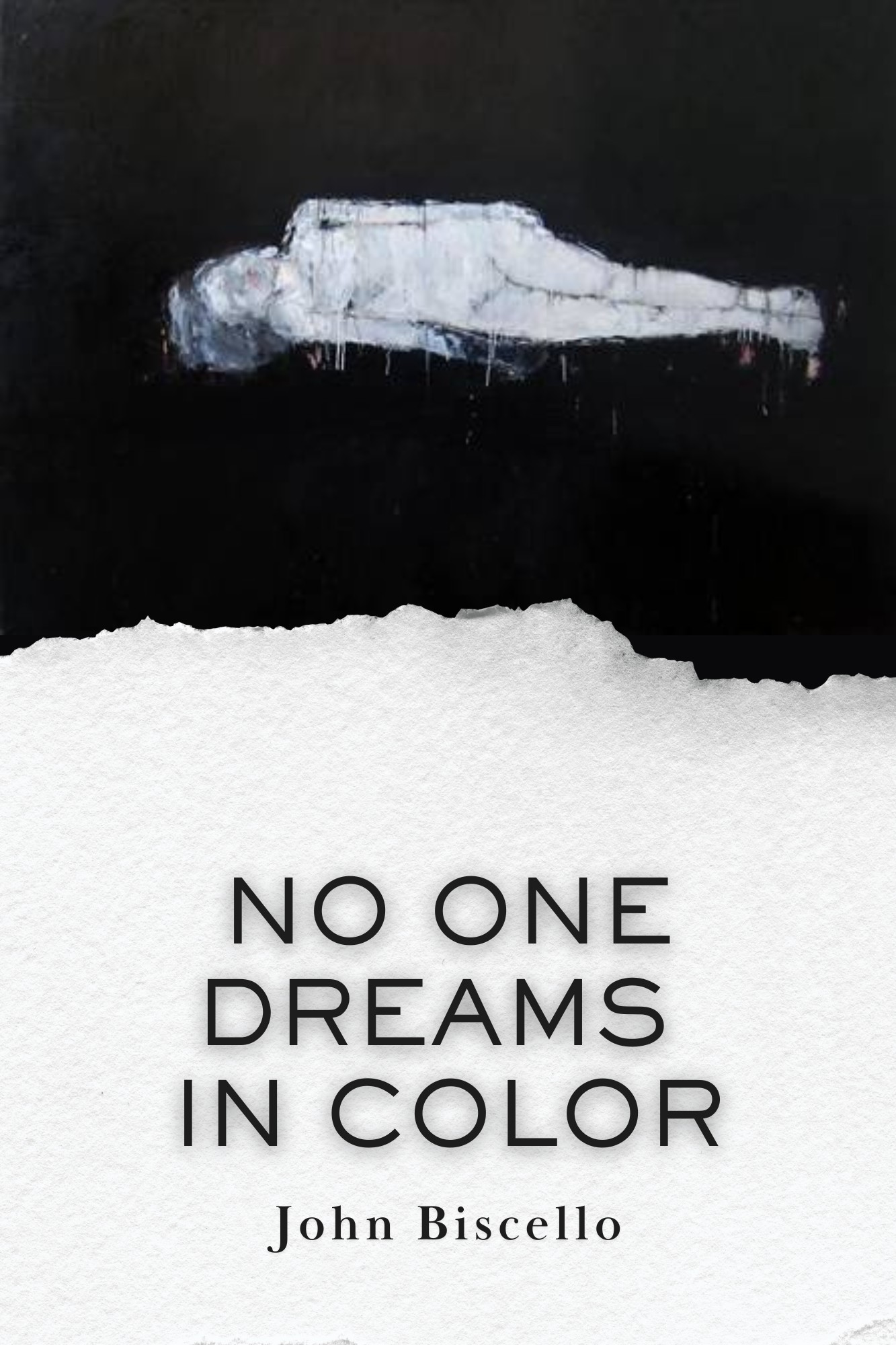
John Biscello’s No One Dreams in Color begins as an artistic mystery and gradually morphs into a tone poem. The novel speculates on the nature of dreams and reality, the psychological effects of loss and grief, and the creative, and destructive, power of stepping out of consensus reality into the surreal.
Loss provides an emotional backdrop to the narrative. The main character finds himself strangely comforted by an indie film entitled Wendigo after the loss of his mother and his first girlfriend, then travels from Brooklyn to a small New Mexico town to find out what happened to the filmmaker, who has gone missing. He interviews an eclectic assortment of characters, including past girlfriends and artistic collaborators of the filmmaker, finding himself immersed in the town’s culture and mysteries. One mystery is that many other people have strangely gone missing throughout the town’s history.
Gradually, the story becomes less and less linear and more focused on images: a dancer in a torn leotard, a young teen on her bike with her face painted like her favorite fantasy character, a woman from imperial Russia perennially dancing in a disused ballroom. Time itself becomes fluid, shown through a bar’s clock that never tells the right time and by the main character completely forgetting a large part of his year. This reflects the way grief and loss warp our experience of time and memory, but also suggests that delving deeply into the surreal, into one’s own psyche and creative process, can cause you to “disappear” into your own world, away from those who love and need you.
Dreams, and the motif of sleeping and waking, play a major role in the tale. They are the first clue this novel is something more than realistic fiction: a woman and her boyfriend work at a facility dedicated to recording and analyzing dreams. The woman suffers from insomnia and can’t dream, while her daughter moonlights as a superhero while sleepwalking. Her boyfriend, a higher-level researcher, is privileged to be able to observe some of the recorded dreams, and observes that they might involve some of the same cinematic features as early film. We see dreams linked to art, amid an atmosphere heady with wine, weed, and talk of Borges, Jung, Bob Dylan, and the Beastie Boys.
The woman’s daughter loves comic books, which the book suggests may be our modern version of a cultural mythos. Her dreams are often nightmares of werewolves: not all dreams are sweet. Near the end, she sneaks out at night and burns down the dream laboratory, believing she’s acting at the request of a figure in the dreams. This highlights the destructive potential of losing control of oneself in the dream world, but could also suggest that dreams and the subconscious resist full, rational explanations.
Yet, the dream researcher’s character seems positive and thoughtful, not a stereotypical “mad scientist” or someone depleting dreams of their magic through over-analysis. He shows sincere compassion for his girlfriend, even when she wants to end the relationship, and is motivated to study dreams because of his genuine belief in their importance and beauty. He makes one of the most powerful statements about the dream-world in the entire novel, that perhaps when we go to sleep, we should shrug off our waking world as “just a dream.” His scientific study and other characters’ artistic endeavors and deep personal experiences seem to all have value in helping us understand ourselves and our world.
Children, and relics of childhood, recur throughout the story. Wendigo’s major scene consists of a man looking at photos of a little girl, and in later scenes, a boy in a party hat celebrates his birthday and another girl plays a fanciful game of hopscotch. The main character connects with his own childhood in ways both endearing and off-kilter. He eats peanut butter sandwiches in his hotel room as he did while a boy, writes a horror story about children playing hide-and-seek, and wakes up sucking his thumb after dreaming of a sexual encounter. No One Dreams in Color suggests through this motif that keeping some of one’s childhood imagination may make you as strange and unpredictable as charming, but that it may be essential to artistic creation.
A legendary monster in the tales of some of America’s Indigenous people, the Wendigo is linked to desolate winter landscapes, destruction and cannibalism, and being lost and isolated. In the imaginary film within this novel, a woman is slowly consumed by a winter landscape, while the male lead also loses himself to confusion and perhaps grief. This is perhaps a dramatization of the risks of entering into the level of private, sustained thought needed to create original art.
Yet, the novel still points to the vast power of the personal and shared cultural subconscious to create beauty from raw materials. The title, No One Dreams in Color, reflects the dream analysis lab’s observation that dreams appear black and white on their screens while dreamers can remember vivid colors. Our imaginations fill in much of the richness and texture of our dreams, creating the reality that we see around us. Through the continual motifs of philosophy, art, literature, mythology, and music, Biscello suggests that this may be as true of our waking as of our sleeping hours.
No One Dreams in Color was a rich, textured, and thoughtful read!
Poet Ms. Koo Myongsook was born in Nonsan, Chungcheongnam-do, South Korea. She graduated from Sookmyung Women’s University with a degree in Korean literature and later earned her Ph.D. in literature from Bielefeld University in Germany. She received the New Writer’s Award from the monthly literary magazine Simunhak in 1999 and from Poetry and Poetics in 2009.
She has held various academic and cultural leadership positions, including Visiting Professor at Soka University in Japan, Visiting Professor at Waseda University, Director of the Sookmyung Leadership Development Institute, Director of the Museum and Cultural Center, President of the Korean Women’s Literary Association, Chief Editor of Our Literature, Chairperson of the Korea Gender Equality Education Promotion Institute, Policy Advisory Member for the Ministry of Gender Equality and Family, Mediator at the Seoul Family Court, Chief Editor of Siseon, Director of the Literature House Seoul, and Vice President of the Korean Women’s Literary Association.
Currently, she is an Emeritus Professor at Sookmyung Women’s University, President of the Glocal Women’s Network, Director of the Korean Women’s Organizations Council, Director of the National Museum of Korean Literature, Advisory Member for Korea Women Consumers News, Senior Vice President of the Seocho Cultural Center, and Vice President of the World Poetry Literature Society.
Her poetry collections include How Many Bushels of Rice Has That Woman Washed to Cook?, Walking, Life Is, Sky Tree (selected as an excellent literary book in the 2014 Sejong Book Program), The Art of Flowers, You, Pietà, Heartfelt, Asking the Spring River off the Way of Poetry, and Where Do Clouds Go?.
Her academic publications include Understanding Korean Women’s Literature, The Horizon of Han Moo-sook’s Literature, Women Communicating Through Literature, A Collection of Women’s Literature (From Liberation to the 1960s) Vol. 1-6, Diaspora and Korean Literature, War-time Literary Discourse and the Reconstruction of Collective Memory, and edited works such as Anthology of Women’s Short Stories from the Liberation Period, Anthology of Korean Women’s Essays (1945-1953), Anthology of Korean War-Era Women’s Literature, Bibliography of Works by Korean Women Writers: From Liberation to the 1960s, and Selected Works of Representative Korean Women Poets.
She has received numerous awards, including the Deputy Prime Minister and Minister of Education Award, the Manhae “Nim” Poetry Award, the Excellence Award from Poetry and Poetics, the Seocho Writers’ Association Grand Prize, and the Grand Prize from the World Poetry Literature Society.
“To Be Born a Woman in the Desert of Sacred Masculinity”
I never imagined, while watching the film “Naga” that many of its scenes would remain in my mind for so long. I usually forget details of films I watch, and only the story remains in my memory. However, I believe that the fact that all the details of “Naga” remain in my memory is due to the film’s strong connection to reality.
From the very first scene in “Naga” the viewer is driven to fear the lived reality: a man storms into a hospital in 1975 and commits a massacre, simply because a “male” doctor delivered his wife, who had a difficult delivery and nearly lost her life. It’s a terrifying moment, but it’s not a coincidence; it becomes the key to everything that follows in the film.
Although the rest of the story seems, on the surface, to be unrelated, the film focuses not on the events but on the mindset that produces them. From here, the threads of events begin to unravel. Between Past and Present: Identity Crisis and Inherited Norms
What “Naga” masterfully creates goes far beyond a simple narrative through characters moving from point A to point B. Through the journey of its heroine, Sarah, the film reveals a society caught between eras, stuck in a state of cultural stagnation, where modernity struggles to break free from its entrenched traditional rules. The violent opening scene is not an isolated incident; it mirrors a complete generational and psychological crisis.
Although the camel appears later in the story, it is the film’s central symbol. The angry camel, who lost her young child to the recklessness of Sarah’s lover, Saad, embodies many things: the silent mother, the wounded community, and the unresolved collective trauma that strikes the wrong targets. Sarah, who runs away from her father’s house to attend a desert party, finds herself in a surreal confrontation with the ghosts of patriarchy. The camel is not her enemy, but her reflection. Both are victims of a reckless and arrogant masculinity, yet both are condemned as dangerous, brutal, and in need of self-control.
She confronts her fear of men, her shame about her femininity, and the fragility of emotional trust. In that brief period, she realizes the hollowness of her lover’s promises, the complexities of her seemingly gentle father, and, most importantly, the deep rage of a mother figure betrayed by society. The camel becomes a merciless, incurable, and furious mother.
In the final scene, we see Sarah running into the desert, pursued by the enraged camel. But the real pursuit is symbolic—she is escaping from memory, from inherited guilt, from societal control. But this is not an escape; it is a transition, as this pursuit symbolizes her liberation from the “unconscious” in which she was trapped. She may not defeat the camel, but she survives. This survival, this breathless emergence into the present, is victory. It’s not a neat ending, but a cry of “I’m still here.”
The true audacity of “Purity” lies not in the cigarette or the lover’s encounter, the removal of the veil, or attending a mixed-gender party in a remote location, the risky dialogue, and the female escape on motorcycles, but in its exposure of internal divisions. The film dares to expose the psychological cost of a society that no longer functions.
It is a film daring in its cinematic language: the inverted opening shot, the raw chase scenes, the visual poetry of light and space, and the precise rendering of desert lighting, whose expressions convey everything, even silence.
The music blends horror and humor, defies linear construction, and even the few extended scenes (like the camel chase or the police chase) feel part of a wider, more emotionally chaotic world. In short, “Naga” is not just the story of a rebellious girl—it’s about a society suffocating under its weight, about mothers crushed and resurrected as monsters, about love betrayed, and about women punished not for their sins, but for their pursuit of life. The film is about pent-up anger, reluctant awakenings, and the urgent question of identity in a world that punishes femininity for its mere existence.
………..
Naga is a Saudi film, debuting on Netflix on December 7, 2023. The film is written and directed by Meshal Al-Jaser and stars Adwaa Badr and Yazeed Al-Majioul.
She is a poet, teacher, editor, writer, and playwright born in Najaf, Iraq, in 1967, who now lives in the United States. Faleeha was the first woman to write poetry for children in Iraq. She received her master’s degree in Arabic literature and has now published 27 books. Her poems have been translated into English, Turkmen, Bosnian, Indian, French, Italian, German, Kurdish, Spain, Korean, Greek, Serbia, Albanian, Pakistani, Romanian, Malayalam, Chinese, ODIA, Nepali and Macedonian. She is a Pulitzer Prize Nominee for 2018 and a Pushcart Prize Nominee for 2019.
Faleeha is a member of the International Writers and Artists Association, a winner of the Women of Excellence Inspiration award from SJ Magazine 2020, the winner of the Grand Jury Award (the Sahitto International Award for Literature 2021), a member of the Women of Excellence selection committees for 2023, a winner of a Women in the Arts award for 2023, a member of Who’s Who in America 2023, on the judging panel for the 2023 Sahitto Award, the winner of the HerStory Award from the Women’s Federation for World Peace New Jersey 2024, a Cultural Ambassador between Iraq and the USA since 2018, a Cultural Ambassador and worldwide literary advisor for PEN CRAFT Bangladesh.
She is also honored to be appointed as a 2024 Peace Ambassador by the Universal Peace Federation and to be a member of The Founding Mothers Global Women’s Congress 2024. You may email Faleeha Hassan at d.fh88@yahoo.com
Abstract. Foreign language teaching has developed in past few years as a result of the advancement of new digital and technological devices as well as the interaction of artificial intelligence. This article explores several both contemporary and traditional methods and approaches to teach international students, such as analysis of Grammar Translation method and Communicative language approach.Each approach and method is analyzed in terms of theoretical basis, effectiveness and practical implementation. Additionally, this article emphasizes on both advantages and disadvantages associated with these methods, taking account on students autonomy, current trends in learning language.
Introduction. Foreign language education is crucial in today’s fast-pasted world, where multilingualism is seen as a main concept of both personal and professional success. Language acquisition is a complex process, and educators should be devised with multiple and interactive methods to navigate students. Over the years, teachers have tested numerous methods to find most suitable and applicable approaches to teach students. This article provides suitable and interactive methods of teaching foreign languages and examines their principles and practical implementations.
Methodology. 1.Grammar Translation Method.
Grammar Translation Method is commonly used in traditional classroom, teachers teach grammar rules through using both native and foreign language. This method is mostly appropriate for beginner and elementary students because they are in primary stage in learning language. Grammar Translation Method is not new, it has been used by teachers for many years. It was called Classical Method since it was first used in teaching classical languages: Latin and Greek. In 20th century, the method was used for the purpose of aiming students to read and comprehend the text in foreign language. It was supposed that through teaching grammar rules of target language students become more familiar with grammar of both native language and foreign language, that this familiarity could enhance their both reading and writing skills.
Positive sides of GTM:
Enhances reading and writing skills. GTM is very effective for overall understanding of texts, especially in literature. Students will be able to interpret various level of complex grammar sentences without any difficulty.
Expands vocabulary source. During learning foreign language with GTM, students come across different words and find their meaning if they don’t understand. It helps to learn meaning of new words both in native and target language.
Easy application. GTM does not require any special equipment and atmosphere for teaching. Teachers could use this method in large classroom without difficulty.
Increase analytical thinking. During the lesson, students learn to analyze different structures, that helps to enhance their cognitive and problem-solving skills.
Negative sides of GMT:
Lack of speaking practice. GTM is mainly focuses on grammatical rules, that is why students rarely practice speaking and they can not communicate in real-life situations.
Overemphasis on Grammar. Students practice grammar too much, it makes the lesson boring as well as limits the development of practical skills: listening and speaking.
Decrease student’s motivation. Students can not see any improvement in their practical skills, such as speaking, because of it they may lost their interest in learning language. During the real life, students want to show their knowledge with speaking in foreign language, however if they only learn grammar rules, they may not capable of communicating.
Communicative language teaching. CLT aims broadly to make communicative competence the goal of language teaching. This approach mainly focuses on speaking and real-life communication skills in target language. Students need to know how to speak fluently and efficiently in front of people and how to use language for both educational and practical purposes. CLT introduces language functions and practical applications of target language. The teacher facilitates communication in classroom, the role of teacher is to create situations that force students to apply language in speaking. CLT can be used with authentic materials, language games, role-plays, stories, scrambled sentences.
Positive sides of CLA:
Student-centred learning. CLT gives an opportunity to show student’s own potential and speaking skills. Learners actively participate in debates, discussions, role-plays and through these activities they will practice speaking.
Integration of skills. During CLT approach, students do tasks which are devoted to listening, reading, writing and speaking skills. This helps them to learn all skills together, increase general knowledge in target language.
Makes learning environment engaging and interactive. Through teaching with CLT, teachers motivate to be engaged in lesson with using different tasks, such as role-plays. While participating in role-play, students try to adapt to scene and communicate with their classmates. Besides, students do roles, as well as dress for the scene. It makes the lesson more captivating and students learn to how to communicate in different situations.
Negative sides of CLT:
Difficulty in large classroom. Teachers could not do any special tasks in large classroom, because of limited time. CLT tasks requires more time and teachers may not manage the time.
Requires skilled and trained teachers. For using CLT teachers should have good communication skills, and they need to be well-trained. In CLT, students focus on communication skill, but teachers should correct their mistakes carefully without interrupting student’s speech. This require both experience and knowledge.
Not all levels are ready for CLT. Some students, especially, beginners and elementary group students could not able to speak fluently. They do not have enough vocabulary source and confident to speak. Teachers may face difficulty in attracting all students to lesson.
Result and discussion. A total of 40 students participated in the study and were divided into two groups: a group trained using Communicative Language Teaching (CLT) and a group trained using the traditional (Grammar-Translation Method). Data were collected through questionnaires, observations, and tests. According to the results of the questionnaire, 70% of the participants considered the CLT method to be more effective, while 30% of the students preferred the traditional method. Students who studied using the CLT method were more active in the lesson and actively participated in group discussions. The results of the observation showed that in the class where CLT was used, students tried to express their thoughts freely, and about 60% of them actively participated in oral communication. At the same time, 20% of the students made grammatical errors, but this did not significantly hinder their communicative activities. On both written and oral tests, students in the CLT group scored an average of 86%, while students in the traditional group scored an average of 62%. This difference suggests that the CLT approach is more focused on the practical application of students’ knowledge.
Conclusion. The results of this study showed that the Grammar Translation Method (GTM) and Communicative Language Teaching (CLT) approaches have their own advantages and disadvantages. The GTM method is effective in in-depth study of grammar rules, written translation, and understanding of language structure. However, this method does not provide sufficient opportunities for developing speaking and listening comprehension skills. CLT, on the other hand, is characterized by involving students in real communication, developing their oral speech, and increasing their communicative competence. According to the results of the study, the CLT method increases students’ activity and develops their ability to use the language practically. At the same time, grammatical accuracy can sometimes take second place in this method. In general, both methods have their place, with GTM being effective in strengthening grammar and academic knowledge, and CLT in developing communicative skills. Therefore, it is advisable to combine these two approaches in the educational process.. .