1. Please share your thoughts about the future of literature. Also, when did you start writing?
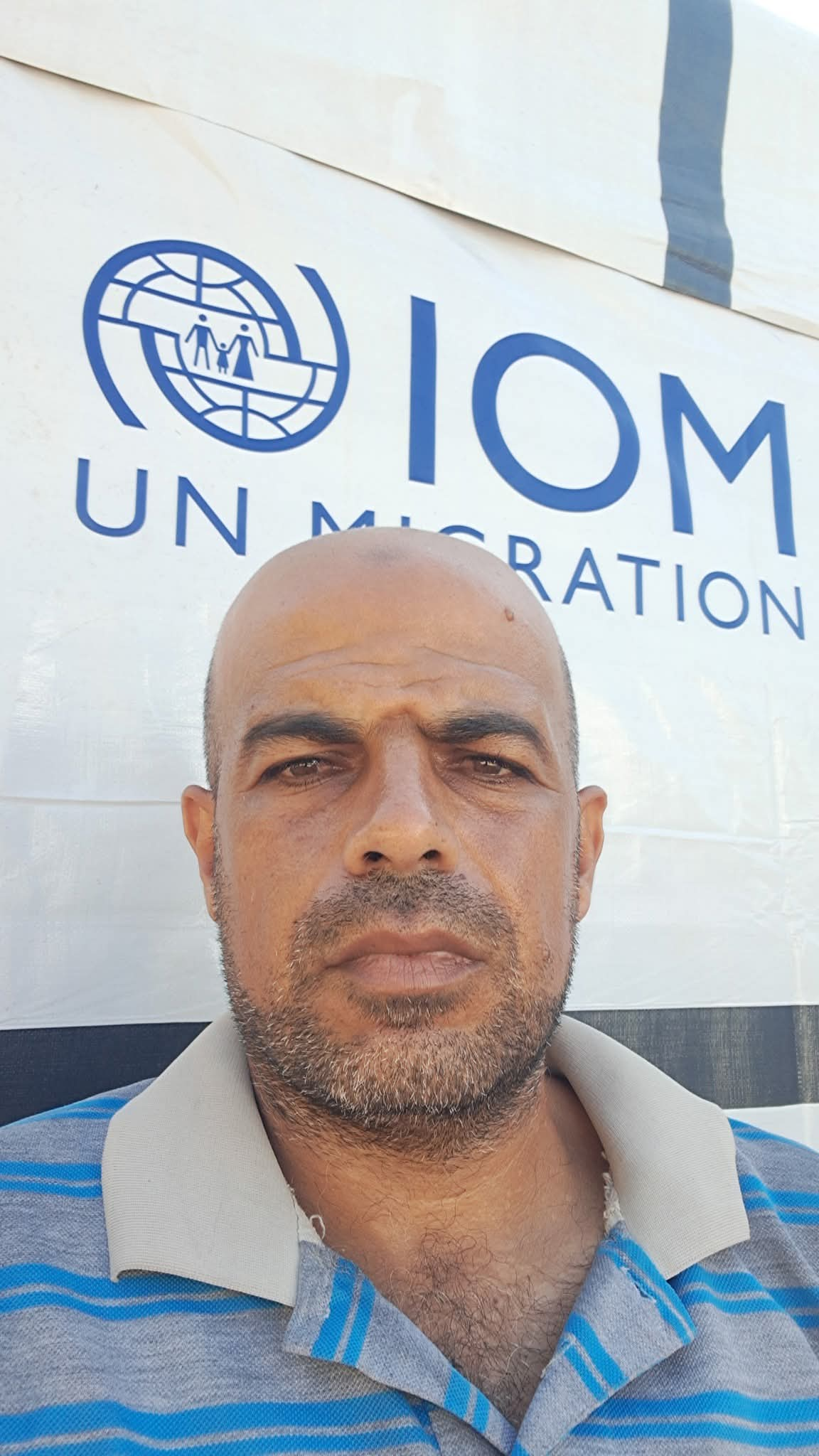
Actually, I’ve started writing since 2014 during the Israeli aggression on Gaza City. What inspired me to write poetry is the necessity to raise awareness about the Palestinian cause and convey a message to the Western world that Palestinians have been suffering since 1948 and we are looking for justice and peace.
2. The Good and the Bad. Which is winning nowadays?
I do believe that those who seek love and peace will win in this life because those who seek war will destroy themselves. Peace will make the world a beautiful place full of light and mercy whereas war will make it a horrible and dark place none can endure to live. Throughout my literary journey I’ve passed many good things and people who’ve me feel like I’m not alone in this world by showing their sympathy and support. I’m as a poet, I write poetry about how war affects us as humans and destroy anything beautiful. I write about the suffering of my people for years and how my people starve severely. I wish I could write about the beauty of my country Palestine and share poems of love and peace.
3. How many books have you written and where can we find your books?
I’ve self-published four books. Three are poetry books and the fourth is a short novel. The first book I published was ” Gaza Narrates Poetry”, the second ” When Hope Isn’t Enough”, the third ” Stolen Lives,” and the last was “Falastin”. I’ve recently published a poetry book with the great poet John P. Portelli called “The Shadow”.
Most of my books are available on Amazon.
4. The book. Do you prefer e-books or hardcover books?
What will be the future?
I’m looking forward to publishing a new book. The title will be “The Genocide.” It will contain more than 40 poems that I wrote during the ongoing genocide on Gaza City and the horrible experiences I witnessed.
5. A wish for 2025
I wish and only wish that Palestinians who have been suffering for ages restore our legal and humane rights and that peace prevails in this world.
A phrase from your book
“My loyal Cactus, Your thorns are more delicate than the hypocrisy of Humanity”.
” I’m still alive but nothing has remained”
Eva Petropoulou Lianou, Greek author and poet.
Ahmed Miqdad is a Palestinian poet and activist, awarded the 2025 Naji Namaan Literary Award.
Ahmed Miqdad (b. 1985) is a Palestinian poet resident of Gaza. He has a B.A. in English and a Master in Education. Ahmed is the author of three collections of poetry (Gaza Narrates Poetry (2014), Stolen Lives (2015) and When Hope Is not Enough (2019)) and a novel Falastin: The Hope of Tomorrow (2018). The latest poetry collection is The Shadow: Poems for the Children of Gaza. He has witnessed over three wars and severe aggression by Israeli forces on the Palestinian people since the 1980s with a huge loss of life. He writes and publishes to raise consciousness about the Palestinian cause.
I heard the sound of familiar footsteps approaching our street. When I turned, I saw my old schoolmate standing there. I hadn’t seen her since the last days of high school, when she had suddenly married and left. Time had flown by. And now, she was at my door, carrying a tiny baby in her arms.
Her eyes were the same as before, her hair just as I remembered it back in tenth grade. It was as if the very girl I once knew had returned unchanged. Only the infant asleep in her embrace told another story — a story that had already marked her life with burdens far beyond her years.
I walked up to her and greeted her. My gaze fell on the child’s face, and my heart trembled. The baby looked exactly like his father, Qurbon. But the truth struck me like a cold wind — this man had denied his own child, refused even to acknowledge him.
“My husband now carries him in his arms,” she said, her voice filled with pride. “He treats him as if he were his own.” I stayed silent, questions echoing in my mind. It may be so today, but what about tomorrow? Will promises remain unbroken? Will this child’s presence one day be thrown back at him like a reproach?
Meanwhile, the baby slept peacefully, unaware of the weight of life, unaware of the wounds left by adult mistakes. Not even a year old, yet already a living orphan. His mother was still barely a woman herself, and his father had turned his back on the responsibility of being a parent.
As I held the fragile little body in my arms, a storm of thoughts rose within me. Who was truly at fault? The reckless choices made in youth? The blindness of love? Or the indifference of a society that lets such stories repeat again and again? I had no answer. Only one truth stood clear before me: the child was innocent.
My friend kept talking, complaining about another acquaintance, words spilling fast and bitter. I barely listened. My eyes were fixed on the sleeping baby, my mind trapped in a single haunting question: Whose hands will raise him? His uneducated mother’s? The stepfather who now shows him affection? Or the real father, who has rejected him, yet whose blood flows in his veins?
This question pressed upon my heart like a heavy stone — and no answer would come.
Dilobar Maxmarejabova, born in Yakkabog‘, Qashqadaryo, is a young writer and a second-year student at the Journalism and Mass Communications University in Tashkent. Specializing in English Philology, she is passionate about literature, poetry, and storytelling, and often reflects on themes of identity, resilience, and the beauty of her homeland. Beyond her studies, she leads youth initiatives such as the “Rivojlanamiz Club,” where she organizes literary competitions and reading circles to inspire creative expression among young people. Dilobar aspires to pursue further studies abroad and dreams of becoming a voice for her generation through journalism and creative writing.
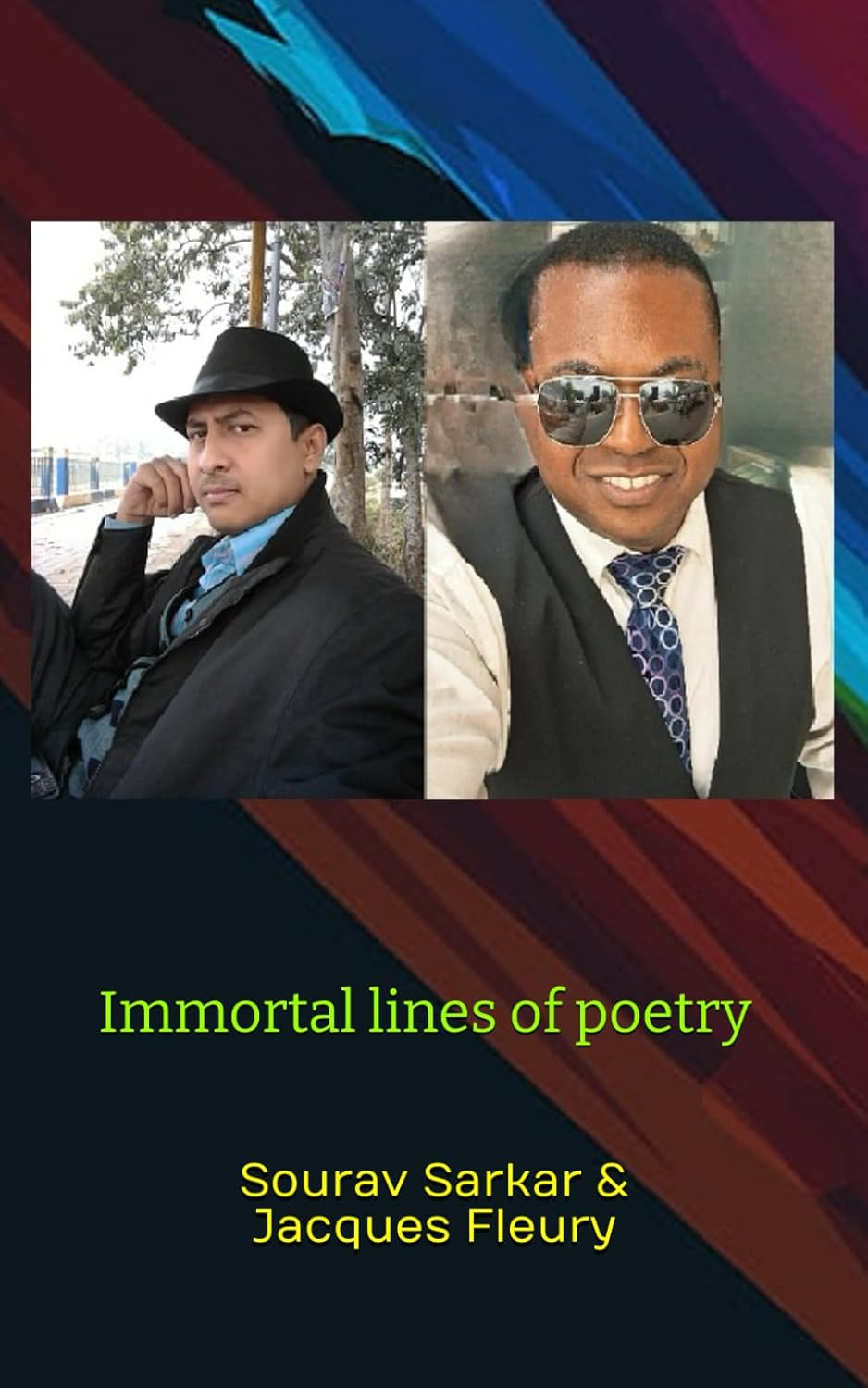
A collaboration between myself and internationally renowned poet Sourav Sarkar of India. The book presents us both as “2 Poets of the Common Era Literature Period” (a term Sarkar claims to have coined himself on Oct. 24, 2021 and is celebrated worldwide on its founding date yearly) and allows the reader an opportunity to “sample” our poetic styles and substance. It is at times a supple staccato or eroticism, at times mesmerizingly musical of humanism, at times visceral to its soul core but eventually reaches a crescendo to volcanic eruption of literary passion, hope and inspiration for our seemingly crumbling humanity. Here is a sample of one of MY poems from the book. Hope you check it out on Amazon. Merci beaucoup!
This month’s issue focuses on what’s going on inside of all of us, and how that shapes who we are. We’re going Beneath the Surface.
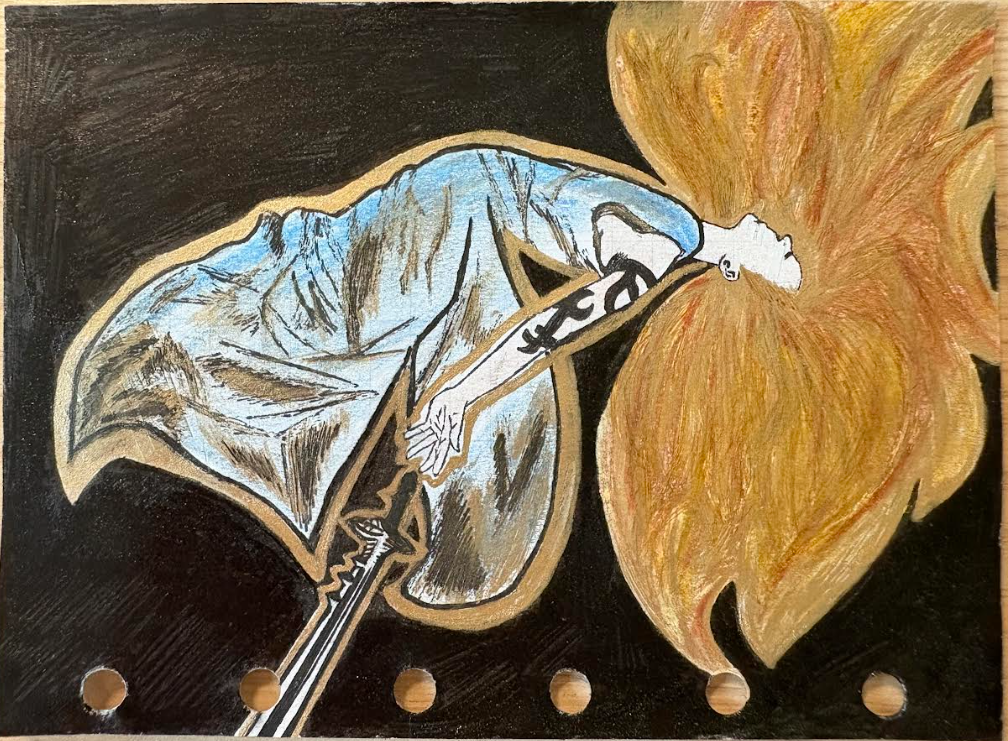
Image c/o Stella Kwon
Stella Kwon’s paintings explore dreams, childhood, fantasy, and the interiority needed for a creative life. Jacques Fleury’s sample poem from his new book Immortal Lines of Poetry looks into dreams and internal inspiration. Debabrata Maji’s poem traces his heart’s inner journey. Damon Hubbs tracks the odds and ends running through his mind while watching competitive tennis. Annabel Kim’s artwork explores and celebrates human and natural creativity. Ma Yongbo evokes the change of seasons, nature, and mortality.
Mark Young renders maps and nature into works of art in his ‘geographies.’ J.K. Durick speaks to intellectual experiences – the news, books, museums – and how we communicate ourselves to ourselves. Jasmina Saidova honors an inspirational teacher as Abdirashidova Ozoda explores possibilities for digital technology in early childhood education. Eshmamatova Shabbona traces the history and evolution of Uzbek literature and Munira Xolmirzayeva traces the history of Russian writing.
Eva Petropoulou Lianou praises the delicate elegance of Lily Swarn’s new poetry collection A Drop of Cosmos. Uralova Gulmira highlights themes of personal experience and motherhood in the patriotic writings of Uzbek poet Saida Zunnunova. Sayani Mukherjee reflects on being driven towards poetry in a full and changing world. Dr. Rasmiyya Sabir writes of romantic love, poetic inspiration, and the irrepressible drive to be heard.
Jakhongir Nomozov interviews poet Rustam Bekhrudi, who intends to capture and convey the resilient Turkish spirit in his writing. Mesfakus Salahin speaks to human psychology and the drive to live amid the allure of death. Mahbub Alam describes a night of discomfort due to mosquitoes, which he endures by thinking of people who have it much worse. Abdisattorova Hurshida’s short story highlights the dignity and self-determination and patience of the hardworking rural poor in Uzbekistan, even when facing death.
Hanen Marouani probes our internal emotional life with tenderness. Bill Tope uncovers the veil of a past sixth grade classroom where the students and teacher are full of inner and outer turmoil. Alan Catlin continues his surreal examination of the physical manifestations of work anxiety as Elbekova Nilufar warns of the danger to our eyes and psyches posed by Internet addiction. Emeniano Somoza Jr. reflects on what we lose by lessening the ups and downs of our emotional nature. Donia Sahab’s poetry probes the psychological torment and confusion Dr. Alaa Basheer alludes to in his painting. J.J. Campbell navigates loneliness with his trademark wit and cynicism.
Joana L.J. Milovanovic’s words bear witness to the psychological and physical damage domestic abusers inflict. Mykyta Ryzhykh’s characters find themselves subsumed by the crushing violence of a metaphorical “leviathan.” Alex S. Johnson reflects on his friendship with Runaways band member and visionary Kari Lee Krome and how the music industry elevates and chews people up.
Jakhongir Nomozov’s speaker reasserts himself after intense seasons of emotional pain and rejection. Soumen Roy highlights the importance of respect and patience in true love. Munisa Rustamova expresses gratitude for her mother’s constant love in a harsh world full of fake people. Alex S. Johnson and Kandy Fontaine assert their confidence in their way of living and loving and show how power is expressed through service and care, not abuse. Liderqiz demonstrates this ethic of service through a profile of Uzbek Information Service leader Dilbar Ashilbayeva.
Andela Bunos speaks of the universal human grief of lost love. Kristy Raines’ poetry expresses commitment to a romantic relationship despite being separated. Lola Ijbrater outlines the rise and fall of a romance through a series of flowers. Ken Gosse describes heartbreak through clever poems with increasing numbers of lines. Eva Petropoulou’s lines address intimate love and the beauty of forgiveness. Annamurodov Umarbek reflects on coming of age after losing his father.
Taylor Dibbert reflects on the impression Americans make while traveling abroad. Doug Hawley and Bill Tope present a humorous tale of unintended interplanetary cooperation. Duane Vorhees’ poetry deals with our humanity, the roles we play in life and who we choose to become to each other.
Abdel Iatif Moubarak’s words express solitude and the hopes and dreams of individuals and communities in an uncertain world. Abigail George reviews Nadine AuCoin’s horror novel Tucked Inn, a tale of survival and good overcoming evil. Justin Faisal, a Rohingya refugee from Myanmar and advocate for his fellow refugees, writes of his inner journey of perseverance and finding beauty in life. Sharifova Saidaxon reflects on similar sentiments, finding forgiveness and acceptance through her faith.
We hope this issue inspires you to dig into your inner psyche and uncover strength and reach for your hopes and dreams.
The 25 newly-minted 6th grade students waited, a little on edge, for their new teacher to appear in the classroom. The 30 desks were arrayed in 5 rows of 6, and all were occupied save for the foremost desk in each row. Nobody, it appeared, wanted to be under the close scrutiny of their new instructor. Into the room strode a short, portly man in his late twenties, with a burr haircut, thick eyeglasses and a cheap suit. “My name,” began the man, reaching the front of the classroom, “is Mr. Shipley,” and he turned facing the blackboard and sketched his name in large block letters. “Now, who are you?” he asked a pretty blonde girl sitting near the front. “My name,” replied the girl, straightfaced, “is Miss Johnson.”
Several in the class laughed, but then wilted under the glare of Shipley. “Do you have a first name, Miss Johnson?” inquired the teacher, who already knew full well who she was. “It’s Jane,” she said. “Do you have a first name, Mr. Shipley?” asked Jane in the same sardonic tone.
“Indeed I do,” answered Shipley. “My full name is Marvin Allen Shipley,” he said. Jane burst out laughing. “You mean, like ‘Ma’ Shipley?” she asked, rocking back and forth like an old woman. She laughed and was again joined in her merriment by other students. A withering glance from their 6th grade instructor soon brought them to heel. “Enough!” rumbled Shipley in a deep baritone, and everyone, at his invitation, in turn introduced herself. Casual, getting-to-know-you chit-chat prevailed for the first couple of hours. The late August heat permeated the tall windows in the classroom. A spinning ceiling fan kept the temperature bearable. There was no air conditioning in public elementary schools in the American Midwest in 1965. Shipley asked about the interests and backgrounds of his pupils and he, in turn, opened himself up to questions from the students.
“Were you ever in the Army, Mr. Shipley?” asked Ruth, a pretty brown haired girl whose own brother had recently been drafted into the Army for service in the rapidly escalating Vietnam war. “No,” said Shipley, “I was contacted by the government and when I explained that I had a wife and a little boy, I was told that I needn’t bother.” He smiled benignly. “My older brother has a wife and kid too,” Ruth said pointedly, “but that didn’t get him out of going to ‘Nam.” Shipley just smiled weakly and shrugged. Turning to a large, thick-shouldered young man by the name of Butch, he asked, “And what do you like to do in your time off from school?” Butch blinked in surprise and then said in a hoarse voice, “I like to kiss the girls and make them cry!”
The other students groaned and Shipley rolled his eyes, prompting Butch to laugh like a braying donkey. Shipley shook his head. Turning next to a student whom he knew had been held back in school for a year, he asked, “Robert, what are your interests, son?” “My name’s Rob, and I’m not your son!” said the boy in a dull voice. “Duly noted,” murmured Shipley, turning to the next student, who turned out to be a small, red haired boy named Willy. “Willy, what do you want to be when you grow up?” “A baseball player,” he replied at once. The teacher shook his head, thinking that the small frail boy had as much chance of being a professional athlete as Shipley did of becoming CEO of Ford Motor Co., a local employer of prominence.
“Do you have a second choice?” asked Shipley. “A cartoonist,” said Willy. Before him on his desk was an open notebook in which he had crudely sketched myriad animal figures. Shipley craned his neck to observe the artwork, then said, “Keep playing baseball is my advice.” Several students laughed and Willy shot daggers at his new nemesis. – – – At recess two weeks later, Jane was chastised by a special education teacher for chasing and making fun of a student enrolled in the special ed. program. “Get out of here, you dirty Mongoloid,” shouted Jane, tossing stones after the child. Jane laughed shrilly. The teacher, monitoring the playground, reported the incident to Mr. Shipley. “Jane means well,” said Shipley, running into the special ed. teacher in the teachers’ lounge. “Well, I don’t know, Mr. Shipley,” said Mrs. Baxter. “Besides,” said Shipley. “Special ed. isn’t really a part of Burbank School, now is it? You only use our spaces twice a week and then go onto other district facilities the rest of the week, am I right?” He smiled cunningly. The other teacher twisted her lips wryly. Shipley was right: special ed., still experimental in this school district, couldn’t afford to be too demanding with respect to their hosts’ behavior. “I’d like to speak to Jane for a moment if I may,” she said.
Shipley acquiesced and later that afternoon, during recess, Jane and her teacher trooped into the cafeteria, which was used by the special ed. classes when lunch was not in session. Shipley introduced the two. “I just wanted to speak with you for a moment, Jane,” said Mrs. Baxter. She went on to briefly explain the mission of special ed. and to enlist Jane’s support for her efforts. Drawing her narrative to a conclusion, Baxter said, “You understand, don’t you, Jane? I want us all to just get along.” Baxter leaned forward in earnest. She had to tread cautiously here. Roger Johnson, Jane’s father, was a member of the Board of Education. Jane, who had been fighting back against laughing in the teacher’s face, finally gave up the struggle and said, “Alright, just so long as I don’t have to touch one of those Mongoloids!” Baxter sighed and came back to her full height. She’d tried. She looked over at Shipley, but all he did was shrug. Throughout her school years, Jane seemed to harbor a particular resentment for such children until, almost 10 years later, she gave birth to the first of her own two children with Down’s Syndrome. – – – “How old is this new teacher of yours?” asked Cynthia, Ruth’s mom, one evening at supper. “27,” Ruth replied. “So he’s already been in the Army?” asked Cynthia. Ruth shook her head. “No,” she said. “He said he doesn’t have to go. He has a wife and a little boy.” “Humph!” said her mom. “That won’t keep you out of the Service nowadays. He probably knows someone on the local Draft Board! The fix is in,” said Cynthia, who was a big proponent of conspiracy theories.
Ruth shrugged. “I saw old man Shipley’s photo in last year’s yearbook,” said Melanie, Ruth’s sister, older by 4 years. “He got out of the draft because he’s so fat. He must weigh nearly 300 pounds!” She hooted. “What are you going to be studying this year?” asked Cynthia next. Ruth pulled a sheet of paper from her bookbag. “All this,” she said. Cynthia accepted the document and read, nodding her head. “Math, spelling, social studies, science, art…” “Mr. Shipley has a degree in Chemistry,” remarked Ruth. “He says he wants to get a job at the high school teaching that.” “What sort of a man is he?” asked Cynthia. Ruth shrugged again. “I don’t know. He seems to like to tease people, make fun of them.” “Well, you just do what you’re told,” advised her mother. “Next year you’ll be in junior high; won’t that be fun?” Ruth and her sister both rolled their eyes. – – – A few weeks later Butch made an enemy of another student. That student, an 8th grader named Boxey, repeatedly called Butch “stupid” and “retardo” and stole his lunch. Finally Butch caved to his tormentor’s badgering and agreed to fight him after school one day. Boxey, who was tall and meaty and decidedly mean, was still not as large as Butch. He came armed with a retinue of supporters, who urged him to do unspeakable things to the underclassman. Then the fight proceeded. Boxey peppered Butch’s face with short, sharp jabs, emulating his hero, Cassius Clay. He even chanted, “Float like a butterfly, sting like a bee.” But he did little damage. Butch threw just one punch, to Boxey’s ribs, likely facturing one. Boxey, impaired by the damaged rib, tried to strike Butch in the crotch, but Butch easily deflected the blow. Boxey cried out in pain, grabbed at his injured wrist. He sank to one knee. “Go ahead, Butch,” called out Rob, his sole booster, “finish him off. Beat the hell out of him. He’d do it to you!” Butch shook his head and dropped his fists to his side. “He’s hurt,” he murmured, picking his jacket off the ground. “It wouldn’t be right. Let’s go,” he said, and led his one friend away. – – – “Pamela and I are getting a divorce, Rob,” said his father Aaron Braden bluntly. “She moved out this morning.” Rob frowned. Things had been so shaky in the Braden household recently, indeed, for as long as Rob could recall, that he had long suspected that it would end like this. “When?” he asked. “As soon as she can get the lawyer she’s sleeping with to file the motion,” replied Aaron harshly. He went on to levy bitter criticism against his wife of 14 years. Rob was the couple’s only child. “What happens to me?” asked Rob, cutting to the chase. “Well, Pamela doesn’t want you,” said Aaron coldly. “You’d just cramp her style. I guess I’m stuck with you.”
Rob swallowed, nodded and turned away. He’d found out all he needed to know. Rob never saw his mother again.
Winter
Three children, selected by lot the day before, accompanied their teacher on a trip downtown during the school’s extended holiday lunch period. Though they would forgo ice cream and roasted turkey served in the cafeteria, they would be given treats by their teacher nonetheless; plus, they got an off-campus excursion. Their mission: to purchase for their class a Christmas tree. After they’d all piled into Shipley’s “groovy” new Mustang, they debated over where to obtain the tree. “I think Lentzburger’s has a tree lot again this year,” noted Ruth. Levi Lentzburger was her mother’s brother. “And what,” asked Jane scornfully, “get us a Jew Christmas tree? That’s an oxy-moron.” Ruth, a member of a non-observant Jewish family, stared at her blankly. “What do you mean?” she asked, although she recognized Jane’s remark as part of the same subtle prejudice she’d felt almost since she’d become self-aware.
“Never mind,” said Shipley gruffly, slipping the car into gear. “We’ll just go by Kroger’s.” “Gimme a hatchet,” offered Jane, “and I’ll cut one down in the city park.” She grinned woflishly. Minutes later, the children and their teacher were in the parking lot at the grocery, inspecting the meager selection of trees. The children gravitated to the prettier, more expensive trees: magnificent specimens of Douglas fir, priced at $3, $4 and one exquisite specimen at an other-worldy $7. “I like this one, Mr. Shipley,” purred Jane with cunning, holding up the $7 tree. “Put it back,” said Shipley, grasping a sparse, practically denuded specimen of balsam from the $1 pile. He shook the tree and needles rained down copiously onto the paved lot. The children stared at the beleaguered specimen with sad eyes. “It’s missing a few branches,” remarked Ruth, running her fingers through the blank spaces. “It’ll be fine,” Shipley assured them. “Besides, we’re on a tight budget. C’mon, let’s check out.”
The little group drifted toward the outdoor cashier, paid for their purchase and were soon on their way, the small, thin tree stuffed unceremoniously into the Mustang’s trunk. “I’m getting hungry,” complained Jane, running her hand over her tummy by way of demonstration. “When do we eat? You promised us food, Mr. Shipley,” she whined melodramatically. “Oh, here, Mr. Shipley,” said Ruth, handing over a $5 bill. “I told my mom that you were taking us out today to get a tree and lunch, and she said it wasn’t right that you spend your own money.” Shipley accepted the bill gratefully. “Tell your mother thanks, Ruth,” he said. Second-year grade school teachers didn’t earn a great deal of money.
Arriving at a small diner, the four found spots in a booth with a formica top and faux-leather seats. An ageless waitress arrived promptly and took their order. The next thing that Shipley did, under the watchful gaze of his students, was to turn up a pack of cigarettes, shake one out and light up. This was extraordinary. Smoking was something that parents did, or a renegade older brother or toughs on TV, not an elementary school teacher. They watched, morbidly fascinated, as their teacher greedily sucked smoke from the coffin nail and then expelled the fetid fumes in their immediate vicinity. Shipley had budgeted $3 for lunch, thinking 4 hamburgers and 4 Pepsis and then stiffing the waitress on the tip. The tree had been paid for by conscripting a nickel from each student who could afford it, and not everyone could. But now, with the 5-spot in his pocket, the cash-strapped teacher could afford to live a little. The payments on the new car were murder. As they sat at the table, watching Shipley smoke, the students took stock of their surroundings. “What’s that?” asked Ruth, indicating an elaborate, multi-colored metal and glass device sitting on the edge of the table next to the wall. Shipley recognized it as a rather bizarre looking napkin dispenser, but before he could answer, Rob spoke up. “It’s a slot machine,” he quipped.
The other children laughed. Shipley rolled his eyes, but chuckled in spite of himself. This was the first time he’d heard Rob speak in days and Shipley was glad that he was opening up again, at least a little. The teacher had heard rumors that the Bradens were contemplating a divorce and this couldn’t be good for their son. In all the school, just a handful of students had parents who were divorced. 20 minutes and 5 cigarettes later, Shipley gathered his charges and they set out. Pausing at the cash register, he purchased 2 packs of Marboros with fifty cents from the $5 he’d gotten from Ruth’s mom. Then they piled back into the Mustang and returned to the school. – – – Rob had been acting out. Fits of unexplained temper and irascibility accompanied by mild aggression became common. Mr. Shipley had told him on several occasions to check his temper but, unknown to Shipley, the dissolution of the Braden marriage had been extra hard on 12-year-old Rob. Already wincing from being held back a year for indifference to his studies, he was seething with frustration at rejection by both his parents.
Jocelyn Shipley, Marvin’s sharp-tongued, aggressive wife, worked for the company that administered aptitude and intelligence tests at schools throughout the county. She reported to her husband that, of the 25 students in his class, there were but 3 that stood out as exceptional. The first was Butch, whose IQ was some 15% below average. “He really should be in a special program,” she said. “But, I know that Burbank doesn’t have a special education teacher on faculty for students his age just now. 5 years from now, you probably will have, and Butch would be enrolled. As for now, he’ll continue to slip through the cracks.”
“Is anyone exceptional for the right reasons?” asked Marvin with a frown. “Yes,” said Jocelyn. “2 students. Ruth Lanier and Robert Braden.” “Rob is a miserable student,” opined Marvin. “And his attitude stinks.” “Yet, he’s very intelligent,” said Jocelyn. “He has an IQ of 131.” Shipley’s bushy eyebrows arced skyward. “That’s not bad,” he conceded. “Your IQ,” his wife told him slyly, “by way of comparison, is just 118.” She flashed a mean little smile. “And what about Ruth?” he asked. “Ruth,” Jocelyn informed him, “is off the charts smart.” “How smart?” he asked. “Try 150+,” she told him. Marvin whistled soundlessly. No wonder he hadn’t been able to get a handle on that one. She always seemed to be onto him, to see through him. – – – “I need that library book back, Rob,” Sheila, the class librarian, told her classmate. “I’m not done with it yet,” he responded. “I’ll finish it over lunch and then bring it back.” “I need it now!” she snapped truculently. This went on for several exchanges until which point that Rob angrily flung the paperback book at the girl. It slipped through her hands and landed loudly on the floor. At that very moment, Shipley looked up, became instantly enraged.
“Enough!” he shouted, and rose to his feet, violently flinging his desk chair into the wall. Everyone froze in place. Reaching into a desk drawer, Shipley pulled out a heavy wooden paddle, walked around the desk and seized Rob by the arm. “You’ll learn,” snapped Shipley, dragging the child in his wake. They swept out the door and up the corridor to the other 6th grade classroom, where Shipley knocked peremptorily on the closed door. Within seconds, the other teacher appeared. “Need you to witness corporal, Duane,” said Shipley with barely contained fury. The three proceeded to a small store room down the hall, unlocked the door and stepped inside.
“You’ve been warned before,” thundered Shipley, grabbing Rob round the waist and bending him over. He then delivered 2 tremendous swats to Rob’s backside. “Now,” snapped Shipley, still breathing heavily, “don’t lose your temper again–or else!” Shipley marshalled Rob back to class and shoved him through the door, lingering in the hallway and conversing with the other teacher for a moment. Rob could hear some pleasantries exchanged; what sounded like laughter. Red-faced, he took his seat and avoided the others’ stares. 60 minutes later, when Shipley had calmed down and next addressed his classroom, he said that he hoped the students had learned something from the incident which had taken place an hour before.
“I learned something,” remarked Jane with an evil grin. “If you’re big enough, you can bully anyone.” Shipley frowned darkly. “She’s right,” said Ruth. “And if you’re in charge, you can get away with it.” “Ruth,” intoned Shipley ominously. With Jane, he had to put up with this nonsense, but Ruth was another case entirely. Jane’s father was a bigshot, but Ruth’s father wasn’t even in the home.
“Am I wrong?” Ruth went on. “What did you teach anyone here? Not that anger and violence aren’t appropriate. Only that some people can get away with it, where others can’t. You got angrier than Rob ever has. And then you got violent, which he never has.” Shipley silently stewed. – – – Tragedy was visited on Shipley’s 6th grade class in February of 1966. The first instance, unknown to the teacher and to the school-at-large, was when Rob’s mother perished, alongside her new husband, in an automobile accident near Las Vegas. “Pamela’s dead,” Rob’s father told his son without preamble one afternoon after school. Rob halted in his tracks. Was this another play on words, of which his father was so fond, as in, “She’s ‘dead’ to me.’? “Wh…what?” asked Rob.
“In Nevada,” said Mr. Braden. “Hit a truck on the interstate, probably drunk, or else that sonofabitch she was with was. Don’t know yet who was driving.” “When?” asked a stunned Rob. “Um? When did she buy it? Hell, I don’t know exactly, probably last night or early this morning.” Rob could smell the heavy stench of alcohol coming off his father. “Don’t ever fall in love, son,” counseled Mr. Braden. “Or else make sure they croak before they take you to the cleaners…” That was the last thing he said before Rob belted him in the mouth. The next day, Rob arrived for class sporting 2 black eyes and, if truth be known, a body festooned with deep, ugly bruises. The abuse continued. A week later, following the funeral, Rob was shaken by Aaron’s bitter weeping over his wife’s passing. Aaron’s behavior became increasingly bewildering and unsettling to the young man until, finally, he ran away from home. He didn’t see his father again for more than 20 years.
The second tragedy came out only a week later, when Mrs. Dinwiddie, the school principal, arrived at the door of the classroom and beckoned Mr. Shipley. After a whispered conversation, Shipley summoned Ruth, who intuited that something was not right. Ruth didn’t return to class for a week, following the funeral of her older brother. Shipley told the class that Eli Lanier had been KIA–killed in action–in the war in Vietnam. Ruth, he told them, would be absent to attend the funeral and to grieve. “Is that the same war that you got out of, Mr. Shipley?” asked Jane in a needling voice. Shipley heaved a great sigh. He hadn’t the heart to fence with her this time.
Spring
On the last day of school, the students turned in their textbooks and received their final report cards, each tucked away in a half-size manila envelope. As the children were comparing marks, Shipley said, “I was pleasantly surprised to discover that everyone passed this year, although with some of you it was close.” He smirked at Butch, whose face and neck turned crimson. Some of the children laughed, but not Ruth. “Why’d you have to go and say that?” she said. Shipley stared up at her in surprise.
“Butch does the best he can,” she went on. “You can’t say that about everyone, you know.” Shipley’s own face grew a little red. “It’s not too late to change the grades,” he said threateningly. “Go ahead and flunk me then,” she dared him. “My scores on tests and on my other report cards won’t back you up.” Shipley knew she was correct, and he decided to cut his losses. “Butch tries,” he conceded. “Good luck in junior high, Butch, and to all of you.”
The students preened. In just three months they would be 7th graders, and whole new social vistas would open up. They were both thrilled and terrified. “I’ve some other news for you,” said Shipley. “This is my final year here at Burbank. Next fall I’ll be teaching 7th grade general science classes at the junior/senior high school. So, I’ll be seeing all of you again next year.”
Some of the students spontaneously applauded, while others sat on their hands. “Shit,” muttered Butch and another student in unison. “Is there something you’d like to say?” asked Shipley sharply. Neither boy responded. As the hands on the clock face wound to 3pm, Shipley said, “I want to say that I have really, truly enjoyed teaching–most of you–this year. Of course,” he went on, “there’s always that one bad apple in any bag…”
As he continued, almost every student wondered if he or she was the one being focused on as a troublemaker. Ruth observed the scene before her. She would go on to earn advanced degrees in Psychology in college and then more fully understand Shipley for who and what he was. Even now she recognized the young teacher for his efforts to marginalize and misuse others. She blew out a breath and shook her head. They’d had each other’s number from the first day, she thought. From his desk, Shipley stared at her. When the final bell on the final day rang, Shipley watched the students depart. At the last second he called out, “Ruth, would you stay a moment longer, please?” Ruth turned and walked up to Shipley’s desk. They regarded one another warily for a moment. Then he spoke.
“Ruth,” he said in his deep voice, “I got the feeling just now, and not for the first time, that you don’t really like me very much. Is that an accurate observation?” he asked. “No, Mr. Shipley,” she said, “it’s not. As a matter of fact, I don’t like you at all.” He narrowed his eyes at her. “May I ask why?” “Of course,” replied Ruth. “I just don’t trust you.” “Explain,” he requested.
“My father, as you might know, doesn’t live with us.” Ruth stared into Shipley’s face but could discern nothing. “My mom divorced him when he sexually and emotionally abused my older sister and brother.” Shipley’s eyes grew a little larger. He knew the father was not a part of the Lanier household, but this was news to him. When my mom reported him to the police, he was arrested and a judge decided that if dad would divorce mom and pay child support, then he wouldn’t be sent to prison. I see in your eyes the same thing I saw in my dad’s. It’s the same thing I see in a feral animal. When you would pull Michelle onto your lap and act like you were going to spank her, I knew then you were the same kind of monster that my dad is. I talked to Michelle and when she was sprawled face down on your lap, she could feel it too.” Shipley was deathly quiet.
“You’re lucky you never pulled me onto your lap,” she went on. “Because I would’ve told my mom and she would have got you fired.” Shipley was sweating now. “So you really hate me that much, Ruth?” he asked bleakly. Ruth shook her head. “I don’t hate you at all, Mr. Shipley. Like I don’t hate my dad. You’ve both got a problem and I can’t hate you for that. It’d be like hating someone for having measles. I don’t think you’re to blame for it. But, like with someone with measles, I don’t want to spend any time with you or get too close, you know?”
She turned on her heel and as she made her way to the door, the teacher called after her, “good luck in junior high, Ruth.” “Same to you, Mr. Shipley,” she said without turning around, and passed for the final time through the door.
**In collaboration with the Literary cultural initiative POETRY Unites People Founder Eva Petropoulou Lianou**
**An exclusive interview presented by Eviasmile**
Journalist **Giorgos Pratzikos** introduces the beloved author and poet **Fay Rempelou**,
Greece
I met Fay Rempelou, although we live very close – she in Chalkida and I in Psachna – (and she herself has roots in the local community of Psachna), through Eva Petropoulou-Lianou last year, at “The Path of Hero.” Indeed, Eva and the Path know how to connect and unite people. From the very first moment I heard her, I sensed something unique in her poems and thought to myself that I would one day interview her. Well, the time has finally come.
—
**1. Fay, I know you don’t give interviews often. Searching online, I only found one more from eight years ago. I want to ask you many things, but I’ll start a bit unconventionally: Let’s begin with Eva Petropoulou-Lianou, thanks to whom we met. What does Eva mean to you?**
Eva is multi-talented, a very good writer of fairy tales and a poet. She is also a remarkable organizer of cultural events, who has given and continues to give her utmost to culture, especially in these difficult and cold times we live in, where material gains are placed above humanity. I met Eva at poetry gatherings of the group *Poetry in the Age of Auctioning*, and we immediately became friends because, above all, she is a wonderful person who gives from her soul. A true human being who inspires love and admiration.
—
**2. The place where we met is “The Path of Hero” in Politika, Evia, where, for two consecutive years, the Women’s Poetry Festival Greece–Mexico was held. You also participated both years. What are your experiences?**
This event, dedicated to peace and gender equality, is very important. Especially when it takes place in the enchanting *Path of Hero*, a beautiful and mystical landscape that speaks directly to our hearts, born out of the love of Hero’s parents, who gave everything to create this space, a true gift and cultural bridge. This magical place ignites the imagination, making me believe that our calls for peace and equality across the world will be heard.
From both years of the festival, I keep a wonderful experience, not only because I had a great time and felt inspired, but also because I met amazing people who took part. The organization, the poetry, the music, the venue—all together were impeccable and felt like a beautiful fairytale, full of joy and optimism.
Moreover, because Greece is not only Athens, this festival taking place in the province contributes to the spiritual growth and flourishing of the local community, just like all events that promote, in times of individualism and spiritual inertia, participation, collectivity, and culture.
—
**3. I took a look at your work *Everything is a Circle*. Do you believe that life really works this way?**
Yes, I believe that our stories, our relationships, and our lives in general follow their own cycles. Beyond that, however, I gave my book this title because its four stories create a circular flow, starting from the first, where power, through technological development, has fully controlled and subdued people. Then, raising questions about our roots and our capacity for resistance in the next two stories, it ends with the last, where love, passion, and altruism conquer everything harsh and inhuman that tries to subdue us. If this human stance in life fails, we return again to the first story.
—
**4. I especially liked the second story of your book, which speaks about a tree. As you have mentioned, the tree is symbolic and refers to our roots. How do you see today’s society? Do we have a chance to return to our roots, or will we eventually be completely uprooted?**
I’m glad you liked it, Giorgos. The story with the tree is indeed symbolic, representing our roots, which, since the 1990s, Greek society seems to forget, avoid, or even deny, carried away by the trend of easy affluence, urban comforts, and greed.
As the well-known poet Katerina Gogou said, our roots are there so we can grow branches, not to hold us down to the ground. And I too believe that progress is necessary, but without tradition, the memories of our past, and our history, we will end up with inhuman progress, with modern societies stripped of values and sensitivity.
Especially today, when man tends to be replaced by a mere number, this is a great danger, and our connection to our roots, tradition, and history becomes an essential issue.
—
**5. The last story in *Everything is a Circle* refers to a theatrical game, where the protagonists are Tarot cards. This really surprised me. Which Tarot card, among those that appear in your story, represents you the most?**
In this story with the Tarot cards, which is the final story of the book *Everything is a Circle* and my personal favorite, I identify with Chrysanthe, who, together with Nektarios, forms the Lovers, the protagonists of the story. Their love brings about social revolution and resolution—the victory of Humanity against harsh and inhuman social systems.
And that’s because I have always believed that love and passion, containing the authenticity of free choice, were, are, and will always remain revolutionary acts.
—
**6. Searching online, I saw that you have participated in many poetry collections. Although it’s difficult, can you tell me which contribution stands out the most for you?**
My contribution to the erotic poetry collection *Hello, I love you, goodbye*, and to the collection dedicated to the elderly *With the Pi of Poetry*. That doesn’t mean that all the other poetry and prose anthologies I took part in were not equally important to me, that they didn’t inspire me equally, or that I didn’t give them my best.
—
**7. September is dedicated to the elderly. I know that there is a poetry collection dedicated to them, in which you participated. How does Fay Rempelou, the poet and author, view old age? Does it scare you?**
As I write in the poem for old age with which I participated, *The Circle of Life*, “there is no death. In the face of every old person hides the future child.” It is natural that old age and death scare us, but only as future insecurities that all people share. In reality, old age is wisdom and the essence of life, helping you rediscover your simplicity, spontaneity, and childlike nature.
As for death, it is something we should not fear, because, firstly, as the writer and psychologist Leo Buscaglia says, it is our best friend, reminding us to live each moment that is given to us. And secondly, as Epicurus wrote, it is someone we never actually meet, since when he comes, we are no longer here.
—
**8. To close, I’d like to lighten the mood and ask you: what are you preparing for the future?**
I am preparing the publication of my fourth book, which will be a poetry collection titled *Unaware Perpetrators*. It speaks about people whose actions’ consequences, no matter how much they embellish their motives, transcend even themselves and become unmanageable! I am already in contact with publishers, and I hope it will come to fruition soon!
In closing, Giorgos, thank you for giving me the space and stimulus to introduce myself to the world and talk about myself and my works, as well as for your overall contribution to the promotion of culture in my beloved homeland.
Russian literature holds a singular place in world culture, offering profound explorations of the human soul, moral conflict, and the complexities of social change. From the early chronicles of medieval Rus to the masterpieces of the nineteenth and twentieth centuries, Russian writers have consistently used fiction as a mirror of national identity and universal human experience.
The “Golden Age” of the nineteenth century remains the cornerstone of Russian literary achievement. Alexander Pushkin, often called the father of modern Russian literature, established a new, flexible poetic language that bridged classical tradition and modern sensibility. His narrative poem Eugene Onegin not only shaped the Russian novel in verse but also captured the emerging tensions of a society moving toward modernization.
Following Pushkin, the great novelists—Fyodor Dostoevsky, Leo Tolstoy, and Ivan Turgenev—pushed psychological and philosophical depth to unprecedented levels. Dostoevsky’s Crime and Punishment and The Brothers Karamazov delve into questions of morality, free will, and redemption. Tolstoy’s sweeping epics, War and Peace and Anna Karenina, portray the intricacies of Russian society while contemplating fate, love, and spiritual awakening. Turgenev, with works like Fathers and Sons, introduced a refined realism and examined the generational conflicts of a rapidly changing nation.
The “Silver Age” at the turn of the twentieth century brought experimentation and symbolism. Poets such as Anna Akhmatova, Alexander Blok, and Marina Tsvetaeva infused lyricism with mystical and political undertones, reflecting the turbulence of revolution and war. Meanwhile, modernist prose writers like Andrei Bely and later Mikhail Bulgakov—author of the fantastical The Master and Margarita—combined satire, magic, and philosophical inquiry to challenge official ideologies.
Despite political repression and censorship during the Soviet era, Russian literature continued to evolve. Writers such as Boris Pasternak, whose Doctor Zhivago became a testament to love and resilience, and Aleksandr Solzhenitsyn, whose One Day in the Life of Ivan Denisovich exposed the brutal reality of labor camps, kept alive a tradition of moral courage.
Today, Russian literature remains a global conversation partner. Contemporary authors, including Lyudmila Ulitskaya and Vladimir Sorokin, address issues of memory, identity, and the tension between tradition and innovation. Their works demonstrate that the Russian literary spirit—marked by psychological intensity, philosophical depth, and a search for moral truth—continues to inspire readers worldwide.
From Pushkin’s poetic breakthroughs to the postmodern experiments of the present, Russian literature endures as a vast landscape of thought and emotion, reminding us that the written word can illuminate both the darkest and most luminous corners of the human condition.
Annotation
This article provides an overview of Russian literature from its nineteenth-century Golden Age to contemporary authors. It highlights the philosophical depth, psychological insight, and moral questioning found in the works of writers such as Pushkin, Dostoevsky, Tolstoy, Turgenev, Akhmatova, Bulgakov, and modern voices like Ulitskaya and Sorokin. The text emphasizes Russian literature’s enduring influence on world culture and its continuing relevance in exploring the complexities of human existence.
Keywords
Russian literature; Golden Age; Silver Age; Pushkin; Dostoevsky; Tolstoy; Turgenev; Akhmatova; Bulgakov; contemporary Russian authors; psychological depth; philosophical inquiry; world literature influence.
References
Belknap, Robert L. The Genesis of The Brothers Karamazov. Northwestern University Press, 1990.
Emerson, Caryl. The Cambridge Introduction to Russian Literature. Cambridge University Press, 2008.
Figes, Orlando. Natasha’s Dance: A Cultural History of Russia. Metropolitan Books, 2002.
Kelly, Catriona. Russian Literature: A Very Short Introduction. Oxford University Press, 2001.
Terras, Victor. Handbook of Russian Literature. Yale University Press, 1985.