Poetry from Lilian Dipasupil Kunimasa

Light skinned Filipina woman with reddish hair, a green and yellow necklace, and a floral pink and yellow and green blouse.
Lilian Dipasupil Kunimasa

Rainbow

Yes, I am for Unity

Yes, I am for Equality

I am also for Diversity

Not for Singularity

Nor for Monotony

For beauty lies in Autonomy

How would a rainbow look like,

When all it have is but

One color, One shade?

No boundaries, where colors can separate but blend,

Blend into different shades and hues

Even a black and white photograph

Has its different shades and hue

Yet our minds are set

Between one not even two.

For two will make us choose, be IN or OUT

And OUT will always be wrong

Because IN is always right.

And Tolerance does not mean Respect

Just waiting to prove the other Weak.

We see only what we want to see

We understand what we only want

We believe only what is beneficial

Others are blind or lying false.

How I envy the unschooled beasts

They have territories, yet respect boundaries

They do not attack, unless hungry

Knowing not of greed, nor hatred

How I envy the rainbow in the sky

Brightly shining after after cold dark storm

No color, but the sun makes it beautiful

Neither clashing, nor overlapping.

Nature is harsh but it has its rule

Diversity so to balance its growth

Yet we are smarter than Nature

We control, change and destroy

Rules made by Nature, we can overcome

Because we are smarter than Nature.

And rainbows are just part of foolish nature.

Vengeance

Once I donned the perfume of the innocent

Thinking it will shield me from evil’s intent

Yet when you recognized the purity scent

You came and tore down my peaceful tent

Your claw hands my virginal gown did rent

My mind to your devious wishes force bent

My soul to hell’s sulphuric kingdom sent

And my sanity to Limbo’s voidness went

I came back and wore the musk of the beast

My turn to bring havoc to the west and east

I watched as the hyenas and buzzards feast

For the past I know I should not care the least

But why instead of success I feel pains of defeat

Why do I feel numb from head down to my feet

Why have my heart and pulse end their beat

Ashes poured on my head and in the mud I seat

I am the victim but where is the sense of justice

I had my vengeance but where is my peace

All debts been collected yet trouble won’t cease

Tell me God Above, what did my spirit miss?

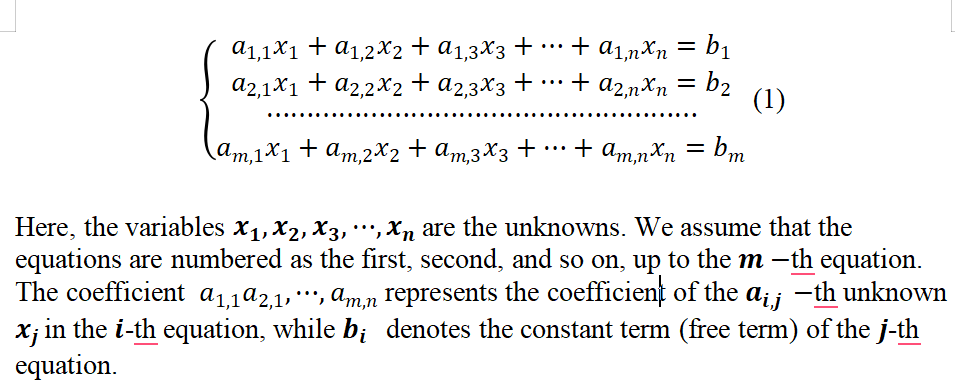
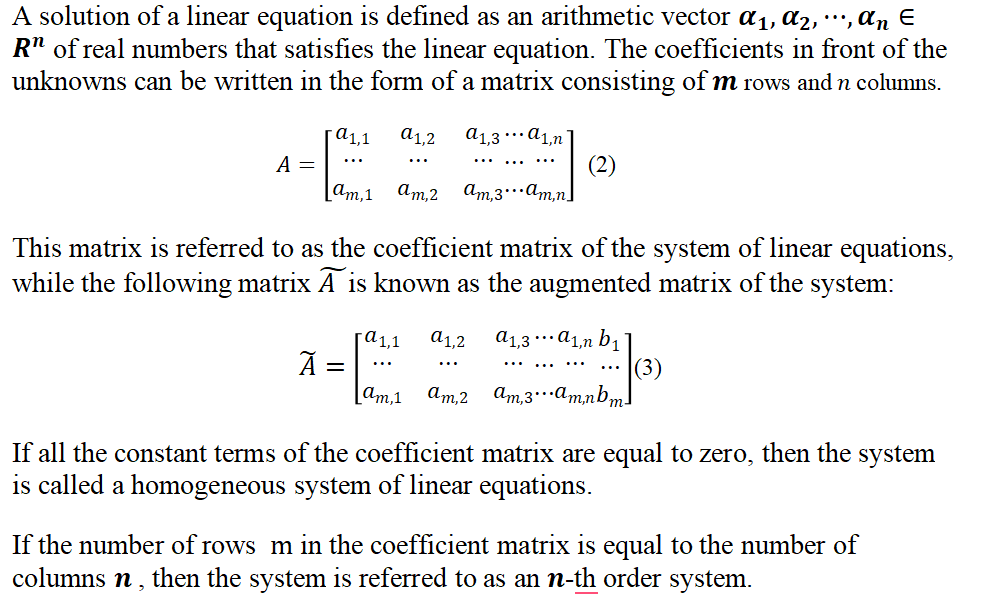
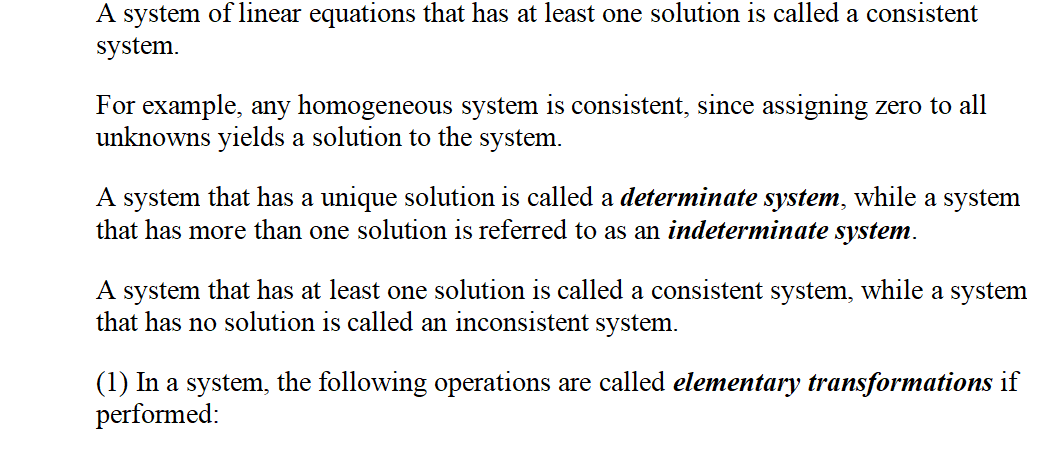
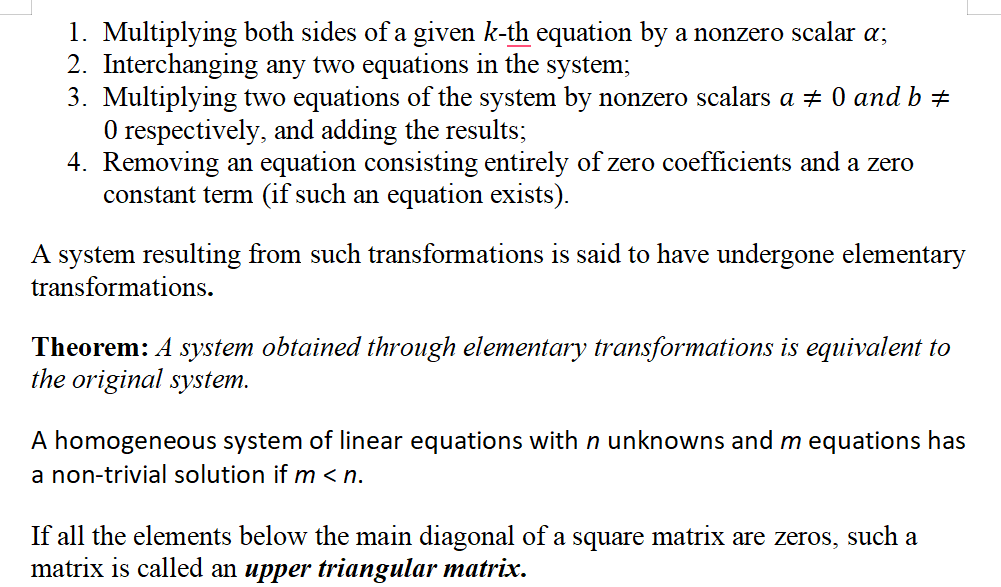
Lilian Dipasupil Kunimasa was born January 14, 1965, in Manila Philippines. She has worked as a retired Language Instructor, interpreter, caregiver, secretary, product promotion employee, and private therapeutic masseur. Her works have been published as poems and short story anthologies in several language translations for e-magazines, monthly magazines, and books; poems for cause anthologies in a Zimbabwean newspaper; a feature article in a Philippine newspaper; and had her works posted on different poetry web and blog sites. She has been writing poems since childhood but started on Facebook only in 2014. For her, Poetry is life and life is poetry.

Lilian Kunimasa considers herself a student/teacher with the duty to learn, inspire, guide, and motivate others to contribute to changing what is seen as normal into a better world than when she steps into it. She has always considered life as an endless journey, searching for new goals, and challenges and how she can in small ways make a difference in every path she takes. She sees humanity as one family where each one must support the other and considers poets as a voice for Truth in pursuit of Equality and proper Stewardship of nature despite the hindrances of distorted information and traditions.

Essay from Qurbonboyeva Dilafruz Sherimmatovna and Andaqulova Mohinur Juraqulovna

Qurut-traditional dried dairy product of Asian Countries

Talibjanova Aziza Lutfullayevna

 The teacher of UzSWLU

talibjanovaaziza@gmail.com

Qurbonboyeva Dilafruz Sherimmatovna

dilafruzqurbonboyeva99@gmail.com

Andaqulova Mohinur Juraqulovna

mohinurandaqulova8@gmail.com

Abstract

This article provides detailed information about Qurut, one of the favorite foods of Asian people. At the same time, its history, benefits and preparation process are also included in the article. It contains information about which diseases the substances and vitamins in Qurut prevent and treat.

Key words: Qurut, yogurt, vitamins, dairy products, preparation process, benefits.

Aбстракт

В этой статье представлена ​​подробная информация о Куруте, одном из любимых блюд азиатских народов. В то же время в статью также включены его история, преимущества и процесс приготовления. Содержит информацию о том, какие заболевания предупреждают и лечат вещества и витамины, содержащиеся в куруте.

Ключевые слова: Курут, йогурт, витамины, молочные продукты, процесс приготовления, польза.

Abstrakt

Ushbu maqolada  Osiyo xalqlarining sevimli yeguliklaridan biri bo‘lgan Qurut haqida  batafsil ma’lumotlar beriladi. Shu bilan birga  uning tarixi, foydalari va tayyorlanish jarayoni ham maqoladan o‘rin olgan. Unda Qurut tarkibidagi moddalar, vitaminlar aynan qaysi kasalliklarning oldini olishi va davolashi haqida ma’lumotlar mavjud.

Kalit so‘zlar:Qurut, yogurt, vitaminlar, sut mahsulotlari, tayyorlanish jarayoni, foydalari.

Qurut has long been a favorite food of Asian countries. Qurut was prepared from them to prevent dairy products from quickly becoming unfit for consumption.

Qurut in an easy-to-carry form and saved themselves from hunger during long walks. One of the 13th century, Qurut served as the main food for Genghis Khan’s soldiers. Those who prepared main reasons for the spread of Qurut  is the Great Silk Road. It is rich in  proteins, carbohydrates, fats, minerals, vitamins (A, B2, B6, D, E), salts, and probiotics. Nomadic Turkish people in particular prepared it for winter supplies and for pastoral life. In the

 Preparation process:

1. Milk is boiled at 90-100 degrees for 15-20 minutes and cooled to 40-45 degrees.

 2. Yogurt (2-3 percent) is added to milk and a mass is formed over time.

 3. Mass it is waved, and butter and  ayran(buttermilk) are obtained. After the separation of the serum, a thick mass is formed.

4.The ayran(ayran is liquid that is produced when yogurt is waved ) is boiled about 10 minutes at 90-100 degrees.

5. Boiled ayran is putted in a bag and seperated from the whey.

6. After that process, a thick mass is formed.

7. Salt, spicy according to taste, various greens, including basil, jambil are added to the mass and made into a round shape. it is mostly round, but sometimes it can be square, cylinder and billiard ball size.

 8. The dried Qurut is dried in the sun for 2-3 days with gauze on top. The dried Qurut is placed in special bags. This product can be stored at any temperature for up to 8 years, during this period it does not lose its quality.

 Benefits. The small size of Qurut is very useful for human life. It contains many substances that increase the human immune system. These are: vitamins B2, D, E, A. Vitamin B2 – it strengthens memory, increases resistance to stress and fatigue, improves attention and thinking, helps fight depression, acts as a source of energy for the brain to function properly. Vitamin D – it plays an important role in the treatment of cancer. It prevents rickets (softening and deformation of bones), which is especially common in young children. In addition, the vitamin A it contains improves vision, protects the body from viruses and bacteria, prevents colds and other diseases. It maintains skin and hair health, strengthens bones and teeth, and improves intestinal and stomach function. The iron, magnesium, potassium, and calcium it contains help children grow taller, prevent blood clots in damaged areas, and repair dead cells. Since it is high in salt, it is recommended to drink water after eating it.

 Uses:

  • Can be crushed into soups.
  • Can be used to make a drink from qurut.
  • Can be eaten as a snack.
  • Can be added to salads and pasta.

  Qurut is mainly widespread in Asia. Therefore, it is called differently in different countries of Asia. For example, in Uzbekistan it is called qurut, in Tajikistan kashk or qurut, in Turkmenistan gurt, in Iran kashk, in Kyrgyzstan kurut, in Kazakhstan kurt. In addition, it is used for various purposes. For example, in Uzbekistan it is added to chalob, masatava, soups and salads. In Tajikistan it is used for kashk-o-bodonjan, osh and soups. In Turkmenistan it is eaten with gurt dishes, that is, soups and meat dishes, as well as tea. In Iran, dishes such as ash-e-reshteh, kashk-e-kadoo and kashk-e-bademjan are prepared with qurut. In Kyrgyzstan, chalap, lagman, besh barg, etc. are also eaten with qurut. In Kazakhstan, it is drunk with tea, added to meat soups.

Sometimes it can be eaten crushed with bread. In Afghanistan, ashak is eaten with qurut sauce, mantu is eaten with qurut mixture, and kashk-e-badenjan is eaten with qurut solution.Qurut is mainly widespread in Asia. Therefore, it is called differently in different countries of Asia. For example, in Uzbekistan it is called qurut, in Tajikistan kashk or qurut, in Turkmenistan gurt, in Iran kashk, in Kyrgyzstan kurut, in Kazakhstan kurt. In addition, it is used for various purposes. For example, in Uzbekistan it is added to chalob, masatava, soups and salads. In Tajikistan it is used for kashk-o-bodonjan, osh and soups. In Turkmenistan it is eaten with gurt dishes, that is, soups and meat dishes, as well as tea. In Iran, dishes such as ash-e-reshteh, kashk-e-kadoo and kashk-e-bademjan are prepared with qurut. In Kyrgyzstan, chalap, lagman, besh barg, etc. are also eaten with qurut. In Kazakhstan, it is drunk with tea, added to meat soups. Sometimes it can be eaten crushed with bread.

In Afghanistan, ashak is eaten with qurut sauce, mantu is eaten with qurut mixture, and kashk-e-badenjan is eaten with qurut solution. Qurut is mainly widespread in Asia. Therefore, it is called differently in different countries of Asia. For example, in Uzbekistan it is called qurut, in Tajikistan kashk or qurut, in Turkmenistan gurt, in Iran kashk, in Kyrgyzstan kurut, in Kazakhstan kurt. In addition, it is used for various purposes. For example, in Uzbekistan it is added to chalob, masatava, soups and salads. In Tajikistan it is used for kashk-o-bodonjan, osh and soups. In Turkmenistan it is eaten with gurt dishes, that is, soups and meat dishes, as well as tea. In Iran, dishes such as ash-e-reshteh, kashk-e-kadoo and kashk-e-bademjan are prepared with qurut. In Kyrgyzstan, chalap, lagman, besh barg, etc. are also eaten with qurut. In Kazakhstan, it is drunk with tea, added to meat soups. Sometimes it can be eaten crushed with bread. In Afghanistan, ashak is eaten with qurut sauce, mantu is eaten with qurut mixture, and kashk-e-badenjan is eaten with qurut solution.

Prices also vary: in Uzbekistan, the average price is 60,000 soums per 1 kg. In Kyrgyzstan, it is 100-120 soums per 1 kg. In Kazakhstan, it is about 600-800 tenge per 1 kg. In Russia, since this product is an imported product, the price can be around 300-400 rubles per 1 kg. In the USA and European countries, it is an exotic product and costs $ 10-15 per 1 kg. These are all average approximate prices.

Qurut is also produced in various ways in the economy. For example, traditional dry food production, that is, the preparation process is mainly carried out manually, and sometimes in small craft enterprises. In industry, the dry food production process is carried out in drying workshops, that is, using special technological equipment. Dry food is mainly produced in flat or powdered form and packaged and taken to the market. Dry food chips, dry sauces and spices, energy bars are products made from dry food. Exporting dry food to the international arena includes stages such as packaging, quality control inspection and certification.

Conclusion. Qurut is one of the ancient foods and it still retains its importance in Asian countries (Uzbekistan, Kyrgyzstan, Tajikistan, Turkmenistan, etc.). Although it is small in size, it is a dairy product that contains many benefits. At the same time, it allows you to have full strength during long trips. Because it was difficult to carry other dairy products, including yogurt, milk, etc. in good quality during trips, but Qurut is an exception. Ancient nomadic people wanted to carry quality dairy products with them during their trips, and as a result, they invented Qurut, which has a long shelf life. Currently, Qurut is among the most popular products in the world.

References:

  1.   Aigerm Tuganbay, Amin Y.,Per E.J.S,” Production of kurut(kurt) using probiotic Lacticaseibacillus rhamnosus GG strain in combination with a yeast isolated from Kazakhstan kurut”, Frontiers in  Food Science  and Technology 2, 2022
  2.  Erturk B., B Incedayi, Omer U.C, “Traditional dairy product:kurut “, 2016 .
  3. “O‘zbek  Milliy ensiklopediyasi”, 398 pg
  4. https://sg.docworkspace.com/d/sIBWttLuQAoXHgL4G?sa=601.1131
  5. https://www.trtavaz.com.tr/haber/uzb/avrasyadan/markaziy-osiyoda-sevib-istemol-qilinadigan-qurut/61ab386f01a30a0888930a27

Poetry from Terry Trowbridge

Potato Popo

They give him 30 days in San Ber’dino

– Frank Zappa, San Ber’dino

“The suspect’s head looks like a potato,” types a patrolman.

The AI surveillance of San Ber’dino porches

train on adversarial images of potatoes,

earthy spuds with loam nuggets in their clogged pores,

roots creeping and skins greening

during their pantry stowaway concealments.

Every potato is a precious snowflake individuality incarnate.

Albert’s potato-shaped-universe could bang big over and over

and every time a different holographic mass would unfold

from the same unevenly distributed infinite premise.

The engineers who programmed the surveillance doorbells

used the same algorithm God did: deus machina, code is law.

The AIs try to generate the suspect’s potato.

They instead create inflationary suspicions mapped by reticulating splines.

San Ber’tato streets ravel like knitting around porch AI.

The Riemann-Gauss asymptotes of suspects arrive in police blotters

in batches of infinitude.

San Par’tato police BOLO infinite no-knock warrants,

wake the judges at 3am to cut a potato stamp like a grade schooler.

The judge’s inkpad runs dry.

With starchy stamps and fingerpaints he authorizes

the generative algorithms into creation.

The Popo pop potato people throughout the Pan-Par’tato suburbs.

One for the chair will fry. Another scallops a scapegoated caseload casserole.

One baked gives up his dealer. Many are mashed, hugging their ribs.

The suspect is still not drawn from the deck of possible perps.

The suspect is hidden in the precinct 52 Factorial

the faces of the public stare at curbside handcuffs, at spud-gun gunpoint.

The Pot’tato Popo having transformed the city of San Ber’dino

into the lumpen image of their search algorithms.

Terry Trowbridge’s poems are in Pennsylvania Literary JournalMasticadoresUSAPoetry PacificCarouselLascaux ReviewCarminauntetheredProgenitorMiracle MonocleOrbisPinholeBig Windows,Muleskinner,Brittle StarMathematicalIntelligencerJournal of HumanisticMathematicsNew NoteHearth and CoffinBeatnik CowboyDelta Poetry ReviewStick FigureminiMAG, and 100more. His litcritis in BeZineErato,Amsterdam ReviewArielBritish Columbia ReviewHamilton Arts & LettersEpistemeStudiesinSocialJusticeRampikeSeeds, and The/t3mz/Review.  His Erdösnumber is 5. Terry is grateful to the Ontario Arts Council for his first 2 writing grants.

Essay from Yunusova Khodisa

Andijan State Institute of Foreign Languages
Foreign Language and Literature, German Language Course
Student of group 402 Yunusova Khodisa
Scientific supervisor Isamutdinova Durdona
Learning a foreign language through games and stage play


Annotation: This article analyzes the effectiveness of teaching foreign languages, in particular, German, through games and stage play (szenisches Spiel).
By stimulating children’s natural curiosity and creative thinking, game activities make the process of mastering a foreign language more interesting and effective.
The study highlights the possibilities of developing language skills through methods such as game forms, role-playing, and dramatization. The article contains practical recommendations for teachers, methodologists, and those who want to teach a foreign language through an interactive approach.


Annotation: This article explores the effectiveness of teaching foreign languages, particularly German, through play and dramatic play (szenisches Spiel). By fostering children’s natural curiosity and creative thinking, making playful activities the language acquisition process more engaging and efficient. The study highlights
how methods such as role-playing, dramatization, and game-based learning can support language skill development. It offers practical recommendations for teachers, educators, and those seeking to adopt an interactive approach to language instructions.


Annotation: V dannoy state rassmatrivaetsya effektifnost obucheniya
inostrannym yazykam, v chastnosti nemetskomu, cherez igru ​​i stsenicheskuyu igru (szenisches Spiel). Blagodarya stimulirovaniyu estestvennogo lyubopytstva i tvorcheskogo myshleniya detey, igrovye vidy deyatelnosti delayut process language learning is more uvlekatelnym and rezultativnym. V isledovanii osveshchayutsya vozmojnosti razvitiya yazykovyx navykov through role-playing games, dramatization and other acting methods. Statya soderjit prakticheskie rekomendatsii dlya prepodavateley, methodistov i vsex, kto stremitsya an integrated interactive approach and foreign language teaching.


Keywords: foreign language, play-based learning, stage play, dramatization, interactive teaching, language skills, methodology, creative approach Keywords: foreign language, play-based learning, dramatic play, dramatization, interactive teaching, language skills, methodology, creative approach Preschool education is the first stage of our children’s education and upbringing. It is known that in recent years, learning a foreign language has become not only a way to develop human thinking, but also a social activity.

Foreign language teaching is taught as a mandatory part of almost all stages of the continuous education system. Not only the demand for a foreign language in society, but also parents pay significant attention to the introduction of a foreign language to their young children during their preschool years is being addressed. On the other hand, we can say that learning a foreign language in today’s era is a time-consuming and social activity. Language is considered not only a factor in educating a modern person, but also the basis of socio-material well-being in society.

If we compare the current time with the previous 10 or 15 years ago, knowing a foreign language was required only for specialists in a certain field, now knowing at least 1 foreign language is a necessity for representatives of each field. According to experts in the field, the main reason for the frequent problems in teaching foreign languages ​​is related to the age of foreign language learners. It is recommended that they start learning other foreign languages ​​much earlier, that is, it is necessary to learn a foreign language from the age of 3-7 years old.

In the minds of preschool children, elementary communication skills in a foreign language are also developing rapidly. The main goal of teaching preschool children a foreign language is to develop the ability to use a foreign language to achieve their goals in the future and express their thoughts and feelings in life relationships. The advantage of teaching preschool children to learn a foreign language is that the younger the children are, the less their vocabulary. For example, 3-year-old children have a vocabulary of 300-400 words, and 4-year-old children have a vocabulary of 500-600 words. The preschool age of a child from 3 to 7 years old constitutes a large part of childhood. It is mainly from this period that the child’s independent activities develop. However, at the same time, his needs for speech acquisition decrease.

Poetry from Maria Miraglia

Middle aged brown haired European woman with white earrings and a black and white dress top in a promotional image for Palestina: Poem of the Day. Image around her looks like a postage stamp with red, green, and tan designs on a black background.

Gaza

I have seen so much

And heard so much

To believe that a part of hell

Has moved to Earth

Not only with the stench of burning flesh, 

Flames screams and cries

Invocations and curses

But also with the demons

Who in the underworld left

Their bestial forms

Their tails horns  fangs

claws and black wings

But with them they brought

Their wickedness

You can read in their disturbing eyes

Their evil smiles and

Their way of rejoicing 

Over the lifeless bodies of innocents

The demons disguise themselves 

In human form, 

Which also carries the scent of sulfur. 

One of them loves the carnival 

And wears the clothes of Francis. 

Who knows if it’s out of scorn or madness 

But the dead children in Gaza 

Will rise like angels

With  white wings 

And be welcomed in God’s presence, 

While on Earth 

In a land destroyed 

By hate and greed, 

The memory of their bloody faces 

Will haunt the nights 

Colouring with nightmares 

The dreams of those demons.

And if by chance

Or for unknown reasons 

They’ll not receive 

The proper punishment on Earth, 

They will undoubtedly have a ticket 

To the most fiery of hellish circles.

May 2025

Essay from Graciela Noemi Villaverde

My Three Grandchildren

Ciro, eleven years old, a torrent of energy contained in a body and an intellectual mind. Your eyes, two deep pools reflecting the blue sky, serene yet full of the restlessness typical of your age. In them I see the future, a path yet to be charted, full of infinite possibilities. A future that fills me with pride and hope.

Three light skinned boys in white shirts and jackets and black pants on children's bikes in a park area with nearby green trees.

Constantino, eight years old, a spring sun in your shining blond curls. Your laughter, a spring that flows endlessly, brightening every moment. You are joy personified, a whirlwind of pure energy that infects everyone around you. A hug from you is a shot of optimism, a balm that heals any sorrow.

Milo, five years old, a little dark-skinned prince, sweet as honey. Your eyes, two bright stars that shine with radiant innocence. Your silence, sometimes, speaks louder than a thousand words, conveying a deep and comforting peace. You are the calm after the storm, the warm embrace that comforts me at the end of the day. A sweet whisper that reminds me of life’s simple beauty.

I love my princes.

GRACIELA NOEMI VILLAVERDE is a writer and poet from Concepción del Uruguay (Entre Rios) Argentina, based in Buenos Aires She graduated in letters and is the author of seven books of poetry, awarded several times worldwide. She works as the World Manager of Educational and Social Projects of the Hispanic World Union of Writers and is the UHE World Honorary President of the same institution Activa de la Sade, Argentine Society of Writers. She is the Commissioner of Honor in the executive cabinet IN THE EDUCATIONAL AND SOCIAL RELATIONS DIVISION, of the UNACCC SOUTH AMERICA ARGENTINA CHAPTER.

Synchronized Chaos’ First May Issue: Paradoxical Understandings

First, some announcements before our first May issue, Paradoxical Understandings.

Pink, blue, white and purple circle with circular designs around the edges.
Photo of a “paradox frame” c/o Piotr Siedlecki

Poetry submissions to North of Oxford’s Streur Anthology are now open!

North of Oxford would like to pay tribute to the late Russell Streur, poet and publisher of The Camel Saloon and The Plum Tree Tavern with an online anthology dedicated to Nature. Send us your poems of Nature, of floral and fauna, of forests and trees, of rivers, creeks and streams. Of farms, of urban nature, of parks and sanctuaries, of oceans and bays, of islands, of all things, Nature.

Send one to three poems for consideration of publication to North of Oxford at sahmsguarnieriandreutter@gmail.com  Subject line of submission: Streur Anthology. Submissions will be accepted until 5/31/25. Only submissions attached as word doc will be reviewed. Please include a 100-word bio within the word doc.

https://northofoxford.wordpress.com/2025/04/13/streur-nature-anthology-submissions/

Announcement from Jacques Fleury:
 “You Are Enough: The Journey to Accepting Your Authentic Self”  is being featured on the Boston Public Library website for Haitian American Heritage Month in May!

Silhouetted figure leaping off into the unknown with hand and leg raised. Bushes and tree in the foreground, mountains ahead. Book is green and yellow with black text and title.
Jacques Fleury’s book You Are Enough: The Journey Towards Understanding Your Authentic Self

Eva Petropoulou Lianou shares a short film inspired by NASA’s inclusion of her poetry in a capsule launched to the moon.

Synopsis
On 26th February 2025 NASA launched a capsule with poems to the moon, one of them was the anti-war poem “Happy Birthday”. Written by Eva Lianou Petropoulou, Directed & Animated by Zina Papadopoulou, Music & Sound by Grigoris Grigoropoulos

Lunar codex, Athena, Minerva Excelsior, The Vagabond Anthology, edited by Mark Lipman, dedicated to the Palestinian poet Ahmed Miqdad

Also, our contributor Brian Barbeito’s new book has just come out, When I Hear the Night. This is a prose poem and landscape photography book. Included with the words and pictures are two literary and dynamic introductory essays, one by poet and editor Jude Goodwin, and another by the writer and editor Mary Buchanan Sellers, figures current and thus well-informed in the field. There are also author notes and question-and-answer sections. The writings can be said to have interesting elements of memoir, essay, belle-lettres, poetry, and short story forms. Their content often includes the mystic and inner vision of the author coupled with the outside world of nature walking and travel.

Brian Barbeito's book When I Hear the Night. White text in various fonts, orange at the top, a bonfire outdoors with flames and colored lights at night on the bottom. Blue stripe at the bottom.

When I Hear the Night can be ordered here.

Now, for May 2025’s first issue: Paradoxical Understandings. In this issue, we explore various perspectives and vantage points, how multiple things can be true at once in our complex universe.

Painting of an older Black man with a beard resting his head on his fist. He's got on a jacket and a red cardinal is on his shoulder.
Image c/o Jacques Fleury

To begin, poet Yang Yujun interviews Sudhakar Gaidhani about the inspirations behind his epic poetic work Devdoot the Angel, which promotes wisdom and unity among the world’s diverse groups of people and philosophies.

On a more personal level, Peter Cherches writes of understandings and misunderstandings, how much we can come to know or forget about those closest to us. Aziza Xazanova urges human understanding through avoiding assumptions and listening with empathy. Daniel De Culla relates a story where a person in trouble simply seeks a listening ear, not rescue.

One way people can understand each other better is by learning each other’s languages. Several contributors discuss pedagogical methods for language teaching.

Malika Abdusamadovna writes about translation techniques, the importance of clarity in a teacher’s speech, principles of word division in various European languages, and ways to teach speech activity. Gafurova Mahbuba discusses complex sentence structure, digital game metrics as teaching tools, and practical and theoretical approaches to translation. Oblaqulova Gulshoda examines and compares the implied meanings of Uzbek and Japanese idioms.

Scrabble tiles, blue text on white tile. The R, worth one point, is jostled out of place in the middle.
Image c/o Anna Langova

Abdullajonova Rayhona outlines methods of translation practice, how to teach speech activities, principles for the categorization of words, and how to teach language through movement and stories. Olimova Shahina discusses how to improve English learners’ skill in speaking. Matqurbonova Ro’zaxon explores different methods of improving spoken word fluency in language learners. Husanboyeva Nargiza highlights the potential of new digital technologies in education.

Other contributors reinterpret language in concrete and abstract ways. Jerome Berglund renders different poetic forms into concrete images. Noah Berlatsky contributes a humorous poem about procrastination that uses repetition as a literary device. Christina Chin and Uchechukwu Onyedikam craft joint tan-renga poems, finishing each other’s pieces with images of music, nature, rest, and memories. Rus Khomutoff’s concrete poetry takes us on a journey of surrealism, music, and romance.

Like Khomutoff, other writers travel deep into their own psyches. Brian Barbeito reflects on his thought process and creative journeys, considering how he both opens his mind to emptiness and enlightenment and, like a skilled hockey player, remembers the basics of his craft. On another note, Nigar Nurulla Khalilova evokes writers’ block and an intense, foul mood as harsh as the Arab Simoom wind.

Mesfakus Salahin ponders the fragility of human identity and self-concept. Mark Young’s poetry explores creative processes, relationships, and the search for meaning. Texas Fontanella’s music digs deep for a dose of duende. Tagrid Bou Merhi draws on train travel as a metaphor for introspection and longing for one’s past or future. Stephen Jarrell Williams crafts a series of verses describing a person’s inner struggle and renewal. Ari Nystrom-Rice explores identity, wondering who he truly is underneath the surface. Mexribon Shodiyeva’s poetry celebrates the fragile butterfly and the beauty of being yourself. Shamsiya Khudoynazarova Turumovna relates having had the courage to free herself from an unhealthy situation and walk her own path.

Light skinned man in a black suit and collared white shirt holds a photo of a woman with dark hair in front of his face.
Image c/o Gerd Altmann

Paul Cordeiro speaks to the aftermath of significant relationships and events and to how our feelings can reshape our memories. On a less serious level, Mark Blickley develops a farcical story of unemployment fraud inspired by a photo of a man with a sheep skull, where a character invests deeply into reinventing himself.

On a more cosmic level, Jack Mellender’s work looks at space, time, and humanity’s place in the universe. Ummnusalma Nasir Mukhtar relates a fanciful and expansive dream where she traveled to the moon and stars and gathered her strength. Jacques Fleury’s photography encourages us to view life from different vantage points, exploring concepts as varied as travel, physical attraction, thought, and justice.

Duane Vorhees reflects on ancient archetypes and how we tell stories about ourselves. Sayani Mukherjee reflects on the constant turbulence of human and natural history. Dr. Jernail S. Anand probes some basic paradoxes of modern human life.

Rezauddin Stalin reflects on the beauty and the price of freedom as Blue Chynoweth reflects on the blessing and curse of being able to contemplate one’s place in the universe rather than living by instinct.

Mahbub Alam wonders whether love or self-destruction will win the day. As a person of faith grappling with these issues, Chimezie Ihekuna addresses life’s seemingly intractable struggles, suffering, and human evil, and also God’s implacable goodness in a paradoxical couplet of poems. Lilian Dipasupil’s paired poems take a similar approach, warning of child kidnapping while honoring the love and sacrifice of Jesus.

Black shadow of a wizard holding a staff up to a bunch of stars in a dark environment with blue and red smoke.
Image c/o Ian Pampagna

As writers, one of the ways we can respond to evil is to bear witness and document it as a warning. This is one of the roles of journalism. Davronova Asilabonu affirms the value of journalism and speculates on the field’s future.

More traditionally literary writing can bear witness as well. Yucheng Tao provides a sobering reminder of the historical massacres of the indigenous people of the American West by European settlers and of many Cambodians later in history by the Khmer Rouge. Z.I. Mahmud explores how Arthur Conan Doyle’s The Hound of the Baskervilles brought realism into detective fiction, illustrating the monstrosity of human greed and vengeance. Rahmat Muhammad laments how people where she lives in northern Nigeria no longer honor elders and ancestors as much as they should.

Yet, history has not all been bleak, and people have developed some magnificent works. Christopher Bernard reviews the energizing performance of Grupo Corpo at Berkeley’s Cal Performances, highlighting how the dances reflect various aspects of Brazilian culture. Federico Wardal outlines the accomplishments of celebrated actor Massimo Sangalli. Jeffrey Levert delves into history and philosophy as he wanders the back pathways of a remote Greek island. Graciela Noemi Villaverde poetizes on the beauty of old books and the sorrow of losing or forgetting the words inside.

Shuhratbekova Gulzoda describes the historical contributions of the humanist Jadid leaders of Uzbekistan to art, literature, science, and culture. Dilobar Maxmarejabova expresses her pride in her Uzbek heritage and her hometown of Qashqadaryo. Hashimjonova Durdana affirms her pride in her Uzbek heritage and culture. Nozima Gofurova outlines the many achievements of today’s Uzbek youth.

Artsy image of older books stacked up with a mug, spoon, and saucer on top with steam and some blackbirds flying above. Pieces of paper with text fly above and a red robin perches above a book.
Image c/o George Hodan

Bhagirath Choudhary points to the role of literature in terms of helping people and societies evolve to become more humane. Dr. Jernail S. Anand illuminates the power of art and literature to touch people’s hearts and souls and inspire wiser and more compassionate behavior.

Alexander Klujev highlights connections between Russian music and Russian philosophy and how both honor the triumph of life over death.

Various contributions celebrate different aspects of life. Shahnoza Ochildiyeva enjoys a picnic with her classmates on a sunny spring day. Su Yun evokes the struggle and beauty of flowers growing in an urban environment. Isabel Gomez de Diego photographs childhood exuberance in a neighborhood where humans coexist with nature, trees and bike paths near city apartments. Eva Petropoulou Lianou crafts a story around the evocatively named “Hero’s Path,” a hiking trail near a European monastery. She finds simple joy in nature and travel. Manik Chakraborty takes poetic inspiration from misty mountains as Taro Hokkyo honors his muse and the land on which he writes.

Marjona Jorayeva Baxtiyorovna expresses her respect for women and the feminine, which she links to nurturing and compassion. Gulsanam Qurbonova celebrates the tender nurturing of a mother’s love. Vo Thi Nhu Mai reflects on the warmth and tenderness of her childhood in Vietnam and how that inspired her creativity. Kylian Cubilla Gomez’ photography captures vintage childhood images: Snoopy, old Easter themed toys, a colorful frog, even possibly Dad’s aftershave. David Sapp enters the mind of a three-year-old, excited about cereal and dogs. Marjona Jo’rayeva relates her enthusiasm for a fresh term at school.

Smiling brown skinned child in a blue tee shirt holding out his arms. Trees with green, yellow, red, orange and bluegreen trees in the background.
Image c/o Gerd Altmann

Kristy Raines expresses the simple yet profound joy of two souls finding true love and choosing each other. Eid Saleh writes in English and Arabic of the meeting of souls in a similar way, and refers both to romance and to close friendship. Qaraboyeva Zilola expresses the tender urgency, trepidation, and obsession of young love. Marley Manalo-Ladicho ignites a fiery love feast in his poetry.

However, as Taylor Dibbert points out in his brief poem, romances, and other sources of happiness, aren’t guaranteed to last.

Tuliyeva Sarvinoz’ elegant poetry laments lost love as Mirta Liliana Ramirez honors the memory of a beloved, asserting that she’s not yet ready to move forward. Eva Petropoulou Lianou touches on the tenderness of human hearts and how many of us carry emotional trauma. J.J. Campbell’s poems describe a soul’s slow descent into misery and cynicism. Luis Cuauhtemoc Berriozabal speaks to social and psychological entrapment, stuck with folks tired of his old stories. Linda S. Gunther’s short story “Bake Me a Banyan Tree” explores what we owe our loved ones and how far we would go for them.

Eric Barr’s poetry reflects the realities of navigating life after a stroke. Manik Chakraborty laments destruction caused by a fire as Mykyta Ryzhykh reimagines the Three Little Pigs into a futuristic dystopia in light of environmental destruction. Don Bormon evokes extreme desert heat and the specter of climate change.

Watercolor of lavender in a decorative vase next to a purple towel and lavender scented water in a glass bottle with a stopper.
Image c/o Sulvia

Alex S. Johnson takes us on a mythical journey to transmute sorrow in a poem translated into Greek by Cassandra Alogoskoufi.

Sometimes what one needs to overcome suffering isn’t as complex as alchemy, but can just be time at home curled up with one’s cat. Nicholas Gunther’s poem describes a weary soul’s desire to return home after a long journey. Bill Tope’s short story explores how a senior cat helped bring an older woman out of depression after society made both feel useless.

We hope that Synchronized Chaos can inspire creativity, bear witness to the joys and pains of the world, and transform sorrow and stagnation. Please enjoy this issue!