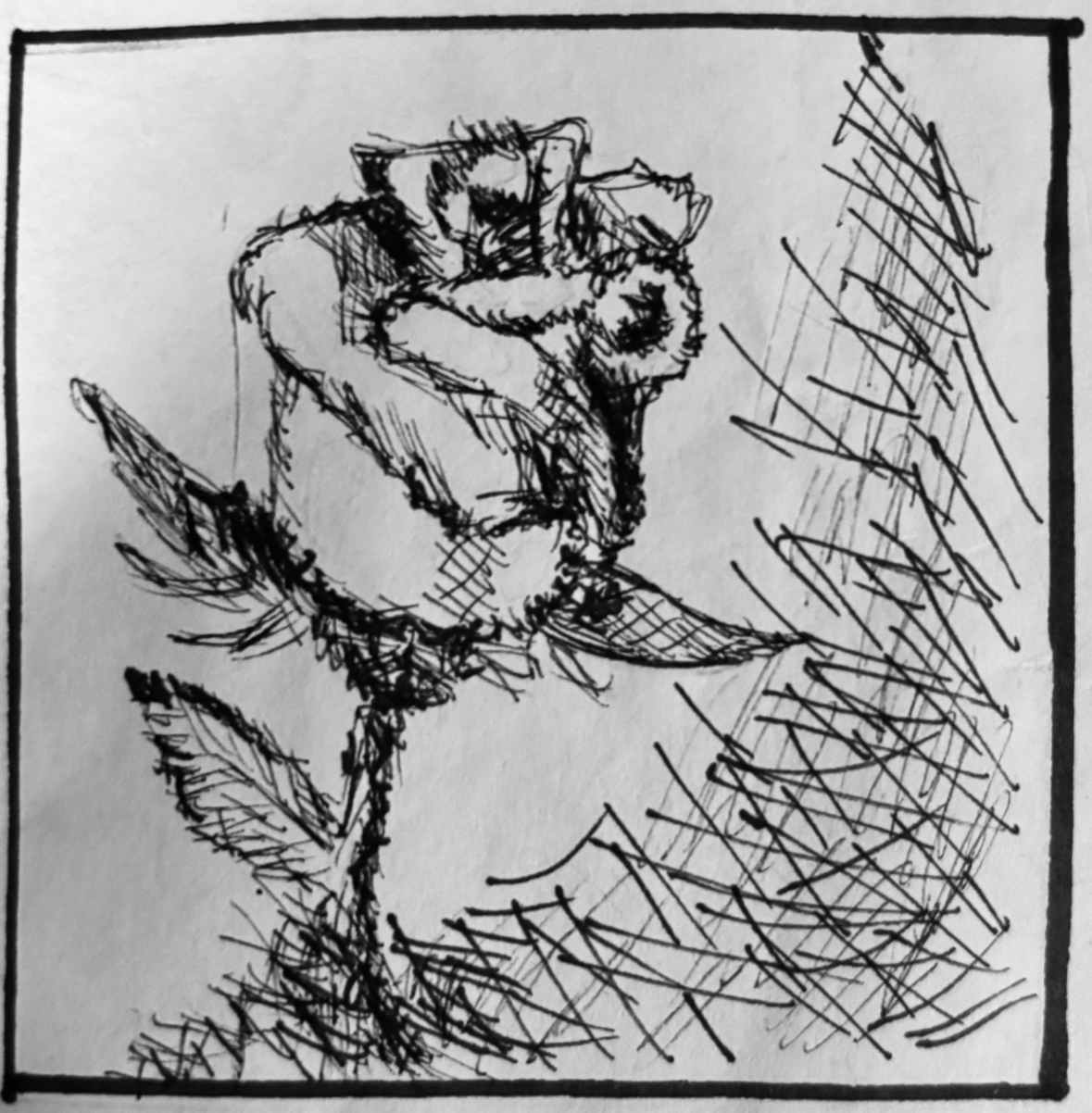
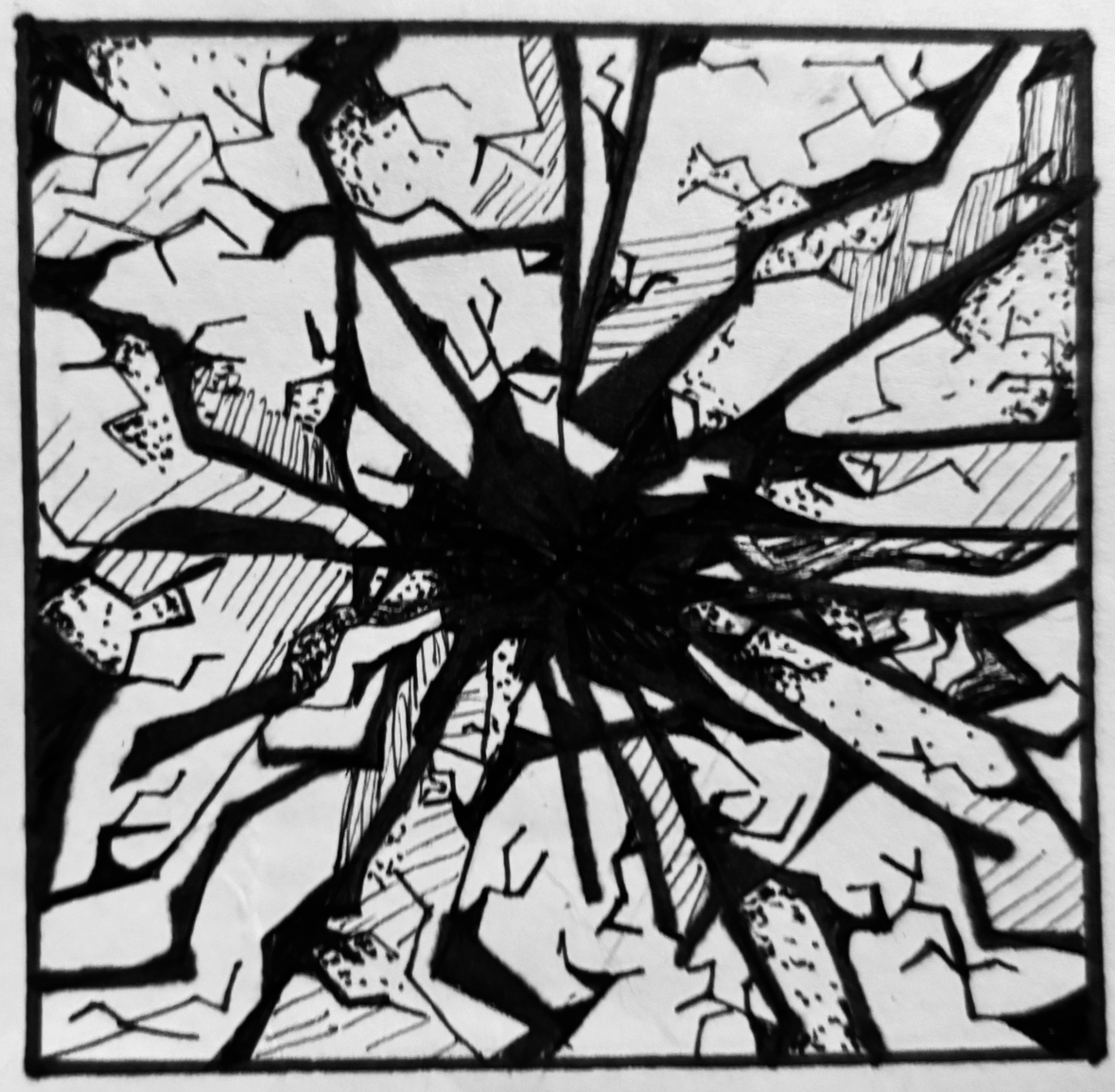
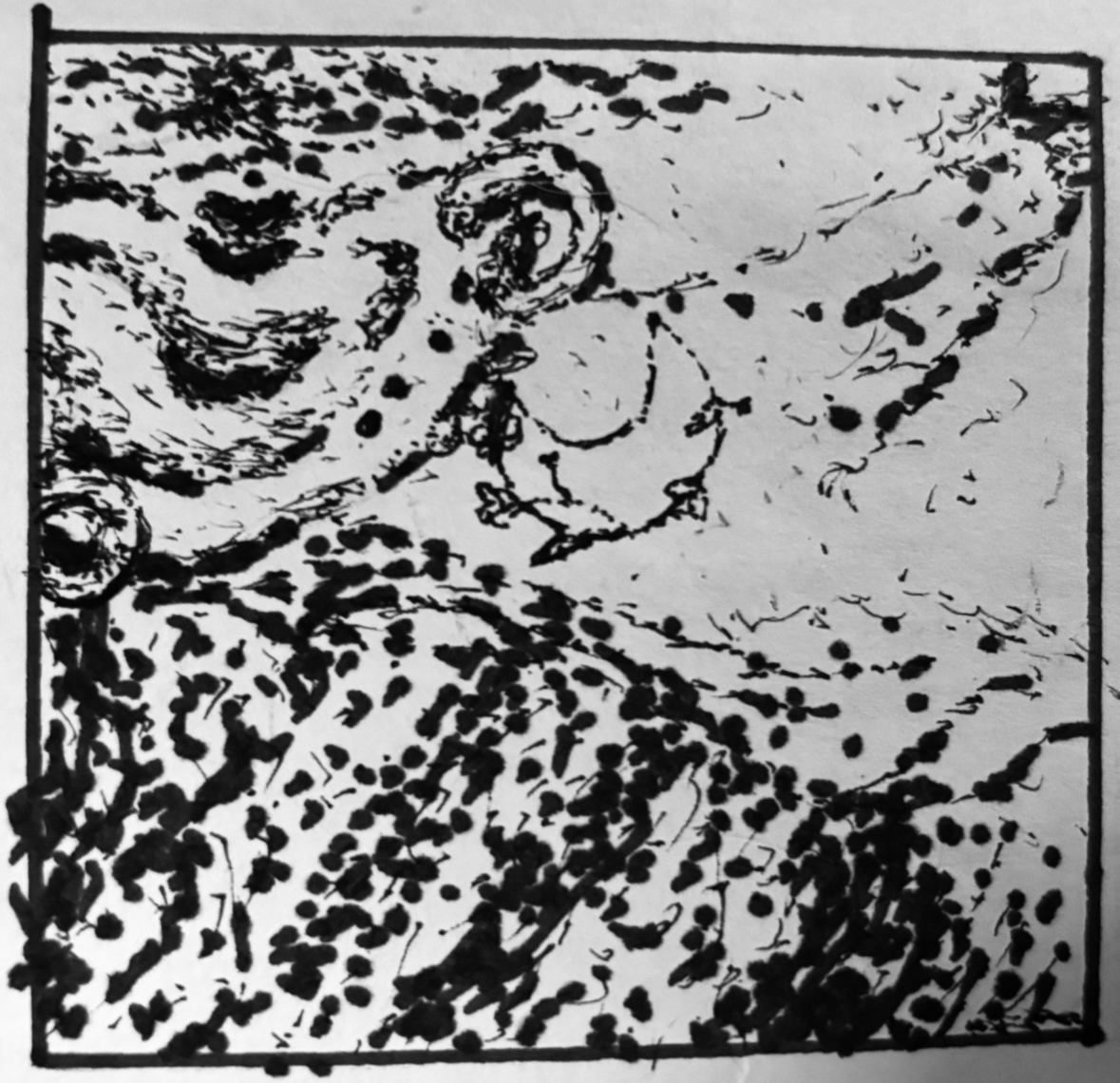
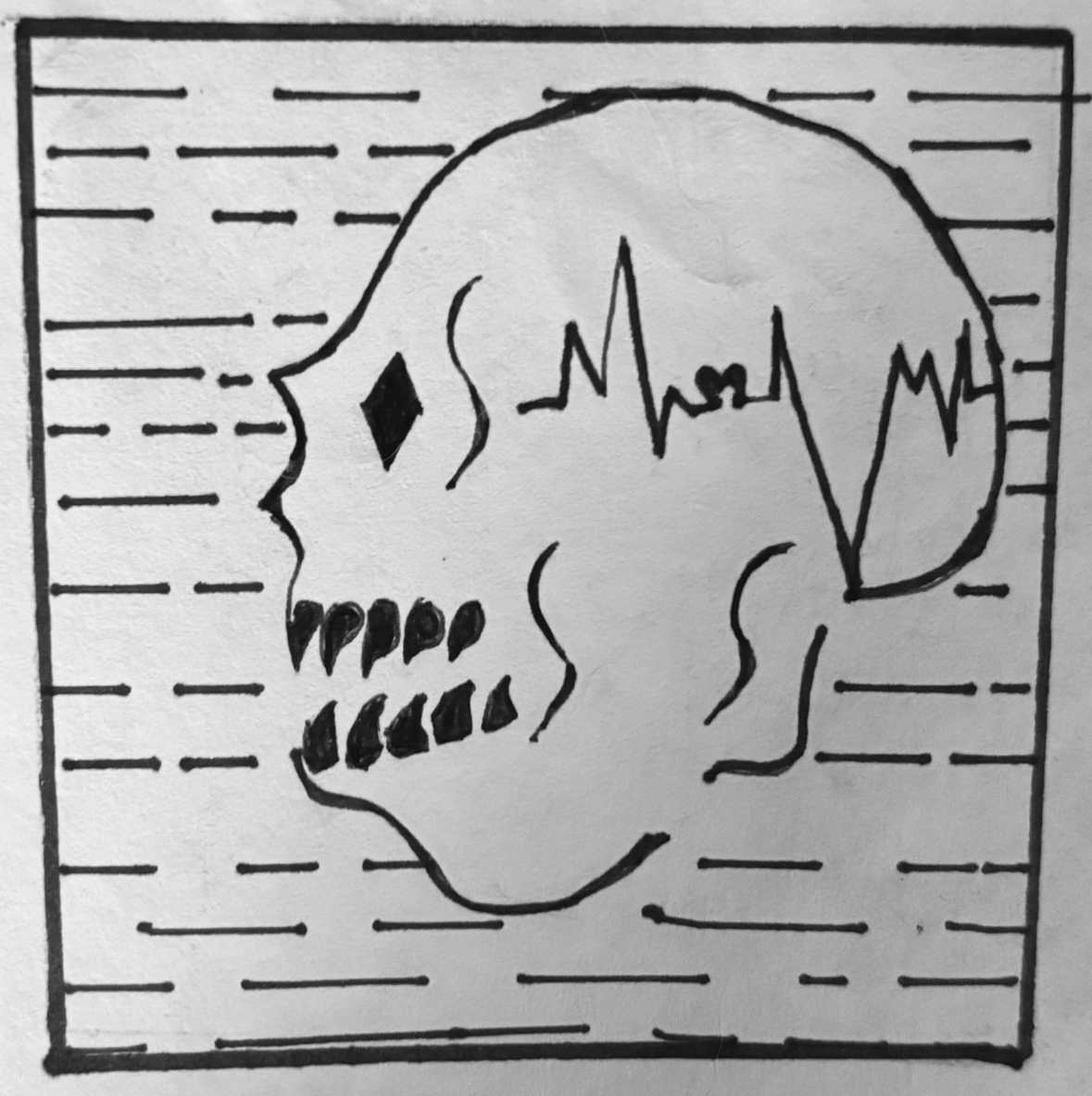

LADY LIBERTY CHANGES HER TUNE *
The “tired” and “poor” now fleeing to our borders
can just turn back. Go home. It’s not my problem.
If they face massacre—Scrooge said it best:
“Decrease the surplus population.” Yes!
These “homeless,” “tempest-tossed” are welfare pests.
Let “huddled masses” huddle somewhere else—
not in my backyard. Or in my country.
We’re not averse to proper immigration.
We spread a welcome mat for white-skinned Aryans—
rich, well-fed, well-heeled—like Musk and Murdock.
Let’s face it—God’s another sticky problem.
Those who call God “Allah” or Jehovah”
are heretic, like brown-skinned Papists; those
whose culture sees God through a different lens
should just convert, be born again, conform.
It’s time for Christian nationalists to rule.
I lift my lamp and sneer at shithole countries.
We don’t need “wretched refuse” eating cats.
A golden door for some; for most, a wall–
with tariffs on all imports. Brave new world!
* THE NEW COLOSSUS
Give me your tired, your poor,
Your huddled masses yearning to breathe free.
The wretched refuse of your teeming shore.
Send these, the homeless, tempest-tossed to me.
I lift my lamp beside the golden door.
–Emma Lazarus, 1883
Copyright 11/2024 Patricia Doyne
A Miss At Twilight
They were called marbles.
They were called reasons.
I am never where I am
when I need to be.
When “I’m sorry” is necessary
or “I’m leaving” is the only response.
I fear life is destructible
and consolation
is a round-trip ticket
to go round and round.
It’s in your eyes.
Your eyes looking into mine.
Counterfeit glances
through a snow globe,
leaving tiny droplets
behind on the surface,
soon to gather and stain.
Gather and stain.
Suffering
is a repeatable offense,
a language
the soul whispers to the heart
on a dark, lonely night
with darker contemplation
to come.
To gather and stain.
Broken and repellant
in a bookstore
that sells small bags of marbles
I see
Cat’s eyes and beauties.
Tragedy radiates from them,
they have no function,
except to be.
Except to be.
Reason teaches us
that
to be completely forgotten
is to climb into ourselves
and be put
in another’s pocket.
I am a miss at twilight.
At dawn
I separate myself from the chasm.
Somewhere in between
you have a thought of me
and I tremble
involuntarily
like
a visitor
at a cemetery.
The Woman I Need
I am as seaweed on a stone
either clinging from the last pass of water
or anticipating riding
on the next wave.
I am a silhouette of myself at times.
Burdened
with modern unforgiveness,
holding my hand over
a candle burning
through
one day from another.
If one is to dream
love is an extravagance,
yearned
from the bedroom
while
experiencing
the cold nights of winter.
I can hear the seams
losing strength.
An allusion
bearing the solemnity
of difficult questions
I ask myself.
And music
provokes reminiscences,
devoid
of a predicate.
What remains
are desire’s
bittersweet
scars.
Experiences,
are dangerous grounds,
abandoning oneself,
abandoning
what is necessary
to understand
tragedy’s consequences
or
contradiction’s demands?
I
yearn to foresee,
to weave a net
across
the enigmas
and dissipate
the contrived
influences.
There is a pier
where beneath,
the waves splash in rhymes.
Every Sunday at dusk
a woman
with long brown hair
stands at the furthest end
and smiles
every time a cat
strolls along the
guardrail.
I lose interest in myself,
while
watching that woman,
that woman.
That woman
is the woman
I need.
Philip received his MS in Psychology from Simon Fraser University, Vancouver, Canada. He has published Five books of poetry: Mirror Images and Shards of Glass, Dark Images at Sea, I Never Finished Loving You, Falls from Grace, Favor and High Places, and Forever Was Never On My Mind. Three novels, Caught Between (Which is also a 24 episodes Radio Drama Podcast https://wprnpublicradio.com/caught-between-teaser/), Art and Mystery: The Missing Poe Manuscript, and Far From Here. Two plays, The Apparition and The Poet’s Masque. Philip has a column in the quarterly magazine Per Niente. He enjoys all things artistic.
First of all, we’re sharing an announcement from contributor Howard Debs about the upcoming virtual course Writing from Atrocity to Healing: A Multi-Genre Virtual Workshop.
This four session virtual workshop will provide poets and writers of all levels, genres, and backgrounds with the tools to write from their experiences with atrocity, the traumas produced by atrocity, and the healing (personally, communally, nationally) your words can make of it. Featuring Ellen Bass, Jacqueline Osherow, Joy Ladin, Geoffrey Philp, Jehanne Dubrow, among others. Moderated by Andrew McFadyen-Ketchum. Four consecutive weekly sessions (January 7, 14, 21, 28 ).
Each session includes content from the forthcoming book The Wounded Line: A Guide to Writing Poems of Trauma (“ethical concerns and helpful craft elements for writing poems [and other writing] that engage with trauma”) presented by the author Jehanne Dubrow, and session related writing prompts and open review of selected flash fiction, poems, etc. as submitted by attendees. Each registrant receives New Voices: Contemporary Writers Confronting the Holocaust suggested readings from which coordinate with the workshop series. Session recordings will be made available to registrants unable to attend specific sessions upon request. Registration fee includes all four sessions. Limited registration closes December 30. Presented by the New Voices Project, a 501(c)(3) nonprofit organization. newvoicesproject.org and you may sign up for the workshop here.
Now for our issue’s theme, Plumbing the Depths. We look into the varied aspects, not always visible at first glance, of people’s interior and social lives, human societies, the natural world, and our artwork, history, and culture.
Chuck Taylor’s story reminds us about the complex layers of each person’s life, that we are more than our most obnoxious moments. Paul Tristram explores everyday human feelings and interactions in his “street poetry,” claiming them as a worthy literary subject.
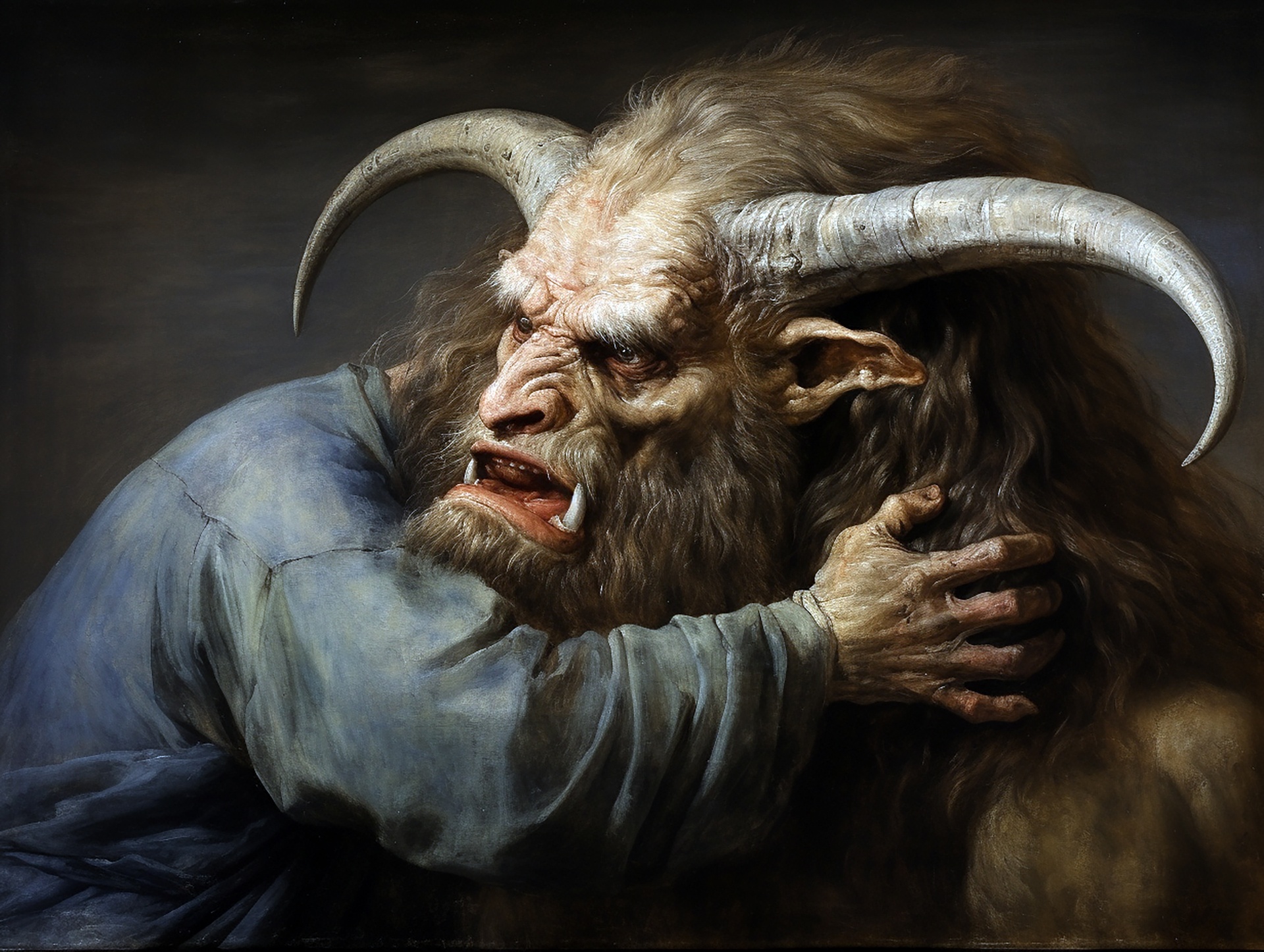
Gabriel Kang speaks to the important issue of men’s mental health by illustrating men’s struggles passed down through generations. David Sapp delves into Middle American family life in the 1970s through a cascade of shifting perspectives.
Daniel De Culla laments relationships inside and outside of the church which are exploitative rather than nurturing.
Ivan Pozzoni brings a comically psychoanalytic perspective to digital and analog aspects of modern life. Mykyta Ryzhykh illuminates the internal and external destruction of total war with a landscape suffering from PTSD. Alexander Kabishev evokes the displacement of civilians during wartime in his continuing epic of the siege of Leningrad. Muheez Olawale’s dramatic tale of escape and survival highlights the tragedy of human trafficking and the slave trade. Nicolas Gunter evokes the hopelessness of a person displaced and oppressed within a cruel climate.
Daniel De Culla’s fragmented near-death dream vision excoriates the political and economic power structures of the modern Western world. Noah Berlatsky illustrates the grotesque nature of hate and vitriol through his consciously repulsive imagery. Patricia Doyne excoriates the rising tide of racist and anti-immigrant sentiment in the U.S. Jake Cosmos Aller lambastes the political climate of the United States. Howard Debs preserves the words of and speculates along with the hosts of The View, wondering about Trump’s recent victory. Christopher Bernard suggests that America’s unique mix of cultural values and priorities helped to produce a leader akin to Trump. Bruce Roberts registers disgust at Trump’s voice, attitude, and behavior.
Turgunov Jonpolat describes how he stopped his peers from bullying him by reminding them that they were not all that important in life. Ivanov Reyez crafts vignettes of people determined to live and thrive despite the small and larger cruelties of the world around them.

Nuraini Mohamed Usman’s tale of enemies-to-lovers takes place within a secondary school. Ahmad Al-Khatat describes two broken people finding and healing each other in an unexpected love story. Mesfakus Salahin offers his gentle love to someone for whom he cares very much. Lan Qyqualla poetically immortalizes his late wife Lora in his mythical verse. Taylor Dibbert conveys continuing grief over the loss of a beloved canine companion. Kodirova Barchinoy Shavkatovna mourns the loss of her grandfather’s kind and poetic soul. Faizullayeva Gulasal reflects on how her love and respect for her parents helped her get through sheltering in place during the Covid-19 pandemic. Cameron Carter describes a love that inspires him to become a better version of himself.
Harinder Lamba presents a love story between a couple, their baby, and the Earth as they help our planet navigate climate change.
Michael Robinson leans on the poetic voice of Rumi to describe his spiritual intimacy with Jesus. Brian Barbeito evokes the mystical feeling that can come with staring into the deep daytime or nighttime sky as Sayani Mukherjee offers up a sensuous take on fallen leaves.
Sidnei Rosa da Silva gently chronicles a ladybug’s climb up a sand dune as Muslima Murodova relates the tender tale of a beautiful but short-lived butterfly.
Kylian Cubilla Gomez zooms in on bits of nature and culture from unusual angles, cultivating a sense of childlike wonder. Isabel Gomez de Diego’s work accomplishes something similar with scenes of cultivated nature: sheep on a hillside and seaside lookouts. Raquel Barbeito also gets up and close with nature, sketching outdoor scenes as well as a closeup of a person’s eye.

Duane Vorhees’ poetic speakers merge with nature in their own way in his descriptions of passion and indigestion.
Sarvinoz Quramboyeva highlights the beauty of Uzbekistan and its people’s optimism. Nilufar Anvarova celebrates the beauty of her Uzbek village and the kindness of its people while Ilhomova Mohichehra highlights the goodness of Uzbeks. Mansurova Sarvinoz Hassan, an Uzbek writer, relates her educational and professional accomplishments and thanks those who have supported her.
Zafarbek Jakbaraliyev outlines the language and distribution of the world’s Turkic-speaking peoples. Irodaxon Ibragimova relates the history of the Bekobod area of Uzbekistan. Sarvinoz Tuliyeva elucidates the history and importance of Uzbekistan’s Shaikhontohur Ensemble. Dilbar Koldoshova Nuraliyevna highlights the elegance and history of the Uzbek language as Farangiz Abduvohidova explores proverbs in Uzbekistan’s culture and Shamsiyeva Gavhar celebrates the beauty and rich history of the Uzbek language and its integral role in Uzbek culture. Maftuna Rustamova praises the wisdom of the Uzbek constitution.
Z.I. Mahmud draws out themes of nationalism and civilization vs wild nature in his analysis of Ted Hughes’ poetic works. Ari Nystrom-Rice illuminates the sheer force of nature, rainwater crashing into the sea. Kass evokes images of nature and plant life overtaking cities. Olivia Brody revels in melding with the beach, merging with wind and sand and ice plants.
Niginabonu Amirova blusters about the power of wind to transform a day and a landscape. Federico Wardal celebrates the lush landscapes and many talents of emerging Egyptian painter Nour Kassem. Nathan Anderson highlights the pure blunt force of Rus Khomutoff’s new poetry collection Kaos Karma as John Dorsey celebrates the soft and tender melodies of jazz. Jacques Fleury’s poetic mishmash twists and turns syntax around into a kerfluffle.

Joshua Martin weaves biological and mechanical images into his elaborate syntax-adventurous poetry. Mark Young’s “geographies” adjust, alter, and repurpose images and style elements. Texas Fontanella also probes the edges of conscious thought with his stream-of-consciousness text-message dialogues.
Also through a stream-of-consciousness form, Abigail George recollects personal struggles and a lost love in a poetic and descriptive essay. Lilian Dipasupil Kunimasa shares her own journey through poetry, towards balancing compassion for self with that for others. Bill Tope’s short story calls attention to the silent suffering of many with misophonia, sound sensitivity, through its depiction of a person’s quest for outer and inner peace.
J.J. Campbell speculates through vignettes from his own life on our place in the world, among time, history, and other creatures, and whether we are learning and growing as time passes.
Mahbub Alam compares the cycles of life to stops along a train route, as our world continually moves and changes. Through the tale of good clothes hung up and set aside, Faleeha Hassan reminds us not to save our entire lives for some amorphous special occasion.
Richard Stimac comments on the rhythms of life and human experience through the metaphor of Argentinian tango as Sara Goyceli Serifova rejoices in the look and feel of a long-awaited hopeful night.
We hope this issue will help plumb the depths behind the surface of the headlines and wring some hope from the sodden fabric of the world.
Haze

The autumn windfall of fallen leaves
A shadowy misty river water
Sat by the upfront the river cried
A dozen zenith full of wavering sadness
I churned the fall from the seasons
Of Tulip's most unkempt secret
A lonely hazardous blush garden
All around a throny buzzing
Fall came with its basket
By the river it was
As I carried the leaves with the moisty touch
So all were symphony of a cacophonous haze.
A few weeks later, the mother finds her father in the hospital with a back wound. He was caught by a shard. She learned from her father that Nikolai was killed on Nevsky Pyatochk, where he was buried in a mass grave.
Hiding the pain of loss in herself, the mother throws all her remaining strength to ensure the speedy recovery of her father. She didn’t forget about us either. Now we seem to see her at home more often. Alexey said that it was caused by Nikolai’s death.
Time passed so slowly but surely, gradually my father recovered and soon they promised to discharge him and let him go home. We were all really looking forward to his return, despite the grief for Nikolai, who was always a good brother and son. It seemed that if mom and dad were at home together again, our peaceful life would return, the way we remembered it, and most importantly, the blockade and even the war would end.
Based on these dreams and fantasies, we held on from day to day. However, unpleasant events continued to knock on our lives. After which Ivan and Leonid still haven’t sent a single letter, despite their heartfelt promises to write every day. For some reason, Masha was especially worried about this. After the news of Nikolai’s death and her father’s injury, she generally changed somewhat, became more silent and thoughtful, and could cry a little. Although we did not know this at the time, her hidden premonitions were not born out of thin air: in 1943, Ivan and Alexei were recognized as missing. It so happened that that was the last time we saw each other on their vacation.
The situation at home was also difficult. The younger Sasha got sick again. Remembering Lena, who died in the fall, we tried in every possible way to take care of him, went to familiar doctors, sometimes even carried him almost in our arms, always made sure that he had a slightly larger ration, so that he slept in warmth, always drank fresh boiled water. But, alas, in the end all our efforts and efforts were in vain. Later, when we leave the city, he will die in the evacuation anyway.
8
It was the month of May. Compared to winter, it has become much easier. In any case, there was no longer the bone-chilling cold and the frightening darkness of the streets. The food situation has also improved. The mother was able to get additional rations for a large family, so there was a little more food.
Since our neighbors evacuated, we were allocated another room. The father returned home, but he was not recognized. He has aged noticeably and is very weak. He lay quietly in the room for several days. But most importantly, he was home now. We also received some long-awaited letters from Ivan and Leonid. They were fine, although they were transferred to the southern front, and it was not entirely clear when we would see them again.
Nevertheless, new challenges awaited us. I don’t remember what kind of day it would have been, but Alexey and I were at school. The raid began, and after its completion we were allowed to go home. When we set foot on our native street, we couldn’t recognize it. Several houses were destroyed, including our house.
With the most terrible thoughts, we approached the front arch. Ours were there. My father, sister and brother escaped because they went out for a walk in the yard, but Baba Katya could not be saved, the bomb exploded right in her room.
We were all alive, but we were homeless. The whole family went to the local district committee, where we were accepted surprisingly quickly and without hesitation were given new housing somewhere in the Vyborg district. After receiving all the documents, my father went with us to the specified address to settle in a new apartment, and sent Masha to the hospital to her mother, tell her about what happened and escort her to a new house.
I had little idea what our new home could be like and what kind of Vyborg district it was, which years later would become my family forever. Alexey knew much more about this area, his classmate lived there, whom he visited a couple of times. Therefore, we discussed this part of the city all the way and assumed what our new home might turn out to be.
– So this is the area of old dachas? – I asked my brother.
– Yes, Pushkin was fatally wounded in a duel in those places, – he replied, – Who knows, maybe the windows of our house, I will go out just to this place!
– It can’t be! It was in the 19th century, the wooden house would not have stood so much, – I disagreed.
– There are many old houses there. You’ll see for yourself soon, – Alexei said, pointing ahead.
Indeed, it was an area of small wooden houses, comfortably located in blooming gardens and the shade of mighty forest parks. It seemed that this place was free from war and blockade. Birds were singing on the branches, locals were digging in the gardens, summer was making its way through the lively streets of the city.
One of these houses became our shelter for the next couple of months. It was a low two-storey house, slightly battered by time, but retaining some representativeness or rather attractiveness. Besides us, several other families lived in this house, so the check-in process was somewhat delayed. My father had to negotiate with the new neighbors for a long time and, referring to the permission, asked to vacate two rooms for us.
In the evening, mother and Masha also came. That’s when we started checking in the rooms and unpacking the remaining things. My parents moved into one room with the younger Sasha, and the three of us in the other. As our neighbors called it, the guest room.
All this time, moving furniture and putting things in order, my brother and I continued to argue about our house, Pushkin and the duel. By chance, my sister heard our argument, laughed and said:
– Actually, Lenin stayed in this house before leaving for Finland. It’s a shame! You should have known that!
Her words made a strong impression on Alexey and me and our arguments stopped. For the rest of the day, we silently helped to arrange the rooms. I returned to this thought again when everyone was settling down to sleep and the lights were out. Taking my place near the window, I lay all night and thought that I was sleeping exactly in the place where Lenin once stopped.
(Young Central Asian woman with a black and white vest and pants, a white collared top, and white sandals. She has long dark hair and is holding textbooks).
Artistic interpretation of folk proverbs in the poetry of Boborahim Mashrab.
Abduvahidova Farangiz
2nd stage student of Samarkand State University named after Sharof Rashidov.
Mashrab’s creativity has been captivating hearts with its charm, charm and sincerity. Therefore, many scientists and researchers are trying to reveal Mashrab’s poetry and make it easier to understand. One of such literary experts, A. Abdugafurov, commented on the unique style of the poet: “He created an attractive and charming mashrabona style in poetry. “Shokh weight and sonorous radif – rhymes, effective use of the lively language of the people, giving speed and enthusiasm to each verse are the unique qualities of the mashrabona style,” he writes.
Undoubtedly, although the poet did not create special didactic works during his career, he widely and effectively used proverbs, which are examples of folk art, and in this way taught people to be virtuous, to do good and meritorious deeds. wrote verses in the spirit of advice.
You are the best person in the world.
If you break the heart, the floating Kaaba will not be broken? (p. 159).
Through this verse, he exhorts the reader not to hurt someone’s heart, and he exclaims that you should forgive the language of the people, because the destruction of one heart is equal to the destruction of a hundred Kaaba. The meaning of this verse is consistent with the sayings of our people such as “Building one heart is a visit to the Ka’bah of a thousand Meccas” or “Dil ozori – God’s bully”.
Mashrab called everyone to do good deeds, saying that alimi guffar – a scholar of speech, that is, not only a speaker, but a virtuous deed – virtuous in practice, that is, be the owner of good behavior and good deeds. advises:
Don’t be a scholar, be a virtuous deed.
On the Day of Judgment, you will ask for the truth of the servants. (page 109)
The content of this verse is closely related to the content of the proverb “Knowledge to the wise, knowledge to the foolish”.
Mashrab talks about humility, which is one of the most unique characteristics of a person, saying that no matter how much the fruit of the tree is, the head is still (crooked), and he calls people not to be arrogant and proud.
If your head reaches the Throne,
Don’t lose your temper
Every tree has a lot of fruit
Raw… (page 125)
The main idea of this stanza can be equated with the meaning of proverbs such as “Even with a small load, a camel kneels” and “Even if your head reaches the sky, walk towards the earth”.
In Mashrab’s work, we can see that he put forward ideas such as work and hard work, striving to master a craft.
A flower without a thorn, a flower without a pearl, there is no craft without hard work,
You can’t get to the bottom of the road without doing math. (page 149)
In fact, our people have long praised work and tried to raise children in the spirit of hard work. Therefore, the idea of hard work is considered one of the leading ideas in our rich spiritual heritage, and a number of proverbs were created in this regard:
Work is pleasure at the base of work.
Work is the foundation of pleasure.
Work is the mother of pleasure.
We find these proverbs in a different form in mashrab interpretation:
I work to have fun
If you do, you will cry. (page 11)
In conclusion, the verses of the folk proverbs used above, which contain deep thoughts, reflect creation with a spirit of mashraban. He enriched his lyrics through our proverbs that have been refined over the centuries. Boborahim mashrab’s work is one of the masterpieces of Uzbek literature, and this charming and charming poem contributed a lot to the development of original human qualities such as hard work, humility, generosity, nobility, humanity, and respect in the young generation.
List of used literature:
1) Uzbek folk proverbs. T.: Sharq, 2005. Pages 27-28.
2) Kh-davron.uz
3) Sh. Shomaksudov, Sh. Shorahmedov. Wisdom. T.: 1990.