Sometimes
London has
Been gone
For almost
Eighteen months
And sometimes
He still
Bursts into tears
When he thinks
About her.
Taylor Dibbert is a writer, journalist, and poet in Washington, DC. “Rescue Dog,” his fifth book, was published in May.

Sometimes
London has
Been gone
For almost
Eighteen months
And sometimes
He still
Bursts into tears
When he thinks
About her.
Taylor Dibbert is a writer, journalist, and poet in Washington, DC. “Rescue Dog,” his fifth book, was published in May.
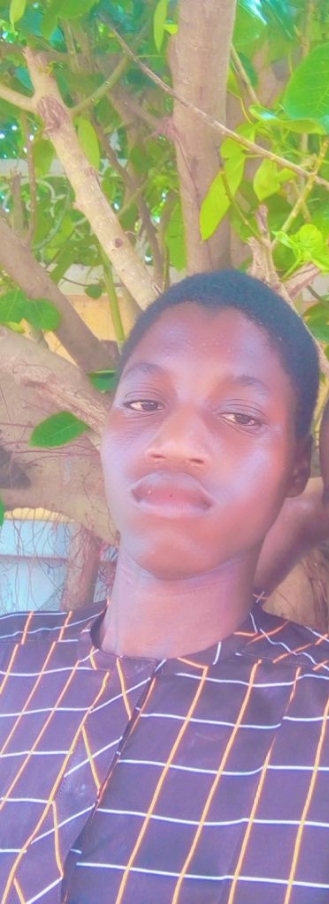
BETRAYALS OF HATRED QUEUE IN PATH OF LOVE
I met her on resuming junior secondary school.
On Monday, we all resumed school and everyone promised to study well. On that week, we all wrote our first test which was to test the seriousness of a student when they have gone away for holidays.
Like water in a basket, the first, second, and third weeks came and passed. On the fourth week, a new student was enrolled in our class, a female student.
We have a classmate called Ummul Khayr who acted as if she knew the girl before. They were classmates in the formal school she attended.
On Tuesday morning, the new student introduced herself to the whole class. She was friendly but a bit proud.
Fatima was the kind that felt proud of herself in the classroom which I hated. So I spoke to her rudely about her arrogance but it led to a serious odium between me and her in the classroom.
Fatima and I never spoke to each other in a good manner but we were always being rude to each other.
We always had to fight in the classroom every single day since the day we had a misunderstanding with each other.
The first term went by without counseling with each other but we would always find new abusive words to stab each other with.
The second term came again and went by but still battling also the third term.
We were given a holiday for the end of the school year which makes me think about the issues.
I asked myself:
Should I stop this rubbish fight? or what will I do?
After the resumption of SS2, I tried my best possible ways to dodge the girl problem but all went in vain till the day I slapped her but still regretted my actions.
The first term passed by and we resumed as “not friends not enemies” and I really enjoyed myself like that.
The second term was so special to me because I met the love of my life.
In the middle of second term, the school embarked on a excursion to “BILKI BAB”. On that day, I just don’t believe myself when I realized that “NURAINI AND FATIMA” were chatting and smiling with each other.
I have a classmate called Salihu who saw us talking to each other. He announced it to the whole class member and wrote on a paper that “Nuraini and Fatima have started playing love”. some of my friends told me that is there a wish and Salihu said he had a dream about it before.
On our way back to school after the excursion, the bus was full with the story of the new Romeo and Juliet.
We continue like that until the speech and prize giving day of my school. The school gave one month holiday that distracted our relationship. So as a newbie poet I wrote a poem and placed it on my cupboard.
Fatimah
You are like a weapon that budged the gap between me and odium
You are the bridge that bridges my ribs to build a household of love in my heart
You are halal theft who took my heart without permission
You are a kind kidnapper that kidnapped my feelings and emotions
You curtained my heart so that nobody has access to it again
Let me tell you, Fatimah
My heart is your palace
Where you can do anything you like inside, Twerk yourself as fun
My heart is a palace that the kingdom In it never ends but you are only the queen forever.
We resumed SS3 in which I became shy of her. So I wanted her to first speak to me but no response.
NOW
I bought a chocolate and wrapped it in a lovers’ package gift container, I dressed up in a very ironed suit and walked to the front of the classroom. I brought out the gift and started writing with three colors of markers on the whiteboard.
A hyperstructure of surreal evocation:
a review of Kaos Karma by Rus Khomutoff
Kaos Karma, the latest chapbook release from Rus Khomutoff, has remarkable weight for such a slim volume. Coming in at a mere nine pages, the book, were it not a digital only release, would feel delicate in the hand, something only barely able to delay its inevitable collapse. This feeling is soon swept away once you pull back its figurative cover and begin to read. What is found within is a poetry that is anything but delicate. It is a poetry wrought with energy and power. A poetry that does not relent and does not care for the easily overwhelmed senses. Perhaps it is a blessing that it is so short.
Kaos Karma does not bring the reader gently into its message. From the opening page, read as a solid block of full caps text, the reader is almost overwhelmed by the concrete, almost monolithic structure of the work. Its appearance seems almost intended to intimidate the reader. There are no soft hands to guide you as you read on, you are hit again and again by these unrelenting blocks of language. These almost endless sentences are like surreal billboards and indeed I would very much like to see some of this work as billboards. A wakeup from the endless detritus of the advertising world. A hyperstructure of surreal evocation.
The language of the book carries a heavy taste of surrealism, those dreamlike and visionary sentences that burn and strike the mind. ‘HEAR THE SECRET SUN SPEAK BLOOD LABYRINTH BLOOD FREED FROM THE WEIGHT OF ALL TIME ALL THE DARK REBIRTHS ARE MINE’ is but one example. Though this heavy language is broken up at times with a kind of new-age esotericism, ‘NOSTALGIA IS A DRUG’, ‘BE ALL THINGS IN ALL TIME’, the self-help for the burnt out searchers on the edge of an insane whirling mountain. Guidance from Khomutoff to where? And when? Who knows? This combination of the abstract and concrete in the language give the effect of the reader being brought back into a recognisable and understandable world, though only for a moment. Once the surreal language reengages the reader is sent back off into the vortices of mental propulsion.
And there is a purpose here, though it is obscure. The writing is taking you somewhere, like a guidebook, like the great Bardo Thodol, the Tibetan book of the dead. ‘ALAS THE CHILD WHO LIVES IN A MYTHICAL, PARADISICAL TIME RENEWING THE WORLD.’ But unlike that holy ancient text which reaches in to take the reader through the labyrinth of illusion through to a clarity of consciousness, through to the other side, Kaos Karma does not state which of its threads is illusion and which reality. Perhaps there is neither in Khomutoff’s cosmology, or perhaps both in a swirling miasma of meaning and nonsense. It is up to the reader to decide.
While only a brief taste, it is a taste so full and potent the reader will find themselves at the other end of Kaos Karma with the heady feeling of both clarity and confusion. This is an artwork both highly idiosyncratic and universal all at once. I have spoken often of the idea of the third text, a text that exists only through the combination of the mind of the reader and the work they are reading. A text that exists entirely unique and which is conjured by strange and powerful, but obscure language. Kaos Karma is such a work. The reader is all the better for having experienced it.
Nathan Anderson is a poet from Mongarlowe, Australia. He is the author of numerous books and has had work appear widely both online and in print. He is a member of the C22 experimental writing collective. You can find him at nathanandersonwriting.home.blog or on Twitter/X/Bluesky @NJApoetry.
Well, The essay of mine is based on overcoming conflicts in my personal life. If I reveal something about my personality, character or lifestyle, it's that I am such a calm, peaceful, introverted, relaxed person. I can say that not upsetting people is one of my traits.

So, why am I writing or exposing my character in this essay? To explain that I have encountered so many problems, conflicts, issues and longitude considerations. I am absolutely saying as one of the minor member of this generation -people, especially youngsters, do not want to respect others. I had had some kind of conflicts with children, individuals and school organization that year, I am going to speak about them one by one in my essay.

Initially, my personal character has caused many misunderstandings with school mates during my school years. I do not fancy having a conversation with people who are irresponsible, irresistible, irrespective, rough, rude and also stupid. Nonetheless, we must admit these types of people are more and more around us.

Once upon a time, when I paid a visit to school in the past, some teens in my school were kidding me and say something worse about me. At that time I did not pay attention to their stereotypes. I though it was a simple childish thing of them to say. Then it escalated and I should have done something to prevent these bad things for me, at this time I had few conceptions of how to get rid of their violations or bullying.

Therefore I have three ways to figure out this conflict, First, I can utilize adequate manipulations to their psychology, because if they had had a good personality, they wouldn't have behaved themselves in this way. In this situation, not only did I not influence them with true and impactful opinions and conversation, but I was likely to be influenced. I just ought to speak to their guardians or parents, if I was not able to manage it.

I would call their parents, so that I could have a straightforward and easy conversation. The next day I did come across again to them in the hall. Tranquility was really gone there, they were bound to reveal some of nasty or unacceptable sayings again and again. After that I had been trying to have a top-notch and real conversation with them.

I requested them to please tell me why they were doing that to me.    I had spoken about their life, asked them to be a merciful person. I told them about homes for orphans, refugees, and the poor. Then I said it was not too complex to be a better person.

Every person has a admirable personality, positive hobbies, and closest acquaintances who are able to shape that person from the core. After this phenomenal situation, every member of his "crew " left there without any words, genuinely realizing that we must be thankful, respectful, and responsible humans. We must take a look at the significant issues around our world.

They understood that embarrassing people did not gain them anything. I was both happy to influence someone to find out the significance of their life, why they are living in this life, what the importance of their goals and dreams are, and indispensably, to be a grateful person. They had bullied everyone, not just me, so that's why I did these campaigns to teach manners to them. It was beneficial for everyone who were suffering from their actions, because everyone has a right to live proudly and independently.
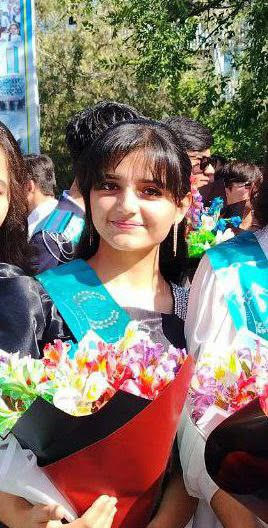
My mother tongue
Languages are beautiful, my Uzbek language,
If the creator of beings is resounding.
My Uzbek language seems to be unmatched in glory,
If the light shines in the hearts of those who hear.
My people proudly say on every front,
The anthem of the country, the bright gloss of the language.
If it increases the reputation,
Such is the power of words, oh well done.
If you love your tongue, blood flows in the veins,
My native language is inherited from my grandfathers.
If you love your language, you will find a place in any field.
If the world loves the Uzbek language, it will be my language.
I value my soul like gold,
I will give my life for my tongue.
We, the Asrayites, are our heritage, like our ancestors.
It is strong even for barley grain.
My Uzbek people, let’s celebrate the language holiday,
Let’s celebrate the birth of a beautiful language.
Let the world know, the whole world, let the nations know,
Great respect of the Uzbeks who speak the language.
Shamsiyeva Gavhar was born in Zarafshan, Navoi region. In addition to science classes, he practices poetry. He has taken pride of place in several republican contests. Her future dream is to win the state award named after Zulfia.
Grown A Little Higher
She painted the ‘Battlefield’
onto her face
with criss-crossed
‘Emotions’…
and walked
… differently…
away from the
(Previous) Incarnation
she had just Discarded.
“I shall no more
‘Shrink’ to fit in
anywhere…
‘Acceptance’
is a self-given Gift…
and, I belong
equally amongst Life’s
Flowers, Thorns and Thistles.”
No Entry (Ever Again!)
‘Access Denied’
… is the best
Weapon to use
upon the Toxic.
You cannot
manipulate,
argue or placate
… Silence,
a Brick Wall,
a Closed Door.
Give a ‘snake’
no slither-room
within your
bright Energy…
and, it will
confuse, anger
and frighten
them… into a
Pain unbearable.
Bowers, Bows, And Bovver Boys
Beginning with ‘Entropy’
… 2 love hearts
hating the same thing…
and, they put a ring on it.
“You haven’t seen her
‘Smile’, have you?
You’d be more than ‘head
over heels’ you’d
understand and become
a (Human) Bowerbird.”
I can taste your ‘Energy’
… and, I’m murderous,
afflicted, and withdrawn
… like an arCHed bow…
coming for your Emotions
straight as a damned arrow.
Suspicious Comfort Zones
And, beneath
Raven Black
Banners…
we Frown,
READY
for all things
Negative…
the ‘Light’
is Mistrusted
… and,
‘Peace’
a Trick,
Trojan Horse
.. a way into
those
‘Vulnerable
Places’…
which instead
of ‘Sharing’
we DEFEND!
… And That, As They Say, Is That
No Fear of ‘Derision’
… puts you up
upon a Higher Level
… than the insecure.
True ‘Confidence’
requires no Mask…
and remains Silent
when gaining ground
… and Obliterating
‘Targets’… which
the clowns, fakes,
and braggarts…
cannot even get Near.
Backing Off Towards The Nearest Exit Point
It is just so Unfamiliar
… you remained
‘Calm’ when I made
a ‘Mistake’… and,
instead of ‘Rage’
… you asked me if
I was going to be okay
… I’m confused…
and, really not sure
that I can be around
someone so… so…
‘Unemotional’
and (Scarily) Different.
Uncouth, Sir!
Absolutely ‘No Shame’
… you grinned as
she tutted the word
‘Problematic’…
and, belly-laughed
when asked to
explain yourself…
answering calmly
“I would dent and
buckle the safety bar
of your preposterous
‘High Horse’
position… damaging
your fragile ‘Ego’
forever and a day
… afore we’d even
got halfway-in to my
Fract/ured Personality.”
Paul Tristram is a Welsh ‘Street’ Writer who has poems, short stories & flash fiction published in hundreds of different publications all around the world. He yearns to tattoo porcelain bridesmaids instead of digging empty graves for innocence at midnight, this too may pass, yet.
His novel “Crazy Like Emotion”, short story collection “Kicking Back Drunk ‘Round The Candletree Graves” and full-length poetry collection “The Dark Side Of British Poetry: Book 1 of Urban, Cinematic, Degeneration” are available from Close To The Bone Publishing.
My mother
Mom, you are for us
You are both great and honorable.
There is a folk saying:
“Learn from Cradle to Grave”
We are your beloved children
Three girls, one male shunkor.
We boldly promise
Now we can help you!
Now we put aside
The joys of childhood,
“We won’t tell you
About my father’s death…”
stay home (covid 19)
Dear relatives,
Dear blood relatives,
My classmate, my confidants,
Please stay at home
shed less tears now
Read more books
Write meaningful poems,
Please stay at home
Memorizing from Navoi,
put wisdom in your heart,
Enjoy your time
Please stay at home
Brave as our countryman
Man does not exist in the world.
He gives his life for us
This is God’s test
We will definitely win.
That’s why my people
Let’s be patient
Be sensitive for now
Please stay home!
Faizullayeva Gulasal was born on January 28, 2009 in Gijduvan district, Bukhara region.The author of “My father’s dream” and “My mother’s paradise”.In addition, he made many achievements in chemistry and biology. English language, literature, mother tongue are among his favorite subjects. Participated in the “Festival of Book Lovers” – “Festival of Literature” and won a 3-day trip to Tashkent. There are 6 people in their family. His father died. She is a very talented, smart and beautiful girl. She has many plans, dreams, and goals for the future, so Gulasal is studying biology and chemistry and making every effort to achieve them. He wants to become a good doctor in the future and send his mother to Hajj. Her future dreams are to take IELTS, win student of the year, Zulfiya award and open a course and teach students.