Poetry from Alex Stolis

How to Drink Yourself Sober

Step Five: Admitted to god, ourselves & another human being

– First confessional

Bless me father for I have sinned. I’m not going to tell

you I don’t buy anything you’re selling. Or twelve years

from now I’ll be driving blackout drunk, arm roped out

the window. You are not going to hear that twenty years

from now I will know the barrel of a gun tastes sour cold

sharp. You’ve no idea that one day she’ll not have to say

a word. The sky will burst in flames, heavens will plunge

into the sea. So, go ahead Father, tell me God’s forgiven

my sins. To go in peace. I have paid my penance by fire

and ash. Been absolved in cinder and smoke. 

How to Drink Yourself Sober

Preamble: The only requirement is a desire to stop drinking

Let it bleed baby, bleed till we’re white. We are pale riders. Ghosts sucking the light 

out of the tunnel, our bones left to blot out the sun. We are sons and daughters waiting

to mourn; ready to set the world on fire.

she calls me by name but I don’t recognize her

voice, the smell of her perfume, soap, shampoo

her body against mine is light:

all legs, long hair and ready

to start a revolution

she starts to say something but I can’t hear

I can only watch,

thinking I’m clever, knowing

she can see right through me

I am that fly on the wall. Yes. A thousand eyes. Unfocused, unclean, unable to swallow

and she knows. Yes she does. It is not to her advantage to forget. She’s watched

every move I make. I know. I know and there is power in knowledge.

I have that power. Don’t waste it. Don’t waste it.

How to Drink Yourself Sober

A Design for Living

When she’s five her mother spun a tale 

of an angel who dropped to earth, 

landed in a quarry. 

She fell in love with a mortal, 

asked him to bind her wings tight 

against her back, 

tried unsuccessfully to fit into his world. 

Years later, when he died, she found herself

unable to fly back to heaven. 

In her grief she flung herself into a marble slab 

where she waits, to this day, for god to split it 

in two to be reunited with him.


Alex Stolis lives in Minneapolis; he has had poems published in numerous journals. Two full length collections Pop. 1280, and John Berryman Died Here were released by Cyberwit and available on Amazon. His work has previously appeared or is forthcoming in Piker’s Press, Jasper’s Folly Poetry Journal, Beatnik Cowboy, One Art Poetry, Black Moon Magazine, and Star 82 Review. His chapbook, Postcards from the Knife-Thrower’s Wife, was released by Louisiana Literature Press in 2024, RIP Winston Smith from Alien Buddha Press 2024, and The Hum of Geometry; The Music of Spheres, 2024by Bottlecap Press

Essay from Bardiyeva Dilnura

Central Asian teen girl with straight dark hair and reading glasses. She's got a leafy patterned top with ruffles at the collar. She is in a living room or bedroom with a rug.

Mother tongue

Unique from all languages

A bright masterpiece indeed

There is no one like you

My mother tongue is one piece

You are as dear as our father

Dear like our mother 

You are one of a kind

My mother is the only one

Bardiyeva Dilnura is a student of the 7th grade of the creative school named after Ogahi. She was born on January 11, 2011 in Kosmabad, Khiva. She is a participant of the Hippo Olympiad and various Olympiads. At the same time, she is the author of several poems.

Poetry from David Sapp (some of many)

Finally Did the Trick

At forty-one

I was nearly cured

Of skyscrapers – September

One year before almost

To the day I laughed

At myself caught

In a revolving door

After lunch beneath

The World Trade Center –

Where I laughed lightly

Turned burned steel and ash

The memory didn’t quite do it

At sixty-two

Though distant and filtered

Through TV news

You’d think the slaughter

At My Lai or Rwanda or Ukraine

Would cure me of any

Remote hope for humanity

The tragic inertia deadly

Incompetence and cowardice –

The demolished little bodies

At Sandy Hook and Uvalde

Finally did the trick


Silence

For those sages

Lao or Chuang Tzu

(Maybe even Siddhartha)

Silence came naturally

Nirvana turned slowly

Silence now requires

The unattainable –

Far too much patience

To be at all effective

To have any impact

Upon our lives

Our intricate elaborately

Constructed karma

The well-intentioned

Vows of silence

Of monks and nuns

In serene monasteries

Seem quaint but futile

Solutions to the clamor

Of a peevish throng

And I am thinking

Anymore silence

Is rather irresponsible

A reckless wu-wei

An obsequious inaction

All spins too swiftly

Suffering too pervasive

Comes hard and fast

Though priceless

We’ve run out of time

For mute circumspection

To adequately flourish

Despite Khrushchev

When we were two

October 1962

JFK on the TV

Moms and dads around us

Must have made love

Despite Khrushchev Castro

And missiles – in beds

Whispering and wondering

Designing elaborate bomb

Shelters in their heads

In our first year that

Sizzling upstairs apartment

We made love never

Getting enough of the other

On our mattress lugged

Into the front room for AC

We gaped at our tiny TV

A man despite his shopping

Bags stopping the tanks

Stopping the party

In Tiananmen Square

When the towers fell

NYC ash in our TV now

Annihilation not so distant

We went to work to school

And made love tenderly

Tended our kids despite

Daycare lawncare taxes

Mortgage utilities insurance –

No time for terrorists

Lurking beneath our bed

Eventual empty nesters

Ukraine and tanks again

Bombs blood despair

Just another despot

Still we fret over the TV

Wish we were young enough to

Join an International Brigade

Still safe in our bed

Whispering and wondering

We make love despite

Our aches and pains.


Lucky Window Table

On the morning of

Ukraine’s invasion

Before cluster bombs

Aromas of burned

Tanks schools hospitals

Russian soldiers

Bewildered boys yet

To warm to brutality

Grandmas and grandpas

Wielding Kalashnikovs

Yet defiant in donning

Yellow and blue and blood

Women children babies

Pressed into trains

Crying screaming dying

Over unwonted catastrophe

We brunch in Oberlin

We snag a lucky

Window table

But we are distracted

Anxious watching waiters’

Enormous round trays

Feasts flying overhead

Or plates queued up

On lavish sleeves

Maneuver around patrons

Through two narrow doors

Up steep precarious stairs

We forebode – worry over

Impending tragedy

Spills and broken dishes

Any other day

Our silly apprehension

Would be amusing

No Quaint Choo Choo

No quaint choo choo

This train isn’t that

“Little Engine That Could”

This train keeps coming

Coming and coming

Pushing and shoving

And in its insistence

There is nothing else

But power steel gears

Huffing grunting roaring

A sadist thrusting

Through field forest town

Renting our sleep

Deep in the night

The deer know its death

Know to avoid its path

Know its inevitability

But Gary steps in front

Of this train anyway

His despair a long time

Coming and coming

He thought, “I think

I can I think I can”

Relying upon momentum

To accomplish his oblivion

What a shame – what a mess!

The horrific image takes

A toll on the engineer

Despair comes for him

Keeps coming and coming

After three the tragedy

A routine – his heart

Must lean upon indifference

Who has the honor of scooping

Up Gary’s little pieces?

Who has the privilege

Of calling upon his wife?

What will his children do

With this stark obituary?

Was there any good in this?

Was a bone – a small morsel

Of flesh left – Gary a repast

For crawling scavengers?

David Sapp, writer, artist, and professor, lives along the southern shore of Lake Erie in North America. A Pushcart nominee, he was awarded Ohio Arts Council Individual Excellence Grants for poetry and the visual arts. His poetry and prose appear widely in the United States, Canada, and the United Kingdom. His publications include articles in the Journal of Creative Behavior, chapbooks Close to Home and Two Buddha, a novel Flying Over Erie, and a book of poems and drawingstitled Drawing Nirvana.

Essay from Leslie Lisbona

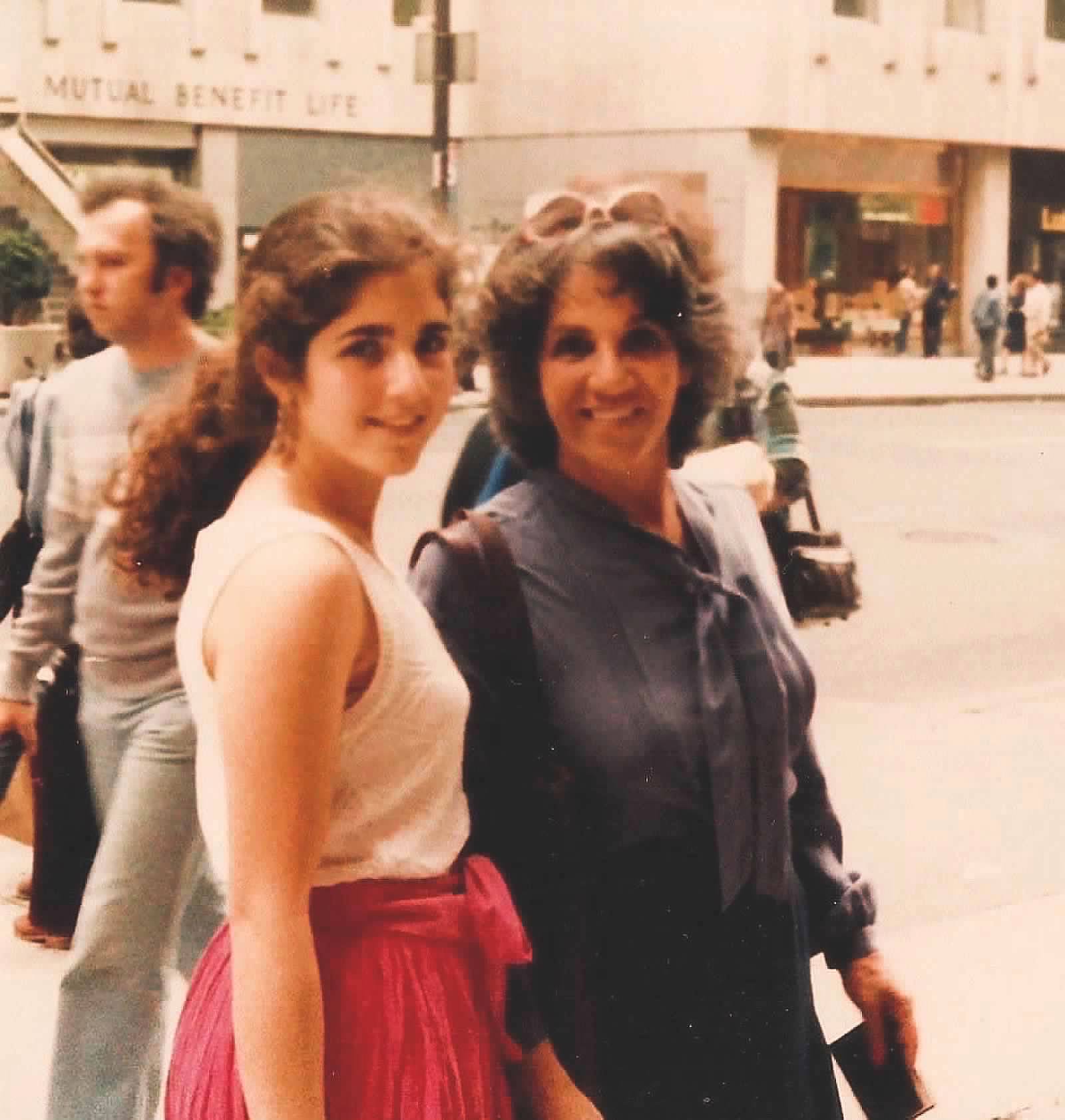
Teen light-skinned girl with curly dark hair and a white tank top and pink skirt stands outside in a street next to a young middle aged woman with a gray tied blouse, brown hair, and sunglasses.

Stand Clear of the Closing Doors

I walked briskly west to 40th and Sixth to catch the F train home to Queens, where I lived with my parents. It was already dark and cold even though it was only 4pm, early for me to be leaving the bank, where I had worked for six years, since I turned 24. 

In the station, there were a lot of people on the platform.  An empty train arrived, and I got a seat.  Commuters hung over me, so I bent my head down to my paperback copy of Wuthering Heights.  It had been my mom’s favorite book when she was a girl.  I was midway through, engrossed in the story of Catherine and Heathcliff. 

I loved imagining my mom young. It wasn’t difficult, even though I came late in her life.  We had so many black-and-white pictures from her youth in Lebanon, where I could tell she had lots of friends and was clowning in almost every shot.  In one she hung upside-down on a metal bar; in others she was skiing, swimming, and sticking out her tongue.   

In junior high, I used to think that if somehow my mom and I were classmates, she wouldn’t choose me as a friend.  I would run through every possible scenario where we might become friends and turn over in my bed with a sinking feeling that it could never happen. 

In school I was bookish and had only one or two friends. We wondered how we could become like the popular girls, but it seemed out of our reach.

My mom was popular even at age 66.  She had many friends. She oozed charm and wit.  Maybe it was because she was my mother, but I saw her as the vibrant center of any gathering.  I admired the magnetism in her. 

The subway car screeched to a halt as someone stepped on my black ballet flat.  I looked up.  It was my mother.

She never took the subway anymore.  When I was a teenager, she was nearly choked in the turnstile by a mugger trying to grab her gold chain, which wouldn’t break.  Instead she drove a Caprice Classic with velvet blue seats. 

I couldn’t believe I was seeing her under the florescent lights of the subway car, amidst the advertisements for clear skin and hemorrhoid creams.  She wore dangling earrings and looked glamorous. She seemed out of place, out of context in her stylish coat and high-heeled boots. 

“Mom,” I said, loud enough for many to take notice.

“Lellybelle!” she said with a smile that embraced me. 

I stood up, grabbed her arms, turned her in coordinated baby steps, and placed her in my seat. “What are you doing on the subway?” I asked

“My car broke down on 57th Street,” she said, brushing her brown hair out of her face.

She had been at a bridge tournament that day with her friend Mireille. She played all kinds of card games and was good at them.  As we headed home together from the Forest Hills subway station along 108th Street, she told me that when she was walking down Lexington Avenue, she was overcome by perspiration, so much so that she went into a coffee shop and got napkins to wipe down her panty-hosed legs.  “That’s weird,” I said. “Maybe you should go to a doctor.”

“Don’t be ridiculous” she said.

Instantly I stopped being ridiculous.  We made a right on 68th Drive and were finally home.

Two days later, my mother collapsed. 

That night as she was dying on the floral couch of our house, my sister, Debi, cradling her until the EMS arrived, I was on the subway.  The trains were delayed.  I got out at my exit; the air was arctic, my boots crunching on the snow, my breath visible in the night sky. Walking along 108th Street, I hopped aside as an ambulance went by, lights flashing and sirens wailing.  I didn’t know it was racing down side streets to save my mother. I came home while they were trying to get her to breathe.  A machine was doing it for her, and the ambulance took her to the hospital, but she was never able to wake up and breathe on her own.  Four days later, declared brain dead, the apparatus was unplugged. For those four nights, my brother Dorian stood vigil at the foot of her bed.

Dorian and I left the hospital and made the arrangements at the funeral home and cemetery for a burial in the morning. That night, I fell into bed exhausted and depleted and finally went to sleep. I dreamed I was in bed with my mom having coffee.  We were in her bedroom, which for some reason was on the first floor instead of the second, and we were wearing our nightgowns.  Her gold bangles chimed as she lifted the cup from the saucer to drink. The doorbell rang.  It was a couple, friends of my parents, a box of pastries in their hands. “Who was it?” my mom asked.  “Valley and Marco,” I said and showed her all the goodies as if we had won a prize.  As I was climbing back into the bed and getting settled for a grasse matinee, the doorbell rang again. “What’s going on?” my mom asked.  I shrugged, ran to get the door to find more of her friends, and then got back into her bed. But as I snuggled next to her, smelling her smells, I realized that her friends, whom I’d known all my life, had looked at me with pity.

After the funeral, the friends who had populated my dream came to our door.  It was the first night of the shiva.  The friends had food just like in the dream, but my dream had been kinder.

I didn’t pick up Wuthering Heights again until the shiva was over and I had to go back to work.  On the subway that morning, seated on the hard plastic orange seat, I opened the book to where I had left off.

The next chapter was the funeral of Catherine.  I gasped. How had I stopped reading just before that point?  Catherine saw Heathcliff again and was sick with regret.  But I didn’t expect her to die.  The shock of it made me cough out a sob.  I closed the book and gathered myself.  My mom was gone, brutally taken from me, like an excision. Here I was on the train, after an interruption of 10 days, going back to the mundane advertisements overhead like nothing had happened. But I had changed. I didn’t know how to be. I didn’t know how I was going to continue my life without my mother in it.  I wasn’t ready to read a book and be in the subway.  I wished I could look up and see her again, right there, stepping on my foot.  My mom was in the hard cold ground in a cemetery in Queens, snow already covering her grave.  The finality was savage. 

My stop was next. I got up to leave the train, and with one last searching look, I stood clear of the closing doors.

Nathan Anderson reviews Sanjeev Sethi’s poetry collection Legato Without a lisp

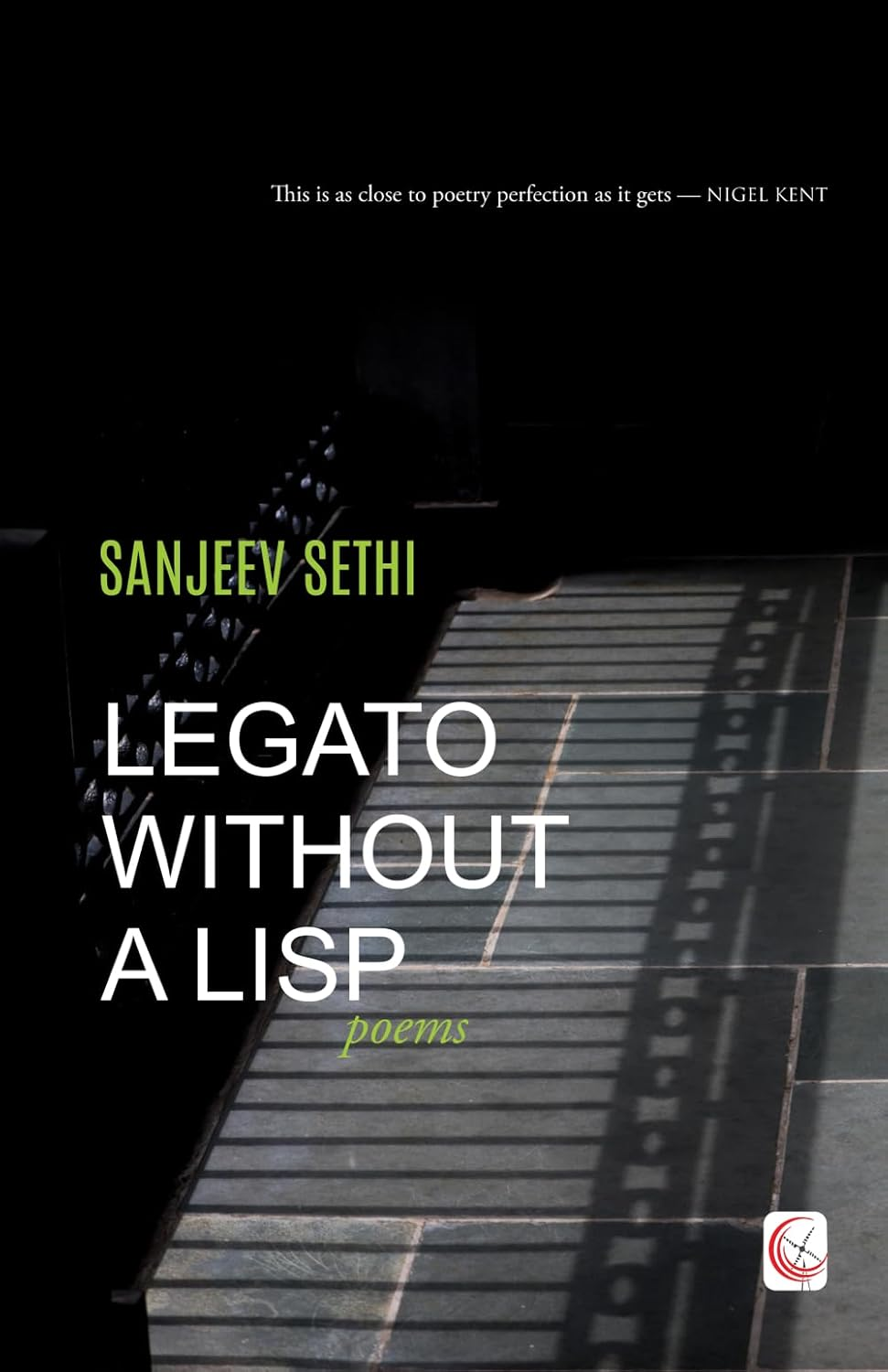
Sanjeev Sethi's Legato Without a Lisp. Book cover has the author's name in capital green letters and the title in white capital letters. Slats of a fence leave shadows in the pavement. Quote at the top right reads "This is as close to poetry perfection as it gets." -- Nigel Kent

A gentle tone from an angel megaphone

Sanjeev Sethi’s latest full length collection of poetry, Legato without a lisp, is a work of exemplary fullness. A fullness of language and of intention. Comprising a collection of works rendered by a poet sure of his abilities and expression, it comes in its sheer robustness into an era marked by frail superficiality. Legato without a lisp is projected in its fullness to stand apart from the mere apparitions of art, those things that shout but barely speak, that garble as they scream with nothing to say. This is not at all in their company. This is a work solid and tangible.

It begins at the level of the line. Each feeling fully formed as though pulled from some remarkable ether and yet each line comes together, cobbled together with striking unity. Poetry born both together and apart. ‘Menarche left its mark/on your left leg’ – from Adolescence and ‘The meter of mederation fails/to direct my dinghy. A sneeze’ – from Effectuation are two such examples. This language, while transformative in its solidity, is not forceful, not violent but inviting, wise and open in its delivery. At times it almost comes like a sermon, Sethi pronouncing from his pulpit, tome in hand, somehow quiet yet booming. A gentle tone from an angel megaphone. A sound that does not speak with reluctance but with vigour.

All this is not to say that it does not have its moments of playfulness and humour. When the humour does come it comes with wit and with a sense of play that eschews the tired figure of the overly serious and dull artist. In passages such as ‘In Meatspace, we meet slices, too’ – from Rifeness, Sethi shows he’s not afraid to have fun. So too in the exemplary rhythms of the poems. They roll by on the gentle musicality, freely played with but always disciplined enough to not crumble into sing-song emptiness. You never get the manipulative feeling of being dragged into another’s song but feel compelled to sing along with Sethi’s gentle tune. ‘Do you know of anyone who dickers/with destiny? Meet the unsexed who,/like everyone, breathe some/more, and leave without a forwarding/address – from Olio, illustrated Sethi’s mastery of the rhythmic form.    

The poems themselves are concerned with the movements of life, the chronological and the appreciative frozen moments where lyric poetry of this quality is born. At times political, at times gently instructive, at times traversing memory that concretes the past rather than descending into sentimental nostalgia. This shapes a world removed from attempts at the homogeneous universal and into the individual. The abstraction of the personal, the subjective waltz of place and time. One gets the feeling that Sethi has a mind for pondering the small moments of life and taking from them something entirely individual. These are not the rehashed platitudes of the churned out postcard poignancy of so much modern poetry. These stand alone. When Sethi writes lines like ‘Mortality forwards its memo,/through a long-lost friend./Senectitude wrests my mentor/and I am quietened by lines left by him;/as an impulse larger than me/chooses to triturate my ego’ – from Au Revoir, you sense his authorial presence in each utterance. He is not interested in the familiar, only in what he can grasp from life through his art.

Legato without a lisp is a book well worth the time. As an art object, it stands as a physical structure against the tide of so much that withers and falls, weak work created with so little thought apart from the on-trend and the easily consumable. Work that it is made to be quickly exhausted and disappear. Work that has no physicality and cannot stand. Sanjeev Sethi has here created a work that wishes to stand, that demands to be remembered. What more could one ask?

Nathan Anderson is a poet and artist from Mongarlowe, Australia. He is the author of numerous books and has had work appear widely both online and in print. He is a member of the C22 experimental writing collective. You can find him at nathanandersonwriting.home.blog or on Twitter/X/Bluesky @NJApoetry.

Essay from Rukhshona Rasulova


(Central Asian teen girl with dark hair and a white collared blouse. She’s holding a certificate.)

The first step towards great goals”

 Goal, dream, passion, plan are words that are similar to each other. Every person should have these words in their heart. If these words are not in someone’s heart, know that he is a person — People who have these words in their hearts are perfect, knowledgeable, intelligent and everyone envies them. Do you want to be among these people?

 Then put a goal in front of you and try your best to achieve that goal. If you know the word “action”, you know the words “goal” and “dream” as well. To achieve your goal try hard. And achieve your goal. Also justify the trust of people who trust you. Through this goal, you become such a person that people look at you with envy and take an example from you. It is true that there will be people who look at you with envy when you are achieving your goals. But don’t pay attention to those people. On the contrary, try harder. Let that person see you become a bigger person and start looking at you not with envy, but with envy. Let that person follow your example.

Rasulova Rukhshona was born on October 16, 2008 in Rishton district of Fergana region. In 2015, she started studying in the 1st grade of school 34 in this district. Currently, she is a 9th grade student of this school. Rukhshona Rasulova is interested in participating in various competitions, writing poems and stories, and reading many books.

She regularly participates in school and district competitions and takes pride of place.

 Also participated in many online contests and 

 There are international certificates.

 Member of various creative teams.

 A young artist has unlimited goals in his heart. His biggest dream is to become a “young reader”.

 Rukhshona Rasulova’s poems were published in the book “Youth of Uzbekistan” published by Justfiction publishing house and in one of the most prestigious British magazines “Raven Cage”. And participated in various anthologies covering artists across the Republic. His creative works are included in the collections “Journey to the Land of Joy”, “Young Talents”, “Youth of Uzbekistan”. Currently, he is the leader of the “Young Artists” circle at Ruhshona 34 general secondary school. At the same time, her creative works were also published in the newspaper “Tong ystziri” published throughout the Republic. We hope you will enjoy reading some of her works.

Poetry from Lan Qyqualla (some of many)

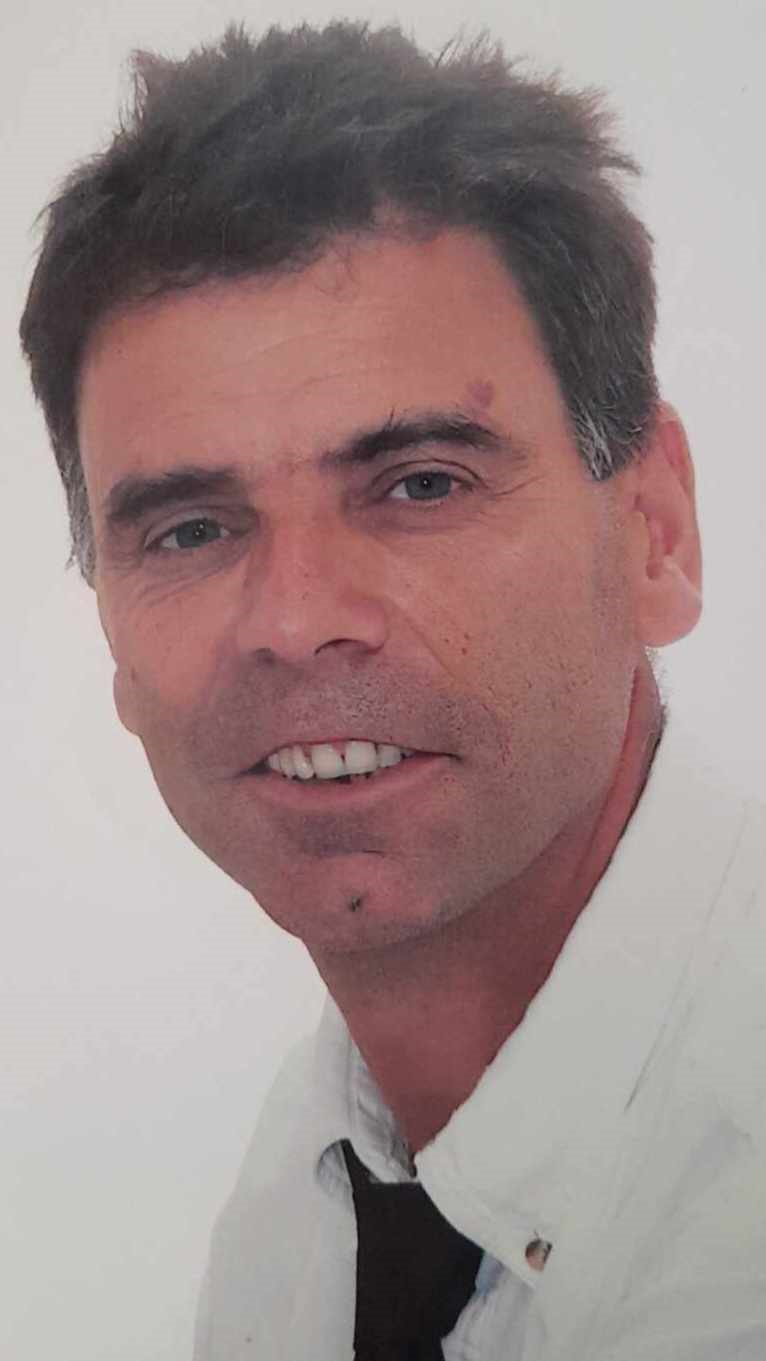
Middle aged white man with a clean shaven face, brown hair and eyes in a collared shirt.

METAMORPHOSIS

(Melissa of New York)

Melissa asked me to imitate Odysseus,

not to listen

sirens of the deep,

nor the poet’s erotic verses

in the rocky waves of the sea.

In New York he studied Pythagoras,

the language of mimicry read the unspoken word

wrote it in saltiness,

where life is a dream

and the dream becomes life.

The epic words underwent a metamorphosis,

the seagulls danced

over our heads,

deep sea conception

shivers run through,

air in New York

I missed the thrill of life.

LATE LETTER

The pigeon made the wrong journey

with the letter written in the color of the sun,

where the moon hung on the white feathers

and the field swayed in the boy’s nap…,

her heart ached in June,

raindrops washed the streets of the smoky village,

the pigeon lands at the wrong address…street number 1986.

The dove, that morning, decorated the song in the bird’s nest,

the rotten mammal was flying

to bring tidings to the chord of Eros,

in Pristina it stops at Ulpiana,

relieves fatigue in the stork’s stork,

the reception smells of the White Crow,

Doris wrote the letter beautifully

in a duel he sought in the Chair

on street number 1986.

The late letter faded into reading…

she sheds tears on the side path,

crow’s feet, seeking separation

in the corner of the heart the melody of hope,

spiders in Doris’s painting

they embroider the bride’s dowry

the late letter wet with tears,

two-way flow switches cards,

to the wrong address –

a life in search traverses, road number 2016.

(The letter left from Peja city in Kosovo,in June 1986, reached Bardh village of Kosovo, in November 2016). The distance between Peja and Bardhi is 45 km!

THRILL

Good evening –

a portrait appears on the screen,

blonde girl with lots of bangs,

special name in this late fall.

Letters get lost on the keyboard,

confusion of emotions in the frozen landscape,

“I’m sorry… – I wanted to say hi,

I have a shiver in me!

“Well, for a few years now, they have made themselves…

“break of sweat on the afflicted forehead,

vision lost in crystal ecstasy…

that, behind the glass a more simplistic world.

He dances his fingers to the chord

of syntactic timbre submerged in pools of tears,

“how close we are, how far we feel”,

this antithesis said in synonymy,

a lot has changed, a lot.

A single path of divine longing,

where I hear the return in late winter,

suspend the sworn oath,

I am looking for architecture

in Rozafa Bridge,

nothing has changed, nothing.

FLOCK CARD

My goodness

Golden hair

in a wedding dress,

it disturbs my life

how you glean the corn

who wear and weave maiden crowns.

There was a mole on the cheek, the weight on the eyebrows

of mortal suffering, in the hands of fate

embroidered in Pelasgian letters,

history cashed in mythology.

The two portraits of your soul,

a woman in infinity

which wreath we laid on the altar of happiness,

the white wedding sheet

you stole from me treacherously!

On our pillow

we share the dreams of the future,

I miss you so much..

THE PERSECUTED MUHAJIR

You sat in the lap of dreams

I caressed her tender lips with caresses

and breasts flourished in my drunkenness,

Song of the Sibyls in poetic verse.

In the oasis of the aroma of tea we lay down,

in the leaves we looked at the unlived life,

we scratched the skin in myzava,

we used to fight in lectures for years.

We poured over the river bed

morality wrapped in dogma,

we spat the time we didn’t know each other

and when we got to know each other, we hugged.

You embroidered the bride in the poet’s muse,

I’m a persecuted muhajiri

I sought refuge in love

our harp was longing.

Lan Qyqalla, graduated from the Faculty of Philology in the branch of Albanian language and literature in Prishtina, from Republika of Kosovo. He is a professor of the Albanian language in the Gymnasium. He has written in many newspapers, portals, Radio, TV, and Magazines in the Albanian language and in English, Romanian, Francophone, Turkish, Arabic, Italian, Greek, Swedish, Hindu,  Spanish, and Korean.