I dreamed and found you young again somehow transported across the Atlantic, past Gibraltar then Corsica, over the waves of the Mediterranean. I arrived quite dashing in a light linen suit and polished Italian shoes, in a little white sportscar, over ancient brick streets and through Di Chirico piazzas and skewed Zeffirelli perspectives at your flat in Rome set curiously in the forum at the edge of the Palatine Hill. I took you in my arms, circled your waist, and my palm found the small of your back.
You twirled for me, flipping the hem of your dress, a black and white print in tiny cubist abstractions. We danced spinning through your bright rooms with the high ceilings like a chiesa expecting Raphael above our heads – an Assumption or an Ascension. You’d arranged vases of flowers, and the tables and chairs were strewn with opened books, chipped china, and the remains of bread and the dregs of wine from the night before. The windows were tall and opened wide, curtains drifting in the breeze, and allowed the shouts and cheers of scruffy boys kicking a soccer ball outside. And there was a jumpy, comedic Italian tune playing from the phonograph – the kind of music that makes you want to whirl around the kitchen with your mother or gambol with your little sister balanced on your shoes.
So pretty and poised, you were Audrey Hepburn in Roman Holiday after she got her hair cut short, raced Gregory Peck on a Vespa, and stuck her hand in the Mouth of Truth. Giddy, we laughed and ached and wept, immediately in love again. Your bedroom walls and the quaint watercolors you bought of the Pantheon, Colosseum, Spanish Steps, Trevi Fountain, and that little temple of Portunus near the Tiber – the very ruins around us seemed to laugh too, happy for us. But when I leaned in to kiss you, our lips refused to touch, to meet as willing participants in a prelude to desire. I heard, “Remember, you’re married.” Instantly I returned flying back across the ocean in my little white convertible to that other bliss I’d live after waking. And that was all. That was enough.
Christopher Bernard will be reading at the Poets for Palestine SF Marathon Reading at Bird and Beckett Bookstore. For a donation of any amount to the Middle East Children’s Alliance, poets can come and read at any time at the store on October 14th, Indigenous People’s Day. Please feel welcome to sign up here or email poetsforpalestinesf@gmail.com to be scheduled.
A Day in October
A child holds his breath
like a frightened pet to his chest.
*
His eye peers through a hole
in the wall of his night room,
in the acid dust of siege
and cage of bone and blood,
in the code of an algorithm
governing AI
that has made the ineluctable
decision he shall die.
*
His eye, brown as honey,
watches you, intently.
*
It is like the eye in a castle wall
where hungry defenders await the burning
arrow vaulting through a sky
dark as velvet,
to break a mother’s shield
and wipe her tears with ashes
*
and build in pillars of fire
a school where future terrorists
(according to the omniscient
and infallible AI),
are learning, even now, their alphabet.
*
_____
Christopher Bernard is an award-winning poet, novelist, and essayist. His book The Socialist’s Garden of Verses won a PEN Oakland Josephine Miles Award in 2021 and was named one of 2021’s “Top 100 Indie Books.”
We begin this issue with an announcement. Bird and Beckett Books in San Francisco is hosting a marathon poetry reading on Indigenous People’s Day, Monday October 14th, to benefit the Middle East Children’s Alliance (https://www.mecaforpeace.org/) which provides humanitarian aid to all children of any race or background in Gaza and the West Bank. For a donation to the Alliance of any amount, you can choose a time and come to Bird and Beckett to read any one poem on stage that day. More information here.
Also, several of our contributors invite reviews of their written works. Please feel welcome to contact us and we will put you in touch with the authors.
Noah Berlatsky has a book of poetry recently published from Ben Yehuda Press called *Not Akhmatova*, which is translations/responses/arguments with the work of Anna Akhmatova, thinking about Jewish diaspora.
Daniel De Culla has a collection, Grandparents Dance, that he hopes to publish, and for which he invites reviews. You’re welcome to email him directly at gallotricolor@yahoo.com for a copy.
Duane Vorhees has a book of poetry titled Between Holocausts and invites pre-publication reviews.
Duane Vorhees also offers expertise on a variety of topics and is happy to have writers contact him and pick his brain! Please reach us at synchchaos@gmail.com and we’ll forward your message to Duane.
I grew up in rural SW Ohio (actually about 20 minutes from JD Vance’s home). I lived in Montreal when Rene Leveque won the provincial governorship and launched a French domination movement.
I spent most of my active professional career teaching for the University of Maryland to US military. dependents, and locals in Korea and Japan. I currently live in Thailand.
My PhD was on Immanuel Velikovsky (as a result I probably am one of the world’s leading experts, though I have not engaged in the field for a long time).
Lorraine Caputo’s verbal postcards serve as windows on South and Central American townscapes.
Brian Barbeito dreamily reflects on a suburban neighborhood where he used to live. Soren Sorensen’s art concerns liminal states and the uncanny: a calm suburban house at night with a vague occult reference, hazy suggestions of sunrises, and an arrangement with a dagger and rose. Robert Fleming reinterprets cows in a multitude of surreal directions. Kylian Cubilla Gomez zooms in for closeups of uncanny or unusual aspects of nature.
Mark Young intermixes text, line, and swathes of color in the artworks he calls ‘geographies.’ Patrick Sweeney crafts little vignettes through his haiku-ish sentence fragments. J.D. Nelson brings us another set of quirky monostich poems, peering into the world with gentle humor and curiosity.
Noah Berlatsky illustrates how art can liberate us from commonplace thinking. Kelly Moyer’s photography renders common objects, even a restroom, intriguing visual and tactile experiences. Grant Guy pays tribute to an artistic faction whose ideas he appreciates as they bring a sense of humor to their speculations on life’s absurdities. Doug Holder describes the visceral experience of listening to Etta James.
AG Davis conveys the psychological weight of dislocation in his poetic piece. Ahmad Al-Khatat’s short story evokes the despair and helplessness of soldiers in wartime who cannot return home. Alexander Kabishev evokes the fear and despair of the blockade of Leningrad in his memoirs, a time when home became unrecognizable.
Christopher Bernard envisions the impact of an imagined disaster tearing at the heart of the American city as Pat Doyne pokes fun at Donald Trump’s recent comments on urban immigrants.
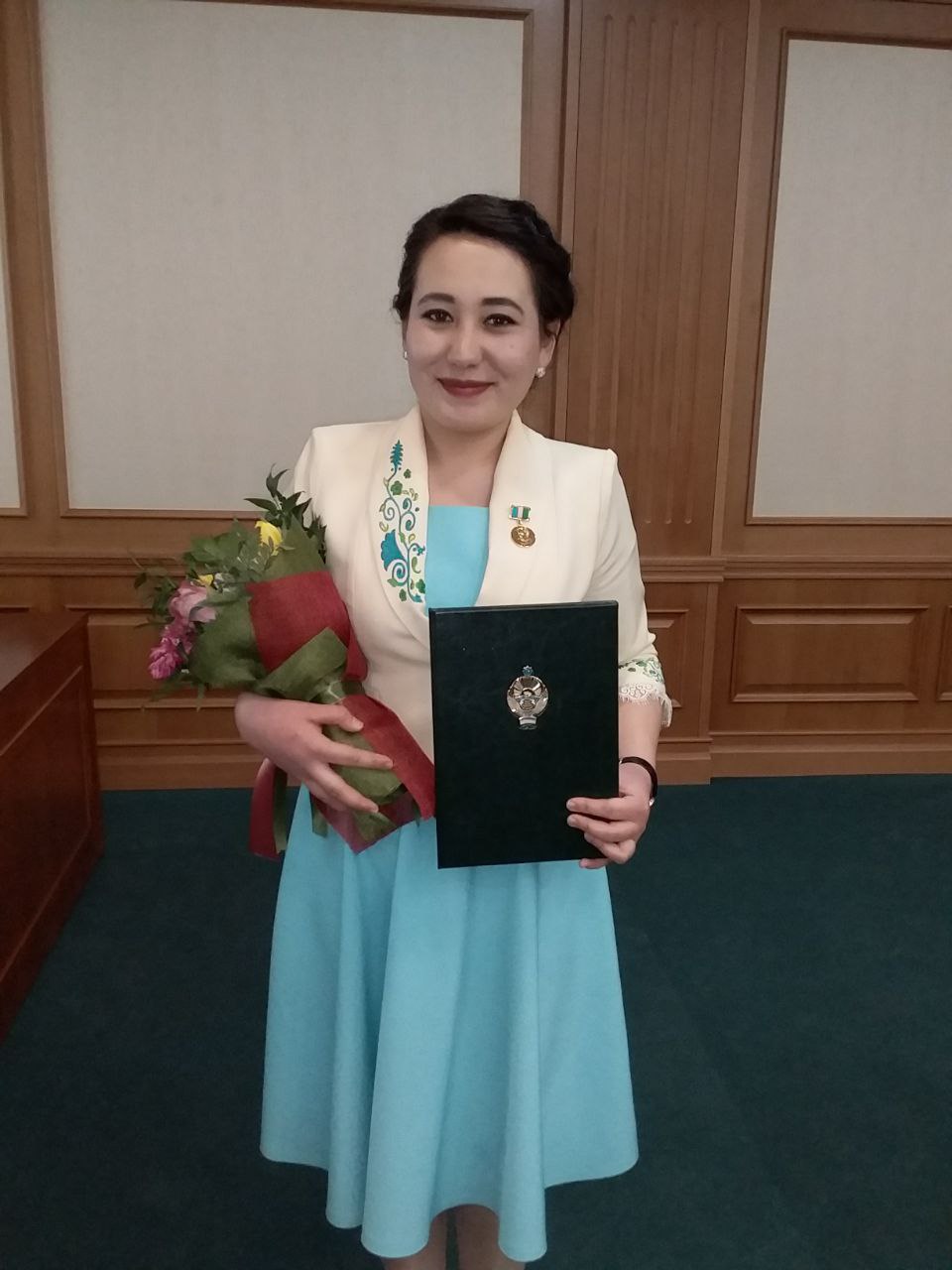
Parichita Saha explores the roles of Greek and Roman mythologies in their respective cultures. Z.I. Mahmud explores how W.B. Yeats’ poem Leda and the Swan relates the themes of the Greek myth to the Ireland of his time, situating the story within his own world. Kahlil Crawford celebrates the power of language to provide shelter and refuge and to convey and inspire thoughts that go even deeper than human culture. Aminova Oghiloy pays tribute to the culture and scholarly work done in her region of Turtkul, Uzbekistan.
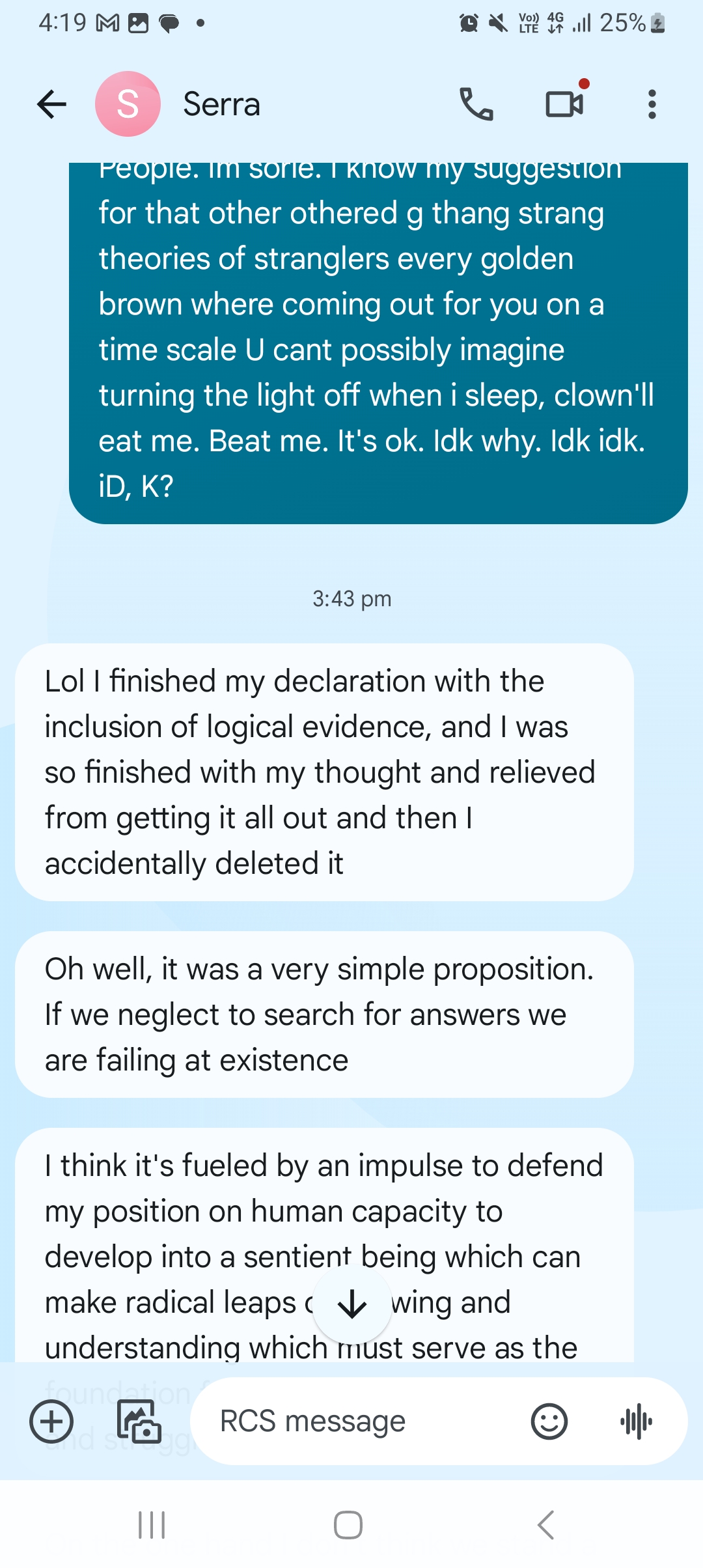
Texas Fontanella ponders whether the answers to life’s ultimate questions are simple or complex and whether we stand a chance of figuring them out.
Maja Milojkovic finds belonging and peace through a very personal faith and sees the inspiration of the Lord in nature. Michael Robinson reflects on the steady and caring hand of the Lord throughout his life as a Christian in two pieces, here and here.Mahmud Dzukogi speaks to the spiritual grounding people receive through faith, compassion, and ethics.
Jacques Fleury reminds religious leaders and adherents of our common humanity before God. He points out that racial marginalization can manifest within church settings as well as in the secular world and must be confronted as part of the practice of faith.
Mesfakus Salahin reminds us that we are all equal at the moment of death. Eva Lianou Petropoulou urges readers to hold onto innocence in a harsh world. Daniel De Culla captures a loss-of-innocence moment for a young and naive girl.
Some contributors speak to inclusion and belonging within society. Mykyta Ryzhykh laments the callousness of humanity towards the vulnerable. Nahyean Taronno memorializes the courage of student protesters who recently changed the course of Bangladeshi society. Rakhimjonova Mashhura highlights Uzbekistan’s efforts to include children with disabilities in the national education system.
Salihu Muhammad Ebba reminds us of the ubiquity of disease and biological predators and our shared human biological vulnerability. Raquel Barbeito brings a tender eye to her drawings of cats and people, crafting images with colors and lines softly fading into each other.
Many writers find their spiritual and emotional home with another person, or wish to do so. Jasna Gugic expresses the beauty of close, yet wordless, intimacy. Fadwa Attia celebrates the deep and steady love she has found with her partner. Mahbub Alam also speaks of a tender, intimate love. Faleeha Hassan expresses each of the ways in which a close relationship affects and inspires her life. Dr. Prasanna Kumar Dalai contributes delightful rhyming romantic sonnets. Dilnura Kurolova highlights the value of close friendship.
J.J. Campbell speaks to the years-long pain of lost love. Nosirova Gavhar shares a tragic tale where a man recovers from his injuries, yet loses the love of his life. Graciela Noemi Villaverde reflects on the emptiness of her home as she grieves a loved one. Otteri Selvakumar shares his hopes for an honest conversation between lovers to clear the air.
David Sapp reflects on his connection to his father across generations through their shared boyhood collections. Lidia Popa reflects on the memory of those ancients who have died and been lost to history. Isabel Gomez de Diego highlights the smallness of humans, mere children amid the size of nature and culture.
O’tkir Mulikboyev speaks to the depth and breadth of cultural and natural history in the voice of a river flowing to the sea. Sayani Mukherjee muses on rivers, and other natural phenomena, as reminders of impermanence. Utso Bhattacharyya celebrates the wisdom of ecologically sustainable development, including drawing hydroelectric power from moving water.
Jerome Berglund captures and celebrates moments and the flow of time in his mixed media art. Duane Vorhees speaks of physical intimacy, aging, and love and art in his poetry.
Elmaya Jabbarova compares human emotion to the rainbow, asserting that a wide range of feelings are natural. Sandy Rochelle urges us not to fear suffering, but to learn as much as we can by all of our life experiences.
Lilian Dipasupil Kunimasa illustrates the pain of social rejection and abuse, yet reminds us that every season passes, like the night back into day. Dr. Jernail S. Anand offers up wisdom for various stages of life. Ilhomova Mohichehra speculates on life’s mysteries while watching the rain and asserts that on a future sunny day, she will choose to be happy. Idris Sheikh conveys the strength of hope through a poem about seeds. Thaalith Abubakar Gimba affirms his hope for the future despite others’ cynicism.
CONFLICT AND PLOT HARMONY IN SAID AHMAD’S NOVEL “SILENCE”.
Abstract: This article describes the characters in the novel “Silence”, the similarities and differences in their characters. Information about the conflict and the subject is provided. Conflicts in the work are revealed through examples.
Key words: work, hero, conflict, plot, positive image, negative image, psychological conflict, social conflict, personal conflict.
There are many writers and poets who have gained their place in Uzbek literature and enriched Uzbek literature with their works. Among them, Said Ahmad left a rich legacy with his unique and unique works, and he won the hearts of readers. The works written by him are loved and read again and again. A person who has read will want to read again. In this article, we will try to shed more light on Said Ahmed’s novel “Silence” and the negative and positive images in it.
In the novel “Silence”, the ugly life of the leaders in the Soviet era, the lifestyle of the oppressed ordinary people, the Taliban who lived in Africa for many years under the pressure of the leaders, returned home after losing his wife and child, the womanizing chairman Mirvali, who is ready to do anything abominable for wealth and position, his father was killed and his mother was killed by Mirlvali. The fate of people like Azizbek, who was kidnapped, is told. The work perfectly reveals the evils of the stagnation period.
In the novel, the internal dramas of the Shura era, which seemed calm and peaceful on the surface, and the crisis of the regime are shown in all their tension and intensity. Almost all the leading characters in the play have a tragic fate. The novel is attractive with its simple, “free” style of expression.
“Plot (fr. Sujet – a subject, something based on) is one of the most important elements of the artistic form, a system of events in the work that are interrelated and consist of the actions of the hero. Plot is one of the characteristics of fiction, plot is present in all works, regardless of type or genre, but its manifestation largely depends on which type or genre it belongs to.[ D. Kuronov, Z. Mamajonov, M. Sheraliyeva, Dictionary of Literature, T: Academy, 2013].
At first glance, Mirvali, who appeared to be a good and positive character, was actually a negative character. In the village or collective farm, Mirvali had a hand in everything if there was any evil, dirty work… The main characters in the work are as follows:
• Taliban – the main character. Scientist. A man who lived far from his homeland for many years under the pressure of officials, returned to his home where he was born and grew up after the death of his wife and child, and “buried his happiness in the soil”, according to his mother.
• Mirvali is a friend of Taliban. Chairman of the collective farm.
• Zainab- Talibjan’s sister.
• The old woman is a 90-year-old blind woman, Talibjan’s stepmother.
• Azizbek is a young man whose father was killed by Mirvali, and whose mother Mirvali took as his mistress.
“The plot is the interrelationships of characters, contradictions, sympathies and antipathies between them, so it also invents, generalizes, and discovers the contradictions of life. Life conflicts are transferred to the work in the form of a struggle of expressed ideas, depicted characters, and moods, and it is called a conflict. [ H. Umurov, Theory of Literary Studies. T: Publishing house of folk heritage named after A. Qadiri, 2004. B-123].
Any kind of conflict can be found in the novel “Silence”. The characters of the work and the conflicting relationship between them are described very well. We can see it in the example of the conversation between Talibjon and Jayrona in the play. “Jairona was silent for a while. Then he sat looking at the far ceiling, deliberating whether to say what came to his heart or not.
– Won’t you be upset if I say something?
The Taliban said, okay, tell me.
– Brother Talibjan, you are a person who is not fit to fight and has no will. You are one of those who follow Tolstoy’s theory. Do you know? Tolstoy puts forward the idea of rising up against oppression. You once raised your head and became an earthworm. Your heart stopped beating for the second nod. Accepting fate, you are wandering in other countries. You are powerless to stand up against violence. Frankly, I don’t like you. A man should live as a fire. He should spend all his will, strength, and mind to prove that he is right. What are you doing, eh…” Jayrona waved her hand like a disappointed person.
The Taliban did not crack the ground and did not enter the ground. On one count, his words were true. Talibjan did not realize that he was living by his fate. He felt it at the same time. Jayrona told him this. [ S. Ahmad, Silence. T: Gafur Ghulam, 1989]. It is in this part of the work that we saw a personal conflict. The laziness of the hero of the work and his inability to fight for the truth are told to his face by the language of another hero.
“Conflict is the driving force of the plot. It is an element that determines its effectiveness, interest, and scope. Its different types are found:
1. Psychological (spiritual) conflict is the struggle of emotions, concepts (weaknesses and strengths) in the heart of the hero.
2. Social conflict is a struggle between the heroes of the work and the conditions in which they live.
3. Personal – intimate conflict – struggle between opposing characters, groups. These three types of conflict can be found in all novels, but the works in which psychological conflict is the leader (“Mirage” by A. Qahhor; “Treasure of Ulugbek” by O. Yaqubov) are always indicators of the quality of literature and leave a bright mark.” [H. Umurov, Theory of Literary Studies. T: Publishing house of folk heritage named after A. Qadiri, 2004. B-124].
The fate of the heroes of the work ends in tragedy. But we can learn that the combination of plot and conflicts is the tool that moves the work. We should also be among the people who fight for the truth and freedom, for the rightness in our lives. We would recommend others to read this work of Said Ahmed again.
Unknown person behind the curtains that take decisions
It is all about manipulation and violence
It is all about no ethics
People want to earn money fast
It is all about a fake world
And if you do not stay soft ..
If you don’t keep the inner child
your soul will be lost….
EVA Petropoulou Eva Lianou Petropoulou
Eva Lianou Petropoulou (Greece)
She is an awarded author and poet from Greece with more than 25 years in the literary field published more that 10 books. Her poems are translated in more than 25 languages. She is President of creativity and art of Mil Mentes Por Mexico Association. She represents Greece as a media partner and is a member of IAE India. She’s part of the Global Federation of Leadership and High Intelligence A.C. and an official candidate for the Nobel Peace Prize. She is a World Ambassador of the International Academy of Ethics in India and an Ambassador of Group Poetry as well as a member of several literary groups.