Poetry from Lan Qyqualla

EURIDIQUE COME BACK ONE DAY!

(dedication to my late wife)

Eurydice, come back one day,

that my song for you does not stop

prayer to Hades touches ancient crystals,

my muse invades Diana’s verse,

I will not turn my head back

that I am not Orfe.

Eurydice, take the fairies’ journey,

come to visit and don’t stop there to see

the children have grown up. Teuta walks

your traces in Grammar,

Fly like birds in flight,

Lali stays calm like a meteor pillar,

cold winter has fallen on me

I have snow everywhere on my head.

Eurydice, I wrote you a letter,

in which paradise do you rest,

sorry i didn’t have an address

and started the journey without a visa,

no passport, no goodbye

and how do we wish this year?!

The Sun’s Tears

I do not trust

the sun’s

tears

and Lora’s

love

I do not trust

theweight

ofher word

or the longing

I have for her.

The Drawer of Forgetfulness

I locked you up

in the drawer of forgetfulness

as the crystalline water under the earth

and the crumpled writing on the gray sheet

proof of the time spent in the studio

I saw you

in the labyrinths of the faculty

where the Alphabet’s raytwinkles

your voice can be heard in each class room

in the workbook you

are piling up the memory years.

Lora 

We wander through time 

like snakes in the bushes 

Lora and I 

in the ecstasy of the painting 

I gave her Mona Lisa’s smile 

I drank water from Lora’s bosom 

and I lost myself in adolescent dreams, 

I gave Lora a life 

I gave the sky a kiss 

the sun seemed to be silent 

and left a free way to darkness 

the rainbow lightens my way 

fiery I take the stars to the bosom 

I hug the sun 

to feel its tenderness. 

Lora is silent 

and she silently speaks 

in her blonde hair 

I touch the love 

embers in the lap 

white frost 

he left traces 

Lora is asleep 

with the fiery stars 

tickling her lips 

in the corrugated crown 

the sounds of silence 

I put her crown 

and I read under her eyelids 

the novel I will write 

Lora with her bosom as virgin snow 

lures the Talmudists’ years 

Lora crystalline meteor.

WHAT TO WISH YOU TONIGHT

I am drunken with craving

of cords of your voice

I seek the canary of love

in the labyrinths of the soul

the morning messenger is not heard

nor he knits the sounds cardigan of Monastery

you, the lost one in the waves of forgetfulness.

I glaze the pictures in the museum

I doze in present time

the verb love

I conjugate in first person

Because you loved me

I track in mirative form

the time passed in lucidity

what to wish you tonight as you forgot me.

Ah, with the sweetness of the vowels

Quivered even my lake

we, like two canaries in the mountains

loosing trails in canon

me, you and the voice

tonight brings me back to nostalgia.

Poetry from J.J. Campbell

Middle aged white man with a beard standing in a bedroom with posters on the walls
J.J. Campbell

----------------------------------------------------------------------
flutter

and here comes the old timer


a blackout drunk in the city
that never sleeps


has stories for days about
hookers, heroin and whatever
happens to flutter into his mind


i egg him on from time to time,
especially when he calls oprah
the anti-christ


how many black women have
fucked you over?


i stopped counting in the late
fall of 1979


like a lost dog, he wears those
puppy eyes like a scolded child


ok, let's go to the bar


he lights up

a smile


we get to the bar and ask for
two old fashioneds and a shot
of everclear


the bartender asks are you two
celebrating or looking to die


the old timer mumbles under
his breath
what is the fucking difference

i pat him on the back, reassuringly

tell him there isn't any
---------------------------------------------------------------------
imagine the fame

watching the news recently
has me rethinking all those
dreams when i was a kid
and i wanted to kill
my father

i sip on a whiskey
and imagine the fame

love letters on the wall
of a prison cell, cracking
jokes

of course i try not to
think who is claiming
me as their bitch

swimming in a river
of apathy that never
ends

whatever greatness ever
touched me has withered
away by now

a walking corpse


a poem edited beyond
belief

even the shotgun in the
corner has lost interest

i think of my bed as a tomb
and one day, i won't be jesus

actually get to enjoy
a few more hours
of sleep
-----------------------------------------------------------------------------
any sense of depravity

a slow song
as she rests
her aching head
on what is left
of your soul

it was never
supposed to
be this hard

all the mistakes


bad luck dressed
as a devil in a
three piece suit

two dreamers left
alone to suffer

stretch a dollar past
any sense of depravity

this is what happens
when the drunks realize
a bon jovi song is never
something to aspire to

can't afford the good
drugs anymore

this is why you never
burn any bridges with
the homeless

you never know
------------------------------------------------------------------------
when the holidays roll around

embrace the madness like tomorrow
is the hooker with a heart of gold

some fantasy made up in a
tarantino movie i suppose

the nights get bleaker when the
holidays roll around

suicide is this tempting seductress
showing just the right amount
of leg

she will give you a taste and you'll be
fighting the urge the rest of your life

i see the tombstones of my friends

lucky fucks that made it out

but who knows

maybe some damsel in distress
stumbles into my life

i win a lottery or a ten team parlay
and suddenly, sunshine is something
more than just cancer waiting to happen
------------------------------------------------------------------------
something fondly

sometimes i believe my death
will solve everything and soon
enough i will be forgotten

my ego tries to make a point
that the poems will last longer
than any of us

and there will surely be a woman
or two that cries or remembers
something fondly

the realist in me laughs

knows none of this matters
or will come true

the ashes will be spread into
a flower bed where the dogs
will piss every morning
that part always makes me laugh

fitting

i always pictured my ashes
being flushed down a toilet
in a cocaine rage
but pissed on isn't that far off

hopefully the flowers

will look good


J.J. Campbell (1976 - ?) is old enough to know better. He's been widely published over the years, most recently at Horror Sleaze Trash, Lothlorien Poetry Journal, Yellow Mama, The Rye Whiskey Review and Mad Swirl. You can find him most days on his mildly entertaining blog, evil delights. 

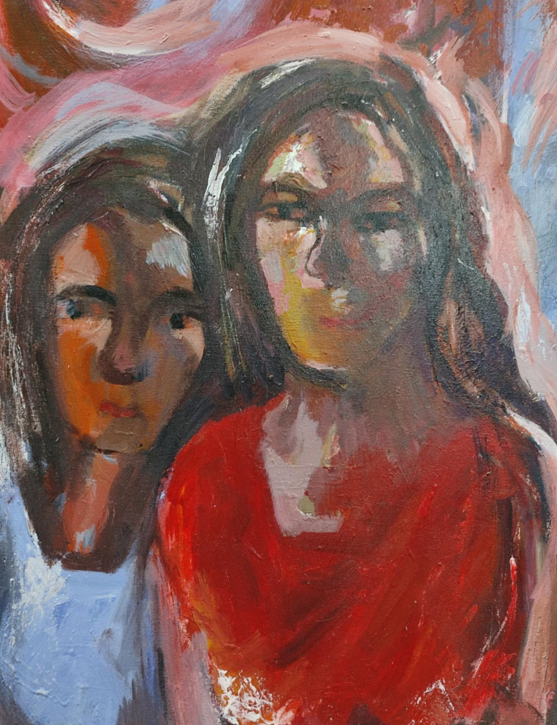
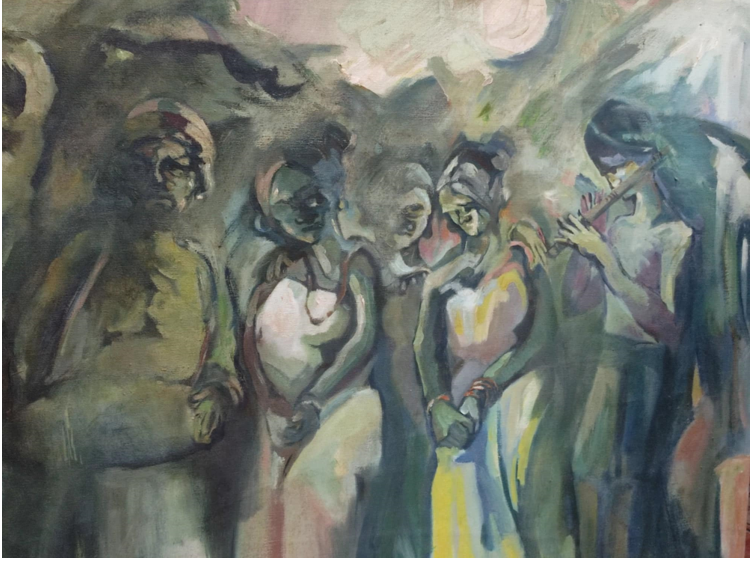
Artwork from Rubina Anis

Oil painting unfinished type image of two dark haired women standing next to each other. One has a blue top, the other has a red top.
Mostly gray image of five old women in long dresses and headscarves standing by each other. Some have jewelry, one has a long flute or clarinet.
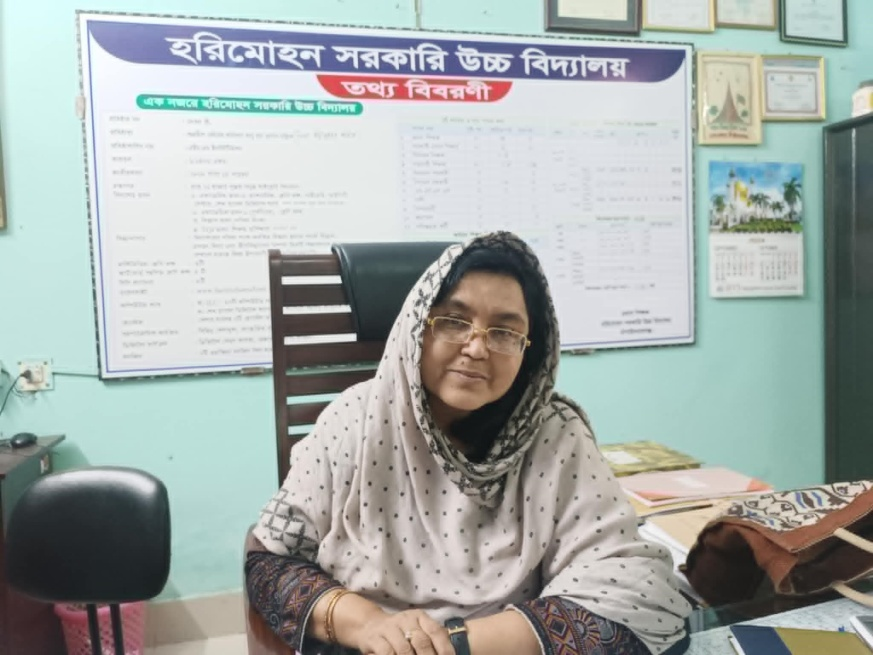
Middle aged woman with a headscarf seated at a teacher's desk in a classroom. Signs and posters on the wall behind her.

Rubina Anis is the Headteacher of Harimohan Government High school, Chapainawabganj, Bangladesh. She has obtained her honors’ and masters’ degree from the department of Arts and Crafts at Rajshahi University.

Poetry from Marvelous Monday

The same motherland that shaped me now seeks to break me,
A stranger hut where familiarity’s a distant memory.
Every step feels like a betrayal, choking my breath,
A reality that suffocates, leaving me gasping for air.
But we’re survivors, weathering hunger’s biting pangs,
Enduring bullets born of insecurity’s sting.
We stand tall, proud in our composure,
United in love for our country, despite its flaws.
My skin, richly pigmented, tells ancestors’ stories,
Resilience and triumphs are etched in every glory.
Like my father before and mother now,
We, the younger generation, face adversity with courage.
Though aspirations are restricted, dreams flourish hidden,
Wildflowers blooming secretly, unrelenting.
Rise, fellow countrymen, weary but united we stand,
Determined to reach great heights, despite soaring challenges.
Our fuel may be scarce, but perseverance is plentiful,
Our spirit is unbroken, like wildflowers that bloom.
Let us rise, and in our diversity, find strength,
For a brighter future, where dreams are free to length.

Marvelous Monday is a passionate writer with a published credit in Written Tales Magazine. His work explores themes of identity, resilience, and social justice.

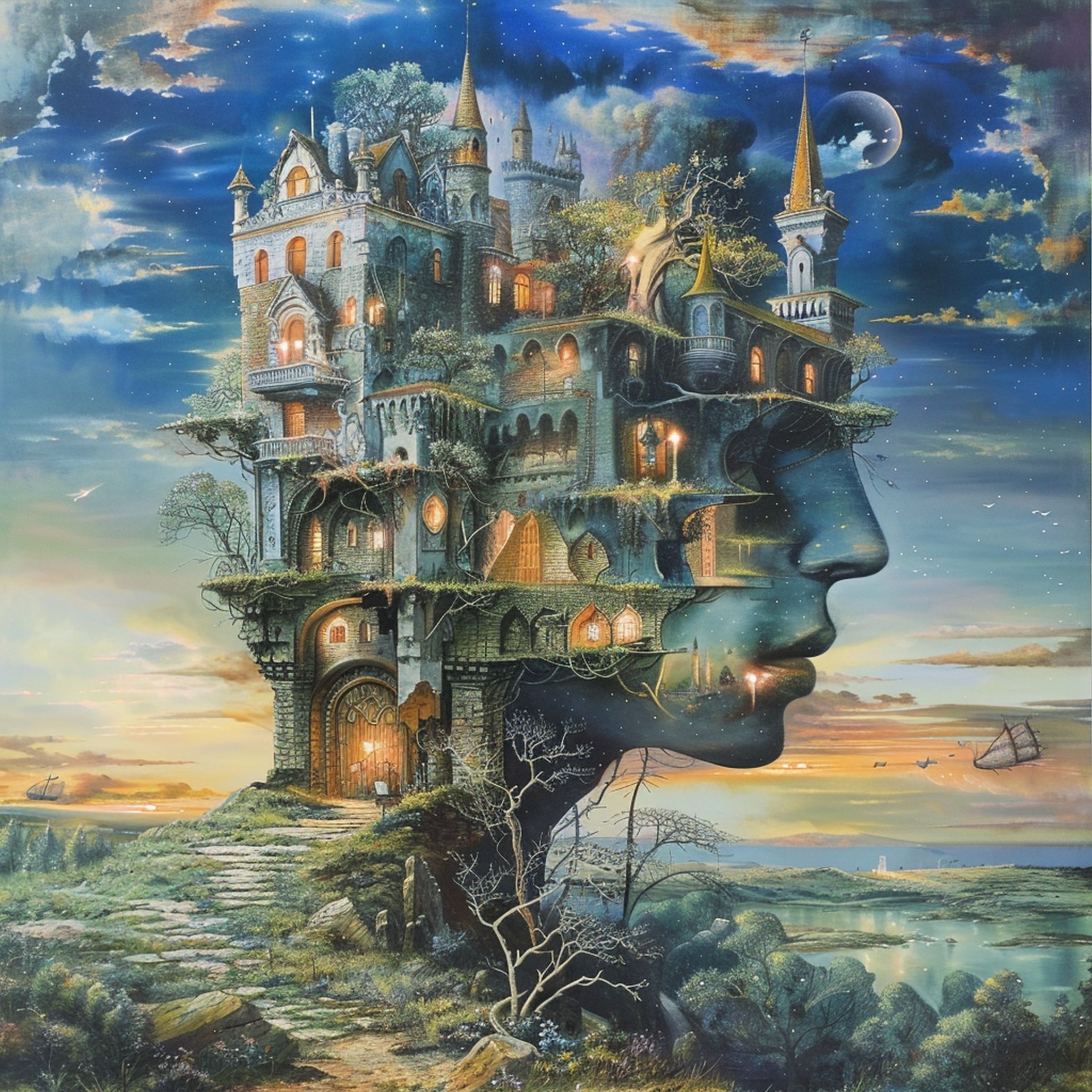
Synchronized Chaos Mid-October 2024: The Shared Human Imagination

A human head rising out of the ground with a large medieval castle and trees growing out of it. Trees, rocks, and a lake below, clouds and sunset/sunrise above.
Image c/o Circe Denyer

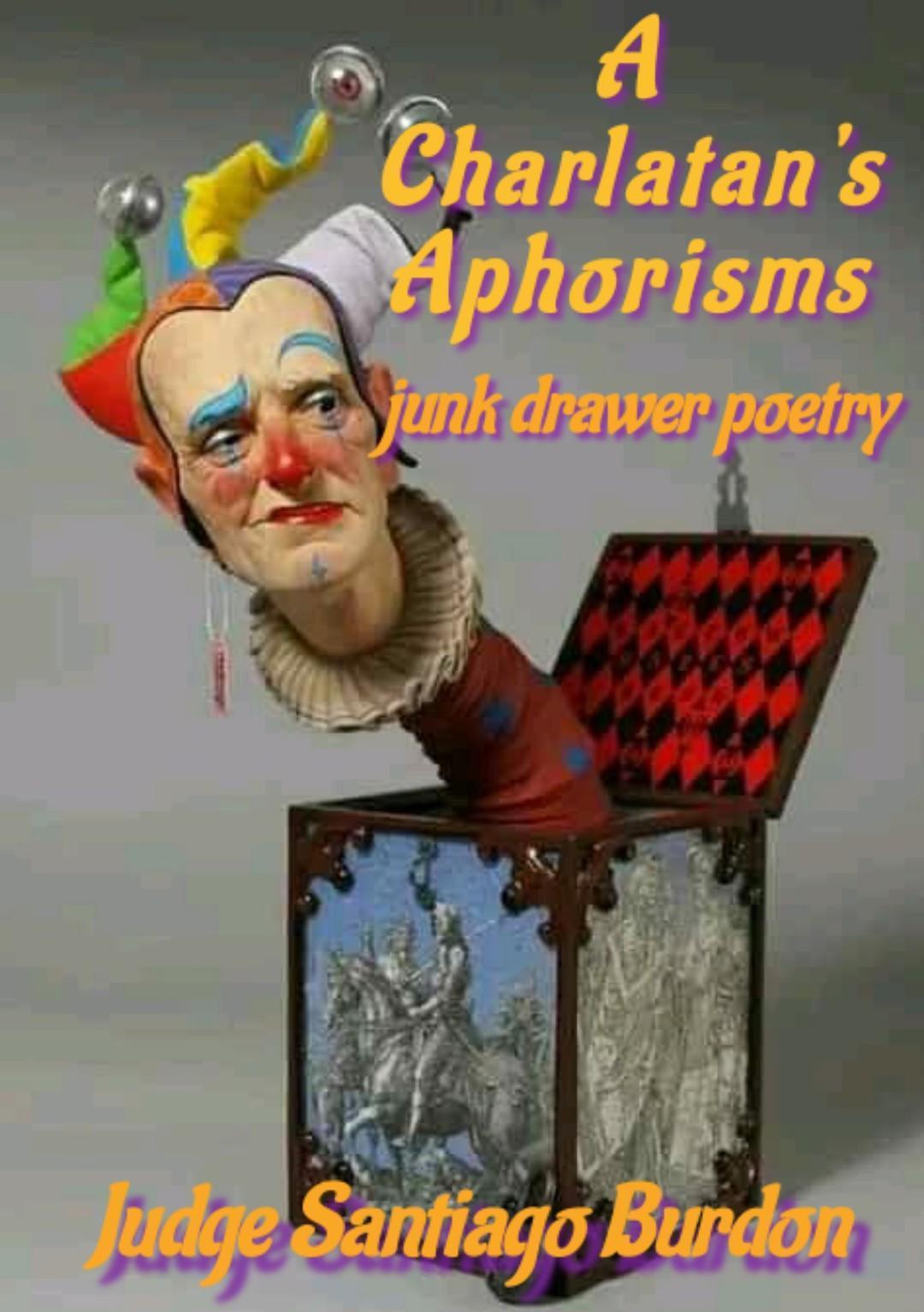
Judge Santiago Burdon offers his new collection A Charlatan’s Aphorisms for review. Please contact us if you’re interested and we’ll put you in touch with him for a copy.

This is a Best of Collection of both past and new poetry by Judge Santiago Burdon. They were selected by dedicated readers and past publishers. Some have appeared in his books “Not Real Poetry” and “Tequilas Bad Advice Poetry With the Worm.” Judge Santiago Burdon’s poetry is a sophisticated slap in the face. The imagery induces you to clear your throat and shift your weight from one side to the other. Santiago doesn’t waste his words in an attempt to make you comfortable. As a poet he delivers defined grit and structured devastation. He speaks in the language of gasoline fumes and stale cigarette smoke. Always honest and fearless, never apologizing. Know that I am a fan.”

(Jack in the box popping out on the cover of Santiago’s book)

Now for our second October issue, The Shared Human Imagination. In this issue, we look to and draw upon our own creativity and love and that of the many who came before us.

Lilian Dipasupil Kunimasa reflects on life’s complexity and on the overlap between poetry and music. J.J. Campbell’s curmudgeonly poetry explores age, loneliness, music and regret. Murrodillayeva Mohinur mourns her rejection by false friends as Ilhomova Mohichehra celebrates the refuge she finds in her dreams. Umida Jonibekova writes eloquently of clouds and rain.

Diana Magallon crafts visual poetic pieces on the movement of the ocean. Dilnura Qurolova highlights the importance of ecology and environmental awareness. Brian Barbeito probes the worlds within worlds in out-of-the-way corners within nature.

Raquel Barbeito’s visual art stylizes nature-based images. Kylian Cubilla Gomez’ photography presents images of cultivation, humans carefully sharing space with and working with the natural world.

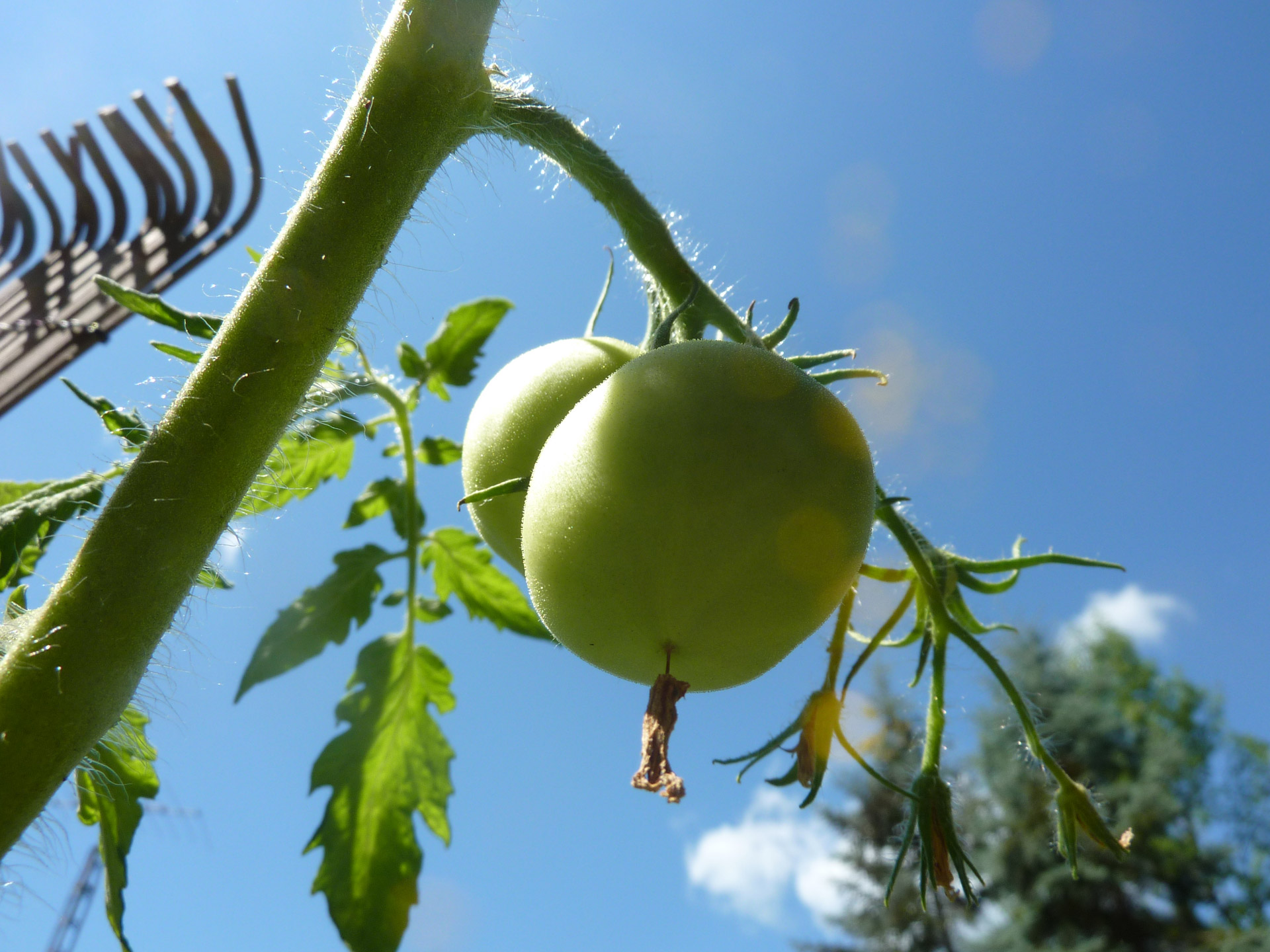
Angled-up image of a green pair of tomatoes growing on a stalk near a rake on a sunny day.
Image c/o Charles Rondeau

Ilhomova Mohichehra revels in the natural and cultural beauty of her Uzbek homeland and also her native region of Zarafshan. Nodira Jorayeva celebrates Uzbekistan’s rich and noble history as Mahliyo Sunnatullayeva reflects on the cultural heritage of Uzbekistan. Rajarbona Sarvinoz looks to ancient Uzbekistan, outlining Central Asian historical leader Amir Temur’s aqueduct engineering. K.C. Fontaine relishes the rich Latin culture of Chicago’s Logan Square.

Otayeva Dinora highlights the dignity and importance of the teaching profession. Rayhona Sobirjonova offers up praise for a respected teacher as Saydinqulova Elenora Olimovna presents solid life advice in the form of a letter to a friend and classmate. Barnoxon Ruxieva celebrates Uzbekistan’s well-developed education system, in particular its Barkamol Avlod children’s schools.

Bardiyeva Dilnura evokes the poetic beauty of the Uzbek language. Charos Toshpulatova outlines the importance and unique value of sign language. Abduvahidova Farangiz compares and contrasts physical books and e-books. Nathan Anderson describes the finely crafted musical language of Sanjeev Sethi’s poetry collection Legato without a lisp.

In a piece of literary analysis, Z.I. Mahmud discusses how Philip Larkin’s poem Whitsun Weddings depicts social and ecological changes in England after the First World War.

Mark Young probes an imagined world in a fresh set of his “geographies,” digitally altered photos integrated with visual art. J.D. Nelson peers at the edges of his world through a fresh set of monostichs. Jim Meirose sends up a quirky story on pleasure and its aftermath. Jake Cosmos Aller depicts a fanciful wild night whirling and drinking through the solar system.

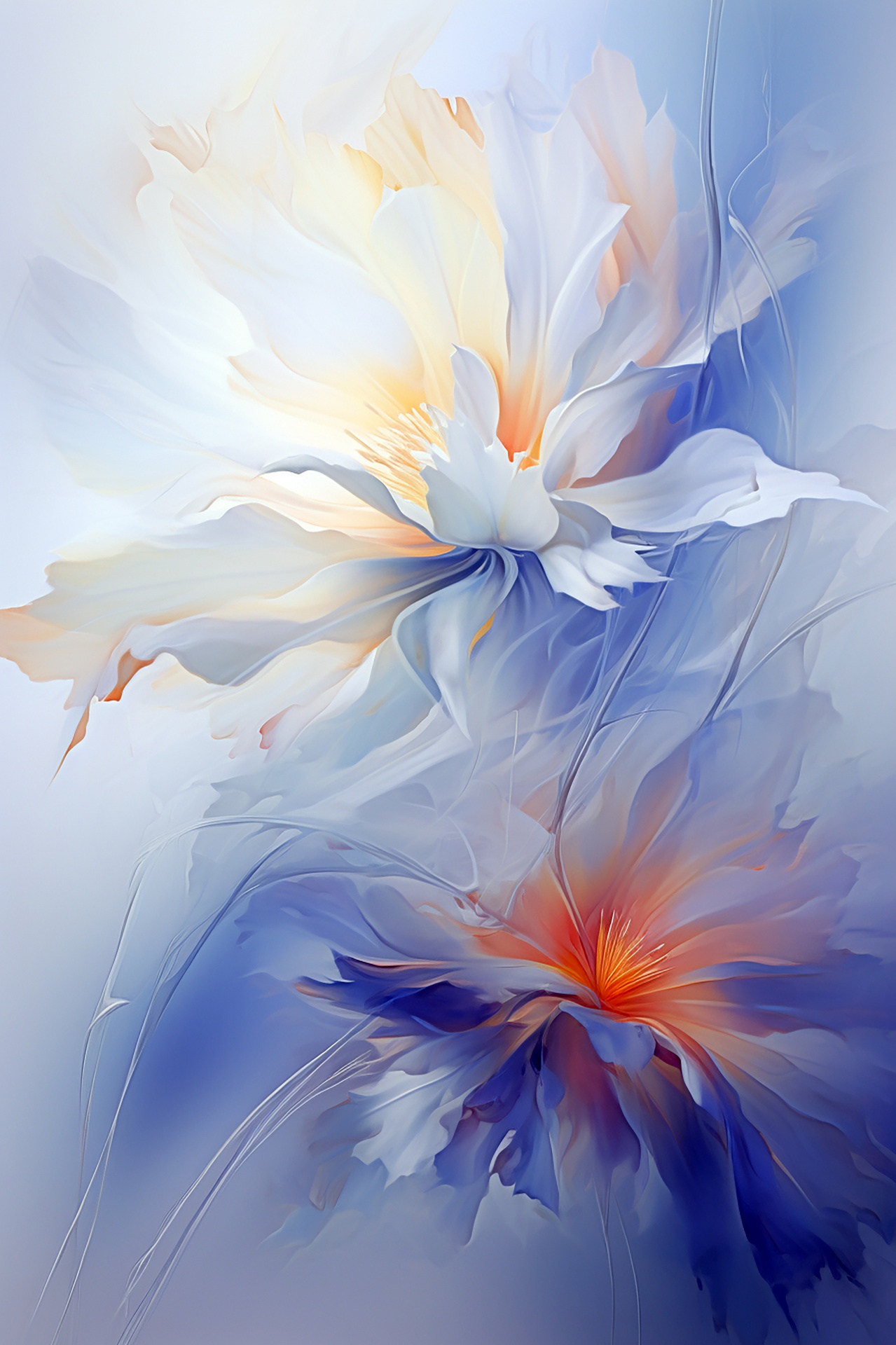
Stylized white flowers with large ragged petals and a yellow center. Graceful translucent curves throughout the work.
Image c/o Omar Sahel

Fhen M. speculates on how the element of mystery attracts us to Magritte’s paintings. Soren Sorensen shares a sunset image and a metallic melting clock, perhaps Dali-inspired.

Stephen Jarrell Williams sends in gentle vignettes of hope and faith while Mahbub Alam describes love as one of humanity’s lofty aspirations.

Mesfakus Salahin considers his psychological complexity and fallibility in light of a great love that leaves him humbled. Duane Vorhees reflects on memory, love, and the ironies of life. Lan Qyqualla draws on history and memory in his poetic vignettes of love and connection. Ivan Pozzoni orates in English and Italian on human history, love, beauty, and tragedy.

Michael Robinson speaks to the peace he found through a relationship with Jesus.

Xavier Womack offers love and respect to a spiritual mother figure embracing the world. Leslie Lisbona reflects on the death of her mother and the empathy she finds through a classic novel and the broader human imagination.

Woman with a ponytail of indeterminate race (silhouetted) reading a book by the ocean on a pier. Sun shines through clouds at sunset or sunrise.
Image c/o Mohamed Mahmoud Hassan

Rukshona Rasulova celebrates her deceased grandmother’s long and loving life as Murrodillayeva Mohinur contemplates her mother’s steady love. Maknuna Oblaqulova honors her parents and their love. Iroda Abdusamiyeva mourns her deceased grandmother and celebrates her life. Orinbaeva Lalezar Azadbay reflects on losses in her life, especially her dearly departed parents. Taylor Dibbert reflects on his deep love for his departed dog.

Holy Henry Dasere laments some universal struggles of young womanhood as Graciela Noemi Villaverde highlights women’s determined struggle for equality and safety. Hilola Abdullayeva discusses ways to psychologically support people recently released from jail and prison.

A. Iwasa reviews activist and anti-fascist professor Josh Fernandez’ memoir The Hands That Crafted the Bomb as an exploration of how to take youthful brash exuberance into adulthood. Dr. Jernail S. Anand warns us about the danger of words to ignite hatred and violence, how the computer keyboard in the wrong hands can be more dangerous than a bomb.

Ahmad Al-Khatat’s poetry evokes sorrow over the loss of love and human experience as well as life in wartime. David Sapp speaks to how ordinary people react to global tragedies as Alexander Kabishev continues his grisly tales of the brutality Russians suffered during the siege of Leningrad. J.K. Durick explores new poetic ways the world could end.

Eva Petropoulou encourages the world to choose peace and tolerance as Daniel De Culla urges the world’s people to end the shameful tradition of hate. Mykyta Ryzhykh laments environmental destruction, war, and a personal heartbreak in his poetry. Pat Doyne pokes fun at Donald Trump’s style and ethics in her poem of warning.

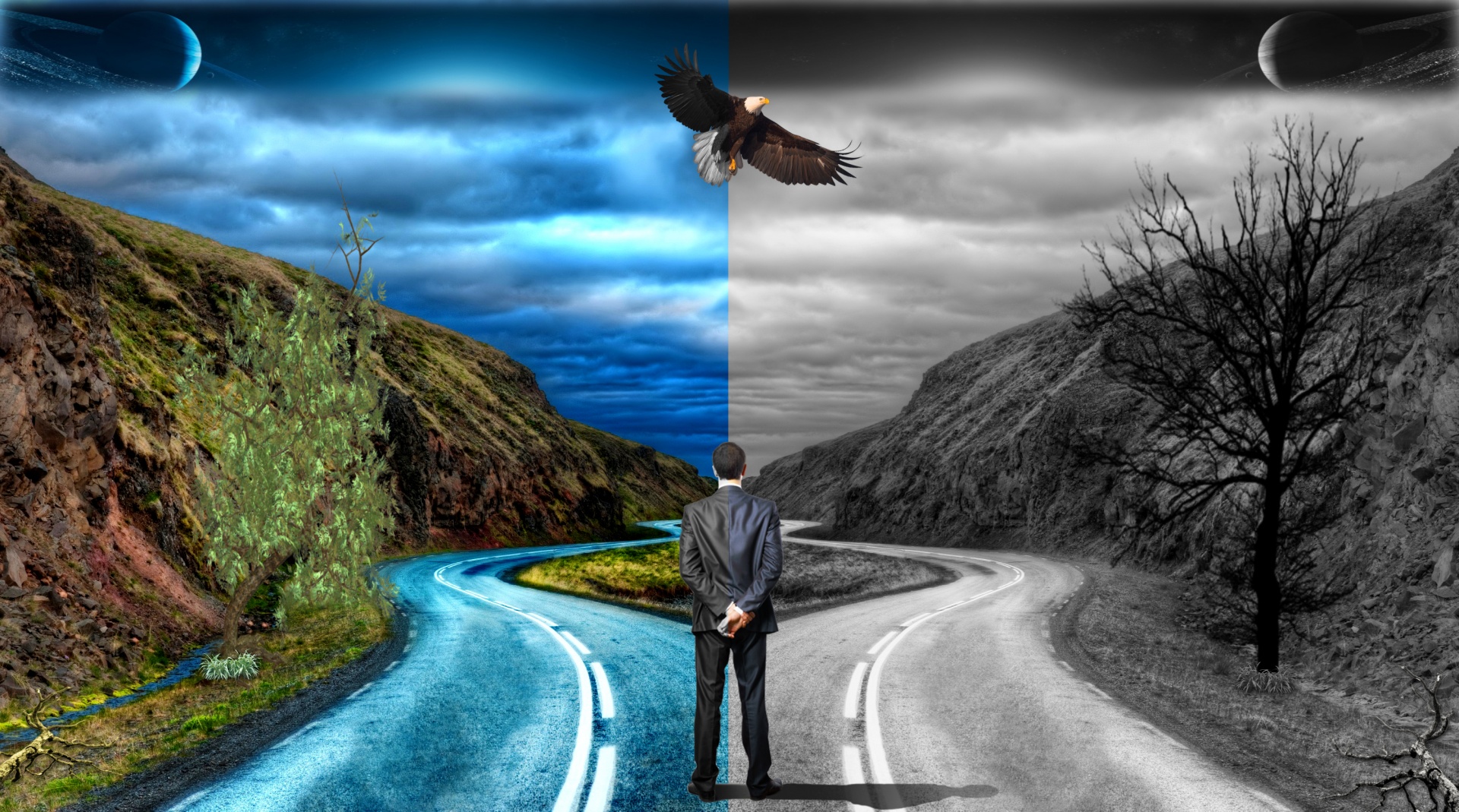
Man of indeterminate race and light skin in a business suit stands with his back to us in front of two paths on a paved road. There's a hillside and tree, leafy and green on one side and black and white and barren on the other. Moon in the top in both photos, an eagle flies above straddling the photos as the man does.
Image c/o Digital Media

Jacques Fleury urges us to get beyond our fear and welcome the “other,” those unlike us. Bill Tope’s poems highlight the pain children went through before we understood learning disabilities and neurodiversity.

Childhood is a time of adventure and wonderment. Isabel Gomez de Diego’s photos show a small child experiencing new spaces: a ship preserved on land with a carved mermaid on the prow, a park train with a red caboose.

As we grow, we try new things, sometimes get disappointed, learn, and move forward. Panijeva Dilnavo Shukurvna celebrates the youth of Central Asia and expresses her wish for her generation to thrive and triumph. Rukhshona Rasulova urges brave and dedicated work towards our goals. Orzigul Sherova highlights the importance of motivation in reaching one’s goals. Alex Stolis’ poems draw on addiction as a motif and speak to waiting, hoping, and being stuck.

Dilbar Koldoshova Nuraliyevna’s poetic speaker reflects on how her heart and intentions were pure, even if her goals did not work out.

Maja Milojkovic encourages us at any age to embrace blessings in our lives, with the understanding that they are temporary.

We hope that this issue will be thought-provoking and a blessing in your life.

Poetry from Ilhomova Mohichehra

Uzbekistan

My country is always
My dear Uzbekistan.
This girl is rich in beauty,
Narcissus in my garden.

The so-called Uzbekistan
I was born in a beautiful place.
By and by
I pulled out the rock.

Have fun these days,
Flowers open every day.
Birds flying far away,
Happy girls.

Play and laugh at home
Sneak away.
Push your period,
You build the future.

The country is burning for you,
Both parents.
always burning for you
Sweating and burning.

For the value of such a country,
Enough dear friends.
Such a country from the world,
You will never find.


Ilhomova Mohichehra is a student of the 8th grade of the 9th general secondary school of Zarafshan city, Navoi region.

Essay from Z. I. Mahmud (one of many)

Philip Larkin’s Whitsun Weddings

Examine a close reading of the poem “Whitsun Weddings” with critical analysis and textual references.

(Image of Philip Larkin, a black and white photo of a skinny middle-aged white man sitting on a couch in a room, wearing reading glasses).

Whitsun Weddings is a brandishing testamentary swashbuckler locomotive wedding party of ceremonial festivities and ritualistic observance of postcolonial and post industrial England. The impending wedding coach has been metaphorically epitomized by Philip Larkin as a means of celebratory cavalcade. “We headed towards London, shuffling gouts of steam. Now fields were building plots and poplars cast”

Whitsun Weddings occasion symbolically manifest old maidish Postcolonial British folks entrenched and rooted by a connubial affair in accord to the fiscal reformation aftermath of the beginning of a new financial year instead of that ending from a previous year. Philip Larkin’s vaticination and sortilege of the porters and mails bears to metaphorical connotations of pregnant women and their spouses respectively through avant garde impressionism. Poet laureate’s setting and locale of Whitsun Weddings is a treasure trove of observation, reflection and contemplation amidst “Where sky and Lincolnshire and water meet.”

“The secret like a happy funeral” encapsulates the oxymoronic ambivalence that is at the heart of this fascinating reading of Larkin’s litany poems. “While girls, gripping their handbags tighter, stared. At a religious wounding” might implicate references to saturnine temperaments and stony faced solemnity being exposed to sepulchral sombre melancholia. The affair of espousal is overall sultry dismay, gloomy despair, desultory grim and grave depression in accord with Larkin’s point of view. Expanses and vistas of England with drifting of Britannic legacy and British isles have been subjected to dismantlement and shrinkages afterwards of the Great World Wars. 

Whitsun Weddings is that seventh Sunday after Easter, Pentecost Christian holiday, commemorating the descent of the Holy Spirit upon the apostles and disciples of Jesus Christ while they were in Jerusalem and 1950s Britain’s progressive levy reform position legitimizes financially beneficiary matrimonial alliance. The signature litany of verbal photographic memorabilia from the memorialization of a train travelling outside the carriage windows rattling through the British landscapes. Englishness and Britishness of the 1960s era symbolize cultural hallmarks of the charismatic poem as indicated by the parodies of fashion lurking beneath veils and heels of soon to be wedded maidens and already betrothed ladies. Language, speech, prosody and rhetoric has been alchemically metamorphosed from the bedrock of ordinariness to that extraordinary visual and auditory impact and emphases. For exemplary evidences point to uncles with smutty mouth, fathers with broad belts under suits and mothers with seamy foreheads, nylon gloves and jewellery substitutes and lemons, mauves and olive ochres.  

“A sense of falling, like an arrow shower/ Sent out of sight, somewhere becoming rain” herein the epilogue revealing epiphanic heavenly downpour onto earth as metaphorical connotations of anarchy being poured. Larkin, haunted and obsessed with marriage, conspicuously extrapolates the unforeseen on edge and fidgety ending. 

BBC has a radio show where Simon Armitage explores Philip Larkin’s poem The Whitsun Weddings.