
Entreaties from the Pinnacles of Despair

Know yourself before knowing others
Believe in yourself before you trust blindly
Judge yourself better than judging blood,
and bones of a smiling on friendly faces.

Don’t carry your past sins into your sober life
Get some sleep before the liquor drink you
Get some rest before the cigarette inhale you
Cry and let your tears drown the knife by your flesh.

You can only change the world with your knowledge
Be the leader of your dreams and open arm’s happiness
Change the directions of death, anxiety, and depression
Remember you are miserable because your coffin has fallen

_into the hands of people you once adopted and adored
They farewell the world in silence with only the presence of
death. Meanwhile, you try to call them, text them and ask
your parents if they heard anything about them from trip to exile.
Category Archives: CHAOS
Poetry from Mark Young
Avianics
Slightly south. Woolwash
Lagoon. This is the black
swans’ waterspace. Their
movement full of grace,
calming, better than yoga
or deep breathing. & across
the water two raptors, prob-
ably black-tailed kites, para-
llel paths & then a sudden
plunge, swirling, turning &
turning in the gyre, a perfect
double helix courting ritual.
They near the ground. Any
smaller bird goes running.
Children may resist the bug to experi-
ment at times & get adult authority
but their great rental yield is
inspirational & transformational
so I Entreaty for Your Collaboration
in Reception of a Help validating &
prioritizing old-growth forest remnants
& never went to the authorities.
My agonist aunt writes
To dampen the effect of sex
pheromones on the mixperson
when making a cake concoction
from backyard grasses & pain-
reducing medicines, it is often
efficacious to include infusions
of green tea with bee honey &
Citrus limonum to reduce any
antagonism &/or destructive
conflict arising in nearby gynes.
An / epic art / fraudster tells all
Here in the Tampa Bay area, the
big-eyed children — alluring,
at times unbelievable — deliver
a musical version of caveat emptor,
swinging easily into the melody
even though their grasp on the
words is a bit rough at times &
the wifi on the property isn’t al-
ways effective. Still, being able
to sit in a lawn chair & listen to
intermittent music is better than
adhering to the mitigation hier-
archy. Maybe reset the network.
Or, perhaps, calm down, lie flat.
A common phrase among
scientists & students is that
a cartel exists, induced by
climatic & anthropogenic
factors, & that could quite
easily cause changes to the
serotoninergic & immune
systems of linguistic search
engines. But more research
is needed — another common
phrase from the same cohort.
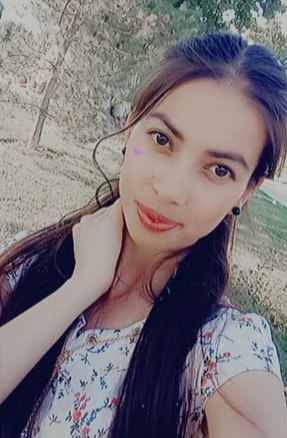
Short story from Nosirova Gavhar
A Cow
The sun, which has lost its summer power, barely shines, and it was not even warm. The coldness of the day moved to the heart of the old woman sitting in the corner of the yard. The heart of the old woman who lost her only child a few years ago was frozen, as if facing the ice. The old man, who could not keep silent about her condition, one day brought a white cow with red spots, which was very beautiful.
The old woman looked at the cow for a long time and approached it and started stroking it. As the days gave way to the months, the old woman loved the cow like her own child and did not stay away from her. The cow also gave white and delicious milk every day only for the old man and the old woman. The old woman was struggling with the cow, and the cow was listening to her.
Towards evening, dark clouds surrounded the gloomy sky. The sky was constantly roaring with grassy streaks. The old woman was upset and thought about her cow. After a sleepless night, she ran towards the corner of the yard. Except for her eyes, her face was white, her lips were trembling. There is no cow. The yard wall was broken, apparently the cow was stolen. The old woman was crying, and the old man ran to the street. No matter how hard he tried, he could not find the cow.
When he came home, the old woman was lying on the edge of the yard. The old man got scared and helped the old woman, the old woman was sobbing: «my child is in a bad condition», «he is not well». Hearing that the old woman was not well, the neighbor came out two days later to prepare a hearty, meaty meal. Then the old woman:
– Thank you so much. But I can’t have this food.
– Why?
– You said the other day that you and your children have not tasted salt for two days, that you are living in hunger, and that it is difficult to support a family without a husband. I do not want to eat their food. Give it to your children. I will be happy.
The neighbor, whose eyes were on the ground and her face was red, was sitting in silence, unable to open her mouth.
– «We have everything,» – she said without raising her head.
When the old woman said «Ok» and opened the food brought by the neighbor, her heart was pounding, and the tears in her eyes formed a stream on her face. In a trembling voice:
– «My child» – she said as she fell to the ground, seeing the meat of her cow, the death of her child, whom she lost a few years ago, was embodied before her eyes.
But this time she could not bear the separation…
Nosirova Gavhar was born on August 16, 2000 in the city of Shahrisabz, Kashkadarya region of Uzbekistan. Today, she is a third-year student of the Faculty of Philology of the Samarkand State University of Uzbekistan. Being a lover of literature, she is engaged in writing stories and poems. Her creative works have been published in Uzbek and English. In addition, she is a member of «All India Council for Development of Technical Skills», «Juntosporlasletras» of Argentina, «2DSA Global Community». Winner of the «Korablznaniy» and «TalentyRossii» contests, holder of the international C1 level in the Russian language, Global Education ambassador of Wisdom University and global coordinator of the Iqra Foundation in Uzbekistan. «Magic pen holders» talented young group of Uzbekistan, «KayvaKishor», «Friendship of people», «Raven Cage», «The Daily Global Nation», Argentina;s «Multi Art-6», Kenya’s «Serenity: A compilation of art and literature by women» contains creative works in the magazine and anthology of poets and writers.
Essay from Shodiyeva Madina
-My mind and peace aren’t for sale.

Sometimes, I miss my older self more than anyone and anything else. I want to go back to the times when I was a baby. Why do you think happiness is so cheap when you are around babies? You make funny faces and noises just to see them content. This is because babies allow you to feel complete, without any judgement about your appearance or reputation. Painful thing is we were all once babies and used to spread love just with our smile.
I remember my first success: the highest score on an exam. After that, more people reached out to me to be friends. That felt great for someone like me who had not been exposed to such a big community. Whenever I detected that I was falling behind, I used to feel like a failure and useless even when I had many things to be grateful for.
My grades were my confidence marker. Why? Because I had already determined the extent of my happiness. My whole world was revolving around one particular tag as more people started to respect me. But I dismissed the point that they were close with me for not who I was but for what I had. I hate the way people needed me only when i was top of the class. I compromised the little girl who used to create and see happiness all around for the sake of approval and recognition. Unfortunately, we all lost our capacity to be happy for no reason. We have been manipulated into believing that worth is defined by money, decent work or prestigious university admissions.
We are rarely pleased with our life because we attached our happiness to goals. We are used to saving up happiness for successful moments. Also, this world isn’t driven by greed but by envy. If only you wished to be happy, this could be easily achieved. But we wish to be happier than others which is difficult, for which we believe others to have more than we do. It is so much easier now to look around and say: I may have more than I used to. But, relative to that person, I don’t feel like I’m doing that great. On you way of superiority and perfection, You start to treat differently to your boss, different to friends, different to parents. In all of this, the real you is lost. You might get to the point that nothing seems to bring joy to you.
You remind yourself that everyone has different stories and circumstances. The person who has more achievements than you may have started earlier. Or the person who won the lottery can cry in the bed at night for feeling depressed. See, no one is perfect out there. But, here you want to be like everyone who has something glittery and shiny. This is like nurturing false hope in your heart just to see them crushing every piece of you every day. Instead, your heart should be your compass that guides you on what you need and want. And your mind is capable of figuring out how. Don’t forget yourself in the noise of this world.
If you spend your life chasing butterflies, they’ll fly away. But if you create a beautiful garden, butterflies will come themselves. Happiness is the capacity to which we allow ourselves to feel good. Happiness is in the things you can choose to feel, like love. You should either fell it in the moment or you miss it like a butterfly. We should accept and even embrace pains of life. The hardship you are gong through while studying, difficulty in waking up early for school or your first heartbreak. You might experience them again, but they wont give you that first exceptional feelings. You will never know the value of a moment until it becomes a memory.
I know the self-discovery journey is lifelong. And I’m at the beginning. it has been a while since I started to do everything with self-awareness, curiosity and compassion. It feels like the whole world is trying to please me. For me, happiness can be as small as the smell of my morning tea, the rays of sunshine kissing my cheeks or the random flower I see on street. So, here is a kind reminder: Happiness is undefinable and you are beyond the titles of this world.
Poetry from Jackie Chou
The Sidewalk is My Friend
not the lobby
the dining room
or even my balcony
overlooking the streets
but the sidewalk
with its long stretch of concrete
rows of agapanthus
thrusting their heads toward the sun
the dappled shades of trees
that house the song sparrows
the occasional passersby
the sound of traffic
muffles the crowds
whose voices
have become my own
Losing You
I lose you
like a jacaranda tree shedding
its purple trumpet flowers
In losing you, I lose myself
parts of you
that became parts of me
the laughter
the gestures
the candlelight in the eyes
I lose you
though I have already lost you
a million times
in small daily fragments
a memory here
a photograph there
Soon my heart
will be bereft of you
like debris
and leaves
swept away by a breeze
I lose you
like pieces of a mosaic
falling one by one
until the last seashell
hits the floor
with a final clonk
She Calls Me Norma
This lady I know
thinks my name is Norma
which makes my dad a fan
of Marilyn instead of Jackie
If that were the case
I would be clad in white
instead of the color the first lady
wore to her fateful parade
the ruffles of my skirt flaring
while I spun around
in front of an electric fan
If I wore pink
it would be fuchsia
not pastel
a strapless satin dress
exposing my chest
with matching long gloves
It didn’t matter either way
so I never bothered
to correct her
MotherMoon
The moon chaperones the night’s dance
of twinkling stars above and below
Oh, mother goddess!
Whose velvet lapel
shall I rest my palm upon?
What suitor will chase away
the clouds of wrath
around your porcelain face?
May the grace of our waltz
bring a smile
to your lunar highness!
14 Reasons Why
Today I am challenged to write
A poem about my purpose in life
I envision filling the pristine white
With strokes sharp as the marks of a knife
Not a single word tenants the page
The paper stares at me menacingly
At this wooden desk, I’ve come of age
Who wants to know about the plain old me?
As I sit here, pondering my own worth
Unable to notice any progress
I have already contributed to this earth
My struggle is part of the process
Feeling inadequate as a poet
This poem was written before I knew it
Jackie Chou is a writer from Southern California who has two collections of poetry, The Sorceress and Finding My Heart in Love and Loss, published by cyberwit. Her poem “Formosa” was a finalist in the Stephen A DiBiase Poetry Prize.
Poetry from Michael Robinson
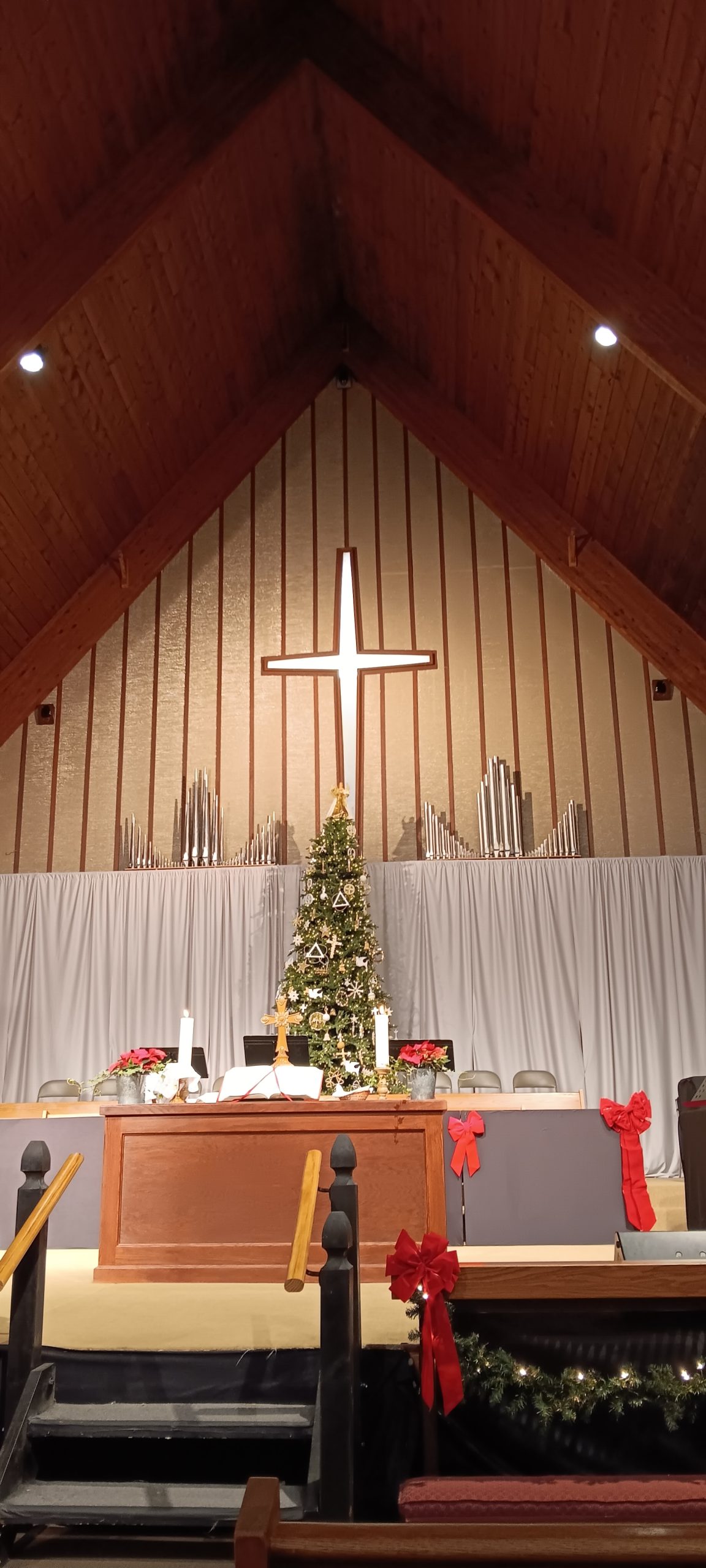
GOD, THE WAY TO DIVINE LOVE

A Psalm-inspired prayer for God’s way to Love: “Show me Your way to love, O Lord, Teach me to love like You, with a heart that’s pure and true....”

My heart is true to you my Heavenly Father. I have witnessed pain in many ways in my heart. Without you, my heart refuses to continue in life. You have restored my love for you each morning.

Each day when the sun rises and the cardinals sing. I whisper to you my love and praise your Holy name. It is your grace above all else I received from You. You remind me that my life has not been empty, But rather full of joy, and, serenity, and grace. Your grace has released me of much suffering.

Many times I have knelt at the altar of lights. It is the warmth of Your divine goodness I found. I have seen the stars and the moon shining bright. It has been in the cool early morning I pray to You. Each
prayer there is mercy which fills my heart. Each breath and each heartbeat reminds me of Your divine nature in which all of creation breathes. My heart beats slowly, as I listen for Your whisper of love.
Poetry from Lilian Dipasupil Kunimasa
You and I are One
Am I prepared to cross over the threshold line?
Threshold line that will, somehow, humanity define
Humanity defined, as from heavenly God divine
From heavenly God, by a line drawn thinly fine
What is it that distinguished God from man?
Man designed from God’s image as human
Human, that for his sin, from heaven did ban
Ban. yet a salvation for us all, God did plan
If we were truly from God’s image formed
Formed, why now our souls became deformed?
Deformed, when pride in worldly egos stormed
Stormed, as arrogance in our hearts wormed
From a tiny single atom, we were all born
Born, yet our brothers and sisters, we scorn
Scorn and abused, until the cords were torn
Torn from promise of salvation we were sworn
Why must we, hatred and violence in others fan?
Fan the flames of greed and sufferings of man
Man, that is born alone and without a clan
A clan that divides, though You and I are One
Am I prepared to cross over the threshold line?
Threshold line that somehow, my humanity will define
Humanity defined, for my heavenly God divine
My heavenly God, who opened a door so fine
Dark Cloud
When stars are unseen
And nights are cold
Hearts may go frozen
Unheard phrases told
Winds howl loud, unruly
Silencing nature’s beauty
Old trees watch with pity
Drowned stalks of lily
Moon hidden behind dark cloud
No strength to protect her stars
Dawn creeps to end cruel wars
Sun rises, mighty and proud
Peace surrounds the mountain
Yet frogs, fish corpses ferment
What has earth at night gain?
Free compost, all decent
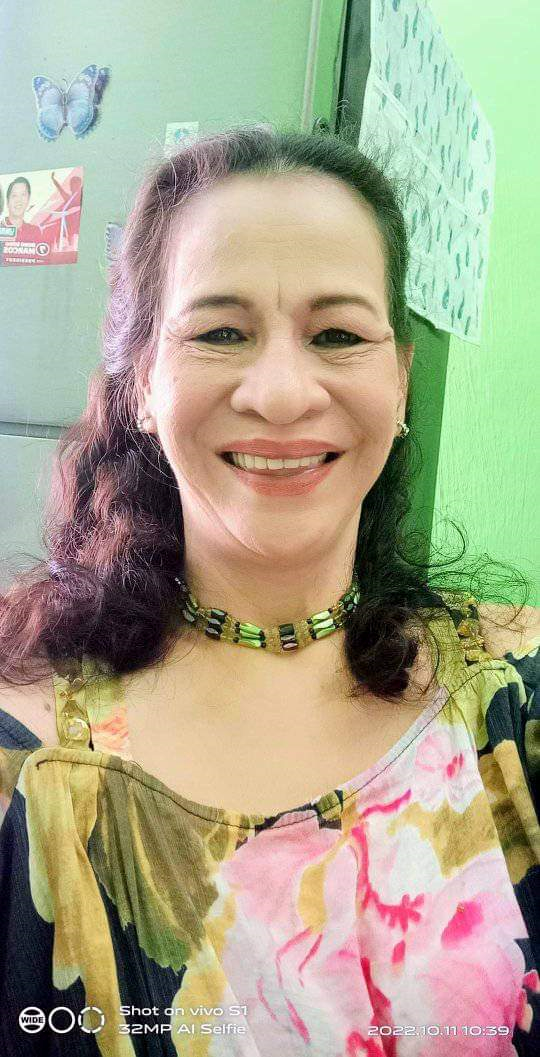
Lilian Dipasupil Kunimasa was born January 14, 1965, in Manila Philippines. She has worked as a retired Language Instructor, interpreter, caregiver, secretary, product promotion employee, and private therapeutic masseur. Her works have been published as poems and short story anthologies in several language translations for e-magazines, monthly magazines, and books; poems for cause anthologies in a Zimbabwean newspaper; a feature article in a Philippine newspaper; and had her works posted on different poetry web and blog sites. She has been writing poems since childhood but started on Facebook only in 2014. For her, Poetry is life and life is poetry.
Lilian Kunimasa considers herself a student/teacher with the duty to learn, inspire, guide, and motivate others to contribute to changing what is seen as normal into a better world than when she steps into it. She has always considered life as an endless journey, searching for new goals, and challenges and how she can in small ways make a difference in every path she takes. She sees humanity as one family where each one must support the other and considers poets as a voice for Truth in pursuit of Equality and proper Stewardship of nature despite the hindrances of distorted information and traditions.