Three, Two, One......Done

My heart has been dragged, ragged and bruised.
Every drop of its weary blood has been used.
I have wrung it dry and left it out to die and still
It feeds my thirsting brush and starving quill.
My soul has been battered, tattered and sold
Every piece set in stock; paid out in fool's gold.
I have set it out on the world to the point of no return.
Still in everything I do.......... I can see......... I feel it burn.
In giving my heart and soul my mind has left me.
My passion has led me to the point of insanity.
All that I love has gone from peace to war.
I'm left staring in madness at a black door.
No reflection from the depths of the abyss.
Pain and sorrow have become my bliss.
Oh hell, I remember the destruction
The end and rebirth of creation
Three.........two........ one
ONE......it's done.


But A Droplet

If you could catch my fall
My tears would tell it all.
You might be able to see
Your way through me.
If you could break the surface
You would see secrets I can't confess.
But I am but a droplet
That you will soon forget.
You will never see me blossom
Nor know what I have become.
If you could see beyond the reflection
You would see behind my rejection.
You would know I'm entangled in tears
I've let grow for so many years.
If you could catch my fall
My tears would tell it all.
I am but a droplet
Wishing it could forget.


From South-Western, Michigan, Jerry Langdon lives in Germany since the early 90's. He is an Artist and Poet. His works bathe in a darker side of emotion and fantasy. He has released five books of Poetry titled "Temperate Darkness an Behind the Twilight Veil", “Death and other cold things” “Rollercoaster Heart” and “Frosted Dreams” Jerry is also the editor and publisher of the literary magazine Raven Cage Zine poetry and prose. His poetic inspirations are derived from poets such as Edgar Allen Poe, Robert Frost and Henry Wadsworth Longfellow. As well as from various Rock Bands. His apparently twisted mind, twists and intertwines fantasy with reality.
Spring Grows Dim

Where art thou gone, oh where ---
Across the deep sea, riding on
Stormy waves and chilly winds?
Did we know it, did we care?

Realization creeps in among us
Now that it is too late,
The sun that beamed once
Is now forever mutely sit.

Didn't though hazard thy life
Ours to save from ruin---
Gone forth in search of light
All our dark souls to illuminate.

Oh, the spring is come again,
The spring that went with thee
Merry goes the world as it did ---
Anxiety or care strives in rain...

Nature wears her face as bright
Wind blows as merrily as oft
None sees wrong with sun and wind
Flowers nod as sweet and soft.

Birds fly from tree to tree
Rivers flow, murmuring low
Among the thickets, over the plains
Boatmen sit aright, sing and row.

Only here is no spring for us
Spring is poor without him
Shadowed with our grief and sigh
The smile of spring grows dim.
Manzar Alam from Bangladesh. By profession I am a college teacher.
Ways to increase the energy efficiency of buildings and their external barrier structures
Egamova Marguba Turakulovna, teacher;
Matyokubov Bobur Pulatovich, teacher;
Samarkand State Architecture and Civil Engineering University, Uzbekistan.
pulatovich93@gmail.com

            Abstract:  In this article the results of theoretical and field studies with different thermal design solutions of external walls to improve the energy efficiency of buildings.
            Keywords: Natural energy, external barrier construction, polystyrene,thrombus wall, heat-physical

           Nowadays, rational use of natural energy resources remains one of the main tasks in all developed countries of the world.
In order to effectively use natural energy sources in Uzbekistan, in the reconstruction and perfect repair of residential, treatment, children's institutions, schools, lyceums, colleges and boarding schools, which are being built and used in accordance with the requirements of KMK 2.01.04-97*, which was adopted in 2011 as amended, their energy in order to increase its efficiency, it is necessary to increase the thermal protection of external barrier structures.[3]

         Therefore, in order to increase the energy efficiency of buildings, thermal-physical practical experiments were carried out on external wall samples with different structural solutions in the laboratory of the "Building and Constructions" department of SamDAQU. Some of these are listed below:
           In the joint enterprise "OOO SAM ROS KHOLOD" a non-removable form of polystyrene foam was prepared, in the laboratory of the "Building and structures" department of SamDAQU an external wall sample was built and thermal-physical experiments were conducted. this. The experiment was conducted based on the requirements of UzRTS-809-97 "Determining the thermal conductivity of barrier structures" method [4].

 Experimental results were compared with theoretical studies.
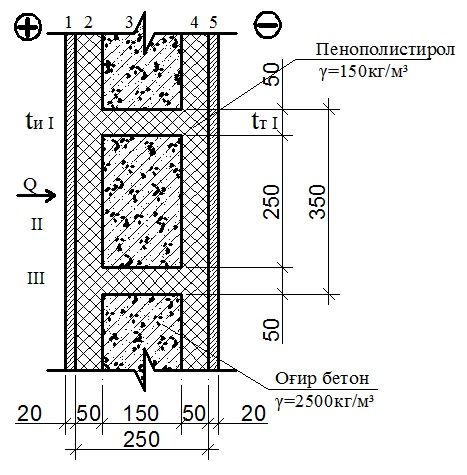
The scheme of the wall structure is presented in (Fig. 1).
Figure 1. Scheme of non-removable formwork wall construction made of foam polystyrene.
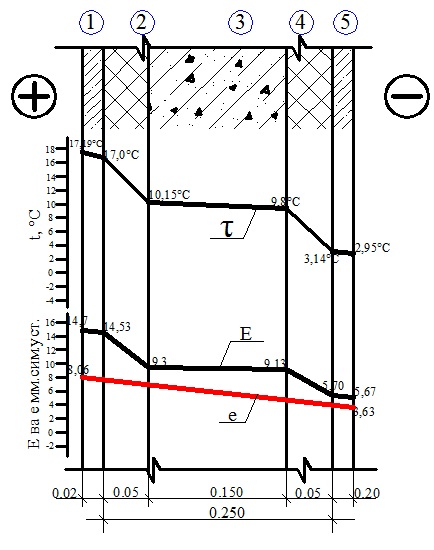
 The total thermal conductivity of this structure is Rу =2.49 м2 .(м2. оC)/Вт and the total thermal protection meets the requirements of QMQ 2.01.04-97 *. In addition, as can be seen from Figure 2, condensation moisture does not form in the layers of this structure.

2 - picture. Moisture status of non-removable formwork wall construction of expanded polystyrene
1 - Cement-sand plaster; 2 - Polystyrene; 3 - Cast heavy concrete; 4 - Polystyrene; 5 - Cement-sand plaster;         In addition, various studies are being conducted in the field of using solar energy for heating buildings in our Republic. An experimental solar house with a heliosystem of the "Thromb Wall" type is located at 40° latitude in Princeton. Built in (New Jersey, USA), this latitude corresponds to our country.

However, such buildings, i.e. "Tromb wall" type solar buildings with helio system, have not been designed and built in our country. In order to build this type of buildings in the climatic conditions of Uzbekistan, it is necessary to justify them as a result of thermal-physical theoretical and practical experiments. For this reason, we have installed a "Thromb wall" model on the outer wall of the laboratory of the "Building and Construction" department of SamDAQU, and thermal physics research is ongoing.

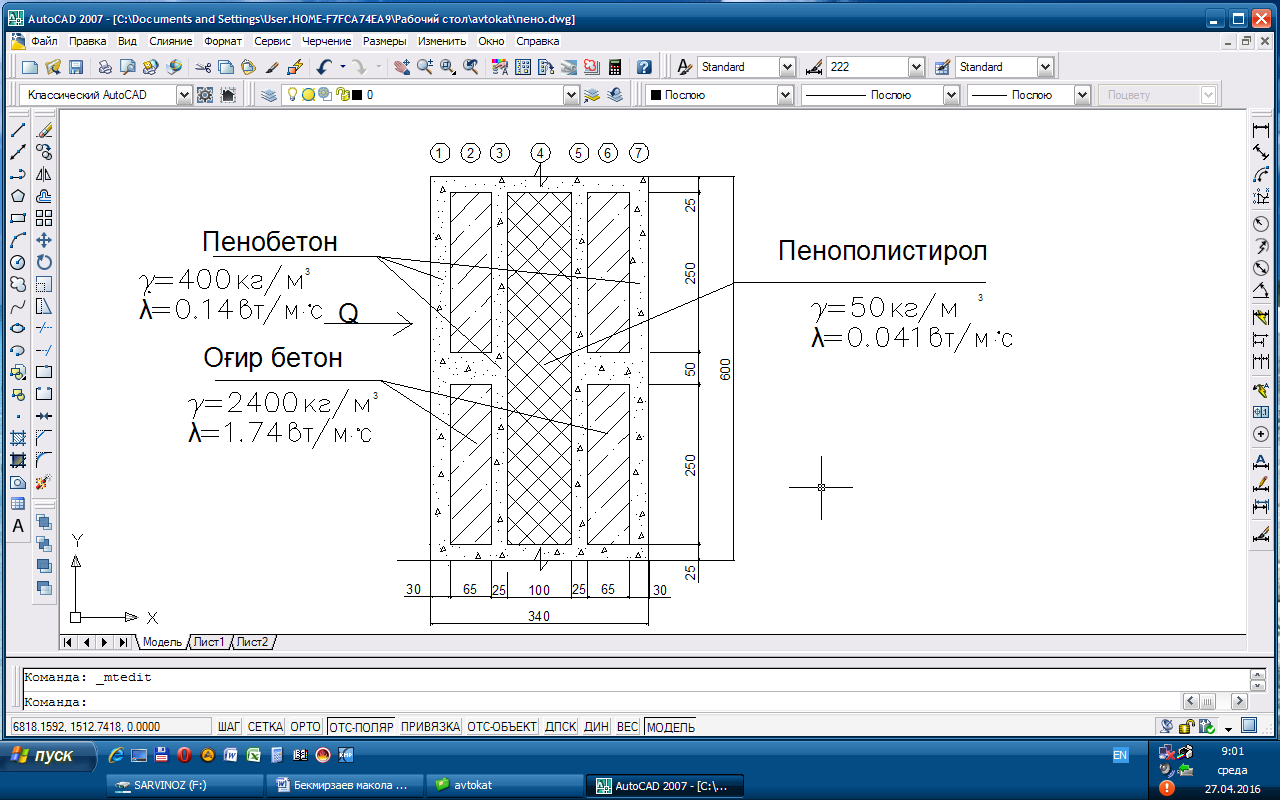
In order to increase the energy efficiency of buildings with the help of local materials, a constructive solution was developed for the external wall with non-removable formwork made of foam concrete, heat protection increased with foam polystyrene. The advantages of this construction are as follows:

      1. The wall structure will be completely restored from local materials; 2. The period of construction of the building will be shortened sharply; 3. The energy efficiency of the building and its exterior will increase; Increases the overall earthquake resistance of the building.

 In order to use this construction in practice, it is necessary to theoretically base it on a thermal-physical basis. For this, it is necessary to determine the total heat transfer resistance of the external wall construction, whose calculation scheme is shown in Fig. 3, compare this resistance with the heat transfer resistance given in QMQ 2.01.04-97*, and recommend the effective thickness of the wall. In addition, it is necessary to justify the formation of condensate moisture in the layers of this construction or not using the graphoanalytical method.

    Thermal-physical calculations are performed in the following order.
   Since the non-removable external wall construction of foam concrete shown in Figure 3 is not homogeneous, we cut it with planes parallel and perpendicular to the direction of heat flow and determine the thermal heat transfer resistance.
 Figure 3. Scheme of a non-removable formwork wall construction of foam concrete.

         We divide the construction into parts I and II by cutting it with a plane parallel to the direction of heat flow. The first part is made of foam concrete and the second part is made of heavy concrete and expanded polystyrene. We determine the heat transfer resistance for the first part using the following formula.

R_I=δ_1/λ_1 +δ_2/λ_2 +δ_3/λ_3 ;          (1)

For thermal physical calculations, we accept the following heat transfer coefficients[3].

1. Foam concrete, Υ_0=400-600 кг/м^3,λ=0,14 Вт/(м^2∙℃) ;
2. Heavy concrete, Υ_0=2400 кг/м^3 ,λ=1,74 Вт/(м^2∙℃) ;
3. Styrofoam, Υ_0=100 кг/м^3,λ=0,041 Вт/(м^2∙℃);

〖   R〗_I=2,428 м^2∙℃/Вт. Surface of the first part F_I=0.05.
The second part of the structure consists of foam concrete, heavy concrete and expanded polystyrene. Its heat transfer resistance. RII=3.298( м2 .оC)/ Вт.

We determine the thermal heat transfer resistance of this structure using the following formula [2].

R_II=(F_I+F_II+F_III+⋯.)/(F_I/R_I +F_II/R_II +F_III/R_III +⋯.)    (2)
Here, R_I,R_II,R_III…,- thermal heat transfer resistance of individual layers,  м^2℃/Вт;  F_I,F_II,F_III…, the surface of individual parts, м^2

The surface of the second part is F_II=0,25..
Wall thermal heat transfer resistance, RII=3.1(5 м2 .оC)/ Вт.

Cutting the construction with a plane perpendicular to the direction of heat flow, 1;2;3;4;5;6; and divide into 7 layers (Fig. 3).
1st and 7th layers of foam concrete〖 R〗_1=R_7=0,214〖(м〗^2∙℃)/Вт; 3 and 5 layers of foam concrete 〖R_3=R〗_5=0,178( м^2∙℃)/Вт; 4th layer expanded polystyrene R_4=0,10/0,041=2,439 (м^2∙℃)/Вт;; Since part 2 is not homogeneous, we determine the average heat transfer coefficient of the construction using the following formula. [1.2]

λ_ўр  (λ_I xF_I+λ_II xF_II+λ_III xF_II)/(F_I+F_II+F_III )=1.473 Вт/(м^2∙℃),

Here, λ_I,λ_II… is the thermal conductivity coefficient of the materials that make up the individual layers, Вт/(м^2∙℃) ; F_I,F_II…  surfaces of individual layers,

Then R_2=R_6=0,044 ( м^2∙℃)/Вт.
       So, R_⊥=R_I+R_2+R_3+R_4+R_5+R_6+R_7=3,311 〖(м〗^2∙℃)/Вт.

The heat transfer resistance of a non-homogeneous structure is determined using the following formula. [1.2]
R=(R_II+〖2R〗_⊥)/3  =  (3,157+2x 3,311)/3=3,259 〖(м〗^2∙℃) / Вт,

          We determine the total heat transfer resistance of a non-homogeneous wall structure made of foam concrete.
R_ум=R_и+R+R_T=0,114+3,259+0,043=3,416 〖(м〗^2∙℃)/Вт;
        Therefore, the total heat transfer resistance of the non-removable formwork wall construction made of foam concrete that we recommend meets all the requirements of the level of heat protection specified in QMQ 2.01.04-97*.

	Conclusion. The following can be concluded from the above theoretical and practical studies:

1. As a result of the calculations, it was found that the thermal protection of the non-removable formwork wall construction made of foam concrete is sufficient for the conditions of Uzbekistan and meets the requirements of QMQ 2.01.04-97*;
2. Heat transfer resistance of non-removable formwork wall construction made of foam concrete, thickness 38 cm. and it is 4.9 times greater than the heat transfer resistance of a brick wall with a density of 1600 kg/m3 and 1.3 times greater than the heat transfer resistance of a non-removable formwork wall structure made of polystyrene foam;

3. If this wall construction is based on thermal-physical practical experiments, it will provide an opportunity to build various energy-efficient buildings.

References

	Шукуров Ғ.Ш., Бобоев С.Н. Архитектура физикаси 1-қисм. Дарслик Қурилиш иссиқлик физикаси-Тошкент, Меҳнат, 2005 й..160 б.
	Шукуров Ғ.Ш.,Исломова Д.Ғ. Қурилиш физикаси. Дарслик - Самарқанд,. 2015 й., 217 б.
	ҚМҚ 2.01.04-97*  Қурилиш иссиклик техникаси.-Тошкент, 2011й.

	Ўз РСТ 809-97 “Тўсиқ конструкцияларининг иссиқлик узатишга қаршилигини аниқлаш” Т., 1997й.
	Bolikulovich K. M., Pulatovich M. B. HEAT-SHIELDING QUALITIES AND METHODS FOR ASSESSING THE HEAT-SHIELDING QUALITIES OF WINDOW BLOCKS AND THEIR JUNCTION NODE WITH WALLS //Web of Scientist: International Scientific Research Journal. – 2022. – Т. 3. – №. 11. – С. 829-840.

	Тулаков Э.С., Бўронов Ҳ., Матёқубов Б.П., Абдуллаева С. А.. Кам қаватли турар-жой бинолари ертўла деворларининг иссиқлик изоляция қатлами қалинлигини ҳисоблаш. //Me’morchilik va qurilish muammolari Проблемы архитектуры и строительства.Samarqand 2020. №2. -С.41-45.
	 Pulatovich, M. B. . (2021). Energy Efficient Building Materials for External Walls of Residential Buildings Physical Properties of Heat. International Journal of Culture and Modernity, 9, 1–11. Retrieved from https://ijcm.academicjournal.io/index.php/ijcm/article/view/67

	 Тулаков Э.С., Матёқубов Б.П.. Thermal Insulation Of The Foundation Walls Of Buildings And Calculation Of ItsThickness. THE AMERICAN JOURNAL OF ENGINEERING AND TECHNOLOGY (TAJET) SJIF-5.705 DOI-10.37547/tajet Volume 3 Issue 04, 2021 ISSN 2689-0984  The USA Journals, USA www.usajournalshub.com/inde x.php/tajet -С.70-78

Pulatovich, M. B. . (2021). Analysis of Underground Projects of Energy-Efficient Residential Buildings. International Journal of Culture and Modernity, 9, 12–18.Retrieved from https://ijcm.academicjournal.io/index.php/ijcm/article/view/68
	Inatillayevich, G.O. and Pulatovich, M.B. 2021. Analysis of Underground Projects of Energy Efficient Low-Rise Residential Buildings Built on Highly Flooded Soils. International Journal on Integrated Education. 4, 9 (Sep. 2021), 96-102. DOI:https://doi.org/10.31149/ijie.v4i9.2156.

Pulatovich, M. B. ., & Innatillayevich, G. O. . (2021). Laboratory Experimental Studies on the Properties of Highly Sedimentary Lyos Soils when their Moisture Changes Over Time. European Journal of Life Safety and Stability (2660-9630), 8, 91-98. Retrieved from http://ejlss.indexedresearch.org/index.php/ejlss/article/view/119
	 Pulatovich, M. B. ., & Shodiyev, K. . (2021). Thermal Insulation of Basement Walls of Low-Rise Residential Buildings and Calculation of its Thickness. International Journal of Culture and Modernity, 9, 19–27. Retrieved from https://ijcm.academicjournal.io/index.php/ijcm/article/view/69

Матёкубов, Бобур Пўлатович, and Сарвара Музаффаровна Саидмуродова. "КАМ СУВ ТАЛАБЧАН БОҒЛОВЧИ АСОСИДАГИ ВЕРМИКУЛИТЛИ ЕНГИЛ БЕТОНЛАР ТЕХНОЛОГИЯСИНИ ҚЎЛЛАНИЛИШИ." INTERNATIONAL CONFERENCES. Vol. 1. No. 15. 2022.
	Pulatovich, M. B. . (2021). Energy Efficient Building Materials for External Walls of Residential Buildings Physical Properties of Heat. International Journal of Culture and Modernity, 9, 1–11. Retrieved from https://ijcm.academicjournal.io/index.php/ijcm/article/view/67

Тулаков Э.С., Иноятов Д., Қурбонов А.С., Матёқубов Б.П.. Бинолар-нинг ертўла деворларини иссиқлик изоляциялаш ва унинг қалинлигини ҳисоблаш. //Me’morchilik va qurilish muammolari Проблемы архитектуры и строительства.Samarqand 2020. №4.(2-қисм) -С.29-32.
	 Матёкубов, Б. П., & Саидмуродова, С. М. (2022). КАМ СУВ ТАЛАБЧАН БОҒЛОВЧИ АСОСИДАГИ ВЕРМИКУЛИТЛИ ЕНГИЛ БЕТОНЛАР ТЕХНОЛОГИЯСИНИ ҚЎЛЛАНИЛИШИ. INTERNATIONAL CONFERENCES, 1(15), 103–109. Retrieved from http://researchedu.org/index.php/cf/article/view/319

Inatillayevich G. O., Pulatovich M. B. Analysis of Underground Projects of Energy Efficient Low-Rise Residential Buildings Built on Highly Flooded Soilshttps //doi. org/10.31149/ijie. v4i9. – Т. 2156.
	 Matyokubov , B. P., & Saidmuradova, S. M. (2022). METHODS FOR INVESTIGATION OF THERMOPHYSICAL CHARACTERISTICS OF UNDERGROUND EXTERNAL BARRIER STRUCTURES OF BUILDINGS. RESEARCH AND EDUCATION, 1(5), 49–58. Retrieved from http://researchedu.org/index.php/re/article/view/364.
	https://scholar.google.com/citations?view_op=view_citation&hl=ru&user=jhldcIoAAAAJ&citation_for_view=jhldcIoAAAAJ:RHpTSmoSYBkC.

	Носирова С. А., Рустамова Д. Б., Эгамова М. Т. ЭНЕРГИЯТЕЖАМКОР УЙЛАР-ЎЗБЕКИСТОННИНГ ЯҚИН ЙИЛЛАРДАГИ ЭНГ АСОСИЙ ШИОРИ //Журнал Технических исследований. – 2021. – Т. 4. – №. 2.
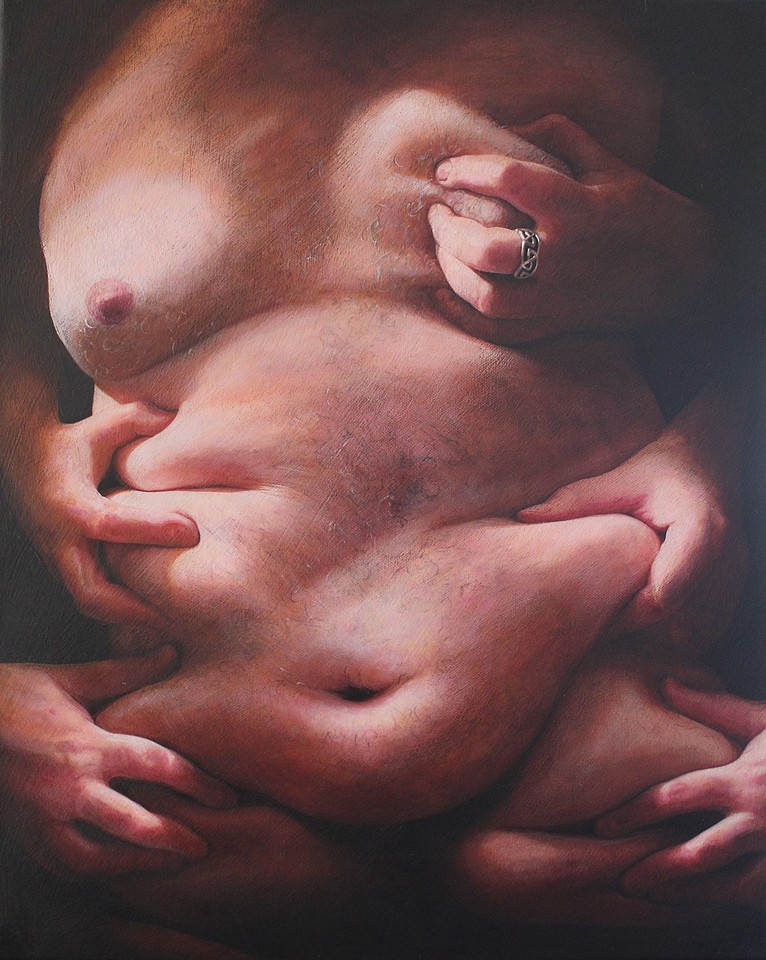
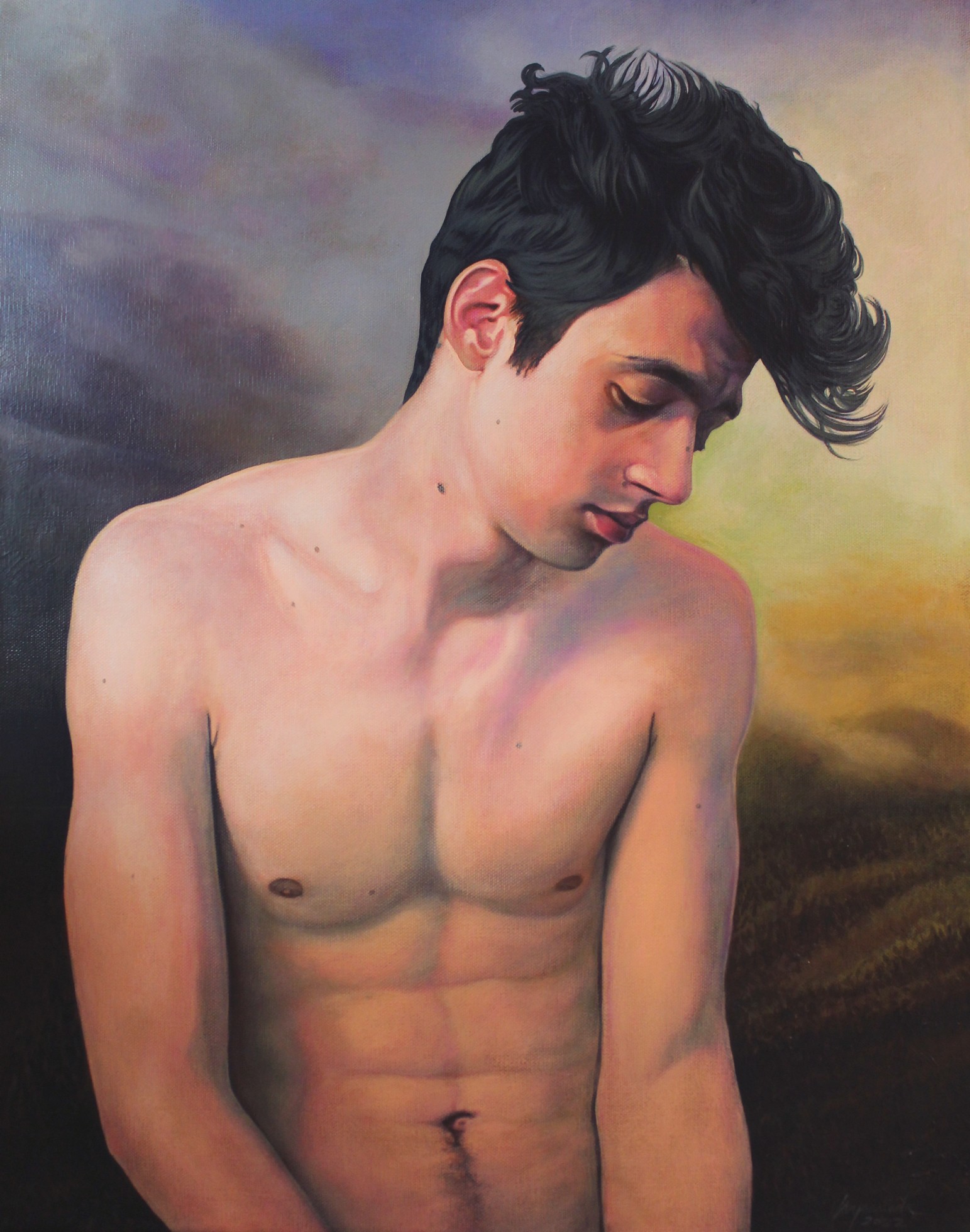
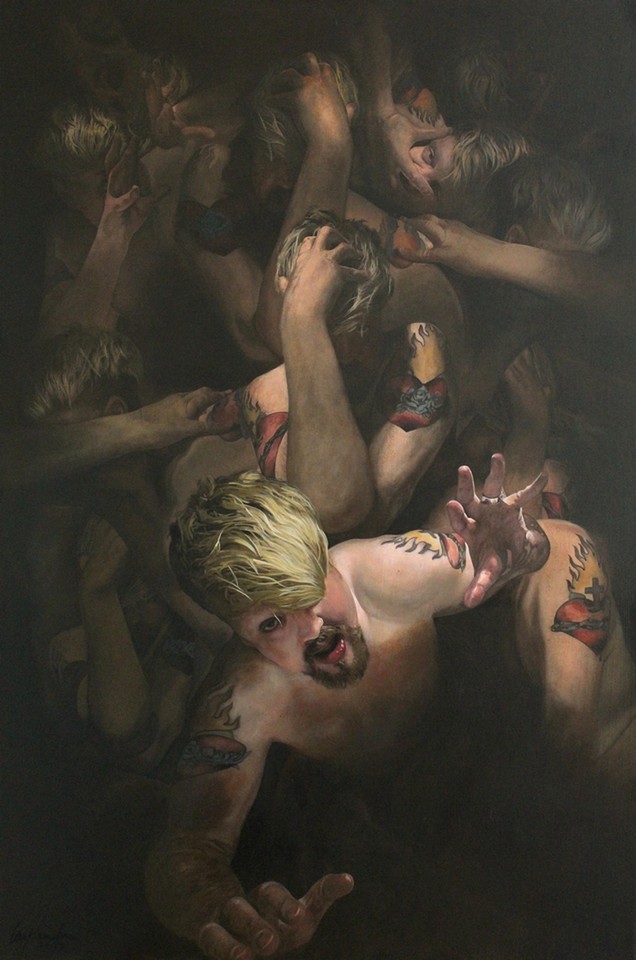
Body PositivityCorbin. Acrylic on canvas.JesusChristJusticeSon of ManIt’s Not a Crime! It’s Not a Sin! Selfitis: The Obsessive Taking of SelfiesThe Transfiguration
Fernando Carpaneda has been creating sculptures and paintings within the punk and homoerotic genres since the 1980s. His voracious involvement in the cause of diversity and punk culture led him to exhibit at: the CBGB art gallery, The Heckscher Museum of Art, The Tom of Finland Foundation, The Leslie Lohman Museum of Art, and on the LED panels in Times Square, New York. Carpaneda also created illustrations for The Best of Punk Globe Magazine: a book that brings together interviews with Debbie Harry, Boy George, Jamie Oliver (UK SUBS), Earl Slick, John Lydon, The Adicts, Glen Matlock, Joe Dallesandro. Carpaneda’s works were published in the book Treasures Of Gay Art, by the Leslie Lohman Museum of Art, alongside Andy Warhol, Robert Mapplethorpe and Keith Haring. Recently, the artist made it two in a row returning to the Long Island Biennial.
From Fernando Carpaneda:
I come from an Italian family but I was born in Brazil. I had my first exhibition of paintings at the age of 13, in the early ‘80s in Brasilia: the capital of Brazil. I came to New York City by chance. In the late ‘90s, I met “Dumpster”, an American Crust Punk who was on vacation in Brazil. We became friends and I ended up moving to New York and living in the C-Squat on Avenue – C.
C-Squat and CBGB were two very important influences on the creative process of my works. My work has always illustrated the Underground scene, the Punk scene, and the LGBTQIA+ scene. In early 1995, I got in touch with CBGB, and ended up scheduling some exhibitions at CB’s 313 Gallery. A few years later the gallery invited me to participate in an exhibition called “Back to the Bowery”. That brought together some of the remaining artists from Andy Warhol’s famous The Factory, as well as new artists who portrayed the city’s underground scene.
It was a historic exhibition, and where I met Billy Name (He created the design for The Factory, Andy Warhol Superstars, and was Warhol’s photographer) as well as several other artists from the ‘70s. I ended up becoming friends with Billy Name and we stayed in touch until his death in 2016. The CBGB exhibitions definitely opened several doors for me on the city’s art circuit, and it was a turning point in my international career. It was also at CBGB that I met Arturo Vega, we became friends and we stayed in touch until his death in 2013. Arturo invited me to participate in an exhibition called The Bowery Electric Festival (A Tribute to Joey Ramone) with Dee Dee Ramone paintings. I will be forever grateful to have participated in those celebrated exhibitions.
My style has grown through experience across several mediums for decades. I work with sculptures, paintings, and drawings. I try to show in my works: relevant social taboos, often dense, linked to the punk/underground universe or to LGBTQIA+ contexts. My works talk about exclusion, belonging, racial, gender, social discrimination, and anti-fascism, especially at this moment. In a world of exclusion, art for me generates dialogue. It doesn’t matter who you are, how old you are, or how innovative you are in society. I highlight ordinary people, natural and real bodies and this brings people closer to my work and, consequently, to ourselves.
Interview with artist Fernando Carpaneda
Carpazine: How did you end up on Long Island? Tell us a little about your early career and the influences that led you to where you are today.
FC: I come from an Italian family but I was born in Brazil. I had my first exhibition of paintings at the age of 13 in the early 80’s in Brasilia: the capital of Brazil. I came to Long Island by chance. At one of the first exhibitions I did in New York, I met an artist who invited me to visit his studio on Long Island, and I ended up moving there. My work has always portrayed the underground scene, the punk scene, and the LGBTQIA scene. In early 1995, I got in touch with CBGB, and ended up scheduling some exhibitions at CB’s 313 Gallery, which was the CBGB art gallery. At that time, the gallery organized an exhibition called “Back to the Bowery” which brought together some of the remaining artists from Andy Warhol’s famous The Factory, as well as new artists who portrayed the city’s underground scene. It was a historic exhibition, and where I met Billy Name (He created the design for The Factory, Andy Warhol Superstars, and was Warhol’s photographer) as well as several other artists from the 70’s. I ended up becoming friends with Billy Name and we stayed in touch until his death in 2016. Various artists from The Factory, like Lou Reed, Candy Darling, and Joe Dallesandro lived here on Long Island in the 60’s and 70’s. I think Joe Dallesandro was living in Babylon at that time. The CBGB exhibition definitely opened several doors for me on the city’s art circuit, and it was a turning point in my international career.
Carpazine: You had an exhibition of your work in Times Square, right? How was that exhibition?
FC: I exhibited paintings in Times Square. The paintings were portraits of friends and acquaintances, my own superstars. The works were shown on giant bright LED screens and were displayed on the screens of NASDAQ, Thomson Reuters, Clear Channel Spectacolor, and A2a MEDIA’s Port Authority. The opening of the event was attended by singer Twin Shadow, DJ’s AndrewAndrew, and musician Questlove from the band The Roots. The host of the night was Jimmy Fallon of NBC’s Late Night show and the event was organized by Art Takes Times Square. It was a unique experience.
Carpazine: How was it to have your sculptures in the film The Nearest Human Being?
FC: It was a fantastic experience to see my sculptures in director Marco Coppola’s film. It won an award for best feature at the Manhattan Film Festival, and it is incredible. While filming, my friend: actor Robert W. Smith, made the connection between me and director Marco Coppola. The director liked my work, and he included my sculptures in the movie. Also, it was great to meet Charlie Hofheimer. I met him by accident when I arrived to leave my sculpture on the film set. So, I saw this guy there, and said, “Hi, how are you?” and shook his hand and talked to him a little bit. It was only after that that I realized it was Charlie Hofheimer. LOL. He was very cool. Charlie is in two of my favorite films. Black Hawk Down and The Village. I was happy to meet him.
Carpazine: How do you view the reactions from the conservative part of society in relation to artistic manifestations in the contemporary world and issues such as sexuality and discrimination?
FC: Art aims to promote freedom of expression and knowledge, however, not everyone has the knowledge and sensitivity to understand or discuss the subject. Conservatism and lack of information are recurrent. Our society is formed by people with different realities and lifestyles and we have no right to compel people to follow our reality, just as no one has the right to impose theirs on us. Human sexuality is complex and it is not up to anyone to judge it. I know people who have been sexually abused by pastors, priests, and family members and they obviously don’t see the world the same way I do – If an artist’s sexuality bothers you, think twice before criticizing or discriminating against it , because not everyone has had the same life as you.
Carpazine: Can you tell me a little about the Long Island biennial?
FC: The Long Island Biennial, is an exhibition held by the Heckscher Museum of Art, and had his first edition in 2010. The Long Island Biennial offers professional artists a unique opportunity to share their work through a prestigious exhibition and offers a unique space for visitors. This year the museum celebrates its 100th anniversary, and the proposal of the biennial on this occasion was aimed at showing contemporary artists residing on Long Island. For the first time, most artists will exhibit two or three works of art, presenting visitors with a more complete picture of their most recent works. I thought it was incredible to have been selected, and I think it is a positive point for my work, in such a unique moment in which we live. At a time when minorities are persecuted, I think it is a victory to participate in this exhibition.
Carpazine: Tell me about your sculptures, you did some reinterpretations with classic art scenes. What was your inspiration to reinterpret Rodin’s sculpture (The Age of Bronze)?
FC: I always loved Rodin’s sculptures, and I always thought of making a hyper-realistic version of one of his works and I ended up being inspired by the work The Age of Bronze. My version was inspired by Keanu Reeves. I turned him into Punk Rodin. I have always loved Keanu Reeves, I like his character, his personality, and attitude as a person. I was inspired by a phase in his movie My Own Private Idaho which is one of my favorites. Eroticism for me is something natural and I show that in my works.
Carpazine: How do you see the role of tattoos in Punk Rodin?
FC: Some tattoos on Punk Rodin sculpture refer to the relationship between Rodin and Camile Claudel.
Carpazine: Homoerotic Art has always been part of the underground in the 20th century, recently it started to boom and to be part of the mainstream. How do you see this interaction between amateurs and queer art? Not all nude is art … or is it?
FC: I think that interaction and the boom in homoerotic material is happening in the same proportion as the boom that abstract, geometric or conceptual painting had. At the beginning of these movements, they also suffered from the interaction of amateurs with contemporary art … not all contemporary art work is art … or is it?
Dear Past,

I thank you for revealing life’s art,
For letting me taste its every part,
In pains, joys, words unkind or sweet,
You shaped me whole, made me complete.

Stronger now, forged by your embrace,
Wounds and scars adorn with grace,
Etched like art on canvas, body and soul,
Each story they tell, making me whole.
Those scars, in sorrow’s shadow born,
Became my drive, my fires were sworn,
You spurred me on, fanned my inner fire,
Turning pain into purpose, soaring higher.

For every tear, a clearer sight ahead,
Each ache a milestone, towards goals I tread,
Truly, you’re the gift that keeps giving still,
Turning trials into strength, an iron will.
Through trials akin to the inferno’s maw,
Earthly challenges seem but straw,
Betrayals and falsehoods left thorns to find,
Yet deeper pain I’ve met, a crucible of the mind.

Now I stand strong, a conqueror in grace,
Thankful for the storm that shaped my pace,
Thankful for a tempest of lessons and more,
A past complex and layered, its wisdom I adore.


Defined not solely by what’s already done,
You’re a prologue, a journey, a rising sun,
A force that propels me into the unknown,
With lessons as my armor, confidence has grown.


Past, I’m grateful for your steady hand,
Guiding me through this intricate land,
Now I step into Future, arms stretched wide,
Prepared for an adventure, with hope as my guide.
Anointed with Timeless Joy

I want to dance in the sunshine of my soul;
Laugh in gales of greedy delight at nothing at all.
I want to strip bare and bathe in rain-drenched blossoms
Falling like snow from the flowering pear tree
And let down my hair to cling in rivulets down my back.
I want to go fast down life’s slide on my belly
And land laughing in the dirt at the bottom of the world.
I want to count the stars of midnight and ride the comets
Across the universe, bare-back, with my spurs dug in.
Dusty eons and frozen grains of sand in the hourglass
Mean nothing but being alive in all the soul’s timeless joy;
Spending golden moments lost in endless beauty;
The breast of time rising and falling with the tides of the moon.
Each breath is a lightness of knowing, of remembrance
Moving rhythmically to the drums of everlasting madness
While strolling leisurely through the light tunnels of infinity
With a silly grin spread across my wonder of existence.
Endless joy is sparkling eyes, and a laughing soul in bare feet.


Breath of Life Sonnet

Oh, the intemperate swells of the heart
That drown me in their wake when you appear,
That melancholy stills when you depart;
And comes again to life when you draw near.
Ancient forgotten love spells seem to call
Like fading siren’s songs from long ago
And all the sighs that held me so enthrall
Whisper once again how I love you so.
Come to me from the tunnels of the wind.
Let not our time on earth be lived in vain.
Love is a living force that has no end -
A breath of life for us to breathe again.
 Love is a magnet that pulls heart to heart;
Once together, no force can pull apart.


Prayer at Twilight

You are my thoughts in the shadowy lane at twilight;
So real I wonder if you can hear my footsteps
Crunching over the stones beneath my feet as I walk;
Or the whisper of the grass when I step off the path.
Can you hear my voice as I speak to you in make-believe,
Imagining your hand in mine and you walking beside me?
The stars hang above the treetops like tiny lanterns
Waiting for the breath of God to blow them out
When dawn peeks breathless over the hills of morning.
I will be long in my bed before the new day arrives,
Snug under the covers of night and its holding
Of my treasured dreams of you in earnest longing
Tucked in my lonely heart missing you with each beat.
My fervent prayers at night are always the same words,
Let him be safe, healthy and strong and missing me
As he seeks my soul in the long shadows of twilight
Down the silent starlit lanes of his stalwart soul.

Annie Johnson is 84 years old. She is Shawnee Native American. She has published two, six hundred-page novels and six books of poetry. Annie has won several poetry awards from world poetry organizations including; World Union of Poets; she is a member of World Nations Writers Union; has received the World Institute for Peace award; the World Laureate of Literature from World Nations Writers Union and The William Shakespeare Poetry Award. She received a Certificate and Medal in recognition of the highest literature from International Literary Union for the year 2020, from Ayad Al Baldawi, President of the International Literary Union. She has three children, two grandchildren, and two sons-in-law. Annie played a flute in the Butler University Symphony. She still plays her flute.
two small birds eat up
pieces of dropped ice cream cones—
two small children laugh


—


bag full of quarters . . .
a dozen dried-up houseplants
at the laundromat


—


partially eaten
red apple on the sidewalk . . .
evening sunshower


—


people come & go
on a warm summer evening—
bitten by horseflies


—


lightning overhead
on a summer afternoon—
on the phone with Mom


—


church food giveaway—
iridescent Japanese
beetle lands on me


—


cool rain cuts the heat
on this summer afternoon . . .
early taste of fall


—


wild sunflowers grow
all along the light rail tracks—
someone’s old armchair


—


summer in Denver—
distant gold capitol dome
reflects white sunlight


—


where’s my pretty bird?
I call for the white chicken
& she runs to me


—


bio/graf

J. D. Nelson’s poems have appeared in many publications, worldwide, since 2002. He is the author of ten print chapbooks and e-books of poetry, including *Cinderella City* (The Red Ceilings Press, 2012). Nelson’s first full-length collection is *in ghostly onehead* (Post-Asemic Press, 2022). Visit his website, MadVerse.com, for more information and links to his published work. His haiku blog is at JDNelson.net. Nelson lives in Colorado, USA.