Youth policy begins with children's policy

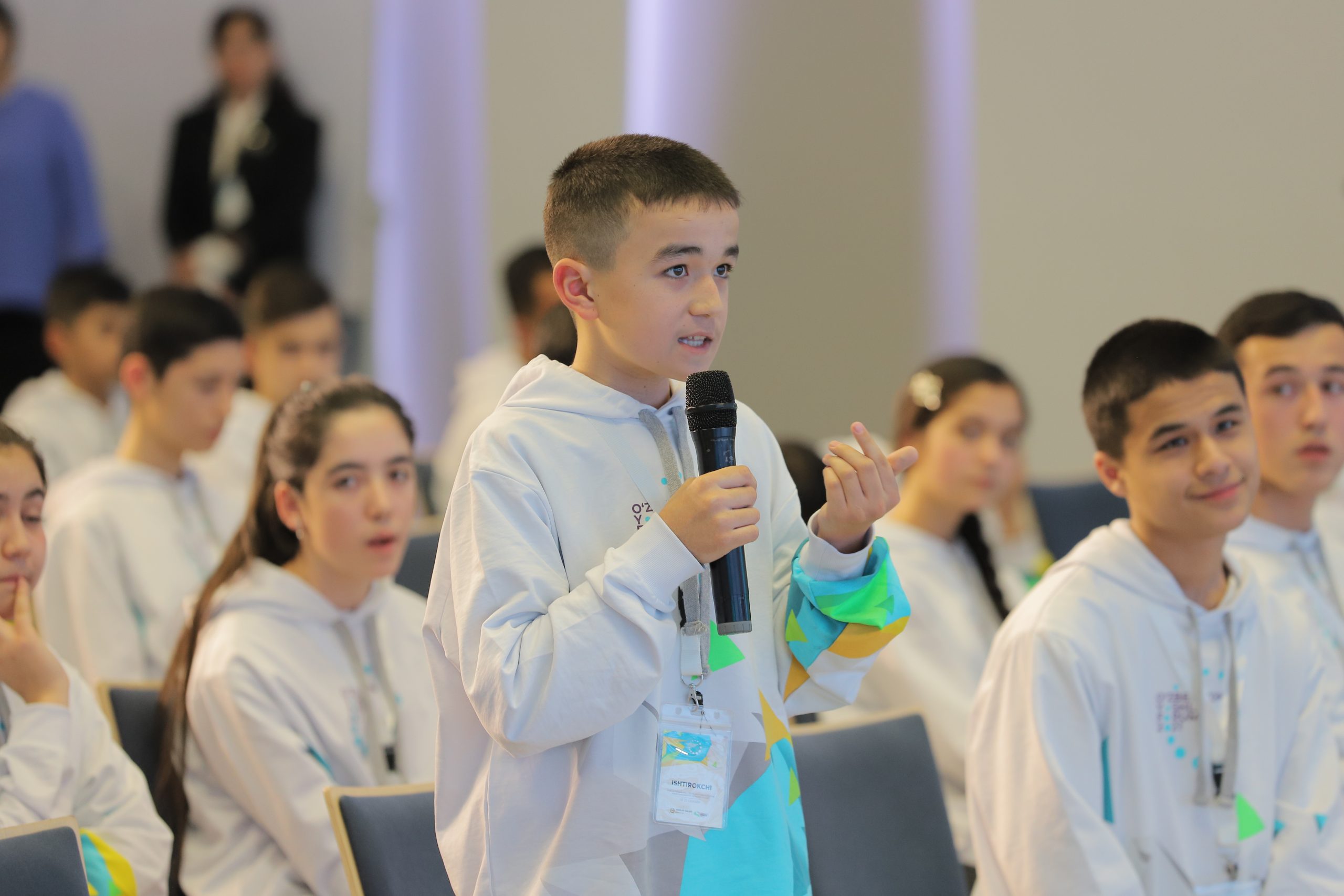
Currently, I am the leader of the children’s organization’s “Kamalak” under the youth union of Uzbekistan. I have been working in this system for three years. Do you know what the leadership gives to children? First and foremost, leadership provides children with a happy childhood. Along with this, it provides skills such as helping our peers, working with children through projects based on their learning and interest.

In the system of "Kamalak" children's organization, we implement various social projects. An example of this is the "Euclid Olympiad" project to increase students' mathematical abilities during the winter vacation, the "Chess Kingdom" online competition among students interested in chess, and the "Eco Frame" project among students interested in taking pictures. Many projects are currently being carried out in order to meaningfully organize free time of students. During the coming summer vacation, we are planning to hold the "Summer with a Kamalak" project in schools, neighborhoods, parks, streets, and camps.

Almost 22 years have passed since the foundation of my beloved organization "Kamalak" children's organization. It is no exaggeration to say that the organization discovered thousands of talented children during this time. In addition, before I joined the organization, I was a child whose speech was not developed enough, and when he appeared on stage, he would forget his words. I became a leader in the organization, I went to different regions, I made friends there, we talk and exchange ideas with them through social networks.

Last year, as a member of the Uzbek delegation, we participated in the international "Children of the Commonwealth" forum organized in Kyrgyzstan because of my exemplary work in "Kamalak". We exchanged ideas with knowledgeable and active students from 6 countries and participated in discussions on various topics. We are using the knowledge and skills we have gained from the international forum among our peers. Friendship, social activity, field trips and unforgettable memories are the gifts that "Rainbow" gives. I am proud to be a part of such an organization! At this point, I would like to recall the favorite motto of our organization:
For the homeland, friendship and happy childhood!

Mirfayzbek Abdullayev
Student of the 4th general education school in the city of Karshi, Leader of the “Kamalak” of Kashkadarya region
Before heading out to do two years in Nigeria as a voluntary teacher of Maths and Physics at the Gongola Day Secondary School in Song, VSO UK organised two, two-week courses. For volunteers like me, (Science teacher in Nigeria), the first course was teaching me to be a teacher. The second course was some instruction in the market language of Northern Nigeria, Hausa, as well as an introduction to working is an area that was heavily influenced by Islamic cultural conventions.
One of the basic cultural lessons concentrated on teaching us not to use our left hand with local people: this could be construed as either bad manners or downright insulting. There were useful hints like keeping your wallet in the right pocket of your trousers to try and ensure that you paid vendors with your right hand. (A later more subtle idea from another long serving VSO teacher was to pass back a badly attempted assignment to the pupil with your left hand to emphasise additional displeasure at the lack of effort: I never did this…)
One day, after I had been in Song for about thirteen months, during a free period, I strolled across the main drag through the village to a little shop, opposite the school — a shop I often frequented to drink one of their ice-cold AfriColas. On this occasion, the older son, who was about fifteen, had arrived back from his boarding school, fifteen kilometres distant, to ask his father for extra money to buy school texts. I had chatted previously with this boy, but have since forgotten his name.
While I was chatting to the older brother, his younger, ten-year old brother took my order and went off to fetch my AfriCola. I left a banknote to cover the price next to me on the bench, which the little boy picked up and went for the change.
Half a minute later, while I was chatting with the older brother, the little boy arrived back with the change. Being involved in the conversation, I absently- mindedly put out my right hand, palm upward, to receive the coins. At the last second, I noticed that the child was using his left hand. Almost without thinking, I rotated my right palm to be vertical and the coins clattered to floor.
At once the little boy turned and ran into the darkness of the inner shop, where he stood near its doorway talking and gesticulating to his elder brother. After a few seconds the elder brother turned to me and said, “My brother begs your forgiveness Mr. Seymour. He asked me to explain that he has a tropical ulcer on his right hand and did not want the coins to touch it before he handed them to you.”
Of course, I felt like total swine when I heard this, and I asked his big brother to convey my acceptance of what I considered to a valid excuse and my apologies if I had scared him. I picked up the coins from the floor.
oooOOOooo
Some VSOs with whom I shared this tale were hard on me saying that I should have kinder in the first place to the little brother, accepting the coins in my right hand.
However, to this day, I remain convinced that the little boy believed that I behaved entirely appropriately, as his father would have, except that the son would have been able to explain the situation in Hausa to his father.
oooOOOooo
In sub-atomic physics, the left- or right- handedness of particle interactions can be significant. Also, it would seem, in some social interactions.
“Fellini’s Mastorna …a film of no return,“ the movie most talked about in film history, finally was finished by Jennifer Glee.
Federico Fellini wrote the script for The Journey of Mastorna in 1965 at the top of his worldwide fame and two years later he created Fellini 8 1/2.
He chose Marcello Mastroianni as the protagonist.
After 11 years, in 1976, Fellini gave me the Mastorna script and invited me to play two characters, but didn’t specify which ones. Fellini was in a strange creative process, which for Mastorna would have had no end.
But Fellini, in Fellini 8 1/2, speaks through Marcello Mastroianni that he didn’t know how to finish the film!
The fact of not wanting to finish a film for which there is already a precise script, means, for Fellini, that he has already made the film!
Actually if you put together all Mastorna’s scenes filmed over the course of 28 years, you could have Mastorna, but, of course, without Fellini’s signature.
After 1993, many directors tried to make the film Mastorna, but only Jennifer Glee has successfully done that.
In short, Jennifer Glee made her contribution to the Fellini 100 by coming with me to Hollywood and presenting the film at the Ruby Theater.
Jennifer began to absorb my experience with Fellini relating to his unfinished film Mastorna.
It was decided between Jennifer and I that the role of the Fortune Teller/Mastorna would be mine. The Another talented actor would play the other main character, the young silent actor who wants to become famous despite his disability.
The Fortune Teller / Mastorna takes the actor on a journey beyond reality, which starts at the Fellini 100 ceremony, where he informs the actor that everything is filmed and therefore the actor cannot go back, but only continue his journey trapped in motion picture film.
There are various reversals of situations, up to an ending that is not an ending!
My experience in the movie Mastorna with Federico Fellini and Jennifer Glee was a wonderful dream, full of ingenious creativity and magic.
To the Tune of Several Hundred Pages of Mandatory Reading which Must Be Done in an Impossibly Small Amount of Time


G!
What?
Whoops where the hell in the where the hell am I is this?
I don’t know I don’t know I
Simply and simple just I—I don’t know—it’s—so cold hard and cold why are my eyes closed I never closed them I don’t think but so open and then—no no open them and—then no not this no . ‘o . . ‘n’ . . . .  ‘‘o’’ . . . . . . . . ‘’’’n’’’’ . . . ‘ . ‘’ . . ‘’’’ . . . . . . . . ‘ ‘ ‘ ‘ ‘ ‘ ‘ ‘  . . so you see that’s why it had to be done the way it was done. Any other way, which, we will grant you, would have provided more precision, would have quadrupled the time needed to be ready to do the count. For doing the count is more important than the count being perfectly accurate—which could never be achieved, no matter the amount of time and care taken. See—here is how these people operate. Give them something to do with absolutely no explanation of how to do it. Just—do this and do that and this that and put it aside and go to the next one. And will they protest? Some maybe—but most not. Because the way we’re going to tell them what to do can’t be too simple. Too simple, and they’ll see right through we’re telling them nothing. Just handing them this big sloppy bag of gas which by the time they get to work at all will be limp-hung down empty and—they will see, and they will know. Then they’ll come back. And we’ll have to admit. That we have told them nothing, not because we’re holding back, but because we have no idea how to do it ourselves. So we got to wrap words and if that then do this and is thus then do that ‘round this gasbag. To the tune of several hundred pages of mandatory reading which must be done in an impossibly small amount of time. There will be some {and these we don’t want} who will see this all as an insane fiasco of make-work ‘cause we got no real work to give you right now kind of make-work, but. There’s another kind of breed which is the kind most in this herd are. It’s the kind that always feels a little bit too stupid. A little bit unsure of themselves no matter what they’re doing. A little bit unqualified to do anything they end up doing, but—never able to say I don’t get it or help me out here or I don’t get this. I got to stop. I just can’t do it because they fear being exposed as idiots or phonies or liars {as in—what the hell you mean you don’t know how to do this job? We hired you ‘cause you said you could do it; that you’ve done it in other places, and at other times, before; what; were you lying to us? [no I was not it’s just that ah ah] Oh? Why the hell did you lie to us then…} or another of the many other variations on this theme {such as—what do you mean you don’t know what to do here? Time was spent in training you to do each and every possible thing you’d ever be made to do on this job, and you said you were ready [oh I know I said that but its just this part here I don’t] why did you lie and say you were ready when you knew you weren’t ready [no no I did not lie it’s just this part here it’s] oh yes you knew here’s the proof here you are not at all ready [but hold it no no I am ready it’s just th’] hey look everybody! hundred faces turn all a’smile here’s another liar who lied that they were ready when they weren’t [no no that’s not true] hey ha look and see them all laughing at you sucka’ hundreds of mouths eyes and faces all laughing yah that’s right sucka’ yes you lied sucka’ that you were good enough sucka’ yes you lied and you lied and look HEY EVERYBODY LOOK AT THE LYING SUCKA’ laughing and laughing and laughing and here's the LYING SUCKA’ laughing pointing the LYING SUCKA’ LYING SUCKA’ LYING SUCKA’ pointing laughing the LIE and the LIE laughing pointing} and like that so you see that’s the last thing they want to see happen to them, so, that type will dig in [!]—that type will—get ‘er done[!!}
Yes get ‘er done, Smitty!
That type will get ‘er done!
Party!
Party!
Party!
Wonderful!
[air pillo air pillo air pillo air]
[spit]
The awakening

when you live asleep
in the life
all situations
they become dreams
you also live
many nightmares
Where to learn from what happened,
recognize what has hurt
forgive those who hurt me
forgive me for those I have hurt
accept what is apprehended
It's what you have to understand
This awakening is not for everyone
because once I wake up
the mission is to transcend.

Mirta Liliana Ramírez has been a poet and writer since she was 12 years old. She has been a Cultural Manager for more than 35 years. Creator and Director of the Groups of Writers and Artists: Together for the Letters, Artescritores, MultiArt, JPL world youth, Together for the letters Uzbekistan 1 and 2. She firmly defends that culture is the key to unite all the countries of the world. She works only with his own, free and integrating projects at a world cultural level. She has created the Cultural Movement with Rastrillaje Cultural and Forming the New Cultural Belts at the local level and also from Argentina to the world.
Nowadays it is common for young people to travel to far-flung places to study. This essay will argue that despite the fact that it often leads to financial difficulties, it is far more advantageous to study in places that are far away from one’s parents because it leads to independence.

Young people frequently face financial problems if they decide to enrol in a degree course in a distant town. This is because it is no longer possible for them to live in their parents’ house, and they, therefore, have to pay for their own accommodation as well as utilities and food. This can come as quite a shock for many young people who have never had to pay a bill in their lives. For example, in this country, it is common for young people in this situation to take on part-time jobs so that they can pay their expenses while at university, and perhaps the most popular such job is being a waiter in a restaurant or bar.

The great advantage of studying in a far-off place is that it allows young people to experience what it is like to be independent of their families. In many Western countries, it is humiliating for someone over the age of 18 to have to ask their parents for money and also to not be able to live their life the way they want to because they have to live by their parents' rules. Leaving the family home allows them to choose whatever lifestyle they want and not be under any influence from their elders. For instance, at universities in the UK, it is noticeable that students who are no longer living in their parents’ houses mature more quickly than those who are still living at home, and this is clearly because they cannot depend on their parents and must instead embrace their newfound independence.

In conclusion, travelling to a distant place to study might be financially challenging for those who have just left their childhood home, but the advantages of being independent far outweigh that drawback.


Shabnam Shukhratova


She was born on August 13, 2008 in Navbahar district, Navoi region. Currently, she is an 8th-grade student of school 21 in Navbahor district and is the class captain of this class. Her works have been published in anthologies. She is also a volunteer. SHe is also a participant and winner of various Olympiads and competitions. SHe also has international certificates.
Nowadays it is common for young people to travel to far-flung places to study. This essay will argue that despite the fact that it often leads to financial difficulties, it is far more advantageous to study in places that are far away from one’s parents because it leads to independence.

Young people frequently face financial problems if they decide to enrol in a degree course in a distant town. This is because it is no longer possible for them to live in their parents’ house, and they, therefore, have to pay for their own accommodation as well as utilities and food. This can come as quite a shock for many young people who have never had to pay a bill in their lives. For example, in this country, it is common for young people in this situation to take on part-time jobs so that they can pay their expenses while at university, and perhaps the most popular such job is being a waiter in a restaurant or bar.

The great advantage of studying in a far-off place is that it allows young people to experience what it is like to be independent of their families. In many Western countries, it is humiliating for someone over the age of 18 to have to ask their parents for money and also to not be able to live their life the way they want to because they have to live by their parents' rules. Leaving the family home allows them to choose whatever lifestyle they want and not be under any influence from their elders. For instance, at universities in the UK, it is noticeable that students who are no longer living in their parents’ houses mature more quickly than those who are still living at home, and this is clearly because they cannot depend on their parents and must instead embrace their newfound independence.

In conclusion, travelling to a distant place to study might be financially challenging for those who have just left their childhood home, but the advantages of being independent far outweigh that drawback.


Shabnam Shukhratova


She was born on August 13, 2008 in Navbahar district, Navoi region. Currently, she is an 8th-grade student of school 21 in Navbahor district and is the class captain of this class. Her works have been published in anthologies. She is also a volunteer. SHe is also a participant and winner of various Olympiads and competitions. SHe also has international certificates.
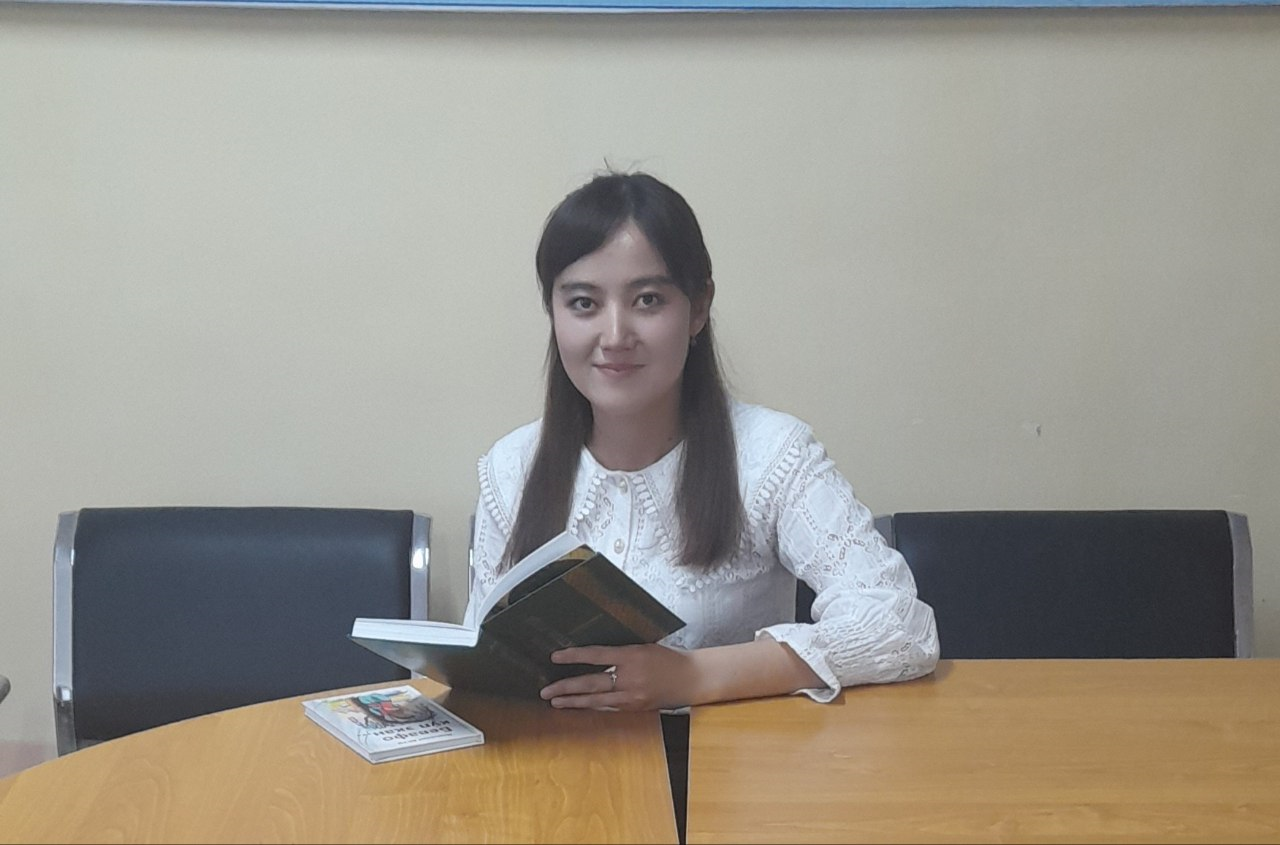
Mahliyo Rahimboyeva was born on November 2, 2002 in Gurlan district of Khorezm region. Currently, he is a 2nd-year student of the Faculty of Philology of Urganch State University, studying philology and languages: Uzbek studies. Mahliya is one of the talented students, the collection of poetry “Tabassum Tarovati” and the monograph “Symbols related to the image of nature in the works of Rauf Parfi” were published. In addition, Mahliyo actively participates in republican and international conferences with his articles and theses. Literary-artistic and journalistic articles have been published in regional and republican newspapers and magazines.