MAYA TO YOU

Bury in yourself all the desires
that are a trap and a binding
thread for this world.
Survive Maya's first death which is like a blessing.
Once the old man in you dies, another time the body dies,
while the soul has its circle of movement in eternity.
Maya endure all the hardships, because this life is like a dream.
Maya does not regret anything.


IF YOU WANT

If you want peace, keep it in your mind,
Don't look for peace in places where it doesn't exist.
If you want glory, it comes by glorifying God, not by having influential friends,
We, poets, are like flowers, we grow from the rain
we receive as grace, some are roses, some are weeds, there are many of us,
let's connect only if we have similar sensibilities.
If you want to be a particle in the bridges that connect the whole world,
you need to open your heart more strongly and sincerely embrace your brothers and sisters around the world.
If you want peace, you can't get it
if you don't respect the cows that feed the whole world with milk,
if you don't want war in the world,
remember that God and all his followers are watching with sadness how cows are killed en masse,
wars in the world will not stop if we are not compassionate towards cows and all other beings.
If you want peace, keep it in your mind and don't disturb anyone who walks beside you.

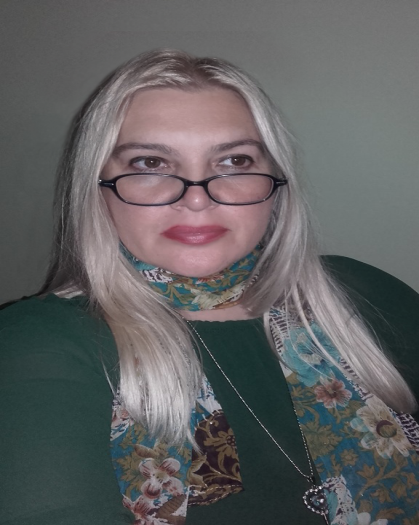
Maja Milojković was born in 1975 in Zaječar, Serbia.
She is a person to whomfrom an early age, Leonardo da Vinci's statement "Painting is poetry that can be seen, and poetry is painting that can be heard" is circulating through the blood.
That's why she started to use feathers and a brush and began to reveal the world and herself to them.
As a poet, she is represented in numerous domestic and foreign literary newspapers, anthologies and electronic media, and some of her poems can be found on YouTube.
Many of her poems have been translated into English, Hungarian, Bengali and Bulgarian due to the need of foreign readers.
She is the recipient of many international awards.
"Trees of Desire" is her second collection of poems in preparation, which is preceded by the book of poems "Moon Circle".
She is a member of the International Society of Writers and Artists "Mountain Views" in Montenegro,and shealso is a member of the Poetry club "Area Felix" in Serbia.
Industrial Revolution


Hey Mac, (this from the fridge, a Westinghouse,

As I walked past), in some forgotten life,

A stinking greenish scum is all you were,

But I, a diamond, Hope’s the name I bore,

That’s bullcrap, I replied, and grabbed a beer,

The Hope exists; mere rust and clay you were,

That ain’t the way this works, it snapped, acer-

Bically, full anything you could become:


A frog, some smog, a piece of crispy toast,

For me, more like, an eagle soaring high

Above a cowering rabbit you, my lunch,

You’re destined to be scrapped, you hunk of tin,

I snarled; just then my wife exclaimed, Oh God!

You’re off your freaking meds again? Get help!
lifetimes ago


i remember wishing

upon a star as a child


i'm still waiting for

that wish to come

true


i know i'm patient

but fuck me


my childhood feels

like two or three

fucking lifetimes

ago


when i see them

these days i don't

bother to make

any wishes


fool me once...
--------------------------------------------------
a hamster wheel


the constant race


have or have not


first or last


rich or poor


it is a hamster

wheel that has

no stop


not even with

death


i still know dead

people gone for

over twenty years

still getting mail


it is why i stay

within the fringes


out in the margins

and creases of life


you can't imagine

what you can get

away with when

no one is paying

attention
-----------------------------------------------------------------------
the years apart


the muse has

slid back into

my life


i think the years

apart weighed

on each of us


it reminded me

of just how big

of an asshole i

can be at times


it also taught me

how much a sincere

apology can mean

to someone


now, i never thought

of marriage or children

or even being allowed

to get close enough

for anything


but now, given this

crazy world


all these options

seem to be on

the table


should be an

interesting

summer
-------------------------------------------------------------------------------
in hindsight


and of course


just when i start

to think about

having a wife

or whatever

in my life

no one is

interested

anymore


in hindsight


i'm sure this

is how it was

meant to be


loners don't

suddenly have

a spell of good

luck and the

perfect wife

appears and

utopia ensues


life is about

learning to

swallow the

hate and pain

and pretend

waking up

the next day

it will all

change
-----------------------------------------------------------
be careful what you wish for


death is

creeping

closer to

my door


my mother

has already

cheated

death


twice


i doubt

i will get

that

fucking

lucky
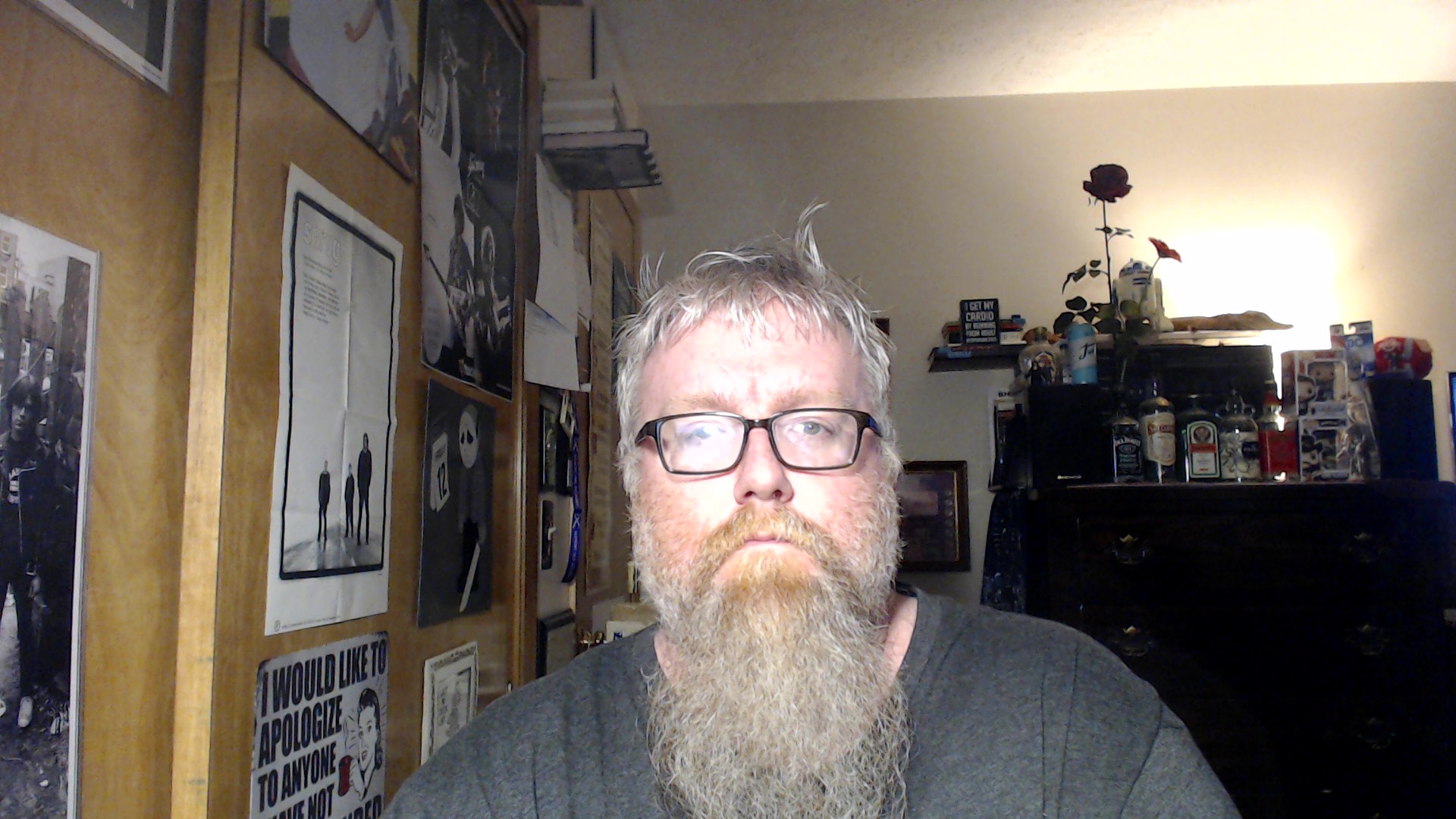
J.J. Campbell (1976 – ?) is stuck in suburbia, plotting his escape. He’s been widely published over the years, most recently at Horror Sleaze Trash, The Rye Whiskey Review, Disturb The Universe Magazine, The Beatnik Cowboy and Cajun Mutt Press. You can find him most days on his mildly entertaining blog, evil delights. (https://evildelights.blogspot.com)
MYSTERY


A century of mirrors, of faces and fiction
The time that circulates summons me
I take my pen and my heart expresses
The rest is mystery Mystery of true faces
tumult of water that is lost
Mystery of distant islands that shine like stars and fleeting flashes, that sink into the sky invested dark and warm
Mystery that calls me It moves me and drags me mystery of naked gods because the fire suffocates them
Mystery of water that is lost
Mystery that calls me in solitude
Mystery that I love beyond coherence.


Graciela Noemi Villaverde
Argentine poet writer based in Buenos Aires
She has a degree in letters, author of 7 books of the poetry genre. She has been awarded several times worldwide. She works as the World Manager of Educational and Public Relations of the Hispano-Mundial Union of Writers UHE and World Honorary President of the same institution.
Parents are such people that no one in the world can take their place. The only people who always believe us and always support us are our parents. If we hurt a little, they will hurt a lot and they long for our success. They are most necessary and sacred people in our lives. They take care of us and remove any obstacle in our way, saying ” My child should not be hurt.” They can’t bear it when we cry. They will be the heroes who are ready to give their lives for us. They always try to make us live well in this life. If we have any problems, they solve them at first. Parents are the meaning of our life. Life will never be meaningful without them. They will be the only people who will love us until the end of the our lives.
The most important, dearest and holiest people in this life are my parents. Dad ! Mom ! For me, they are the greatest blessings in my life. They are my greatest gift from God. They are the most wonderful parents in the world for me. My heroes, who are always by my side and always believe me are my parents. I always promise to be a worthy child and justify your trust! Thank you for everything dad and mom!
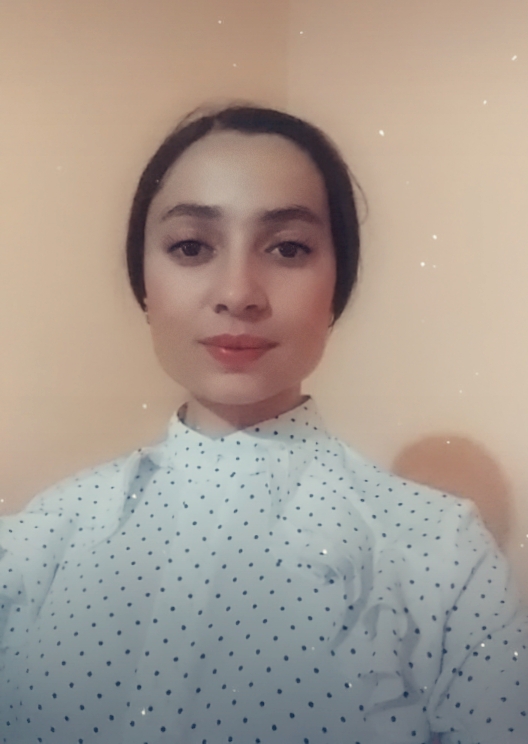
Mekhrangiz Kibriyeva.
MEKHRANGIZ KIBRIYEVA OLIMJONOVNA was born 1 January , 2006 year in Sariasia district Surkhandarya region in Uzbekistan.
Returning to Lidice

Before I knew how to run, how to swim, how to dress and tell the good from the bad, I learned how to take care of the gardens. Most girls and their Nivea-nurtured palms had nothing on my dirt-christened hands.
I was christened all right. First, by the Catholic Church at the Cathedral of Saint Patrick, ten miles south of Lidice, where I grew up. Then I was christened by my grandfather's unforgiving gardens.
"You need to learn the value of hard work," he used to say to me. Of course, he knew a lot about hard work. Helvance was a small town near the Nazi-obliterated village of Lidice. The land was stained with blood. And my grandfather never made a difference between who was manly enough, adult enough, or tough enough to hear what he had seen. He was progressive like that, you could say. No discrimination in the department of permanent trauma.
"We have to pass the story down. Otherwise, history will repeat itself," he used to say to me. As soon as I learned how to walk, I took care of the blood-soaked soil that would spur all the treasures necessary for a family to survive winters and enjoy summers.
“You work, you reap the benefits,” he used to say to me. I think I hated him my whole childhood.
The lesson of misfortune that happened on this soil was carved into me and forever stained my innocence.
"Why don't we leave?" I would often ask him.
"Because we know how to withstand a storm. It doesn't matter whether it's a storm of bullets or a storm of nature. We endure." I learned how to harvest pear trees.

I learned a lot working in his garden. I admired his silent strength and his loud beliefs. I hated his burdens and his ancient personifications of youth.
The pear trees were his favorite. So incredibly unresponsive to so many habitats, yet they subdued to his will and let him mold them into whatever he pleased.
He molded me, too. I became firm. Ready to withstand a storm of the world.
“What if I choose to leave?”
I was eighteen and eager to see the world, to study.
He shrugged. He never acknowledged it as betrayal, but he didn't want to imagine that someone would leave the grove and grow beyond its borders. My grandmother encouraged me.
“Go. You can always come back to your roots.”
Of course, she would say that. She loved her roots. Spent forty-five years fertilizing them. But I didn't blame her. She was abandoned, and the land saved her life. Listened to her pain and accepted her tears without ever letting the salt infiltrate the fruit and spoil it beyond repair.
"The worldly possessions don't matter," he used to say to me. "It's only a matter of time before we're reduced to the state of a catastrophe like we were seventy years ago. Nothing will matter. Except for family and Mother Nature.”
Was it a promise? A prophetic challenge?
"You go and enjoy your life. But don't lose sight of what's important," he used to say to me. He packed three pears in my backpack. Reminded me that France and Belgium cultivated them but could never really nail the taste. He reminded me that the colonists brought pears to the American east coast, but the unique agricultural conditions killed the harvest. The pear trees thrived in Oregon and in Washington – North Pacific East.
“If you want to go, you should go there. Always stay close to the land that can adapt.”
Even when I thought I was making conscious decisions, his opinion was more important to me than my happiness. Because I wouldn't have survived without his tutelage. Without the values, he installed in me. I settled in Oregon. Portland was as close to my garden as I could imagine. I dedicated my life to literature and a small garden.
Then, the worst possible thing happened.
We were reduced to nothing. An imitation of life we used to have. For the first time in a long time, we united to survive.
I wanted to go see him. Five years was a long time to be away. But I couldn't. I didn't go when I could, and now they canceled all flights.
I waited. And I waited. Consoled myself with pears that never tasted the way they did when he served them to me.
Finally. Restrictions were lifted at least to some extent.
When I was waiting for a connecting flight from Atlanta to London, masked and miserable, I saw a bowl of pears on the front line of an airport restaurant. Of course, no one was eating in that restaurant. No one was eating the pears. I wish I could pull down the mask and ask the staff if I could have one. What a strange wish to bite into fruit at the airport.
Who would ever in their ever-loving thought ask a waiter if they could have one of their decorative pears to go?
No one. But that was before. Now, with empty halls and empty hopes, I would give anything to be able to tear the mask apart and have a pear.
I was terrified and invigorated the whole flight to London. Stayed in quarantine for fourteen days, according to their regulations.
“You have to hurry,” my grandmother told me on the phone. “He doesn’t have much time.”
If I could erase the pandemic to be able to travel fast and tell him how right he was and that I'm taking back everything I ever said about living in the middle of nowhere, I would.
Now everyone lived in the middle of nowhere. Their houses and apartments were their nowhere. The streets were empty. Nowhere was suddenly everywhere. Nowhere engulfed us and suffocated us.
 And the people capable of growing their own edibles were the true winners.
I survived. I arrived in Prague. Another fourteen days of quarantine. By the time they let me out, I sprinted to the nearest grocery store at the Hlavna Stanice, the Main Train Station, and bought the freshest, French-imported pears I could pick from the bunch.
I boarded the train to Helvance, admiring the harvest I was bringing him.
The train stopped at Lidice monotonously going into the station as my cell vibrated in sync with the screeching brakes. A text message from my grandmother.
“The garden is yours, now."
He will never be able to say anything to me again.
BRASS MIRROR

Behind the monastery, under a yew tree, in a lonely grave the worms have already worn out the hands of the one who made the mirror.
In front of the monastery, in the cemetery of discarded things; faded photographs, decapitated icons, saints pleading for salvation, and tarnished brass.
After midnight,
I am a silhouette that jumps into the depth of the mirror.
There’s nothing between us anymore.


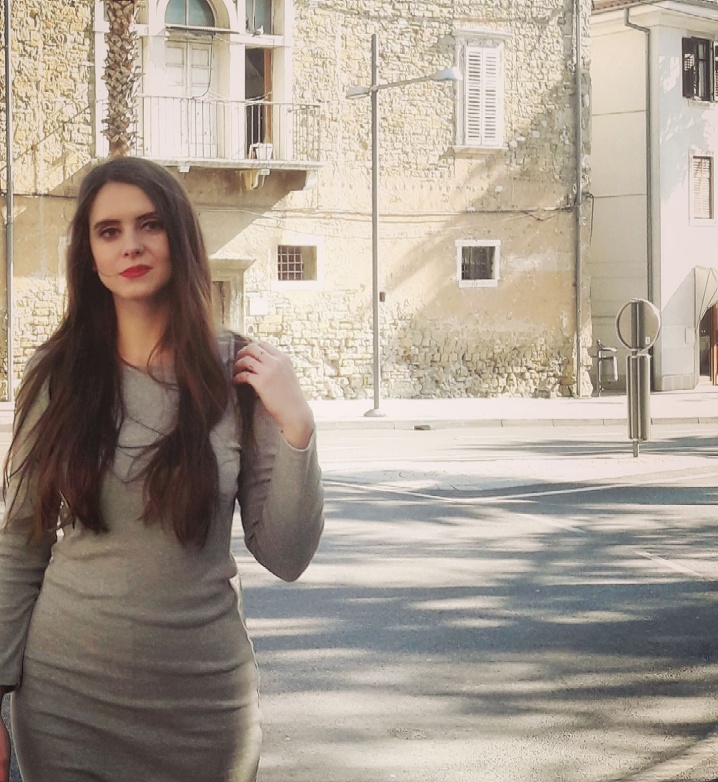
Azemina Krehić was born on October 14, 1992 in Metković, Republic of Croatia.
Winner of several international awards for poetry, including:
Award of university professors in Trieste, 2019.,
„Mak Dizdar“ award, 2020.
Award of the Publishing Foundation of the Federation of Bosnia and Herzegovina, 2021.
„Fra Martin Nedić“ Award, 2022.

She is represented in several international anthologies of poetry.