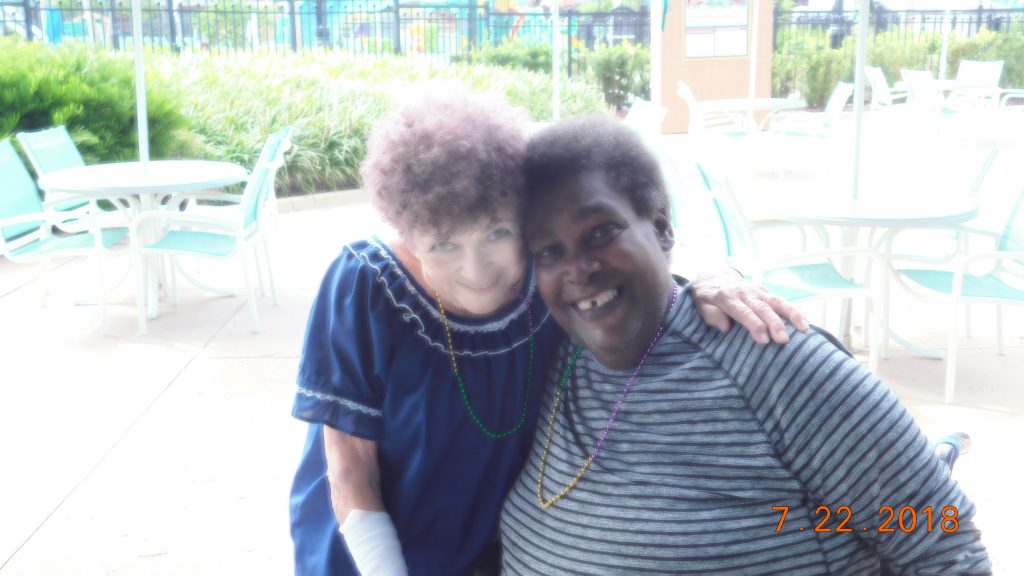
Joan Beebe (left) and fellow contributor Michael Robinson
A rose has beauty
and sending it to someone
has a message so caring.
A thank you for friendship,
and being always there.
What more could one ask.
So I leave with a prayer
And may blessings pour down
That we will share the roads of life
And remember the rose that will
Help us through strife.
Blessed Mother, you are the Patroness and Guardian Of this country. We are the fruit of His Spirit.
Please be our advocate and ask your Son to help His suffering world. May He give the research and scientific people that sudden extra gift of reasoning that will help them find the way to stop this horrible virus.
You are with the Lamb of God and together you may bring Peace, Health and loss of fear to God’s people.
A Time of Stillness
Neat nice homes standing side by side –Where there used to be neighbors mowing the lawn,
Resting quietly in the shade of an old maple tree,
Waving to neighbors who are also in their yard and some taking walks through the neighborhood.
The area now seems like a ghost town. A few cars sit idle in driveways and no one visible through windows of the homes. Arising in the middle of the Night and looking through your window is sad and disturbing. The quiet of the night seems like you are alone in a field of grass with the light from a shadowy moon enveloping you in a time of yesteryear. It is taking you back to a time of youth, laughter and living a family life of love.
The present is now when we hope and pray that the dangerous and fearful virus of COVID19 will be erased from every part of this world. The present is now when we hope and pray that the dangerous and fearful virus of COVID19 will be erased from every part of this world.
Layla, I do not laugh effortlessly
Layla, I do not weep skillfully
Layla does not your name mean
-the night, or blues?
We no longer have the possibilities
Our story made the entire universe
-rain, as well as the students in the
classroom, I weep as I read it today
When I visit your tomb in the graveyard
I remember how the war forced the
-survivors, to transform our memories
into gray clouds of ash
Layla’s disappointment is everyone tale
It is touching and sad to realize she
got married at a young age, then she
became widow, before she died in the refugee
camps.
Rest
When will I rest well from overthinking
I have blinded the daylight in my sights
I even paralyzed all steps to my objective
because I have been the blues in my deafness
When will I rest in peace from awful mouths
I ceased to exist between everyone I know it
I started to support the fight against poverty
unexpected death, and money with bloodstains
When will I learn myself to nothing but to rest
My wordless spirit is an immensely tragic story
It made my heart wonder what I would’ve done
-if I will have the strength to ignore my longing to
Before everywhere I go, I hear continuous outcries
But presently I see the sunshine with birds singing
This quarantine makes me think as we are all given
another bet, to heal what we have ruined before…
Choose Your Own Poem
Choose your own poem
If you can’t reach the moon
Regulate your life journey
and never say that ”You can’t.”
Many things to write about
Just always read more books
Never lose hope on your ink
Just adopt an optimistic effect
Study hard and work fairly
Be smarter than you think
Don’t expend your time in
an unethical background
Choose your own poem
and find the honest lady
to share her scent, eyes,
and her desire for your poem.
My Bio
Ahmad Al-Khatat was born in
Baghdad, Iraq. His work has appeared in print and online journals globally and
has poems translated into several languages. He has been nominated for Best of
the Net 2018. He is the author of The Bleeding Heart Poet, Love On The War’s
Frontline, Gas Chamber, Wounds from Iraq, Roofs of Dreams, The Grey Revolution,
and Noemi & Lips of Sweetness. He
lives in Montreal, Canada.
Vertigo inside of me. Burnt oats. Mother burnt the oats again. The bottom of the pot burnt. The oats tasted like ash, smelled like coals on the fire. Oats like cinders. “Eat. Eat everything.” She said. “Go on with yourself. That’s your food. That’s your breakfast.” I have often blamed Christ God for my unique set of circumstances, but I don’t anymore. My father’s sad that I lost the plot. Nobody understands. Nobody understands me. I’m alone, all alone in this world. Nobody to call my own. And the entire house smells like marijuana. My brother smokes his weed in the house now. The parental units don’t care. I’m ripe for the taking. It’s asking for the taking. I’m slave, and cook. I clean the house like a madwoman. Richard, my father’s close friend, speaks of ‘mental wellness’. Going on holiday. Listening to music. Being happy is a choice, he says. You can be happy. But I feel like Heidi in the Swiss mountains with her grandfather, blissfully unaware of the outside world, how dangerous it is to be a woman on your own.
I think of the Duchess of Sussex, how elated, how happy she looks with her prince, how beautiful she looks every time she’s photographed. Her skin is flawless. Radiant. There are pools of grandeur, and admirers wherever she walks. She walks tall. Head above water. Surfing London, England’s ‘swampland’. Compared to her, I’m nobody. Nobody special. And the day is like cocaine. And the night is marked by sadness, and after winter, comes winning, winning spring. It’s beautiful supposedly, but I am not impressed by the wonders of the flora around me, by the environment marked by pollution, and global warming.
And the economic downturn of the recession, and climate change. We’re normal people. Their eyes tell me that. Tell me that I don’t belong. What’s normal anyway? I’m anti-normal. Smiling when I look at this photograph of you, from memory and desire. Oh, how I desired you. Still desire you, but you belong to someone else. Other people, who are kinder, and more understanding than my own people. They say that I’m mad, and call me mental patient. Oh, I was in high care. Oh, I was in a locked-up ward. Oh, I did try to take my own life, but could I be the most beautiful woman in the world, on your arm at a social function, or a family gathering just for a few hours, please, please. There’s a wasteland for you. Wasted potential. Wasted youth. To live normally, that means exactly what. The only goal that I have in my life is to write.
I think of Charlie Chaplin’s mother in the asylum, a young Anne Sexton full of brio, and bold life modelling her Bostonian-heart out, (I don’t have that kind verve, don’t live according to that velocity). Oh, I’m sad, and lonely, but don’t worry for me. I’m proud to be a ghost nation. I’m governed by patience and virtue, patients and their psychological framework. Their philosophy of life in hospital, shielded away from the gaze of the world. I’m poet. I’m John Updike’s Bulgarian poetess. I must have courage. A woman’s guide to courage, but can someone help with the survival-kit. Men have always laughed at my sexual inexperience, and inadequacy. It was like a storm inside my head, you know. There’s a tangled web for you.
A spider’s web of deceit and lies, deception and self-sabotage, the pattern of self-destructive behaviour, and because of you, as if you didn’t know, I will never marry another. I don’t want to be anywhere near you. You are dead to me like stimulus, capacity, and impulse. Once, your hands were my hands. Once, your heart belonged to me. All I see now is your silhouette. You’re showman, I’m interloper in your relationships. You’ve travelled, made sense of the world around you, and now that you have a wife, you want nothing to do me with me. You don’t want to love me anymore. And I know it would have made a difference if I could have given you a child, to live and to breathe, but all I seem to get out of the day is meditative haiku this, and you have the shadow of a fisherman in my bedroom in the early hours of the morning. Just like, for the rest of my life I will remain childlike.
You gave me up. The spark, the love, the beautiful reflection of me, was there for the taking. You refused. You refused me. Walked away from me in a parking garage. In childhood, it will always be childhood for me, nothing is beyond reach. Everything is within limits. I wait. I’m left waiting. The poor girl, waiting in poverty, living in poverty, spiritual-poverty, the green dragons of men say. No man’s hands will write on my body now. My body is no longer a canvas. The youth is gone. Oh, youth is fleeting, but not the homesick feeling. Growing up, I always sought out introverts like myself, only finding that aspect of personality in older males. And as soon as I got older, they all faded away into the background. Excitement is like a store for me.
I go in there, anxiety and fear disappear, the anguish of not having a man. The ache is still there, but I’m too old for that life, that kind of time, to spend hours, or an entire afternoon in the company of a man, too tired for the games of the sexual transaction. You’re a parenthesis. I’m beginner, on repeat. With the thin needle of desire on repeat. Blood gives, blood takes. You have your career, your wife has her household and family to take care of, you’re both inter-dependants, take care of each other, wife and husband (you each have your duties), taking care to take care of each other in the good times, and sad times. There’s nobody to take care of my heartbreak. All I have is eccentric. My fondness for rubbish television, and J.M. Coetzee novels, (the greatest writer alive today).
Films that only cost about a million to make. I remember when I stopped running. I mean running away. It was about the time you left me, and we said our goodbyes. There was finality for you. There was closure for you. You closed the door on the past, on our past. But it wasn’t completely over for me. Nowhere is the longest distance to traverse, and often there is no end in sight on that pilgrimage. Our end meant the rare appearance of a new world for me. Sickness came and went in my life. You were a non-supportive prop. It wasn’t over by a longshot for me. Not for me. Not for me. Awake, I am tidal, and pure. I feel the cold. Nobody feels the cold like I do. I’m dying. I’m dying to belong to a world, this planet, but you see, I could never fit, adjust, meet expectations high, or, low, justify. My relationships were always scandalous.
I was naïve, too young; he was old enough to be my father. You’re living your best life now. Yes, I want a connection, to this society, link up with likeminded people, who, like me, find living in poverty disabled disagreeable. I still have goals, plans, and this dream. I will speak at Harvard, Brown, Duke, Smith, Yale, and Princeton. I will attend an ivy league university like a Kennedy- heir. I will attend Columbia. Think with clarity and creativity. Then the world will love me, and that will be enough. I do pray. I pray for happiness for myself (but what is that without a man), and for personal success in all the spheres of my life. I’m forever home for the holidays now, glimpsing taverns in my neighbourhood from the safety of my mother’s car, the life-worlds therein, and I don’t know whether bitterness, or, resentment on the part of my aunt, that relationship, the year I spent at a mental institution, was responsible for the estrangement on my father’s side of the family. The ache is sharp. The knowledge of it was always mysteriously invisible to you.
There’s Missionvale. It is not suburbia. I think of Cobra polish, Sunlight soap, Colgate egg shampoo, and the rich who know, who think nothing of sub-economic housing, families of ten people or more who have to fit into two rooms. A matchbox house is far beyond their understanding. They do not know of the kind of pressures, and stress, and hurting when a man can’t provide for his family. Can’t put food on the table. Can’t be caretaker, his wife, and mother-in-law nurturers to the children in the house, in matchbox housing. All the children are, are orphans anyway.
The absent parents who only have their own neglect into the life of addiction on their minds. Addiction to gun violence, addiction to a heinous promiscuous lifestyle, domestic violence, shocking physical, and sexual assault. They know nothing of the filth and stench of poverty, the stain, the organic language of menstrual blood, of blood, of blood spilled. I think of the prosperous with their Swiss chocolate, bouquets of flowers, gifts wrapped in tissue paper on birthdays. There’s Bethelsdorp. There’s Korsten. There’s Timothy Valley. There’s Schauderville. People there do not live the kind of sheltered paradise life that I live. People shoot in the streets. They shoot to kill. I feel like Krotoa. Only good enough for one man. Called out of native darkness into Dutch light.
Come over the threshold, Krotoa. I give my name, my nationality, my life to you. Death is important. Death is king, for without this earth of things, all of our material possessions how can there be life. We need faith to receive the blessing, in order to obtain Christ’s reward, but without it we can still live, just without the guidebook (to salvation). Lazarus is still sleeping. I want to be the next Antjie Krog, not the next Ingrid Jonker. Arthur Nortje, the poet who won a scholarship to Oxford, he speaks. Arthur Nortje, the poet speaks to me. I feel to live vicariously through him. Through his Oxford. Through his romantic life, if he ever had one. This non-European, who looked like a pale king version of a European. Arthur Nortje, speaks with anticipatory nostalgia to me. He is walking alone; I am walking alone. He has a testimony; I have a testimony.
This is not the end for me. There is still the storytelling to be told of Hitler, Mussolini, Smuts and the Cape Corps. I have this map, you see. A map of the world, my mixed-race world. No telling where I still have to go. But I am Krotoa, relying on the spirit of giving from older Dutch males. There is a mother, or rather was the lack of one n my life. The tomcat is inspiration, magic spell, imagination to me. There is a mother, tarnished like seed, that carries with it, Sunday gravy, pork belly and roast potatoes. Wait a minute. There’s a thaw in the air. Just. Just. In the kitchen there she stands, a Jennifer making my life hell. There she goes again. On fire, this injustice, she screams at the top of her lungs of just how inadequate I am. I’m mute. I’m a mute. I think of the needle. The thin needle of desire from memory. How it left a mosquito bite on my arm playing a seduction game on my arm
. How the words, “you’ll be okay, we’ve given you something to sedate you”, were given to me like communion wine, and the wafer of Jesus Christ’s body. And I think of Dennis Brutus, Arthur Nortje, Brian Walter, Harold Wilson, these men of genius. I think of Calvary. My cross, my cross. My cross. I’m glad I couldn’t see into their, my future. You never grew up in our house. Never smiled for the camera the way that we did. Hiding our grief in our interpersonal relationships in the way that we did. I ask myself all the time am I walking on a dream in being a poet, is he really, this great South African writer who lives in France and Spain in awe in of me, are people really talking about me, or, are they laughing at me.
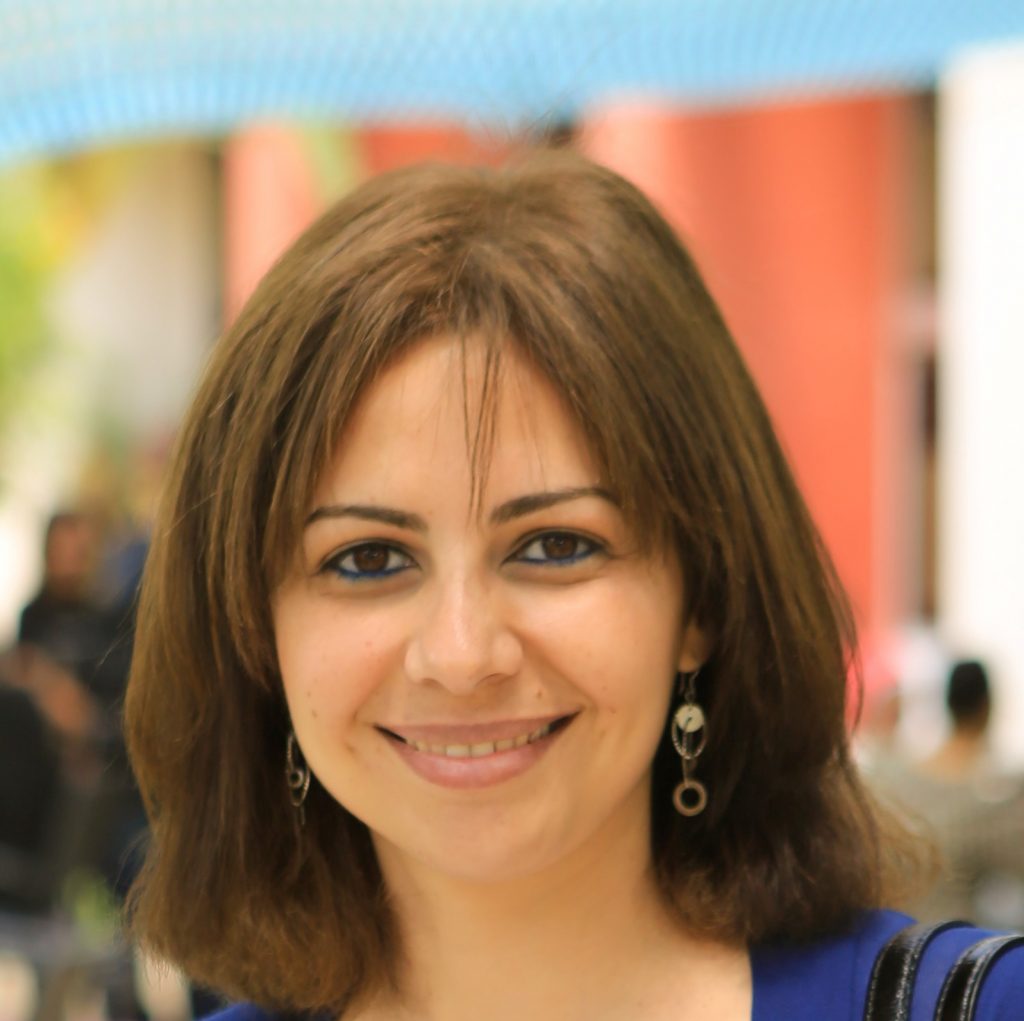
Interviewing Egyptian film director Dina Abdelsalam
Director Dina
Abdelsalam
It was the end of an abusive
friendship.
My abusive relationships share a
common theme of ending during summer. To celebrate, my Mom invited me to attend
a movie screening at the prestigious Atelier of Alexandria; one of the major
hubs for nurturing contemporary culture in the cosmopolitan Egyptian city. Before
watching the feature narrative titled Mesteka and Rehan, I looked up
more details on Google and found out –to my delight- that the director was a
female and this was her third film. Dina Abd Elsalam had more titles attached
to her name. A short film titled Rest in Peace, a documentary titled Girls
of a Feather, and two published books, one which I have read earlier A
Text without Heroes.
Mesteka and Rehan are the
two titular protagonists. Mr. Rehan, an elderly Christian man, befriends his
elderly Muslim neighbor Mrs. Mesteka and they bond over food, shared memories
of the past, and the will to survive despite a constrained life. Audiences
laughed throughout the film, where simplicity and dedication to telling tales
of normal people overthrew the need to showoff directorial prowess. The
experience delighted and fascinated me. I was furthermore intrigued by the
female director’s choice of her topics, plots, and subjects.
There aren’t that many Egyptian
female directors, especially in the post-millennial world after the glow of
controversial director Inas Eldeghedi died out with her last flop “The Princess
Fanatic” which featured an impossible, fantasy love story between the late Princess
Diana and an Egyptian stoner!
Yes, there are Kamla Abu Zekri,
Ayten Amin, Hala Khalil, and Mariam Abo Ouf, but still, the female directorial
experience has a long way to go as compared to the ever-evolving relationship
between the artistic and the mainstream experience of their male peers.
Dina Abd Elsalam is an
award-winning director. She won awards –both nationally and internationally-
from prestigious film festivals and associations such as the Egyptian National
Film Festival, the Ismailia International Film Festival, Rencontres de L’image
Film Festival (French Institute-Egypt), the Alexandria International Film
Festival, Shnit Worldwide Short Film Festival and L-Dub Film Festival.
I sought Dr. Abd Elsalam – who
holds a Ph.D. in Critical Theory and currently works as an associate professor
at the English Department at the Faculty of Arts at Alexandria University- on
social media and our interview started with the inevitable question:
How can a successful university
professor be a prolific director, an auteur with a distinct style, cinematic
language, and persistent tone?
“I graduated in 1998 and started my career as a TA in 1999. After I got my Ph.D. in 2010, I pursued further studies and was promoted to an associate professor. I have been teaching for 21 years. It has been a long academic journey. Academia is nurturing and fulfilling of course, but the need to engage in creativity has been lurking underneath for years and I knew it would surface one day. I still teach at the university, in addition to directing films and writing. As for writing, I wrote a novel [which you read] and lately managed to publish a short story collection titled Recycling, in addition to publishing articles on varied cultural themes every now and then. I also write or co-write the scripts of my movies. Lately, I have collaborated with Ashraf Mahdy on a number of scripts; the idea is usually mine, then we develop the script together. That was the case with Mesteka and Rehan as well as my latest movie Wesh El Afas – Cream of the Crop.”
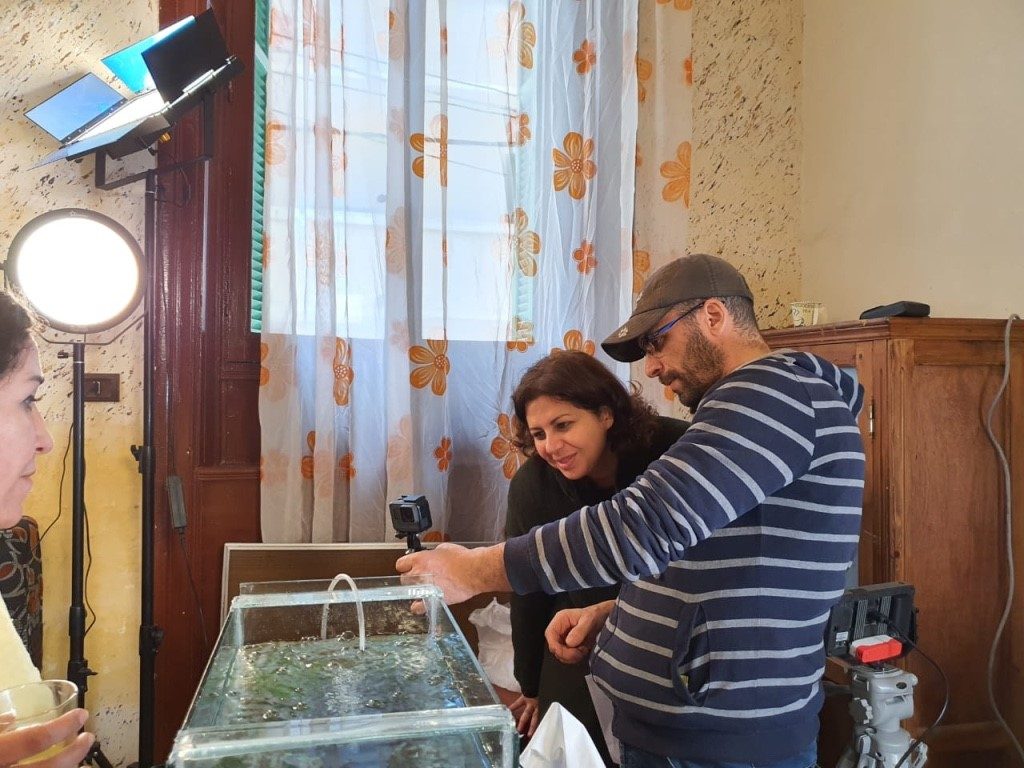
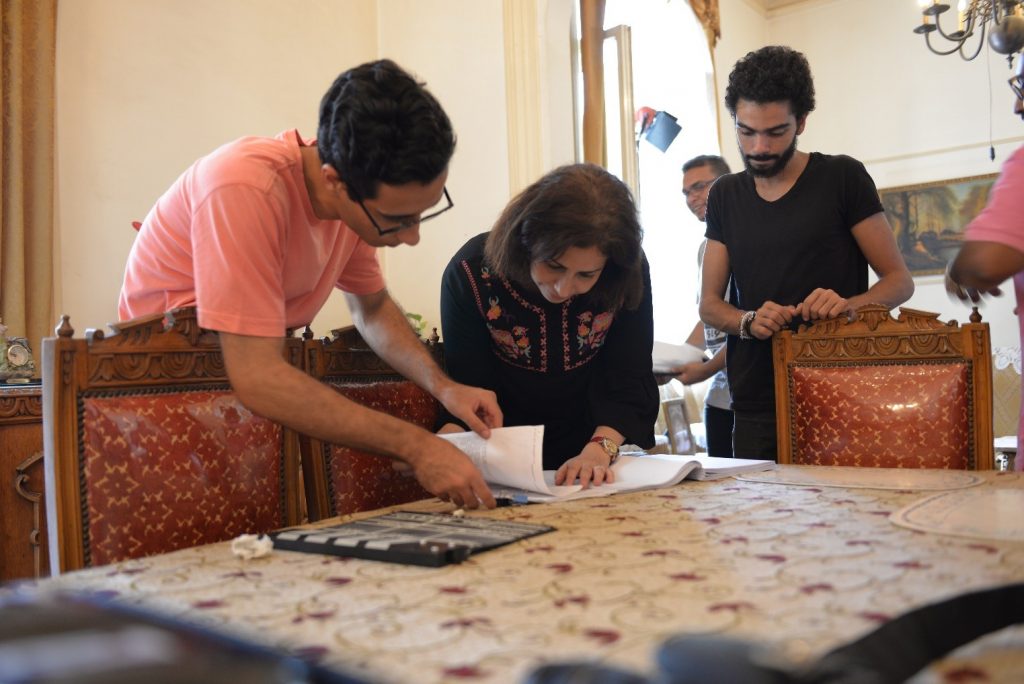
Behind the scene
photo from Abdelsalam’s film Wesh El Afas – Cream of the Crop
It’s obvious that Abd Elsalam’s
films belong to the auteur cinema; she has the original idea, writes the script,
and directs. She has a distinct style, tone, choice of topics and camera work,
I wondered who had an influence on her as an artist,
“My films belong to what is known
as auteur cinema, in which case the director is also the writer of the film, has
the main vision of the work and is in full control of the script either by
writing it or taking an active part in the scriptwriting process.
I have always
known about Abbas Kiarostami [the great Iranian director] and have watched “The
Taste of Cherry” early on in my life. When I started my directing career in
2010, I had not watched the full corpus of Kiarostami’s films. Three years ago,
I watched them all and was struck by the affinity I had with his movies. This
guy did everything I’d love to do with my art. His low-budget films profess a
great deal of authenticity, sincerity, and truth. I instantly felt we shared
the same vocation. Despite the lack of funding and resources, I strive to document
authentic, real moments of life without forced directorial intervention. My target
is to capture humane, precious moments as they unfold without unnecessary artistic
preparation and intervention.”
Abd Elsalam–to my joyful
surprise- retains the curiosity of a young teaching assistant stepping into her
career with wide eyes and an openness that is usually reserved for younger
artists. I had to ask her how she was able to juggle a demanding, well-respected
career such as a univesity professor in the Egyptian society with the
liberated, evolving artistic ventures of an auteur; to be specific an independent
film director,
“To be able to answer this
question I have to go back in time. But let me start with an analysis of how
people perceive me as a unviersity professor.
Many people think that the
prestigious position of a university professor is more than enough and I have
often encountered many people wondering why I ever need to make movies or write.
But my answer is simple. Academia would have consumed me totally had I not
given way to my passion for creativity. Early in my childhood, I discovered
that I had an artistic side in me. I used to play the piano and I still remember
my Italian teacher, Ms. Pappo, very vividly. She was around 80 and I was a
teenager but we hung out as friends, and not just as mentor and pupil. She taught
me a lot about art and life. I also used to draw, sew, act in front of the
mirror and read avidly whatever I could lay my hands on.
Graduating from high school is
the defining moment for any Egyptian, since it’s at this point that one has to
make up one’s mind about the career one wants to pursue. Unfortuanely most
Egyptians let their grades decide for them, and most of them are pushed by
their parents to join the so-called “top-ranking” faculties, namely Medicine
and Engineering. When the time came, my grades were very high. I could have
easily joined the Faculty of Medicine. The pressure was even greater because my
father is a physician and he has a clinic. Everybody was pushing me towards
taking this road, except my parents, who were amazingly understanding. My journey
would have been completely different had I chosen to study Medicine and
practice with my Dad. But I didn’t find it in myself to become a doctor. I
dreamt of applying to the High Cinema Institute. But back then it was in Cairo
–which was a major hindrance- as at that point, it would have been very difficult
for me to leave Alexandria and settle in Cairo all by myself. I was a young,
sheltered, family-oriented girl, like most girls my age. The closest thing to
nourish my thirsty artistic self was to join the English department at the
Faculty of Arts at Alexandria University where I would be able to read a lot of
novels and study drama. I was already passionate about English literature and
there is no denying that the cinema and literature are inter-connected in so
many ways. I never regretted joining the English department. It helped
formulate my ideas, gave me substance and a solid literary background which
enhanced my writing abilities. It also enabled me to develop a fine taste and
appreciation of good art. We also did philosophy and civilization which broadened
my knowledge and opened up my senses to the world.
But I never for once forgot about
my old dream. My passion for cinema came back in my early thirties, which I
think is a very rich age for people in Egypt, for this is when they start to
bloom and know exactly what they want to do with their lives. It was then that I
pursued my artistic drive and fulfilled my urge to make movies. I made my very
first film in 2010 This is not a Pipe which I consider a graduation
project more than an actual film. In making it, I was trying to find out what
it was like to make a film. It was not until my second film Rest in Peace
that I started to find my feet, and to formulate my own artistic voice and
language.”
It has not been an easy road. A
lot of Egyptian middle-class families discourage their kids from going down the
“true artist” bumpy road, whether because of societal and religious
restrictions or because of the lack of financial stability and societal
security which this road incurs. Abd Elsalam faced that sort of astonishment
and incredulous reactions when her acquaintances and friends learned that she
did not make money out of her movies, and actually had to pay from her own pockets
to finance them,
“People don’t understand that I
have something inside me that craves creating these stories and characters and
delivering them in film form. They think my head is in the clouds. People weigh
everything in terms of financial gains. The fact that critics wrote about my
films and that I won awards doesn’t count for them.
Sometimes I do ask myself why am
I doing this? I have an established career. I could have easily resorted to
writing instead of making movies, since it is much easier. Of course writing is
demanding; you think a lot; you put a lot of your feelings into what you are
doing; you are preoccupied with your work day and night. But making a film is a
completely different story. You handle the film throughout all three stages –
pre-production, production, and postproduction. What makes it worse is that as
an indie filmmaker, you are the writer, director, producer, editor, and sound
mixer if need be. You also have to look for a harmonious team, pull all the
threads together, pay a lot of money and rent equipment and hire technicians.
I sometimes say to myself during moments of extreme exhaustion: why not end it all? I could vent my artistic urge through writing books. It would be much easier. These moments of doubt usually attack me after I wrap up every film of mine (because it is at this that I’m at the peak of exhaustion), then I find myself moving on to a new film project. The calling is too big to be curbed, I guess.”
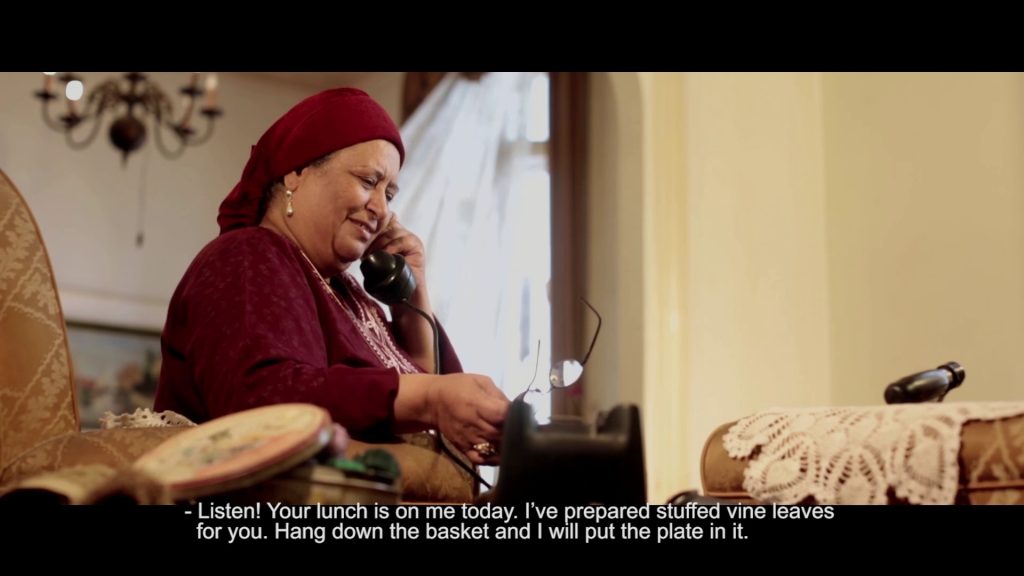
Still from Abdelsalam’s film Mesteka and
Rehan
Abd Elsalam loves to reflect on
issues while answering her questions. I find it a common trait while
interviewing multiple women, how detail-oriented they are when it comes to
talking about anything in their lives from toxic masculinity in the workplace
to feminine expression. This is no surprise. To find your voice in a world
dominated by men who are constantly trying to silence you is a long, bumpy
road. I asked Abd Elsalam when it was that she found recognition for her
directing style,
“I guess that happened with my
second film Girls of a Feather as that’s when I started hearing the
comment “Is this a film by Dina Abd Elsalam? It has her spirit and signature”. People
started recognizing my voice. Of course having a distinctive voice is a
wonderful thing, but for me, it’s never final. To do the same thing over and
over again, means one has stopped trying, and this signals the beginning of the
end. I keep working on myself; finding my style [or voice] is a continuous
process of self-development at each step of filmmaking. Scriptwriting,
rehearsing with my actors, retailoring the scenes according to the characters I
have, and editing are all part of my self-evolving artistic journey. I am not
one-track minded. I am always open to innovation and the creativity around me,
be it in the actors’, the locations, the DOP’s eyes, or the music composer’s
ears. I keep talking to my creative collaborators until they become active
participants in the filmmaking process.”
Girls of a Feather tells
the story of how a group of elderly ladies usually go on trips together. The
film starts as they head towards the fishermen’s village at Elmax in Alexandria
to spend the day and eat fish, but more importantly, their love, sisterhood,
and solidarity shine as the place gradually becomes more beautiful and radiant.
The film was shot with small, handheld cameras in the presence of minimal
cinematic equipment. One might ask if Abd Elsalam’s documentary shows the
reality of Egypt’s aging female population,
“Yes my films belong
to what is broadly known as realism, but I personally belive there is no such a
thing as a realistic film, rather it’s the artist’s point of view of life. If
we ask someone to make a movie about a group of old women, they might choose to
film them in a care home, not on a trip as I did. It’s all about one’s angle of
vision. Art is not a reflection of reality, rather it’s the point of view of
the artist concerning certain issues.
Some people might view my
documentary Girls of a Feather as unrealistic. Elderly women do not have
fun with all the health complications they suffer from. They spend most of
their time in bed needing daily care and monitoring. This could be true. But I
chose to focus on the positive side in those women’s lives and their survival
techniques. To my mind, this minor population has the ability to enjoy the
simplest of things in life, which is becoming increasingly difficult in our
modern material-driven world.”
I asked Abd Elsalam for the
inspiration behind Girls of a Feather which you can easily watch here:
“One of my aunts used to go on similar
trips as the women in the documentary. She visited places in Egypt which I have
never been to before. Never had she been an outdoors person. And suddenly in
her sixities, she abandoned her sheltered life and started embracing the world
afresh. After long years of caring for her children, she finally had time for
herself. It was this sociological change in the lives of home-oriented women
that I wanted to focus on in my documentary. In the past, similar trips would
have been unheard of. This new societal change was something I wanted to
document in my film.
For this particular film, I had to befriend these women. I got introduced to them through one of the actresses whom I collaborated with in a previous film. I am still in contact with them to this day. Luckily, and partly due to my skill with the elderly, they liked and trusted me. The two cameramen who were with me then –Ashraf Mahdy and Abdallah Dawestashy- also befriended the ladies to break the ice and make them forget the presence of cameras during the shooting process, which might have made them self-conscious or uncomfortable [which was] the last thing I wanted in this movie.”
One of the things I enjoyed about
Abd Elsalam’s cinema is how she views the small, confined lives of sheltered
women through a positive lens. She does not condemn them but accepts their
existence without passing judgement about how they choose to live their lives,
“In Girls of a Feather we see the old women suffering from signs of senility, and walking with difficulty. But still, I love their solidarity, their survival techniques, their stamina, and strength. They were also very funny which impressed me. I admire their desire to go on and how they manage to bring joy to their lives through the simplest of things such as going on trips to ordinary non-extravagant hotels, or cafes or non-fancy hangout venues. Their meal was a simple, cheap fish meal too; and yet they were so happy enjoying it together. Their satisfaction with their simple lives is definitely one of their survival techniques. This film is a celebration of their ability to enjoy life against all odds, their solidarity, their sisterhood, and their resilience. ”
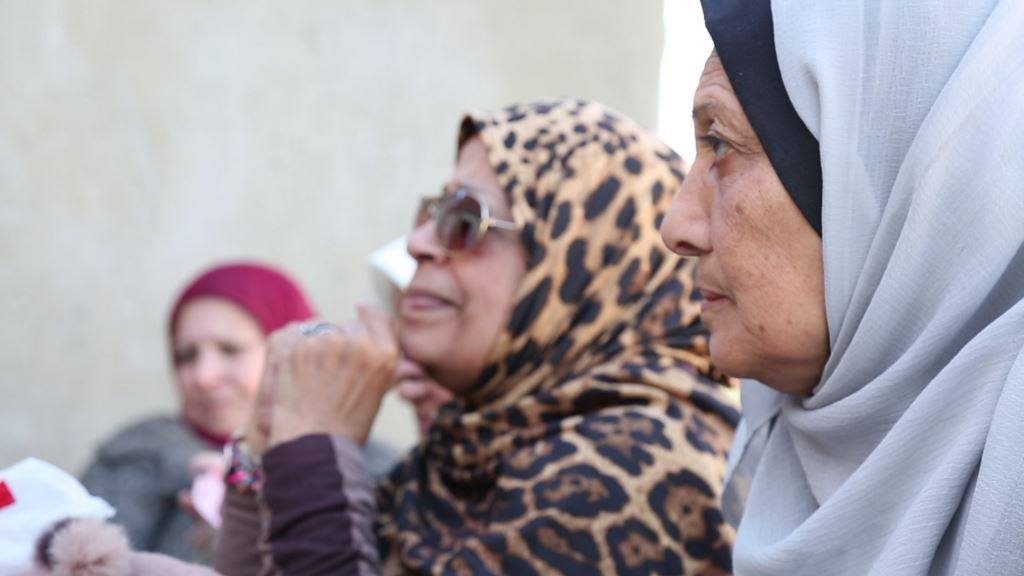
Stll shot from Girls of a Feather
Still from
Abdelsalam’s film Girls of a Feather
There are two kinds of directors;
those who allow actors’ input and others who resist it. Abd Elsalam belongs to
the latter,
“Some scenes require changes in
the script since as we’re shooting, actors sometimes come up with different
ways of telling their lines. There are elements in the location that might
inspire the actors or me to change the script accordingly. I always encourage
actors to be completely immersed in the story and start acting the character in
the way they like. That’s why I always receive the compliment that acting in my
films is spontaneous. It is spontaneous since I give my actors that scope of
freedom.”
Sound is a very recognizable
element of the narrative in Abd Elsalam’s films. I asked her how she was able
to capture that unique sound to reinforce the mood,
“I believe that cinema is a
combination of sound and image, that’s what distinguishes it from silent cinema.
Sound is not merely the musical score but every vibrating sound in the
surroundings contributes to the atmosphere of the film. It also brings home the
feeling that I want to evoke in the viewer. In Rest in Peace, you can
hear a recording of the Qur’an to set the mood. When the women turn it off, the
mood of the film shifts dramatically. The soundtrack of the film is also of
great importance because it has to retain and further the overall spirit of the
film. In Girls of a Feather, several sounds were inserted, though they
did not originally exist in the actual film environment.”
As a feminist Egyptian writer
interviewing a female director who graduated in the Faculty of Arts – English
department –which is home to modern Egyptian feminism both intellectually and
theoretically- I had to ask Dr. Abd Elsalam whether she considers her artistic
expression feminist,
“This is a very difficult
question to answer. Typically a feminist is someone who defends and stands up
for the rights of women, criticizing the status quo, sending a very strong
message about the bad conditions of women which is not what I do. I expose the
lives of these women, putting them under the limelight and giving them the
chance to express themselves without passing judgment on how they choose to live
their lives. These women have the same traditional mindset as the majority of
Egyptian women. The film doesn’t urge them to change their lives.
But then again my films document societal changes. My grandmother, for example, hardly ever left home; she spent all her life rearing her kids, sewing, cooking, and drinking coffee with her female neighbours. Going on trips on her own was unthinkable at her time. Now things are different due to the increase in tour companies which target this population. These homemakers are no longer home-bound. They have all joined the workforce in the 60s and are now on pension. They have monetary independence and empowerment.”
Behind the scene
photo from Abdelsalam’s film Mesteka and Rehan
One of the scenes which piqued my
interest was in Mesteka and Rehan when Mr. Rehan chose to ignore his
alarming medical records during his phone call with his distant son. It showed
how nonchalant he was about his mortality even though a simple detail showed
that it could be sooner than viewers would have expected,
“This is a very smart thing of
you to notice. His X-ray result was bad. But he did not mention this to his
son. He even asked Mrs. Mesteka to promise to take care of his cat after he
passes away. He is at peace with his illness without breaking down or sobbing
in a corner. He will go on with his life and enjoy whatever little slice of whatever
is given to him. He has this capacity to love and care for those who are around
him such as his neighbors and his lazy cat Za’atar, even though he knows he is
going to die soon.”
By inspecting Abd Elsalam’s
career –until her recent film Cream of the Crop– all her main
protagonists come from the elderly population. She is fascinated by telling
stories about middle-class aging men and women as they try to navigate
modernity, multiple health ailments, and regrets,
“It’s something that I grew up
with. Ever since I was a kid, I used to befriend old women. I was so different
from girls my age back then. I believe that old people are more willing to open
up about their past lives without inhibitions or restrictions. Generally
speaking, a person in their 70s or 80s, would look back with maturity to
appreciate the good moments and overlook the quarrels and tension. They are
more at peace with their past and more tolerant towards their mistakes and
those of others. They are willing to freely look back at their past without
shame. Moreover, old people are always full of stories and I love the fact that
the older you get, the more childish you become. There are tons of
contradictions in the elderly; they’are old and wise, but they lose their temper
quickly and are difficult to handle. They offer advice and support, but they
constantly need our help. Modern technology is a mystery to many of them; handling
an ATM, for example, is an arduous venture to most of them.”
As one of the pioneer female
independent directors in Egypt, I asked Abd Elsalam to give me an overview of
what it is like to direct independent films nowadays,
“I have to be honest, this road’s
no picnic. One thing is that I am implicated in all stages of making a film
such as location hunting, sending the call for casting, setting appointments,
setting the budget, editing, sound mixing, and contacting all the crew members
all the time. I don’t have the luxury of hiring assistants to manage this
complicated system for me. But again this is the nature of most indie films. The
director has to be involved in every single detail of the process.
Another thing is that in the
indie scene, most people do not make films for a living. It’s either they have
another job to support them financially, or they depend on funds all the time
to make their films and earn a living, which is very confining and restricting
in so many ways.
Though at times you could get
help from fellow indie filmmakers, but I was also let down several times by
people from the indie scene and my illusions about solidarity and standing by
each other’s side have been dispelled. I am not denouncing any fellow indie
filmmaker by any means. I just became more down to earth over the years, that’s
all. The indie scene is no different from any other walk of life: there’s no
black or white, just the grey area in between.”
I always thought being a female
director in a male-dominated field such as filmmaking requires personal and
social skills beyond the average female leadership trope that women often come
across in modern workplaces. Abd Elsalam had a different opinion altogether,
“When it comes to directing, I
don’t think that the way I direct my movies is about bossing people around and
throwing orders. My presence onset is usually quiet. I like to make my actors
feel at home and befriend them so that they show me the best they’ve got. The
atmosphere is usually friendly and lacks the loud, cringey, authoritative
voice. I believe that a taut mood in the location does more harm than good. In
my film Rest in Peace people asked me whether these actors were acting
or did I capture a genuine moment of two women chit-chatting? I believe the
mood of the set allowed the actors to be themselves and to be creative. As a
director, there are moments when I need to be domineering, and put every
individual back on track to get things going, but these are usually rare on my
set. Every member of my cast and crew is creative in his/her own way, and had
it not been for them, I would have never been able to make my films”.
Abd Elsalam’s words fascinated
me. I had to see for myself how art was born, polished and the catacombs were
drafted to finalize a product that people would understand and associate with
the mind behind creating it. I had the pleasure of visiting the set of Abd Elsalam’s
new film Cream of the Crop and watched the magic unfold. It was my
second visit to a movie set –the first being on the set of Egyptian medical
drama LahazatHarega – Critical Moments-and the experience was so
overwhelming that I decided to write about it in detail. Stay tuned for the
next essay where Dr. Abd Elsalam answers questions about directing actors, how
writing books differs from scripts, and where she sees her movie after the
coronavirus pandemic –hopefully- subsides.
Young man’s face painted with black and white makeup superimposed on an Ouija board
Sheila
Braden and I never dated. We never had any type of relationship but just our
friendship haunts me.
In the 11th
grade, we were both standing with the people in our circle outside in the
courtyard. Everyone was laughing telling jokes when Sheila just happened to
catch my eye.
Strands of
her long, straight, dyed jet-black hair hung down in her face where a smile
couldn’t crack through that sad expression.
Lightly, I
jabbed her in the arm, “What the fuck is wrong?” I asked. “Why do you look so
down?”
Blue eyes
focused on mine searching for my intentions. She spoke lightly telling me she
was fine and just didn’t get enough sleep.
In the
following months she and one of my boys started going out. Timothy was the son
of a corrupt sheriff. So, needless to say, he could get away with anything.
One day, in
the locker room after gym class, I heard Timothy and the guys talking about
paying a bum to go in the ABC store and buy them a few bottles of liquor. The
plan was to get all the chicks smashed at a house party he was throwing.
For weeks I
heard how Sheila was a stuck-up prude who wouldn’t put out. Timothy figured her
inhibitions would lower when she got drunk. Shaking my head, I told Timothy
what he was doing was fucked up.
That Friday
night, I didn’t even go to the party. The next day my phone was blowing up!
“Did you
hear what happened?”
As planned
Timothy got Sheila sloppy drunk. So drunk she accidently vomited inside an open
cooler, full of beer on ice. Timothy took her up to his bedroom, the next part
well…I heard different versions of that event.
One person
told me Sheila ran downstairs wearing nothing but her bra yelling that Timothy
tried to rape her. Someone else said the two were screaming and destroying
Timothy’s room. I learned the first story was true from a reliable source.
Timothy’s
mother and father were called. Forced to leave the fancy restaurant they were
eating at pissed them off. When they showed up, his old man was livid asking,
“Who bought the alcohol?”
Timothy
wasted no time telling on the guy who bought it for them. He even told his
father where to find him.
Sheila was long gone by then, back at her
parent’s house alone in her room. She knew it was useless to say anything.
Timothy, in
nothing but checkered boxer shorts, made sure to remind Sheila who his father
was. “Go to the law if you want,” he said, “Just remember we are the law.”
Not once had
I thought of Sheila as anything more than a friend. That was enough, and so
that Monday I told Timothy to meet me somewhere after school. “Better bring
your daddy and the whole force cause I’m gonna fuck you up!”
When the
time came, he didn’t show up to the local country store where kids would meet
up to fight after school.
The
following weekend I sat around reading graphic novels. Sheila had never
contacted me outside of school, but late that Saturday night she hit me up on
Messenger. “I’m having a really hard time right now and need someone to talk
to.”
This had to
be urgent, so I got up and got dressed in jeans and a hoodie. My parents were
both sound asleep and wouldn’t care if I borrowed their car as long as they
didn’t wake up.
Sheila’s
parents were spending the weekend at the beach, so we had the whole house to
ourselves. Instead of coming on to her, I asked what was wrong, she looked down
and didn’t answer. I told her that I hadn’t let it go and would still hurt
Timothy badly if I caught him away from school.
Sheila had
been crying yet showed me a warm smile. “Don’t give those bastards a chance to
get you in trouble,” she said, “Plus, I’m over that.”
Apparently,
Timothy had an itty-bitty weasel dick.
Taking a
deep breath, “I don’t know where to begin, I’m just depressed about
everything,” she said.
Her lips
quivered when she asked if I’d ever thought about killing myself. I thought about
telling her how I wanted to take my life many times and that I found joy in the
thought of my parents walking in to find their walls painted with my blood. But
instead, I tried to drive the exact opposite into Sheila’s skull.
“You’re
smart, you’re beautiful don’t let whatever’s bringing you down win,” I said.
“You’ve got to fight it and just stay alive. You’ve got to want to live.”
For a
moment, electricity filled the air as we almost made a connection. I could have
taken her, drunk off nothing but sadness. Instead, I hugged her tightly.
Wiping her
eyes, Sheila asked, “If I show you something will you promise not to tell
anyone?”
Nodding my
head, I watched as she unfastened her jeans. Once she pulled them down, I
stared at all the cuts stripped across her thighs.
“Jesus
fucking Christ, you’ve got to stop hurting yourself like that!”
Shaking her
head Sheila told me that pain and blood were the only things that made her want
to go on.
My parents
called; I hadn’t realized it was 6 in the morning. My father told me to bring
the car home right then or he was calling the cops and report that I stole it.
Before
walking out, I told Sheila to hang in there. “Everything will work out somehow,”
I said, “You’ll be fine. In the meantime, if you ever need someone to talk to
just call me.”
I gave her
my number so we wouldn’t have to talk on Messenger.
Summer came then
senior year. We both got involved in relationships. Sheila dated a jealous
insecure dickhead, who wouldn’t allow her to talk to anyone. A loyal friend,
she told him that I was her homie, and no one would keep her from talking to
me.
Once we
graduated, Sheila dropped this loser and got a job as a waitress at a seafood
restaurant. I saw her one day when I stopped by to get a shrimp plate. She was
busy with customers but stopped long enough to wave at me and say hi.
Months later
I saw an old friend outside a convenience store. We both stopped, shook hands,
and shared a little small talk.
My heart
sank when he asked if I heard what happened to that girl we used to hang out
with. He asked, “What was her name, Shelley?”
Not stopping
to correct this friend, I asked, “What happened to her?”
He said,
“Oh, you didn’t hear about it?’
Jumping to
conclusions, I asked, “What was it, a car accident?”
“No,” he
said, “She got off work one day, drove back to the neighborhood where her
parents live. She pulled in and drove passed their house, parked in the
cul-de-sac and shot herself inside the car.”
In my head
it all came flooding, the blood all over the window and chunks of her brain
stuck to the passenger seat.
This buddy
of mine said, “No one ever figured out where she got the gun.”
I’d heard
enough. Damn, this hit me hard. Immediately, I’m thinking back to the night I
talked her through her problems. How could she do this? Why didn’t she at
least call me?
I’m sure
Sheila was so far gone there would have been nothing I could have said. But
damn, I wish she’d have given me a fucking chance. This is something I’ll never
forget!
I’ll take
this guilt with me to the grave. Then again, I tried to help Sheila. With no
hope to my name, I tried to look on a brightside that didn’t exist. I did
everything I could to get her out of my head, but nothing worked.
In my bathroom I cut my chest with a brand-new razor blade, wondering if the pain and blood would help me want to go on.
Robert Ragan, from Lillington North Carolina, has had short fiction published online at Vext Magazine, Punk Noir Magazine, Yellow Mama Webzine, Synchronized Chaos, and Terror House Magazine. In January 2020, he had his second short story collection, It’s Only Art, published by Alien Buddha Press.