Essay from Chimezie Ihekuna (Mr. Ben)

This essay is a monthly series on ‘common deceptions people believe about relationships’ from author Chimezie Ihekuna.

Another work from Chimezie, a play entitled ‘The Success Story,’ has been serialized previously in Synchronized Chaos and is now published and available here. 
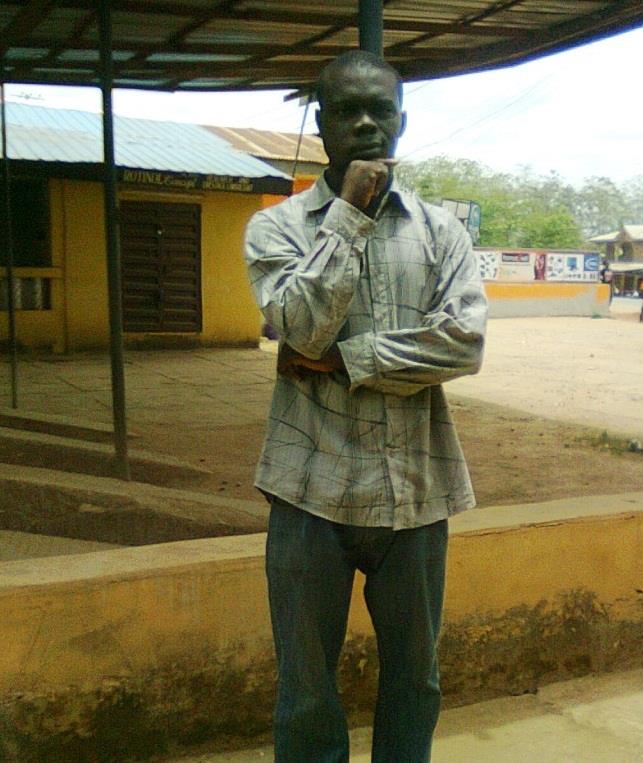
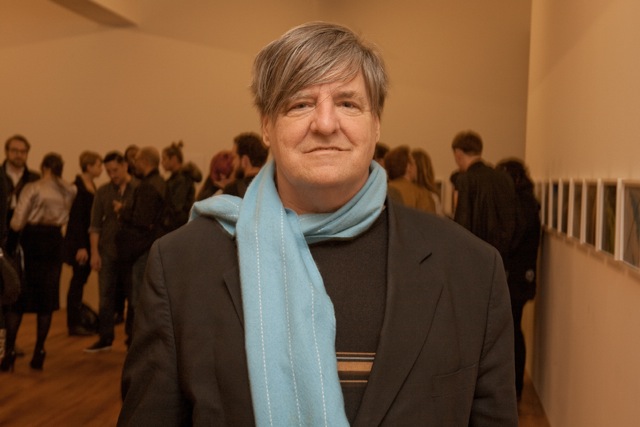
Chimezie Ihekuna

Deception 5

When there is money, it will be safe to get married

In other words, when money is absent, there is no marital safety. Is it? If money is a criterion for marriage, how long do you think you can make it to make possible marriage? Do you want to be the oldest man in the whole world before you get married just because of the need to make available money?

The answers to these questions have unequivocally prompted young men and women into realizing ‘fast money’ using cut corner and illegitimate means. The results are obviously very obnoxious, most of all, a resulting sudden death.

In most cases, this issue is rampant amongst young men who will go at length to see that the much-needed money is made in order to ensure marital safety. Unfortunately, it is just the mirage expression of what it really means.

Imagine a situation where a man lays the foundation of his building on a sandy platform, anticipating it to lift the building’s load equivalent to that of a skyscraper. The building will in no time be in shambles! The analogy is akin to individuals who lay the foundation of their marriage on primarily money in anticipation that it would withstand the ‘loads’ of sexual gratification,  effective communication, physical, mental and material satisfaction. As a matter fact, assertions such as” we need money to fulfill our marital desire,” “money is the most important thing in marriage” and so on are used philosophically by men who monetize their marital foundation. By extensive inference, the issue of money has undoubtedly ‘forced’ responsible and prospect-driven women into marrying men who are of a perfectly incompatible character, no thanks to the parochial thoughts and intents of money dynamics. Consider this true life story;

Lizzy, a close-door neighbor of mine, has been married to Andrew for close to a decade. Situations made her confide in me her topmost “top secrets”. One of the secret would have to be unearthed for the world to see. After all, there is nothing hidden under the sun. However, I cease this platform to apologize to you, Lizzy. Please forgive me! In her words, she said: “I got entangled in this inescapable dungeon, marriage because I was pushed into marrying this rich infidel. Granted, he helped finance most of my pursuits in life (academics inclusive), he didn’t have what it takes to be a good husband

Before I met my present husband, I had been in a relationship with my childhood friend, John.  Though John wasn’t financially capable to carter for me, he had a good prospect and was sound in all areas of like I could (at the time) recognize.   Peers family pressure and impatience on my part made me to settle down with Andrew who was financially more stable.   Now, as I speak to you, I’m in the abyss of marital misfortune as he is self-centered, uncaring, and unfaithful and displays a non-chalant altitude towards me.  Without any skepticism, I utterly regret why I made this decision” “what a pity” I must say.

At this point, a clarion call has to be made: the earlier we recognize and believe look, me and sinker the fact that money is a used tool for communication instead of the generally constructed implicit communication master, the better our relationships would be.  Tell me, how can someone who has nurtured to be a servant all his life suddenly become a master?   This was the intended functions money; a good servant or communication tool.     Else, it would be an ugly master, if given topmost priority.

Paper money was introduced to the world in 1919.   Economists have asserted that the most outstanding quality of money is that it is a means, the term MONEY simply Means (or Medium) Of (inter) National Exchange (for) yields simply, money is a medium of local international exchange for other goods and services, gains. You can see the reason money was primary designed.

“What should be the correction of this deception “? A clever question! It would be an answered by you through the clue-like questions. “What would make you sell your most prized possessions to raise funds to resuscitate your dying mother at the hospital? What would make an individual take the place of his friend at the time of death? What would make a woman abandon her family of a well-to-do background and settle for a man who can barely eke a living?” The answers are just one …

It is a virtue which must be bedrock for any successful marriage. Precisely, it is the foundation which can withstand the ‘forceful burdens’ of marital setbacks and make concrete the convenience of marriage. Similar to a man who laid his foundation on a rocky platform; it is the worth that would ensure an Enduring blissful and beneficial marriage, if embraced.  Can a man-made creation such as money be the bedrock of an eternity-in-life marriage? If yes, what happens if a setback such as financial downturn emerges?   Obviously, the ‘virtue’, a God-defined name, is an eternity-based recognition, serving as bedrock to a life-long marriage.  After all, you cannot lay the foundation of a bungalow building anticipating it to withstand a load tantamount to a skyscraper.

Money can run errands but lacks the verity to send errand .this should be the simple view point of people.   In a marriage, the transient nature of money makes it a flop-noticed master when prioritized.  Put simply, it can never be a good foundation.  However, it should be seen as the communicative tool or arguably a faithful servant that (with proper instruction) will run the errands and successful marriage.   On the other hand, the virtue should be viewed as on the concrete foundation which is a commensurate to eternity-on-earth marriage.  It is to be reckon with in terms of its ability to withstand marital challenges through painstaking sacrifices.     What is that ‘virtue’?  A question you may want to ask. The very answer is true love;

It does not mean that money is not essential for marriage rather, it is a communicative tool or with proper sagacity, a faithful servant of True love.  Realistically, it is the foundation of all long lasting marriage that have ever existed in the world from the medieval to our contemporary era.

Therefore, true love should precede money. After all, who is the servant without his master and how can a master not need the service of his servant for errands to be sent, carrying out instructions and so on? With true love on your side, the mutual co-operation between you and your spouse will birth an idea that will produce immense wealth and make the marriage interesting.   Hence, it is right saying: “with true love it will save to get married”

About Chimezie Ihekuna: 

Following the words of the great Greek philosopher, Socrates, ‘Employ your time by improving with other men’s writings so that you can gain easily what others labored hard for’, Mr. Ben, as he is fondly called, published author, essayist, poet, speaker and voice-over artiste is poised to impact humanity in all spheres of life and human recognition. With his knowledge zenith, he is willing to disseminate valued and ageless information to all interested persons, groups and organizations-what he toiled to gain over the years.

To depict this feat, he has written over twenty breath-taking masterpieces that cut across almost very literary category to help improve the cause, shape and existence of humanity; sexuality, business anecdotes, science, home affairs, marriage, relationships, friendship, self-help, gender issues, life matters, motivational and inspirational interests, educational/academic matters and many more…He is still counting! To his credit, he has written over forty timeless articles on the various literary categories; showcased on www.ezinearticles.com, www.articlebase.com, www.searchwarp.com, www.triond.com and other affiliate sites.

His amazing writing skills, novel concepts, creative works and avid reading and communication skills have earned him a recognized membership with the following international affiliations; www.christianwriters.com, www.associationofaspiringauthors.com, www.writerface.com and other known writers’ organizations. No doubt, he is not only a writer with a difference but also an entrepreneur, investor and a philanthropist whose slogan reads ‘service to God and humanity are paramount’.

Based in Lagos, Nigeria, Ben currently runs an E-retail outfit known as Hub Of All Enterprises (www.mybookpublications.wordpress.com). He loves reading, communicating, meeting people, writing, listening to music and singing, watching classic movies and playing football.
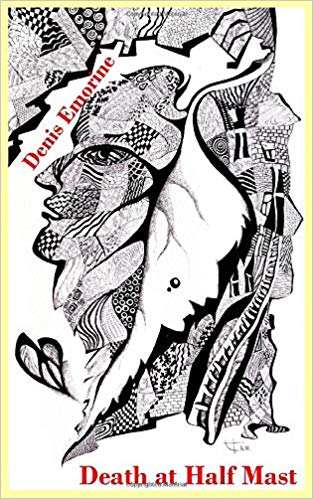
 

Cristina Deptula reviews Denis Emorine’s novella Death at Half-Mast


Dominique Valarcher teeters between extremes, always somewhere in the middle. The professor protagonist of Denis Emorine’s literary novella Death at Half-Mast, he carries a name that in his native France is gender-ambiguous. His mother’s first husband had hoped to have a daughter with her before dying in a concentration camp, and would have given her that name. This leaves Dominique with the idea that he has two ‘fathers’, his actual father and the man who gave him his name.

Hence, he exists simultaneously in two realities, a theme that organizes and propels the novel.  At the beginning, Valarcher reflects that his children are the same age that he and his wife Laetitia were when they met. He positions Nora, the young student who admires him and writes a thesis concerning his work, into a duality as well. She reminds him of the deceased Russian actress Tatiana Samoilova, persecuted and driven to despair by the Stalinist regime. This resemblance repeats and reinforces the motif of tragedy, oppression, and the loss of what might have been, in a somewhat mythical past that enters Valarcher’s life when he discovers his name’s origin. Even when love, study or attraction keeps it at half-mast, death is still present.

Much of the story revolves around Dominique’s internal life. He thinks of and relates to others in ways that stem from the role they play in the mental narrative he constructs for and about himself, rather than observing them as distinct people in their own right. He laments his daughters’ lack of interest in his literary writing. He thinks of his blood father, who raised him, as an interloper. He remembers a passionate night with his wife after she returned from being away somewhere with great nostalgia – along with the fact that he never asked where she’d gone.

Most notably, he agonizes over whether to leave Laetitia for Nora, which he sees as a traumatic moral decision he must make, before he receives any clear indication from Nora that she cares for him beyond friendship. He shows some self-awareness when he observes a male student looking displeased at his interactions with the young student. When it occurs to Valarcher that the young man might be Nora’s boyfriend, it occurs to him that he knows almost nothing about her.

Death at Half-Mast ends before Valarcher makes any sort of decision, leaving him face-down on the couch at his friend’s country retreat. This ending shows that the story isn’t so much about what he decides but about who he is.

Firmly ensconced within French and Hungarian universities, all the novel’s characters meet each other and continue to interact within the academic environment. The book’s language, however, is readable and the plot relatively straightforward, accessible to all those who wish to probe the travails of a man caught between shifting realities.

Death at Half-Mast by Denis Emorine is available here. 

Synchronized Chaos July 2019: Presence and Absence

Presence of Absence by Pete Moorhouse (http://www.petemoorhouse.co.uk/)


First of all, here’s an announcement about one of our regular contributors! 

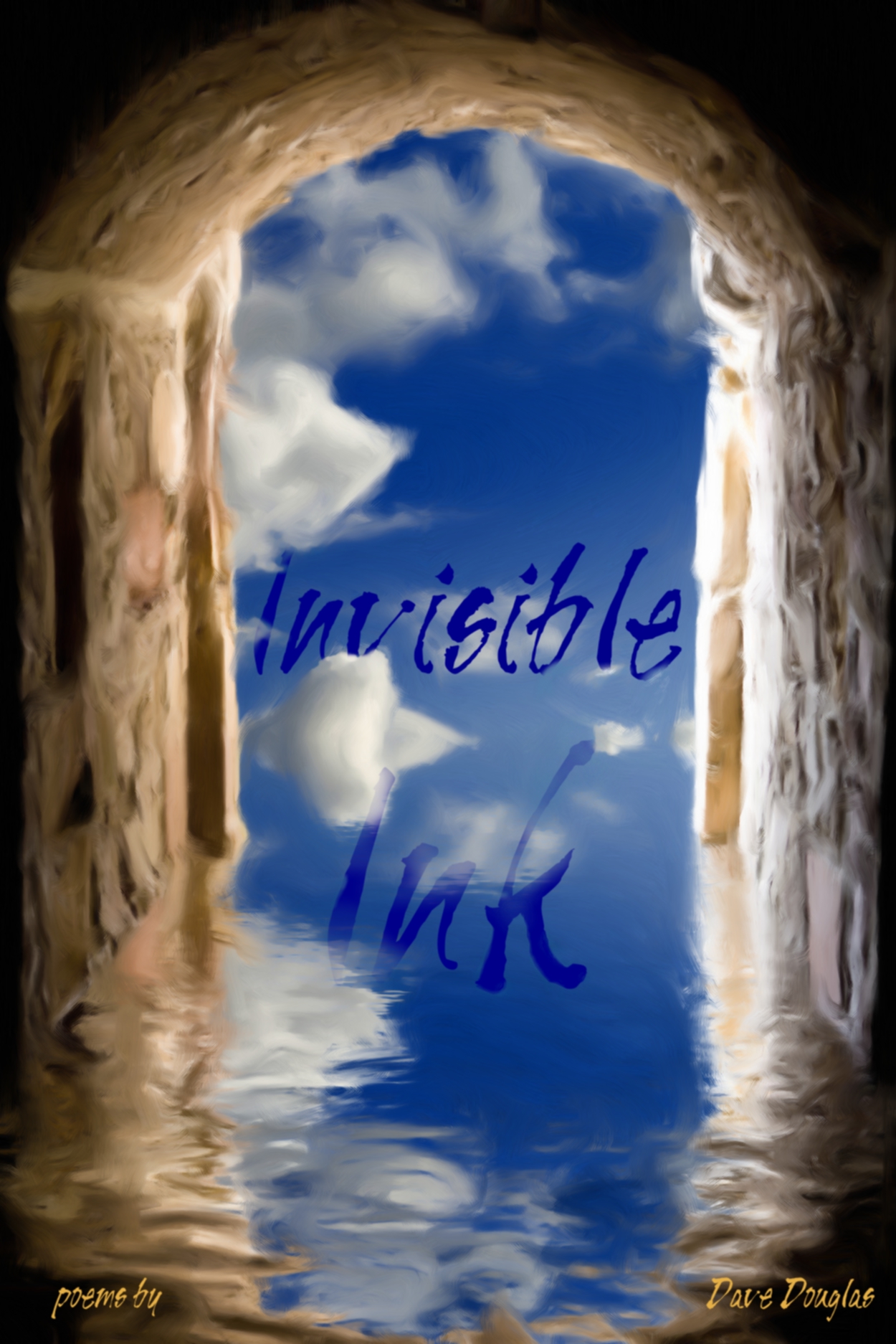
Dave Douglas’ Invisible Ink

Dave Douglas has released a new collection ‘Invisible Ink’ full of new poems.


To those who are trapped in their human shells, here is a collection of poems about struggle, questions and restoration. https://www.amazon.com/dp/B07RWWVQ2S/

This month’s theme is Presence/Absence. What does it mean to exist, to belong, to take your turn at existence and leave a mark, or not?

Sometimes absence can be the most ‘visible’ element of a scene, as in Daniel De Culla’s poem and accompanying photo of an empty chair.

This sentiment is echoed in Jaylan Salah’s tribute to the late poet Kevin Killian, where the loss of the writer sparks a retrospective examination of his life and work. Killian was unafraid to insert himself into the narrative of his poetry and prose, to make himself become forcefully present.

In a kind of contrast, Mark Young’s speakers withdraw to the background, relating non-linear information rather than personal narrative. Young’s work doesn’t always make linear sense, doesn’t create a speaker we can visualize, yet the lines of thought still flow, with the coherent rhythm and feel of an instruction manual. This suggests that it’s the ideas, or the ideas about the ideas, that matter over time, perhaps even more so than a particular person.

Molly Gaudry’s poetry collection Desire: A Haunting, reviewed by Cristina Deptula, presents a story of grief and memory, healing and absolution, before and mostly after, death.

Cristina Deptula also reviews San Francisco State University’s Department of Biological Sciences’ annual Personalized Medicine conference. The day’s presentations covered new laboratory developments in treating the causes of age-related health problems, as well as ways to address the care needs of the aging population in many countries.  A major focus was increasing healthspan, the portion of one’s life when one’s healthy enough to show up and participate in normal life activities.

In Joan Beebe’s poem, ‘A Father’s Love,‘ a father and his disabled daughter fully show up for life together, completely present for each other because of their love. She also celebrates love for country in her July 4th Independence Day poem.

Roozario Wiggins illustrates the beauty and strength of a young girls’ basketball team on a Native American reservation in the U.S. who, in part due to his coaching, have risen to the occasion to show up for each other.

Chimezie Ihekuna shares an essay that outlines his interpersonal, sexual morality, centered on committed relationships rather than short-term encounters.

Some contributors’ pieces look at the ‘absence’ of some from society.Jaylan Salah analyzes how the sci-fi film Blade Runner metaphorically illuminates the ways sexism, racism, and classism and other prejudices cause real harm to people in cities such as Los Angeles. Rather than a city where everyone is beautiful and happy with the help of technology/plastic surgery, it’s a place where only a few are able to live that life while the rest end up unnoticed, listening to the radio alone in their cars.

In his nostalgic poetry, John Doyle writes of those who keep up with fashion and music, and of those who never quite connect with their times.

Judith Borenin sends us poems of beauty but also elements of decay and loss: a disheveled homeless man, destructive wildfires, fellow drivers grieving private tragedies in their cars. 

Christopher Bernard gives us a sci-fi piece that presents a larger-scale look at change and decay: that of our entire planet, rendered uninhabitable by climate disruption. In this case we as a species have ‘excluded’ other species and the planet itself from our sense of who matters when we make decisions.

In contrast, Gloria Lopez’ piece describes the renewing power of a walk around a local lake, the joy of connecting with and noticing nature.

Mahbub’s poetry explores the different aspects of natural phenomena and human-made objects that have become natural to us, such as cell towers and service. Water, wind, and cellphone towers can connect us, literally and metaphorically. But water also destroys and erodes fertile land, leaving us lost and barren. 

Some contributors ponder the place of one individual, somehow strangely present within a large universe. Who are we, what should we do here, what can we do here?

In works translated by Denis Emorine and Michael Steffen, Isabelle Poncet-Rimaud’s poetic speakers show up, with short vibrant bursts of feeling.

Kushal Poddar’s speakers find hope in difficult, painful places. His pieces are elegant and intentional with word choice, as determined to exist and hold onto their form as their speakers.

J.J. Campbell, our monthly prophet of death, aging and loneliness, contributes some vignettes where his speaker is able to step back and put his personal angst into a broader perspective.

Norman Olson also ponders his life’s purpose during a trip to Las Vegas. Why is he creating his artwork, what does he hope will come of his paintings? What would he do with a major lucky break that might come his way?

Lance Manion’s accidental hero inadvertently finds himself rescuing those in need while distracted, thinking of a woman who left him. Ironically, he loses his powers when she calls him, when he gets accepted again by someone in his real, ordinary life.

In Manion’s story, it seems to be one or the other: either you’re present for great worthwhile causes and adventures beyond yourself, or you’re fully involved in your closest personal relationships.

In Elizabeth Hughes’ monthly Book Periscope column, she reviews some books that focus on connection to one’s small circle and others that go beyond and connect to larger dramas, and several that do both.

Tina Heinrich’s Flopsy and Flathead and The Lumpa Rupper tell the story of beloved family pets. Nowrang Persaud gives a look at the culture of British Guyana while chronicling his own diligent hard work and journey out of poverty in Bitter-Sweet Sugar, while Michael Owhoko’s The Future of Nigeria outlines challenges facing a developing nation with a rich culture that’s plagued by corruption. J.R. Conway’s novel After the Ride uses a suspense novel and cast of characters to explore the human cost of cities’ paying for the homeless and mentally ill to leave town rather than investing in human services. Lawrence Wood’s The Transition: Initiated by Copernicus and Galileo, from Religion to Science looks at life at microscopic and then cosmic scales and encourages readers to choose a natural and scientific, rather than a supernaturally based, worldview.

Hopefully, this issue inspires you to be present, calls you forth into its world and encourages you to read its offerings.


Poetry from Isabelle Poncet-Rimaud, translated from the French by Denis Emorine and Michael Steffen

4 poems taken from

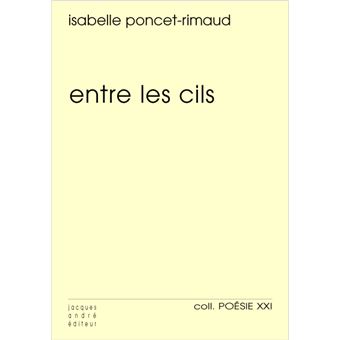
Entre les cils

by Isabelle Poncet-Rimaud  (Jacques André éditeur, 2018)

Translation from the French: Denis Emorine and Michael Steffen


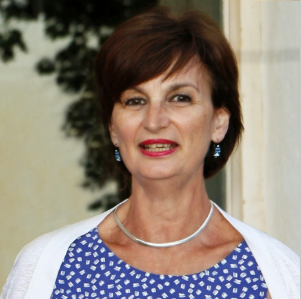
Isabelle Poncet-Rimaud

Isabelle Poncet’s Entre Les Cils

1

Dans les braises du soir

toutes voiles dehors

voguent désir et douceur

sur les eaux amoureuses…


In the embers of evening

desire and ease

are sent in full sail

upon the waters of love


2


Les mots cannibales

s’entre-dévorent

mettant à nu

la trame de ma vie


Devouring one another

cannibalistic words

toss to one side

the bones of my life


3

Aile des solitudes


la vie comme

haussement d’épaules

d’où tombent les scories

du temps…


Wing of solitudes

life like

a shrug

at another

false start


4


Chat d’égoût, l’âme s’ébroue

secouant ses gouttes de vie,

barques à la dérive.


An alley cat, the soul quakes

shedding the dampness of its life,

vessels adrift.


Entre Les Cils can be ordered here. 


Jaylan Salah’s tribute to the late poet Kevin Killian

Poetry No Longer Kitsch – In Memory of Kevin Killian

(Tony Greene Era & the Impossible Princess

By Jaylan Salah

Poet Kevin Killian (photo by Daniel Nicoletta)


It’s not unusual these days to have a public celebration of a poet’s –or writer’s- death.

In the age of social media, everything becomes a headline, an outline for a bigger reality. So when Kevin Killian died, and multiple American friends mourned him, I did not expect to feel. I did not expect the thought to eat me from inside. Another dead poet? What should we do so that his troubles and years spent in contemplation and feelings of not belonging should be put to rest?

As a poet myself, I struggle with demons of my own. All the frustrations, mixed emotions, and impulses that define me in defiance of patriarchy, bigotry, and judgment are merely tools through I which I fight what I hate the most. That’s where Killian’s poetry came in handy.

A friend of mine shared this excerpt from Killian’s poetry which made all the difference;

To become obscure
among human beings,

but clearer
in all relations,

I thought to myself, “Weren’t those lines also applicable to me?”

Kevin Killian and The New Narrative

Kevin Killian was born in 1952 on Long Island. He was a member of the 1970s New Narrative movement which –as described in an article in The Paris Review- is a form of poetry and fiction that places the writer as the center of the writing; a form of writing about the writer themselves. Killian included himself in the narrative, he became part of what he wrote.

His death did not come as a shock, but rather a mean to compare the effect and the legacy that his poetry left on readers worldwide. It was my pleasure as a 30 something Egyptian poet to examine his poetry and ultimately, his poetic and human self.

Tony Greene Era and the Mystery of Peeling Oneself for Art

In his poetry collection Tony Greene Era (Wonder, 2017), Killian examines the intimate moments of a casual blowjob that paved the way for a more intimate, nostalgic moment:

…though I put my card into

the breast pocket of your soft white shirt, I know sometimes

I send my shirts to the laundry but miss those pockets

entirely …”

Killian uses the opportunity to freeze a moment and expand it, shirts pile up into the laundry and the card that was forgotten in the breast pocket transforms into crumpled paper, lost as probably the vague, impersonal erotic moment that it represented.

Elements of the American culture and history could be found in Killian’s poetry; the abandoned city of Croatoan, the hot actor back then Mel Gibson, Matt Damon, Obamacare, Mad Men’s titular character Don Draper, in addition to a list of American cities with details defining each one of them separately.

As a queer poet, Killian bravely treads the forbidden ground of female anatomy. He does not fear the forbidden grounds of menstruation;

in the 80s, Chris asked me and Dodie, for a young poet what is the

easiest way to get into Sulfur?

And she said, write about the menstrual cycle,

And he did, and he sent it in, and the editor snapped it up.

Then he ends the verse describing his friend Chris as the “golden boy of the dark red blood cave”.

Wow! Only a poet like Killian can pull this off!

Killian penetrates the deeper layers of the language, using the human body as a tool to explore further linguistic territories, and proving prowess;

Underneath the dermis and the epidermis a wide, flat, interstitial

space takes the shape of a mask,

In a critique of the American society, Killian does not spare his words.

The Soft American

His own back broken he needed to have sex six times a day to relieve it.

Killian toys with language. He curries favors, describes the perhaps and mishaps feelings, crushes walnuts with his nuts, and orders the “poetic movement” to remove the gag, which he refers to as the constrictive bib.

Tear off the bib, Pip, spit up the pap, Pop, shut down the radar, fuck

Pop and Mom.

So which “constrictive bib” is he referring to exactly? The language, the false impression of having to like the poet behind the poem? Societal and personal censorship?

In “He was a Writer”, Killian beautifully states the impossible relationship between a bookstore clerk living a tidy, orderly life and a writer whose main passion is his penis!

Impossible Princess and the Art of Eroticizing the Reader

In his 2009 short story collection Impossible Princess, Killian’s main playground is the narrative style and voice. His stream of consciousness collides with an unreliable narrator; changing coyly from first to third person, defying the very thing that Killian must have –like us modern writers who aspire to belong to the New Narrative- hated the most; sticking to one tense, one gender, one narrative style.

Impossible Princess is everything Killian boasted about his image; sexual, depraved, insane and intimate. You stare into the face of promiscuity with “Cat People”. In “Spurt”, the air was thick and hot like soup, beauty of the language juxtaposes the transition from first to second person, unravelling and revealing his intentions to misdirect us into a tale where we do not have our footing. Who is Kevin talking to?

You can’t swallow fast enough. Your kisses get sloppy, your vision too. All of a sudden there’s a little click in your head, and the first person turns into the second person. That’s you—Kevin. Have another drink.

In an interview with “The Creative Independent”, Killian mentioned how grateful he was for people who wrote about his book, especially those who liked it. It filled me with grief that I did not get the chance to write about him when he was alive; and then would have made a new friend. But my solace lies in the hope that what I write transcends beyond time and generation, reaching many possible “future friends” whose common interest is Kevin Killian’s poetry.

More about Kevin Killian here. 

Author Jaylan Salah

San Francisco State University’s Department of Biological Sciences’ Annual Personalized Medicine Conference: Aging and the Healthspan


— Cristina Deptula

One risk factor crops up for most of the USA’s deadliest diseases – aging. Can old age be treated, as just another medical condition? And how can we expand our healthspan – the portion of our lives that we’ll spend healthy?

San Francisco State’s University’s Department of Biological Sciences pointed towards some answers to these questions at their twelfth annual Personalized Medicine conference.

Personalized medicine as a concept, is not new. The basic idea goes back to Hippocrates, and modern precision medical tools can enable us to live out his vision of special care for each different patient.

Dr. George M. Martin, of the University of Washington, known as the ‘father of aging research,’ kicked off the day. His lab looks into progeroid syndromes, where people’s bodies age much more rapidly than usual. These are linked to mutations that harm parts of the genome that encode for proteins related DNA repair. Genomic instability and damage is a major pathological mechanism in progeroid syndromes and could be in normal aging as well.

He pointed to the need to look at patients who have only one copy of the genes for these types of recessive syndromes to figure out how their bodies compensate for the faulty gene and avoid showing symptoms. Also, he said we should study people who have antigeroid syndromes, who show less physical change than normal with age.

Dr. David Zarling of ImmunoLongevity Inc., works with small molecule drugs that can reduce the inflammation that can be a root cause of aging-related health problems.

This avenue of therapy shows promise in protecting mice against the negative health effects associated with unhealthy high-fat diets. Treating inflammation can be beneficial for diet-related and digestive conditions because we all have a microbiome of bacteria inside our intestines. Humans have around 100 trillion gut bacteria, representing anywhere from 500-1000 distinct species. Harmful pathogenic bacteria can impair intestinal membrane integrity, causing chronic gut inflammation that can lead to health problems that we associate with age.

Diabetics tend to have more opportunistic gut pathogens and fewer beneficial gut bacteria, pointing to another avenue of research and potential treatment for the condition.

Researchers have developed another new medicine, Tempol, which promotes faster metabolism by making it harder for beneficial gut bacteria to extract energy from the foods we eat.  In another part of the body, these small molecule drugs seem to slow age-related macular degeneration in mice.

Dr. James T. Kirkland, with the Mayo Clinic, described how cells can go into a state known as senescence, where they permanently stop dividing and secrete certain substances that are linked to age-related disease. Senescence differs from cell death (apoptosis) because cell metabolism continues. Senescent cells accumulate in adipose fat tissue with aging, especially during our 60s through our 80s and in our skin.

Dr. Kirkland described new therapies known as senolytics, which clear the body of senescent cells that have accumulated after an injury. Developed with the help of big data, senolytic drugs can remove most senescent cells within one day. They have been shown to alleviate Alzheimer’s symptoms in mice, as well as increase bone mass, cardiovascular function and lifespan by up to 36 percent.

The first human trial of senolytics will be for idiopathic pulmonary fibrosis, a severe lung disease.

Drs. Xi Cen (University of Rochester/Stanford) and Anoshua Chaudhari (San Francisco State University) spoke next, on the economics of aging. Older adults are an increasing share of the population in many industrialized countries, and we need to figure out how to afford to care for them, financially and logistically.

More seniors are now living in home and community-based settings, which seems good, although less is known about the quality of care there.  There are also sometimes unintended consequences of programs set up to save money on elder healthcare, such as Medicare’s voluntary bundled payments to hospitals for certain medical procedures. This was intended to streamline care by minimizing unneeded subsequent hospitalizations after surgery, but is also now associated with exacerbated racial differences in hospital readmissions after lower extremity joint replacements. Hospitals may now have a financial incentive to preferentially admit patients they believe will be healthier and need less treatment, as they don’t get additional reimbursement for follow-up visits.

Research shows that women go to doctors more often, and that women have more chronic conditions. But men are more likely to get life-threatening conditions and die of them. So there are more older widows now in the population than before, who will need the social support of younger generations. The speakers suggested that industrialized countries with a greater fraction of the population who is elderly allow more migration of young people from other nations who can care for them.

After lunch, Dr. Judith Campisi, of the Buck Institute for Research on Aging and Lawrence Berkeley National Laboratory, explained cellular senescence much more in depth.

Why might we have evolved cellular senescence at all? This state plays several roles in the body: it promotes wound healing, signals when labor should begin, and helps with embryonic development.

As Dr. Campisi reminded us, evolution favors those organisms who can reproduce the most, not necessarily those who have the best post-reproductive quality of life. So people affected by the negative age-related consequences of senescence escaped the culling effect of natural selection.

The Buck Institute has been at the forefront of new therapies that eliminate senescent cells from mice, which seem to be able to prevent chemotherapy-induced toxicity. These drugs can restore Parkinson’s-like motor neuron damage and also regenerate old joints in mice too – but only when stem cells are still present within the appropriate regions of the body. So there’s a time window by which doctors will have to administer the medicine.

Dr. Matthew S. O’Connor of the SENS Research Foundation showed off his team’s research, modified cyclodextrin molecules that can bind to and remove cholesterol and ‘rescue’ aging cells. These molecules are able to treat Niemann-Pick disease in cats in the laboratory and hopefully also atherosclerosis in humans.

Next, Dr. Steven P. Braithwaite of the company Alkahest outlined the promise of plasma transplants from younger mice to older mice in the laboratory. These are shown to improve brain function and help older mice get through mazes faster.

Plasma isn’t so easy to use as a treatment, however. It’s hard to transport, gets contaminated easily, and requires that donors and recipients have a compatible blood type. So, researchers are glad that a partial plasma treatment has similar positive therapeutic effects.

Dr. Barbara Koenig, of the University of California – San Francisco, brought up what seemed the other end of the spectrum from life extension, choices regarding one’s death.

Currently, our medical system favors an open disclosure of information: doctors let patients know they are dying, rather than hiding the truth to preserve hope. We also tend to embrace advance care planning and have a desire to manage our deaths, which Dr. Koenig suggests stems from our Western individualistic mentality.

A recent California law permits ‘aid-in-dying’, drugs that facilitate death. This is legally distinct from euthanasia because terminally ill patients must administer the drugs themselves. Research into the effects of this law shows that patients who choose to obtain prescriptions of this nature are more likely to be educated and wealthy or otherwise hold a relatively privileged position in society.

Dr. Koenig suggests that people who are used to expecting more agency and control over their lives are more likely to request this sort of prescription. Many of these people get a prescription for the drug and never take it, just hold onto it as an option. And these are often the same people who are likely to request radical medical interventions to prolong their lives. So, ‘aid-in-dying’ and dedicated research into longevity may be opposite sides of the same cultural and bioethical coin.

Dr. Evaleen Jones, of Stanford University, spoke next, with the help of colorful hand-drawn slides, replete with trees and sunshine. She advocated a more civilized, and civilian-ized, way to practice medicine, where community health workers were educated and empowered to serve people through providing home care. This system is designed to assist patients on a large scale while also providing a pathway to well-paid employment for the caregivers. The need for healthcare for the aging is great around the world and also in Hawaii, where Dr. Jones is from, and this seems a humane and cost-effective solution.

Finally, Dr. Matt Kaeberlein, of the University of Washington, discussed how to slow aging in pet dogs. The biological process of aging in dogs is similar to that of humans, although dogs age more quickly. Dr. Kaeberlein advocates a focus on slowing aging rather than treating individual diseases, as aging is an underlying risk factor for many deadly canine diseases.

A research grant has recently made possible a large longitudinal study to sequence the genomes of different breeds of pet dogs. Through this, we aim to identify any commonalities among those dogs who tend to die young or those who tend to live longer. The study also involves observing dog microbiomes and behavior/activity levels.

Experiments involving helping out our pets engage people in citizen science. Also, pets share our environment and thus research into their medical needs offers more potential insights for human treatment than looking at lab mice.

So far we know of a gene that controls dog size, and that larger dogs age more quickly. Also, researchers have developed a medicine, rapamycin, that can rejuvenate dog heart and immune function. Five years from now, Dr. Kaeberlein said, he expects veterinarians to have common treatments available to extend our pet dogs’ lifespans.

This year’s Personalized Medicine conference pointed to the frontiers of scientific research into cellular, molecular and genomic therapies for age-related disease. The choice of speakers and topics also reflected concern for how society as a whole could respond with compassion and wisdom to the need to provide care on many levels for an aging population.

More about San Francisco State University’s Department of Biological Sciences and the annual Personalized Medicine conference here.