Poetry from Dan Cardoza

If You Pause

Deer trail crisscross my childhood path in the green hills of California, folding themselves into creases in the front yards of Witchweed and Valley Oak.

In the damp far below, I hear the highway hiss, its glissade slowed by the tug of spring grass.

It slithers on its belly ribs, flicks its tongue, seeks the warmth of prey.

I feel my chest cage tighten, noose.

Things have changed in the adoration of hunt, fill.

French farmers say if you pause in the spring hills of Normandy, the Gold Plated Yarrow will blind you like sun.


Choices

There are a lot of choices

we make in life, some have reasons.


My Raised Amnesia Garden

I built it out of redwood, hot-dipped

galvanized bolts, half inch washers,

hexed nuts, 4×6 redwood corner posts.


I am almost sure it’s just for me, now

that it’s nearly complete.


It’s time to compost the raised garden.

Avocado skins, carrot top, forgiveness,

chicken manure, layers of moldy onion skin too.


And when the last frost has healed the warm

soil, at the first sign of spring, I’ll plant parsnips,

rows of lettuce, alongside turmeric, basil and a

blueberry bush, good for memory I am told.


I’ll sew my favorite, bitter sweet ginger, some

amnesia & avocado in celebration of you.


These I intend to harvest each season,

along with carrot, red radish––tomato.


Weather Report, Chance of Rain

Candy coated cold front, cloudy with a chance of heavy rain from the leaky basements of someone’s storied heaven above.


With predictability, the weight of the sky ruptures glass needles full of Lilliputian thorns, hook sharp for a high.


All of the sudden, your baby isn’t the same no more, the other side wanted him––got his address, his mail, mailbox too.

You say he was a good baby. No fault, not true. Blame the spoon, tin foil, a cigarette lighter or two.


Its late winter, in an empty park full of green swings & chipped picked nicked tables.  In a swollen rain sick stream his coffin gonna swim, like a wood thatched tomb with glassy cracked fins.

Today in matters of not, in the valley where nothings grow, the stream fills the River of Doors, continues its flow.


Though too late, the weather man forecasts raining brass keys, not knowing he’s done used up all his in and outs.


As his coffin enters the expanse of bay, Salacia concedes a psalm of kings just off the rocky shores at Carrickfergus.  Dun stallions dressed in lacquered black hooves fight current, pull him further to sea.


And now we can only wish them safe passage to the palace of wings––smooth sailing to Areion’s endless green fields.


First Maps

When we first met, we would camp in the Sierras, Point Reyes, or at the Mendocino Headlands.  By the light of stars & fire, we read maps, some with missing pages. We said topographies are luxuries, and not all destinations are essential.

Cartographers off ramps, tourist traps, and gas stops, simple there’s, pulp, ink.  We concurred that our maps were not always accurate, some worn, torn, others with abandoned pages. We laughed that at least the missing pages had their own directions, unlike us.

And yet we are compelled to wander lost at times, our thoughts & dreams somehow detoured, together or apart.

Prehistoric maps were unfeigned, scribed in the dirt by the dead, with sharp rocks, fire sticks & finger bone, all manifest etchings, here, there’s.

Daily our maps grow more complex, even those patiently waiting in the bookshelf at home for our trips. They know what we fear, that the lost pages, the incomplete directions won’t tell us which way to go, or direct us to who we are, guide us on how to live or die, or point our way there.


Dan A. Cardoza

email:  dancardoza@hotmail.com

Twitter: @Cardozabig



Poem from J.D. DeHart

 2018

Gains and losses, this moment
of looking backward, worried
that, like Lot’s wife, I will be made
salt in a moment.

A cold snap, the feeling of new
travels.  Yesterday is as one hundred
years ago,

each year, something peels away,
replacing past harms with divine
trust.  We move forward, press on,

through mud and through grief,
through the disappointments of others
we thought we knew and the victory
of knowing ourselves a little better.

Dear one, we had to say goodbye
last year, a farewell that led to some
new greetings.  Is the loss of a family
pet enough to inspire a verse?

Apparently.

And what then of the new year,
where we will uncover more, shedding
the children we were, putting
on new faces — no, we will only know
more details about the features

we already possess, the path,
our plans, our present reborn hope.

Idiomatic
I could carry a torch for you,
but that would be arson.  I am
afraid such a blaze would only
create distance between us.
Love is made difficult by
incarceration.
Sick as a dog, I searched for your
muzzle, offered to let you outside,
thought of a treat and reward system,
but these efforts were in vain.
When you told me you were on
the fence, I looked for you next to
the blackbirds that visit every morning,
but you were missing in their song.
Instead, I found you clipping toenails
in the sink.  Next time you could at least
offer a bath there so that the metaphor
means more.
Finally, you said after while, crocodile,
and I checked myself for rows of teeth,
looked about, and understood when I
saw the swamp I was creating,
a neurotic miasma that surely
must have seemed as rough as a reptile’s
unwelcoming hide.
Loud Music
first appeared at Jellyfish Whispers
 
thumps of vandal music
fade as we rise
around the hill,
a lake finding us,
a water fall discovering us
and our escape
right before our eyes.
Toading
first appeared at Pyrokinection
Let’s go toading, someone
suggests, which I believe
is a game that involves
spotting the people in British
films that will turn out to be
lecherous heart-breakers.
Of course, I’m talking about
the polite productions
that draw on tattered novels.
I have grown in appreciation
for the British classics, with
their ever-present awareness
of the importance of manners
and wedding dresses.
Bald Eagle
first appeared at Pyrokinection
Must be some kind
of heroic creature beneath
the hairless form in front
of me.  Which reminds me
of my brother losing his hair
and what may soon be
my fate.  So I should focus
on the salad bar, the static
television across the room,
rather than noting the aquiline
nature of the man sitting
opposite me, who one day
may be me looking back.
Real Looker
first appeared at Pyrokinection
 
She’s a real looker,
and you can tell because
all the old men have turned
around.
She’s a real looker,
I hear one of them say,
and I do not bother to turn,
instead imagining Emerson’s
roving eye, a bouncing
ball of observation.
Now that would be a Real
Looker, certainly so.
Caretaker
first appeared at Pyrokinection
Like the image of the old
bound in balms by the young,
the girl in a meadow, just
a painting I glimpse.
She cares for the weeds
the same as the tender floral dots.
Her voice is an uncommon
invitation to the young, and her
eyes float the roof of the world,
considering her next phrase,
or the next petal to drop.
One finger pointing, indicating
someone, something, just
beyond the limits of canvas,
an invitation to jump in, invent
the other face in the portrait.
Sloth’s Sway
first appeared at Pyrokinection
In the considerate movement
of the sloth, I see my own
sanguine approach to this day.
Problems without solutions
gather in my mind like a mob
at bedtime, and so I carry these
voices with me all day, more
worn by the night than I should be,
slowly turning my head, munching
a leaf, preparing to hop down from
my perch, but thinking better of it
in halting concentration.
High-Back Chairs
first appeared at Pyrokinection
Indecorous, the table
belongs in another room.
The wallpaper crisis,
aesthetics peeling in piles.
The high-back chairs join
the wing-backs for a seasonal
migration up the stairs.
I recall pictures of hollowed
out buildings, shavings, rust,
an artist who captured
ruin photographically.
One day my most carefully
preserved art will be nothing
but curls, hardly an insect
preserved in amber.

Poetry from Jonathan Butcher

Kitchen
The kitchen doors swing open, revealing that darkened
carpet, a comfort we couldn’t afford to tread upon.
The smeared dishes over-pouring from the cracked
sink, the customers’ cries blotted out by the sizzle
of fat and over-heated ovens.
On that tiled floor, the essence of this town passing me
each minute, my fingers sliced by blunt knives that carried
my reflection with each peel and chop. The shredded meats
like torn tree bark, that would cling to each plate like
clotted blood upon neglected scars.
And your face that refused to frown, that smile over your
buckled legs, juggling tea cups and plates stained with
the inconvenience of our presence. Again, those doors
swing open, eating what is left of any will we mustered,
to leave it boiling in those endless pans.


Year Cycle
This year scrapes to a halt, grinding against those
curbs and half closed yards. That endless routine
that dragged through seasons now seems a brief
glimmer, like Sunday morning hallucinations.
Those same doors we pass through each week,
through that self inflected haze, now hang from
their hinges. That slight creak signalling a new
beginning for those with the energy left.
As we trade drinks and earnings, to enable
an even flow to each evening. A delusion
of solitude, that expands like spilt wine,
and stains us once more with that repeated
pattern.
To settle now in those darkened afternoons,
impassive faces well and truly camouflaged.
Those puddles that evaporate at the first splash,
but never keep us dry, never any fear of drowning.


Contradiction on a Bike.
They turn slowly, their backs torn
from the stability of ideas, that never
held weight with them in the first place.
An easy slogan, that loses meaning as soon
as it escapes their lips. The scarves and thrift-
wear ensure they remain undercover, without
the risk of exposure.
And both sides repel, like dirt stained magnets,
the hands always remain unclean, to utter truths
would destroy those germs they try so hard to
cherish.
Their smugness finally blocks any airways,
leaves them choking on that final ideal, that takes
them full cycle, leading back to slumbering with their
enemies.

Jonathan Butcher is a poet based in Sheffield, England. He has had work
appear in various print and online publications including: Plastic Futures, Sick-Lit,
The Transnational, Drunk Monkeys, Mad Swirl, Picaroon Poetry, The Rye Whiskey 
Review and others. His second chapbook ‘Broken Slates’ has been published by 
Flutter Press.

Christopher Bernard reviews Eunice Odio’s new collection The Fire’s Journey Part III: The Cathedral’s Work

EXPLOSION IN THE CATHEDRAL


The Fire’s Journey: Part III: The Cathedral’s Work

By Eunice Odio

Translated by Keith Ekiss with Sonia P. Ticas and Mauricio Espinoza

Tavern Books


Eunice Odio


A review by Christopher Bernard


Eunice Odio, considered by many to be Costa Rica’s greatest twentieth-century poet, spent most of her life in Mexico City and published volumes of poetry as well as essays and short fiction; her most important work being El tránsito de fuego, “The Fire’s Journey,” which (and in particular the third part under review) brings to my mind, along with the psychological themes of C.G. Jung, the prophetic books of William Blake, with their wealth of creative mythology, epic dimensions, obscure allusiveness, complex rhetoric and intellectual demands, and even some of their political implications. The poem thus far (the concluding part four is slated for future release) has been brought into frequently brilliant English by Odio’s translator, the poet Keith Ekiss, with help from Sonia P. Ticas and Mauricio Espinoza – we are in their debt for bringing so much of the work of this poet finally to the attention of anglophone readers.


The third part of Odio’s monumental epic of creation of self and world can be read (thanks to the translator’s helpful introduction) without having read the first two, “Integration of the Parents” and “Creation of Myself.” But it would be disingenuous not to recommend doing so; a little homework in this regard can go a long way to warming the reader to the poet’s unique symbolic vocabulary, her rhetorical leaps and rapid shifts, and often elliptical lyrical flights. We enter a forest, with few paths opened for us, and dense with meanings, some of a deceptive clarity and simplicity, many evocatively obscure, under a skyscape of clouds and twilight and peopled by often only half-seen characters, of misty outlines and gigantic presence, forcefully symbolic, willful, fierce, like figures in a dream whose demands leave us unable either to wake up or sleep on.


I won’t pretend this part is as easy to take in as the earlier ones. Despite the cascades of brilliant details that illuminate every page, the poem can seem willfully obscure and confusing on first reading, though it unlocks its meanings less reluctantly upon reacquaintance.


The epic’s first two parts brought us the chaos and void of the beginning of all things, the cloudy retort of the void and the womb, followed by the creation of the poem’s central character, a poet, god, creator and sufferer named Ion, named after the complex figure from Greek mythology of notoriously ambiguous identity and birth.


Part three, “The Cathedral’s Work” (itself divided into three parts: “All Things Created,” “Opposite Dreams” [though “Opposing Dreams” might have made its contents plainer] and “The Cathedral’s Work”) throws us into a world that is in some obscure sense Ion’s responsibility: he partly creates, or at least assembles it, even as he is created by it. He (for Ion is definitely male) is called on by various members of the world to provide them with essential things: a horse, a bird, a stone; from the stone a column, a vault, a wall, an apse; in the end a cathedral.


Ion is at once namer of the world (for from his words beings come) and dreamer of the world:


4th MAN

Who is the man who sleeps?


5th MAN

A vagabond flung on the morning,

who else could he be?


6th MAN

Who is this ragged man?


7th MAN

I know the one who sleeps


3rd MAN

You know the one who lies asleep?


7th MAN

He is the maker of all things


Ion works in Gemini-like tandem with an older brother figure, introduced in part two, with whom he has a conflicted but essential relationship, Daedalus, named after the Greek inventor and builder of Minos’ famed labyrinth and the wings by which he and his son Icarus flew, escaping Crete – the “patron saint” of technology and distant, troubling father of Silicon Valley.

Various, obscure figures appear throughout the book – appear and usually disappear, never to be heard from again, at least in part three: for example, Gune and Andros (female and male humans) who open this part of the poem by asking Ion to help them, in their endless labor on the earth, by providing them with


A beast of uncontainable body—

an animal that’s gentle within

like a tree’s orbit in its shadow

firm outside

fully born in all its extremities


ivory hooves, curved and narrow


the voice long


reaching the pastoral stars without faltering;

hills and laborers hear it up high


all throughout


our afternoon


And Ion sends Daedalus to search and capture a creature that will meet their needs, and Daedalus goes forth and steals a horse:


. . . a flash, long as God’s syllables

and strong as day.


. . .


. . . so male, so transparently young

so exactly the heat of my thought.


. . .


The horse is truth.


There is a companion and helpmate in creation named Arkhos (his name based on the Greek root meaning “in the beginning,” although he appears to be a “son” of Ion).


There is Shed – a woman, though something like a female principle, a Jungian “anima” figure, who craves of Ion the knowledge of “what she wants.” There is Nebo the Seer, and a chorus of children, and a group of unnamed men (alluded to above) who demand to see the “bird” Ion has created from the word “bird” (“pajaro” in Spanish), then use the “stone,” which Ion found with Daedalus’s help, to kill it.


And there are many others, some only mentioned, others appearing and speaking: the father of Ion, Odon, as well as other sons of Odon, including Thauma (ancient Greek for marvel or wonder) and Logos (Greek for reason or “the Word,” as it appears in the opening lines of the Gospel According to John).


The relationship between Ion and these creatures remains tantalizingly ambiguous: are they separate creations (as it would seem at least some of them must be) or were they in some sense willed into creation by Ion? Ion himself does not seem to know: we may be in the presence of a god whose unconscious is as willful, wayward, yet fruitful, as the unconscious impulses of human beings. He calls himself “pluranimous” and, at one point, “possessed,” as by demons: “The Name of the Word is Legion”: he is single yet plural, one yet many, his many parts in conflict; a crowd of loneliness.


The climax of the poem is the creation of the Cathedral – a work of worship, containment and illumination for the spirit – but which is contaminated by a demonic presence (perhaps Ion’s “shadow,” to use the Jungian term) and must be demolished stone by stone, then rebuilt into its intended splendor in part three’s closing pages:


The sky pauses when you pass by, pure

unpredictable presence of the air, Cathedral,

capital of the heights, a straight delirious flower.


The sky pauses

when you pass by, as you become visible ecstasy


. . .


Oh, Cathedral, oh palace of flight!

Oh, edifice on its journey through dawn!


_____


Christopher Bernard is co-editor and poetry editor of Caveat Lector. He writes on dance, drama, and art for Synchronized Chaos. His most recent book is the poetry collection Chien Lunatique.


Poetry from Ian Copestick

The Sad Sabbath

Ian Copestick

Whoever was it who invented the Sabbath ?
And I don’t mean Ozzy
They’ve been responsible for ruining
One seventh of my life
I know that it’s nowhere near
As bad as it used to be
But still, they’re a pain
In the arse.
The sheer melancholia
And drabness sinks into
Your bones, leaving you
Depressed and uneasy
No matter what you do.
Of course I remember
When they were a hell of
A lot worse.
When the shops and the pubs
All used to close.
And between 3’O’Clock
And 7 on a Sunday, you
Couldn’t get a drink
For love nor money.
This was a nightmare
At any time, but if you had
Been on a weekend
Long bender and you
Didn’t wake up until
Say, ten to three
Aaaaarrrrgggghhhh !!!
I remember running to
The shop, every step
Agony, stopping to gag
About every five yards.
Then !
The shop is in view
You think that you’ve
Made it !
But as you enter
The place you notice
That the alcohol aisle
Has  ” Wet Floor ” signs
At each end.
The shop is still open
But until 7’O’Clock
The only thing that you
Can’t buy is a drink.
As I say, it’s not as bad
Nowadays. At least
You can buy a drink,
But still the overwhelming
Feelings of sadness has
Always ruined
Sundays for me
Another Day Gone
Half dead hungover
Nicotine stained fingers
Dirty, brown/yellow
Look like my soul feels
Stumbling down the street
Hating everything I see
Drown stuck on my face
Along with stubble, dirty, greasy skin
Light a cigarette
Start to cough, nearly puke
Queueing for a cash machine
” Come on, come on, for fucks sake
Stupid fucking prick. ” I mutter to
Myself, or to the person in front.
I fumble with my card
Put it in the wrong way
Finally manage to sort it out.
Worrying slightly about my
Lack of funds.
” Fuck it ! “
Into the nearest supermarket
The cheapest whiskey
£11:99
Dirty look off the cashier
“Filthy drunk “
I can see it in her eyes
Or is it just my paranoia ?
Either way, I stare her down.
Take my change and out to the street.
Cold, grey, misty morning
Waiting for the bus
To take me back
To a darkened bedroom
Drunkenness and daytime T.V.
Sanctuary.
Ian Lewis Copestick is a 46 year old writer ( I prefer that term to poet ) from Stoke on Trent, England. I spend most of my life sitting,  thinking then sometimes writing. I have been published in Anti Heroin Chic, the Dope Fiend Daily, Outlaw Poetry, Synchronized Chaos, the Rye Whiskey Review, Medusa’s Kitchen and Horror, Sleaze, Trash.

Poetry from David Boski

Dinosaurs Too


you used to download porn on LimeWire

using a dial up internet connection,

watch wrestling when the WWE was still the WWF,

use a Zenith VCR to record movies

off of your gigantic television set,

own a Walkman and after that a Discman;

there are kids out there who have forgotten more

about technology than you have ever known,

you get tired for no reason,

your hangovers are much worse now,

it takes you longer to piss,

and you have grey’s in your pubic hair;

you can’t get up without having a cup of coffee

or two or three,

sometimes your back hurts

and

according to WebMD

you’re completely fucked;

plus,

you’re old enough to be

a father —

to a teenager,

and one time a woman

at a bar replied

‘wow that’s old’

after you told her your age

but that’s ok;

cause one day

she’ll be a fucking

dinosaur

too.

Continue reading

Elizabeth Hughes’ Book Periscope

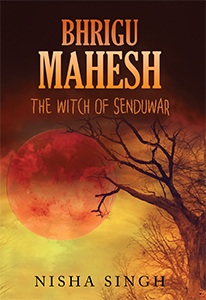
Nisha Singh’s Bhrigu Mahesh

Bhrigu Mahesh is a detective novel. it is very intriguing and grabbed my attention from the first chapter. Bhrigu Mahesh is a private investigator, he has taken on what was thought to be an accident in the death of Malthu. He agrees to look into the death for his mother. Malthu has died in a place called Senduwar that is filled with superstitions of bad luck and death. This is definitely a must have for the readers of mysteries. A good mystery is one where the reader cannot guess who the murderer can be. This is definitely a great mystery.

Nisha Singh’s Bhrigu Mahesh can be ordered here from publisher Book Venture. 


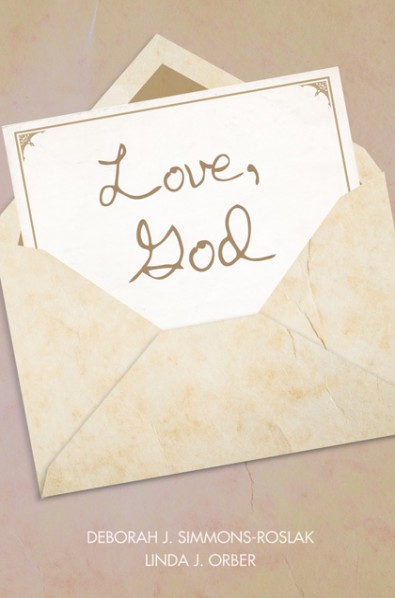
Love, God by Deborah J. Simmons-Roslak and Linda J. Orber
Humans are always looking for and created to be loved. People will let us down in some way or break our hearts. God will never let us down. God will always be there for us and guide us. We may not always receive the answer we want or, it may not be in our time frame, but, we can always count on God doing what is right for us. Love, God is an excellent book that explains God’s love for us. God has unconditional love for us and will always be there. This book teaches us how to be still and learn to listen. It teaches us how we can learn to live in peace in our hearts and minds. This is an excellent book whether you have been a Christian or want to learn to quiet your mind and restless soul. I very highly recommend it. This is a book you can read all the way through then come back if you want to look up a passage or paragraph to meditate on.
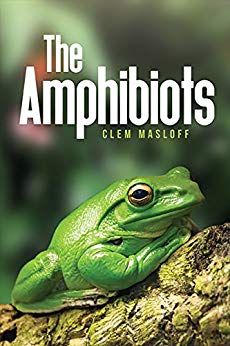
Clem Masloff’s The Amphibiots
Ranid Rolis is a researcher who has been hired to do research in the Salamandrine Archivum. In his research he comes across evidence of a secret sect. The sect now wants to hush him up before he reveals anything. The Amphibiots is an intriguing and exciting scifi book. If you love scifi/suspense this is definitely a must have for your home collection. I enjoyed it very much and highly recommend it. It’s the perfect book to read on these rainy and cold nights.
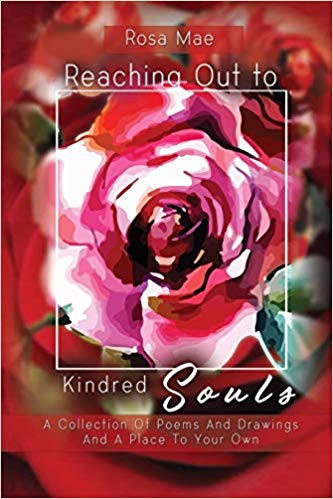
Reaching Out to Kindred Souls by Rosa Mae
Reaching Out To Kindred Souls is a very sweet and endearing book of poetry. It is written in a very unique way. In the back are pages added for the reader to write their own thoughts, poetry, sketches or doodles. Although each and every poem is very good, my personal favorites are ‘My Ray of Hope’, ‘Blessings of the Night’, ‘The Burden’, ‘The Healer’ and ‘Precious.’ This is a must have for poetry lovers. If you have not really read poetry books before, this would be an excellent one to start out with. It would also be absolutely great for a gift for someone you know. I absolutely loved it and know you will too.

Elizabeth Hughes