Elizabeth Hughes’ Book Periscope

G.R. Jerry’s Tom and Lovey
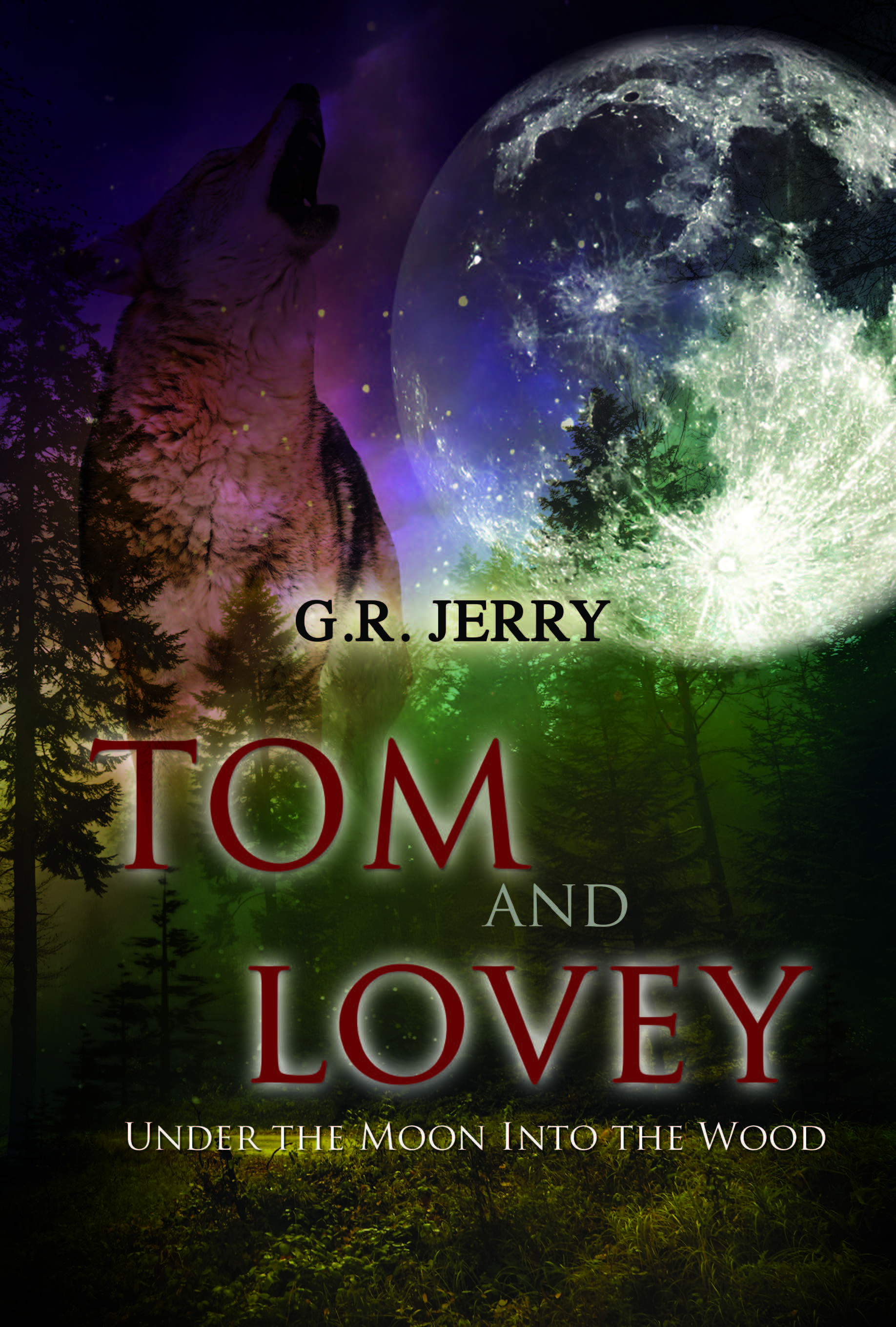
TomandLoveyfront cover
If you love horror and Stephen King books, you will love G. R. Jerry’s novel Tom and Lovey: Under The Moon Into the Wood. This novel will make your breath catch and grab you attention from page one. You will not be able to let go until the very end. Tom and Lovey is about a half man, half animal that is pure evil. He calls himself Stargut. Stargut is the sheriff of a town called the Village of Wrong. Stargut is trying to create his perfect evil beings of half animal and half human. Tom is a preacher, that for hundreds of years has been tracking this evil, by following the stench the evil has around him. Lovey’s husband Bill was murdered by Stargut and she is out to avenge Bill’s death. The creek behind Lovey’s place is no ordinary creek, it is the place where evil resides especially on the nights when the moon is full. I highly recommend Tom and Lovey: Under the Moon Into the Woods by G. R. Jerry. This is the perfect book for Halloween season. Thank you Mr. Jerry for a gripping novel of horror and suspense!
Coulter’s A Night’s Tale
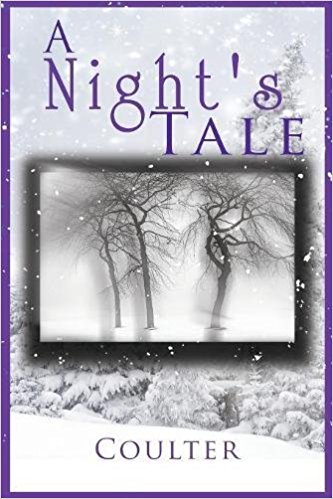
nightstalecover
If you love horror, suspense, and the supernatural, A Night’s Tale is a must for your home library. It is filled with many twists and turns and will keep you on the edge of your seat until the very last page. I loved it. This would make a great gift for yourself or a friend who also loves horror. I highly recommend A Night’s Tale by Coulter.
Greg Payan’s Please Stay
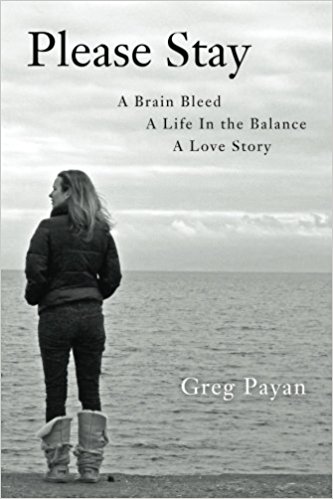
Please stay is the true story of Holly Hillgardner. It was written by her fiance’ and now husband Greg Payan. After a perfectly normal day, Holly had a brain aneurysm. This is the story of how doctors came together as a team to save her life. Greg notified friends and family to send letters to read to her to keep her fighting for her life. This book is the journey from day one of the brain bleed to many months of rehabilitation. It is the story of how well wishes and prayers kept them going physically and emotionally. It is a book that can provide hope to others in similar situations. It is important because it lets us know there is always hope. This a  very well written book of a portion of Greg and Holly’s life. I highly recommend Please Stay by Greg Payan.
 
M.H. Howington’s The Redhead
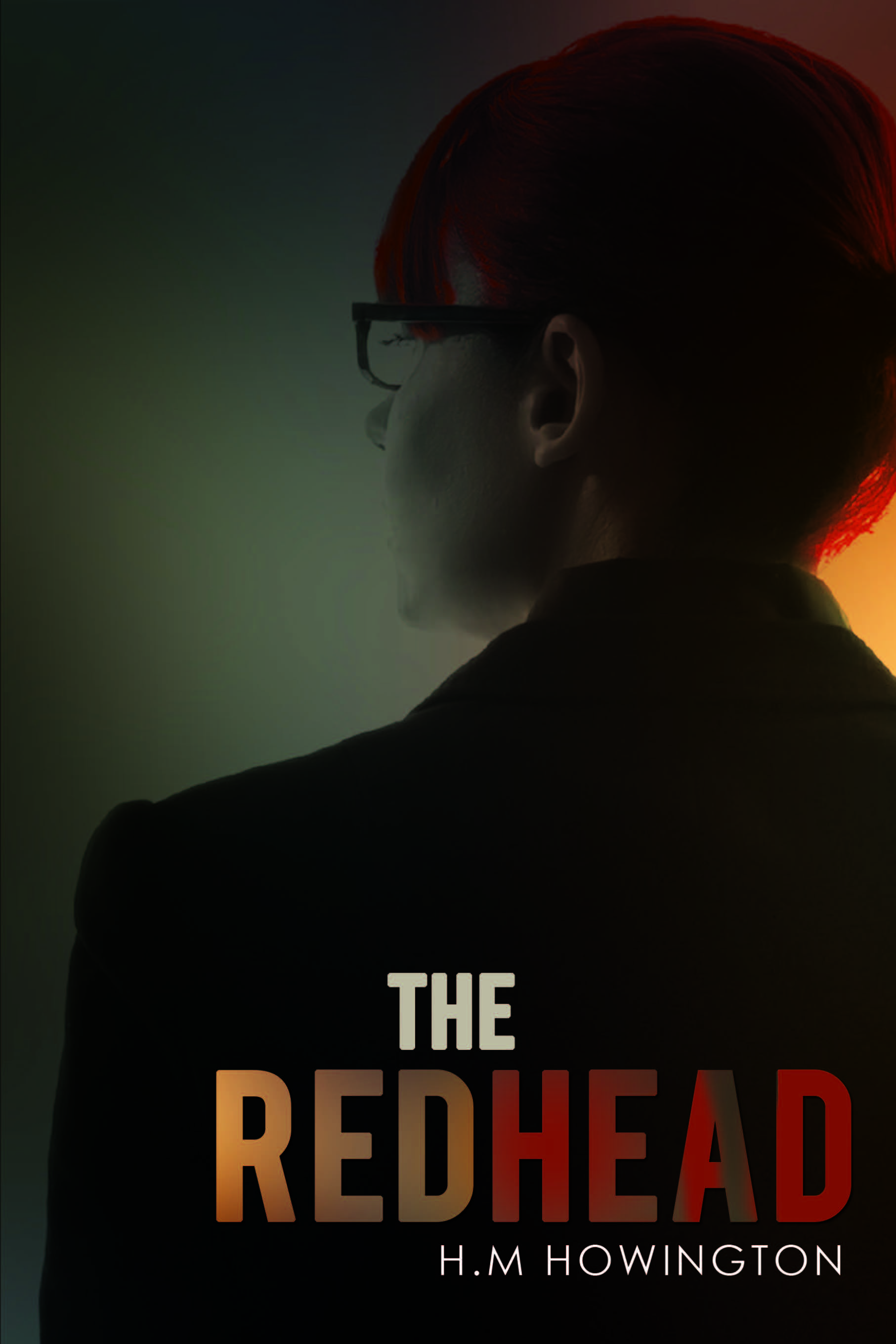
theredheadcover
The Redhead is a must have if you love detective stories. The Redhead is written in the style of the 40’s and 50’s detective novels. Charlie McQuillen served in World War II and became a police investigator when he got out. Now, he has his own detective agency. One day a Red headed lady walks into his office wanting to hire him to find out who is following her. Before their second meeting, she is abducted getting into her car. McQuillen finds out her name is Leslie Carworth and she works for a very powerful man. McQuillen starts looking into her abduction and things get stranger and more complex the deeper he digs. The Redhead is full of twists and turns, and filled with suspense that will keep you on the edge of your seat until the very last page. This is a five star novel. I absolutely loved it and very highly recommend it.
The Redhead is available here. 
Poetry from Ryan Quinn Flanagan

Tire Pile


You really shouldn’t be a fledgling anything

after sixty, but you pass a burning tire pile

and that is it


late to the party is better than never

except there is no party

and many say there is no such thing

as Time either


which makes late as tough a sell

as early

while the schemers

scheme


and the hippies of Redwood

breastfeed Mars out

of war


and later at my place

you are no longer there,

not even in my thoughts:


one woman, eight candles, six bottles,

two glasses…

I am counting.


Are you going to have the bathroom?

I slur.


I’m going to the bathroom,

she says.

I don’t know if anyone can

have it.


Continue reading

Christopher Bernard reviews Ava/Ada at Zellerbach Hall

ARDOR


A review by Christopher Bernard


Ava/Ada

Manual Cinema

Zellerbach Playhouse

March 16–18, 2018


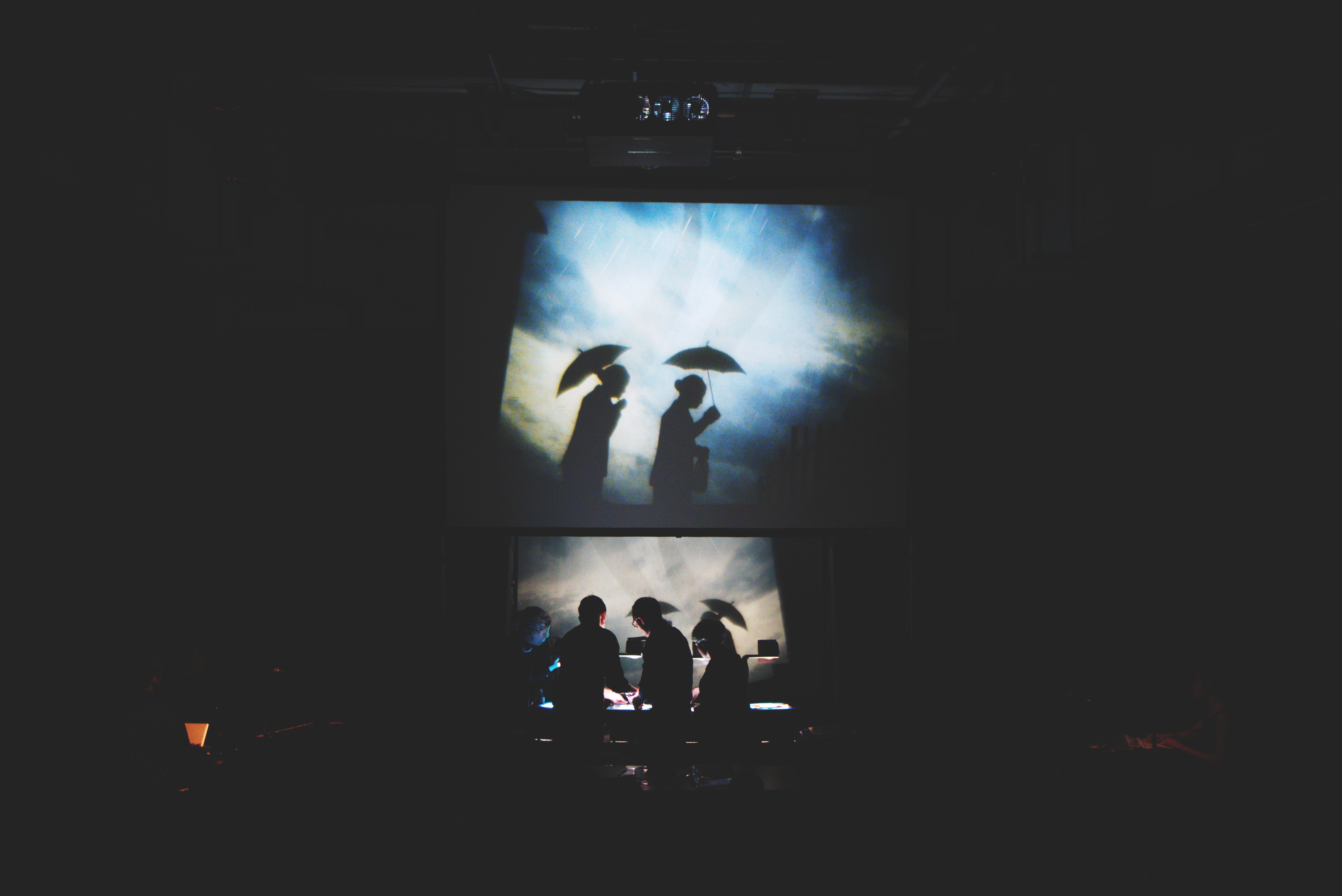
Manual Cinema performs Ada/Ava Friday–Sunday, March 16–18, 2018 in the Zellerbach Playhouse. (Photo credit: Yi Zhao)

Manual Cinema performs Ada/Ava Friday–Sunday, March 16–18, 2018 in the Zellerbach Playhouse. (Photo credit: Yi Zhao)


Chicago’s audacious theater company Manual Cinema has brought its hour of magic to Berkeley just past the ides of March this year, and if you have a theatrical bone in your body, you owe it to yourself to hie thee thither posthaste ere its pixie dust evaporates away into the memories of its enthusiasts.

The form Manual Cinema has created is as simple as it is imaginative: a hybrid of simple animation, Balinese shadow puppet play and live performance (including sound effects and music), using two screens and four overhead projectors, much like those many of us have all suffered through in high school classrooms and musty lecture halls, but with imagination and heart attached, like the balloon that haunts the show throughout.

The live performances make each performance unique and provide the same tension one feels watching a high-wire act: of course they won’t fall, but what if they do?

The story is of an admirable simplicity and originality: two ageing sisters, Ada and Ava—identical twins, as an array of old-fashioned oval-framed silhouettes adorning the walls of their home let us know in no uncertain terms—keep a lighthouse on a stormy coast, and one of them dies (no spoiler here, as the death occurs in the very opening).

The remaining sister has not only lost her oldest and closest companion, but in a sense has also lost her other self, and the rest of the story is what happens to her in her long journey to try to rejoin her sister, through memories of their growing up together, dream and nightmare, an unfinished chess game, and the haunting presence of a tall pier mirror that taunts the surviving sister with the image of her dead twin, which is, of course, her own.

We are told the story in a series of acetate and paper projections, thrown against a small screen at the back of the stage, as the performers work the models in full view of the audience onstage, with their backs to us.

The performers portraying the two sisters act out their scenes in front of that first screen. The shadows on the screen are then thrown onto a considerably larger one hanging high above the stage, and in mirror-reverse from the action seen on the first. That second screen, combining the projected images into one commanding image is what rivets the audience’s attention from first to last, though one can, at any moment, glance down to watch the “kitchen” where the febrile stew is being concocted.

The strongly convincing performers included Vanessa Valliere as Ada and Kara Davidson as Ava, as well as puppeteers Dru Dir (who directed and first explored the ideas that eventuated in the show), Sam Deutsch and Charlotte Long. The musicians, whose music subtly shaped the show’s emotional cast, were Michael Hilger, Kyle Verger and Quinn Tsan, who also performed the colorful and clever sound effects.

One thing about the names: one might be forgiven for thinking of the heroine of Vladimir Nabokov’s longest novel for “Ada,” or Ava Gardner for her twin. One might also think of “avian” for Ava, as in at least one scene, a bird appears above Ava’s grave. And of course, there are only two letters to add or change to go from either Ava or Ada to “alma,” the soul.

The show’s only weakness is its conclusion, where the authors are clearly unable to figure out how to end their story. The story’s logic sternly leads in one direction only, but they can’t quite muster the courage to go there, and so equivocate, sweetly enough if not entirely convincingly. But forgivably.

To say too much would be to spoil a show of such fine delicacy of spirit and subtle strength. Leave it at this: stormy nights and threatening seas, beautiful dreams and fearful nightmares, gaiety and deviltry, mischievous teapots and nagging clocks (one of them advertising the “Menaechmi Bros.”—from the Roman Plautus’s comedy about twins), fights between the sisters and a near drowning, a visit to a carnival and a visit to the regions of death, chess games and halls of mirrors, a lost balloon and a forever kept shell, skeletons and graveyards and spiral staircases, and the looming light of the lighthouse, twisting like an owl’s eye and forever threatening to go out for good, and the mystery of who one is, and the mystery of death, and the mystery of reconciling ourselves to the mysteries of life.

_____


Christopher Bernard is co-editor of the webzine Caveat Lector. His novel Voyage to a Phantom City came out in 2016; his second collection of poetry, Chien Lunatique, came out in 2017. His new novel (currently being serialized in Synchronized Chaos) will appear later this year.


Synchronized Chaos March 2018: There and Back Again

foggy-road


Welcome to March 2018’s issue of Synchronized Chaos! In the tradition of Tolkien’s hobbits, we are reflecting upon journeys, heading ‘out there,’ observing and contemplating, then coming back again.

Patxi Perier contributes a photo essay cataloging various Basque deities and statuary that represents them, and Michael Onofrey shares an excerpt from his upcoming novel Bewilderment where travelers on bicycles first hear, then see, women in colorful saris working hard to beat rocks down to the correct size for construction. Michael Brownstein’s poetry provides glimpses of colorful landscapes, lush with food and color – but also a treacherous volcanic eruption. Joan Beebe evokes the majesty of a thunderstorm while John Chisoba Vincent creates a landscape of grief, poverty and violence set within Nigeria’s inner cities. Michael Robinson also shows the violence of African-American inner city life, yet illustrates his survival through the grace he found from the love of those, especially women, who gave him comfort.

Some pieces reflect states of being, slices of life, more so than actual physical places. Ryan Quinn Flanagan sent us vignettes with a bit of dry humor, into which he inserts the names of famous historical artists. Elizabeth Hughes, in her monthly Book Periscope column, reviews poet Linda Mangram’s title Poems for All Occasions, a collection of gentle, uplifting pieces, along with a dramatic horror piece, A Night’s Tale, by the author known as Coulter. And Michael Lee Johnson contributes quirky observations on life – character sketches of people and a horsefly who’s made his way into his room – through a variety of media.


Cattail Jester’s poetry deals with getting lost and finding one’s destination, while Mahbub probes the unseen frontier: near death experiences, as-yet-uncolonized Mars, the home of a nearby hen. Sravani reflects upon familial love, grief, and recovery, while Mary Burford laments the loss of trees cut for lumber. Jeff Bagato also describes reconnecting with nature in a tough-minded way, with the help of a few pirates who also uncover the wildness within our own natures.

Some writers work to intellectually make sense of life’s journeys. Chimezie Ihekuna, known as Mr. Ben in his homeland of Nigeria, compares the spread of ideas throughout societies to the motion predicted by Newton’s physical laws. Christopher Bernard provides a fresh installment of his serialized novella Amor I Kaos, which explores our human tendencies both towards connection, represented by romantic love, and towards isolating philosophical uncertainty.

Some authors probe the inherent tensions in our life’s travels and travails. Chimezie Ihekuna contributes poetry about our inertia as individuals and as a group, and the difficulty of changing ourselves, much less others. J.J. Campbell’s poems reveal his speakers’ cynicism, full of dark humor and religious doubt. J.D. DeHart offers up only one, tenuous piece on struggling with writers’ block and rejection, yet the poem gives us an unexpected creative twist at the end. Others find hope despite the confusion of our existence as well. Vijay Nair reviews Chimezie Ihekuna’s works in many genres, taking away that Chimezie believes that while we will experience hardship and failure, our lives are worth living anyway. J.D. DeHart also reviews Chimezie Ihekuna’s novella Santa in Two Worlds, and celebrates the poetic language and turns of phrase in this tale of crime, gang violence, and redemption.


mountain-road-sunset

Poetry from Mary Burford

THE GREAT GREEN TREES

Long lay the shadows
Beneath the greatest trees
Until a woodsman laid them low.
And oh, the years they had felt the sleet,
The bitter cold and the summers’ heat,
Had sheltered fowl, and man, and beast
Until the woodsman’s fatal blow!

Then, the earth reached out
and seemed to cry,
“Cover here, and hide the wounds
of the once great trees
That were sadly doomed.”
The rains fell, and the river flowed.
But oh, the years that it took to grow
The great green trees the axe laid low.

The birds, the wind, then did sow
Tiny seeds of other trees.
The rains fell, and the river flowed.
The sun shone, and the moon glowed.
But oh, the years that it takes to grow
More great trees for an axeman’s blow!

—MARY BURFORD

Poetry from Michael Brownstein

AN ISLAND ABOVE THE OCEAN
After we landed
Montserrat floated into the sky
Mountain chicken, goat water,
Black sand lines on the beach:
Look, I shouted, the volcano
Throws more smoke into the air
Coloring the trade winds grayish gray.
She answered, dust masks, oxygen masks,
Quick, buy me something to keep
The dust out of my hair.
Everywhere goats and sheep,
Lemons and lime, a great number of potatoes,
And once a week a boat rose to the occasion
From the Dominican Republic
Full of fresh fish and more fresh fish.
When the volcano erupted one night,
We went to the veranda to listen
To the march of debris.
Morning, everything covered with ash:
Look, she shouted, this stuff is everywhere.
It’s on the chairs and the floor,
In the kitchen sink.
I answered, brooms and dustpans,
Mops and water. Where are the rags?
We left a week later, our gums bleeding,
A lack of vitamin C,
A lack of calcium, a lack of .
Temperament of temperature.

Continue reading