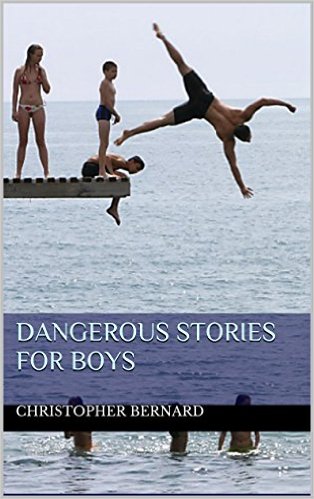
Michael Robinson reviews Christopher Bernard’s short story collection Dangerous Stories for Boys
Michael J. Robinson Reviews Christopher Bernard’s Dangerous Stories for Boys
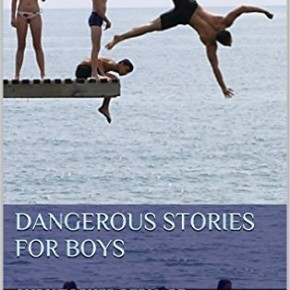
Christopher Bernard’s Dangerous Stories For Boys reaches into the abyss and brings us (men) back to a time and place where our world was full of doubts, fears, and lack of courage. Many boys finding their way into manhood become trapped in and stifled by society’s rules and regulations. There’s a deep psychological aspect to the experience of growing up into manhood. The age where it seems to begin is at ten and throughout adolescence. Many boys may find that their world is chaotic, disingenuous, and full of traps—emotional, physical and mental—all of which can be dangerous.
It’s hard for the boys to figure out what path to take in the midst of the experience of adolescence and pre-adolescence. As we see in one story, changes in one’s family, such as a move, only heighten the disorientation. Matt’s family relocates to the city after living on a farm and he struggles with the strain of transforming himself to survive in the new environment. There’s a profound difference between growing up in the country and in the city. However, meeting people of different backgrounds and cultures is a prerequisite for maturity, even a baptism by fire, as it has been said; but an important step towards developing into a fully mature and well-adapted person.
Many adult men have long since forgotten these rites of passage, but Christopher Bernard reminds us of those moments in a harmonious way. Each story has a rhythm that stays intertwined with the other in a cadence that works well. My thoughts followed the lives of these young men, anxious to see how it would all turn out for them. I found myself reliving my own story of growing up, which made me feel frightened and uncertain of my future. Attempting to control each event becomes futile as the environment shapes the characters’ actions. Still, as with the other boys, even while going through a maze of fear and disorientation, Matt resolves not to surrender to his new world and to maintain his identity.
“Shadow in the Water.” This story is intense and familiar to us. Alan must question his own values, and his strength in order to be himself. It’s difficult to walk away from the challenges of peer pressure to say no to others. Alan finds himself confronted by realities that challenge his fantasy that he can be just one of the boys.
It’s impossible not to continue to follow the story without remembering your own experiences. Story after story, Bernard gives us something to contemplate. The reader cannot help but follow each boy through his adventure and have concern for him. As you become attached to each one of them, you are exposed to your own shadows of the past. I found some stories long only because I wanted to know what would take place with the boys. But it was worth the wait to read the ending without skipping pages.
Christopher Bernard’s Dangerous Stories for Boys can be ordered here.

Poetry from Akor Emmanuel Oche
QUALMS
.
Wrap the sea
around the neck of
this pregnant virgin,
She would never
be satisfied.
Let the forest starve
of trees.
Even if mountains
adorn
the cap of oasis
oh her barren head,
high into the frosty
silver heavens.
This pregnant virgin
would not
be satisfied,
for a heart heavy
with love’s child
cries not of pain
but dilemma.
.
AKOR EMMANUEL OCHE is a Nigerian poet and critic who has been globally anthologised.
Poetry from Ogana Okpah
GUYS ARE RED.
These pretty girls choose John
to them, he is the only guy in town.
Yes he is: the red guy, with the
red car and on red light
and because he is red, he is hot
i warned them pherhaps,
he could be pepper red
they wouldn’t listen
now John is gone with
kate and Helen
they said am the coolest guy
yet red is the colour of love.
Poetry and a story from Tony Glamortramp
by Tony “Glamortramp” LeTigre
Essay from Jaylan Salah
Xavier Dolan and Revolutionizing Sexuality on the Big Screen
A Feminist Critical Analysis of Xavier Dolan’s Cinema
By: Jaylan Salah
The year is 2014.
Being a film critic you are granted many privileges that most people can’t have access to, including early screenings for films that haven’t been in cinemas yet or ones that won’t find a market in your home country.
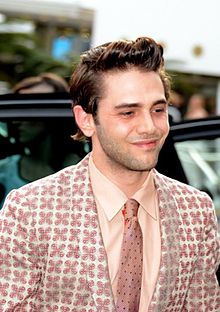
One of the films I had the pleasure of watching was Mommy, the crazy creation by Canadian director and actor Xavier Dolan, who was 25 years old by the time he made it. Nobody had the privilege of watching any of Dolan’s five features that he has made so far in Egypt, save for “Mommy” which people watched late in 2015.
Wow!
Not only is he incredibly young for such depth in analyzing human emotions and depicting them onscreen, but he has also shared the Jury Prize at Cannes Film Festival with — wait for it — the great Jean-Luc Godard!
That being said, the guy has balls. And talent!
Ever since Mommy I’ve been tracking down Xavier Dolan and every film that he directed. Today after watching J’ai tué ma Mère (I Killed my Mother) — his first feature and the last Dolan film on my plate — I can safely say I have formed a critical idea on his world as a director and an artist. As a cinephile and a feminist, my reasons for reveling in the Dolan experience would be as follows.
Poetry from Christopher Bernard
An Ahumanist
By Christopher Bernard
“Who needs atheists?” he said. “ ‘We
do not believe in God’? Well, I
don’t b’lieve in your blessed humanity.
The sooner humans are wiped out,
the sooner the rest of us can rot
in peace.”
I was intrigued, if startled. Cool,
he looked, rational, serene.
He smiled wanly. But it was no joke
to him, I could see. Nor did he preen
himself on his intellect or heart,
his courage to face the monstrous worst.
“We are, to put it bluntly,
the condign damnable Nazis of the earth,
her Kozentrationlagers’ kommandants,
her curse.” He looked grimly
around at the rumpled bustling street.