Short fiction from Peter Jacob Streitz

MEN AND WOMEN—there’s a difference. At least that’s what Shields’ mom formerly decreed. It’s history. It’s science. It’s nature. It’s everything to do with equality and ONLY ONE HAPPINESS. And along with the laws of only one happiness, Shields also knew, by heart, all the other rules in Mom’s house. That’s why he waited a year after his 13th birthday to ask her about the man he’d met the previous Christmas, in his Grandma’s cellar. This was a terrible mistake. When Shields simply asked if the man she called “husband” loved him, his Ma threw a fit! The word LOVE was strictly verboten in or out of their home.

For it was his Mom’s belief that love, as a word, was worthless. “Gens de peu (the meaner class of people),” she’d crow with characteristic fervor. “Love everything from inanimate objects to gods, celebrities, and prime-time TV.” She’d quiz Shields: “And how can love describe the affections of men and women when we incessantly jabber, ‘I LOVE THE FLAG! I LOVE COKE! I LOVE NEW YORK! I LOVE JESUS! Have you ever seen a bumper sticker that says: I LOVE HUMAN BEINGS?'”

When Shields admitted to never seeing such a bumper sticker, or knowing what it actually meant to love, mom told him a story about a long forgotten, magical time when men and women were equally capable of love, because they both possessed The Lobe. God’s Lobe. The Lobe almighty.

Continue reading

Poetry from Michael Robinson

The Seagulls
Their wings spread above the ocean.
Their voices echo off the water,
Their white bodies full the morning sky,
I remember my mother when I see them,
For she was always gentle with me;
I was her only son.
She did not cry when I told her I was leaving for the war.
She simply said “come back to me.”

Sleep II

I cannot sleep in the wee hours of the morning when the muses come,
I cannot sleep when the dream is of colors —
When the moon is bright and the stars float above the water,
It is not easy to forget the goddess of poetry.
But I cannot rest in the wee hours of the morning when I hear the birds sing.

Another Day of Life

When the words appear on the screen,
Nothing else matters to me.
Hearing your voice,
Having you smile and that laugh of yours.
I’m happy when I look out at the mountains,
When the peacocks’ feathers bloom,
And the seagulls fly over the ocean,
I’m happy when the muses call on me to write.
A poem they understand,
That there’s more to life than death.

Elizabeth Hughes’ Book Periscope

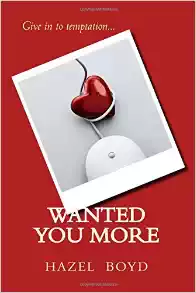
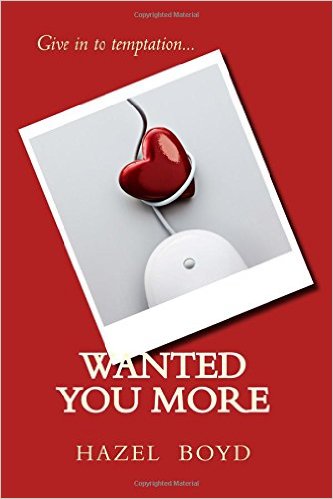
Wanted You More by Hazel Boyd

wantedyoumorecover wantedyoumorecover1
wantedyoumorecover
Wanted You More is a wonderful book about how the lives of people intertwine. It is about friends, lovers, caring, compassion and heartbreak. It is a wonderful story of how when two people break up they can still be loving and caring friends. This book reminds us of how love and compassion really can conquer many things that life can throw our way.

Enough to Keep You, also by Hazel Boyd

enoughtokeepyoucover
Enough To Keep You is a very good book following the relationships of several women. It explores the highs, lows, happiness and heartbreak of each one. It is about how good friends stick by each other and care for each other through happy times and most of all when one is hurting. It is a very deep and meaningful novel. I loved this one as much as I loved the sequel, Wanted you More. This is a must have for your home library. Don’t forget to get the second one along with this one.

Synchronized Chaos February 2016: Innocence and Maturity

Welcome to February, the month of Valentine cards and pink candy hearts and Cupids for some, and dark humor and hopefully self-love for others. Hopefully, this month will also herald warmer weather for those Northern areas besotted with blizzard snowfall.

Our issue this month focuses on innocence and maturity, with some submissions reflecting straightforward childlike enthusiasm and others presenting more complex, self-conscious thoughts.

Leticia Garcia Bradford regales us with a tale of the first time she saw snow, as an adult Californian traveling to South Korea in winter. Joan Beebe draws on the Valentine’s holiday for inspiration, describing a contented relationship and some different aspects of love. She also memorializes a pet parakeet who had become dear to her family.

Tony Glamortramp offers up poetry and a short story, both of which convey the thrill and joy of snow days, not for children, but for bohemian queer artistic types who have the day off from school and work to feast on poetry, art, drink and music. These pieces, somewhat reminiscent of Puccini’s La Boheme, express the treasure of eclectic community and show through nostalgia the value of a city’s remaining hospitable to these sorts of people.

Ogana Okpah celebrates love, both the childlike pangs of first crushes and the longer-term, committed love of adults. Jaylan Salah reviews the cinema of Canadian director Xavier Dolan, whom she appreciates for making films that show teenage boys’ maturing and the complexities of ‘human-human’ relationships, tender and nuanced regardless of gender configuration.

Other writers convey a sense of anxiety, a reflection of the growing pains of our society and planet. Michael Robinson, in his distinctive restrained, delicate verse, expresses the solitude and anguish of having only memories of love for comfort while undergoing mental health treatment. Christopher Bernard’s protagonist considers the weight humanity places on the planet, then looks into the faces of ordinary random folks of all ages waiting for a San Francisco bus, who seem incongrously vulnerable and harmless. Christopher Bernard also reviews Ernest Hilbert’s new poetry collection Caligulan, which expresses modern and timeless social and existential anxieties through formal poetic forms.

Vernon Frazer creates highly structured, precise, heady pieces through free verse forms, reflecting places that are underneath, behind, hidden from view. Readers are drawn by these geometric arrangements of words to peer within our physical and mental structures to examine their deeper natures. Akor Emmanuel expresses existential dissatisfaction through the image of a perpetually unsatisfied pregnant virgin, an echo perhaps of the Virgin Mary’s sorrow over our world.

Dramatic suspense can be a way we can face anxiety in small doses and vicariously, perhaps as a way to accustom ourselves to fear from a distance so that we might become stronger when confronting actual threats to our existence. Elizabeth Hughes, in her monthly Book Periscope column, reviews Joe Klingler’s film noir-esque thriller mystery Missing Mona, describing the tale of a detective’s quest for a missing hitchhiker.

Other writers this month describe the process of men’s coming of age, with all the angst inherent in that physical and psychological journey. Michael Robinson reviews Christopher Bernard’s Dangerous Stories for Boys, a collection reflecting what Bernard considers the ‘dangerous’ and volatile years of burgeoning adult masculinity, beginning at about age ten. Ryan Hodge, in his monthly column Play/Write, analyzes video games’ portrayal of male characters as they develop throughout game play, arguing that they earn worth and value in the eyes of others through service and sacrifice, but face the dilemma of finding a balance where they can assert individuality and not merely exist for the sake of others. Hodge argues for a complex, nuanced view of manhood on the screen, just as he did for femininity and female characters in his last column.

I hope that this issue inspires both childlike joy and wonder and thoughtful consideration of deeper concerns. Thank you for sharing the experience and growing alongside our contributors.

Public domain image from George Hodan, available here: http://www.publicdomainpictures.net/view-image.php?image=20273&picture=silhouette

Public domain image from George Hodan, available here: http://www.publicdomainpictures.net/view-image.php?image=20273&picture=silhouette

Ryan Hodge’s Play/Write column

PW_Banner_LT

-Ryan J. Hodge

For someone who enjoys a great story, is there anything better than a narrative that engages you from the very start? Imagine a world so rich you can almost smell the scents in the air, a delivery so clever it forces you to think in a way you never thought you would. I’m Ryan J. Hodge, author, and I’d like to talk to you about…Video Games.

Yes, Video Games. Those series of ‘bloops’ and blinking lights that –at least a while ago- society had seemed to convince itself had no redeeming qualities whatsoever. In this article series, I’m going to discuss how Donkey Kong, Grand Theft Auto, Call of Duty and even Candy Crush can change the way we tell stories forever.

What Videogames Teach Us About Writing Male Characters

When we think of great literary heroes –let alone heroes in video games- a plethora of male examples often spring to mind. From Hercules to Sonic; James Bond to the Master Chief; indeed it can be argued that if there’s one thing that contemporary narrative has a mastery of; it’s writing for male characters. However, there’s may be more to boys than what meets the eye, and videogames may indeed help us illuminate the way.

Continue reading

Poetry from Michael Robinson

Around Three AM inspired by Bob Kaufman’s Around Midnight

It has always been around 3Am,

when the knock on the door awakens me.

A mystery even to that about what life is not,

Life is not a single word or phrase.

The electrodes are glued to my temples,

I feel nothing for years,

Look at what take me to 3AM land of darkness.

The camera’s watch in my room of solitude,

My soul whispers the lyrics of death,

Still I remain confined but not tied down,

Because my soul will not remain quiet at 3AM.

It’s around 3AM when the psych tech searches my room.

No knives or guns just a soul souring in the morning wind.

01/07/16-9:15PM

Continue reading

Christopher Bernard reviews Ernest Hilbert’s new poetry collection Caligulan

Bold Artificer

Caligulan

Poems by Ernest Hilbert

Measure Press

80 pages

$20.00

A review by Christopher Bernard
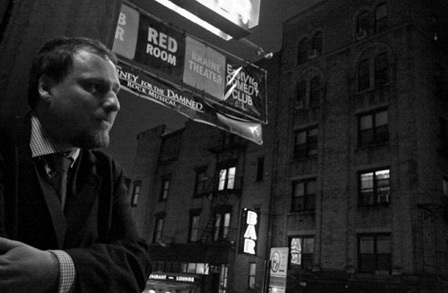
ernesthilbert
Ernest Hilbert

There are books of poetry that, if only readers could be induced to pick them up, might change their minds for good about the supposed incomprehensibility, preciousness and irrelevance of modern poetry. Ernest Hilbert’s new collection, Caligulan, belongs to that rare class.

After his beautifully rendered Sixty Sonnets and the eloquent All of You on the Good Earth comes this richly wrought (if curiously titled—more on that below) new collection. Hilbert is a classicist in the finest sense of the term: he has a firm grip on the formal orders that have dominated the great tradition of Anglophone verse from the skalds of Beowulf and the Pearl Poet to the tight gems of darkness of Thomas Hardy, and he uses them to write poems that ring with very contemporary truths. A skillful artificer of forms of verse that have sometimes gone wanting or are unjustifiably neglected or despised after the earthquakes of modernism, he is afraid of neither tight meter nor demanding rhymes: he proves there is nothing whatsoever anachronistic about well-tooled verse; the rage of authenticity can speak as sharply in a sonnet as in a calligramme.

The book is divided into four sections, named after the seasons, beginning with Summer. The landscape is mostly North Atlantic, eastern seaboard, in the countrysides of New Jersey and eastern Pennsylvania and the city streets of Philadelphia, where Hilbert lives, and which he knows intimately; he throws out the name “Atlantica” in a poem of that title: a place half mythic, half real, torn in the perpetual strife between love and time.

Hilbert has a strong feeling, expressed with great skill, for this “scape” and its denizens – not only human, but the animals and birds that squirrel in among the human detritus. It’s a world full of life:

“Daffodyls, two of them, astonish me
Ambushing me from winter’s nowhere …”

“A thin rain fastens banks of last night’s snow
With ice …”

“The gull pulls bags from trash and drags them clear.
He’s big as a cat, a blur of snow and soot.”

Cats are among the book’s household gods:

“She stalks the May yard,
… moves
Like a shadow …
… a helpless curl
Of fur in her jaws.”

One dies, another lives; and another rules:

“Ospreys orbit rule here, ruling as lords
Their drowned domains.”

A taxidermized moose rises in a museum diorama:

“You still startle, filling half the false sky.”

And yet the central, not always welcome but inevitable figure is of human beings, the planet’s caught, lost invaders:

“It’s pitch dark and pissing down so hard
You see nothing but tearful shards of light.”

“Wind conveys a muffled tune from a truck
Up from a valley, and they make out
Eddie Money’s ‘Two Tickets to Paradise’ …”

“The ship is locked beneath frozen mountains.
It crunches by inches against white floes.”

“He’s stranded in a place remote and sunless …

Above him … lie
The archaic stars whose light still shapes the sky.”

The poet here—the “I” of the poem’s fantasy, which is always the poem’s truth—is immersed in the baroque world of things and meanings, a sympathetic (if also sometimes moping and self-absorbed) character, embattled (as we all are, which makes his struggles so like our own) with the shaggy monster of meaning and its opposite, the tough, shiny thing that stares up at us from the bottom of its absence, and that will not, paradoxically, leave us alone:

“… where is our monster, the one we thought

Would always be there somewhere, though hidden?”

as he puts in “Cryptid,” about a visit apparently to Loch Ness, in search of the fabled monster. Then he finds that the monstrous absence is precisely the human, is precisely himself:

“… I catch the shallow

Smudges of my face in the cabin window.”

We haunt the world between a presence we can never find and an absence we cannot accept.

The poems rock between the contemporary and the archaic, binding the modern and the ancient into an embossed shield against time, demonstrating how the old invests the new with a palpable presence, and the new is often merely the latest mask of the ancient, which finds a dented, dulled, coruscating glamorousness in such poems (of particular accomplishment) as “Dishwasher” and “Judgement.”

Some of the poems have an almost palpable feel to them, like finely worked objects you can weigh in your hand, or even smell:

“The man holds the flaccid, bulging wet
Shape up to shine in the sun a moment
Over the slobbering jaws, then drops it.”

This the result of the gelding of a horse. (A tiny preface, tucked away on the copyright page, states, with a kind of reticent irony, that the author “wishes his readers a few uncomfortable moments.” Well, he succeeds—but never without compensating us with an eloquence more memorable than the discomfort.)

So we come to the odd title, a coinage that is explained in two pages of faux lexicography at the start of the book: it is, of course, a qualifier meaning “like Caligula,” the vicious, half-mad Roman emperor, who presided over Rome in a period of supreme decadence (any parallels with contemporary America are, no doubt, entirely coincidental!) and notoriously named his horse as consul; except that here the word is taken to mean “illogical fear of disaster … constant worry for the safety of oneself … obsession with cruel and irrational behavior.” And there is a poem with the same title at the very end of “Autumn”: about a panic attack the poet suffers after an almost comic avalanche of petty but ominous disasters (rolling together, in a rococo goo, among other sleights to human dignity, tasteless television broadcasts, coffee withdrawal, a call from his bank, a crashing computer, and the curses of “Olympian Jupiter”), portending (though it “just hasn’t happened yet”) his own mortality.

Other poems sometimes suffer from the risks and harrowings of an excessive self-consciousness: the poems that forget the brooding “I” and clasp our attention undistractedly to their subject (“Mother’s Day,” “The Gelding,” “Penrose Diner,” with its admirable cinematic “zoom” and neat reversal of relations:

“The waitresses smell of fresh laundry
And menthol cigarettes, arrive with winks
Like busy nurses. All around is cement,
And there’s a hotel in a lot filled with debris.”)

often reach the reader most keenly.

Though a constant trembling of anguish informs many of these poems, like a quiet ostinato rumbling constantly in the bass, what is most notable is how the poet’s anxieties are, in the main, transmuted from personal spasms of what sometimes sometimes feels like merely neurotic terror into objects of great beauty, a beauty that transforms the anguish that generated them into victories, however temporary, of grace.

Hilbert tends to write in a kind of contemporary Augustan “high style,” which has the congenital, Miltonic problems he does not always avoid of over-portentousness and patchy magniloquence. There are related problems when a poet has made his commitment to strict meter and rhyme: an occasional strained and contrived phrase hammered into a line with an ugly pruning of articles and dislocated enjambment (you can sometimes hear the phrase suppressing a snarl at the pinch) so that the blamed thing will fit.

But more often, and on the whole, the strictness of the procrustean bed to which Hilbert has bound his verses is a strengthener – and then the tight rhymes and the enjambed lines sing.

The collection, growing in strength as it moves through the seasons, ending in the resurrecting life of a typically glorious Pennsylvania spring, concludes with what, for me, is its strongest poem, marshalling the poet’s strengths in a swell of quiet, deep, and endearing, eloquence: “Who Is He Dares Enter These My Woods?” a poem that evokes a spring morning in center city Philadelphia with great precision (having grown up there, I can attest to it) and a moment of joy and affection that is entirely winning, that made me feel, surprised and admiring and, strangely—or perhaps not so strangely—grateful.

_____

Christopher Bernard is author of The Rose Shipwreck: Poems and Photographs and Dangerous Stories for Boys. His latest book is the novel Voyage to a Phantom City. He is co-editor and poetry editor for the webzine Caveat Lector.