From a difficult time, strong people come out.
Strong people create a good time and from a good time, fools come out.

From a difficult time, strong people come out.
Strong people create a good time and from a good time, fools come out.
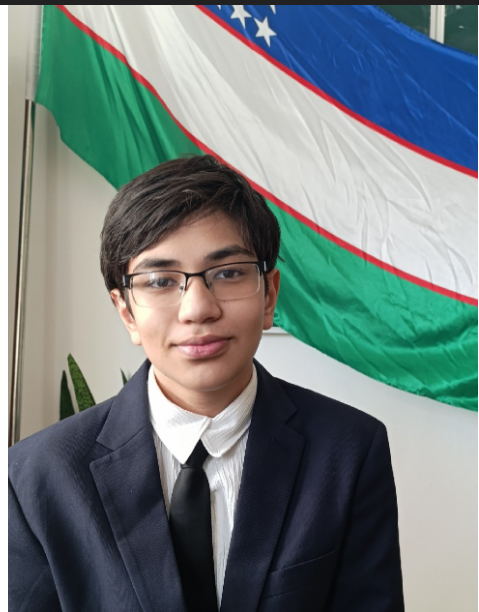
Sons of Turan
Soft winds caress the silent groves,
Along the roads thin pine rows rise.
A raven circles — distant envoy,
A lone horse wanders under open skies.
Here mountains stand and valleys widen,
Among a thousand lands on earth —
No place has ever been more precious,
No soil of greater sacred worth.
The ruins of forgotten cities,
Old fortresses of ancient days,
The lands once held by noble peoples —
Massagetae and Saka ways.
So many wars we fought for freedom —
No count can hold the tears we’ve known:
For land and honor, truth and homeland,
For sacred right to guard our own.
Here came the early Arab marches,
Met by lions proud and brave.
Here rode the khans of Genghis’ empire,
And blood was spilled in every wave.
Yet through the storms and burning ages,
Through iron will and destiny,
The sons of sacred Turan guarded
Their living flame of liberty.
From grief, from chains and bitter sorrow
Rose simple fighters, firm and strong.
Fathers and Jadids stood together,
Side by side where they belong.
Unbroken stands our spirit, rising,
High and steadfast through the years.
Wide-hearted, open, kind and noble —
The Uzbek people persevere.
Kholbekov Ozodbek Makhammatovich
The Responsibility Behind Recognition
There are moments in life that become turning points. They are not just memories, but milestones that shape a person’s character, confidence, and future goals. For me, March 1, 2025, was one of those unforgettable days.
On that day, during a large meeting with students in the Khorezm region, I was unexpectedly given a question in an intellectual discussion. The atmosphere was serious, and more than a thousand students were present. Despite the excitement and nervousness, I managed to answer the question correctly. That moment changed everything. Shortly after, I was awarded a certificate of appreciation and a laptop by the Governor of Khorezm region, Jo‘rabek Raximov.
However, what made this event truly meaningful was not only the award itself, but the responsibility that came with it.
Recognition is often seen as a reward for past achievements. But in reality, it is also a challenge for the future. When a young person receives public recognition, especially in front of many peers, it becomes a symbol of trust. It sends a message: “We believe in your potential.” That belief creates a new level of responsibility.
For me, the laptop was not just a device. It became a tool for further academic growth. It supported my research activities, helped me write scientific articles, prepare presentations, and participate in academic competitions. More importantly, it reminded me every day that I must continue working hard and justify the trust placed in me.
In many societies, youth are considered the driving force of development. Uzbekistan is no exception. In recent years, special attention has been given to supporting talented and active young people. Meetings between leaders and students are not only formal events; they are platforms of dialogue, motivation, and inspiration. When young people see that their knowledge and initiative are valued, they become more confident and ambitious.
This experience taught me an important lesson: opportunities often come unexpectedly, but preparation must be constant. If I had not spent years reading, participating in intellectual games, and improving myself, I would not have been ready for that spontaneous question. Success in that moment was not accidental; it was the result of continuous effort.
Recognition also changes how a person sees themselves. After that day, I felt a stronger sense of purpose. I understood that every achievement creates expectations. People start to look at you differently. Younger students may see you as an example. Teachers may trust you with more responsibility. Society may expect greater results from you.
At first, this pressure can feel heavy. But over time, I realized that responsibility is not a burden; it is a privilege. Not everyone receives the chance to represent their peers or to be publicly acknowledged for their knowledge. Therefore, instead of fearing expectations, I decided to transform them into motivation.
During the year that followed, I focused even more on self-development. I worked on academic research, participated in university activities, and aimed for higher achievements. Every time I felt tired or doubtful, I remembered that day. It reminded me that one confident answer can open unexpected doors.
Another important aspect of recognition is gratitude. No achievement is entirely individual. Behind every success, there are teachers who guide, parents who support, and friends who encourage. That day was not only my victory; it was a shared success with everyone who believed in me.
Today, one year later, I look back with gratitude and forward with determination. The certificate and the laptop remain symbols, but the real reward was internal growth. I learned to believe in my preparation, to stay calm under pressure, and to accept responsibility with dignity.
Recognition is not the final destination. It is the beginning of a new stage. It raises the standard you must meet in the future. It reminds you that talent alone is not enough — discipline, consistency, and humility are equally important.
For young people everywhere, my message is simple: always be ready. Read more. Learn continuously. Participate actively. You never know when a single moment will test your knowledge and courage. And when that moment comes, your preparation will speak for you.
The responsibility behind recognition is not something to fear. It is something to embrace. Because true success is not measured only by awards, but by how we grow after receiving them.
One year has passed since that memorable day. Yet its impact continues to shape my journey. And I am confident that this is only the beginning.
Xoʻjyozova Dildora, Uzbekistan
Alimqulova Munisa Abdurayimovna
11th Grade Student

International scholarships play a significant role in promoting global academic mobility and equal access to higher education. Despite the growing number of scholarship programs, competition remains intense, and many qualified students fail to secure funding. This paper examines the main determinants of success in winning international scholarships, focusing on academic achievement, language proficiency, personal statements, and extracurricular engagement. The study argues that scholarship attainment is strongly associated with early preparation, clarity of goals, and strategic self-presentation rather than academic excellence alone.
Keywords: international scholarships, academic mobility, grant application, higher education, student preparation
The globalization of higher education has expanded opportunities for students to pursue academic studies abroad. Governments and universities increasingly invest in scholarship schemes to promote international mobility and cross-cultural exchange (Altbach & Knight, 2007). However, scholarship selection processes remain highly competitive, often requiring more than strong academic records.
While many students believe scholarships are awarded solely based on grades, research suggests that selection committees adopt a holistic evaluation approach (Perna et al., 2014). This paper explores the key determinants that increase the likelihood of winning international scholarships and highlights the importance of systematic preparation.
Academic mobility has been widely discussed in higher education research. According to Altbach and Knight (2007), internationalization enhances knowledge exchange and institutional development. Financial assistance programs play a crucial role in ensuring that talented students from diverse socio-economic backgrounds can access global education opportunities.
Perna et al. (2014) emphasize that scholarship decisions are influenced not only by academic merit but also by leadership potential and long-term impact. Similarly, studies on application essays indicate that clarity of motivation and alignment with program objectives significantly affect outcomes (Hirschman & Berrey, 2017).
Furthermore, language proficiency is recognized as a critical predictor of academic success in international contexts (Andrade, 2006). Students with strong communication skills are more likely to adapt successfully to foreign academic environments.
This study employs a qualitative analytical approach based on secondary data. It synthesizes existing literature on academic mobility and scholarship selection criteria from publicly available international funding programs. The objective is to identify recurring patterns and determinants associated with successful applications.
Academic performance remains a foundational requirement. High academic results reflect discipline, intellectual ability, and consistency. However, evidence suggests that academic excellence alone does not guarantee selection (Perna et al., 2014).
Standardized language assessments such as IELTS and TOEFL are common prerequisites for English-medium programs. Language competence supports both academic performance and social integration (Andrade, 2006).
The personal statement functions as a narrative of professional identity. Successful applicants demonstrate coherence between their academic background, career goals, and the mission of the scholarship program (Hirschman & Berrey, 2017).
Participation in community initiatives, volunteering, and leadership roles strengthens applications. Scholarship committees often prioritize candidates who demonstrate social responsibility and future contribution potential (Perna et al., 2014).
Early planning, document organization, and awareness of deadlines significantly improve competitiveness. Applicants who understand evaluation criteria are better positioned to align their profiles accordingly.
The analysis indicates that scholarship success results from a combination of academic competence, language proficiency, leadership experience, and strategic self-presentation. Rather than rewarding isolated excellence, selection processes favor well-rounded individuals whose achievements align with program objectives.
Resilience also plays an important role. High rejection rates reflect intense competition rather than applicant inadequacy. Continuous improvement and reapplication may increase the probability of success.
International scholarships serve as vital mechanisms for promoting global education and professional development. Success in obtaining such funding depends on multiple interconnected factors, including academic performance, language skills, leadership qualities, and systematic preparation.
Students who approach scholarship applications strategically and demonstrate clear future goals significantly enhance their chances of securing international grants.
Altbach, P. G., & Knight, J. (2007). The internationalization of higher education: Motivations and realities. Journal of Studies in International Education, 11(3–4), 290–305. https://doi.org/10.1177/1028315307303542
Andrade, M. S. (2006). International students in English-speaking universities: Adjustment factors. Journal of Research in International Education, 5(2), 131–154. https://doi.org/10.1177/1475240906065589
Hirschman, D., & Berrey, E. (2017). The elite university admission process: Narrative evaluation and merit construction. Sociology of Education, 90(4), 300–315. https://doi.org/10.1177/0038040717724818
Perna, L. W., Orosz, K., & Jumakulov, Z. (2014). Understanding the programmatic and contextual factors that influence participation in scholarship programs. Higher Education, 67(3), 363–385. https://doi.org/10.1007/s10734-013-9654-3
Books – The Source of Knowledge
It is no secret today that the world can only be conquered through knowledge. The key to acquiring deep knowledge is simple—reading books.
We say, “Books are the source of knowledge.” This is an undeniable truth that requires no proof. A person gains knowledge through books, and their upbringing is shaped by them as well. When we young people read literary works, our worldview expands, our speech develops, and our imagination grows.
Indeed, books are the light of the heart and the wings of thought. In our culture, there are numerous proverbs about achieving great things through reading books.
However, in today’s world, almost no one reads books anymore. Everyone is busy with their phones…
A large portion of books nowadays consists of e-books. However, the unique pleasant smell that books give off cannot be found in electronic versions. Moreover, it is hard to replicate the mysterious rustling of a physical book in its digital counterpart. In my opinion, it is better to print more physical books.
So, tell me, which version of books do you consider to be better?
Bonu Jurayeva was born in 2011 in the Bukhara region of Uzbekistan. She has a keen interest in reading books and performing poetry. Her articles have been published in international journals, and she continues to explore various literary genres and contribute to the world of writing.
How can we make our city a better place to live?
Heavy traffic congestion, air pollution, and littering are some of the most serious problems of modern cities. Our city is no exception. So how can we help make the city a more pleasant place for its residents? What measures should we take to eliminate these problems?
First of all, it would be a good idea to encourage people to use public transport, especially when going to work, instead of their own cars. It would also be appropriate for people to walk to their workplaces, which are short distances, while adhering to a healthy lifestyle and adhering to the useful habits that we are promoting. As a result, the car accidents, traffic violations, and tragic incidents that lead to a person’s death that are happening before our eyes will become a rarity. According to experts’ data from the last year, 2188 people died and 8901 were injured in 9226 traffic accidents in Uzbekistan last year (an annual decrease of less than 1%). According to the WHO, the annual reduction in deaths per 100,000 people is quite significant – from 6.9 in 2021 to 5.7 in 2025 (-17%).
Secondly, one of the most serious obstacles of nature that puts the whole world in a problematic situation is air pollution. The level of deterioration of the ambient air (if we start from our own country) is shown differently in each region and city. Over the past 2 years, to solve this problem, it is Shavkat Mirziyoyev who has been implementing drastic and environmentally friendly measures. Under the chairmanship of our President, on March 29, 2024, it was planned to plant 125 million seedlings within the framework of the “Green Space” project. This project has also been confirmed and is currently showing its effectiveness.
Finally, maintaining environmental cleanliness and raising the population’s environmental awareness are interrelated and important factors in transforming the city into a healthy area. Experts say that improperly managed waste leads to soil, water and air pollution, increasing the risk of various diseases. For example, in areas where a waste sorting and recycling system has been established, the ecological situation has improved significantly. In addition, garbage accumulated in open areas causes the proliferation of harmful microorganisms and insects. Therefore, it is necessary to install sufficient garbage cans on the streets, develop a waste recycling system, and take measures against illegal dumping.
In conclusion, there are many ways to make our city a better place to live. Implementing these measures will clearly provide better conditions for everyone.
Thirst


A frisson while the night passes
A maw to be filled with bloated stars

The frugalness of neon haunts your suffering
The moon frightens a stranger’s trees

Am I a ghost hiding in plain sight?
Am I a night tremor where the longboats pass?

& If I tremble, it’s only for my love of gillyflowers
That sing, in the wicked breeze of my thirst

Where I am lost, like a cataloguer in a storage room
Of pent-up desires. O cool fountains, interiority—

When do I go to sleep? & In what din
Of a grinning force, how far away is night?


Sometimes it rains here, in the penitentiary of my age
& I am baffled by goslings who have no care for frivolity

Then winter really rubs off on children’s red jackets
& I muffle my knees like a mud cowhand & stutter

In the brackish, sheet metal music of days’ slow death
Shimmering under a wreath of seas