A May 2015 study headed up by Dr. Paul Piff of the University of California – Irvine and described in Psychology Today suggests that when we have a sense of wonder at the larger universe and a connection to something greater than our own lives, we can become more empathetic and compassionate. The researchers speculate that a healthy measure of awe gets us out of ourselves and pulls us away from selfishness towards a broader perspective. And this issue of Synchronized Chaos brought that study to mind as the pieces here comment on and explore various facets of this sort of transcendence.
This month’s contributors begin with the excitement and wonder of childhood. Elizabeth Hughes, in her monthly Book Periscope review column, reviews Harraf Namrattle, the first book in Shirin Lederman’s The Trotters of Tweeville series, a collection designed to illustrate the meaning and value of kindness, and Robert Parfett’s Not-So-Wise Owl, a rhyming story of an owl weary of requests for advice. Neila Mezynski gives us a short poem where kids express their joy at a day off from school.
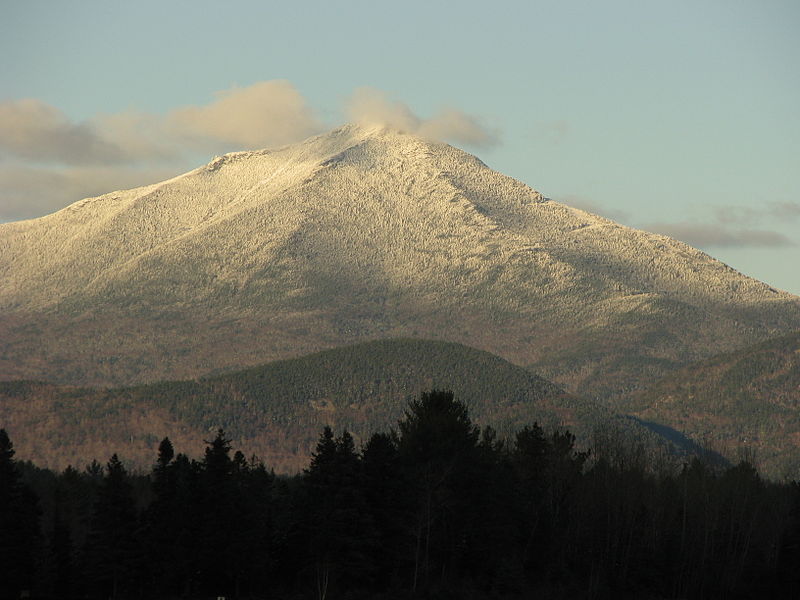
Joan Beebe shares some poetry where she’s amazed at vast alpine vistas and amused by squeaky household objects. She relates a young-adult vacation experience in upstate New York’s Adirondack Mountains with nostalgia for the adventure and the time with her friends in a spectacular area. Tony Longshanks LeTigre also brings us a faded memory of an old abandoned Victorian house in San Francisco where he stayed for a time. As with Joan Beebe’s reflections, but even more poetic and less literal, the facts of the past experience mix here with sentiment and wonder and we speculate along with him about what was real and what was a dream.
Peter Streitz shows through grotesquely tragic imagery the violence that can occur when insecure humans seek to surmount their own internal weaknesses by attempting to physically dominate and deny their natural connection to other species. Christopher Bernard, in his poetic prayer to Mother Earth inspired by Pope Francis’ words on the environment, reminds us that we are part of a larger world and that we can and should give back and respect and care for our planet as she has nourished us.
Ann Tinkham also looks at the destructive and seemingly impersonal power of nature in her short story “Afraid of the Rain,” where a young wife and mother risks her safety to salvage items left behind after the family evacuates the property during a flood. The piece becomes a meditation on what we keep and what we let go and how much risk we take to preserve the fragile and the beautiful.
Tinkham also invites us to consider the nature of courage. Who is the hero of her story, the wife who does not give up until she recovers what she most loves, or the husband who cares for their baby daughter in the meantime and focuses on building a new future?
Other contributions also probe how we become heroic, how we can survive the vastness and wildness of nature. We are part of the natural order, even if small individually compared to the galaxies and mountains. Ryan Hodge, in his monthly Play/Write column on video games, looks at how game creators develop archetypal superhero characters and what traits inspire players and involve them in the games. Hodge posits that often the most memorable heroes and heroines aren’t omnipotent within the fictional universe but develop their strength through hard work and perseverance and sometimes through a desire to overcome a personal failure or regret.
Michael Robinson writes of impersonal institutions: jail and the mental hospital. These confining images are placed alongside images of life: motherhood, home, and childhood. We see the inhumanity and degradation all the more when compared to the gentleness and humanity of the speaker’s family and early life, and wonder at the fortitude some people have to be able to survive such experiences. Strong families and communities can help people develop that resilience, which can be considered a form of heroism.
Siraj Sabuke and Laura Kaminski’s joint poetic sequence also honors courage and endurance. The two writers use images of moonlight illuminating other objects and parents giving life to children to show the power of poets who use their voices to bring others’ concerns and ideas to light.
Bea Garth’s poetry describes romantic love through images of motion and growth in nature. The shape of the words on the page reflects the subject matter of her poems, or at least the energy and direction of the speaker’s thoughts and feelings. Garth’s final piece shows a writer whose work has become a part of his character even when he has moved away from the stereotypical ‘poetry scene’ of San Francisco’s North Beach. His art comes from a connection to something outside his ego and conscious mind, even if only a dedication to articulating the musings of his subconscious.
Our final piece also offers reasons why people write, reasons grounded in a connection to the broader universe outside the writer. Dave Douglas, in a highly structured, intellectual and formal piece, rejoices in the adventure of following the imagination.
As editors and contributors, we hope that these pieces will pull you out of yourselves as you read and inspire creativity, wonder at the power of the imagination, and respect and empathy for the creators.
Whiteface Mountain in the Adirondacks from Lake Placid Airport. Public domain from Wikipedia entry on the Adirondack Mountains.
******************************************************************************************************
Also, our colleague in Portugal, poet and software developer Rui Carvalho, hosts a poetry contest on his blog and invites all writers to participate. Our magazine staff will provide editorial expertise to judge this competition and provide free writing coaching to the runners-up.
International Literary Contest: Poems and Tales for Nature 2015
Competition Adjudicator: Rui M. Carvalho
Prize-giving will be by the end of October 2015 using the web and the website where the results will be displayed.
No entry fee and Rui offers his first book of poetry, Tales for Love, to all who enter the contest.
For further details, rules & entry form visit http://talesforlove.blogs.sapo.pt