
Another year has come and gone. I pray everyone will be blessed through the New Year. I hope everyone’s holiday has been filled with love, laughter and blessings. What a year it has been for our community of book reviewers! I have reviewed and loved many books. I loved Matteo Foschi’s Mordraud One and Two and Adina Sara’s Blind Shady Bend and Rea Nolan Martin’s The Anesthesia Game just to name a few. What a special blessing and privilege it is to be able to read and review all the books we do. I do so hope that each and every one of the reviews helps others to decide to read the books that we recommend. I hope that this upcoming New Year will bring more exciting books to read and get lost in with our imaginations. Happy New Year everyone!!
Ryan Hodge’s Play/Write: Pokemon and Coming of Age Stories
-Ryan J. Hodge
For someone who enjoys a great story, is there anything better than a narrative that engages you from the very start? Imagine a world so rich you can almost smell the scents in the air, a delivery so clever it forces you to think in a way you never thought you would. I’m Ryan J. Hodge, author, and I’d like to talk to you about…Video Games.
Yes, Video Games. Those series of ‘bloops’ and blinking lights that –at least a while ago- society had seemed to convince itself had no redeeming qualities whatsoever. In this article series, I’m going to discuss how Donkey Kong, Grand Theft Auto, Call of Duty and even Candy Crush can change the way we tell stories forever.
What Pokémon Teaches Us About Coming of Age Stories
‘Coming of Age’ or ‘The Rite of Passage’ is a staple in literature. Some of the most successful literary franchises have centered around a neophyte being thrust into a world that is equal parts incredible and terrifying. From Treasure Island to Harry Potter, there is a quintessential and visceral connection with the audience to be exploited with plot structures that amount to little more than just explaining how the ‘world’ works.
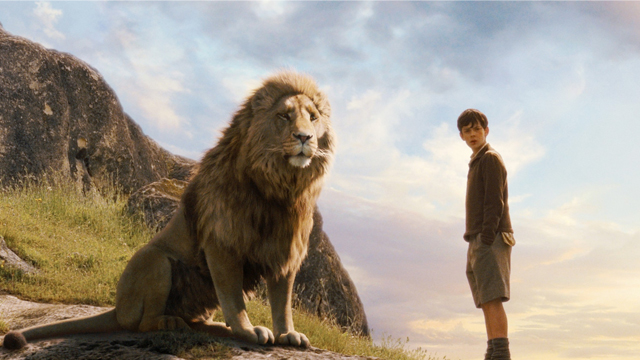
A lion! Thank God! Maybe the wolves will leave me alone now.
This genre, typically, is associated with teens and ‘young adults’, who (while perhaps not facing trials quite so fantastic) are learning in parallel with the characters how their own world works. Such stories allow an escape from the mundane daily routines of suburban living and imagine what it would be like to grow up in a place altogether more exciting.
It is little wonder, then, why Pokemon exploded in the mid-nineties and still commands a strong and loyal following even today. While, on the surface, Pokemon is a silly little game about battling monsters; its stories are coming of age tales at their core. In this series; players must explore, study, and experiment in order to reach the objective of becoming a ‘Pokemon Master’.
The first element we’ll address is exploration. One of the hallmarks of youth is discovering all that the world has to offer, including the dangerous and forbidden. The call to adventure, even ill-advised adventure, is a strong one. Take The Hobbit (J. R. R. Tolkien, 1937) for instance. The weakest element of the plot is, perhaps, the fact that Bilbo Baggins simply allows himself to become a part of the dwarves’ adventure despite having no desire or qualifications that would predicate his inclusion. Yet, despite the many hardships that will befall him; not only he, but the audience, are determined to see the journey through. Conceivably, Mr. Baggins could have turned around and gone home at any point. Perhaps, in fact, that would have been the rational thing to do. But he simply must see what lies in wait at Mirkwood. He simply must see a dragon for himself.
Poetry from Christopher Bernard

Photo by Miles
Miracle in Red Bluff
By Christopher Bernard
“It’s Christmas eve,” the burly motel owner said.
“Nobody’s got any rooms.” “Damn all,” said the man.
“It’s all right, Jay,” the wife, hardly a teen, replied,
looking at the owner. “Oh!” He, suddenly sheepish,
saw the problem: nine-months due,
the little body was swollen, a perfect sphere
at her tummy. “Well,” he added reluctantly,
“we’re not supposed to, but there is a corner
we sometimes rent in the garage. It’s not legal,
you know, so we have to charge more…” “More?
Man! For a garage?” sputtered the man.
“We get to sleep on cement?” “No, there’s a cot—
two cots, and blankets, a table, a utility sink,
and a ceiling light.” It was snowing outside.
Jay cursed. “We’ll take it,” he grumbled. “Come on, Myra.”
Myra exhaled. An hour later they were settled
in a cold room half hidden behind a row of cars
under a naked bulb. “If we weren’t black,”
said Jay, “he’d’ve let us sleep in the lobby,
the white bast—!” “Jay, don’t,” said Myra.
“We’ve got a roof for the night.” She heard the wind
blowing the snow down from Shasta’s peak.
“Be thankful, Jay.” “I’ll be
damned first,” he retorted. He pulled a cot
away from the wall. Myra lay very quiet on the other.
“You all right?” he asked. Myra had a scared look
on her face where she lay near the wall. She tried to
pull herself up. “Jay … Jay … oh … Jay ….
I think it … I think it’s …” “Holy shit … Not here, not now…!”
A clutch of teens were passing a joint behind Sal’s.
The snow was still falling, though lighter. “Hey man,
this stuff’s so strong, I can see Santa coming
over Redding.” “That’s no Santa, that’s a drone,
and he’s comin’ after yo’ tight ass.” The others giggled.
Suddenly someone appeared they didn’t know.
He wore a dark raincoat, which didn’t make much sense.
The boys stopped and stared. “It’s a narc,” one whispered.
“Or some transgender weirdo,” another sneered.
It had the figure of a man but a woman’s face,
it spoke softly but locked their eyes with its own:
each thought the figure looked at him alone.
“None of the above,” it smiled. The boys
were suddenly frightened. “Don’t be afraid. I have news.
Across the alley there’s something you should see.”
It pointed to a garage where a light was burning.
“Hey, it’s late, man. And it’s Christmas. I gotta get home.”
“I bring glad tidings. Go. Look. What have you to lose?”
He looked benignantly at them. “Peace to you.” Then he
seemed to disappear. They looked at each other.
“Man, that stuff is strong,” one of them said.
But they went anyway to the garage. A black man and woman
looked up from a little black baby in a towel and a blanket,
and lying in the sink. From a hole in the wall came a sound
of pigeons, their heads looking down. A stray dog
sat nearby, a cat was curled up on the table,
staring silently at the infant,
who lay watching the boys curiously,
in the unfocused way babies have;
seeming to be wondering where he was.
The boys, still high, fell to their knees.
Sometime after, there was a knock,
and three old men, one with a beard,
one with a funny hat, the third with his fingers
covered with shining rings, came in. “I told you
I was right,” said the one with the hat. “He’s the one.”
“How can you tell?” But the first was silent. The ringed
man nodded deeply to the mother. “Please excuse us.
We’ve come a long way to get here.” Myra smiled shyly,
fatigued from the labor, uncertain, yet taking
these strange happenings as they came. The man removed his rings
and placed them near the baby, their brightness
glimmering like his eyes. “Why are you ….?” she asked,
astonished. The man shook his head and smiled.
The two other men also left small offerings—
the most precious items, it seemed, that they possessed:
a vial of cheap perfume, a handful of costume jewelry.
“We cannot stay,” they said, then with a deep
bow to the child, they left. The man with the beard
said to the bewildered parents, “You do not know
who he is? It isn’t for me to say … But you
will know,” then departed.
“What are they
talking about?” said Jay. Myra wearily
shook her head, then took her newborn baby
who was at last beginning to cry, and opening her blouse,
let him feed greedily. Jay went outside—
the snow had stopped, the sky was deep, empty and clear—
and he looked up. The biggest star he had ever seen—
brighter than the moon on the brightest night of the year—
hung like a beacon, brilliant, straight and motionless, above him.
_____
Christopher Bernard is a novelist, poet, editor and journalist living in San Francisco. His books include the novel A Spy in the Ruins; a book of stories, In the American Night; and The Rose Shipwreck: Poems and Photographs. His novel Voyage to a Phantom City and a new collection of short fiction, Dangerous Stories for Boys, are scheduled for publication in 2015. He is co-editor of Caveat Lector (www.caveat-lector.org) and a regular contributor to Synchronized Chaos Magazine.
Poetry from Joan Beebe
NEW YEAR’S CELEBRATION
A New Year is something most
People look forward to in anticipation.
The old year for many of us was filled with
Worry and perhaps health problems.
Fresh and new is the perception in our minds.
So a celebration of “on with the new” and “off with the old”
With parties, music, hats, dancing, streamers and watching
The huge and lighted ball, in New York City’s Times Square,
slowly move down from
It’s height to the bottom which signals the New Year.
It is a happy celebration because we really have
No idea of what the New Year holds for us.
We all wish Peace and Health in the coming year.
Our hopes are held high for a world of safety,
Contentment and harmony between nations.
And our heads are held high as we move forward
Into the New Year. We see a light into the future
And our dreams have a purpose to be fulfilled.
Music video from Bink$ Win$ton
BINK$ WIN$TON is a new hip hop artist originally from Oakland, CA. His independent brand, Dolla Bill Entertainment, is also part of a larger media network of artists and producers (Cali House).
To date, BINK$ has released a debut EP (MANish), has been featured in MURDER DOG MAGAZINE’S 20th ANNIVERSARY EDITION (2014), placed as a TOP 5 finalist in Jack Daniels Honey/Atlantic Records sponsored Jack’N For Beats competition (2014), and has been featured on various projects and mixtapes from other underground artists, and djs.
Nickels Dimes & Dubs is the promo single from BINK$‘ upcoming EP “StartUp Money.” More of BINK$ WIN$TON’S music, videos, and info can be found online through social media, iTunes, youtube, and hip hop blogs. Below is the link to his latest video:
Nickels Dimes & Dubs – http://youtu.be/QMtg3nyE9Xs
Poetry from Laura Kaminski
Loaves and Fishes
At home, the cabinet was almost bare
I didn’t think we had enough to share:
one loaf of unsliced bread made with palm oil—
orange-yellow, the shade of marigolds—
and one small tin of Geisha mackerel.
My parents gave all their money away
to others who needed it more than they;
they didn’t keep enough to pay the price
at market for a chicken, yams, and rice—
at ten, I disapproved, thought them unwise.
We gathered bitter leaves of sweet roselle
to heat up with the bony mackerel—
we used a spatula to scrape the tin.
My father said grace before we began:
“For these and all our many blessings, thanks.”
The simple stew surprised me with its taste—
it was delicious—and although I ate
all I could hold, used bread to sop the plate,
when we were done, the cook-pot still held more;
there was enough to store as leftovers.
NB: This poem was first published in the chapbook Returning to Awe (Balkan Press, 2014).
====
Failed Conversation with the Owner of the Rig
There is not enough water—
people are desperate with thirst.
They dig holes in the dried
surface of the river-bed, place
small plates and shallow
bowls into the mud beneath,
gather every bit of moisture
they are able, every drop
that seeps over the lip and leaks
into the vessel.
It does not help, it does not
quench their thirst to know
that down the road, less than
seven miles from where they
wait for water, there is a compound
with a gate, a deep well drilled
with equipment larger than
the handmade picks and shovels
they have at their disposal.
There is water plenty
behind that six-foot fence,
not just access to enough, but
madness-inducing excess,
so much that children raised
within that compound
have a pool, are given lessons
how to swim.
But isn’t that reasonable? He
tries to justify the lessons to me.
If they can afford to fill a pool
and teach their kids to swim,
then let them. They are parents.
Isn’t it their responsibility to give
their children any education
that makes them more self-
sufficient, might protect them
in the future, might prevent
their accidental death by
drowning?
But what of other parents
beyond the fence? I ask—
What of their children, the ones
who are dying right now
of dehydration? Wouldn’t it be
better to share the water, help
them, use that huge equipment,
dig more wells?
And then the answer comes: It’s
not my responsibility, it’s not
my problem. It’s expensive to run
that equipment, you’re not going
to see me spend that much of my
money digging wells for people
who aren’t family.
My words have failed, my
knowledge—useless. I cannot
bring water. I cannot get us what
we need, even though I see enough
justice just beneath the surface
that everyone could drink.
=====
Poetry from John Grey
SAVE ME
Please take care of me, Anna.
There’s a storm on the horizon,
as wild, as swirling, as primal as a Turner painting
Thunder’s a certainty. Lightning more so.
It could bring rain or hail or even snow.
My current status is that of abject fear.
I can’t just sit here, passing off the world
with my most blessed indifference.
when it’s about to spin in some
uncontrollable vortex, turn upside down.
bluster tempestuously, burn and flood,
shatter or smother.
I’ll be King Lear before all this is over,
out in the midst of it, howling madly.
Look, my face is pale, my brow, my cheeks,
crunch my eyes together.
The blanket across my knees shakes.
My knees thump like braking train-cars.
And all you can do is ask, “Is something wrong?”
When the storm’s passed, then I’ll know.