Poetry from Jenny Williamson

Mostly Water

From a womb of seawater we glide to earth

On a river of salt and blood. In life

A river of salt and blood encircles our hearts

And the moon speaks to our bones.

Our bones pass from the earth and are gone, but the water stays.

When I die let me climb the veins of an oak tree

From the veins of an oak tree let me pass into air, into cloud

Let me fall over cities and towns

Over rivers and streams let me thrash in the rapids

In a clear glass bottle let me cultivate stillness

Let the eye of the sun find a clear glass bottle

Let it turn me into a pillar of light.

Jenny Williamson’s writing has been featured in 24Mag, Wild River Review, Poetic Voices, and in Philadelphia’s Writing Aloud series.  She has also received recognition from the Academy of American Poets and NPR’s Young Poets Series.

Poetry from Kenyatta Jean-Paul Garcia

Leapt

Two teardrops floating down the river”

Whisperin’ Bill Anderson

Having no need for discussion

but enjoying a conversation

God told Lucifer

about plans for Adam

As cheeks puffed up

Lucifer leapt

Went down chasing nostalgia

before it

-they-

hit the river

to be lost

forever.

Tears fall faster than angels do

and as the dawn breeze cut across

the land and Adam arose,

the garden found

water for thirsty seed.

Lucifer, in luck,

caught a couple

straggling drops

before Eden did

Holding tight to them

all heat gone

from hands

crystallized,

tucked them

down below

in mimicry of man.

The tree grew

and shape was changed momentarily

but most of all,

the imitation of the envied

remained

As further the spiral was assembled

As first Cain and Abel

then the others arrived

Until even the inner sanctum

of melancholy was invaded,

traversed,

and Dante caught glimpse

of much treasured tears

icy

below the waist

so maybe God

wouldn’t know

the difference between hate and hiding

So maybe the commonality

of want and wait

could be kept secret.

Should Want For

There goes again

the pass over

Where’s all this time to waste

as again given reprieve

for

from

what?

Shame spins webs

honest

and devoid

of ancient tricksters

In the silk of spidery ropes

of arachnid

highways

are words

threaded

Are spells to be cast

and curses broken

Should want for touch

be disobeyed

if missing, the gone-away

could keep back hands

to bring the fool further along the journey.

Together

Together remaining where occurrences can

undisturbed by air

Thought unexpressed for fear of suffocation

Fingers crossed behind back

differ from those brought into view

If on a winter’s night

travelers come upon

coral wound through

commercial, residential

districts

symbiosis will be best understood

Swimming by — of arms interlocked

against

quieting breeze.

Ideas away from exposure

may be preserved

but age becomes

time lost.

The squid’s ink

has been left runny

alongside where

pedestrians walk.

Following is a chore.

Form changes

Together maps –

isolates.


Kenyatta Jean-Paul Garcia is the editor of ALTPOETICS and author of Yawning on the Sands, This Sentimental Education and What Do the Evergreens Know of Pining. After growing up in Brooklyn, NY, upstate has become home and is where the past few years were spent cooking and getting a degree in linguistics. More work can found at kjpgarcia.wordpress.com.

Synchronized Chaos March 2014 – Processing Change

The only constant is change, continuing change, inevitable change, that is the dominant factor in society today. No sensible decision can be made any longer without taking into account not only the world as it is, but the world as it will be.
— Isaac Asimov

March 2014’s issue of Synchronized Chaos tackles change, in different aspects and forms.

As this month’s writers remind us, not all changes are positive, voluntary, or desired.

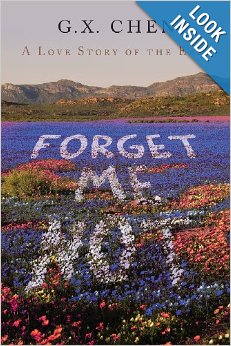
G.X. Chen’s novel Forget Me Not: A Love Story Of The East, reviewed here by Fran Laniado, illustrates the turmoil and repression of the Chinese Cultural Revolution. Her novel poses the question of how and whether we can preserve our relationships and sense of self, as well as our lives, in the face of institutions determined to alter and redefine us.

The recent book and movie The Monuments Men, as reviewed by Bruce Roberts, showcases the work of a special crew tasked during World War II with the retrieval and protection of historical artifacts Hitler intended to destroy. National governments deemed culture important enough to risk lives to save, on behalf of future generations. Or because those instances of beauty, decency, and creative thought reminded them of what they were fighting to preserve.

Christopher Bernard points to the magnitude of the destruction greed and materialism can wreak on the planet and its inhabitants. In his poem, no species survives the violence we inflict, to relieve not our anger, but our boredom. This social critique itself becomes the means through which anything can be preserved.

In a much less serious vein, Kimi Little’s short story “The Three Billy Pigs Gruff” presents clever animals who outwit the larger forces threatening them, as ‘personified’ by a big, bad wolf. The pigs wish to improve their lives by building larger houses across the river, and so work together to be able to make this change.

Anita Cox’ sensual novel The Beginning, reviewed here by Sarah Melton, depicts a young woman figuring herself out after a divorce. No one would compare her to a genocide or eco-cide survivor, but she, also, takes action and makes choices when life confronts her with unplanned circumstances.

Tunisian writer Ali Znaidi offers up a study in contrasts, presenting a lively desert next to a depiction of nothingness. Unlike the common view of the desert as barren, he portrays a landscape full of all sorts of life, perhaps stronger due to their struggle to survive in the harsh environment.

Znaidi’s final poem reminds readers that people often carry within them a multitude of contradictions. When we, ourselves, are complex, it seems improbable to expect consistency and stability from the external environment.

Tony Longshanks le Tigre’s poem relates a childhood experience of visiting a natural history museum, and the wonder engendered by fossils and remnants of extinct animals. Life, in some form or another, has survived and adapted through so many cataclysmic events, so perhaps strength and resilience are part of our natures.

Ryan Hodge’s science fiction book Wounded Worlds: Nihil Novum, reviewed by Elizabeth Hughes in her monthly Book Periscope column, explores the various responses societies and individuals may have to the clash of interplanetary civilizations. Some choose to go to war against invading aliens, others simply become defeated, while others seek to adapt.

Changing oneself, or becoming flexible, in the face of new circumstances does not have to represent surrender or weakness. At times, the strategy may empower people to survive while preserving as much as possible of what they most value.

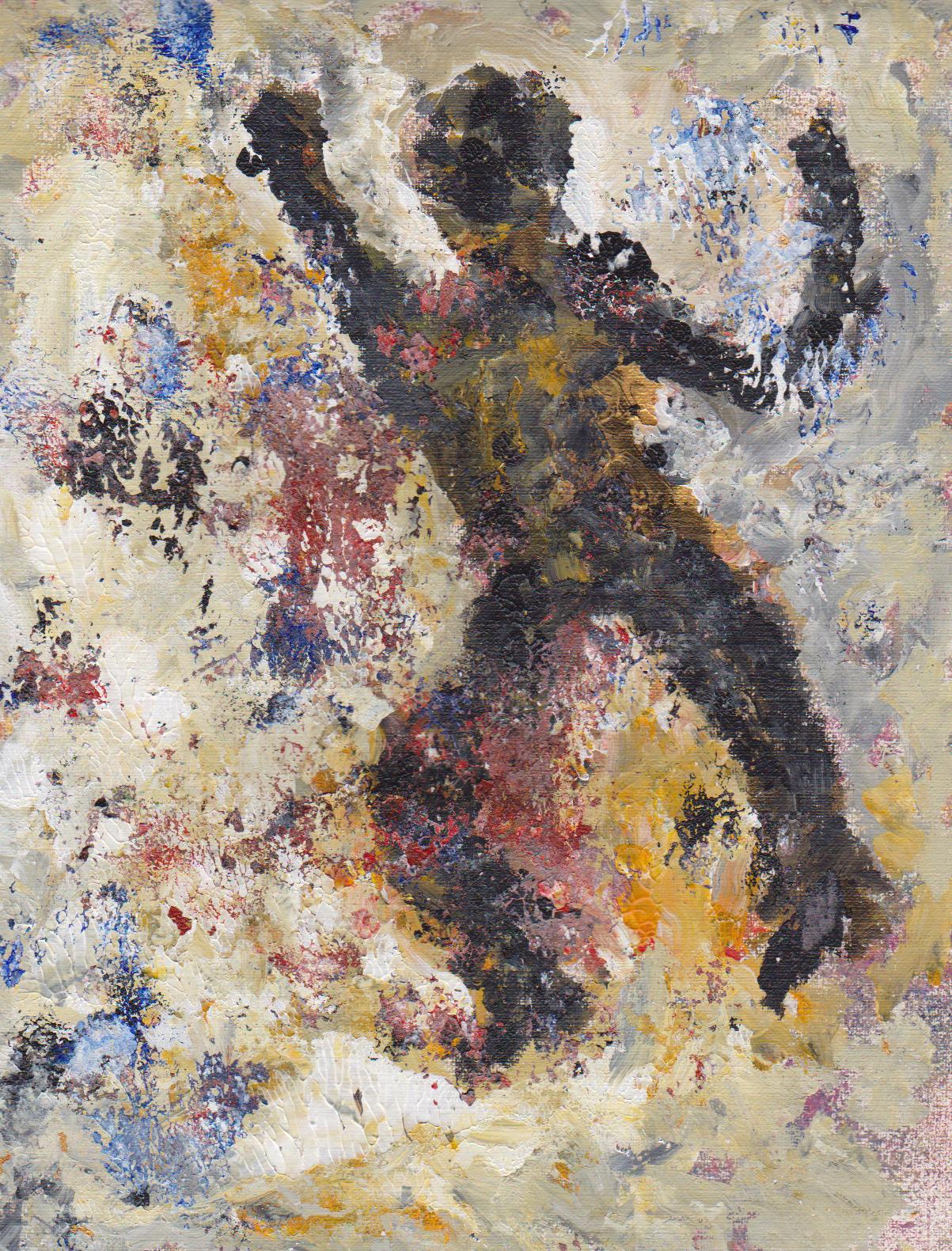
Walter Jack Savage contributes some colorful, complex artwork to this confluence of ruminations on revolution, survival, preservation and evolution.

While some changes are unpleasant and forced on us, others can be launching pads for creativity and new hope. We wish you a pleasant read through the thought and imagination reflected in this month’s issue.

Announcement: For those in or near the San Francisco Bay Area, our magazine’s spring reception will take place the evening of Thursday, March 6th, 6-9 pm at SF’s Cafe Boheme, 3318 24th st. in the Mission District. All welcome, please feel free to bring writing to share, books to sell, artwork to show off, or requests for partners, coauthors, volunteers, editors etc. We will hear book excerpts from guest readers Charles Ayres (Impossibly Glamorous), Joe Klingler (Mash Up and RATS), and Ryan Hodge (Wounded Worlds) as well as learn about how to virtually mentor writers in Afghanistan, from a guest speaker from the Afghan Women’s Writing Project (http://www.awwproject.org)

At First, No One ListenedWalter Savage’s At First, No One Listened

Poetry from Christopher Bernard


The Disappearance of the Flies

By Christopher Bernard


      “Did I ever tell why I no longer call myself a humanist?”
                          —Overheard at a climatology conference 

So, the word’s finally out:


I am the world’s Caesar,
and you are my Christians.


Not that I hate you absolutely—

on the contrary, for the most part

I enjoy you;


those of you I cannot eat

or flog into subservience,

to help me, or amuse me, or decorate my

upscale live-work high-end design space

now, or by no later than the end of next quarter,


are just in the way,


as I thrust ahead


to glory, to a sweet, psychotic power,

and a suffocating wealth

built on the dependable human delight

in the enchanted moment of acquisition.


I’ve got you,


I’ve got the world.


It is no longer God’s or nature’s;


it is mine,


I own you,


I who hate to have and love to get.


There was once a despot

whose footsteps bloodied his time.

After he had conquered the world,

bored with his possessions,

he decided to destroy them:

slaughtered his slaves, his women, his sycophants,

sent his soldiers to the ends of his empire

to pillage and sack it, out of boredom and rage

that he had no more worlds to conquer.

He burned his own palaces to the ground.


In a crazy drunk one night,

he broke his neck in a ditch.

The peasants crept up to his small, pale body,

the body that had conquered the world,

and watched the flies flickering above it.


Today there were no peasants.

There were no flies.

____


Christopher Bernard is a poet, novelist, essayist, photographer and filmmaker living in San Francisco. He is author of the novel A Spy in the Ruins,The Rose Shipwreck: Poems and Photographs, and a collection of stories, In the American Night. He is also co-editor of the webzine Caveat Lector. 

Fran Laniado reviews G.X. Chen’s Forget Me Not: A Love Story of the East

Fran Laniado

Forget Me Not by Grace Chen

forgetmenotjpeg

 I have to admit to knowing very little about twentieth-century Chinese history . Before I read G.X.Chen’s novel Forget Me Not, set in the second half of the twentieth century (during and after China’s Cultural Revolution ) I knew even less. Am I more knowledgeable about it now? Perhaps a bit. But the knowledge is more on an individual level, than on a national or global scale. Forget Me Not deals with the political events of the time, as seen though the eyes of its main character, Li Ling and his friends.

The novel opens in California, where the adult Li Ling seems to be living comfortably with his wife. However, a letter from his native China, distresses him with news that his childhood friend, and first love has died. His wife sees him crying, and he tells her the story that he never told her before. The narrative moves to back in time to Hong Kong, where a nine-year old Li Ling is living with his grandparents, while his parents are working in Shanghai. However, with the Cultural Revolution taking hold, it looks suspicious for Li Ling’s parents to have a son living in Hong Kong, which is not considered a part of China proper. So Li Ling leaves the only home that he can remember, and his loving grandparents behind, and travels to Shanghai to live with parents, who are little more than strangers to him. Fortunately, he quickly comes to love them, and makes several important friends in Shanghai. One is the beautiful Lily Zhang- his classmate and protector in his early days at school. The other is Big Head (yes, that is a nickname, but it is one used throughout the book!) whom he meets at violin lessons.

Lily’s father is a history professor at Fudan University in Shanghai, and is considered an enemy of the new regime, based on some historical books and articles that he’d written during his career. Li Ling and Big Head come up with a daring plan to help Lily break her father out of prison, and smuggle him out of Shanghai to the countryside. Their plan is successful, at least, for a while, but it separates Li Ling from his beloved Lily. He’s soon separated from Big Head as well, when Big Head is sent to the countryside to do farm work, while Li Ling is permitted to remain in Shanghai since he is his parent’s only child. Looking for companionship, Li Ling joins the Communist Youth League, an action that gets him into more trouble than he ever anticipated. With Mao’s death, more changes come to China, and Li Ling is able to attend university, where as coincidence would have it, he is reunited with Lily. After some hesitation on her part, the two resume their friendship, Now, both in their twenties, it quickly becomes romantic.

Li Ling narrates his daily life under the various regime changes and his adjustment to each. What he doesn’t experience first-hand, his friends recount. But while the uninformed reader can understand the experiences of the individual, the novel never really goes into the reason for these experiences on a larger level. For example, why is it believed that school children need “re-education”? Why is Big Head sent to do farm work? Why is Li Ling allowed to stay in the city because he is an only child? Why are jobs assigned arbitrarily for that matter, rather than based on skill? I might have appreciated more information regarding some of these questions.

However, it is both fascinating and horrifying to hear about some of the things that these characters endure. Some of it almost defies belief! But as they say, “truth is stranger than fiction!” When Li Ling’s father, a surgeon, loses his job as a medical doctor, he is forced to be a hospital janitor. I felt bad for him. It also seemed like a tremendous waste of a valuable skill. When we learn that surgery is now being performed by Red Guards who “practice” their new skills on patients, I cringed!

People living under these circumstances are forced to take desperate actions at times, in order to survive. Li Ling experiences the time period from a somewhat sheltered vantage point. He faces danger, but nowhere near the terror experienced by his friends, who have to fight to survive. Both Big Head and Lily face the possibility of death from starvation at some point. During her time away from Li Ling, a starving, desperate Lily was forced to make a decision that will shape both of their futures. When they are reunited, she shelters him from this truth- for a time. Here the reader knows that something is wrong, but not what. While Li Ling dismisses Lily’s hesitation, the reader is waiting for the other shoe to drop. And it does. Eventually she becomes unable to keep her secret. It is a secret for which Li Ling resents her for at first, but comes to understand many years later.

Forget Me Not is a fairly short book at 246 pages. Yet it covers nearly thirty years of Chinese history from the point of view of several different characters. It also creates a love story in which the reader becomes invested. Li Ling is a fully drawn character with many strengths and many flaws. Lily is a harder character to know, but that is because we see her through Li Ling’s eyes. As much as he loves her, she always retains an air of mystery. Readers looking for a novel with the scope of an epic but without the length, need look no further than Forget Me Not. It transports the reader to a country of beauty and violence. Cultural values and traditions may be different from what is familiar, but the feelings of love, friendship, hurt, betrayal and hope that the characters experience should be very easy for western readers to understand and identify with.

Poetry from Ali Znaidi

A Desert Dream
Whenever I go to the desert I find myself
astounded by its depth and extension.
I have nothing to do but inhale its grandeur.
The more sand piled up on this waterless sea
the more desert creatures resist.
How wonderfully little creatures maintain
symbols of life!
What an astounding story of survival!
Little worms become jubilant when they find
prickly pears debris to feast on.
Birds peck the succulent stems of cacti,
& dig beneath searching for water springs.
All creatures are wrapped up in a quilt
made up of survival, dreams, & love for life.
Living in the desert is but a grand narrative
of intense dreams.
Life is beautiful when (your) dreams work well
in a vast place.

Nothingness
Nothingness is a gluttonous king disguised
in an octopus.
Nothing can satisfy his gluttony.
He always feasts on souls and cocoons them
in vicious circles of emptiness.
His only foe is Time. So, he disables the clocks
and devours the hands.
He is never satiated. He is very fat
in every direction.
Even when he eats a soul, he wants more & more.
He wants to grow inside souls.
He wants to show them around his darkness.
He likes the empty souls to dwell in his temple,
& devoutly worship him not as a king,
but as the God of Nihil.

Complexes Inside Us
Complexes are inside us all.
We are all but bags of complexes
put on a hump of a three-legged camel
whose legs are sinking into
the abysmal thick sand.
Our perception of straightness & linearity
is in fact demolished by that image of
the staggering camel w/ uneven gaits.
Our psyches are contaminated in one way
or another. Our psyches are not pure.
Our psyches are not singular.
They are plural, indeed.
They are not only present,
but past and future, too.
Our psyches go back and forth.
They are sometimes as crystal as pure water.
Other times, they are filthy gutters.
We are humans because our skins have pores.
We are humans because our psyches have holes.
We are humans because we have
a bag of complexes that burdens our backs,
& every morning we welcome a new day
searching for newer ways to hide that bag.

 Ali Znaidi (b.1977) lives in Redeyef, Tunisia where he teaches English. His work has appeared in Mad Swirl, Stride Magazine, Red Fez, BlazeVox, Otoliths, streetcake, & elsewhere. His debut poetry chapbook Experimental Ruminations was published in September 2012 by Fowlpox Press (Canada). From time to time he blogs at – aliznaidi.blogspot.com and tweets at @AliZnaidi.