Short fiction from Kimi Little

The Three Billy Pigs Gruff

by Kimi Little

Once upon a time there were three Billy Pigs Gruff – Ferdie- the youngest, Joe- the middle one, and Artie- the oldest. They all longed to build a house across the river in a lovely field. Unfortunately, there was Bob, a large, hungry troll, who lived under the bridge. The pigs packed up their supplies and hoped they would not be eaten when they crossed the river.

Fritz, the Big Bad Wolf, was looking for a snack, and saw the three pigs. He strolled over to them.

“Hello, my good pigs!” Fritz said. “Can I be of some help?”

The three pigs eyeballed him nervously.

Artie, the oldest Billy Pig Gruff, said, “No, thank you, sir, we’d prefer not to be eaten.”

Fritz laughed. “Of course I won’t eat you! That would be rude.”

“Hmmm,” said Artie, “No thanks, but thank you anyway.”

“I’ll just take a nap, instead,” said Fritz. The big bad wolf laid down under a large tree and pretended to fall asleep.

The pigs looked at him suspiciously and headed out to the river.

Ferdie, the youngest Billy Pig Gruff, wanted a house built out of straws. He stuffed his backpack with boxes of bendy straws and rolls of tape, and he trotted up to the bridge.

From under the bridge, up popped Bob the Troll.

“Who’s that walking across my bridge?”

“It’s I, Ferdie, the little Billy Pig Gruff.”

“Well, I’m going to eat you up!” said Bob.

“Oh no, I’m much too small to be tasty,” said Ferdie. “Wait for my older brother – he’s much tastier than I am.”

“Well, all right then,” said Bob the Troll, “off you go.”

Ferdie picked up his backpack and headed over the bridge.

Pretty soon, Joe, the second Billy Pig Gruff, was ready to go. He wanted to build a tree house. He rolled his little wheelie suitcase loaded with sticks, glitter glue, and door knobs, and he trotted up to the bridge.

From under the bridge, up popped Bob the troll.

“Who’s that walking across my bridge?” he asked.

“It’s I, Joe, the middle Billy Pig Gruff.”

“Well, I’m going to eat you up!” said Bob.

“Oh no!” said Joe. “My big brother is coming this way soon, and he is really delicious. I’d wait for him, if I were you.”

“Well, alright then,” said Bob the Troll, “off you go.”

Joe pulled his suitcase and headed over the bridge.

Artie, the eldest Billy Pig Gruff, was heading to the bridge next. He wanted a strong house, just in case the wolf came by. He loaded up his cart with bricks, cement and shiny new windows, and he trotted up to the bridge.

From under the bridge, up popped Bob the Troll.

“Who’s that walking across my bridge?” asked Bob.

“It’s I, Artie, the oldest Billy Pig Gruff.”

“Well, I’m going to eat you up!” said Bob.

“Oh no, you wouldn’t want to do that,” said Artie. “There’s a very juicy wolf following us. If you ate him, you would have a tasty dinner and a lovely pair of fuzzy mittens for winter!”

“Well, alright then,” said Bob the Troll, “off you go.”

Artie pushed his cart and headed over the bridge.

Pretty soon, the Big Bad Wolf snuck up to the bridge.

From under the bridge, up popped Bob the Troll.

“Who’s that walking across my bridge?” asked Bob.

“It is I, Fritz, the Big Bad Wolf.”

“Well, I’m going to eat you up!” roared Bob.

“Oh no you’re not!” said Fritz. “I’ll huff, and I’ll puff, and I’ll blow you into the river!”

Fritz huffed, and he puffed, and…Bob ate him.

So the Three Billy Pigs Gruff built their houses and were very happy.

Bob the Troll had a lovely set of fuzzy mittens for winter.
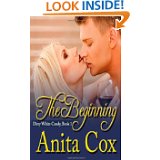
Sarah Melton reviews Anita Cox’ novel The Beginning

Book Review – The Beginning by Anita Cox

  • Review by Sarah Melton

**This is a review of an adult/erotica book. Review itself is PG-13 but the book mentioned is graphic, so make an informed choice about reading.**

anitabeginningcoverjpg

The Beginning” is a short and spicy erotica novel whose title reveals a lot about the unfolding events. It begins, as many stories do, at the end of a horrible relationship, and Candy, the novel’s protagonist, is left like a deer in the headlights of life, from spending the whole of her adult life in a sheltered and uncompromising marriage. It is one that was doomed to fail, as her husband’s willingness to reciprocate any affection towards her seems to be as rare as a troupe of tap dancing unicorns. She is left frustrated and alone, rejected and lost…but wait! There is hope for this poor woman, in the form of a vivacious and well-meaning best friend-a friend who is willing to tell her the hard truth, which is that she is in need of some serious boundary-stretching…as well as a really good sex therapist.

It doesn’t take much coaxing on behalf of her friend, her therapist, and a few other key characters in the story to bring out the “naughty” (or is it just liberated?) woman that Candy has wanted to be all along. The sex scenes are done well, in a simple and direct style that doesn’t overpower the erotica with unnecessary flowery prose or Harlequin-romance-era romanticism. This story isn’t about romance, after all, but about freeing inhibitions, one giant step after another. In between the erotic adventures, Candy manages to achieve other small victories in her life. Her confidence increases, as does her openness with others. She learns to be more direct with her feelings, and to take control of a situation (like a co-worker taking advantage of her) rather than just accepting indignities as a part of the “way things are”. It also touches briefly on the potential complications of sexual explorations, such as jealousy from partners in open relationships, the fine line of coaxing versus coercion when exploring new territory with others, or the labels that people, especially other women, seem to put on themselves when it comes to their own sensuality. She wonders on one page if she’s been a “prude” as her friends insist she is, and yet in just a mere few pages later the word “whore” becomes a label she fears to be stuck with.

Since this book is the beginning of an ongoing series, I would like to see her in future novels eventually learn to come to terms with those labels and to find more security in who she is, despite the labels that others might try to pin on her. I’d also like to see more of an emotional intimacy gained with her new or current partners, perhaps sharing the kind of mindset she was in to carry on such a loveless marriage with her ex for so long, and why so much has changed since then. Since this book is just “The Beginning”, however, it’s a pretty good place to start. I’d recommend it to newcomers to erotica in general as well, since the scenes are pretty mild in comparison to some of the more hardcore novels out there.

This book will be available online, starting on 2/17/14 through Liquid Silver Books, at: http://www.lsbooks.com/


Bruce Roberts reviews the Monuments Men (book and movie)

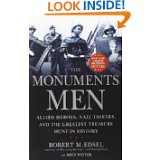
Monuments Men

 monumentsmenjpeg

Fidel Castro, long-time dictator of Cuba, once said that he really wanted to be a baseball player. That if only he could have mastered throwing a curve ball, his life story might have been very different.

Similarly, Adolf Hitler, as a young man, wanted to be an artist. Had he not been rejected by the purportedly Jewish board of a prestigious Viennese art school, his life too, and thus the world’s, might have been very different.

Monuments Men, both the movie and the book, concerns Hitler’s later notorious life as Der Führer, when besides attempting to conquer the world, he also maintained his affinity for art by engineering one of the greatest cultural thefts in history.

The movie, starring George Clooney and Cate Blanchett, gets the essential story out to the public. With about two hours time, and a little popcorn, moviegoers find that Hitler was obsessed with collecting the world’s art. All major museums were looted, and boxcar after boxcar, truck after truck left Poland and Paris and Brussels and Amsterdam crammed with the greatest paintings and sculptures mankind could create. In addition, France especially, was home to many private collectors who, because they were Jewish, became prime targets for Hitler’s henchmen.

The goal here was to be the world’s greatest art museum, built post-war in Linz, Austria, Hitler’s hometown. For this future fantasy, the Nazis took the world’s greatest art, which was so carefully preserved for years in museums, and hid it, stored it, crammed it away in mineshafts throughout the conquered territory.

The Monuments Men were the British and American artists, architects, art scholars, and museum curators assigned to recover these masterpieces in the middle of all-out bombing, savage back-and-forth fighting, and the withering destruction of war. Older than the average soldier, they left good jobs and their families behind, risking their lives to convince soldiers trying to survive that extra effort must be made to find and preserve these priceless symbols of European culture. Needless to say, they weren’t always well-received.

As in so many instances of book versions versus movie versions, the movie comes off second to the book. “Monuments Men” the movie, while commendably getting the story out, just scratches the surface of the book’s reality. All the names have been changed, for example, thus keeping the real heroes out of the public’s consciousness. There are many dramatic moments in the movie, but they are nearly all Hollywood inventions, and not in the book. Plus some of the main actors in the movie are comedians—Bill Murray and John Goodman, for example–which detracts from the seriousness of the tale.

For in-depth intensity, read the book, The Monuments Men, by Robert Edsel and Bret Witter. Here, for example, readers not only know the real names of the heroes, but they know them in depth through excerpts from their letters to their families. Readers learn the sacrifices they made in this endeavor, in addition to how their post-war lives turned out.

The movie gives viewers sad glimpses of the concentration camps. But in the book, the horrors of the camps are so strong, that even General Patton, the toughest of the tough, turns aside and throws up at the human suffering they encountered.

The movie takes viewers down into a mine to discover Hitler’s underground treasure houses. The book develops the detective work needed merely to figure out where the art is concealed, and then gives a much more visceral trip into mine after mine, risking flooding in some, cave-ins in others, and even devastating explosions in still others as Hitler, knowing defeat was near, ordered total destruction of anything the allies might value.

Knowing the magnitude of Hitler’s obsession in looting the symbols of mankind’s artistic achievement is important. Knowing the courage and determination of these unsung heroes, “The Monuments Men” is, in the face of such insane widespread conquest, inspiring.

Short on time? See the movie. Want to know more? Read the book.


Bruce Roberts, 2014

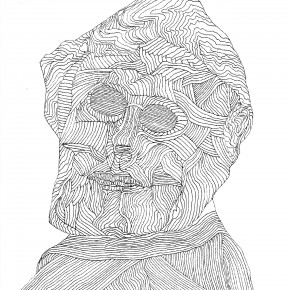
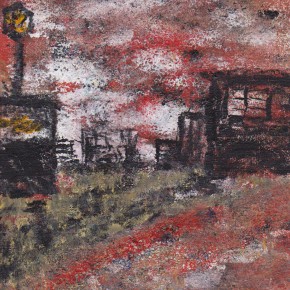
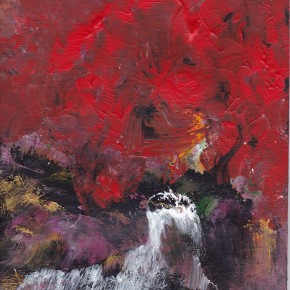
Artwork from Walter Savage


From the left: Adrian’s Friend, At First, No One Listened, Bitter Days and Old Corral at New River

 W. Jack Savage is the author of six books- three novels, two short story collections and the autobiographical The High Sky of Winter’s Shadows (wjacksavage.com). More than eighty of Jack’s paintings and drawings and nearly fifty of his stories have been published in various print and online magazines. Jack and his wife Kathy live in Monrovia, California.

Elizabeth Hughes’ Book Periscope

woundedworldscover

Wounded Worlds: Nihil Novum

by Ryan J. Hodge

Wounded Worlds: Nihil Novum is an excellent sci-fi novel. I highly recommend giving this book a try if you don’t usually read sci-fi. I am sure you will enjoy it as much as I have. I would personally like to see this made into a movie or television series. In Wounded Worlds, the alien Heleans try to overtake the earth and a battle ensues. Meanwhile, on Talvares the humans are trying to integrate human culture with the alien culture. The story flows with non-stop suspense. The readers will be kept on the edge of their seats and will not want to put the book down until the very last page.

I very highly recommend Wounded Worlds: Nihil Novum. I enjoyed this book very much. Hodge’s Wounded Worlds: Nihil Novum is most definitely my cup of tea!

forgetmenotjpeg

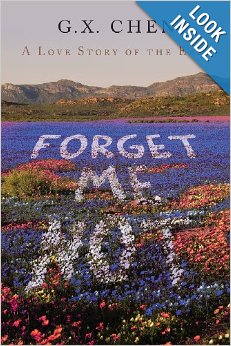
Forget Me Not: A Love Story of the East

by G.X. Chen

Forget Me Not is a sad, happy, serious and delightful story. It takes place in China in the 60’s. It is the love story of Li Ling and Zhang Lily. The book opens with a letter from Li Ling’s friend Big Head. Li Ling’s wife asks him about the letter and Li Ling sets out to tell her the story of his life in China as a child. He lived with his grandparents in Hong Kong until he was about eight. Then some horrible changes came about and he had to be sent to China to live with his parents. Some communists known as the Red Guards were punishing people as counter revolutionary foreign agents if their relatives lived in Hong Kong. They also shut down schools and the government put people to work wherever they wanted to put them, even if they were still teens and should have been in school.
Once the Red Guards ended their reign and schools and universities were reopened, they even were able to have dances once a week. Li Ling and Zhang Lily met up again at the university and rekindled their love for each other.
This is a bittersweet tale of the love between two people who grow up in very difficult times in China. I enjoyed this book very much. The story will keep you captivated page after page after page. I highly recommend Forget Me Not by G.X.Chen. I am sure you will enjoy this book as much as I have.

Poetry by Tony Longshanks le Tigre

Back in the days of dinosaurs,

It was She, my mother, who gave me the keys to Imaginationland,
With all those fabulous art museums

She took me to, in Minneapolis—

Before the great change,
When terror & responsibility rained down from the skies,
Putting an end to my perfect playground:
The sudden drastic destruction of all but fossils
Preserved in the amber of a solipsatisfactory childhood.

How vividly I recall the eerie lighting;

The multiple levels & lack of clocks;
The videos & dioramas & unique-smelling plastic gift shop figurines

(Which we could always afford, when I wanted them badly enough);

The long Jurassic curve of the thunder lizard’s neck;
A pterodactyl swooping so low its wings tousled my snow-white locks;

A glitter-eyed saber-toothed tiger, trapped in the tar pit of its demise;

All those taxidermied stranger-than-fiction fragments of Mesozoic reality;

And how I wanted to never, ever leave.

—Tony Longshanks LeTigre +11+

We swim in oceans of information
And try not to drown
But would drowning not be preferable to beaching ourselves
Like a moribund whale?

Protect free communication, online and elsewhere – curtail NSA abuses

As Creative Facilitator, I, Cristina Deptula, and many others affiliated with Synchronized Chaos, invite you to join with us in defending free communication, online and elsewhere, and protecting individual liberties by rolling back NSA abuses.

WHAT WE CAN DO

Congress is considering two major bills.

We need to tell Congress to pass the USA Freedom Act and amend it to make it even stronger.

Dial (202) 999-3996 to be connected to your legislators. If you are not from the U.S. contact your own legislators and encourage them to pressure the United States to support these protections. 

  • The USA Freedom Act is a proposed law that would curtail the NSA’s ability to collect data on US citizens, create a special advocate to champion privacy in the FISA court, and increase transparency around NSA surveillance.
  • The FISA Improvements Act would allow the NSA to continue to collect telephone records of hundreds of millions of Americans not suspected of any crime—and seeks to restart the bulk collection of Internet communication records.
  • Undermining encryption is bad: Weakening encryption standards and attacking technology companies makes us all less secure.
  • International people matter: We must apply human rights values to digital surveillance techniques through transparency, rigorous oversight, and privacy protections that transcend borders.

According to Josh Levy of Free Press:

“Since the first revelations last summer, hundreds of thousands of Internet users have come together online and offline to protest the NSA’s unconstitutional surveillance programs. These programs attack our basic rights to connect and communicate in private, and strike at the foundations of democracy itself. Only a broad movement of activists, organizations and companies can convince Washington to restore these rights.”

Media Advisory for January 10th, 2014

On Anniversary of Aaron Swartz’s Tragic Passing, Leading Internet Groups and Online Platforms Announce Day of Activism Against NSA Surveillance

Mobilization, dubbed “The Day We Fight Back” to Honor Swartz & Celebrate Anniversary of SOPA Blackout

Contact: Blair FitzGibbon, 202-503-6141

Washington, DC – A broad coalition of activist groups, companies, and online platforms will hold a worldwide day of activism in opposition to the NSA’s mass spying regime on February 11th. Dubbed “The Day We Fight Back”, the day of activism was announced on the eve of the anniversary of the tragic passing of activist and technologist Aaron Swartz. The protest is both in his honor and in celebration of the victory over the Stop Online Piracy Act two years ago this month, which he helped spur.

Participants including Access, Demand Progress, the Electronic Frontier Foundation, Fight for the Future, Free Press, BoingBoing, Reddit, Mozilla, ThoughtWorks, and more to come, will join potentially millions of Internet users to pressure lawmakers to end mass surveillance — of both Americans and the citizens of the whole world.

On January 11, 2013, Aaron Swartz took his own life. Aaron had a brilliant, inquisitive mind that he employed towards the ends of technology, writing, research, art, and so much more. Near the end of his life, his focus was political activism, in support of civil liberties, democracy, and economic justice.

Read more here: https://thedaywefightback.org/