According to Shakespeare, in his comedy of manners and disguises As You Like It, all the world’s a stage. Everyone’s just a temporary player, with a certain role and time to enter and exit this existence.
Yet, even when someone’s not taking center stage, they, or their memory, can still play an important role. In life, as in a dramatic production, a lot can happen behind the scenes.
This month, our contributors pull back the curtain and peer at how nature and society function underneath the surface.
Returning poet Dave Douglas illustrates his speaker’s journey through wild country on a Greyhound bus. He reflects on his Christian faith’s ideals of perseverance, courage and sacrifice while passing through rough terrain.
Writer G.K. Brannen also explores the psychological and emotional implications of a physical journey, that of organ transplantation. He looks at what it means to live through another person’s death, with part of his or her body inside oneself. Also drawing upon Biblical and creation imagery, he considers this topic through poetry and prose.
Bea Garth incorporates rich and specific detail about the natural world into her work, making the riverbeds, stones, seaweed and milfoil as lush and sensual as her romantic couples. Elements of the scene that would likely be in the background of a photograph or painting come to the forefront in Garth’s work, where all of life holds value and beauty.
Science journalist Cristina Deptula reviews a talk on the early development of the universe by San Francisco State University professor Dr. Mary Barsony, at the Chabot Space and Science Center (Oakland, CA). Dr. Barsony outlines the expanding and cooling of matter into light and heavier elements after the Big Bang, and then personalizes the grandiose topic, tracing the origin of the body parts of a hypothetical, average person. At a basic level, the abstract universe has to do with us, and each of us, as a living being, is part of it.
Human societies, and social groups, also can involve underlying feelings and interactions that build up and lead to the obvious, big-picture events we notice. Scott Archer Jones examines the thoughts and relationships among ordinary people in a small town bar. Carol Smallwood highlights the power of fragrances and photographs to bring back memories in her vignette about a woman’s home visit from a new provider of Avon cosmetics.
Ayokunle Adeleye explains the reasons behind student discontent at his Nigerian medical school, which faces financial and administrative problems. Long-term structural injustice and misery can fuel outward strikes and conflicts, as he illustrates.
Tom Reiss’ biography The Black Count, as reviewed by Bruce Roberts, tells the story of the real African-American figure who inspired the legend of the Count of Monte Cristo. The book illuminates a heritage of slavery and racial discrimination through the changing fortunes of one man.
Linda Allen’s poetry turns inward, encouraging readers to ask themselves difficult questions about who they are, how they think and treat others, and who they are becoming. Perhaps by changing inner attitudes, we can affect interpersonal behavior, and thus improve society.
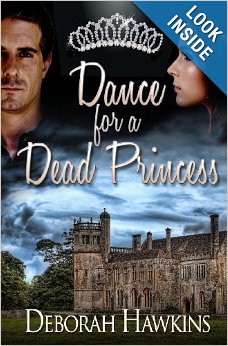
Eric Franklin’s new self-development book Peanut Butter Principles, as reviewed by Elizabeth Hughes in her monthly Book Periscope column, advocates a similar attitude of self-reflection, along with discipline, patience, and hard work. Hughes also offers high praise for Deborah Hawkins’ Dance for a Dead Princess, for its suspense and writing quality.
Other contributors look to art and mythology to fuel their musings. Christopher Bernard speculates about the thoughts of the Minotaur, a half-human, half-bull creature feeding on sacrificed young people caught within his labyrinth. Bernard’s work often centers on the search for love and identity despite difficult, alienating circumstances, and this piece touches upon those themes in a unique way.
Returning poet Neil Ellman conveys the Surrealistic artistic ethos through his poetry, playing with humor and individuality in pieces echoing the spirit of paintings by Dali and Basquiat.
Journalist Martin Rushmere writes about an actual play, Sam Shepard’s Fool for Love, produced and presented by Marin County’s Alter Theater and San Francisco’s ACT Costume Shop Theater. This tale focuses on deep issues and secrets, festering over the years and ruining the relationships in a family.
Finally, writer, film director and photographer Faracy Grouse shows us the majesty of the sunset, rainbows, and waves: where many elements have come together to create a striking scene.
She, and the month’s other artists and writers, invite you to take your seat and enjoy the show, appreciating the onstage performance while remembering the complex world behind the scenes.
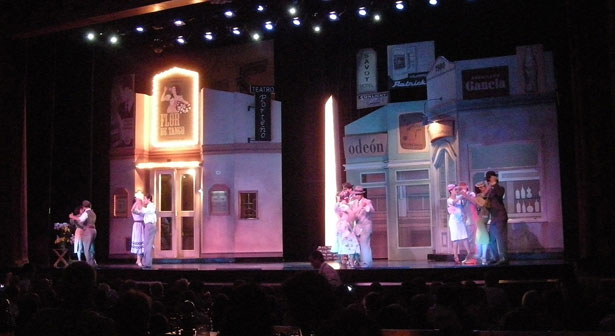
Public-Domain-Images.net Tango Dinner Theater
Fool for Love, by Sam Shepard
Alter Theater
Through February 9 at 1344 Fourth Street, San Rafael
February 11 to 16 at A.C.T. Costume Shop Theater, 1117 Market Street, San Francisco
A riveting portrayal from Marin’s experimental theater company
Powerful, elemental and earthy portrayals suck in the audience for the 70 minutes of Sam Shepard’s lovers caught in an emotional Moebius strip. Chasing each other in an endless loop, unable to find an answer to their love-hate obsession stained by a bitter family secret, they are on the edge. Beyond that is only desolation, physically and emotionally. Even the run down motel room of their encounter is on the edge; beyond is the Mojave Desert. What makes the performances so effective is that the cast understands exactly Shepard’s theme. The raw, brutish roughness of this underbelly of society jumps out as the two vent their passions.
Matt Lai’s Eddie is a gun-toting cowboy and rodeo rider, who has returned to Jeanette Harrison‘s May for the umpteenth time. Life’s illusions and pretense were stripped from them years before, and they know that despair awaits them. Yet they still pretend to each other and themselves that everything can be different. In a rocking chair is the Old Man, Charles Dean, their long-dead equally rootless father, who tries to justify his actions and exists only in their minds. (Director Will Marchetti was the Old Man in the original production with Ed Harris). But the audience can never be sure if their memories are true and if so, if the Old Man’s interpretations are accurate.
Enter Danny Jones as Martin, a wonderfully innocent simpleton, right down to his every expression and action, who is befriending May and is the foil and channel for the lusts and hate. Everything and everyone is one step away from desolation, although only Martin is unaware of it
The Moebius ending, as Eddie’s horse trailer burns, the horses escape and his truck is wrecked, reinforces the theme of eternal desolation and hope and keeps the audience focused until the last second. Will Marchetti has put together an excellent rendering of Shepard’s emotional maelstrom. Alter Theater has chosen a great storefront location for this production, in downtown San Rafael. Like Sam Shepard’s lovers, the company has no permanent home and moves to different storefronts, which makes its mission all the more exciting. The city and Marin should count their blessings with productions like this from the county’s most daring theater company.

From London-based photographer Faracy Grouse:
The ones with the dramatic clouds and sunrays were taken on the beach in Brighton, England last week. The one with the mountains was taken in Olden, Norway. The one with the rainbow was taken in the middle of the Straits of Gibraltar on a ferry from Morocco to Spain.
Tidings From The Hidden Places: Dick’s Liquor
Located on Douglas Avenue in Las Vegas, New Mexico, Dick’s Liquor owns a name glaringly obscene even for an establishment dubbed in the ’40s. A place you either hate or love, Dick’s has that accretionary charm of an establishment that started small and added on one function, one room at a time. From its start as a package liquor store, Dick’s soon became a delicatessen and mutated away from selling pints of Jim Beam and six-packs. Now providing sandwiches and white tuscan bean soup and unlikely magnums of sparkling wine, manned by college students, the deli is less of a boozarium and more of a New York oddity amidst the deep West. The secret begins in the back.
Stroll past a huge freezer through a two-foot-four-inch-wide door and you’re into the bar. Painted black and festooned with TVs, the 80’s version of a sports bar awaits you. The staff control the channels (most of the time) and so this sports bar shows tennis and European football, as well as baseball and American football. They’ve decorated the walls with a ’50’s biker sign, a poster of steel workers eating lunch on a beam, and the iconic John Lennon in an NYC T-shirt. The bathrooms are made of cheap paneling, with doors so sprung they haven’t locked for years. Each restroom sports a sign that advertises a “Don’t Drive Drunk” Friday-and-Saturday-Night cab service.
You can eat here too, served from the deli or the restaurant’s kitchen – yes, further back and a half flight up hovers a family restaurant, rather like Applebee’s but with a lot of blond wood and without the plastic. The restaurant extends Dick’s clear across the block. Its official door opens onto the side street and it lurks in one of those 1800’s mercantile buildings. We’ve never made it into the restaurant because we can’t pass up the wildlife roaming the bar.
At eleven this morning, elbows cocked on the bar, a Hispaño has a shot of amber glowing liquid in front of him. He chats with the barkeep while he stares at the talking heads on the tube hung in his face. In the booth by the deli, a mixed-race family with two small, beautifully latte children camps out. One of the munchers tries to crawl high enough on the wall to erase the imported beer list from the blackboard. We snag a table, our favorite near John Lennon, and order – fish and chips for me with a red salsa side, the Naked Burger and a salad for her. We watch the lunch crowd straggle in.
First we spy two ranchers, one dark brown and short, one tall and burnt brick red. Boots, snap-button shirts, the cowboy hats, the bellies cantilevered out by giant belt buckles, they choose a tall table and studiously avoid the TV images. They talk about procaine penicillin. I want to ask them about procaine, but She-Who-Can-Find-Out wiki’s it on her smart phone – vets use procaine for pink-eye. Rats, a missed opportunity to talk to men who smell faintly of cow manure.
Then the working class arrives. White and Hispaño, all overweight, dressed in coveralls that scream of Public Utility or Phone Company, they crowd into a booth and order beer all around, then the green chili meatloaf special. Surely the beer is in direct violation of workplace safety procedures. For this crowd, the conversation runs half-sport, half-family. The biggest guy in the crowd has three kids living at home, ranging in age from seventeen to twenty-eight. He pays their gas and car insurance and worries they’ll never find jobs with benefits.
College students slop in – Las Vegas harbors the University of the Highlands, part of the UNM system. We marvel at the piercings – it’s not just the belly button, the tongue, the eyebrow, the earlobe. We learn the new cool – a diamond stuck through the upper lip (right side only, we conclude) and a fat hoop stuck through that rib that runs across the inside of one’s ear. We don’t eavesdrop or talk about the Renaissance or Nietzsche: we learn who is shagging whom and who came out bi.
Insurance and Real Estate arrive. They may be sleeping together, but today they ignore each other. Instead they email and send texts off on their phones while they sip ice tea and wait for soup (spicy peanut) and salads. Big enough to threaten her health, she fills a bench for two, while he perches across from her, bone thin with stooped shoulders. Peering down into the diminutive screens, she grunts while he vents off melancholy sighs – the back-breaking pressures of business in a small town.
An extended family claims the farthest back booth, underneath the flickering image of an NFL child-beating scandal. First to arrive is the college professor now gone frail. He’s dressed in shabby tweeds and a driving cap. His gray beard and thick glasses prepare us for a declamation on early Babylonia, or perhaps Germanic languages. Shaky, bent like an aspen under a load of snow, he eases into a booth as if it hurts to bend. A young couple join the prof, her with big Texas hair and a butt-hugging black miniskirt and stout waist, him with a shaved head and tattered Levis. Children, next door neighbors, devoted former students? They’re nattering on about local politics when a gray-haired woman arrives in dingos and jeans with a bandana around her neck, escorted by a ten-year-old boy.
It’s the wait staff who are killer. The barkeep is a Latina about forty with a physique of a twenty-year-old gym instructor and a mane of shining black hair, held back by a purple scrunchie. She runs ten tables without breaking a sweat and laughs and talks with many of the customers – holding the little baby, touching the professor on the shoulder, whispering something into a fat man’s ear. I adore the fan of wrinkles that sweep back from her eyes and her sharp chin. Her understudy the waitress hustles the food in and the detritus away, making all of us feel old and feeble as she pounds up and down the stairs. She has dark flashing eyes and hair that frames her face in blue and red. We ask about her tattoos – she’s working on a full sleeve “but I want to leave the other arm naked, for contrast you know. Oh, it’s the movie Labyrinth. I love that movie. See, here is David Bowie the Goblin King and Ludo, and here’s Sarah in the ballroom scene.” We ask how long she’s worked at Dick’s. “Since I was a freshman. I’m taking a semester off, so I’m full-time for awhile.” To pay for the tattoo, we think. Her name is Tatyana, for the last Romanov princess. Or the tennis player.
Like a belt of juniper trees, Dick’s Liquors holds a cross-section of New Mexican life, blown in, clinging to the rock or burrowed deep, waiting for spring rain. It’s homespun, sophisticated, educated, illiterate, anything but ordinary. Honestly, we may add Dick’s to our collection of tall tales, but you can’t make this stuff up. More tall stories later as we careen across the wilderness. In the meantime, try the pastrami and have a fried green chili on the side.
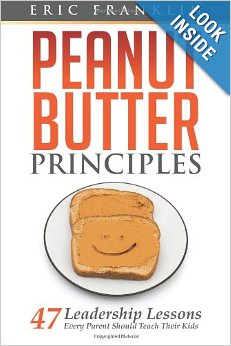
Eric Franklin’s Peanut Butter Principles
by Elizabeth Hughes
Peanut Butter Principles by Eric Franklin is a very insightful and encouraging book. Mr. Franklin touches on some very good points on how to encourage children and others to reach their full potential. In Chapter 16, Mr. Franklin brings up his faith and points out something, I, myself, have learned, that, like the title of the chapter,”Faith Makes all Things Possible, Not Easy”, is very true. As the author points out, our journey to reach our full potential and to make our lives a success is not easy, but, with hard work and perseverance, it is possible. Mr. Franklin speaks of how to build the child’s self-esteem when helping them. Mr. Franklin tells us of the importance of persevering in our endeavors and not giving up so easily.
I agree with the ideas presented in Peanut Butter Principles by Eric Franklin. Thank you, sir, for a very enlightening book, which I can take into account for my own life as well. I highly recommend Peanut Butter Principles by Eric Franklin for anyone, not just parents, teachers or mentors. It has some very excellent guidelines anyone can put to use in their lives. Peanut Butter Principles is most definitely my cup of tea!!
Peanut Butter Principles is available here: http://www.amazon.com/Peanut-Butter-Principles-Leadership-Lessons/dp/0615912826/