Nonfiction from Sue Barnard

POMPEII’S DISTANT COUSIN – OSTIA ANTICA

There can be few people anywhere in the world who have not heard of Pompeii and its near neighbor Herculaneum – the two towns on the Bay of Naples which were destroyed so spectacularly in AD 79 by the eruption of nearby Mount Vesuvius. These two towns, now painstakingly excavated and preserved, are today, amongst the most visited sites in the whole of Italy.


But Pompeii and Herculaneum also have a distant cousin.  Less well-known, but no less impressive, is the ancient Roman town of Ostia Antica, situated about 16 miles (25 km) south-west of Rome.


Ostia is generally believed to date from the second half of the 4th century BC, and was originally built as a military post to control and defend the mouth of the River Tiber.   It takes its name from the Latin ostium, meaning, “river-mouth”.  In its heyday, Ostia was the principal port for the city of Rome and a thriving commercial centre, with a population of around 100,000 people. Its decline began in the second century AD, when much of the commercial traffic was redirected to the newly-built harbor at nearby Portus.  By the 4th century AD the harbor at Ostia was beginning to silt up, and an epidemic of malaria eventually caused the town to be abandoned.


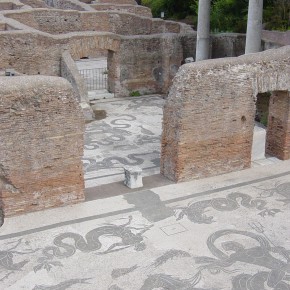
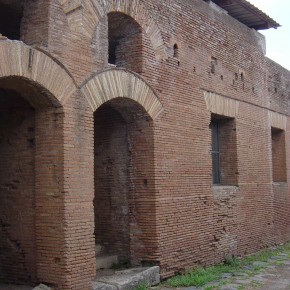
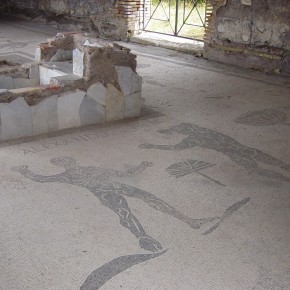
Ostia might be less spectacular than Pompeii or Herculaneum because it died a gradual, rather than a sudden death, but it gives visitors a much more complete picture of life in a Roman town.  Streets, forum, capitol, theatre, bathhouses (many still with their original spectacular mosaics), temples, market, shops, offices, workshops, warehouses, grain stores and private residences – they are all here, and all remarkably well-preserved.


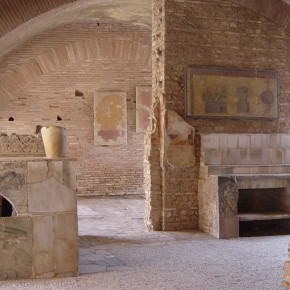
Ostia was home to all social classes. The wealthy enjoyed the sumptuous comforts of spacious, detached houses (domūs), whilst the working-class people lived in the three- or four-story apartment blocks (insulae) which varied considerably in their levels of comfort and decoration. One of the smarter ones is the House of Diana, which boasts a private bathhouse and a central courtyard. The bar on the ground floor, still houses the marble counter where the customers bought drinks and hot food.


The cosmopolitan nature of the town is reflected in the diversity of its places of worship. In addition to Roman temples, there are also a number of temples dedicated to the Persian god Mithras, as well as a first-century Jewish synagogue and a Christian basilica.


The site museum is home to the many exhibits which have emerged during the excavations of the town. Sculptures, statues, pottery, jars, amphorae, glass or alabaster bottles – all offer great insight into the everyday lives of Ostia’s inhabitants. A more recent addition to the site is a modern visitor-center, which also houses an excellent café.


Ostia is easy to reach from the center of Rome – the journey takes about half an hour by suburban train. The modest admission charge to the excavated site (scavi) is an absolute bargain. Allow at least half a day for your visit, but you may well find the place so fascinating that you’ll want to stay a lot longer!

Sue Barnard, 2013

Artwork from Walter Savage

W. Jack Savage is a retired broadcaster and artist. He is the author of six books (wjacksavage.com) To date, thirty-two of Jack’s stories have been published by various online and print magazines, and eighteen of his pictures have been published as well. Jack and his wife Kathy live in Monrovia, California.

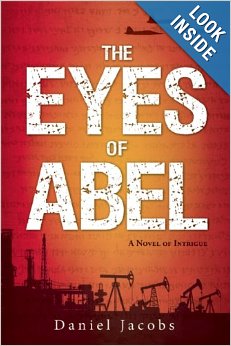
Reviewer Fran Lewis on Daniel Jacobs’ The Eyes of Abel

The Eyes of Abel: Daniel Jacobs

Reviewed by Fran Lewis
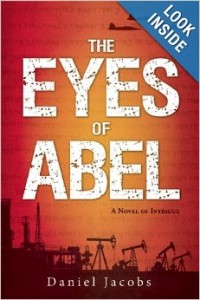
The beauty of Israel, the warmth coming from the sun as it is about to set, and the stillness in the air are the setting for the first scene in this novel. As Roger Charlin and Maya Cohen sit together, discussing their lives, his stories and their feelings about Israel, Palestine and more, something will shake the foundation they are sitting on. The horizon and landscape will explode within seconds, as bombs fill the sky, hotels and buildings collapse, a boat explodes and the world changes.

Thinking about his publication and his recent expose´ of Newton Oil’s corrupt practices, Charlin reflects back on his sources, his initial encounter with Maya Cohen, and, even more, his feelings about Israel/Palestine. He reflects on their conflicts, his take on the situation, and why he feels it has never been resolved. The Eyes of Abel answers these questions, and much more, as the author flashes back three months before this attack on Israel, describes another terrorist attack over San Francisco, and shows what Charlin did to prove that terrorists similar to the one who got through in San Francisco can often fool security officers. But, what he learns will hopefully change things for readers and for him.

At the beginning of the novel, Roger, with the help of some of his colleagues, creates a new image for himself as an Arab, traveling from America to Israel. This is part of an expose´ he conducts, intending to bring to light how sometimes airport security is too tight, and that profiling certain people and singling them out for extra interviews or scrutiny is often based on race or nationality. What happens during his brief encounter, how and why the agent realizes he is using a fake passport and fake identity, just lets the reader know that the agents at El Al Israel are truly always on target. Investigating a secret energy project at Princeton, we hear him speaking with his source, getting the information, and we understand just how creative he will get, and how in-depth he will go to get a story, and in this case, the Pulitzer Prize. But March 26, 2015, will change it all.

Trans Flight 144 goes down and the events spiral out of control, as Roger Charlin immerses himself in more than just the story about racial profiling at the airport. Trying to find out more about Maya Cohen leads him to many discussions and negative viewpoints about the state of Israel. Maya relates her position, and her discussions with Charlin are heated and well-informed, and each side is vividly presented.

But, Roger is trying to create an article that will break open the fact that EL Al security seems to target those who are Arab or appear to be Arab. Is it politically correct to single out these people? Shouldn’t everyone receive the same security clearance? And why is he so concerned with Middle-Eastern people at the airport? But, meeting Maya will change it all.

Who is she, and why is she really here? Within this complex plot, there is much more to uncover. The Princeton Plasma Lab that has been lying dormant for so long now seems to have come to life, igniting more than just the possibility of a new energy program. Things get out of control for Charlin, as his relationship with Maya heats up when his reporter friend and mentor Ben Lampsky breaks the Princeton research wide open, in an article that sets events in motion, which causes lives to be lost. Israel comes into the limelight, and the light shines, but the truth is clouded.

Reporters, Charlin states, are supposed to report the truth and not worry about who gets the story out first. Reporters, Ben states, report events as they see them, write the story through their own eyes, and give the public what they want everyone to see and hear. Next, a video that has been doctored, or at least, whose credibility is in question, sparks more negativity about Israel, before the scientists at this lab are whisked away, and hopefully back home, before more lives are lost.

Project Sherwood, in Jacobs’ novel, “was a secret effort in the 1950’s, during the Eisenhower administration, to produce unlimited energy through fusion.” But, finding this information, taking a trip to Princeton, and signing on to assist Lampsky to learn just who in the government is funding an energy program that was declassified decades ago, sets in motion catastrophic events of huge proportions. Observing several men walking dogs in the middle of the night might not trigger anything suspicious, except in this case, the location is near the lab.

As the author elaborates about the program, and discusses energy production, we learn more about what might be driving this program to be restarted and we wonder why anyone would unleash it to the press and not protect its security. World energy would change, and telling the world about it, would do more harm than good. So, why did Charlin agree to find out more about the government and take the bait?

Since the TransCom 144 incident, he has done nothing significant. Within Chapter Four, taking place Feb. 5, 2015, we learn about an Israeli Medical Team being killed, and the details are graphically described. As his relationship with Maya intensifies, he finds out information about her that would change their fates.

Learning her real reason for being in America and knowing why she disappeared, does not stop him from wanting answers, and trying to find her. But before long, he is interrogated by the Senate Congressional Committee when Lampsky breaks open the story about the fusion program, and the possibility of an energy breakthrough.

When asked why he never filed his article about racial profiling, readers will be surprised at his response, knowing his negative views towards Israel. But, things change, perceptions differ, and although he still has some misgivings about how Israel handles and responds to attacks, we see him becoming more open-minded.

As readers see Lampsky’s expose´ about the breakthrough at Princeton Labs, and hear his words, they can decide for themselves if he intentionally endangered the scientists at the lab. Especially when they see what happens when Charlin explains Maya’s role, and how this article affected the situation.

Throughout the next two chapters, Jacobs vividly presents many incidents, focusing on attacks on Israeli soldiers and letting readers decide whether the reporter really told what happened, or just what he or she thinks happened. We see slanted journalism in many cases, and incidents ignited by the press, with the aid of Youtube videos.

When interrogated by the State Senate Committee, Charlin realizes just who set him up, and why. His remarkable comeback, and his response, will impress readers. Just who in the government is pulling the strings? And why, when Charlin relates information regarding the killing of federal funding for fusion research, does the tone of the hearing change?

A news bulletin relates events in Israel, global reactions, and a world turned against a people just trying to live and survive! Near the middle of the book, there’s a section where we hear the voices of so many. A reporter’s vision or viewpoint of certain events and how different sectors of different countries react to the same incident. This underscores the role of media bias in shaping the Mideast conflict.

Hidden behind the walls of a nondescript building, is a projector, whose screen will emit slides that change the course of the world, change Charlin’s perspective about Israel, and bring the fusion program to life. But, when secrecy is breached, and Israel is in danger, what chance do they have? While he and Maya look bravely to the future, she formulates his next move. Will Charlin agree to the terms? Will he risk it all to help Israel, the United States, the fusion program, and hopefully dismantle a war, before it’s too late? 

What happens next is explosive, and the one person that is the key, turns in different directions.

Background on Abel in the title: Abel was the second son born to Adam and Eve. Abel was the first shepherd, the first martyr in the Bible and murdered by Cain, his brother. This murder, of course, did not please God. Cain, a farmer, grew grains and vegetables, and Abel was a shepherd, tending the family’s herds. They were brothers, who never got along, yet loved each other.

The family had to sacrifice something to God to atone for their sins. Abel was worried about making his sacrifice special to God and he offered his best lamb. Cain sacrificed crops from his garden, yet, God was not pleased with his offering. So, Cain asked his brother to walk with him and struck him down to the ground and killed him.

As with Abel, other countries see her as being favored by the United States and other countries, and thus not punished for her violence and retaliation. So other nations feel justified in attacking Israeli civilians.

Cain was only concerned about getting caught and not the consequences of his actions, but they caught up to him over time. The ending of The Eyes of Abel, you might say, parallels life in the fact that we often have to deal with and live with our choices, and face the consequences within ourselves. What happens at the end, is quite explosive, thought-provoking, and proves that while we teach children to think before they act, adults don’t always do the same. The description of the lattice is quite extraordinary; the events of March 26th will burn within Charlin’s and Maya’s minds, and readers’ minds forever.

Decide for yourself who is right, and who needs to understand: too many Cains in the world, and not enough Abels, to provide the stability needed to protect everyone.

Israel is here to stay. She will not give up, and In the Eyes of Abel, in the Eyes of the People of Israel, we see hope for freedom for everyone and someday peace within the Middle East and the world. This is one powerful novel that will create much discussion and controversy over the material offered. It’s definitely a must-read.

Charlin and Maya: What’s next?

Fran Lewis: Reviewer

.

 

Poetry from Kamilla W. Boegedal


Cosmos thoughts

I want to be one with the cosmos

I want to know the rules

I want to be Someone who can see

The miracles between us

I want the Universe

Under my skin and bones

I want the Stars In my arms

Relieved of this curse

May the evanescence

Of my being

Be the beginning of something great

May my lack of insight

Be knowledge to other’s hindsight

And may I be one with the cosmos

Tree-years birthday

When I was tree

I was bark

I was the Wind fondling leaves

When I was tree

I was tall

I was the ants craving heights

I was sap, water, dirt and heart

I was everything and not apart

I was one with all and all in one

The most living creature on Earth

Waiting for Godot

Sometimes I wait for Godot

It takes a little weight of

Living. Living.

Being

Then I start to wonder

Is there ever anything yonder?

Living. Living.

Waiting


Short story by Irving Greenfield

TOWARD A DARKLING PLAIN

by Irving A Greenfield

He screamed and banged on the closet door, but his mother held it shut. She fought him and won. Being in the closet was his punishment for her having had to answer to his teacher for his bad behavior, his lack of interest and worse, his rudeness.

“I’ll be good,” he cried. “I promise.” He was afraid of the dark. The dark was where the Igdigs lived, and he was terrified they would get him…

That voice, grown tiny and faint over the years, never left Paul; and now it seemed to grow louder, occupying more space in his head with each argument he had with Cynthia, his wife. Both of them were in the closet, but only he knew he was. This time, he couldn’t kick and scream until his mother would open the door. This time, there wasn’t any door to kick or bang on; and everyone in his family was dead: mother, father, and three older sisters.

An octogenarian, he was the sole survivor. In his present circumstances, the benefits for surviving were few, while the detriments were many. Being in the closet was one of them; his infirmities were the other. Crushingly, it narrowed his world, preventing him from having the experiences he wanted to have. But all of that was endurable.

It was the closet that was unendurable, and yet he endured. There wasn’t any way for him to escape, except by dying; and though he thought about suicide, he wasn’t ready for it yet.

Cynthia stood in the way. Who would take care of her? Not their sons, who had their own burdens; or her younger brother, who would probably not be able to admit that his sister had Alzheimer’s or dementia, or possibly both. He had difficulty admitting it; and it was there, palpable every day. It was the closet in which both of them now lived. The Igdigs morphed into real fears, anger and guilt; resentment and depression coupled to a deep feeling of impotence.

Had he somehow failed her? Was he failing her now?

She made impossible demands, things he could no longer do, or that he was powerless to do. And when he told her he couldn’t do what she asked, she reacted negatively, either with the sulks; or more recently, with anger, an irrational fury goading him into an angry response and the emotional abyss that followed it.

After their last blow up, he died or something died inside of him. He was broken, and he knew it. He left the apartment, but she came after him.

“I came from nothing, and I’ll go back to nothing,” he told her. “You can have it all.”

She pleaded with him not to go.

There wasn’t any place for him to go to other than a hotel room. But after a few nights, where? He didn’t know, and didn’t care. Silently, he shook his head. This was the payoff for all the years of being married to her. Maybe she felt the same way. But he never asked her to do something she couldn’t possibly do.

“Come back inside,” she said.

“Why?” He didn’t let her answer. “For more of the same,” he challenged.

“We can talk.”

“I don’t want to talk. We said more than enough to each other.”

“Come,” she said, extending her hand to him.

“You pushed me over the line,” he told her, taking hold of her hand. He saw the fear in her face, in her eyes, and let her lead him back into the apartment.

#

Later, he couldn’t sleep and went into the living room. He stood at the window that framed the harbor with its patchwork of lights that broke up darkness. Their past trickled through his mind. Tears blurred his vision. He took a step backward and sat in the high back chair adjacent to the window. What happened between them was beyond being sad. It augured for a lessening of her hold on reality and more forbearance from him. No longer could there be any sort of a dividing line between what he would or would not tolerate.

As if he were denying his thoughts, he shook his head. But he wasn’t denying them; he accepted the personal enormity of them with feelings of amazement and disbelief at what he saw as their future.

The trickle of the past suddenly became white-water, swift and dangerous, full of boulders. Lightning bolts of misdeeds stretching farther back than his memory of them could go.

“Yes. Yes, I’m guilty. Mea maxima culpa. And you, what did you do or didn’t do?”

But now, in the deep quietness of the night, there wasn’t answer, only the recognition that there never should have been a question. Her vision of the past was as mist-ridden as her vision of the present. What he clearly saw was their anguish, their decrepitude and their different realities that like Venn diagrams overlapped in a narrow arc of their circularity.

He dozed, his head tilting toward his chest. In that restless sleep, he saw himself looking down at the dead body of his older sister, Selma, who claimed there were people living inside of her air conditioner, that devils were pinching her and a myriad of other nightmarish fantasies. He awoke with a start. The memory of the dream felt like ashes in his brain, but it vanished, leaving him with a residue of dissatisfaction of something left undone.

#

He left the chair and stood at the window again. Close by the scream of a siren hunted through the darkness, entering his consciousness to make him aware of the darkling plane ahead of him, and his fear of what he and Cynthia would find when they reached it. The weight of that thought was almost insupportable, and again he wept…     

Poetry from Sophie Mazoschek

with my sister on the 44

our tour guide pointed out the world
strung up small and shivering in the air
when the san francisco curled up at the foot of my bed
we boarded muni with the new cold seats
teenagers stretched out across the aisle
eyes on their phones, sunken in apathy
we unwound along lombard street
fractured moonlight by the bay
the cable moved to the midnight pulse
a moth came through the window seeking light
i crushed it to the floor, not really
thinking of its frail hopeful life
you asked me for the meaning of
the bright box that carried us through the dark
i swallowed a bitter answer about something
that watched over us in our plastic cradle
and also watched me press the life
from the tiny, intrepid wanderer of the night
then you were gone, a skinny silhouette
fleeting beneath the streetlights
i could have followed you, maybe
but you seemed so profoundly disappointed
and i was transfixed by the torn wing
stuck to the bottom of my shoe
i shut my eyes and imagined that i was
somewhere high above, looking down
with my spine pressed stiff against the seat
i rode on to the edge of the sleeping city

Sophie Mazoschek (14)

Prose sketch by Sue Barnard

Heavenly Pursuits

The rockets explode in continuous blazes of color which seem to illuminate the entire valley. As the whooshes and bangs from the sky above reverberate from the mountains around us, punctuated by oohs and aahs of wonder from the crowds below, our nostrils taste a strange, heady cocktail of gunpowder and damp earth.

The English have fireworks on November 5th; the Swiss have them on August 1st. We light up our skies to commemorate a traitor who tried to light a fuse in 1605; the Swiss light the blue touchpaper to commemorate Swiss National Day. August 1st 1291 marked the beginning of the fabled 700 years of unification and democracy which (according to Orson Welles in The Third Man) had, famously but incorrectly, culminated in that zenith of Swiss achievement: the cuckoo clock.

In fact, part of the wonder of this particular firework display is that it has happened at all. August 1st 1994 had threatened to be a complete washout. Early-morning fog had turned into mid-morning drizzle, which in turn had developed into torrential rain from midday to dusk, punctuated by a firecracker of a thunderstorm at about 4pm. For most of the day it had looked for all the world as though the firework spectacular, scheduled to begin around 10pm, really was destined to be the proverbial damp squib.

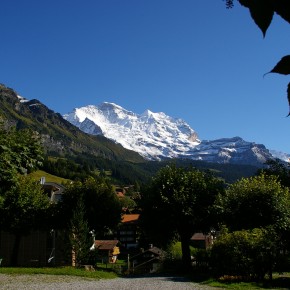
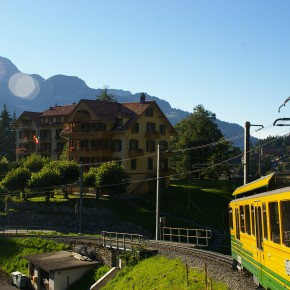
This is our second visit to Wengen. We had chosen the resort and the hotel more or less at random from the brochure last year, and such had been our delight with both that we have returned this year for an action replay. Wengen is a small but perfectly-formed Alpine gem, perched halfway up a lush, green mountain high above the Lauterbrűnnen valley. Here, traffic is a distant memory; apart from a handful of electric trucks (used by the hotels for transporting luggage to and from the station), cars are neither permitted nor necessary. The village is accessible only by rail, and is linked to the outside world by a regular procession of boneshaker trains which travel down the mountain to Lauterbrűnnen, Interlaken and beyond, or upwards to Kleine Scheidegg and the dizzy heights of the Eiger, Mőnch and Jungfrau.

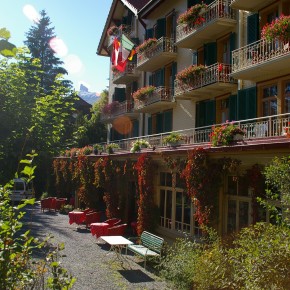
Our hotel, the Falken, has been run by the same Italian-Swiss family since it opened 99 years ago. Apart from one or two concessions to the twentieth century (such as the installation of central heating, and a willingness to accept foreign credit cards), little appears to have changed in the meantime. The bedrooms evidently began as chambers séparées (two rooms with an interconnecting door), but are now put to more practical use as family suites. The Falken is one of those enlightened (but alas, all too rare) establishments which do not expect holidaying parents to share a claustrophobic bedroom with their sprogs. Yet the rooms retain a unique ambiance of an earlier age. Ours still boasts its original wood-paneled walls, a built-in Breton-style dresser, and a magnificent, tiled edifice in the corner, which looks like a cross between a samovar and a wash-stand. According to the owner, this used to be a stove, connected to the original kitchens by a complicated network of chimneys, which provided a primitive form of central heating.

The Falken’s dining room oozes a kind of eccentric, old-fashioned, understated elegance – from the snow-white tablecloths and parquet flooring, to the quietly authoritative omnipresence of the maître d’hôtel, Signor Emilio. Black-suited and white-haired, he glides around the dining room, effortlessly greeting the guests in their own languages (we’ve heard him converse in at least four in as many minutes) whilst simultaneously dispensing instructions to the waiters and opening our bottles of Hopfenperle beer with one hand. The food itself appears with the same effortless efficiency. A typical four-course masterpiece might well begin with hors d’œuvres garnished with crisp lollo biondo and radiccio lettuces which were still growing less than an hour ago, followed by a hearty soup carefully crafted to satisfy appetites whetted by the Alpine air. This might be followed by escalopes of veal, pork or turkey served with wild mushroom sauce, rösti and more home-grown vegetables. The whole thing would then be rounded off by a wickedly delicious pudding (one of our favorites was white chocolate parfait, with fruits of the forest sauce).

But on August 1st the food achieves new dimensions of greatness, as the whole of Switzerland prepares for a great national party. This is evident everywhere we look: the stall in Wengen’s main square, dispensing free cocktails to the accompaniment of alpenhorns, accordions and yodelling; the special celebratory bread rolls (baked in the form of a Swiss flag) on sale in every bakery we pass; the houses, hotels and shops decorated with bunting and paper lanterns – and not least the special buffet provided in the evening by the Falken. Six garland-bedecked tables groan under the weight of melon with Parma ham, pâtés, prawn cocktail, Swiss tartlets filled with Gruyère cheese, tureens of soup, boeuf en croûte, honey-glazed roast ham, fish, chicken quarters, rösti, rice, noodles, bowl after bowl of home-grown salads, home-made chocolate mousse, syllabub, gateaux, more gateaux and a gargantuan basket of fresh fruit. Our experience with the gastronomic marathon last year taught us that this is the kind of occasion which one should not attend wearing tight waistbands! All day everyone has been stoically ignoring the rain. Perhaps one advantage of being British is that we can take the vagaries of the weather in our stride.

And now, two hours after the children should have been in bed, we are all perching, stiff-necked and numb-bummed, on a five-day-old copy of The Times, which is doing its valiant best to ease the discomfort of a hard, wet garden bench in the hotel grounds. We have followed the torchlight procession through the town, and have completely failed to follow the obligatory address given by the mayor of Wengen. Swiss German is less than comprehensible at best; this was delivered in an accent the like of which we have not heard since the days of Jim Henson’s Swedish Chef. Now the skyrockets are shattering the heavens, as if trying to compete with Nature’s own firework display in the afternoon, which had immobilized one of the region’s closed-circuit television cameras. The children, their tiredness forgotten, gaze heavenwards in undisguised rapture. From now on, our own firework displays on November 5th will have much to live up to…


September 1994