Neuroscience Haiku

WhoseBrainIsIt.com


An exploration of how the brain works.

Neuroscience haiku
by Leena Prasad

Blood-brain barrier
Microwaves, radiation
Open sesame.

Open sesame, in this haiku, refers to the dangerous break between the blood-brain barrier. This potentially fatal outcome can occur from exposure to microwave and radiation. This, and other, haiku in Eric Chulder’s, The Little Book of Neuroscience Haiku, deliver a quick, entertaining, and simple way to learn about the brain.

Every page in the book contains a haiku with a short explanation. For this haiku Chulder says: “THE BLOOD-BRAIN BARRIER, created by tight-fitting endothelial cells that surround blood vessels, limits materials in the blood from entering the brain. The blood-brain barrier can be broken down by microwaves and radiation, permitting the entry of chemicals into the brain’s blood supply.” The explanation is as succinct as the haiku itself.

Eric Chudler, Ph.D., is a neuroscientist at the University of Washington and the executive director of the Center for Sensorimotor Neural Engineering. He also hosts the website Neuroscience for Kids at http://faculty.washington.edu/chudler/neurok.html. Dr. Chulder’s discusses his approach in writing this book at haikuHoopla.com, where his answers are as precise as the contents of his book.

The blood-brain barrier poem is from the “Places” collection in the book. The Little Book of Neuroscience Haiku is organized into three sections: places, things, and people. Places references locations in the brain. Things is about things that interact with the brain. People, of course, are people who have contributed to neuroscience as scientists, writers, artists, etc.

Excerpts from the book:

Things
Use a neural net
In the absence of a brain
To catch jellyfish.
A JELLYFISH has a nervous system of interconnected nerve cells (a neural net), but no brain. The nerve net conducts impulses around the entire body of the jellyfish. The strength of a behavioral response is proportional to the stimulus strength. In other words, the stronger the stimulus, the larger the response.
People
Tremors in aged
Essay on shaking palsy
Writes James Parkinson.
In 1817, James Parkinson published a manuscript titled “An Essay on the Shaking Palsy” to describe tremor (shaking) and other symptoms of a disorder that now bears his name (Parkinson’s disease).

Borrowing from a traditional Japanese poetic form to present neuroscience, is a unique approach for expanding the horizons of knowledge about the brain. It is also a suitable format for quick flips while waiting at the doctor’s office, waiting for a train, waiting in line, etc. If you are suffering from information overload, this book is a nice change of pace for learning about the nervous system in short bursts of reading.

Indulge your brain
Feed it some haiku
about itself.


To read more about the brain, go to whoseBrainIsIt.com. To read other material from Leena, go to fishRidingABike.com.

Elizabeth Hughes’ Book Periscope


Paul DeBlassie’s The Unholy 

The Unholy, by Paul DeBlassie III, is a great thriller about the good and evil within the Church. The story flows with excitement on each page. The book is very hard to put down once you start reading it. I will not give away the ending, however, I definitely was NOT expecting that! Thank you Mr. DeBlassie III for an excellent supernatural thriller. I very highly recommend The Unholy!  The Unholy by Paul DeBlassie III is most definitely “my cup of tea!!!”
David Toussaint’s DJ: The Dog Who Rescued Me
DJ: The Dog Who Rescued Me by David Toussaint is the author’s story of his dog DJ and how adopting him brought David Toussaint out of his depression. It is a very uplifting story of DJ. The photographs taken by Piero Ribelli, are precious. Mr. roussaint is spot-on in telling that dogs are wonderful companions. A dog’s love is extremely unconditional. Dogs are very smart and quickly learn our routines and will never disappoint us. I miss my two Chihuahuas very much, they were also very loyal, loving, and funny. I highly recommend DJ: The Dog Who Rescued Me by David Toussaint. Thank you for such a lovely book and thank you Mr. Ribelli for the gorgeous photographs of DJ throughout. This is most definitely “my cup of tea!”
Elizabeth Hughes is a book reviewer from San Jose, CA who loves dogs, history and suspense. 

Synch Chaos October 2013 – From The Inside Out


Greetings readers, welcome to October 2013’s issue of Synchronized Chaos Magazine. This month’s theme is From The Inside Out, how big themes and larger social ideas play out on an individual level.

This theme can also signify the relationship between structure and function, how the way something is told, created, or done affects its meaning and impact.

Danny Barbare links form and function elegantly through his poetry, with a janitor who views his job as his creative work, figuratively signing his name with his mop. What he does comes from who he is, as he turns something ordinary into something personal and distinctive.

Our regular neuroscience columnist, Leena Prasad, changes things up in this month’s Whose Brain Is It, presenting an entertaining quiz covering the topics of her columns over the past couple years.

Some of her past columns dealt with music and memory, themes Irving Greenfield draws upon in his poetry. Greenfield illustrates how music can affect you, bring about certain memories and sentiments, even for things you don’t think you believe in. Melodies can reach somewhere in the mind deeper than facts or conscious thoughts, and Parisian poet Virginie Colline conveys this power through her evocative, romantic rendition of a moment near the sea. Colline’s words themselves do as much to express this feeling as their meanings, through rhythmical repetition of carefully chosen sounds, in this hybrid of craft and content.

Nigerian political commentator Ayk Adelayok uses similar methods to create a very different musical feeling in his piece, “Nigeria In-Dependence”. He uses punctuation, and short, pointed sentence fragments to call attention to disease, poverty and violence within his home country.

Other authors personalize, or localize, broader concepts. Cultural critic Christopher Bernard reviews Berkeley’s Aurora Theater Company’s production of Amy Herzog’s After the Revolution, where she examines how three generations of a family might be affected by a hypothetical left-wing Western political revolution. Bernard’s review encourages people not to stop working for humane ideals because of the failures in practice of certain governmental systems on both sides of the spectrum.

George Sparling’s new short story, “The Nearness of You” shows an awkward moment between two radically different individuals. The author speculates on the paradox and ideal of tolerating even the intolerant, and the associated dilemmas. Bruce Roberts’ review of Opera San Jose’s production of Falstaff shows people resisting unwanted seduction through cleverness and humor. Some may question whether sexual harassment is a laughing matter, but sometimes making someone’s behavior look ridiculous can serve as a real way to get their attention and disarm them. There is a difference between deriding someone’s behavior by laughing at it, and poking fun at the very idea of the behavior being an issue. And we hope Opera San Jose’s production found an effective way to convey its message.

Several writers use the daily experiences of small groups of characters to touch on deeper issues. Scott Archer Jones creates a memorable bartender whose sense of justice and loyalty transcends the racism of his time, in his short piece “Bear among the Dogs”. Carol Smallwood illustrates the way fiction can both mask real issues and comfort us, sometimes both at the same time, as her narrator struggles through a violent, tumultuous marriage in a town constructed to mimic and honor where Shakespeare created his plays.

John Grey gives a sense of a strong, precise and reserved man from the tightly honed, very concrete description of his son’s thoughts watching him shave, and continues to create these types of characters throughout the rest of his poetry. William Doreski presents prose-style poems showing us mice in his bedroom, his canoeing trips, the outdoors, and a meal where he self-consciously avoids organic produce for fear of losing his manliness. Valentina Cano also creates miniature personal vignettes, poems with bursts of feeling and imagery. She lets us see the river shaped like pus, the grossness of anorexia – and a surprising image of betrayal that does not involve adultery or heartbreak.

The poet who goes by ePLy has included a collection of pieces analyzing our motivations for certain values and behaviors. She questions why we try to manipulate each other to get along, help each other, and live responsibly within nature through fear, guilt and apocalyptic thinking rather than encouraging people to preserve our world out of genuine love and respect. Furthermore, are we good examples ourselves of the behavior we often insist on from others?

Reviewer Kimberly Brown also highlights the value of changing one’s perspective to effect change in one’s own life, as well as the larger world. In Alison Nancye’s Note to Self, one of the books she discusses, she observes how the protagonist learned to stop hating her life and feeling like a victim simply by choosing to identify and work towards her own goals. Brown also provides a unique point of view concerning Katherine ‘Catfish’ Nelson’s novel Have You Seen Me, a coming of age tale dealing with teen runaways, abuse and poverty. Many other reviews focus on the experience of the teens involved, their courage in building new lives, while Brown considers the impact on parents in the small town who would have worried about their own children.

More often than not, different perspectives and ways of viewing situations exist. Our other book reviewer this month, Elizabeth Hughes, looks at titles showcasing methods for and stories of self-improvement and personal resilience in this month’s Book Periscope. She also includes an original poem about her own journey out of homelessness.

I myself was skeptical of the self-help book industry for awhile on behalf of people in situations such as Elizabeth’s. I wondered if authors were simply making money by convincing people dealing with deep personal and societal issues that all could quickly get solved just by following a particular formula, and if it didn’t work, then one must not have done it right. However, Elizabeth had a very empowering experience reading the books, considers them very helpful and feels she learned a lot from them. So I have learned not to so quickly dismiss a genre when it seems to benefit others’ lives, when they perceive the books differently.

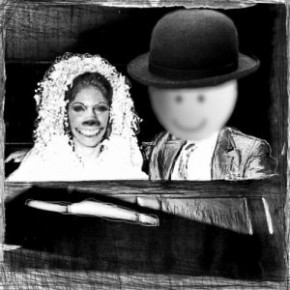
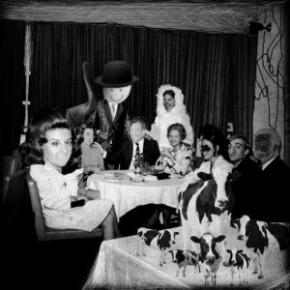
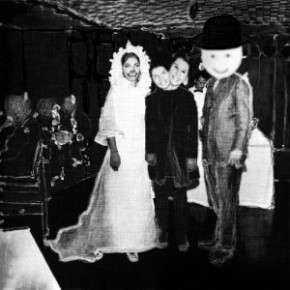
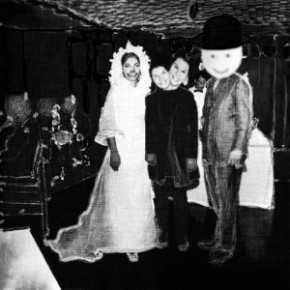
Lance Manion’s short story “Risking the Scraped Knee” whimsically looks at how instant fame, even for something quirky, can affect a person’s casual relationships. Italian photographic artist Samy Sfoggia also plays with concepts of memory and importance in her series The happy wedding of Mr. Nobody and Ms. Obvious, ascribing a certain dignity to her fanciful subjects’ ‘wedding’ through making the work resemble treasured heirlooms. She encourages us to consider what we find worthy of remembrance, and why we automatically lend gravity to some people and occasions.

W. Jack Savage illustrates interpersonal violence at large institutions of higher learning in his short piece “The Story of Baggs House”. We see here how some large decisions, which supposedly stem from deep concern for the welfare of the academic fields, or at least the schools, can in fact arise out of jealousy and ego issues among individual people. Yet his piece is not without a redemptive ending, and a note of hope for the human race.

Our dreams, and our music and art, can also reflect our hopes and higher aspirations, coming from our subconscious minds and extending out into the general culture. Fashion columnist Mimi Sylte interviews Lauren Grinnell, founder of Runway to Freedom, a Seattle fashion show benefiting a domestic violence shelter. As in “The Story of Baggs House”, she highlights the possibility of change and transformation for an aggressor, where they can learn healthy ways of relating to people if the process starts early.

Tetman Callis writes about a literal dream in his poetic piece, “After the Dreaming”. Inspired by the native peoples of the American Southwest, the poem suggests a return to a more traditional way of life, described colorfully but without romanticization.

Visual artist Kyle Hemmings also works with dreams, rendering them into colorful abstractions in his set of images. His pieces combine a technical, modern flavor with the energy of the subconscious. Old and classic movies inspire him, and his work thus represents a personal re-imaging of part of our broader cultural heritage.

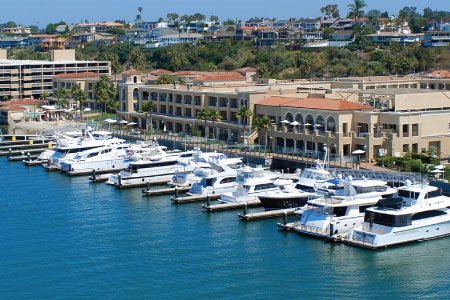
Richard Hartwell brings us his childhood memories of learning to sail, helping rescue a swimmer, exploring boating technology, and not quite fitting in at the yacht club. These vignettes have a dreamlike quality, as they are vividly imagined, atmospheric, and non-linear, and come across as interesting and nostalgic.

Dave Douglas creates a vision of heaven in his poem “Limitless,” where he looks at flower petals and envisions infinite creativity and hope, symbolically as an ever-growing vine. He describes and idealizes the psychological effects of coming from a place of abundance and gratitude, remembering the goodness and beauty one has and looking forward to the future. For people so often afraid of losing what they have, who tightly grasp onto and fight over resources, this can represent a new way of looking at things. One can also imagine what they would do if nothing got in one’s way, and start working towards that in sustainable ways here.

Thank you very much for taking the time to enjoy this large and complex issue!

Vignette from Richard Hartwell


When hate is in the seeds, you can only harvest weeds. Ernst Jünger, The Glass Bees

In joined hands there is hope; in a clenched fist, none. Victor Hugo, Toilers of the Sea

An eye for an eye only ends up making the world blind. Mohandas Gandhi, The Mahatma


The Balboa Bay Yacht Club


Slip-Streams of Consciousness

I sit here listening to wind chimes softly melodizing in a light breeze backed by the ever-present sound of falling water from a waterfall and fountain in the pond. The Tibetan prayer flags are sending their plaintives up and out of the yard on the same soft breeze that animates the chimes.

Parts of the garden are slowly dying back, or going dormant as the nights approach freezing, although the days seem to still hover in the eighties. Unseasonable days are driving the plants and flowers crazy. I suspect the animals, reptiles and insects are more than moderately confused as well. 

Inside, I watch the news about the ten- to fourteen-foot swells hitting west- and northwest-facing beaches and I am reminded of the extreme tides occasionally surrounding Balboa Island when I was young. In some places the slight seawall would be compromised and the sidewalks and gutters would be awash with nowhere for the overflow to go. We felt as Atlantians sinking into the sea, at least for the scant hours until the tide turned and the local fire department could start pumping out the hardest-hit streets.

I sit here as an aging man with memories rummaging through my mind. Not all are good or fanciful, some are downright bizarre and macabre, but all are obviously part of me or they would not arise, bidden or unbidden.

I recall walking around the Island, and I do mean around the Island, on the sidewalk making a complete revolution. Some great exercise and, often as not, boats to stare at and oogle, far more worthy of wolf-whistles and adoration than even the skimpiest-clad beauty sunbathing on the beach. Even the sleek-lined hulls bouncing in their nudity of sails, bobbing at anchor in the channel, were more captivating of me from nine to fourteen years of age.

When Greg and I walked the Island, we would stop at the far northwest at the address we called merely the Shell House. On patio and deck, banister and railings, were displayed the shells and shellfish and the anemones, octopi, squids, and starfishes collected over years and miles and displayed in preservation jars for all to see. Back then none were ever stolen or molested and we all seemed to take a proprietary pride in what was only a proximity of residence.

The Shell House faced Newport Harbor’s great Turning Basin and one had only to turn about to behold an array of shapes and sizes of ships of all descriptions from the 101- and 102-foot Pioneer or Goodwill to the eight foot Sabots or Balboa Dinghies. There were powerboats, to be sure, some of great size and grand substance like the Ebb Tide and John Wayne’s Grey Goose, but it was the creatures of sail that always caught my attention. There was something about capturing the wind and placing it under bondage that captivated me. The scene was awesome, particularly on weekends or summer Wednesday evenings during the Beer Can Regattas. 

On those evenings, especially on those when the wind died to a mere whisper, one was easily captivated by the almost silent, slow-motion tacking duals of fifty-, sixty- and seventy-foot sloops, yawls, ketches, and schooners working their way up the north Lido channel. Each tack followed by silence and the serene-tenseness of slow footing to windward. 

The northernmost mark would be rounded and then an almost dead-run down the entire length of Newport Harbor would be fought to the finish line. By prior agreement, no spinnakers would be used, being far too unwieldy in the confined channels, but the sight of three or four of these large ocean racers slipping wing-and-wing downward, abreast of one another and almost filling the channel with thousands of square feet of contained wind energy, was not one to be forgotten.

As I became older I was no longer restricted to being an observer to such a fantastic image, but became an actual participant in the production of these sights. It would be impossible almost for me to exaggerate the ego posturing I assumed during the rare moments when my measly muscles were not being tasked to their limits. And I did pose and was definitely quite full of myself for my position as part of the crew on a fifty-one-foot eight-metre sloop Angelita. From her owner-skipper, Walter Podalak, I learned the basic skills of blue water racing. 

Ocean racing is an adrenaline thrill, a rush of speed and power, controlled fury as opposed to silent stealth. However, the contained might of those boats when raced occasionally with the confines of Newport Harbor, was not to be underestimated. My dreams and recollections are to be envied and I would not relinquish them even for a ‘round-the-world passage in a sumptuous stateroom aboard the QE2. 

A recollection of the day Greg and I, perhaps age thirteen, helped a woman caught in the riptide off Balboa Pier. We kept treading water with her and ducking under each massive wave as set after set came in. We were trying to get her to swim across the riptide, out past the surf-line, and then to swim in on the next large set, but without fighting the riptide. But she would have none of it. Finally, a lifeguard swam out with a rescue buoy and helped the woman swim in. To us? Nothing! No thanks, not comments, no help, not even a nod of the head from the lifeguard. Such is the life of heroes at sea.

I never knew how he was beached nor why nor where, although he ended in Newport Harbor by the 1950s working as a handyman for the Balboa Yacht Club. His name was Bill, Wilhelm, Old Bill to us kids running loose around the yacht club. Most of the kids were the spawn of money with fathers at the bar and mothers on the front lawn as uncovered as possible. I was an outsider, like Old Bill and Earl, who piloted the yacht tender for those boats moored in the main channel.

I belonged to the Balboa Island Yacht Club. One dollar, summer only, and you could race your boat against the rich kids just as if you were new money and welcomed. Me? I was old poverty, son of a divorcé, and definitely not welcomed by the yacht club’s brass, just by Bill and Earl. I was taught to pilot the Club launch, to place the turn flags and start/finish line for the ocean racers, and all manner of things nautical. I learned a hell of a lot more from them about seamanship anyway!

What’s the point of all of this? Nothing but to stir my salty loins, to pay homage to my mentors, to re-collect the me I am, and to place, at least, the value of memory on my earlier education of things that matter.

Rick Hartwell is a retired middle school (remember the hormonally-challenged?) English teacher living in Moreno Valley, California. He believes in the succinct, that the small becomes large; and, like the Transcendentalists and William Blake, that the instant contains eternity. Given his “druthers,” if he’s not writing, Rick would rather be still tailing plywood in a mill in Oregon. He can be reached at rdhartwell@gmail.com.


Poetry from Ayk Adelayok


Nigeria-In-Dependence

Nigeria. Nigeria. Malaria. Pneumonia
Boko. Haram. Jona. Athan
Nigeria. Nigeria. Thieves in Power
‘Herein is a Country!’ Proclaimed Lugard

Nurtured. Able-bodied. Now mature
Yet. Abroad. Her offspring seek manure
They hop on planes, even hide beneath them
All, in search of the greener pasture

Northern. Haram. Southern. Militants
Central. Theft. Abuja. Massacre
Europe. China. They borrow galore
Indebted nation! Ravened future

The cries. Can one hear easily. Responsibilities abandoned
As it dries. Can one see. Milky resources squandered
Noses like our gases, are flared for oil
Mouths, like our water are polluted with oil

Ministries-Decaying. Military-Wailing. Souls. Scarce
Kidnappers-Ransom. Politics-Faction. Land. Scarred
ASUU-Striking. President, delegateS, New-Yorking
‘Nigeria the Great!’ Obama mocking?

Nigeria. Nigeria. Behold. The Nation
Now held. Together by. Fragile. Threads
Census-Disrepute. 2015-Dispute. Armageddon is foretold
The threads to razor! Politicians hold

Sit in the Square. Gold I-pads share. Have fun
Spend millions. Send billions. Tend to be all that is done
Alliances sheer, amidst laughs and cheers
Plots, tier as apart Nigeria tears!

(God. Forbid!)

Ayokunle Adeleye.
On Nigeria. 100th Existence. 53rd Independence. Anniversary.
adelayok@gmail.com

Mimi Sylte on Runway to Freedom, fashion show benefiting domestic violence survivors

Lauren Grinnell (left)

I had the honor of sitting down with Lauren Grinnell to discuss her Seattle fashion show, Runway to Freedom. Grinnell created Runway to Freedom four years ago; it’s a fashion show showcasing local designers and a live auction, with proceeds going toward New Beginnings, a domestic violence shelter and help-network for women and their children. New Beginnings offers shelter, job training, social workers, and daycare to these women and children.

Lauren Grinnell has always been into fashion. However, she wasn’t as interested in creating clothes, as the styling of hair and makeup. After her first year of interning after hair school, Grinnell was introduced to New Beginnings at a salon called Red. The salon did haircuts for women and children that were in the New Beginnings shelter. After visiting New Beginnings she thought, “It’d be cool to have a fashion show, style the hair, and then raise money for a good cause.”’

What inspired you to start Runway to Freedom?

“After cutting hair for New Beginnings, I realized that they were in the same situation that I was in. I was in an abusive relationship and didn’t realize it. So after I did the volunteer work I realized that this is affecting me too. What a great organization to have for people to use as an outlet. Doing the haircuts for the women and children inspired to me to start Runway to Freedom.

I had some support. I was lucky to have some support like family and close friends.”

Why is this subject important to you?

“The subject of domestic violence is really important to me not only because I was affected by it, (and am a survivor of it, on a smaller scale) but they say the statistic is one in three, but really its everybody who is affected by domestic violence. If you have never had an encounter with domestic violence in your life, it would be amazing to say that. But say you were walking down the street and you see a couple arguing with each other, and that in itself is traumatic, but then you turn on the news and you hear about this guy burning his house down, and hurting his children, and then you look into it, its because the man and the woman were fighting. The guy was violent. Or a same sex couple were fighting, it got violent, one killed the other and then himself, it’s usually domestic violence. Within drug and gang violence, a lot of the time there is domestic violence. It’s so important because it affects so many people”

What is the long term goal for Runway to Freedom?

“The law has changed a little bit, but our long term goal with Runway to Freedom is to have the law be changed for abuser and victims. And the reason I say abuser is because if you have been shown your whole life that this is how a healthy relationship is, this is normal. And, well then you just go about life like ‘this is how I do things; this is how I treat other people’. You need the education. Once you have one charge, stalking, or hurting another person, it should be taken very seriously, and that person should be put into an intense program. They need to be taught that this is not okay, and shown what is okay, what is healthy. You know, nip that in the bud at an early age.

“Also, we need education for the young people, starting in middle school, show them examples, have workshops for them, and show them what a healthy relationship means. There’s so much funding cut from education, we don’t learn those things.

“And with victims of domestic violence, they should be protected way more because when you file a restraining order against someone you need to go to court and prove it to them.

            “Imagine a woman comes here from Poland, or wherever, and met a guy, and they get married. They don’t have anybody. Or a man for that matter, he’s being abused by a woman, and it’s quote unquote, ‘embarrassing’, as a guy, to show weakness like that.

            “If you have nothing and you go to court, and your abuser is right there, sitting there, it would be so much scarier. Like you think, ‘Is he going to be there?’
“The law needs to change for abusers and the victims. Violence happens and we can make money for shelters and have a really cool event, but we want to try to solve the problem as much as we can. I think that getting into the legal system and writing a petition is a good idea. This year at the show attendees can sign a form for the petition, and they can be a part of it.

“That’s really the point of it. [Victims] don’t need to stay really hateful people forever. Everyone has some rehabilitation to do on some level in life.”

October is Domestic Violence Awareness Month. To learn more about domestic violence, visit http://www.domesticviolence.org/.

If you know you are in a violent relationship, visit http://www.thehotline.org/.

Here’s another link to the Recovery Village’s online resources for survivors of domestic violence and for those figuring out how to handle their situation.

Art from Samy Sfoggia


These are stills from a slide show, located online here: http://samysfoggia.wordpress.com/the-happy-wedding-of-mr-nobody-and-ms-obvious/

Samy Sfoggia was born in Brazil in 1984. She lives and works in Porto Alegre/RS. Samy has a bachelor’s degree in History from Faculdade Porto-Alegrense (FAPA – 2007) and studied Art, Body and Education at the Universidade Federal do Rio Grande do Sul (UFRGS), post-graduating in 2009. Since 2006, she is an undergraduate Photography student.

Samy shoots with film cameras (mostly her Zorki-C) and works primarily with 35mm black and white film. Her negatives are scanned at high quality and the images are digitally altered: assemblages; color inversion; drawings on the tablet. After that, the images are printed and then Samy draws on paper with a knife and oil paint. The images are scanned again and reprinted.

On Samy’s creative process, photography is used as work material, but her artwork is not limited to this medium. Most of her work is influenced by movies (David Lynch) and by literature (Franz Kafka). She tries to represent the subconscious mind by creating fantastic imagery and by juxtaposing elements that seem to contradict each other. Her pictures are like frames of an unconscious deliberately incoherent and illogical. She tries to create the nightmare aesthetics.

Samy has participated in group and solo exhibitions in Brazil (Novo Hamburgo/RS; Porto Alegre/RS; Recife/PE; São Paulo/SP). Her work has been published on several websites and international magazines (Lost At E Minor; Powerscourt Gallery; International Times; Trend Hunter; Empty Mirror Arts & Literary Magazine).