Road to Nowhere: Gabriel Hernandez’ Journey. A Film by Javier Clorio

Javier Clorio’s video documentary profiles undocumented Mexican immigrant Gabriel Hernandez’ unsuccessful attempt to make a better life for himself and his family in the United States.

Road to Nowhere poses a memorable question to its international audience: would you risk your life for the chance to earn ten to thirty times your current salary?

Many Mexican nationals considering legal or illegal migration north to the United States face that dilemma. Through profiling the Hernandez family and focusing in on the economic conditions where they live, filmmaker Javier Clorio presents immigration as more of a pragmatic than a cultural or societal issue. People, whether immigrants or native born Americans, tend to seek out the best available work to support themselves and their families.

For Gabriel Hernandez, that meant choosing the difficult life of a California day laborer rather than staying in Mexico and selling flowers to passersby. Told in his own words, with Clorio filming the family and their simple home, the story contains some surprising, powerful moments. How Hernandez appreciated the food, shelter, and educational opportunities he found while incarcerated in the USA for a crime he swears he did not commit. The fragile solace praying to occult icon Santa Muerte provides him, and the resigned desperation behind his requests. The tension prolonged separation causes for marriages and families when men travel north alone to work, which Clorio presents with compassion and sensitivity.

Clorio presents the desperation of Mexico City’s working classes with the sensibility of a citizen-journalist. Many scenes come across as if he simply walked through town carrying his camera, viewing the cityscape on any random day, stopping whenever he encountered police, street vendors, or any illustrative moment. And it is those panoramic shots of the metropolis which best drive home the points he expresses through statistics – the sense of just how many people live in Mexico, and what it means for high percentages of them to go without adequate education or employment.

Tighter, more attentive filmmaking would strengthen the piece, as sometimes the statistics seem off-center on the screen and at one point the camera shakes, making viewing difficult. Also, organizing the documentary around the emerging themes of faith, family, intercultural communication, and the American/human dream for a better life, with a nod at the middle and the end to what gets discussed at the beginning would make the piece more cohesive.

Road to Nowhere explores root causes for poverty in Mexico through interviews on the street: widespread illiteracy, an inadequate educational system, government corruption and inefficiency. Many impoverished adults never finished elementary school, dropping out to work and help support their families. And the focus on the Hernandez family brought together the personal and the sociological aspects of the piece, showing how statistics affect real people.

Javier Clorio’s documentary left me wondering how we could raise the standard of living for Mexico’s poorest residents, and pointed towards education as a large part of that answer. Clorio’s cityscape pulses with people, many carrying babies and small children. Perhaps if we can teach those children to read and write, and prepare them for the emerging job market, the Road to Nowhere might lead somewhere worthwhile, for immigrants and those who remain in Mexico.


YouTube hosts a trailer for Road to Nowherehttp://www.youtube.com/watch?v=GDeXX5deqLc

You may also order the film directly from Clorio by emailing him at j_clorio@hotmail.com
William Brixton’s short story Text Message


Text Message


I sat staring vacantly at May Yong as she spoke, while I sipped vodka and tried to appear interested. Across the table from me were my hosts at one of the largest law firms in New York. They had rolled out the red carpet for me this week. A town car picked me up, they catered food and liquor, and their conference table was large enough to land an airplane on. Four partners were spending their Friday night sitting in this office welcoming me to New York, and all I could do right now was stare vacantly at May Xu as she delivered her pitch.


My phone was on the table, directly between me and May. I had not checked my texts in a while. I wondered if Diana had texted me. I missed her when I traveled. Text messages were a proxy for “being there” for two people who were so busy that they desperately needed technical proxies. I wanted her to be here.


An art lawyer in California’s San Francisco Bay Area, William Brixton enjoys chatting, writing, and text messaging in his spare time. He may be reached through comments to this post.  

Continue reading

William Brixton’s Short Fiction: The Two Week Solution

The Two Week Solution


Her name was Diana, and I had not stopped thinking about her since the moment I saw her. I am not one to believe in love at first sight, or at all for that matter, and I cannot say what force gripped me those first few moments and refused to let go. I cannot say what attracted me or what held my interest. It was not her beauty since I had long ago steeled myself against such things. I cannot identify in any detail any one quality that held me prisoner. If I could, I would have isolated and exorcised the offending demon. Her attraction held its power in the fact that it was so indefinable.


I still remember the first time I saw her. She strode (not walked) into the conference room as if she owned it. We had a very serious discussion about … what, I do not recall and did not pay attention to in the first instance.  I was focused on the intensity of her gaze, the outline of her face, the fullness of her lips, and the thousands of thoughts she could convey without saying a word. I knew right then that I was looking at perfection and when I asked her at the first opportunity to lunch with me, I hoped like hell that she would say no. I knew then that one meeting would be too many, and a thousand would not be enough.

  Continue reading

Fly By Night – Medium-length fiction by Joseph Urso


      “A Prophet is not popular in the home town.  A Doctor does not heal family and friends.”

     Sounds familiar doesn’t it?  Can’t quite place it though right?  Neither can I and I should, since I meditate on its meanings everyday.    I know this –  and take it from a creature of experience – this is a warning and don’t think it comes from The Creator.  Do you really think The Creator has time to issue warnings like some cosmic Mr. Chips?  No.  No of course not.  This warning  comes from a creature of experience too, one who’s bled, and there’s the problem.  Who wants to be told what to do, especially by someone who gets his ass kicked on the front line because you’re hiding in the rear.  Better to know, not to speak, and watch those who think they know get their asses kicked instead.  He should have stopped to think the bell isn’t  tolling for him.  It’s just a bell making noise. 

     Now if you’re really knowledgeable you probably have an inkling I haven’t a thought of my own, but who does.  Flies never worry about being knowledgeable or popular.  Like the rest of my kind, you might say I’m an observer of the human race.  I’m well qualified for the job since Flies have been buzzing around Earth much longer than you mere Humans.  Try not to be too mystified about my ability to communicate with other Life Forms.Don’t waste your time hiring Ph d’s to figure this out.  Besides isn’t it written all things are possible?


Joseph Urso has been writing for many years and lives with his wife in upstate New York. He may be reached via e-mail: ribera.14@hotmail.com


Read the rest of Joseph Urso’s Fly By Night (3400 words) here: http://community.livejournal.com/chaos_zine/7313.html


Peace About Life: Dancing With Parkinson’s – a production of DanceNaganuma

all photos are by Matt Haber
Peace About Life; Dancing with Parkinson’s
danceNAGANUMA
www.dancenaganuma.com

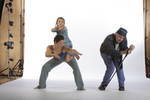
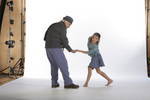
A few weeks ago I enjoyed the privilege of visiting San Francisco’s CounterPulse Theater for DanceNaganuma’s Peace About Life show. Performers of all ages, including very young children and older adults with Parkinson’s disease, moved about the stage. Sometimes soaring and gliding like ballerinas, and other times marching, brushing each other off, and conveying tension through more rigid postures, the dancers illustrated the different moods and aspects of the lives of those living with Parkinson’s disease.

Anecdotes about life post-diagnosis served as a background for some of the dancing: one woman resolved to push her body as far as possible through exercise rather than resign herself to helplessness, another man made peace with the wavy lines in his paintings after losing some control of his hands. Yet, the presence of people of all ages, with and without the disease, and the reliance on universal themes of interdependence, family relations, coping with aging and life transitions, rather than on specific medical details, made this dance performance a piece on the stages of life, relevant for many people outside the Parkinson’s community.

Some medical research at the University of Colorado-Denver currently looks into possible health benefits for Parkinson’s patients who dance or engage in other forms of exercise. Dance may actually prove especially beneficial as it encourages practice in the accurate, mindful motions which the condition tends to make difficult.

 However, DanceNaganuma’s performance exists as much for the audience as for the cast and crew. This is not a physical therapy session, but a presentation of complex emotions and life’s confusion (in particular, a standout piece where dozens of young voices and bodies surround a few performers, all simultaneously chanting different ideas on what is most important in life.) This piece created the visceral effect in me which the choreographer hoped to convey: I had to restrain myself from jumping up and screaming for everyone to be quiet! In another scene, which earned my nods of recognition, many different people surrounded a single young healthy woman, attempting to pose her, make her smile, make her look presentable, and she fell out of line each time. Those with Parkinson’s themselves are not the only ones affected by the condition, or by aging in general – and I appreciated the attention paid to the effects on family and friends.

Not every piece seemed jerky and confused: some, especially the opening segment with dancers in flowing orange robes, reflected the grace and beauty still present within the participants’ movements. This gave dignity to all of the dancers – by allowing them to show off the best they could do in whatever condition life had brought them, rather than having them convey imposed ideas of ‘weakness’ or ‘age.’

Overall, Dance Naganuma’s Peace About Life: Dancing with Parkinson’s excels at living up to all the aspects of its name. The cast strikes a balance between illustrating life with a serious movement disorder and presenting their company’s skill at creating beautiful movements and stage pictures. Through conveying the disease’s effects through nontraditional methods (spoken word anecdotes, abstract renderings of emotion) and through the mix of ages and ethnicities present on stage, the company communicates a real sense of peace about life: that although one’s looks and ability to move will change with one’s age and health conditions, there is still a place where all people are welcome to come out and participate in public, where we do not have to camouflage or ignore reality to find and present the beauty of the human body, of movement and life in all its forms.

About Claudine Naganuma, the company’s founder:

Claudine Naganuma founded danceNAGANUMA in 2001. She has served as the Managing Director of Danspace since 2002 where she teaches modern dance, ballet and composition. Her company danceNAGANUMA is in residence at Danspace and has been producing work and performing in festival settings annually. She was selected as a Yerba Buena Center for the Arts Hong Kong/San Francisco exchange artist in 1999. She also received a Jack Loftis and Vibeke Strand Honorary Fellowship while at the Djerassi Artist in Residence Program. Her costume designs merited an Alexander Gerbode Foundation Award as well as two Isadora Duncan nominations for costumes in 1995 and 1992. She received her M.F.A. in Choreography and Performance from Mills College and her B.A. in English Literature from Dominican College. She studied Early Childhood Education at the Mills College Children’s School and continues to teach specialty classes at Aurora Elementary School and St. Paul’s Episcopal Schools in the East Bay. Claudine served as the Artistic Director of Asian American Dance Performances from 1992 to 2004 taking it into its 32nd anniversary.

A poem, from Cynthia Lamanna’s son, to his cousin


From Elijah Plummer:

In your childhood we played in the yard
“Paradise” was no further than the fence line
It was our canvas of joy upon which we painted
All the colors of loves imagination.Afterwards, years later, when that love
had learned the pain of distance, i
found my way back into that yard.

the “loquatz” tree was full as usual and
the “stone fire put” looked ever so lonely
nothin had changed except that YOU
were not there. And because of that
not the sunlight and fresh air, not the
singing birds nor garden scents
could remove the shadow from my heart;
i cried…

Paraphrased from Cynthia’s description of this piece:

Cynthia’s son Elijah wrote this for his cousin Bethany, who was like a little sister to him. He would go stay with the family nearly every weekend for several years before he passed away at age twenty-six.

Though he wrote many sad poems, he lived with passion and purpose. Psychology fascinated him, and he may have been somewhere on the autistic spectrum. He was a beautiful soul, and I am honored to share this piece of his with you.

Cynthia Lamanna may be reached at cynthialamanna@yahoo.com

Dee Allen’s New Spoken Word Poetry


BIO
___
Used to be 404 and 770.
Now, I’m 415 and 510.
Seven years spent
Taking in all this Area by the Bay gives me.
The good,
The bad,
The strange
From my adopted home on the range.
“Consume all of it,
Grow strong and
Put in the work you’re meant to do”,
My heart whispers.
Always down for the Struggle
In defence of all life
Encompassing nature, all races, sexes,
      species and certain classes
Especially the Poor—-
________________________
W: 9.26.09
[For Lisa Gray-Garcia aka Tiny.]

TORCHLIGHT
___________
From a marble pit in Athens,
A perpetual pyre burns on.
Re-housed in a cone hand-held,
Made of titanium steel, part of the pyre is
Glowing, flickering, blazing, illuminating
With its own newfound life.
Traveling the globe
In a cyphre, the steel torch is gripped & carried
Providing light.
Torchlight tells us that the games are coming.
Yet whenever the torch approaches,
What some see as a symbol of sportsmanship
And good will, most see
Lost blood, damaged lives, mouths sealed shut
In the “people’s republic” of the Far East.
Visions of nightsticks, shields, boots kicking in
Ribs, filling jails, extracted innards, outlawed
Faiths & politics, support for starving children,
Divide & conquer in another besieged land
Covered in African dust & endless warfare.
Visions alive & well in the public mind.
Torchlight darkens its path through
Old cities of the Earth.

Torchlight tells us that the games are coming.
And with them,
Displacement
Repression
Surveillance
Follows.

Looking at evil transpiring
Elsewhere
Makes it easier to cast
Thousands of blinded eyes on
Atrocities in the land of plenty.

Displacement
Repression
Surveillance
In their harshest forms
Happen here, too.

Never mind Tibet. Never mind China.
Free Hunter’s Point. Free Oakland.
Better yet, free Amerikkka
From its hypocritical self.
____________________
W: 4.28.08

TORCHLIGHT 2
_____________
Torchlight
Burns bright
Torchlight
Holds flame
Torchlight
Carried in different hands
Torchlight
Carried across continents
Torchlight
Means games
Torchlight
Brings crowds
Torchlight
Means sportsmanship
Torchlight
Brings tenfold
Catastrophe
To women,
To black bears,
To legions of impoverished on the street,
To non-surrendered
Indian land
Torchlight
Means corporate sponsorship
Torchlight
Brings happy consumers
Torchlight
Means merchandising
Torchlight
Brings pale green
Cascades, the kind that fills
Bank vaults well
Torchlight
Is development
Of paradise for wealthy, smug ones
Torchlight
Is removal
Of mountains & forests
Torchlight
Is cleansing
The city of their weary, tired
And dirt-poor with nowhere
New to breathe free
Torchlight
Is feeding
The two-week, five-ring
Spectacle billions of the workers’ dollars
Straight line to debt
Torchlight
Is the beacon
Flickering, attracting
Businessmen, snipers, militarised
Cops, their hated armoured flesh
Lent to a powermad, sickened dream
Torchlight
Shines its brilliance
On a vision its backers want materialised:
Steel-gated, multi-camera, heavily-guarded
Checkpoint AR-15
Panopticon future
Guaranteed not to disappear
When the games do
Torchlight
Is the symbol
For Fortress KKKanada
Torchlight
Means runination
For Vancouver—-

The natives
Saw this coming long ago.
Together, they fight
The torch & the chaos its brings.

Bulldozers sabotaged.
Roadways blocked.
Flags stolen.
Corporate offices wrecked.
Relay runs disrupted.
Billboards defaced
With spray-paint warnings subtle
As a car crash.

For all its powerful shine & magnitude,
The torch

Have nothing on the wolves.
There’s more than enough to
Snuff out the flame.
The packs are gathering,
Moving in for the big strike
With glowing hearts.
The digital clock
In the downtown square is ticking.
Captains of industry are ready
And so are the furious wolves,
Emerging from hiding in the woods.

The games have already begun
On the streets.
_________________________
W: 11.12.09
[For Gord Hill aka Zig Zag.]

NO OLYMPICS ON STOLEN NATIVE LAND.

Dee Allen performs and writes at social-justice events all over the San Francisco Bay Area. You may reach him at pathogen@sanfranmail.com