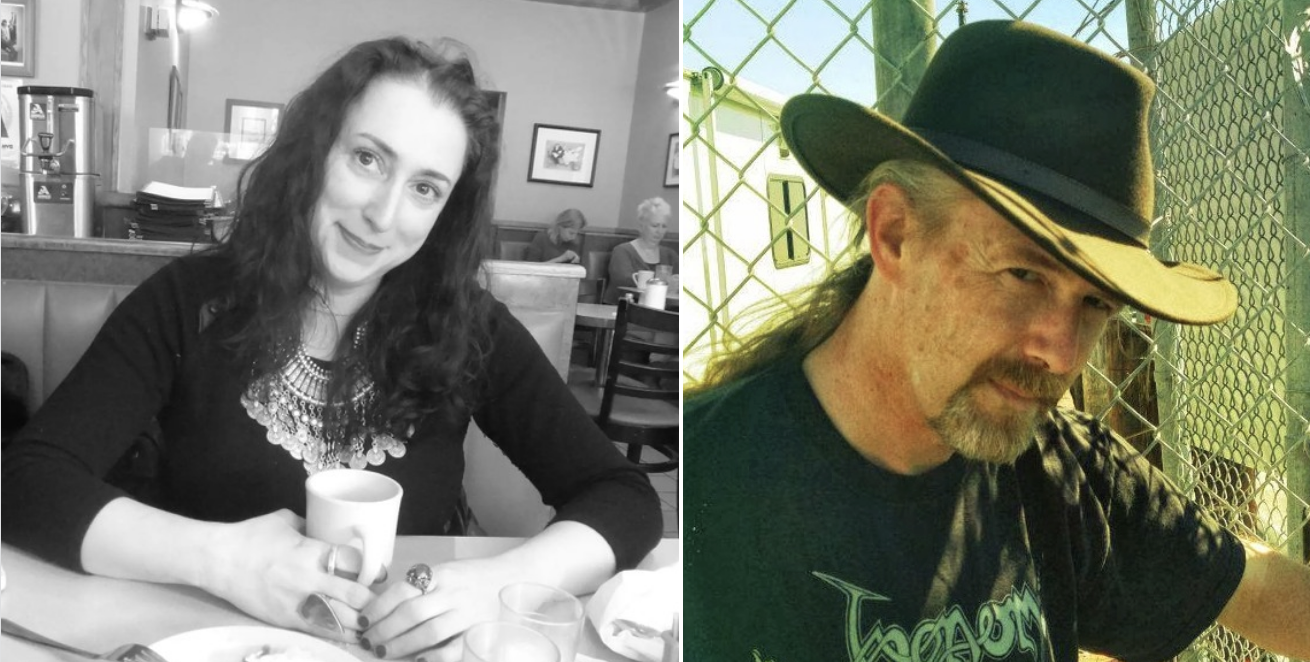
Cristina Deptula interviews poet Michael Todd Steffen

What inspired you to write this collection? 

The urge to salvage something I suppose of my losses inspired a good deal of the poetry in this book. That is the oddity of memory: we never really lose anything we cherish. For me, there is an almost invisible essence to each thing we love, each moment, as particular and invisible as the scent of mint in the sauce of a good meal. So part of the inspiration to write the poems was also finding or coming up with the disguises that would conceal those dear ones, moments and things while they held the place of identities and kept the reader (in me) on the appreciative hunt, searching them out anew. An indispensable element of joy is in the pursuit and discovery of it. 

Your poems often explore themes of nostalgia and reflection. Can you talk about the role of memory in your work? 

To add to the partial answer to this question found in my first response: History contains a key in my way of thinking about my own past. It is collective memory, and it’s a vital key in knowing who we are, who we choose to be rightfully from our journey across time and distances. The fact for most of us is that we have many homes and a large and very diverse family. Going to be with one means leaving and for the time losing the other. I grew up watching the spirited Sand Hill Cranes on the Nebraska-Platte River stop of their migrations from South America to Canada each spring. They’ve flown the same migratory path since the age of the dinosaurs. A simple clue to the nearly perpetual mechanism of nostalgia and desire in me comes by way of the salient ironies of missing America most when I was living in France, and then missing life in France now that I’m living in America. That can be true of the different places I’ve lived here in the States too, living in Boston and missing Oklahoma or Tennessee. I have a joke about a partner who insists she stays with her guy mostly only to avoid falling into the gross error of having to miss him if she were to leave him!

These poems touch on the intersection of personal and historical events. How do you balance these two aspects of your poetry? 

Some time back after I’d finished my Masters degree in England, I moved to Normandy in France. To my surprise I was very much appreciated – The American! – by people there. They kept insisting on thanking me for helping liberate them from the Nazis in WWII. I kept thanking them for the wine and fine meals they prepared for me, while insisting I hadn’t even been born yet in 1944. I grew up vaguely aware of a great-uncle, my mother’s uncle Jack, who did participate in the Battle of Normandy, but it took me awhile to connect those dots. In fact, particular interest in WWII came back powerfully to me as a way of finding a language to help me write about those 10 years in France. The end of the long poem in this book alludes to that uncle. Two more long narrative poems were written about the family French-American connection and the days of WWII in rural America and in Occupied France. I met so many people there who had lived under the Nazi Occupation, each with their memorable story to tell. Eventually I’d like to publish the three narratives together as a trilogy.

Your poems often have a strong sense of place. How do you think your surroundings influence your writing, and what do you hope readers take away from your descriptions of specific locations? 

Writing about the particulars of a place marks a positive act of writing, of witnessing, but also appreciation. It is like complimenting another for the care and work they put into what they do—gardening, dressing fashionably, fixing a meal. The particular language of love waters the plant we are. When we don’t receive any recognition for our efforts we wilt. Same for place. We need, on a larger scale, to put more into the infrastructure of our country. When I first moved into the Boston area and was teaching, it disheartened me to hear students from Japan and Canada, polite and quiet as they meant to be, lament the shabby conditions of our roads, airports and trains!

In several pieces you write about accepting things you can’t change (death, war, office politics, WWII history). How do you think this relates to your broader themes of identity, mortality, and the human condition?

Acceptance is an abiding wisdom that runs the American in me deeply at odds. Because, I suppose as an American, I do believe humanity can live better – that we have, at periods in history, lived in fact better than in this age of great access to convenience, communication and travel. We are emphatically out of balance with nature, especially its pace and patience, and terribly imprudent in how we consume our resources. That is what the upcoming generations have to struggle for. But it helps me to see that by and large they are becoming lucid to the challenge and I believe they will by numbers overcome the harmful ways our super-tech and voracious society lurches about as though to saw off the branch we’re all sitting on, so to speak.

Your poetry often has a reflective, introspective tone. What do you hope readers take away from your work, and how do you think it can relate to their own experiences? 

I try to be very careful about broadcasting any demagogical intention in my writing. I would hope the introspective element would inspire readers to be themselves generous with quiet time, turn off all the media and music, not all the time, not in any strict sense, but to cultivate an appreciation for the sifting ruminative processes of reflection. Great insights do come, but only of themselves with a sort of natural, unforced, even wary way of approaching them. Almost like deer in the wild. Voluminous wide access to all the facts doesn’t really help us put those facts together. On a small very intense scale, that’s an important lesson creative writing teaches us. Beyond what, the how!

Michael Todd Steffen’s book I Saw My Life is available here from Lily Poetry Review.
Poetry from Niall McGrath

Days of a shivering sun 

(i.m. David McWilliams) 

   I have shaken in those same streets 

among a throng cowering at the bandstand

   as down the hill something erupts

a puff of black smoke as if from the chimney

   above a camp crematorium,

those same roads where you noticed him, nose pressed

   to shop windows, skin as pale as death 

and I have known a similar prejudice

   what it’s like to be overlooked

to be invisible and leave no trace 

   as the vain elbow through their race 

chasing other dreams and snatching at wealth 

   for all they’re worth, while just like you 

I’m content to observe, make brief comments

   about how glory is disbursed 

of, by, to and among the least worthy 

   with glassy eyes that do not care

and untwitching noses that do not smell

   the tartness of blood-sticky streets

where sandwich-board men holler about hell 

   and the evils of the casino 

that stands a Reichstag stately pleasure dome 

   burning with harsh voices that wail

about injustice even while they inflict 

   greater crimes on the innocent,

their hearts are caves of ice, their skulls winecups

   of the godless hoards, the type of brutes

blind enough to follow the first howling

   dog with leg cocked at a lamppost 

where only drunkards’ urine and rats run 

   they can get you so down you bow 

your head, fail to notice the lovely sun 

   roughs in the streets or yes-gofers

in grey suits in grey buildings issuing

   spiteful decrees like bureaucrats 

that stymied our moments of glory 

   through pettiness and passing spite, 

but you were beyond all that, going home

   to watch white horses jump the spray

along the strand where dark basalt columns

   mingle with tufts of seaweed grass

and pass precious time in the company

   of the only hearts that matter,

so I salute you and thank you for songs

   that make heavy moments lighter,

for reminding us when all’s said and done 

   best forgotten times and filthy streets

are mere totems of where we’ve risen from,

   immaculate days lie ahead. 

the day before

The day before I was due to go away

I visited you in your house,

tea and biscuits by an open fire,

your mother slipping into the other room

as we snogged on the sofa. 

We called at your aunt’s

to see her new baby. I learnt

your uncle had just started a business

in a converted church.

In the backseat at the marina

we made out some more

as the lough’s waves slapped on the shore. 

On the radio, songs of inspiration:

When the Going Gets Tough from Billy Ocean.

When I left you home, I told you

what I had to do the next day.

We promised to write. (For a while, you did,

how you liked how I slipped the hand

even if, after a few weeks apart,

it became Dear John). 

And I drove away, rattling over the cattle grid

listening to Captain of her Heart

and Manic Monday wondering 

should I go or would I stay?

CONSENT

It is march in Tyrone,

bluebells burgeoning, larches

swaying above St Patrick’s chair,

shamrocks greening by the bullán. 

I thought of Singing School

and The Strand at Lough Beg

as we drove by Lough More

and you spoke of Rattle and Hum,

Bono slagging armchair patriots

after Enniskillen that shocked

you into sense, knowing who to revere.

Those around us here,

now, young and dumb enough

to idolise or wear

their balaclavas as badges

of dishonour, whatever their colours. 

I mull over what happened to Lyra

and to my tutor’s wife,

starting her car to go to work,

who didn’t even know her neighbour

was a cop or, until it was too late,

that the volunteer went to the wrong address.

And the hate that took her legs

was the same as that in Carrickfergus

where Glenn criticised 

racketeering. The dew of my libations

is for people like him,

the shards of his ribs

bleeding out, agonised, 

alone by the bed

where they left his dog

like The Godfather’s horse’s head. 

It’s too much of an inconvenient bore

for many to think about the skelfed seats

and foam-pocked red cushions

of Darkley and Tannaghmore. 

No Troy-like cures

this long after we were supposed

to have respite, when our guardians of peace

are too neutered to chase escooters. 

The well’s rags have rotted away,

the plaster St Patrick has toppled;

there’s a dog walker who is aware

it wasn’t giants or enraged sidhe

but winter floods that flattened 

burn-side hazel and birch

and last year’s storm that brought down

so many spruce here in Favour,

but there’s still demons in Augher 

this Lughnasa to coerce to Altadaven.

Rockefeller made me a junkie

‘The way to make money is to buy when blood is running in the streets…

I have ways of making money that you know nothing of.’

(John D Rockefeller) 

old John D wanted workers not thinkers

he and his rich mates wanted cheap labor

he donated to medical schools – the catch 

being he would dictate what they could teach

promoting his petroleum-based pills

over alternatives – holistic, herbal –

spawned over a century of disdaining

complementary techniques

it’s why I can hear the laugh in the GP’s

voice on the phone when I mention I see

hypnotherapy stopped me being anxious,

kinesiology fixed my reflux 

when I was down they gave me diazepam

without saying what it does to the system

when will they accept the curveball thrown,

causing my spiral towards methadone

when they cut welfare I tried cold turkey

couldn’t shake the monkey, stuck as a junkie 

desperate, get fentanyl, crack cocaine,

anything off the street, heroin –

when I am beaten, bloody in the gutter 

who’s counting dividends? 

Take away the fourth wall 

see the bedroom scene

double bed centre stage 

pre-divan spindly legs 

toddlers push pillows aside

bounce bounce bounce

arms out straight

swinging for propulsion

launching somersaulting

so high heads tucked

most of the time

landing squat 

at the edge

but the carpet 

cushions any falls

as spindly legs splay 

get replaced by stacks

of family bibles 

which one day

contain fresh names

of gleeful toddlers 

long after that room

has been demolished 

Aftermath

I’m a mess. 

But you had to insist.

Even though you were told.

You knew. 

That’s why your subterfuge. 

But still you persisted. 

And here we are. 

You harassed and bullied. 

And you roped others in. 

So that when I resisted

it was them as well as you. 

And made me look stupid. 

As always, victim-blaming. 

As always, self-blaming. 

this city

The poet rages the room,

smashes chair over table

screaming, My work’s not systemic 

or formal like Lowell, 

that same bland, gloomy hand

they all affect

however pseudo-confessional,

that multi-dimensional 

lack of meaning,

I don’t scrawl like an academic,

I write like a human being. 

Feel the sun blaze,

skin tingling as it reddens,

cheeks itching as they dry,

ignore the heady aroma of magnolia

and rose pungent on the breeze

from railed in street greenery.

Sense the moon rising above

the horizon, eeking its way from one sky

to another, delving into darkness 

as surely as this city turns us into savages: 

the way the lover rages,

kneeling on the sidewalk,

weeping over the bloodied limbs

and exposed viscera of the only soul 

that made inhabitance bearable.

One needy conceit rages,

objectifying, denying an other,

oblivious to the reality

every herd doesn’t just murmurate 

or scatter like magnetized irondust, 

but throbs with a multitude of hearts 

that spew adoration and harm as readily 

and promiscuously, as delicately

and beautifully as bile 

seeping onto pavements. 

So, this city swarms 

with such exigencies

nightmares generate. 

You Know It’s Me 

Sunshine through grubby trailer windows…

A moment ago I was at the gas station,

they have a good vegan range. Everyone knows

me, the wild-haired cat-lady,

the old one there with accusing baggy eyes

even remembers… why I take

a cab to the clinic twice a week at four

to queue up for the methadone that keeps

me level, why I lie awake when it’s dark,

sometimes siesta through afternoon heat

when the distant industrial estate

is clattering. All the world is busy

living and getting, consuming, taking. 

I panic and rush to the doctor’s. Infrequent

sessions with a shrink to regain focus.

Sunday mornings the catholics parade 

for service, I watch them go and return 

from slippy deck steps, feel shutters

crash in my head, calloused like the hands

that kneaded me when I was playdough.

Crashing down, galvanized steel 

locking away the past. Steel, like gates 

all around you. I visited once, 

threw up in the parking lot. 

I don’t need to see you, I know you’re there. 

I know your stomach knots

to see me, but you’ll never admit it. 

You shuffle between gray block rooms,

lie, fantasizing, sometimes about me, 

as I lie next to a treated plywood wall,

sometimes fantasizing about you.

Through so many years –

letters, then emails, now texts.

Rare voicecalls. We have little to say:

you don’t want to divulge the threats

you face every day; I don’t want to confess

the emptiness of my existence. 

There was no doubting the evidence,

I understand why you have to be where you are,

don’t excuse what you did or why.

But sometimes there is something 

that is stronger than sense. 

That’s why I tolerate this incarnation. 

That’s why I contend with 

sunshine through grubby trailer windows…

I know you know,

you know I know…

I know it’s you;

you know it’s me. 


Niall McGrath is a twice Pushcart Prize nominated writer in the 2020s, most recently for 2026, from County Antrim, N Ireland. He has had work in Tears In The Fence, The South Carolina Review, Ashville Poetry Review, Poetry Scotland, French Literary Review, Antigonish Review, Irish Times, Poetry Ireland Review, The Stinging Fly, Poetry Scotland, New Statesman and Quadrant (Australia) among other journals. He is Assistant Editor of Northern Ireland’s premier journal of the arts and culture, Fortnight. Recent selections include oral tradition (Alien Buddha, USA, 2024) and Shed (Lapwing, UK, 2021).

Essay from Tursunaliyeva Zilolaxon

THERE IS NO FUTURE WITHOUT BOOKS

Annotation

This article highlights the incomparable role of books in the life of society, their importance in educating the younger generation, and the issues of developing a reading culture. It substantiates the necessity of effectively organizing literature lessons in the education system and forming reading skills in students. It also discusses the reforms being implemented in our country to improve the system of publishing and distributing book products, develop library activities, and expand book trade. The article emphasizes that bringing books closer to the population and turning them into an integral part of daily life is an important task. As a conclusion, the idea is put forward that a book is the main factor of a person’s spiritual development and that society cannot progress without books.

The homeland – our motherland – possesses its own great and unique book. This book is the history, spirituality, aspirations, and future of our people. Reading it, understanding it, and preserving it is the sacred duty of each of us. Indeed, a book is the greatest blessing that leads a person to perfection, guiding them out of the darkness of ignorance into the light of enlightenment.

Today, it is necessary to pay special attention to literature classes in our schools and colleges. It is important to instill a love for books in the younger generation from an early age and to develop in them skills of independent thinking, free expression, and creative approach. During lessons, it is necessary not only to make students read the text, but also to create opportunities for them to understand, analyze, and debate it. This broadens their thinking and teaches them to look at life consciously.

At the same time, it is important to recommend that students read more fiction, to encourage and support them. A child who reads books grows up not only knowledgeable, but also spiritually mature, patriotic, and well-rounded. Therefore, the development of reading culture should be one of the priority directions of the education system.

Unfortunately, it is also observed that in our lives the place of books is sometimes being replaced by other things. While large shopping centers, markets, and various service outlets are increasing, there are not enough bookstores. Even in large airports, railway stations, or crowded public places, book sales are not properly organized. As a result, people are often forced to waste their time during travel instead of reading newspapers or books.

However, in developed countries, the system of book trade and libraries is well established. It is possible to find books near every station and every торговая точка. This plays a significant role in increasing the reading culture of the population. We also need to bring books closer to people and turn them into an integral part of our daily life.

For this purpose, important reforms are being implemented in our country. In particular, special decrees and resolutions have been adopted to develop the system of publishing and distributing book products and to increase reading culture. Based on these documents, measures are being taken to expand book trade, improve library activities, and provide the population with high-quality and affordable books.

However, these efforts should not be supported only by the state, but by the entire society. Promoting reading in neighborhoods, educational institutions, organizations, and enterprises, organizing book fairs, and holding reading competitions among young people are of great importance.

If we look at the history of our ancestors, we can see that they placed books and knowledge above everything. Our great scholars, commanders, and thinkers understood the world through books and achieved great heights through knowledge. The rich spiritual heritage they left behind is an invaluable treasure for today’s generation.

Tursunaliyeva Zilolaxon, a first-year student at the Faculty of Primary Education of Kokand State University, living in Uchko‘prik district of Fergana region.

Essay from Bakhromova Gulsanam

THE GOALS, OBJECTIVES, AND PRINCIPLES OF INCLUSIVE EDUCATION

Bakhromova Gulsanam, a second-year student in the Surdopedagogy program, Faculty of Pedagogy and Psychology, Kokand State University.

ABSTRACT

This article discusses the goals, objectives, and principles of inclusive education, as well as its significance in the modern context. It also examines why students should be included in inclusive education and highlights the priority of its current goals and objectives.

 Keywords: Inclusive, social, psychological, child, behavior, physical, mental, education, needs, pedagogical.

Based on the humanistic principles of any state policy, the conditions created in society for persons with disabilities and socially vulnerable groups, as well as comprehensive support in all areas necessary for their free and prosperous living, reflect great attention to people with disabilities. The fact that one of the five principles of Uzbekistan’s development is defined as a strong social policy is a clear indication that the country is moving toward improving the lives of persons with various types of disabilities and those in need of social support through the targeted implementation of comprehensive approaches. According to statistical data, there are about 240 million children with disabilities worldwide. Like all children, they need quality education to develop their skills and fully realize their potential. Nevertheless, children with disabilities are often overlooked in policy-making, which limits their access to education and participation in social, economic, and political life. Worldwide, these children are more likely not to attend school. They face discrimination, stigma, and persistent barriers to education arising from the failure of decision-makers to systematically include disability in school services.

Inclusive education develops the general education process and implements an education system suitable for all children. It creates favorable conditions for children with disabilities by organizing additional support and facilities that facilitate their access to education. Educating children with disabilities in a separate special education system makes it difficult for them to adapt to society after graduating from school. In addition, they are forced to live away from their families, which may contribute to the formation of various negative behavioral traits. These children may become dependent and develop difficulties in self-care.”

To implement inclusive education, the integral criteria of the developed system for staff consist of personal and procedural components. The personal component includes the following socio-psychological indicators: social activity, readiness for self-regulation of behavior, self-awareness, and self-esteem related to physical and mental health. During the learning process, students demonstrate changes in certain personal qualities, which makes it possible to assess the level of achieved socialization and identify emerging needs for creating and promoting additional conditions for social integration. The procedural (socio-pedagogical) component does not directly reflect changes in the personal characteristics of children with special educational needs; rather, it helps to understand the mechanisms of influence of technologies and methods applied in the socialization process.

This component includes the accessibility of inclusive education for children with special educational needs, the inclusive competence of participants in the educational process, and the readiness of the community to provide volunteer-based services. Ensuring access to inclusive education plays an important role in implementing socialization mechanisms for young people with special needs, as it helps remove key barriers to obtaining quality education and to full and independent participation in society. When evaluating the effectiveness of socio-pedagogical work, first of all, we identify the achievements made in working with applicants (providing information about study conditions, professional guidance, adaptation to the student environment, and preparation for university admission by teachers). The next indicator requiring detailed analysis is the adaptation of the educational base to students’ individual needs (architectural accessibility, adaptation of classrooms and workplaces, provision of learning materials and modern information technologies, and modifications in accordance with curricula).

The main goal of inclusive education is to involve all children who have access to education, including children with special educational needs, in the general education process. Inclusive education is of great importance as it provides access to education for children with special needs. It means the inclusion of such children in the continuous general education system. In many cases, parents of children with special educational needs have incorrect perceptions about their children’s educational rights and other opportunities; as a result, they do not demand proper education for these children.

The objectives of inclusive education are:

1.To create a unified adapted social environment that ensures equal treatment of all children and excludes any form of discrimination against students with different developmental abilities;

2.To develop a tolerant attitude among the public and all participants of the educational process toward the issues of students with special educational needs;

3.To develop the intellectual and social potential of both typically developing children and children with special educational needs within the educational process;

4.To provide opportunities for all students to master preschool, general secondary, vocational, and higher education programs in accordance with state educational standards;

5.To create conditions for the comprehensive development of students, activation of their emotional-volitional sphere and cognitive activity, as well as the formation of social skills and competencies;

6.To provide advisory support to families raising children with special educational needs, to increase parents’ awareness of educational and upbringing methods, pedagogical technologies, teaching methods and tools, and to offer psychological and pedagogical support to them.

In the process of inclusive education, students with special educational needs are taught together with typically developing children in the same school and classroom. Children with disabilities require special support from the very first days they enter school. Such support is considered necessary throughout their entire lives. Therefore, it is essential to create favorable conditions for the social development of these students starting from the early stages of schooling.

The educational process organized for students with disabilities requires identifying forms of inclusive education and integrating them into the general education system. Such integration must correspond to their specific educational needs.

Principles: The main principles of inclusive education. The implementation of an education system always requires adherence to certain rules and principles. The implementation of inclusive education is based on the following principles:

  1. Recognition of inclusive education.
  2. Accessibility of inclusive education for all learners.
  3. The principle of interaction and cooperation (communication).
  4. The principle of decentralization.
  5. The principle of a comprehensive approach in inclusive education.
  6. The principle of flexibility in inclusive education.
  7. The principle of professionalism.”

The role and significance of inclusive education in the development of society require the implementation of the following tasks: creating the necessary psychological, pedagogical, and corrective conditions for the education of children and adolescents with special needs in educational institutions; ensuring their mental development and social adaptation through the implementation of general education programs and corrective work oriented toward their abilities; guaranteeing equal rights to education for all students; meeting the needs of both children with and without disabilities with the active participation of society and families, and ensuring early social adaptation; realizing the right of children and adolescents with special needs to live with their families without separation; and forming a friendly, compassionate, and supportive attitude in society toward children and adolescents with special needs.

In the full implementation of the above tasks, special attention should first be paid to the following: a child with special needs is still a child like all others and has the right to be recognized and respected; therefore, referring to them by their impairment is considered inappropriate. Regardless of their condition or abilities, every child always needs the support of adults. Isolating or labeling them is not consistent with the principles of humanism. Previously, terms such as “abnormal children,” “disabled children,” “blind children,” “deaf children,” “mentally disabled children,” and “children with locomotor disabilities” were used. However, such terms violate the rights of children with special needs and have a negative impact on parents as well.

Although children with special needs may not perform tasks as quickly or perfectly as typically developing children, they are still able to complete tasks according to their abilities. Protecting the rights of the child and treating them positively is an important educational approach. Therefore, any form of discrimination or disrespect must be avoided.”

Inclusive education is an important approach that ensures equal access to education for all children, including those with special educational needs. It promotes the creation of supportive psychological, pedagogical, and social conditions that enable children to develop their potential and successfully integrate into society. The main principles and tasks of inclusive education focus on equality, accessibility, cooperation, flexibility, and respect for individual differences.

This system not only improves the quality of education but also strengthens social inclusion, tolerance, and humanistic values within society. It helps eliminate discrimination and negative labeling, ensuring that every child is recognized, respected, and supported according to their abilities. Therefore, inclusive education plays a key role in the development of a fair and compassionate society where all children have the opportunity to learn, grow, and participate fully in social life.

List of References

1.Sadikovna, Rakhimova Khurshidakhon. “Theoretical Foundations For Teaching Future Surdopedagogs To The Development Of Speech Of Children With Cochlear Implants.” Onomázein 62 (2023): December (2023): 2408-2416.

Amirsaidova SH.M. “Maxsus pedagogika fani taraqqiyotida sharq mutafakkiri g‘oyalarining o‘rni va roli” . Ped. fan. nom… diss. – T., 2006.

2.  IIektra Spandagou, Cathy Little, David Evans, Michelle L. Inklusive Education in Schools and Early. Childhood Settings.springer Springer Singapore. 2020.

3. Инклюзивное образование в Испании. Пашкова.М, Скуднова. Т.Д.2018.

4. Екатерина Михальч. Инклюзивное образование. 2021.

5. Наталья Микляева, Татьяна Чудесникова, Анна Виленская, Ольга Кудравец, Светлана Семенака. Инклюзивное образование детей с ограниченными возможностями здоровья. Москва Юрайт. 2021.

Poetry from Tursunova Mehrinoz Oybek qizi

A Letter to My Mother

If one day this fragile heart should cease,

My soul will hold just one last wish in peace:

In that last breath, that final fleeting hour,

Mother, to see you once more is my power.

My gentle one, so loving, warm, and kind,

Around your children, tears you often bind.

Through every trial life placed upon your way,

You stood unbroken, strong in every day.

My angel here on earth, my shining sun,

Your smile can brighten all when day is done.

When your bright eyes so full of light I see,

This world feels whole and perfect just for me.

Now I confess the truth I could not say:

A selfish child—I’ve been along the way.

To such a mother, pure and full of grace,

I’ll never be deserving of your place.

At times I spoke with words both sharp and cold,

An ignorant heart, a soul not yet grown old.

Though years have passed and I have aged in time,

I’m still that foolish child in this strange life of mine.

Are all mothers like you—I wonder so,

Who never blame when children hurt them so?

One question lives inside my restless heart:

From where does such deep endless love all start?

My dearest mother, patient through it all,

My life, my hope, the one who lifts me tall.

It’s true I’m not the child you hoped I’d be,

But you’re the greatest mother there could be.

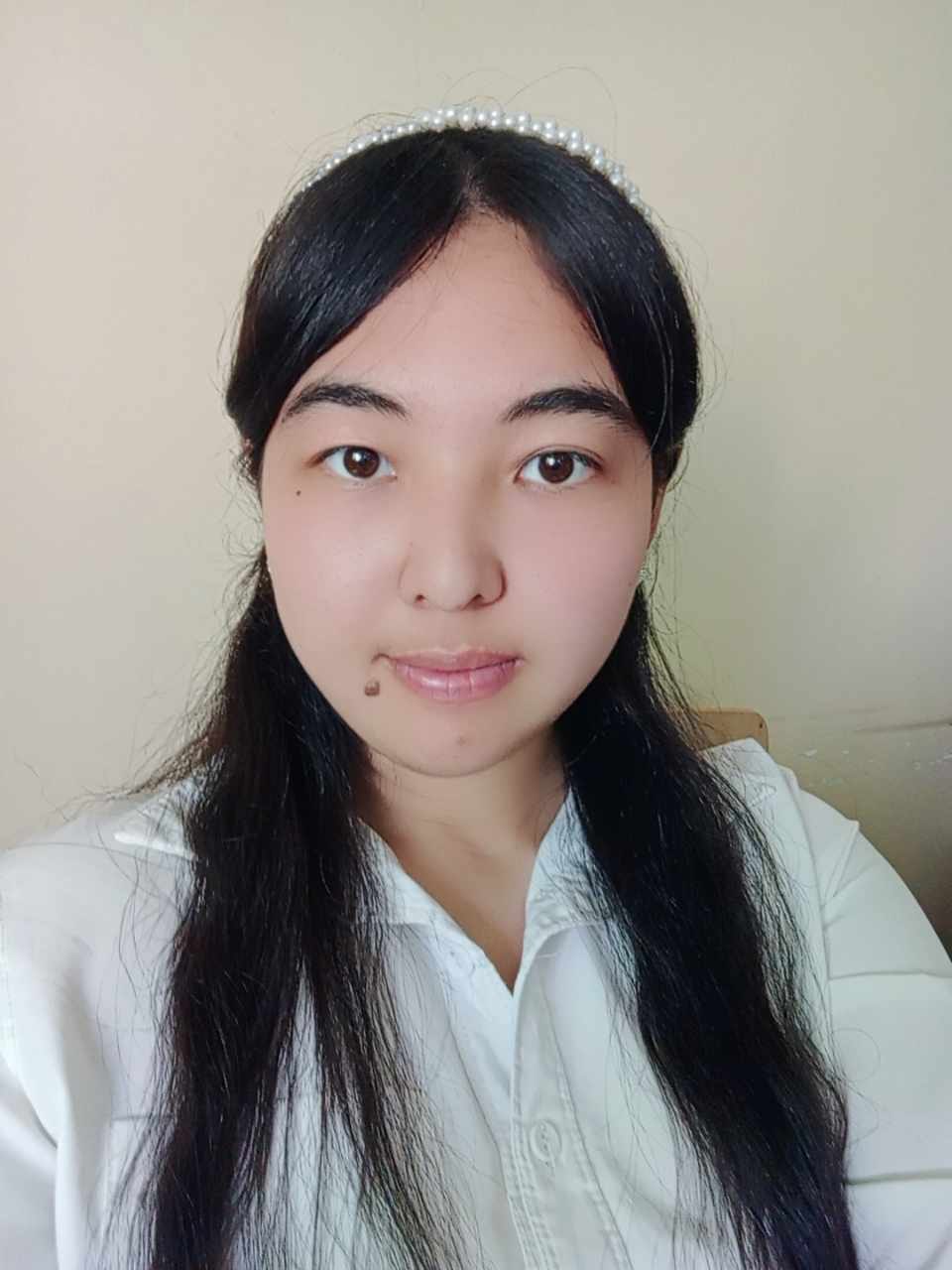
My name is Tursunova Mehrinoz Oybek qizi. I was born on February 28, 2005, in Andijan region. Currently, I am a third-year student at Andijan State Pedagogical Institute. I chose primary education because I enjoy working with children.

My favorite activities are reading books and learning languages. At the moment, I work as a Turkish language teacher. In my free time, I enjoy writing poems.

THE HOTMAMA PART THREE With love to my femme‑feral sister Tricia Warden by Alex S Johnson (Kandy Fontaine)

Hotmama kicks open the saloon doors of the multiverse, heels clicking like two caffeinated metronomes on a bender.

“Before we get to da canole,” she says, “we gotta talk lineage. Receipts. Pedigree. Da who‑da‑hell‑you‑think‑you‑are file.”

She snaps her gum. The gum files a counterclaim.

⭐ BIO INSERTION: ALEX S. JOHNSON

Hotmama waves a cosmic clipboard.

“Dis one? Alex S. Johnson — transfemme polymath, author, editor, metal journalist, books sittin’ in Harvard, MIT, SUNY like they payin’ rent. Former English professor, horror surrealist, creator of Axes of Evil, Bad Sunset, Wicked Candy, editor of Just One Fix: A Literary Salute to William S. Burroughs, and boss‑witch of Nocturnicorn Books / Darkest Wine Media. Host of The Kandy Fontaine Show. A whole literary hydra widda thousand heads, and every one of ‘em talkin’ smack.”

She winks.

⭐ BIO INSERTION: TRICIA WARDEN

“Then we got Tricia Warden — femme‑feral Jersey City oracle, author of Brainlift, Attack God Inside, Death Is Hereditary. Her words ended up in a Golden Calf–winning film, and she’s performed widda legends: Hubert Selby Jr., John Cale, Ntozake Shange, Exene Cervenka, Mark E. Smith, Henry Rollins — the whole pantheon of beautiful weirdos. She writes like a fever dream and performs like a prophecy.”

Hotmama leans in, conspiratorial.

“These two? They ain’t collaborators. They’re a double‑helix of chaos. A matched set. A cosmic tag‑team. A literary buddy‑cop movie where both cops are unhinged and the precinct is a surrealist nightclub.”

⭐ RETURN TO THE ORIGINAL HOTMAMA PART III ENERGY

“Badda BOOM, badda BING, badda metaphysical BLING,” Hotmama says, heels clicking like two switchblades flirting in an alleyway behind a quantum bodega.

“You think Part Two was the blackout? Honey, that was the brownout. This here’s the grid collapse.”

She snaps her gum. The gum snaps back.

“Lissen. I went down the canole hole again. Not the K‑hole. Not the Acker hole. Not the Pirandello‑rhinoceros‑barber‑sno‑cone hole. The canole hole. The one widda sprinkles of doom.”

She leans in.

“You ever meet a pastry that knows your government name? That’s what I’m talkin’ about.”

A voice from the mezzanine of the multiverse yells:

“HOTMAMA, YOU A WALKIN’ DISASTER OF SEMIOTICS.”

She blows a kiss.

“Baby, I’m the FEMA trailer of your subconscious. I show up after the storm widda glitter tarp and a bottle of olive oil.”

Suddenly the sky cracks open like a cannoli shell under too much pressure.

Out steps:

  • Cosey Fanni Tutti in a rhinestone hazmat suit
  • Nina Hartley holding a clipboard labeled “Continuity Errors”
  • Simone Signoret smoking a cigarette that smokes her
  • Harpo Marx honking a horn tuned to the frequency of feminist rage
  • Kathy Acker’s motorcycle, idling like a prophecy

Hotmama throws her hands up.

“OKAY, OKAY, I GET IT. THE LINEAGE IS HERE. THE GIRLS ARE GIRLING. THE META IS METTING. THE CANOLE IS CANOLING.”

She sighs.

“Fine. Let’s finish the scene.”

The reflection steps out of the puddle, puts on Hotmama’s shoes, and says:

“Tag. You’re it.”

⭐ DA BLACKOUT SKETCH.