I wonder if you truly knew How often my joy begins with you.
No reason, no moment, nothing to prove, My heart just smiles because it’s you.
Perhaps some happiness needs no clue, Some hearts just find their way to you. And mine, without a reason why, My heart finds its greatest joy whenever you’re near.
An introvert’s heart is a garden unseen,
Where calm grows quietly, graceful and green.
They listen with depth, they speak with care, Finding rare beauty others miss there.
They cherish few, but love them true, Their silence often says more than words do.
So never mistake quiet for small, The gentlest souls can inspire us all.
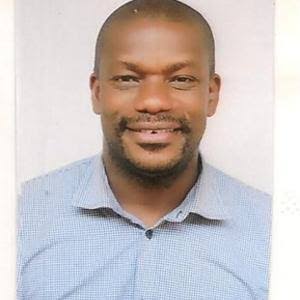
Hassan Musa Dakasku is a Nigerian writer, a passionate advocate for youth well-being, a microbiologist, and a performance poet. He is an author whose work is rooted in vulnerability and personal expression, and he maintains a personal blog where he shares his insights and creative pieces. Instagram: @hm_dakasku, Facebook: @hm_dakasku
Bank Cards: Advantages and Disadvantages in Uzbekistan
Turan International University
Annotation
This article examines the current state of the bank card market in the Republic of Uzbekistan. It analyzes the key aspects of plastic card usage, including the history of their emergence, types and categories, advantages and disadvantages, as well as the prospects for the development of cashless payments in the country. Special attention is paid to the national payment systems HUMO and Uzcard and their interaction with international payment systems Visa, Mastercard, and UnionPay. Based on data from the Central Bank of the Republic of Uzbekistan and other official sources, the analysis shows that bank cards significantly simplify the daily lives of citizens; however, users should follow financial security measures to ensure the safe use of these payment instruments.
Keywords: bank cards, non-cash payments, Uzbekistan, HUMO, Uzcard, Visa, Mastercard, payment systems, Central Bank.
Introduction
It is difficult for a modern person to imagine life without a bank card. This small piece of plastic has become not just a tool for storing money, but a real key to a world of financial opportunities. In Uzbekistan, the transition to cashless payments is gaining momentum every year, and today almost every adult citizen has at least one bank card.
According to the Central Bank of the Republic of Uzbekistan, at the beginning of 2026, more than 68.2 million bank cards were registered in the country, and their number had increased by almost one and a half times over the previous year [1]. At the same time, the share of cashless payments reached 43% in the first half of 2025 [2]. These figures clearly demonstrate that bank cards have become firmly integrated into the everyday lives of Uzbek citizens.
However, like any financial instrument, bank cards have both undeniable advantages and certain disadvantages. This article examines the history of the development of bank cards in Uzbekistan, their types, the specific features of national and international payment systems, as well as the advantages and disadvantages of their use. Particular attention is paid to security issues, since the growing popularity of cashless payments is accompanied by an increase in risks associated with their use.
Main Part
What Is a Bank Card?
A bank card is a plastic payment card that allows its holder to perform various financial transactions, including paying for goods and services, withdrawing cash, transferring funds, replenishing accounts, and much more [3]. Essentially, it serves as a personal key providing access to a customer’s bank account. From a technological perspective, a bank card is equipped with a special chip or magnetic stripe that stores information about the cardholder and their account. Modern cards also support contactless payment technology, which allows transactions to be made without physical contact between the card and the payment terminal. This technology is becoming increasingly popular in Uzbekistan, particularly amid the development of national payment systems.
It is important to understand that a bank card is not simply a means of storing money. It is a complex financial product that requires responsible use. The security of the funds depends on how effectively the cardholder manages their finances and follows security measures.
History of Bank Cards in Uzbekistan
The history of bank cards in Uzbekistan began in 2004 with the launch of the first national payment system, Uzcard [5; 6]. This step became an important stage in the development of the financial infrastructure of the young independent state. The creation of its own payment system made financial services more accessible to broad segments of the population and reduced dependence on foreign payment systems. An important milestone was the establishment of the National Interbank Processing Center in 2019 and the launch of the second national payment system, Humo [7]. This was preceded by a serious disruption in the operation of the Uzcard system, after which the President of Uzbekistan instructed the Central Bank to create an alternative payment system.
Starting in 2016, Uzbek banks began actively cooperating with international payment systems. For example, JSC UzNatsBank became a principal member of the international Mastercard payment system [8]. Subsequently, cooperation with Visa and UnionPay International was also established.
Main Types of Bank Cards
Bank cards can be classified according to several criteria.
First, they are divided into debit and credit cards. A debit card allows users to spend only their own funds held in the account. A credit card provides access to borrowed funds from the bank within an established credit limit. According to the type of information carrier, cards can be divided into magnetic-stripe cards, which are becoming outdated, and chip cards, which are more modern and secure. There are also combined cards that contain both a chip and a magnetic stripe.
According to the method of making payments, cards are divided into contact cards, which require physical contact with a payment terminal, and contactless cards, which allow payments to be made without physical contact.
The national payment system Humo is actively introducing contactless technologies. Humo cards allow transactions for small amounts of up to 50,000 soums to be made without entering a PIN code.
According to their status and range of services, cards are divided into standard, gold, platinum, and premium cards (World Elite, Black Edition). Premium cards provide their holders with additional privileges, including access to airport lounges, insurance, concierge services, discounts from partner companies, and other benefits.
Specialized cards for children, such as Uzcard Kids, have also appeared in Uzbekistan. These cards help young users become familiar with modern financial instruments under parental supervision [9].
As of 2025, more than 35 million cards had been issued within the Humo payment system. More than 184,000 payment terminals and over 6,400 ATMs had been installed throughout the country [10].
International Cards: Visa, Mastercard, and UnionPay
International payment systems in Uzbekistan are represented by three major brands: Visa, Mastercard, and UnionPay.
Visa is the world’s largest international payment system and operates in Uzbekistan through various partner banks. For example, Kapitalbank offers Visa cards of different categories, ranging from standard cards to premium Visa Infinite cards, which provide access to a wide range of services.
Mastercard is represented in Uzbekistan through numerous banks. For example, JSC UzNatsBank has been a principal member of Mastercard since 2016. The bank offers several types of cards, including Mastercard Standard, Gold, Platinum, World Elite, and Mastercard Virtual for online payments.
UnionPay is a Chinese payment system that is also expanding its presence in Uzbekistan. Having a UnionPay card is particularly useful when traveling to China.
The main advantage of international cards is that they are accepted in most countries around the world. This makes them indispensable for travelers and people who frequently make purchases from foreign online stores. For example, Visa cards can be used to pay for purchases on AliExpress and Amazon, as well as to subscribe to services such as Netflix. However, international cards may involve higher service fees, particularly for premium categories, as well as currency conversion fees.
Advantages of Using Bank Cards
Bank cards offer their holders numerous advantages that make them more convenient to use than cash.
First of all, bank cards provide security. Carrying large amounts of cash always involves the risk of theft or loss. If a bank card is lost, it can be blocked through a mobile application or by contacting the bank by phone. The funds in the account remain secure. In addition, many banks offer insurance for funds held on cards.
The second important advantage is the convenience of making payments. With a bank card, there is no need to carry cash or count change. Payments are completed within seconds. This is especially noticeable when using contactless payment: the card simply needs to be tapped against the terminal to complete the transaction.
Bank cards also make it possible to pay for goods and services remotely, including online. This is particularly relevant in the modern world, as more and more people prefer online shopping. Virtual cards, such as Mastercard Virtual offered by UzNatsBank, are specifically designed for such purposes and allow users to make online purchases without a fee.
In addition, bank cards provide access to various bonus programs. Many banks offer cashback, which means returning part of the amount spent to the customer’s account. Holders of premium cards can receive exclusive offers, including discounts at restaurants, hotels, and stores. Cards also make it easier to control personal expenses. Through a bank’s mobile application, users can check their transaction history, view their account balance, and set spending limits at any time. This encourages more responsible personal budget management.
At the national level, the active use of bank cards contributes to reducing the share of the shadow economy, since transactions pass through the banking system and can be monitored by tax authorities.
Disadvantages of Bank Cards
Despite their obvious advantages, bank cards also have several disadvantages that every user should be aware of. The main disadvantage is their vulnerability to fraudulent activities. Criminals may steal card information through phishing websites, skimming devices installed on ATMs, or social engineering techniques. There are frequent cases in which fraudsters call people while pretending to represent a bank and attempt to obtain confidential information from cardholders.
Therefore, when using a bank card, it is necessary to follow security precautions: never disclose your PIN or CVV/CVC code to anyone, avoid suspicious links, and do not make purchases on unverified websites.
The second disadvantage is fees. Some cards, particularly premium cards, require annual or monthly maintenance fees. Fees may also be charged for withdrawing cash from ATMs operated by other banks, transferring funds between different payment systems, or converting currencies. For example, cash withdrawals from an ATM above a certain limit may be subject to a fee.
The third disadvantage is the possibility of technical failures. ATMs or payment terminals may malfunction, while online banking services may temporarily become unavailable. This can create inconvenience, especially when it is necessary to make an urgent payment or withdraw money.
The fourth disadvantage is the risk of losing a card or forgetting its PIN code. Although a lost card can be blocked, restoring access to the account may take some time. If a card is lost, the user must also know the bank’s hotline number and be able to block the card quickly.
Prospects for the Development of Bank Cards in Uzbekistan
The future development of bank cards in Uzbekistan is associated with several key areas.
First, the number of issued cards and the share of cashless payments are expected to continue growing. According to forecasts by the Central Bank, the share of cashless payments will increase, and by 2030 it may exceed 75% of the total payment market [11].
Second, instant payment systems will be actively introduced, as they are already demonstrating high growth rates.
Third, the regulatory and legal framework will continue to improve. The Central Bank of Uzbekistan regularly adopts regulations governing the activities of payment system operators, establishing risk management requirements and cybersecurity measures.
Fourth, further integration of national payment systems with international ones is expected. This will make HUMO and Uzcard cards even more convenient for international travel.
Fifth, the digitalization of banking services will continue. The development of mobile applications will allow users to manage their cards more conveniently, including blocking and unblocking cards, setting spending limits, and receiving transaction notifications.
Sixth, virtual cards for secure online payments will become increasingly widespread. They allow users to avoid exposing their main account balance to unnecessary risks and provide additional protection against unauthorized withdrawals.
Conclusion
The analysis conducted allows us to conclude that bank cards have become an integral part of Uzbekistan’s financial system. Over the past two decades, the country has progressed from limited card issuance to tens of millions of cards and from a single national payment system to two competitive systems that actively interact with international payment networks.
The advantages of bank cards are undeniable: they provide secure storage of funds, convenient payment methods, access to a wide range of financial services, opportunities to control expenses, and various bonuses. The development of contactless technologies makes payments even faster and more convenient.
However, the use of bank cards requires financial literacy and responsibility from cardholders. The risks of fraud, fees, technical failures, and other disadvantages should not discourage people from using bank cards, but rather encourage them to adopt a more conscious and responsible approach. The future belongs to cashless payments, and Uzbekistan is confidently moving in this direction by creating a modern and secure payment infrastructure accessible to all citizens.
But those with no heart merely drift on their way.
A few gentle hearts melt the ice into streams,
A smile unties knots that are tangled in dreams.
Each soul will share bliss as the seasons roll by,
And happiness then will enlighten their sky.
If only the world could forget how to hate,
Today would surpass yesterday’s brightest fate.
A centenarian grandpa lives life with a goal,
His old aging wife smiles with joy in her soul.
The air is as pure as a clean, sacred mind,
Like innocent babies, no stain will it find.
To sharpen your speech, rub it hard on a stone,
To find the solution, stir fires unknown.
The moonless dark night will look radiant and bright,
If you kindle your heart with love’s endless light.
Time waits for no one if you sit there and cry,
Or lead your own steps where the steep canyons lie.
Though bitter hot peppers may season your meat,
The bread that you break will taste hearty and sweet.
You discover your true self in library halls,
You see who you are where the loud echo calls.
A wealth that is greater than all worldly gold,
In reading and books, you will surely behold.
If you wish to fly high, you will spread wings and soar,
If you wish to embrace, you will hold and adore.
Consider your health as the greatest award,
Drink happiness deep, let your spirit accord.
Don’t drown your brief days in a river of grief,
Life passes like storm-winds, so fleeting and brief.
Justin 9 place the bright sun in your chest for a while,
Don’t wake in the night with a tear, but a smile.
The beauty of living is never regret,
Envy eats up the heart where its shadows are set.
Admiration will lift you to heights that are grand,
And purpose builds kingdoms from castles of sand.
The hearts that are weary will heal up one day,
But those with no heart merely drift on their way.
A few gentle hearts melt the ice into streams,
If you smile, you will loosen all knots from your dreams.
By O’tkir Mulikboyev
Qoshrabot
O‘tkir Mulikboyev Qo‘chqor o‘g‘li was born in 1990. He currently serves as a primary school teacher at Public School No. 75 in the Qoshrabot district. Alongside educating and nurturing the younger generation, he is actively engaged in both scientific and creative research.
The author’s academic and creative works have been featured in a number of national and international journals, as well as prestigious collections. Furthermore, hundreds of his heartfelt and profoundly meaningful poems have been widely published in the press.
He is black and disdainfully beheld by haughty eyes.
He migrates because his home is uninhabitable
He migrates because he is oppressed.
Oppressed by his own kith and kin in the black skin who lord it over him as political overlords and bigwigs.
He is oppressed by European neo-colonialists and the Asian hegemon.
The European neo-colonialist, the Asian hegemon and his own repressive kith and kin in the black skin have one thing in common;
they are complicit in the scheme of his enduring and lasting neediness and destitution.
He is herded by destitution to the middle east, where he is treated like scum by his semitic abuser.
He is shepherded by penury to the far-east, where he is superciliously sized up by haughty Oriental eyes.
He is driven by indigence to continental Europe, where rights are upheld, but he is still relegated to the depths as a famished black man in dire need of the luxuriant and lush European pastoral green.
He is guided by his empty stomach to uncle Sam’s North America, where Mr. Levy alleges he is a savage for eating dogs and pet cats.
He is steered within the continent, to his black African neighbours, especially to the deep south, where he is derogatively branded ‘kwerekwere.’
His African brothers of the much lighter skin tone, to the far north of the continent are snobbish, and scarcely identify with him.
He is black African, and he is between the proverbial “Devil and the deep blue sea.”
He is black African, and he carries the dark skin as a social stigma within and without his own continental home.
He is a minority amongst minorities,
Only heaven can be his only realm of solace.
Joseph C Ogbonna is a widely published poet. Some of his works have been published by Spillwords Press, Synchronized Chaos, Micromance, Written Tales, North of Oxford, Waxpoetry, Orenaug mountain publishing, Borderless journal, Double Speak, All Your Poems, All Your Stories, Flowersong press, Soulful valley publishing, Clarendon publications, poetrysoup and a few other magazines and anthologies.
He is also a winner of three international weekly poetry contests. He was a high school teacher, with a major in history. He lives in Enugu, Nigeria.
CALÌ VELELA, FROM ITALY TO INDIA: A VOICE AGAINST INVISIBLE WOUNDS
Literary awards, Milan Design Week, a new book and her participation in IMMERSIVE VOICES: the Italian author’s work crosses the boundaries between psychology, literature and rebirth
There are wounds that leave no marks on the skin. Calì Velela has chosen to write about them. Today, her voice is beginning to travel beyond Italy’s borders.
With a degree in Clinical and Community Psychology and eighteen years of previous registration with the Professional Register in the Emilia-Romagna Region, Calì Velela is today a writer and communicator working at the intersection of psychology and literature.
At the heart of her writing lie the less visible dynamics of violence: psychological manipulation, the gradual loss of self-determination, isolation, silence and the fragmentation of identity. Yet her work does not stop at the wound itself. Above all, it seeks the moment when a person begins to recognise themselves again.
Her new book, Ho ballato con il diavolo (I Danced with the Devil), published in 2026 by Pegasus Edition, is an epistolary memoir built around a true story of violence, loss and rebirth. Through its protagonist, Estella, and a correspondence that gradually brings the fragments of a life back together, the book leads readers into the most intimate dimensions of abuse, survival and resilience.
Calì Velela’s literary journey has already received significant recognition.
With La Rishika – colei che vede dove nessuno guarda (La Rishika – She Who Sees Where No One Looks), she won Third Prize in the Unpublished Fiction section of the International Juan Montalvo Literary Art Prize.
The same work also received the Special Prize for a Book Outside Competition at the 8th International Literary Award Carità è Donarsi.
A further recognition connected to La Rishika followed at the 9th edition of the 2026 International Poetry and Literature Prize Isola d’Elba – Ascoltando i silenzi del mare.
The title itself contains an essential part of Velela’s poetics: seeing where others do not look, recognising what remains submerged, and giving words to experiences too often lived in silence.
Screenshot
Calì Velela has also appeared on one of Italy’s most important cultural stages.
In April 2026, during Milan Design Week, she was among the guests at Custode, an event by 03STUDIO LAB held at the historic Rotonda della Besana and dedicated to USIC – Unione Sindacale Italiana Carabinieri.
She was joined by Dr. h.c. Milena Renzi, writer, journalist and international cultural communicator, and architect and poet Rodolfo Vettorello, a candidate for the Nobel Prize in Literature in 2020.
The evening brought together art, design, literature and music, with performances by countertenor Angelo Bonazzoli, accompanied on piano by Mateus Gardellini.
That Milan experience has become another stage in a cultural path that is now continuing in the prestigious setting of Brera.
Calì Velela and Dr. h.c. Milena Renzi are currently developing the cultural and educational project La violenza che non lascia lividi (The Violence That Leaves No Bruises), created to address psychological violence without sensationalising it or reducing violence solely to physical aggression.
The project explores the “sloping path” through which trust can become imbalance, manipulation can lead to isolation, and fear can result in the loss of self-determination — before moving towards recognition, the recovery of one’s voice and, ultimately, reconstruction.
Velela’s books thus become part of a broader cultural project in which literature and psychological knowledge can serve as tools for awareness and prevention.
Now, a new chapter is taking her writing beyond national borders.
Calì Velela is among the poetic voices selected for IMMERSIVE VOICES – Poems of Sensitivity and Sublimity, a new international anthology promoted by the International Academy of Ethics – IAE, an India-based institution fostering dialogue between ethics, education, literature and the arts.
The International Academy of Ethics is led by Dr. Jernail Singh Anand, Founder President, an internationally recognised Indian poet, philosopher and author, together with Dr. Maja Herman Sekulic, Vice President, poet and scholar of international standing.
Its international cultural network also includes Greek poet and author Eva Lianou Petropoulou, World Ambassador of the International Academy of Ethics, India, whose commitment to international literature has helped create meaningful connections between writers, poets and cultural figures from different nations.
A special and heartfelt acknowledgment goes to Eva Lianou Petropoulou for the passion, generosity and tireless cultural work through which she continues to build bridges between people, countries and traditions. Her ability to bring together voices from different parts of the world has made possible encounters that go far beyond geographical borders, creating genuine spaces for dialogue, friendship and cultural exchange.
Through her work for the International Academy of Ethics and her wider commitment to international literature, Eva has become a vital link between different cultures. Calì Velela and Dr. h.c. Milena Renzi wish to express their deepest gratitude to her for believing in the value of these connections and for helping Italian voices enter an increasingly broad international conversation.
IMMERSIVE VOICES is edited by Dr. h.c. Milena Renzi, writer, journalist and international cultural communicator, with Dr. Jernail Singh Anand serving as Chief Editor.
The anthology brings together poets from different countries and cultures, united by a form of poetry that speaks to sensitivity, the human condition, shared values and the challenges of contemporary life.
For Calì Velela, participation in the anthology also marks a new stage in her own journey: from narrative prose to poetry, from Italy to India, and from individual experience to international literary dialogue.
Her voice thus enters a cultural community that sees literature as a means of crossing geographical, linguistic and social boundaries.
Awards, books, cultural encounters and new international collaborations tell only part of Calì Velela’s story.
The thread running through all her work remains something deeper: giving a voice to what often remains unseen.
Recognising manipulation before it becomes a prison. Giving a name to one’s own experience. Transforming silence into awareness. And remembering that, even after losing oneself, a path back to one’s identity can still exist.
From La Rishika to Ho ballato con il diavolo, from Milan to India through IMMERSIVE VOICES, Calì Velela is now taking her writing into an international dimension, making literature not only a means of telling the story of a wound, but also a tangible possibility for rebirth.
An Italian voice that has chosen to look where others often do not — and that is now ready to be heard beyond every border.