Poetry from Akbarova Farangiz

THE EXPRESSION OF FOLK PROVERBS IN THE TEXT OF THE NOVEL “O‘TKAN KUNLAR”

Abstract: This article analyzes the artistic and linguistic features of folk proverbs used in Abdulla Qodiriy’s novel O‘tkan Kunlar (Bygone Days). The study examines the role of proverbs in enriching the system of characters, their function in the speech of the protagonists, and their significance in reflecting the national mentality. The research also explores the ways in which proverbs are integrated into the text structure, their contextual meanings, and their stylistic functions.

Keywords: Folk proverbs, O‘tkan Kunlar, Abdulla Qodiriy, literary text, linguostylistics, paremia, speech culture, imagery.

Abdulla Qodiriy’s novel O‘tkan Kunlar occupies a special place in Uzbek literature. The work is distinguished not only by its high artistic value but also by its unique language and style. One of the novel’s greatest strengths is the masterful use of folk proverbs, which represent some of the finest examples of oral folk creativity.

Folk proverbs are forms of wisdom passed down from generation to generation, embodying the life experiences and intellectual heritage of the people. They are concise yet profound expressions that reflect the worldview and cultural values of a nation. Qodiriy employs this rich heritage skillfully; he does not insert proverbs mechanically into the text but integrates them harmoniously with the psychology of the characters, the development of the plot, and the ideological message of the novel.

Although O‘tkan Kunlar has been extensively studied, the linguistic and stylistic analysis of its proverbs has not yet become a fully explored field of research. Therefore, this topic remains highly relevant. The present article aims to identify the proverbs found in the novel, classify them into thematic groups, determine their contextual functions, and demonstrate their value within the literary text.

When discussing the integration of proverbs into literary texts, it should be noted that the use of folk proverbs in literature has a long tradition. However, each writer continues this tradition in a unique way. Qodiriy employs three main methods of incorporating proverbs into his novel.

The first method is the use of a proverb in its complete and unchanged form. In such cases, the proverb appears directly in the speech of a character or in the author’s narration, allowing the reader to recognize it immediately. For example, the proverb “The dog barks, but the caravan moves on” is used in this manner.

The second method involves adapting a proverb to fit the context. In such instances, the core meaning of the proverb remains intact, while the word order or certain lexical elements are modified. This technique allows the proverb to blend more naturally into the text.

The third method is the indirect expression of a proverb’s meaning. Here, the proverb itself is not explicitly stated; instead, its essence is conveyed through the actions of the characters or the reflections of the narrator. This is the most complex method and requires a higher level of literary competence from the reader.

Qodiriy’s mastery lies in his ability to combine these three methods harmoniously. As a result, the text gains multiple layers of meaning rather than remaining a straightforward narrative.

The proverbs found in O‘tkan Kunlar can be classified into several thematic groups:

1. Proverbs about human relationships and loyalty;

2. Proverbs about wisdom and life experience.

The first group is the most common in the novel. Since the central theme of the work is love and loyalty, Qodiriy frequently employs proverbs related to these concepts. Proverbs such as “A good friend is like one’s hands and feet; a bad friend is a headache” are used to evaluate the relationships between Otabek and the people around him. Such proverbs serve as criteria for assessing the character and behavior of others.

Proverbs related to love are primarily used to express the feelings and devotion between Otabek and Kumush. These proverbs not only create a particular emotional atmosphere but also enable readers to gain deeper insight into the inner worlds of the characters.

The speeches of older characters, especially Yusufbek Hoji and other experienced figures, contain numerous proverbs related to wisdom and life experience. Proverbs such as “A wise enemy is better than a foolish friend” enrich their speech and emphasize their image as wise and knowledgeable individuals.

These proverbs form the educational and enlightening layer of the novel. Through them, Qodiriy conveys valuable life lessons to readers, not through direct preaching but through artistic expression.

The novel portrays the complexity of life and the unexpected turns of human destiny. Accordingly, proverbs expressing ideas such as “The heart longs for what the eyes have seen” or “No one can escape death” are reflected throughout the work. Such proverbs are often used during moments of hardship, despair, and suffering experienced by the characters.

These proverbs allow the misfortunes faced by the characters to be interpreted from a folk-philosophical perspective and contribute to the tragic tone of the novel.

In contexts associated with positive characters, especially Yusufbek Hoji, proverbs about hard work and perseverance are frequently encountered. Proverbs carrying meanings similar to “Those who strive achieve their goals” reflect the characters’ active approach to life and their philosophy of diligence.

One of the most important stylistic techniques employed by Qodiriy is adapting proverbs to the individual speech characteristics of his characters. Through this method, each character acquires a distinct linguistic portrait.

Yusufbek Hoji’s speech is particularly rich in proverbs. This is not accidental: he is a man of experience, wisdom, and eloquence. The proverbs he uses are carefully considered and perfectly suited to the situations in which they appear. At the same time, they deepen and enrich his character.

In contrast, the proverbs found in Kumush’s speech perform a somewhat different function. They are more emotional and heartfelt, serving as expressions of her inner feelings and emotional struggles. Here, the proverb functions not as a logical conclusion but as a manifestation of emotion.

Negative characters such as Hamid also use proverbs, but they often employ them incorrectly or manipulate them for personal gain. Through this technique, Qodiriy reveals the hypocrisy and deceitfulness of such characters.

In O‘tkan Kunlar, proverbs simultaneously perform several stylistic functions.

As a means of description. Proverbs often provide a level of precision and conciseness that cannot be achieved through ordinary language. Instead of lengthy descriptions, Qodiriy can portray an entire situation through a single proverb.

As a compositional device. In certain chapters and sections, proverbs serve as compositional nodes. They may momentarily pause the flow of events, encouraging readers to reflect, or they may prepare the ground for subsequent developments.

As a means of preserving national color. O‘tkan Kunlar depicts Uzbek life in the nineteenth century. Proverbs play a crucial role in recreating the speech and communication style characteristic of that period. They strengthen the historical and national atmosphere of the novel.

As a means of revealing character psychology. In many cases, the choice of a particular proverb and the context in which it is used reveal important aspects of a character’s inner world and emotional state. This forms part of Qodiriy’s technique of psychological realism.

A linguistic analysis of the proverbs in the novel reveals several important features.

Lexical characteristics. Proverbs generally employ simple and widely understandable vocabulary. However, this simplicity is only superficial; each word is carefully selected and precisely placed. The novel also contains archaic lexical elements, enriching its historical and linguistic dimension.

Syntactic characteristics. Most folk proverbs consist of two parts: the first presents a condition or description, while the second provides a conclusion. This parallel syntactic structure is preserved in the proverbs found throughout the novel. Such a structure creates rhythmic appeal and facilitates memorization.

Figurative usage. Many of the proverbs in the novel contain metaphors, comparisons, and irony. These figurative devices elevate them beyond simple didactic statements and transform them into genuine artistic expressions.

Conclusion

In conclusion, O‘tkan Kunlar is not only a masterpiece of Uzbek literature but also an exemplary illustration of how folk proverbs can be effectively integrated into a literary text. Abdulla Qodiriy demonstrates remarkable skill in using proverbs: he incorporates them naturally into the narrative, employs them effectively in character development, and relies on them as one of the principal means of preserving national color and historical atmosphere.

The thematic and linguistic study of the proverbs in the novel reveals new layers of meaning within the text. This once again confirms the promising potential of studying Qodiriy’s literary heritage from the perspectives of modern literary criticism and linguistics. Future research may yield significant results through comparative analyses of the proverbs in O‘tkan Kunlar and those found in the works of other Uzbek writers.

Akbarova Farangiz was born on May 16, 2005, in Qumqorgon district, Surkhandarya region. She is currently a 3rd-year student at Termiz University of Economics and Service, Faculty of Pedagogy and Social Sciences, majoring in Preschool and Primary Education with a specialization in Foreign Language, Group 2.23.


Poetry from Mickey Corrigan

The Executive Enabler

Working for 18 years
for the best boss ever
a 30-something
hot blonde divorcee
alone in the Big Apple
sent by a headhunter
to a wealthy financier
his team of assistants
lawyers, traders
a masseuse every day
she schedules them
in her private office
in his brownstone
in his home
setting dates, times
travel plans, meals, gifts
girls, young girls
and their friends
her own life suburban
a husband in Connecticut
a baby on the way
a doubled salary to stay
a car, a nanny, a loan
and an NDA the girls
come and go she keeps
arranging payments, visas
flights, schedules
island vacations
very famous men
very young women
she sees nothing
knows nothing
does nothing
says nothing
at her hearing
after the fact.

a fascist is a fascist is a fascist

Night town
white town
deep snow
deep cold
color white
but here we all are
hybrid nation of individual
freedoms blackbooted
stomped and kicked aside
laws, norms, civility
under hard ice feet
glorifying the crush
the masks the heavy arms
bulked up brutality
colorless cruelty
attack dogs clawing
what stands in the way
of a bulldozed morality
while the red rose pools
red  red  red
on the soft white snow.

The Enigmatic Everybody

I am become an enigma to myself.—St. Augustine

Everybody does what everybody does
with a lunatic’s clarity building
the same billionaire bunkers
on green plastic grass
the same shiny luxury cars
on the Italian stone drive
on the razor’s edge
between boredom and suicide
everybody does what everybody does
the same Mar-a-Lago face
under the same blunt cut
the same slink, sassy shoes
inflated breasts and lips
the muscles maxxed
worked up, injected
the same dark shades hiding
eyes without occupancy
on the razored border
between lived and lost
everybody does what everybody does
same movies, shows, media slop
thoughts and conversations
the endless drive for more
attention, goods, money
talking to itself it is all
anyone can do to be
alive, a self, awake
as the lands burn
as the seas rise
as the species die off
as the planet wobbles
on this razor’s edge
everybody does what everybody does
until they do something else.

Poetry from J.J. Campbell

——————————————————–

the better option

scribbling down madness

before the pain gets to

the point where death

is the better option

there’s that fine line

i have to walk each

day

hope or reality

both feel like a shit

sandwich most days

but if the beautiful

people choose hope

i know i better go

the other way

i was never allowed

in those reindeer

games

i’m not bitter

just lonely most

nights

——————————————————–

tired of the charade

roll over in bed

and both my hips

crack

i believe in irish

folklore that means

i’m going to hell

fifty years at it now

and my hands are

starting to get tired

of the charade

and the latest love

has apparently chosen

either another love or

it was better for her

to become a ghost

just my luck

scary movies don’t

do anything for me

my friend in germany

sent me a text saying

she loves me

i joked, it gets easier

the further you get

away it seems

she laughed and said

i hope you are used

to it

————————————————

a soundtrack

she was the

kind of woman

that came with

a soundtrack

soft skin

glistening

in the sun

i look like every

social distortion

song put into

motion

opposites

supposedly

attract

hopefully one day

she will actually

realize that

time isn’t on

either of our

sides

——————————————-

put me under

the color of

the multi-vitamin

i take now that

i’m fifty is the

same color as

the dick pills

the chinese try

to sell me every

day

kerouac

once said

details are

the essence

of life

of all the things

to remember

and how i’m

applying them

to this crazy

fucking world

now, i only get

good sleep when

they put me under

for a medical

procedure

the nurses are all

stunned when i’m

wide awake twenty

minutes later and

fully lucid

perhaps next time

i’ll bribe the fucker

for some stronger

shit

———————————————-

the next generation of crazy

i see the one in the mirror

and wonder why the fuck

does he believe he deserves

to be loved

i try to convince myself

that’s my father talking

even though he has been

dead for years

perhaps it’s all the dead

relatives disappointed

in me

or just maybe

the next generation of

crazy has finally arrived

three hours of sleep

rinse and repeat

swimming upstream in

a river of cloudy shit

what fifty really means

is you are on the verge

of all the elderly shit

you never wanted to

face

and that is why crazy

is never that far away

the only heirloom

this family has

J.J. Campbell (1976 – ?) is a three-time Best of the Net nominee and a two-time Pushcart Prize nominee. He has been widely published over the years, most recently at The Beatnik Cowboy, Yellow Mama, The Rye Whiskey Review, Night Owl Narrative and Misfit Magazine. His most recent book, to live your dreams, published by Whiskey City Press, is available at Amazon.com by going here: https://a.co/d/0eFsH7fe

Poetry from Md. Naeem Aziz

The Harlot of the East

In the hour when daylight bled into rust,

I saw a young girl dragged through the dust.

Her eyes were rain, her face full of pain,

As humanity drowned in greed and shame.

Her father was helpless with fever and debt,

Coins were borrowed as time was the fate.

Then poverty sharpened its merciless blade,

A daughter’s deal that made her a slave.

I purchased not a body that night,

But only time to stand beside her fight.

A crushing debt that broke a human life,

Turned streets and walls into chains of night.

Before the sun rose and shone,

My messenger returned with coins I owned.

The debt was paid and humanity won,

Freedom was the gift that left her reborn.

Poem’s Note: This poem is based on the story of a poor family, where a teenage girl takes a loan from a powerful man in order to save her ailing father. According to the agreement, she is unable to repay the debt on time, and as a result, she is forcibly taken and pushed into prostitution as a form of repayment. A witness to her suffering intervenes upon seeing her condition and, through financial assistance, helps to free her. The poem portrays a tragic yet hopeful depiction of poverty, exploitation, human compassion, and liberation.

About Poet: Md. Naeem Aziz is a Bangladeshi Author, Writer, Poet, Engineer and Photographer. He is best known for his poems & photography. He was born on 10th December 1998. He is from Dhaka, Bangladesh. (nknaeem14@gmail.com)

Poetry from Mesfakus Salahin

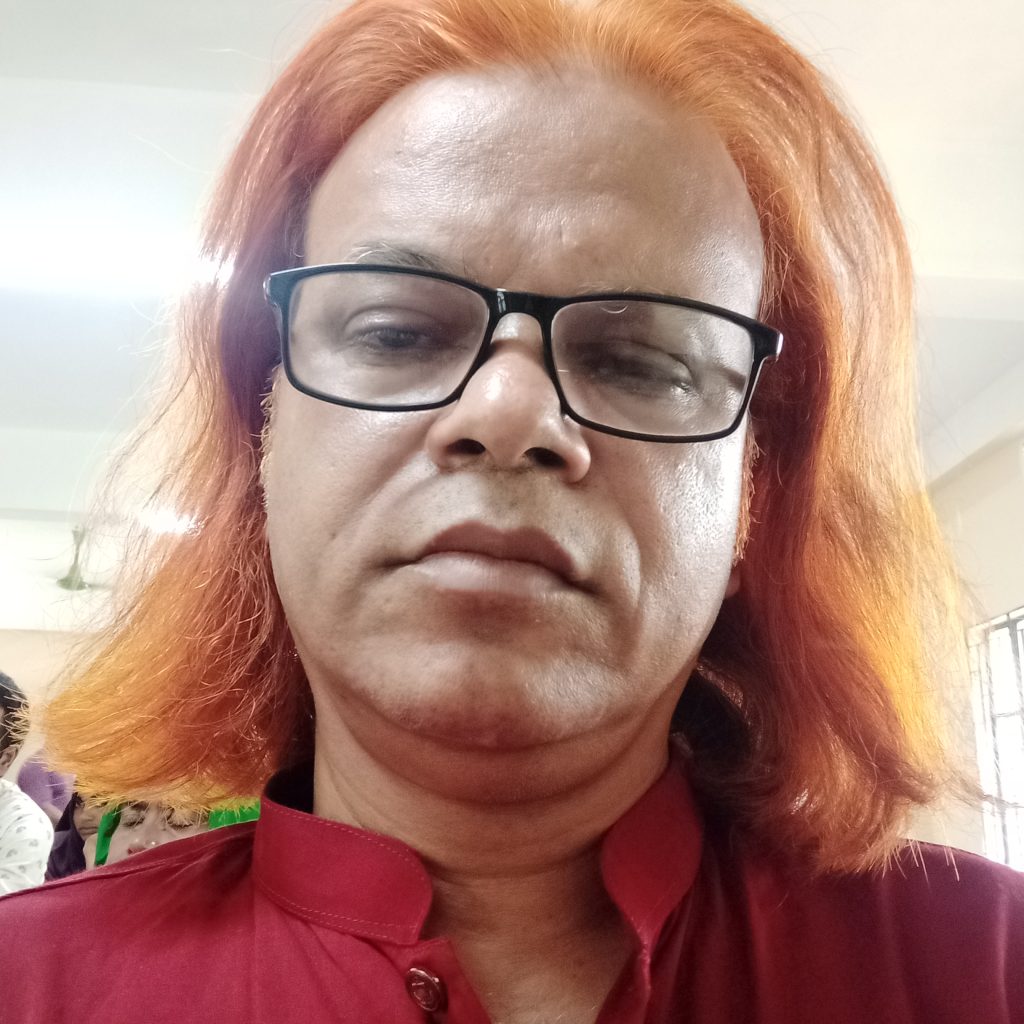
South Asian man with reading glasses and red shoulder length hair. He's got a red collared shirt on.
Mesfakus Salahin

Eyes

When l see your eyes, l see heaven

l forget worldly life 

All the sufferings turn into happiness

Pain becomes a fountain of love

All the dreams bow down at your sight

l fly away where love flies 

I search myself 

My ‘myself’ loses identity

Your eyes try to hide yourself

Your ‘yourself’ sing the song of love

I woke up in your heart

My heart blooms becoming a flower

Your smiles make a river

I float there everymoment

I get the fragnenc of existence

That removes thirstiness of world.

I touch your soul through the blue eyes

It is constant to me.

Poetry from Jacques Fleury

Comfort Zone 

by Jacques Fleury


“A comfort zone is a beautiful place but nothing ever grows there.”-anonymous


Two men are stuck together 

under the subway in the dark,
One man says to the man next to him 

“Since we’re gonna be stuck here together, 

we might as well have some banter…

so what’s your name” the black man 

asks the white man standing next to him
The white man responds,
“My name is Klearly  White…”
“Nice to meet you, Mr. White,  

My name is Klearly Black”
” So… Do you identify as white?” Mr. Black  asks…

 “No, I’m just a spirit inside a white body . ..
How about you? Do you identify as black?” Mr. White asks,

“No, I too am just a soul inside a black body” says  Mr Black,
“So now what?”  Mr. White asks,
“I have an idea! Why don’t you tell me more about what makes you you? 

Tell me something about your humanity….”  says Mr. Black,

“Hmmm” Mr. White tilts his head in thought then says,
“I love walking in the woods, I love being one with nature…”
” What a coincidence!” Mr. Black says  excitedly,   

“Me too! Perhaps we can go for walks together during comfortable weather…”
“Sounds good…” says Mr. white “Let’s exchange phone numbers…”
” Sounds good…” says Mr. black
Then, suddenly the lights come back on 

with one big swoosh and the train sliding doors part open
The two men say their goodbyes then walk

     their separate ways… 

        One went North, the other went South…

Attn: Updated Bio:

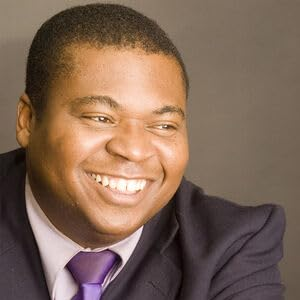
Young adult Black man with short shaved hair, a big smile, and a suit and purple tie.
Jacques Fleury

Jacques Fleury is a Boston Globe featured and internationally published Haitian American poet, theater reviewer, educator, author of numerous books of essays, reviews, fiction, poetry and literary arts student through Harvard University. He was chosen among over 4, 000 competitors from 83 countries as the Recipient of the International Naji Naaman Literary Prize for Creativity (2026) and a Certificate of Participation for his “…esteemed contribution of poetry to the anthology Water: The Source of Life (Volume IV) presented by La Fenetre De Paris. 

Silhouetted figure leaping off into the unknown with hand and leg raised. Bushes and tree in the foreground, mountains ahead. Book is green and yellow with black text and title.
Jacques Fleury’s book You Are Enough: The Journey Towards Understanding Your Authentic Self

It’s Always Sunrise Somewhere and Other Stories among other titles are available at all Massachusetts public libraries, the University of Massachusetts Healey Library, Wyoming University, Askews and Holts Library Services, the leading library supply specialist in the United Kingdom, The MIT Press Bookstore, The Harvard Bookstore and the oldest poetry bookstore in America: The Grolier Poetry Book Shop (est. 1927)  has hosted great American poets E. E. Cummings and Alen Ginsberg and online bookstores worldwide such as Bookshop dot com, amazon etc…

Poetry from Danijela Ćuk

LET PEACE LIVE — EXTINGUISH THE WARS

Let us all stand for peace across the earth,

let every shadow cast by war lose worth,

let every child enjoy a childhood bright,

let every soul both give and feel love’s light.

Must darkness triumph through another’s spite?

Must goodness fade and yield without a fight?

Do not touch peace, let it forever thrive;

why should the innocent pay so others’ hate survives?

No war has ever brought true good to humankind,

not in the past, nor now, nor in the days we’ll find;

nor will it bring a better dawn tomorrow’s way,

so let us guard the sun that lights each newborn day.

The innocent were never meant to bear the cost,

nor shed blood-stained tears for ambitions dark and lost;

this weary world is thirsty, hungry still for peace,

while people wage their wars and life’s brief moments cease.

People, cease creating wars that choke the human soul,

for they can tear down walls of love that once stood whole;

you entered this world with empty hands, unclothed and free,

and empty-handed you shall leave,why sow such misery?

Do not strike against one another,

do not become servants of the dark and suffer;

serve love and peace throughout the earth instead,

and never steal a single child’s bright years ahead.

Let peace live on, extinguish every war,

do not hate, do not judge, do not wound anymore;

be truly human,what is power worth in the end?

Without it you arrived, without it you shall transcend.

Danijela Ćuk

Croatia