Poetry from Soumen Roy

PAEAN

I am here 

I will be here 

Now and forever 

An omnipotent name with its sweetest nectar 

They will come and pass by 

The forlorn chair will read the debonair 

Speaking of my love in splashes of seasons  

In the song of the cuckoo 

In the heart of an oasis 

In the shade of the green

In the hues of a skeleton

There sings the rain, wiping the sore of exhaustion 

And the brewing coffee, comforting the cold 

There remains abandonment in an unrecognizable darkness 

And I set myself free on the other side of the window 

The dove flies here with dust of gold 

And the sun kisses my heart before I sleep this night 

The morning sings its eternal notes 

And I continued to dwell in its sheer brilliance 

Nothing has gone, then or ever 

Everything is there, reflecting in its unique chapter.

FLORA AND FAUNA 

Life was never so beautiful as it is now 

Now in this very moment 

In this stillness 

Silent yet full of foam 

Completely detached, being sure of the fruits to come 

When I chose to forgive my own 

Suppressed in agony of unfulfilled desires

It no more fears 

Just a gentle nudge saying it’s okay 

It’s okay to live in this present

So beautiful, like never before when stuff was chased 

Now a celebration that soothes me within 

With peace and contentment 

There smiles the dew over my green this morning 

Singing an ode to the flora and fauna

Poetry from Mark Young

Shanty

The mercantile marine sweeps in on

the wings of song — more specific-

ally an a cappella rendition of “Blow

the Man Down” by the crews of a

thousand ships as they hoist their 

sails in a joint operation, so power-

ful it threatens to blow the place a-

part. No need for famous faces here.

polygraphic night sweats

Linguistic dexterity is often 

accompanied by special fats 

found mainly in fish, other

seafood, nuts, & seeds. Words 

that are learned at a later age

are rarely used in daily con-

versation. The fifth basic taste 

is gummies for erectile dys-

function. Long time no see.

Escalator etiquette

Stand on the right, pass

on the left — unless, of

course, you’re in Australia

or New Zealand where

the sides are switched.

Don’t go down the up

escalator, though going

up on the down is okay

if you’re trying to lose

weight & you keep your

knees high.

             Don’t try to take

an elephant onto an esca-

lator, especially when it’s

traveling up. Chihuahuas 

are fine, maybe even an 

ocelot; but an elephant,

especially an African sav-

anna elephant whose tusks 

curve outward, is likely to

take a lot of fellow travelers

with it in a direction they

weren’t intending to go.

There’s no point farting on

an escalator & casting

accusing looks at the people

around. Might work in an

elevator, but here you’re

only going to offend a sing-

le person if they’re a couple

of steps below you & they’ll

know it was you, anyway.

Don’t tailgate. Keep a couple

of steps between you & the

person in front, & hope they’re

not farters. & if there’s room,

then it’s perfectly fine to pass.

holla at me lata 

Fifty is the new
forty. In the
legendary tradition
of the game show,
calorie & heart rate
monitors are the
only vocabulary
you need. That
& the fact that the
only real mistake
you can make is
to wear a strapless
Jason Wu dress in
a creamy chiffon
with a pair of
off-white shoes.

A line from Paul Revere

According to a top Face-

book executive who came

down immediately after a

mind-numbing high, you 

can fly to the other end 

of the earth & it still 

looks like New Orleans & 

the Sugar Bowl Regatta. 

Essay from Jernail S. Anand

Older South Asian man with a beard, a deep burgundy turban, coat and suit and reading glasses and red bowtie seated in a chair.
Dr. Jernail S. Anand

CHECKING CRIME: WOMAN AS A STABILIZING FACTOR FOR THE FAMILY

Women are a great stabilizing factor in the family. It is because they are loyal to the home, and they are also committed to their kids. Men may deviate from these duties, but a woman never takes her eyes away from her children. If a woman wants that the man she marries should have property, it is less because of her own protection and more because she is trying to secure the future of her offspring.  The idea of home making is integral to the vision of being a woman, not only giving birth to kids, and giving them good education –but also giving them a stable home. 

It is a common passion among working women too, who have to stretch themselves too far, to work outside, and then, look for the comfort of the family members too.  These days, reacting to the need of the fast households, there are companies like Zomato and Swiggy who provide food items, saving the women from the arduous work in the kitchen, yet these options are not easy. They provide food cooked for business purposes, and eaten without any sense of love or attachment. It is just to satisfy the hunger, reducing the act of eating to a mere physical activity. 

We forget that like air that we breathe in, and water on which we live, food too has around it an aura of divinity. We must thank the elements for the food that is available to us. But, this sense of thankfulness is departing. Readymade foodstuffs leave a layer of toxicity, not only in the stomach, but also in our minds. The members of the household remain under stress, or suffer from the malfunctioning of the body parts. This is food stuff, not food. Perhaps, it is time we understand what it means to cook, and what it means to eat with passion and desire. 

It is important to look at the criminal side of the story. In the parlance of the law, it is said that all the conflicts arise from three things: Jar [wealth] Joru[Wife] Zameen[Land]. I think that in a home, where women are not present, or where their prime position is undermined, an environment of instability and mental depravity is created. All the criminals who are seen at work with gangsters are people, who have no families, and who quench their urges by going to the red light areas, or they have keeps, who are after their money.   

The birth of a daughter even in the family of a gangster sets him thinking.  There are men who are running around the wedlock for the extra marital, or even for wealth creation through ulterior means, but women often stop them from these activities, and, in turn,  get beaten up. Although it is an event from a film, Naam Shabana, but the incident is worth quoting. Shabana’s, [played Tapsi Pannu,   father was a drunkard, and an evil character, who would come home and beat his wife black and blue. Shabana had actually killed her father, trying to save her mother from his bashing. It happens and crime burgeons where men do not listen to the women, who want a life of stability. 

I am talking of this stabilizing impact of a woman in the family who loves her offspring, and wants her man to keep away from drugs and drinks, and even from red light areas. They have a preservative mind set. And they suffer, when they confront their menfolk, because men, in the patriarchal society, threaten them with divorce. They are silenced. But, try to impart their values to their sons and daughters. I wonder if I have reason to believe that all that is good, beautiful and lasting, in society has something to do with the presence of the woman.  

Apart from what is happening in our society as a result of financial dislocation of families, and the evils of capitalism and materialism affecting the wedlock, those who go for marriage go for a life of steady relationship. And, if a daughter is born, it gives greater stability to the home. If we want to curb the bane of corruption and crime in our society, the most important institution that needs to be strengthened is family, love and faith. 

Dr. Jernail S. Anand, with 200 books to his credit [19 epics] is a Chandigarh-based top-ranking presence in the contemporary world literature, a polymath, and a vital architect of the 21st century ethical literature whose seminal work ‘Lustus: The Prince of Darkness’ challenges the moral complacency of our era.  Founding President of the International Academy of Ethics, and Laureate of Charter of Morava [Serbia], Seneca [Italy], Franz Kafka [Germany, Ukraine, Czeck Rep] and Maxim Gorky [Russia] Soka Ikeda and Mahakavi Bharati (India) Awards, his name is inscribed on the Poets’ Rock in Serbia. [Email: anandjs55@yahoo.com]

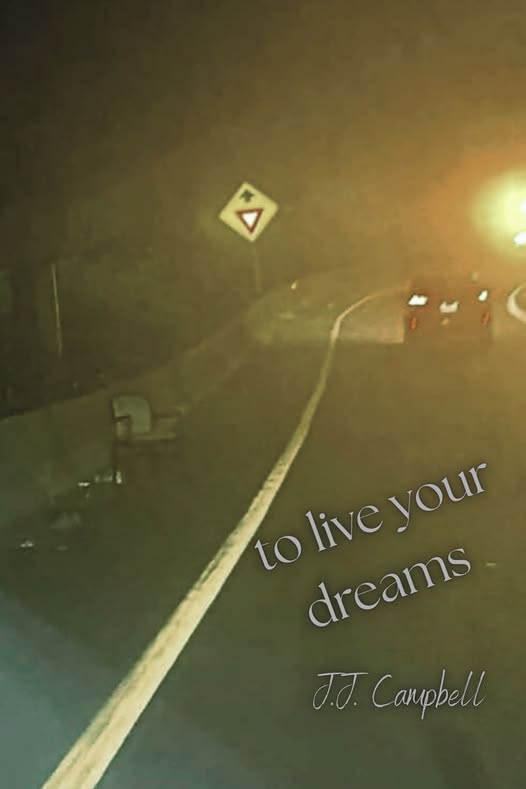
Review of J.J. Campbell’s new collection To Live Your Dreams

J.J. Campbell’s new collection To Live Your Dreams is a collection of raw, emotional, and often dark expressions of life, love, loneliness, and despair.

His speaker often feels disconnected and isolated, describing themselves as “broken” and struggling with feelings of loneliness. Many poems express a sense of disappointment and disillusionment with life, love, and relationships, which are often fleeting and precarious. In “the twilight,” “love is like juggling hand grenades…you hope the people are entertained and the pin never comes out.”

The speaker frequently uses self-deprecating humor and acknowledges their own flaws and shortcomings. The lack of capitals and punctuation in the poems, and the non-rhyming, understated, free-verse narrative help to convey the speaker’s raw pain and humility. They also frequently use dark humor and irony to cope with emotions and experiences, including trauma and abuse they have survived. In an attempt to snatch a smidgen of hope from a barren life, he fantasizes about “being shot while getting rejection letters in the mail,” and in “count the seconds,” he recollects “explaining being molested again/to a group of people who never wanted the truth.” Finally, in a moment perhaps familiar to many writers who mine the well of their own sufferings, he reflects, “she liked my poetry/which is a sign something was up.”

Despite the speaker’s struggles, they often express a deep and touching desire for human connection and understanding. In “the one,” he reflects on a tenuous long-distance romance, suggesting with a tinge of tragicomic hope that “maybe this silly thing called love/will take care of everything.” Hope can spring eternal in a person’s heart, and we hope that he finds his way to peace and connection, one way or another. The collection’s title itself can be taken in multiple ways: while he has not yet “lived his dreams,” the fact that he still has dreams, that he can still hope despite his past and present struggles, becomes poignant and beautiful in itself.

Community and love are two-way streets, though, and perhaps reaching out to others who are struggling in similar ways could help him to find purpose and friendship. It’s clear that he’s not the only one in his situation, as he mentions support groups, counseling, and encounters with others on dating sites who seem equally broken and lonely.

In to live your dreams, J.J. Campbell offers a glimpse into his speaker’s complex and often troubled inner world. Overall, these poems convey a sense of raw emotion, vulnerability, and introspection.

J.J. Campbell’s to live your dreams is available from Whiskey City Press here.

Poetry from George Gad Economou

Alcoholic Nights

alcoholic nights smelling of overproof rum and cheap rotgut,

when the smoky clouds in the living room refuse to dissipate.

nights when the liver twitches and demands a sacrifice even if

it means emptying the wallet and going to work the next day

with a massive hangover and in a genocidal mood.

these are the nights of true danger, when you have no idea

where you might end, what you might do.

it’s like gambling, only you can win more, and lose even more.

you can lose your job; you can find a girlfriend.

you can end up injured and/or missing body parts,

or wake up having created a masterpiece.

it’s the alcoholic nights that smell worse than a skid row dive

that have the greatest potential for anything and everything to happen.

Calls From Nowhere

sometimes. during good drunk nights, I wake

up in a fervor, confusing my alarm clock for a phone

call from Christine; on a couple of occasions, I’ve even

“answered”, hearing her voice in my half-asleep state of stupor dreaming.

it’s been thirteen years since I last heard her voice on the phone,

when she told me she’d be moving to Copenhagen while I was

away on vacation, and I sometimes wonder what would I do if

she somehow found my new number and gave me a real call.

would I go back to her? would I tell her I’ve turned into a better person?

would she even believe I’m not the whoremongering alcoholic junkie

she met, saved, then abandoned?

I have no idea; part of me wishes for her to return to my life, for 

a second chance with the only woman ever coming close to

replacing Emily in my heart. on the other hand, I traumatized her enough

that I know she would never be able to trust me. perhaps, it’s for the

best we haven’t stayed in contact; it’s for the best I haven’t

seen or heard from her in thirteen years.

I prefer half-dreaming imaginary talks with her, hearing her

tell me she’s happy and that she found someone who

doesn’t shoot heroin in the bathroom or drains two bottles of Four Roses

during a calm Saturday afternoon.

Boozing It Up Early

boozing it up early, once again chasing the midnight train.

memories and future moments are juxtaposed in a nightmarish

amalgamation creating more restless nights. heading to work

with a liter of bourbon in the blood and almost no sleep, 

the mind’s racing for reasons beyond my control and will.

booze clears some things up, and it blurs others.

no definitive answer found in any of the twenty empty bottles

of the past fortnight; perhaps the next twenty will have something

refreshing to offer.

Frigid Winter Nights

remembering frigid winter nights in a tiny

apartment; clouds of smoke choked out the air and vapor

crawled out of the spoon like thin blue snakes. Emily and I would sit

on the blue foldout couch already stained by melting junk.

hunger in our eyes, lust in our souls, everything felt so goddamn

all right—even if nothing was. 

we’d kiss as the spoon was burning, and the first bubbles appeared.

sometimes, we’d trade a look of anticipation and sometimes, our

glances would express worry over what the fuck we were doing.

nothing could stop us; not even our love.

yet, those frigid winter nights, laced with cheap booze and heroin,

were the best months of my life.

madly in love, slowly dissipating into the madness I came to know

as life. and I had Emily by my side, begging me to burn the spoon

while kissing me.

frigid winter nights that’ll never return, and that’ll live

forever in my mind; no one else could have been there,

no one else will ever be there.

the frigid nights of junk beauty are interred in my heart,

and a lot of women have failed in their attempts to destroy them.

Poetry from Alan Catlin

Homeland Security

The police must be raiding 

houses, their sirens on full

blare, searchlights waving

like crazy magic wands made 

out of lasers, though imprecise

at fixing locations, finding what

is hiding out there in the dark

For a moment the light is

terrific, enough to read by,

if you were so inclined, had 

the time, were not otherwise

occupied

by all this chaos

by all this confusion

No one questions what is

going on, no one asks who has

the authority or what for

Why bother?

Asking will not change what

has already begun, what is going on

They must know what

they are doing, these policemen

and women

Knocking on doors in the night

Yelling, “Open up, open up!

It’s the police!”

We have no doubts about what

they are doing

We always open up

We have no choice

Futility Music

That’s what they

call it:

the interrogators,

assassins

spooks

Heavy metal to us:

Twisted Sister

Metallica

Kiss

Angry music:

Limp Biskit

Slip Knot

Rage Against the Machine

“Interro-tunes”

say those in the trade,

approved by your

Defense Department

“Mood music for

jolting your jihad”

Unholy, infidel

noise, horror sounds

the ultimate

cultural clash:

pure torture:

“We’re Not Going to Take It”

“Shoot to Thrill”

“The Sandman”

Drowning Pool

“Let the bodies hit the floor”

“Glow in the Darks”

This new interrogation

technique;

beating the prisoner

with phosphorescent

sticks,

you know, the kind

they guide airplanes

down runways with

at night,

beating them until

the sticks break,

coats the prisoners

with the stuff that’s

inside,

makes them easier

to keep track of

when they glow

in the dark

Pictures of What Happens on Each Page of Thomas Pynchon’s

Novel, Gravity’s Rainbow, mixed media

on paper

Under the sign of an hourglass,

men in loose fitting Hawaiian shirts

look up to where the sun should be

and see an absence of light, 

see a strange colored chemical haze,

what the clouds have become and

no one can explain how this came about;

not even the scientists in tie-dyed lab

coats who caused this abstract transformation;

nor the rear-guard SS troopers in their

atrocity exhibit offices, walls covered by

portraits of tyrannical rulers throughout 

the ages, their rulers and ours; not the lackeys 

or the bootlickers kneeling down in ruined

streets to kiss the shoes of false Popes,

Grand Inquisitors wearing heavy, plush

robes to conceal their executioner gear;

not satan’s soldiers on wheels; not pale

musclemen, minutemen, plunderers of the dead;

not the burgermeisters nor their whores:

the taxi dancers, cabaret queens, make up

artists, made up as tainted gypsies, hot to

the touch; not the anarchists with their 

apolitical tracts but the atonal music they

listened to as the rockets came over the spent

horizon, some exploding in mid-air recreating

the memory of the missing stars, others not

ignited and no one knew why.

Gravity’s Rainbow: Paper Collage with Pills,

Hemp Leaves, Acrylic and Resin on Wood

after Fred Tomaselli

Gravity’s Rainbow as extreme Art,

a hybrid form combining found objects,

over-the-counter Medicinals, antacid wafers,

dissolvable capsules, antihistamines, low

dosage aspirins, the enteric and the regular,

all strung as helix amid drooping plastics,

necklaces and furbelows, the ornamental

and the functional, an almost tapestry,

tableau of modern life, of lost and found

Art, affixed on a field of black, the universal

and the particular, random designing, scars,

the wounded back drop, the sky.

When you first

see them, the men,

seated, waiting in

the desert, you wonder,

why have they gathered

here? What are they

doing?  Are they so

devout, nothing can

keep them from praying?

Not the approaching

storm, the darkening

whirl of dust and dirt,

a tidal wave of earth.

No, you realize, prayer

is not what has brought

them here but war;

that lone man standing

some yards away is

a soldier, an armed

guard and that jeep

nearby is not moving

but idling, more men

inside, waiting for what

happens next.  Waiting

for the hovering craft,

the first of many, about

to land despite sight line

zero, this ghost ship in

a wasteland, here to ferry

the doomed, the prisoners,

home.

Franz Marc’s Battling Forms (1914)

A piece of Klee,

geometric, tarnished

as the skin of martyrs

uprooted from their

graves;

the hell they were

interred in no longer

consecrated ground

but something profaned,

damaged by earthquakes,

artillery barraging;

their rude crosses bent,

dismantling, even eternity

markers impermanent as

the town’s people who 

died here breathing mustard

gases;

their collective exhalations

a poisonous cloud, a pale

horse, pale rider nightmare

wrenched from Chagall’s

worst dream;

all of Munch’s lost tubercular

children gathered behind

locked church doors balanced

on the edge of a precipice;

or like a Kandinsky composition

in red, a folk dream inside a blood

red chamber, the one the artist

never finished, the one no one

could ever finish.

Poetry from Abbie Huh

April

This is where a twenty-cent popsicle melted,
glistening under the summer sun.

This is where a farmer stood
with his apples and cherries on the sidewalk.

This is where they left bike trails from their Sunday outing.

This is where a dog once chased a tabby through a sprinkler.

This is where a boy lost his first front tooth.

This is where newlyweds built their dreams,
and where an old couple closed their lives together.

This is where lost toy trucks and dolls and rubber ducks
lay in the bushes for many days.

This is where the green leaves turned reddish-brown,
year after year.

This is where some sobbed and cried,
while others celebrated.

This is where the land now lies barren,
where luggage was packed,
where cars drove away,
and where voices slowly faded.

April 8th

A still, settled atmosphere.

A bedroom door left slightly open.

Sheets tucked in tight.

Stuffed animals waiting on the bed.

Clean, cold pens aligned in a row.

A thin layer of dust resting on the tops of books.

Warm rays of sunlight seeping from behind closed drapes.

A pair of slippers neatly placed, untouched.

Outside,

the smell of dinner,

dishes clinking,

a television humming,

voices and footsteps passing by.

Summer Arrival

As I round the corner, he greets me,

standing on the sunlit, sandy steps—

small bare feet,

ruffled hair,

a sheer white dress,

and a cheeky grin.

The puppy trails behind,

his bell jingling with each tiny paw print,

his tail wagging eagerly.

Orange sunlight gleams against the vases and grains of sand,

filtering through outstretched bushes

of poppies and sunflowers,

and draping a gentle warmth over me.

Every bloom carries the freshness and fragrance

of a bright midsummer afternoon.

Then she rushes through the doorway,

an apron clutched in her hands,

half-worn sandals slipping across the porch.

The scent of fresh bread follows her out

and soon fills the entire front yard.

Abbie Huh is a student at an international high school in Seoul, South Korea. She is currently preparing a creative writing portfolio for university applications. In addition to writing poetry, she enjoys working with ceramics and exploring the connections between visual art and language. Her work often reflects an interest in memory, identity, and the details of everyday experience.