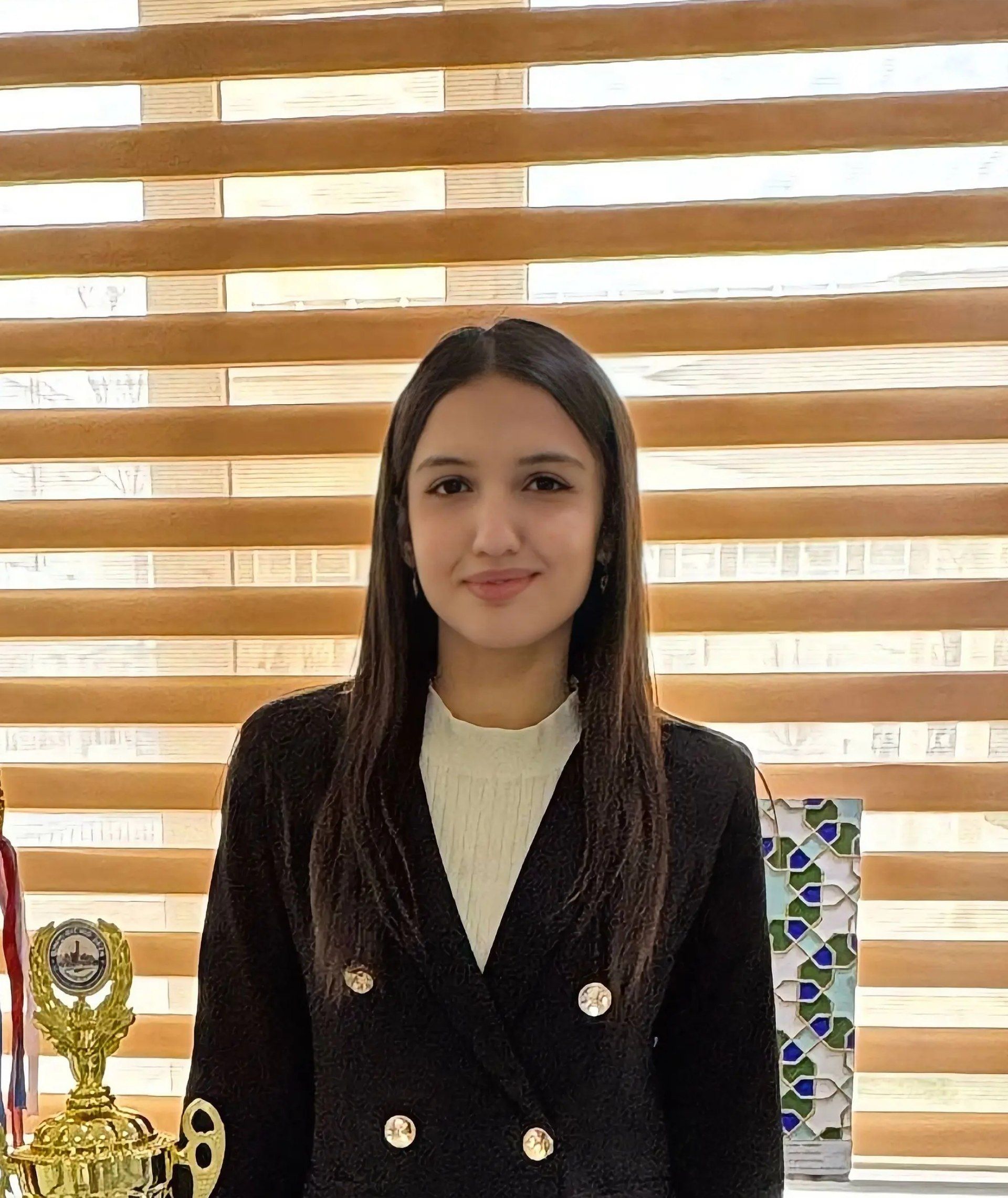
A. Iwasa reviews Ivan Salinas’ book Dealer

Dealer by Ivan Salinas

There’s Only Peace In Death Press

www.darylgussin.com, $14.00

Reviewed by A. Iwasa

This collection of poems starts off with a two page long paragraph, stream of consciousness type piece, from which it takes the name, “Dealer”.  It definitely sets the tone for the rest of the book.  Off the bat, you may assume it’s about a drug dealer, but that assumption’s promptly turned upside down when Salinas writes about “a dealer in the deep web of the night” found while looking for a car, “I was going to get a brand-used baby from a sketchy Spanish-speaking dealer, following a family tradition.”

Though the details are different, it’s the kind of scenario I could easily see someone from my white family in the rust belt playing out, and not a far cry from my limited misadventures on foot and public transit in So Cal.

Finally getting to a place “more of a junkyard than a dealer” that can only be described as “seeing through a veil of grainy radio static,” it’s the poetry in everyday life.

Generally what I like about prose poetry is performance.  Even when it’s a scene I’m not connected to, the context is what can make or break it for me such as my preference for the Beat Generation’s novels, as opposed to their poetry which defined it for so many people.  But Salinas’s work is different.  Though I consider chap books to be the ‘zines of the poetry world, Salinas is both a poet and a ‘zinester.  Dealer is mostly laid out like a ‘zine with funky photography, and some experiments with creative layout and hand drawn art.

I’m not sure how some of the most creative pieces such as “Discount Auto Dreams” and “Statement of Facts” could be read out loud without losing their charm.  Spoofs of forms, or perhaps actual forms filled out the way you might if you were feeling snarky and had no intention of getting whatever the form is for, they’re 110% ‘zine material, or perhaps wingnut flyer or demo tape layout.

They’re the kind of pieces that make me feel at home reading Dealer compared to your average poetry chap book.

Somewhat similarly, I spent a little too long figuring out that the last line of “PO441 vs. La Yahualica Auto Electric” is actually a line.  A mostly conventionally laid out poem unravels, and though I have some funny ideas about how a live reading might go, I mostly appreciate how the formatting gets creative to tie in with the end of the poem.

It’s not all mundane; coming out of Los Angeles in 2026, lines like “Tinted Fords and GMCs prey on the road, planning grand theft auto at gunpoint in federal uniform,” address the bigger picture also in “Hey Mula,” without flogging you over the head.

But still, it’s the poetry of everyday life that draws me in and wins me over.  I can’t help but be sure Salinas knows someone who “used to say the border/was just a rumor in asphalt.”  And, that “He said the line was real/only when the engine stalled,” as in “Federal Limits Do Not Apply.”

Another very cool aspect of this collection is that the poems are printed in both English and Spanish.

Dealer can be ordered here.

Poetry from Joseph Ogbonna

Da Vinci’s Portrait 

I am Mona Lisa and I am art

Send me your sweet love letters for a start!

Go on bended knees with your proposals!

There will never be counterproposals.

Come with your dreams and many fantasies!

Come from your different nations and countries!

Come with your longings, it’s a gazing spree!

Let your gazes take you to the high sea.

I feel the impulse of your strong desires,

for to my heart, every man aspires!

Build on my smile, I smile to tempt a lover!

Your lustful desires I will uncover

with nothing more than my own gracious smile.

You desire to have me walk down the aisle,

but I am nothing more than Da Vinci’s Portrait,

and a portrayal of his artistic trait.

(First published by Micromance magazine in 2025)

Joseph C Ogbonna is a widely published poet. Some of his many works have been published by Synchronized Chaos, Spillwords Press, Micromance magazine, PoetryXhunger, Waxpoetry Magazine, Borderless, Orenuag Journal, Ihram and more than two dozen anthologies and magazines. He also has two self-published volumes to his credit. His works, ‘Napoleon to Josephine and Josephine to Napoleon,’ had been aired by the BBC Radio 3 for a historic documentary.

He is a graduate of Nigeria’s famous Ahmadu Bello University, Zaria, where he bagged a Bachelor of Arts in Economics and Education. He has PGD, MBA, M.Sc and M.Ed degrees from other Nigerian institutions of higher learning. He lives in Enugu, Nigeria with his wife, Chizoba.

Poetry from Mykyta Ryzhykh

Protest

war is not a protest but a lack of protest
death is not a protest but a lack of protest
laughter is not a protest but a lack of protest
peace is not a protest but a lack of protest
revolution is not a protest but a lack of protest
life is not a protest but a lack of protest

a soldier cannot say no
a citizen cannot say no
a suicide cannot say no
a lonely shadow cannot say no

letters do not arrive
letters do not sent

a bed under an apple tree
an apple on a bed

a drop of execution sleep at sunset

Essay from Ismatova Dilnura

In today’s rapidly changing world one of the most pressing topics is the great importance of books in developing children’s thinking. We can say that by reading books, children are finding solutions to the world’s most complex problems, thereby contributing to the development and future of our countries. 

Today, the only thing that leads children to perfection and success is the book.  In my opinion, every child has read a book at least once in their life. For example, a piece of work, a novel, a drama, or simple literature from a book.  By this, I mean that books primary invite children to reading and literacy. Furthermore, through reading books children are enhancing their mental intellect and critical thinking in serious areas.  That is to say, easy solutions to the economic, social, and spiritual-culture problems of our countries are being found with the help of books. Another aspect is that the gems of Uzbek literature teach children the roots of our history; the reason is that it shows how humanitarian, brave, and most importantly, patient the Uzbek people are. Based on this, I want to say that to build the future, one must look back at history; as a result, history will pave your way to success, drawing from it is own hardships.  This opinion of mine is, on the contrary like a battle on a reflected stage.

Because in the war, thousands of our grandfather fought putting their lives in the line, and if necessary, sacrificing them. Do you think they did not have fathers, mothers, spouses, or children waiting for them anxiously at home? Of course they did! But they possessed pride, honor, and a sense of responsibility. I can say with confidence that these books will help children take steps toward a great future.

Furthermore, children learn how difficult life can be and how to respond to it appropriately.  In, reading books can be useful not only for children but also for adults.  For instance, Yu Hua’ s famous work “To Live” helps to further increase the patience and resilience of our women today. In my perspective, this book reflects the hardships of an entire family, and even the suffering of a woman who lost all her children and her ability to endure these difficulties. I believe that this story can serve as an example for our women. 

In final conclusion,  a book is not just an object that leads people to perfection,  but rather a guide that shows them the way.  It is known that for many children,  a books a source of knowledge and one of the most enjoyable activities 

My name is Ismatova Dilnura.  I was born on October 11, 2010, in Shahrisabz district of Qashqadaryo region, Uzbekistan. Moreover, in order to expand my worldwide and mental capacity, I have been learning various languages and reading books.  In addition, thanks to my knowledge of foreign languages, I have been participating as a volunteer in my events, festivals, and large pavilions. And also, currently, I am continuously developing myself and further increasing my knowledge in order to realize my many dreams. 

Essay from Jasmina Qahramonjonova

One of the most prominent figures in Uzbek sports is Bahodir Jalolov, who competes in the heavyweight division of boxing. Jalolov’s accomplishments on the international stage are remarkable, not only for his formidable strength but also for his technical prowess, strategic acumen, and psychological resilience. Each match sees him, meticulously analyzing his opponents, formulating tailored strategies, and executing them with precision and confidence. His endurance is unparalleled and physically demanding contests.

Jalolov’s success transcends physical capability: it embodies mental fortitude. In high-pressure situations, he maintains composure, concentrates intensely, and make decisions that demonstrate strategic insight. His victories at prestigious competitions, including the Olympic Games and World Championships, have solidified his reputation as a role model for Uzbek boxers and aspiring athletes worldwide. 

Equally remarkable is Abduqodir Husanov a central defender who has emerged as one of Uzbekistan’s most promising football talents. Husanov’s gameplay is characterized by rapid decision-making precise ball handling, tactical awareness, and seamless collaboration with teammates. His defensive skills, combined with a strong understanding of the game’s dynamics, have rendered him indispensable to both his club and national team. For young football enthusiasts, his journey underscores the necessity of combing physical aptitude with strategic thinking and adaptability.

In the realm of women’s sports, Diyora Keldiyorova stands out as a paragon of dedication and skill judo. Her achievements in international competitions, including the Olympic Games, reflect a synthesis of physical strength, technical mastery, and mental resilience. Keldiyorova’s victories have not only advanced the statues of Uzbek women in sports but have also provided in inspiration to countless young girls, encouraging them to pursue their ambitions with confidence and determination. Her commitment illustrates the importance of integrating mental discipline with physical capability, highlighting the multifaceted nature of true athletic excellence.

Moreover, these athletes contribute significantly to the social and cultural identify of Uzbekistan. Their accomplishments foster national unity, instill pride, and motivate citizens, particularly the younger generation, to pursue their goals with diligence and integrity. The narratives of Jalolov, Husanov, Keldiyorova extend beyond the arena of sports: they serve as enduring examples of how talent, discipline, and resilience can transform personal ambition into collective inspiration.

In my conclusion, athletes embody the values of dedication, excellence, and national pride. Their achievements inspire young people like me to pursue knowledge, cultivate resilience and aspire to contribute positively, I aim to emulate their commitment, integrating the lessons of discipline, strategic thinking and perseverance into my own life. As Qahramonjonova Jasmina, I am motivated by these exemplary figures to engage in sports, uphold a healthy lifestyle and commit to purposeful and meaningful personal growth.

I am Jasmina Qahramonjonova, a citizen of the Republic of Uzbekistan. I currently reside in Shahrisabz district, Kashkadarya region. I have a strong interest in the field of law, and I am actively engaged in academic and research activities. I continuously develop my knowledge and skills by studying and analyzing various legal issues and writing scientific articles. In the future, I aim to study at the Faculty of Law of the University of Bonn and become a qualified international legal specialist. At present, the increasing level of legal violations in society in negatively affects legal awareness and values. Therefore, I aim to work in law enforcement bodies and contribute to ensuring the rule of law, protecting human rights and freedoms, and strengthening justice in community. In addition, I provide legal advice and guidance to support children’s personal development and help them build a strong future. Nowadays, I take part in several legal competitions in my country and have many awards and certificates.

Poetry from Duane Vorhees

WHEN I WAS UNWINTERING

you entered into my year,

the thaw that unsealed the snow,

that undamned the ice,

the thaw that paroled the seeds

FISHERS AT HOME

You’re

the sinker,

and you’re the bobber,

and I’m the other, the provider of the worm and the

wait

BALLAD OF THE KNYGHT

Itts no mair redd,

the daye is donne.

The sonne is sett,

the stars are cum.

The knyght doth ryde

strong yonge mare. Oh,

the broadswords wide,

the scabbards narrow.

The cocke grows bold

and lifts itts hedd.

The knyghts gone cold,

and darks turned redd.

A new sonnes born.

The quests now donne.

the knyght hees worn,

and mares undunne.

QING YU AN, LANTERN FESTIVAL

The east wind of a single night

brings flowers to a thousand trees,

brings star glow down the streets,

brings fragrant coursers and carved cabs.

Flutes coo like phoenixes,

Flashing jade lanterns turn, turn.

Fish and dragon lanterns dance.

In her gold and willow threads she

giggles then melts into the throng.

In vain I hunt, hunt for her

then a glimpse in dim lantern light.

–after Xin Qiji

PAINTINGS

Vivid crags though far.

Listen close! Stream’s calm.

Buds bloom but spring’s gone.

Birds ignore your lunch.

–after Wang Wei

Essay from Dilnoza Jabborova

The Aral Sea Crisis: A Warning and a Lesson for Our Future

The Aral Sea was once one of the world’s largest inland lakes. Today, it is considered one of the greatest environmental disasters caused by human activity. This sea, located between the territories of Kazakhstan and Uzbekistan, has shrunk dramatically in recent decades. The main reason for this is the large-scale diversion of the waters of the Amu Darya and Syr Darya rivers for large-scale agricultural projects, in particular for cotton cultivation. As a result, the natural balance was disrupted, and the once vibrant sea gradually began to disappear.

The Aral Sea has played an important role in the lives of the region’s inhabitants for centuries. Fishing was one of the main sources of income, and many cities and villages were located near the sea. People’s lives were closely linked to water, and the economy relied mainly on natural resources. However, as a result of the diversion of river water in other directions, the water entering the sea has sharply decreased, and a gradual process of drying up has begun. This process continued for decades, eventually leading to the destruction of the entire ecosystem. As the water level decreases, the ecological consequences also increase. Fish species have disappeared, the fishing industry has completely collapsed, and thousands of people have lost their jobs. Previously coastal cities have moved away from the water, falling into a difficult economic and social situation. These changes have had a direct impact not only on nature, but also on human life.

One of the most serious problems is the opening of the dried-up seabed. Salt, dust, and various chemicals have accumulated in this area, which strong winds spread over great distances. As a result, dust and salt storms are often observed. These storms not only reduce soil fertility, but also seriously harm the health of the population. Respiratory diseases and other health problems have increased in connection with this ecological situation. Nevertheless, the Aral Sea is not only a story of loss. In recent years, positive changes have been observed, especially in the Northern Aral region. Water levels have been partially restored through dams and water management systems built across Kazakhstan. As a result, fish have begun to reappear in some areas and fisheries are recovering, albeit on a small scale. This shows that natural systems can be partially restored with the right approach and cooperation. However, the overall situation is still complex. Climate change, water scarcity, and competition between countries in the region are making it difficult to fully restore the Aral Sea. Since water resources are transboundary, this problem cannot be solved within the framework of a single country. Regional cooperation and long-term planning are essential.

The Aral Sea crisis is now being studied as a complex system where ecology, economics, and politics intersect. It clearly shows how human activity can have a powerful impact on nature. Most importantly, it reminds us that development and nature conservation are not contradictory, but rather complementary. For young people, the Aral Sea is not just a geographical object, but a great lesson. It reminds us that natural resources are not unlimited, that today’s decisions determine the lives of future generations, and that each person has an environmental responsibility. If we are indifferent to nature, the consequences will be felt for many years to come.

In short, the history of the Aral Sea is both a warning and a source of hope for us. The warning is that mismanagement of nature can lead to great losses. The hope is that through cooperation, science, and responsibility, positive changes can be achieved even in the most difficult environmental problems. Most importantly, we must start protecting nature today, because the future depends on today’s decisions. The Aral Sea no longer exists as it once was—but its silence continues to speak to the world.

Dilnoza Jabborova Jobir qizi