starves the sleepy face of the decrepit old man with freshness?
It’s not that it only carries pollen
and sprinkles the fertile earth with seeds,
nor does it play with the waves,
to wake up the lulled fisherman,
it’s just…
It also brings the aromas of youth
that make the latter’s sad eyes water with nostalgia.
Images and scents of the most beautiful times
that he is dreaming of right now.
So he wonders,
whether time really exists,
or is it just a
stretched canvas of a painter,
on which colors flow and mix
with the scent of oil, seaweed and lavender…
Or does it connect the horizons beneath the
Stribor forest
with the murmuring mountain stream,
announcing the dawn…
While in the night sky he discerns
the last sketches of shooting stars,
which have already written the destinies of many,
including this one, whose simple life
has been struggling from the burden since time immemorial,
with great difficulty,
and without any particular meaning…
While his last wishes sink like a stone
through the whirlpools of ignorance,
and now, as if in a delirium,
in the middle of the abyss between sleep and reality
he tries to discern,
not even knowing why,
and again without meaning,
why tonight
this breeze is rustling
so strangely…
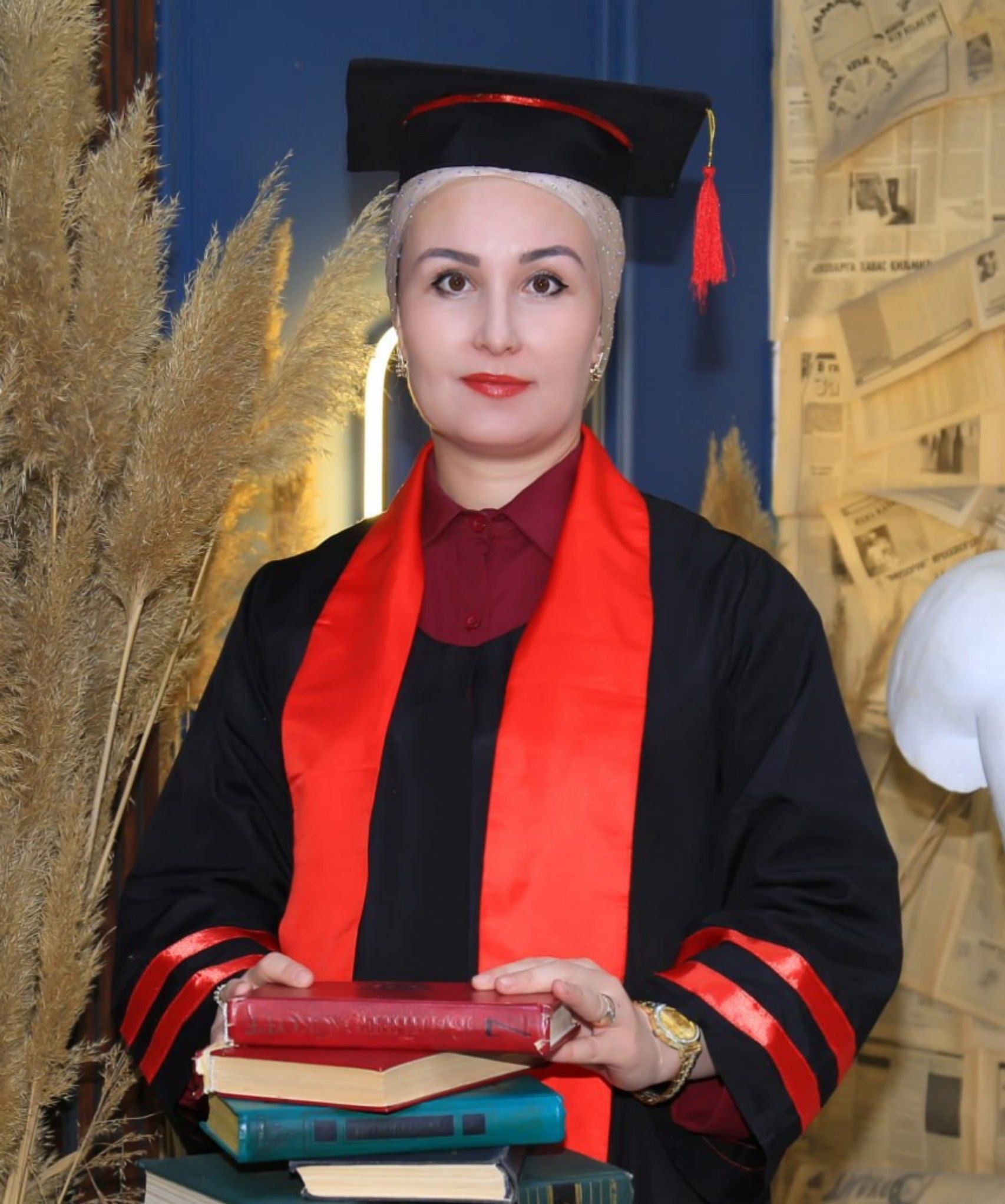
Zlatan Demirović is originally from Croatia. Currently lives and works in America. He is a poet, essayist, publisher. He is the founder and Editor-in-Chief of PRODIGY MAGAZINE USA, PRODIGY PUBLISHED USA and PRODIGY LIFE ACADEMY USA. He is the author of many works.
He organizes and manages the free publication of the works of creative people from different countries so that they can be recognized worldwide. He is a promoter of Peace, Friendship and Culture in the World. He is the founder of the NOBLE LAUREATE AWARD for 2026.
Sometimes, tears come The way the waves of the tide Crash upon the shore of the sea.
From the chest, Through the head— They crash upon the eyes.
From the feet to the sky, Water surges everywhere, Overflowing without end.
Upon the breast Of the waterless world, The waves of the tears Leave behind some unknown mark.
They wash away All the sorrow and pain, All the hurt and resentment, All the wounds and blows.
Everything is washed away.
The world appears a little brighter, A little clearer.
Unknowingly, Pure air settles upon the body, And some tender, cooling touch Seems to brush against me.
Within such a Jalsa hall, A sudden stirring— Could it ever bloom As a flower upon a lotus leaf?
The cry of a heart torn open Rolls across heaven and earth —
Waves play on, waves play on, waves play on.
Chapainawabganj, Bangladesh
16 September, 2026.
Md. Mahbubul Alam is from Bangladesh. His writer name is Mahbub John in Bangladesh. He is a Senior Teacher (English) of Harimohan Government High School, Chapainawabganj, Bangladesh. Chapainawabganj is a district town of Bangladesh. He is an MA in English Literature from Rajshahi College under National University. He has published three books of poems in Bangla. He writes mainly poems but other branches of literature such as prose, article, essay etc. also have been published in national and local newspapers, magazines, little magazines. He has achieved three times the Best Teacher Certificate and Crest in National Education Week in the District Wise Competition in Chapainawabganj District. He has gained many literary awards from home and abroad. His English writings have been published in Synchronized Chaos for seven years.
Once when he was in grade ten in 1990, his Bangla letter was selected as the best one from Deutsche Welle, Germany Radio that broadcast Bangla news for the Banglalee people. And he was given 50 Dutch Mark as his award. They would ask letters from the listeners to the news in Bangla and select one letter for the best one in every month.
From 17 to 30 September, in 2018 he received a higher training in teaching English language in Kasetsart University of Thailand for secondary level students through a government order from education ministry.
On 06 November 2015 he achieved Amjad Ali Mondal Medal for his contribution in education field by a development organization in the conference and felicitation function for the honorable personalities at Rajshahi College Auditorium.
On 30 December 2017 from West Bengal in India he was declared a ‘Literary Charioteer’ in Bangobandhu Literary and World Bango Conference and they awarded him with a Gold Medal in their International Literary Conference and Prize Giving Ceremony.
In 2018, he achieved Prodipto Lirerary Award in Prodipto Literary Conference at Kesorhat, Rajshahi for poems in Bangla literature. He received honorary crest from the administration of Chapainawabganj District Literary Conference and Cultural Function in 2021 and 2022 consecutively.
His poems have been published in many international online magazines such as Juntos Por las L Raven Cage Zine, and Area Felix. His poems have been translated and published in Argentine and Serbian, and he participated in many international online cultural meetings.
INTERPRETATION OF PRINCESSES IN THE NOVEL “ONA LOCHIN VІDОSI”
Abstract
This article analyzes the artistic interpretation of Timurid princesses in Pirimqul Qodirov’s novel Ona Lochin Vidosi. The study examines how the female characters Saroymulk Khonim, Shodimulk Begim, Khonzoda Begim, Husn Nigor Khonim, Habiba Sultan Begim, Robiya Sultan Begim, Feruza Begim, and Gulruhbonu are portrayed through diverse character traits. Particular attention is paid to the fact that the author emphasizes not merely external beauty but also the spiritual and moral qualities of the princesses, including motherhood, loyalty, political activity, courage, and devotion.
Keywords: Pirimqul Qodirov, Ona Lochin Vidosi, Timurid princesses, Saroymulk Khonim, Khonzoda Begim, Habiba Sultan Begim, Robiya Sultan Begim, Feruza Begim, artistic interpretation.
Introduction
In historical novels, the process of creating images of historical figures combines documentary information with the author’s artistic imagination. In particular, the portrayal of women who lived alongside rulers and influenced family and political relations is one of the factors determining the historical and aesthetic value of a literary work. Pirimqul Qodirov’s novel Ona Lochin Vidosi depicts the complex period of the Timurid dynasty and presents not only more than a dozen princes and rulers but also numerous princesses through artistic interpretation.
The female characters in the novel are not presented according to a single stereotypical model. Some princesses appear as wise mothers and devoted wives, others as active participants in political struggles, while still others are portrayed as complex and contradictory personalities. Therefore, it is important to examine the portrayal of the princesses on the basis of their individual characters, their roles within the family, their attitudes toward state affairs, and their moral and spiritual qualities.
Main Part
In Ona Lochin Vidosi, Saroymulk Khonim is portrayed as one of the most influential figures among Timurid women. Historical sources record her position within Amir Temur’s family, her interest in education and enlightenment, and her participation in matters of state administration. In Qodirov’s interpretation, these aspects enrich the content of her artistic image. She is portrayed as a wise woman who directly influenced the upbringing of such representatives of the dynasty as Shahrukh Mirza, Muhammad Sultan Mirza, Khalil Sultan Mirza, and Ulugbek Mirza. Her advice to her daughter-in-law Gavharshod Begim embodies concepts of court etiquette, responsibility, and family duty.
The tragic fate of Saroymulk Khonim in the plot further emphasizes the spiritual elevation of her character. The novel presents her mysterious death and suspicions that she was poisoned. Thus, the writer connects the life of a wise woman, attentive to the upbringing of children and supportive of education and enlightenment, with political conflicts within the royal court. Through this character, the continuity of goodness and loyalty in the memory of subsequent generations is emphasized.
The character of Shodimulk Begim differs sharply from that of Saroymulk Khonim. Although the writer particularly emphasizes her external beauty, he also reveals contradictions within her inner world. At a time when Khalil Sultan was indifferent to matters of state, Shodimulk Begim actively interferes in political processes. Her decisions concerning her rivals and her involvement in the circumstances surrounding Saroymulk Khonim’s death make her character more complex. Thus, the author portrays the princess not merely as a symbol of beauty but as a contradictory personality whose decisions are influenced by power and personal interests.
The image of Khonzoda Begim combines maternal love, loyalty, and a tragic fate. She is portrayed as a woman who was forced into marriage twice amid historical circumstances and who later experienced the tragic fate of her son, Khalil Sultan. Her inability to endure the death of her son and her passing away shortly afterward demonstrate the strength of maternal feelings. At the same time, her fate artistically expresses the human consequences of marriages based on kinship and political interests.
The interpretation of Husn Nigor Khonim is also connected with the inner suffering of a mother. She is portrayed as the wife of Ulugbek Mirza and the mother of Abdulatif. Abdulatif’s opposition to his father causes deep psychological suffering for Husn Nigor Khonim. In her conversation with Gavharshod Begim, she expresses shame over her son’s actions and distress that her grandchildren have also been subjected to reproach. Therefore, in this character, the responsibility of a mother for her child’s fate and the emotional experiences of a mother’s heart are emphasized more strongly than her status as a princess.
Habiba Sultan Begim is portrayed in the novel as an active and positive female character. Along with her beauty, her wisdom, good manners, and loyalty are revealed through the actions of other characters. Gavharshod Begim proposes marrying Habiba Sultan Begim to Abdullah Mirza in an attempt to prevent him from becoming involved in internal conflicts. As a result, the heroine’s personal qualities become an important part of the development of the plot. Habiba Sultan Begim uses her valuable possessions to persuade officials and save her husband, Abdullah Mirza, from imprisonment and the threat of death. Thus, her loyalty is not merely a passive emotion but is demonstrated through practical action.
In the portrayal of Robiya Sultan Begim, political and educational activity occupies a special place. She rises to the status of an influential princess at the court of Abulkhayr Khan and influences the upbringing of her children, particularly the attitude of Kuchkunchi Khan toward science and culture. Her ability to instill respect for Amir Temur in her son and develop his interest in scientific and cultural heritage demonstrates the educational power of her character. Robiya Sultan Begim’s support for protests against Abu Said also presents her as a princess who directly responds to political events.
Courage and devotion are the leading characteristics of Feruza Begim. She is portrayed as a mother who played an important role in the upbringing of Husayn Bayqara and wished her son to grow up independent and strong. When her son was imprisoned, she personally went to Samarkand and spoke courageously with Abu Said in an effort to save his life. Despite the confiscation of her property, she continued to support Husayn Bayqara’s future activities. Therefore, the image of the “mother falcon” in the novel is not limited to one individual; it also continues through the images of mothers who prepare their children for difficult trials and struggle for their future.
Although Gulruhbonu is not a princess, she contributes an important dimension to the representation of women in the novel. She is portrayed as the nurturing mother of Alisher Navoi. Despite the confiscation of her property, the loss of close relatives, and difficult living conditions, she directs her child toward education and enlightenment rather than war and violence. In this respect, the character of Gulruhbonu strengthens the spiritual and educational dimension of the mother image in the novel.
Furthermore, the portrayal of princesses in the novel demonstrates that female characters extend beyond the family sphere and are connected with social and political processes. In the characters of Saroymulk Khonim, Gavharshod Begim, Robiya Sultan Begim, and Feruza Begim, upbringing, advice, political responsibility, and influence on the fate of future generations are closely interconnected. In this sense, the princess is presented not merely as the wife of a ruler or a member of a dynasty but as an active participant in historical processes. Turgun Fayziyev’s work Timurid Princesses, which provides information about the genealogy, status, and historical role of Timurid women, also helps readers understand the historical foundations of some of the characters portrayed in the novel.
The relationship between historical fact and artistic interpretation is also important in the poetics of the novel. The lives of some characters recorded in historical sources are expanded in the novel through psychological states, dialogues, and dramatic situations. For example, the influence of Robiya Sultan Begim on her son’s upbringing, the role of Feruza Begim in the fate of Husayn Bayqara, and Habiba Sultan Begim’s efforts to save her husband connect the personal qualities of women with the development of historical events. Such a method of representation prevents historical figures from remaining merely biographical subjects and contributes to revealing their inner worlds and human relationships.
In this respect, the system of princesses in Ona Lochin Vidosi is notable because it is not constructed according to a single model. In one character, motherhood and education are dominant; in another, loyalty and devotion; while in another, political activity or a tragic fate becomes the defining characteristic. Consequently, through the images of Timurid princesses, the writer presents the diverse dimensions of women’s lives in a particular historical period. Historical information recorded in the National Encyclopedia of Uzbekistan also serves as an important source for understanding the subsequent fate of some of these figures. The artistic interpretation in the literary work enriches such historical information with human emotions, family relationships, and psychological conflicts.
Conclusion
The portrayal of princesses in Ona Lochin Vidosi is not based on a single character model. Saroymulk Khonim embodies wisdom and enlightenment; Shodimulk Begim represents a contradictory psychological character; Khonzoda Begim and Husn Nigor Khonim embody the tragic emotional experiences of motherhood; Habiba Sultan Begim represents loyalty and devotion; Robiya Sultan Begim demonstrates political and educational activity; and Feruza Begim embodies courage and maternal devotion. Thus, the writer does not limit the portrayal of Timurid women to external beauty or their status within the royal court but seeks to reveal their inner worlds, moral qualities, and attitudes toward historical processes. In this regard, the depiction of the princesses contributes to creating an active and multifaceted image of women in the artistic structure of the novel.
References
1. Qodirov, P. Ona Lochin Vidosi. Tashkent: Yoshlar Matbuoti, 2023.
2. Fayziyev, T. Timurid Princesses. Tashkent: Abdulla Qodiriy National Heritage Publishing House, 1994.
3. Chuvashova, S. The History of Khoja Ilgor. Tashkent: Fan, 2006.
4. National Encyclopedia of Uzbekistan. Tashkent: State Scientific Publishing House of the National Encyclopedia of Uzbekistan, 2000–2005.
Mahfuza Abduqaxor qizi Sharipova was born on September 18, 1993, in Bogdod District, Fergana Region, Uzbekistan. In 2009, she graduated from General Secondary School No. 8 in Bogdod District, Fergana Region. In 2016, she successfully completed her studies in the field of Philology and Language Teaching: Uzbek Language at Fergana State University.
Since 2016, Mahfuza Sharipova has been working as an Uzbek language and literature teacher at General Secondary School No. 11 in Chortoq District, Namangan Region. Throughout her professional career, she has paid particular attention to increasing students’ interest in the Uzbek language and literature by applying modern pedagogical approaches and effective teaching methods. She currently holds the highest qualification category as an Uzbek language and literature teacher.
From 2024 to 2026, she studied for a master’s degree in Uzbek Language and Literature at Namangan State Pedagogical Institute and successfully completed her master’s studies. She is also a holder of an A+ level certificate in her field of specialization.
Mahfuza Sharipova’s academic and professional interests are closely associated with Uzbek language and literature, literary studies, and language teaching methodology. At the same time, she has a particular interest in the in-depth study of the Turkish language. She holds a C1-level certificate in Turkish and currently conducts courses in this language. She is also engaged in translating literary works from Turkish into Uzbek.
Mahfuza Sharipova’s primary goal is to continuously enrich her knowledge and professional experience in her field, deepen her academic research, and become a highly qualified specialist in philology. In the future, she aims to obtain the academic degree of Doctor of Philosophy (PhD) in Philological Sciences, further develop her academic and pedagogical potential, and share the knowledge and experience she has acquired with the younger generation.
J.J. Campbell (1976 – ?) is old enough to know better. He’s been widely published over the years, most recently at The Beatnik Cowboy, Drinkers Only, Mad Swirl, The Rye Whiskey Review and Yellow Mama. His most recent book, to live your dreams, published by Whiskey City Press, is available at Amazon by going here:
Those hands are certainly not meant to be clasped behind my back wrestling against the sand. My eyes, however, cannot resist the struggle. the desert does not give back any tears it expands endless before the eye toward the melting sky, stained blue, watercolor. The sun indifferent to my skin cocooned around the bone The sun indifferent to the whitewashed steeple of the little church under the rock The sun indifferent to each shallow tire-track shadowed by my own broad back… Whoever said blue is the color of water? Blue is the color of a cloudless sky. And the countdown continues. Five weeks till sunset. All is still in that desert of my mind and the quivering high-pitched whine of microphone feedback noise echoes out over the landscape. Why is the sun indifferent? A summer two summers before lawn chair aching from the belt the singer on the speaker smooth and loud and powerful and uncle in the pool and he’s coughing and he says get in the water’s incredible. Whoever said blue is the color of water? Blue is the color of the infinite night.
Of wheeling stars, those bright white holes in the dark blanket of sky holes to a bright place somewhere beyond holes I cannot climb through. The night too far from here this sun-baked golden bowl hands clasped behind the back watching the wind bring in birds fresh from beyond the stateline. Fresh from the other side of the ocean the other side of the sky another place another time. Birds singing get in the water’s incredible.
Now then, I may be contemplating perhaps, but what if I hadn’t have met my wife, where now would have my life endeavoured? Would I be more, or less, fortunate in nuptial embrace to an inane woman, or perhaps be living in a different place. Would she look the same, I wonder. What if I had of stayed in my local that night and not gone out on the town. Would we have gone our separate ways? Would we have met different partners? What would our histories have become then? Would we of had the same child? And what if perhaps my progenitors hadn’t have met at all. Would I have been born conceived as I am this very soul? What if I’d been born a generation or two later? Been an adolescent as I am now. What would I be doing? Where would I be? Would I have met her as an ageing woman chasing me away from our garden gate, unaware of our alternative fate. Is it all meant to be? Am I meant to be me as I am now wondering who would I have been, whom would I have become? Would I be the same as I am now? Would I be unrecognisable to myself? Would we both recognise our alternate histories towards one another? Not in the empathetic sense, but just realised at that point who we are and just who we might have been?
Is everything rendered from circumstance, or is there such a thing as fate? Has my path been lain before me from the very beginning? Is there any chance that anything could have turned out any other way. That I could have turned out any different? Are our destinies our densities to fulfil? Am I meant to be perambulating along this very moor at this very time and place? What if I were to stray from my initially intended path and start walking a different path, would it be a refraction from my proposed destination, or would it be all part of the natural course of events that were supposed to take place? Were my thoughts meant to ponder this very paradox and cause in effect me to change my direction, so that in effect, my direction has never changed at all from what was meant to be the direction I was destined to take.? If that is the case, then of what is choice, it wouldn’t exist would it? Even if I arrived at a forked road, or even a crossroad, whichever direction I decidedly took would just be the same linear path that I was meant to travel in the first place. Maybe the whole stability of evolution and the universe, even my minuscule place within it, would not be sustainable if I didn’t correlate every circumstance of my very own existence. Like the butterfly effect, the whole universe would not function if it were not for the actions that I foretook. Not in any solipsistic sense, but in that the whole order of things, no matter how minute or trivial, are not the mere meanderings of infinite alternate histories, but in effect the whole grandiose order of ontological macroscopic proportions.
This type of thinking could drive a man to distraction. It could even cause me to abandon any of my principles or responsibilities, which I think would be profoundly unreasonable. But in effect would that not be the effect that was meant for me and my place within the order of everything? Though I would say one thing about that, if it were the case that everything is all strategically preordained, it would mean that my wife was meant to be my wife, the person with which I should share my life and bring up my child. That is a very comforting thought indeed! Though that I’ve had no doubt. But again, that brings about the dilemma of why I believe that I personally should make choices of my own and not just abandon myself to the fates. A paradox that may seem, yet in a metaphysical sense, maybe my conscious actions are relative to my very experience and appreciation of existence. So in that case, I belong to this path and this path belongs to me.
I don’t know. The idea that I haven’t so much made my own choices and that they weren’t even choices at all, leaves my feeling a little concerned about any self sufficient commitment that I’ve made. Any paths that I chose to take, my meeting of my progenitors and theirs before them, and so on, the meeting of my wife and the progeny that we created, I prefer to feel that my fate and theirs is serendipitous, and that my life is down to luck in a game of chance.
I’m not a speculative man, I’d like to reflect and appreciate my life, my wife, my progenitors and progeny, on the life I lived and my involvement in life in a cogitative sense rather than a cognitive one. I’m lucky to have had my life and been given the life I’ve had, and that I kept the order in myself and not myself in the order. I think I’ve managed to clear my head from all this disarray for long enough. For a person could go mad thinking of all the what ifs. Though now I think it’s time to head back to my nuptial and see if she’s got anything tantalising on the stove. I think she may be making broth, though she usually makes broth on a Tuesday.
Today is Saturnday, the harbinger of old age. I hear the cricks of grasshoppers creeping up like senescence, looking towards the past as the future closes in from here to then, way back when I was in my summer years, when it was all weddings and birthdays. Now I don’t celebrate the consent of another year, I cherish it. My immortality denunciates as my age decreases by another year. Although my health is deteriorating, with my mind disintegrating into proclivity, like an old broken fence in the field, where the smell of creosote takes me back, since the photism of paint senses nosetalgia through the limbic system. For the olfactory sense is the primary sense and thus maybe related to dysosmia. How we often reminisce by the redolence of things. As if returning to new beginnings from memories in the background, fading. I love the aroma and texture of shoe polish and soaps, reminding me of home, and hotel rooms occupied with memories. Like the smell of a meal cooking that you’ve not had in a while.
I can smell the both boiling upon the stove. I can feel the warmth of ladlefuls already. The froth of broth from the kitchen window as the sarmentous ivy creeps up the florid maroon brick, like bronchioles savouring colours. Visual accents upon the tainted scenery of a rustic old world. The smile of the pot marking a mighty fine broth as the scent of the oven saunters the air. She bakes her cakes as the sun braises beauty upon the earth. While the heliotropic alchemy bestows such a glarious sight to behold in the summer, seething with the sunsation, with its auriferous auric guilder upon the plumage of cumulus clouds, their billowy white buoyant masses foliating the firmament, where you can hear the avifauna chirping on the telephone lines. The skies a flutter with the chattering of choughs, the clamour of rooks, the charm of goldfinches, as a murmation of starlings take flock to their austral habitats. A jovial, jubilant, ornithic choral of avian migration, leaving the loyal patriotic breast of the erithacus rubecula, when the summer yolk is covered by the albescent winter, amongst the dank dull days that cast half the night, when the sun lies over the Tropic of Capricorn.
I become immersed in the glaucous mist upon the low marsh. The fog upon the foggage, appropriate to the reputable month, veering in the wrong direction upon the dank rusty foliage/ The woeful boreal wind rustling the rueful rustic infruition of nature. Rushing and brushing the bramble that’s condensed with aurora’s tears, with its ripe blackberries that I used to pick for the pie, home made in the quietude of those postprandial halcyon days.
And thus the years go galloping bye, un-like the dear old days. Time passed much slower in then. Nowadays, even when time drags it seems to pass quick. The days now aren’t enough. It appears we never have enough time unless we’re bored, and then we have too much of it. Though when you’re waiting, time appears long, when deliberating, time is strong. There’s no bargaining with time. Time is our greatest enemy. Time resembles the Doppler effect, where the past seems condensed and eternal behind you, whilst the future appears more spread out, speeding towards you. We perceive life as if the past diverges and the future converges to a focal point, even though the road is the same width all along. There may be wider and narrower widths along the road, like passing places that allow you to pass on by. Every second is ticking away, like sand filtering through the glass from the stars to the earth once more. On average there are around two thousand two hundred and nine million, thirty two thousand seconds, in a life time, and you can disregard ten of them by the time you’ve reached the end of this sentence. Every second counts, so you should fully appreciate how special time should be regarded, as, when you break that down into months, there’s only eight hundred for a lifetime. And considering how quickly a months lasts, it doesn’t seem that long at all.
From the morning we are born we are closer to death. Though the nearer to death we are, the more we’ve been alive. Today we appear to be getting older at a younger age, and younger as we’re getting older. When I depart from this fair life I want to be revivified by memories of kindness that I bestowed too little upon too many. For I’ll never forget what I’ve remembered through the presentation of now. I’ve scene layers upon layers of time past and future, present upon one another, where time elapsed and got ahead of me. I now retire to a new beginning. Tired of time never being right. It’s either too early or arrives too late, though becomes more efficient with speed at the most precious times, compensated by that lingering memory as we learn to accept time with age.
In the blink of an eye, A sudden flash appeared, Then darkness swallowed everything around me.
Debris rained down upon us, The choking dust filled my lungs, And silence crept in like a ghost, Broken only by faint voices Barely able to utter words.
We were trapped beneath the rubble, Unable to move, Unable to escape.
My sun had set, And my moon’s voice drifted from afar, Whispering broken farewells.
My stars could not withstand The merciless rockets And the razor-sharp shrapnel. They were scattered into countless pieces.
I screamed with all my strength, But my universe could neither hear Nor answer It had become deaf and mute.
Then, from somewhere in the distance, A rescuer’s voice echoed: “Is anyone still alive?”
I wished I had gone with them, Closing the sorrowful chapter of my life forever. But destiny decreed That I should remain alone.
Who will make my sun rise again? Who will bring my moon back to my sky? Who will let my star-like siblings Dance around me like butterflies once more?
I am the only survivor, Wandering through this dark and unjust universe, Stumbling onward Without my family.