
MEMORIAL DAY 2026

I’ll feed you, house you, offer you a job—
but die for you? Give up my life? No way!
Who goes that far? Who sacrifices life?
Well, Jesus did. We thank him when we pray.

And one more category—saints or fools—
who put their bodies in the line of fire:
our military troops, young girls and boys
who fight our battles, hoping to retire

and live out normal lives-- with grandkids, peace,
and future, just like all the rest of us.
Instead, they’re killed.  Statistics of a war
that weighs its gains against “acceptable loss.”

Yet those who die for causes simply trust
that martyrdom will make life’s wrongs more just.

Copyright 5/2026	Patricia Doyne


ODORS FROM THE EPSTEIN FILES
     Trump watched as girl’s newborn was murdered and dumped in lake, Epstein document says. – LGBTQ Nation, May 21, 2026

I’m 13, but I’ve never been a child.
My uncle Jeffrey sold me to his friends,
and someone got me pregnant.  Many men
made use of me. They liked their victims young.
Compliant. Scared. Too scared to sneer or shame
grown men who bully children. Hateful men.

And now, nine months are up. I’m racked with pain--
but soon my daughter gives triumphant cries.
My uncle grabs her. Kills her. Dumps my child
Into Lake Michigan, to be erased.
Another man looks on. “Apprentice” star.
He watched my uncle kill my newborn baby.

The FBI did nothing.  I’m a whore,
and whores are things, not people. But my tale
is part of the enormous Epstein file
released today. The head of DOJ
said no one should believe my nasty smear.
Will POTUS lawyers keep him in the clear?

Copyright 5/2026             Patricia Doyne
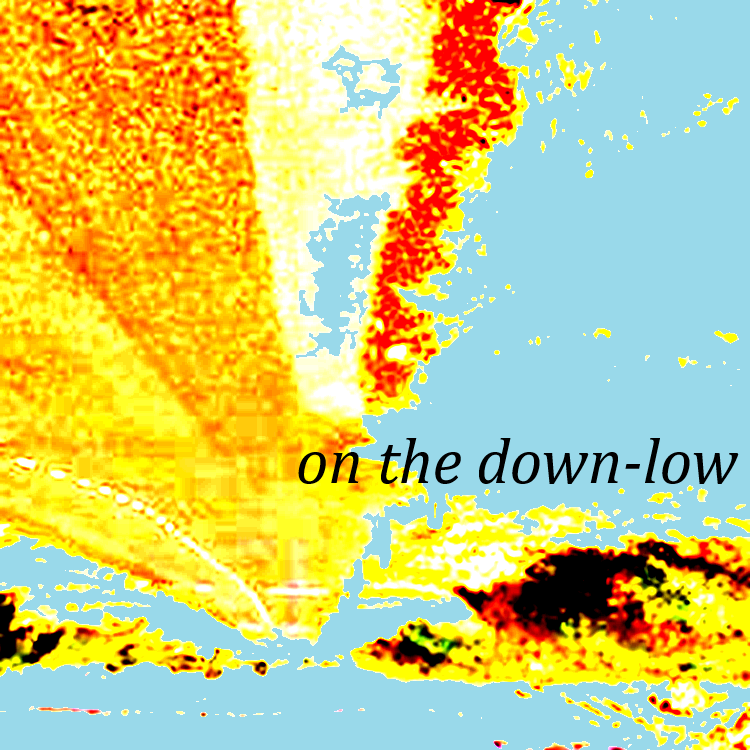
Artwork from Mark Young




Poetry from Ma Yongbo
The Same Rain
How many more rains must I listen to
before I hear the one and only rain,
before I hear the self that is fading away?
Rain only casts a temporary sheen
on the stones of the Ming Palace Ruins.
It drifts far and near; its feet tread upon the water,
countless fine stitches mend a tattered grey cloth.
Rain can always begin anew,
as if all rains are the same rain.
Yet you cannot make the same mistake twice,
not even beneath this very same rain.
This morning, I hear the same rain falling again and again:
on singing towers with lowered red curtains, on open-roofed boats;
on the dimming eaves of monk’s quarters.
But you, listening to the rain, are forever in another rain.
Passing Shaojia Mountain in Spring, Thinking of My Elder Brother Yongping
The mountain is still the same mountain, shaped like a saddle
the valley in between is now filled with tangled green
no one lingers in the hills, nor does water flow
where one might pause for a moment, to see the self of old
Only stones, only trees, only branching paths
leading to memory or oblivion, to where we came from and where we go
which is truer? even light rises late
even the dust we breathe
carries an unspeakable breath of the afterlife
This morning I crossed through the mountain, not to seek you
you dwell in farther hills, on higher ground
entangled with mist and clouds
my cry is but a pale grey stone, falling into the valley
no echo returns, that somber green
still nurtures invisible particles
All earthly toil is but a feast of flowing water
the mountains we climbed together still lie ahead
even between you and me
perhaps I ought to rise like slow sap
up black treetops, blooming into words in the air
The Tapestry of Words
He wove a tapestry from words,
yet only saw its front—
a riot of blooms and colour,
never the tangled threads behind,
the knotted, messy stitches,
a puzzle of hues where no one
could trace where each line began or bent.
Inside the story he wove, he spoke to someone,
using that man’s hands and speech, till there was nothing left to say.
It felt like a real place,
yet nothing existed there, no space at all—
the emptiness between the outstretched arms of a sleepwalker.
A universe without substance, where rain watered the galaxy,
and a frying pan cooled slowly, leaning against a wall.
There would be no certain ending, no protagonist
rising again in each act. He grew tired of repetition,
yet could not bring it to a full close. Only
by falling into the grass could he breathe
the sharp scent of real earth, and see inside the roots
a busy republic. His abstract life
lifted the roof higher, and the flocks of birds that divined upon it.
And this bright, blazed tapestry, its edges blurred,
hung on a nail of stars, high above the road,
replacing every visible landscape.
He always longed to circle to its back,
as he once did in childhood, behind the screen of an open-air movie,
since he could not understand the story woven on its front.
Impressions of Visiting Zhou Libo’s Former Residence
I must have read your works in childhood,
The Tempestuous Storm and Great Changes in a Mountain Village,
along with the School of Potato Fiction and Bitter Chrysanthemum.
Yet not a single line comes back to me now.
Those vicissitudes of life repeat themselves time and again;
layer upon layer of historical shale
has long pressed childhood curiosity deep into the folds of time.
I may reread you, or I may not.
Yet your slim translated works,
the palm-sized dictionary you used to teach yourself foreign languages,
have deepened my admiration for you.
I said to Bu Cundan who toured here with me:
Compared with your generation, contemporary poetry
lacks the concern for and ability to tackle grand themes,
mostly trivial trivialities, petty self-absorbed trivialities no bigger than dirt under a fingernail.
You said your writings will fade away soon,
and your name will be quickly forgotten by the world.
Yet the truth, goodness and beauty your words have touched,
the courage and revolutionary spirit within, shall endure forever.
I fully agree with this view, just as
striving for the people’s yearning for happiness
and striving for the people’s happiness itself
are two entirely opposite things.
Then I think of other souls:
Ovid, the playful bard of tender love, undone by his own genius;
Yeats, knight of the golden rose, casting a cold glance
at life and death, yet walking ever onward;
Keats, the twenty-six-year-old youth who wrote his name on water;
Dickinson, the final enigma left to the world—”Return”.
Nero’s Golden Palace has long fallen into ruin,
and eternal Rome itself has long fallen.
But those who, in their lifetime, fretted over love and fame
that would sink into nothingness in the end
have outlived
all of us, including you and me.
Silver River as Your Witness
Warm the summer days, the Silver River lies in quiet grace;
Fortuned the chosen date, blessed the auspicious hour and place.
Upon this nuptial rite, may peace and health attend all years;
Heaven-made perfect pair, in lute and harp harmonious cheers.
May your predestined bond forever stand secure,
Walk hand in hand till hoary hair endure.
Through wind and moon you side by side shall roam,
Journey together down the rest of life’s long home.
Benevolent the mother, filial the daughter bright;
Amber glows with pure and radiant light.
Poetry and painting blend in one refined delight,
Spanning the East and West, across the world’s broad height.
Rise early, rest late; begin with end in thoughtful mind,
In flourishing prosperity all joys you ever find.
Essay from Rashidova Shohsanam

DENAU INSTITUTE OF ENTREPRENEURSHIP AND PEDAGOGY
Faculty of Philology
Philology and Language Teaching Department
First-Year Student of Group 117
Rashidova Shohsanam
THE DEVELOPMENT OF THE UZBEK LANGUAGE IN THE DIGITAL ERA AND YOUTH SPEECH
Annotation
This article analyzes the development processes of the Uzbek language in the digital era, the influence of the internet and social networks on youth speech, changes in language culture, and the role of modern communication in language development. The article also discusses the penetration of foreign words, abbreviations, internet slang, and their impact on the Uzbek literary language. Furthermore, recommendations are given on preserving language purity, enriching youth speech, and increasing the prestige of the Uzbek language.
Keywords
Uzbek language, digital era, internet, social networks, youth speech, language culture, communication, literary language, slang, globalization.
Introduction
In today’s rapidly developing world of globalization and technology, the issue of language remains one of the most important topics. The national values, spiritual wealth, and culture of every nation are reflected primarily in its language. During the years of independence, the Uzbek language has significantly developed and is actively used in all spheres of society as the state language. Especially with the widespread use of the internet and information technologies, the scope of language usage has expanded even further.
In the present era, where digital technologies have become an inseparable part of human life, the communication style of young people is also changing dramatically. Social networks, messengers, blogs, and various online platforms have deeply entered the daily lives of youth. As a result, new words, abbreviations, and internet slang expressions have appeared. This situation is considered one of the important issues that should be studied from a linguistic perspective.
Language is not only a means of communication but also a reflection of national thinking and culture. Therefore, scientific analysis of language development, linguistic changes, and innovations in youth speech is one of the urgent tasks of modern philology.
Main Part
The Digital Era and Language Development
The twenty-first century is entering history as the century of information technology. The popularization of the internet has accelerated communication among people and expanded opportunities for information exchange. At the same time, this process has had a significant impact on language development.
Previously, people mainly received information through books, newspapers, and television. Today, however, social networks have become the primary source of information. Millions of users actively communicate on platforms such as Telegram, Instagram, Facebook, and YouTube. During this communication process, new forms of language are emerging.
One of the main characteristics of the digital environment is speed. Since young people are accustomed to expressing their thoughts quickly, shortened words and abbreviations are often used in online communication. Expressions such as “ok,” “bro,” “thanks,” “like,” and other shortened forms are frequently used in internet language.
This process can be evaluated from two perspectives. On the one hand, the flexibility of language and its adaptation to modern times is a positive phenomenon because language is always developing and adapting to new conditions. On the other hand, the violation of literary language norms, the increase in spelling mistakes, and the excessive use of foreign words may lead to negative consequences.
The Use of Internet Slang in Youth Speech
Today, internet slang occupies a special place in the speech of young people. Slang refers to informal language units used by a particular social group. Internet slang consists of new expressions that emerged during virtual communication.
For example, words such as “top,” “super,” “like,” “story,” “trend,” “blogger,” “online,” “chat,” and “status” are widely used in youth speech. In some cases, these words are used even though Uzbek equivalents exist. This situation affects the national characteristics of the language to a certain extent.
The interest of young people in internet language is connected with several factors:
- Desire for modernity;
- Fast and convenient communication with peers;
- The influence of social networks;
- Interest in foreign cultures;
- The impact of bloggers and mass media.
Today, many young people mix English or Russian words into their daily speech. Expressions such as “I posted a story,” “Will you be online?” or “Write a comment” are becoming common in everyday communication.
According to linguists, if such tendencies continue for a long time, they may negatively affect literary language norms. Since the younger generation shapes the future language of society, this issue is becoming increasingly important.
The Position of the Uzbek Language on the Internet
In recent years, the amount of Uzbek-language content on the internet has been increasing. The growth of Uzbek websites, blogs, electronic libraries, and educational platforms serves as an important factor in language development.
The activities of young bloggers, journalists, and creators contribute to the expansion of the Uzbek media space. Various materials in the Uzbek language are being produced on YouTube and Telegram platforms. This helps strengthen the position of the Uzbek language on the internet.
However, on some internet pages spelling rules are ignored, Latin and Cyrillic scripts are mixed, and punctuation marks are used incorrectly. Such situations also influence the written speech of young people.
For instance, some users prefer informal and dialectal forms in writing. This may negatively affect the literary norms of the language.
Therefore, promoting грамотical writing and popularizing Uzbek spelling norms on the internet are of great importance.
Language Culture and Speech Issues
Language culture means the ability to use language correctly, appropriately, and beautifully. Speech culture is considered one of the important indicators of a person’s education and spirituality.
Today, because of the habit of writing quickly and using abbreviations, some young people face difficulties in expressing their thoughts fully. In particular, challenges are observed in writing official texts and expressing ideas in scientific style.
In addition, rude words, offensive expressions, and spiritually inappropriate phrases are sometimes used on social networks. This leads to a decline in speech culture.
To improve language culture, attention should be paid to the following issues:
- developing reading habits;
- following literary language norms;
- strengthening literacy promotion among youth;
- creating high-quality Uzbek-language content on the internet;
- using pure and fluent language in mass media.
Reading books enriches vocabulary, broadens thinking, and improves fluency of speech. Therefore, encouraging young people to read books is one of the important tasks of modern society.
Globalization and the National Language Issue
The process of globalization affects all national languages to some extent. In particular, the widespread use of English as an international language causes many foreign words to enter other languages.
In the Uzbek language, many terms related to technology, economics, marketing, and media are borrowed from foreign languages. Words such as “marketing,” “manager,” “startup,” “digital,” “content,” “target,” and “brand” are actively used.
Of course, the emergence of new concepts with the development of science and technology is natural. However, it is important to create and popularize Uzbek alternatives whenever possible.
Protecting language means protecting national identity. If a language disappears, national values and spiritual heritage may also suffer.
Therefore, increasing the prestige of the state language, actively using it in science and technology, and strengthening respect for the mother tongue among youth are among today’s urgent tasks.
Conclusion In conclusion, the digital era creates great opportunities for the development of the Uzbek language. Through the internet and social networks, the sphere of Uzbek language usage is expanding and new communicative forms are emerging. At the same time, preserving language culture, following literary norms, and enriching youth speech remain important issues.
Although young people’s interest in internet language is natural, it is necessary to develop грамотical writing and proper speech skills among them because language is the spiritual wealth and future of the nation.
In the future, in order to increase the international prestige of the Uzbek language, it is important to create high-quality Uzbek content on the internet, develop electronic dictionaries and educational platforms, encourage young people to read books, and educate them in the spirit of respect for their native language.
Every person should value their mother tongue and strive to use it correctly and fluently. Attention to language means attention to the nation.
References
- Karimov I.A. Yuksak ma’naviyat – yengilmas kuch. – Toshkent: Ma’naviyat, 2008.
- Mirziyoyev Sh.M. Milliy taraqqiyot yo‘limizni qat’iyat bilan davom ettirib, yangi bosqichga ko‘taramiz. – Toshkent: O‘zbekiston, 2017.
- Mahmudov N. Til va jamiyat. – Toshkent:
O‘zbekiston milliy ensiklopediyasi, 2019.
- Begmatov E. Nutq madaniyati asoslari. – Toshkent: Fan, 2008.
- O‘zbekiston Respublikasining “Davlat tili haqida”gi Qonuni.
- Rahmatullayev Sh. Hozirgi o‘zbek adabiy tili. – Toshkent: Universitet, 2006.
- Internet manbalari va zamonaviy ilmiy maqolalar.
Poetry from Patrick Sweeney
when called on to read,
I was in the same metabolic state
as Ham on take-off
*
sparrows always at the fragile conjunction
of staying
or going
*
he never knew the square footage
or the date of anyone’s birthday
*
dandelion puff ball
going somewhere
without a wish
*
I rode in the little yellow bus
with Der Witwer
*
the nervous son of a nervous father,
taking the heat, the white stones refused
*
who I think I am
in the teeming rain
*
he was the genius
of nothing worth knowing
*
mistrusting the rungs
of the ‘borrowed ladder’
*
for my benefit,
Wednesdays and broken lifelines
*
listening to Teen Angel
over and over again
*
stopping him before he could say:
‘Sorry for your loss’
*
she’s overprotective of caterpillars
and runny noses
*
saying the distance between stars
as if I understand it
*
the ones who laughed
behind my back
Bio: Patrick Sweeney is a short-form poet and devotee of the public library.
Poetry from Darren C. Demaree
Emily as the Predictable Question
Yes, she drew me in
as simply as a breath
& when she breathed
me out I was part
of the derivation
of Emily, the world
that exists for everyone
else. I miss the before,
when her lungs
were making this me,
but it’s good to be
with you all.
How else could I mourn?
How else could I fight
my way back to her?
Emily as Well-Made Cake
I don’t need to be so modern
as to use plates or utensils or occasion,
I just need her in my mouth.
Emily as Obvious Beauty
Being simple,
seeing good as a gift,
that re-made me.
Emily as Fifty-Seven Years Later
The frailties will be funny, too.
Death will be hysterical. Jokes we
barely remember, that’s oxygen.
All All #52
Now, now, now is when we sit on top
of America’s chest to see what
good breath is left. No songs. No strutting
across the mythology of fields
with actual gods we blanketed
to smother. Just the weight of people
& a promise to bring back honey,
to bring back the drowning in honey
to the bee killers. Now. Now. Now. Now.
Alex S. Johnson interviews Diamanda Galas

“No Extracurricular Moaning: Diamanda Galás on Suffering, Irony, and the Wily Mind”
Interview by Alex S Johnson
- INTRODUCTION
In this newly released segment of Alex S. Johnson’s ongoing conversation with avant‑garde vocalist and composer Diamanda Galás, the artist dismantles sentimentalism in contemporary music, critiques the misuse of feminist rhetoric, and explores the philosophical and psychological architectures that shape her work.
Galás rejects the “namby‑pamby, like, crying into the hanky shit” of modern singer‑songwriters, insisting that authentic expressions of suffering must contain irony, perspective, and survival intelligence. As she states in the interview: “If you got nothing else in your deck to show me, then why don’t you just get lost… I want a punchline in there.”
Drawing on country legends like Hank Williams and Johnny Paycheck, she contrasts their sardonic, outlaw‑inflected storytelling with today’s confessional pop, which she finds “revolting” when stripped of humor or self‑awareness. She also critiques certain strains of contemporary feminist performance as “weak,” noting that “what they think is maybe feminist… is not feminist in the original sense of the word.”
The conversation expands into classical philosophy, the Stoics, and the Greek concept of wily intelligence—the survival‑driven cunning embodied by figures like Odysseus. Galás emphasizes that “wily is by no means a negative… it means you are a man who can survive in situations designed to destroy you.”
Finally, she discusses the conceptual roots of her piece Panopticon, drawing from Jack Abbott’s In the Belly of the Beast and the psychological violence of total surveillance. She describes the panopticon as “a system of mental destruction… a massive paranoia situation for prisoners,” and critiques the naïveté of releasing institutionalized people into society without support.
This exchange reveals Galás at her sharpest—philosophically incisive, culturally unsparing, and fiercely committed to artistic rigor. It is a portrait of an artist who refuses sentimentality, demands intelligence, and insists on the power of the wily mind
ALEX 07:59
Suffering has never been, and even earlier, I’m going back decades, suffering has never been for you as sort of an abstraction. A lot of artists will, in pop music, for example, they’re suffering in love, and again, I’m going back to you, I’m thinking of, you know, “I Put a Spell on You,” because you take this classic by Screamin’ Jay Hawkins,
Diamanda Galas 08:33
oh yeah,
ALEX 08:34
So this is, I’ll just give you my sort of theatrical interpretation of it…what I felt from it was that it’s there are two voices here, one voice is, is the one who’s genuinely in anguish, who’s genuinely hurt, who’s, you know, wants to be beloved, has been failed in some way, shape, or form. The other is more like the dark goddess manifestation, who is putting a curse on the person, assuming power, and with a lot of pop songs, it’s like, why did you leave me, like country western, it’s like, why’d you leave me, or, a female empowerment song, which is completely valid, but I – go ahead,
Diamanda Galas 09:29
Yeah, well, my take, yeah, actually, a lot of the songs, I think that when Hank Williams sang them, when, Johnny Paycheck was singing them, it was a very different time, and initially, and there was a lot of sardonicism, there was a lot of irony, and there were, they were just singing. Sing the life, life as they knew it, and they would sing about a lot of other things too, besides, you know, unrequited love, but I think that right now there’s a lot of singers who sing a lot of these songs, love songs, and poor me songs, and I really, when I hear a lot of women or men singing these kinds of songs without any irony, without any humor, without any perspective other than poor me, I find it revolting, because it’s just like, look, you know, I really don’t need to know all those details, you know? If you got more, if you got nothing else, in your, in your deck to show me, then why don’t you just get lost, because you know what? We all know what these things feel like, and I want a punchline in there. I want a punch line in there. I want a point of view that will help me survive that, if that, if you know, if that’s what I’m looking for. I don’t want all this namby-pamby, like, crying into the hanky shit. I can’t bear it. I still seriously can’t bear it, you know.
And, and I find, and musically, it’s like the singer songwriter tradition, that kind of thing. I can’t stand it. It’s with, with Hank Williams, or especially with Johnny Paycheck, there would always be this kind of, you know, two feet up on the bar,
ALEX 11:47
Right,
Diamanda Galas 11:48
And getting really drunk, and, and knowing that he was an outlaw, he was going to do the wrong thing every time, and then writing a kind of a sort of imitation poor me song, but always had these punch lines, were just like, like, with ‘Pardon me, I’ve got someone to kill.’ He sings, you know what I mean.
ALEX 12:10
I do.
Diamanda Galas 12:10
I don’t know..I mean, I’m sorry, I’m gonna have to leave you because I got someone to kill. I told her not to do it, and blah blah blah, and I’ve been so miserable, and blah blah blah. At the end of the song, he just says, ‘Okay, pardon me, I got someone to kill, you know?’ They’re on the hill, they’re on there. He talks about them being on the hill, and his wife and her lover, and.. and it’s.. it’s kind of like all in a, all in a day job, in a day’s job
ALEX 12:41
Right. Yeah, that’s…
Diamanda Galas 12:42
Their approach to art is the life that they’re in, that’s just the way it is, you know, and it’s sorrowful, but there’s no extracurricular moaning, and you know, and I think that a lot of women do that, just like what they think is maybe they think it’s feminist, that’s not feminist in the original sense of the word. The expressions that people use a lot of times right now that are supposed to mean feminist are for me just weak.
ALEX 13:18
Okay…
Diamanda Galas 13:19
And I don’t like all that weak shit. I don’t want to be around it. I don’t want to hear it, and too many sweet voices, fine sweet voices. I’m just like Jesus Christ, don’t strangle me to death.
ALEX 13:31
Okay, so examples, please.
Diamanda Galas 13:34
Nope!
ALEX 13:36
That’s fine.
Diamanda Galas 13:38
Examples, no, there’s so many examples, it would just be redundant.
ALEX 13:42
Okay? Because, because I know, I don’t hear a lot of sweetness, I hear a lot of what they call it, sort of selective outrage, or blaming men for shit that’s really structural…
Diamanda Galas 13:58
I think if you get to this point where you’re just sitting blaming men all the time, you know, you should make up your mind, just go out there with the scissors and just kill them,
ALEX 14:06
Okay?
Diamanda Galas 14:07
Or just, you know, do something else, but the same old theme over, over it, it just glorifies these, these people that they’re supposedly got a hate on for, and it’s just like, oh, for Christ’s sakes.
ALEX 14:25
Well, you know, that’s a fascinating because it makes me think of two things. First of all, Hegel, right, the master-slave dialectic, and also Nietzsche, you’ve got, like, fucking. I really, I’m not meek at all, you know, but I’m going to clad myself in the robes of meekness in order to dominate people, right, and try to gaslight them into thinking that they should be meek in order to be dominated by me.
Diamanda Galas 14:57
Well, that’s a stoic that comes from the Stoics. Actually, if you think about it, because the Stoics were the slave, the Greek, at first the Greek slaves of the Romans,
ALEX 15:08
Yeah.
Diamanda Galas 15:08
They were the counselors to the Roman emperors, and because they were slaves, of course, they could never, never express their feelings or any of their, their particular resentments or angers, they, but they were, they were sought after because of their use of logic, and they had to put an emphasis on certain things, logical thinking, and they were valued for that, because they will be able to make constructs that would work for the people they, for the people that employed them, military designs, just mental… how do you put it? How would I say this devious in Greece? There’s an expression in Greek which means wily thinking, [πολύμητις (polýmētis)] and to survive as a slave of the Empire, Roman Empire, with people that were syphilitic emperors and very evil, had to be extremely wily, and that’s a one of the most revered words in Greece, so you have these people, like you know, Zeno Heraclitus, and these others,
ALEX 16:47
Right,
Diamanda Galas 16:48
Helping plot, plot the rule of a Roman government, and that’s what I’m talking about, I think that that’s very interesting.
ALEX 17:04
It is, it is very, very interesting. I almost.. I lost my, my thought. It was.. oh, yes. There’s a word.. I don’t know Greece. I don’t know Greek. I don’t know anything about it, except, you know, my poem, which is translated into Greek, which I don’t understand my own poem, but anyway, I’ve been assured that it’s really good Greek, and it’s called “Alchemist of Sorrows,” anyway, after Baudelaire, actually, but so, so in in the original Greek of the of the Odyssey, when, when, and I was wondered about this, you know, when Odysseus, they’re one of the epithets, is always used is, you know, you know, man, in many ways, or I guess it’s polytropos, probably mispronouncing it, but I, you know, and, and you know what’s, what’s her name, the she’s a professor at Columbia, Gayatri Spivak, right, translates it says basically sardonically big liar, so I’ve always, I’ve always been curious about that, and now you’re kind of filling something in for me, where that the mentality of being wily is not necessarily wrong, it’s just so Odysseus. What’s your, what’s your take on Odysseus and his ways?
Diamanda Galas 18:35
I, I, I don’t think I’m qualified to discuss.
ALEX 18:39
Okay, okay…
Diamanda Galas 18:40
Wily is by no means a negative, it’s a positive, it means you are a man who can survive right in situations that are designed to destroy you.
ALEX 19:03
Yes.
Diamanda Galas 19:04
And that means you must be extremely clever. You must be able to to see paradigms, and you must be able to recognize patterns before one is exacted upon you, and that is why they’re, we’re hired and revered,
ALEX 19:30
Right?
Diamanda Galas 19:32
So much as revered,
ALEX 19:34
Right? Yeah, I mean, that’s that’s that’s brilliant, and I think that, you know, pattern recognition is the, you know, skill set of our era in so many, so many ways, right? Yeah, so also I just wanted to kind of pivot to Panopticon. So you did a piece called Panopticon, immediately think, obviously, Jeremy Bentham, but famously Michel Foucault, and right, and could you, could you talk about the origins of that piece, and your, your, your use of vocal language to express the concept of the panopticon?
Diamanda Galas 20:16
One of the texts that I was reading at the time was was a, oh my god, in the morning I’m, I tend to forget it, a Jack Abbott’s In the Belly of the Beast.
ALEX 20:34
Yes.
Diamanda Galas 20:35
That was promoted naively by Norman Mailer, who fought very, very hard to get the guy out of prison, and as soon as the guy got out of prison, he killed somebody, you know, that was just it. It’s like that’s where you look at Norman Mailer, and you know, I remember that Truman Capote used to laugh all the time, he called him “the most vicious bitch in the world.” And my favorite things were to read in Gay Sunshine, they’re casting aspersions upon each other, and I would just fall out laughing…Norman Mailer was very protected.
So, anyway, when you talk about Panopticon, it’s really a system of many eyes, in, in, in the sense that the guards, the guards, and the warden are in the center, they’re in the center, they have the center seat, and they can see every cell in the prison, they so that there, there is a, there’s, it’s a massive paranoia, paranoia situation for prisoners. There’s no privacy, there’s no privacy at all…a system of mental destruction.
So you have a guy like, like Jack Abbott, and all these liberals are thinking about, ‘oh, poor guy,’ you know? Like, well, you could say poor guy all you want, but I mean, you don’t want to just hatch him out of prison, like, and give him 50 bucks and say have a good life, you know. It doesn’t work that way in your life. Doesn’t work that way.
It’s like when a person becomes institutionalized, that person becomes terrified of the outside world. That person does not know how to interpret gestures from the outside world. A gesture, I believe it was a gesture by a bartender or a situation like that that got killing him because he thought the gesture meant that it was he was threatening Jack Abbot and it wasn’t that…The thing is, is, is that the person to leave is, is a, is a second execution, is a second punishment, because, where do you go, where do you go, where do you go to learn the skills of, of, of a normative? It’s not a normative society, is it? But it’s called normative society. Where do you go to learn how to communicate and how to interpret signals after you’ve been in a place for eight years, and always have 24 eyes in the back of your head.
Alex S. Johnson — American author, editor, and cultural interviewer. Known for over 100 works in horror, bizarro, surrealism, and the dark fantastique, and for conducting a major interview with avant‑garde vocalist Diamanda Galás. His projects include Black Diadem: Magazine of the Fantastique and the Axes of Evil metal‑horror anthologies. Johnson’s work aligns with underground, mythic‑punk, and transgressive traditions; he has been praised by cyberpunk pioneer John Shirley, who called him “the Baudelaire of our time.” His interview with Galás situates him within the lineage of writers engaging with radical performance, political art, and the aesthetics of extremity.