3. My dreams are my life.The most important question is who do you want to be? It doesn’t matter if someone tells you: “It’s impossible.” It doesn’t matter how many such people you meet in your life. The most important thing is that you are the only person who says these words.
Know that even if you are on the right path, even if they step on you, even if you do not move, even if you sit on the road! Don’t waste your life on trivial things. Be interested and strive with your being for something higher than you, higher than your experience. go on, your life is like that.
Every person, without exception, has the power to move towards his dreams and imagination. Every time you allow yourself to dream about something great, you allow yourself to be evaluated, your self-esteem is strengthened, and you allow yourself to be more helpful and proud.
Such dreams improve your self-image. Buy confidence in yourself. They will increase your personal self-respect, internal pride and emotional level. High dreams and high imaginations have a power that enlivens us, inspires us, and encourages us to act faster than before.
for this to destroy your dreams into traps. The first life is a big trap: “Never allow yourself to think that it is over!” Know that if you don’t follow your dreams, no one will do it for you.There is nothing more interesting in our life than walking towards our dreams. The hopes of a person who ignores and forgets his dream will be dashed. People who have not forgotten their dreams stop for a while and ask themselves the following questions:
– Am I pursuing my dream?
Such people know that they can plan their future. They build a decent life for themselves. The more we dream, the more power we have. A wise man said: “People often do not want to believe that they have everything they need to become the person they want to be.” That’s why they get used to what they don’t deserve, and we forget that it is necessary to pay a fee to achieve a dream.
Many times we make many goals in life but we do not try to achieve them. A simple example is that your goal is to study at a higher educational institution, and your biggest dream is to become a mature and good doctor in the future. Now, in order to achieve this dream, first of all, you need to pass the university entrance exams. For this, you need to go to a tutor or take additional classes to prepare for the exam. This, in turn, requires a certain amount.
From this we can see that you have to pay a price to achieve your dream. Therefore, a simple formula arises by itself. That is:
Goal+Payment=Dream
There are different dreams in human life. Small dreams and big dreams. All this is a dream.
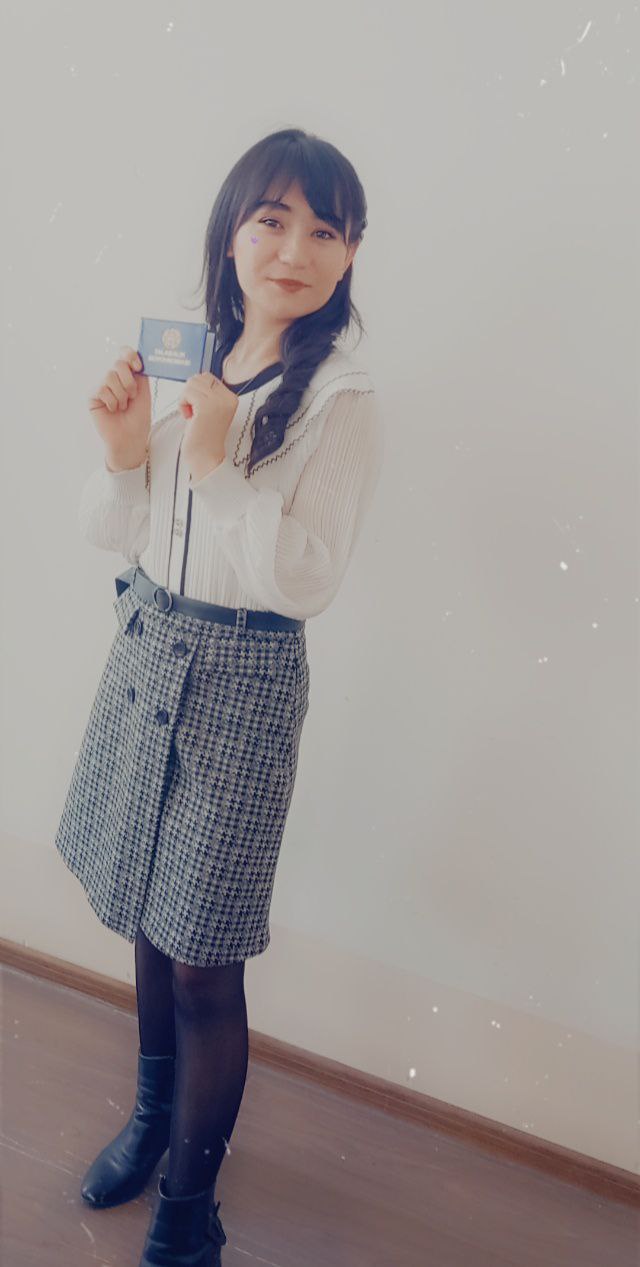
I Saida Ismoilova was born on January 10, 2005 in the village of Ovshar Hazorasp district Khorezm region.
Currently, I am a 1st-year student at Berdaq State University.
I am currently engaged in writing books, and I have been preparing to publish my books.
Welcome, readers, to a new year! This time, Synchronized Chaos Magazine focuses on time’s passing, whether that represents new growth and fresh possibilities or the sobering reality of grief and loss.
Regular contributor Channie Greenberg has a new book out, Subrogation, which includes many of the images she’s published with us.
Adhamova Laylo Akmaljon urges people, as much as possible, to maintain a positive attitude while Dilfuza Salomova encourages people to take action on their hopes and dreams. Shahnoza Ochildiyeva reflects on her 2023 accomplishments and comes into 2024 with excitement and hope. Elmaya Jabbarova beckons readers to step forward, away from lingering griefs, into the new loves awaiting in the new year.
Ike Boat broadcasts the news of a spectacular dance show and concert in Ghana.
John Edward Culp illustrates people who connect with childlike innocence, finding and then losing and finding each other again. John Mellender shows heartbreak transmogrifying into inspired creative writing and the beauty of platonic friendship between people of different genders.
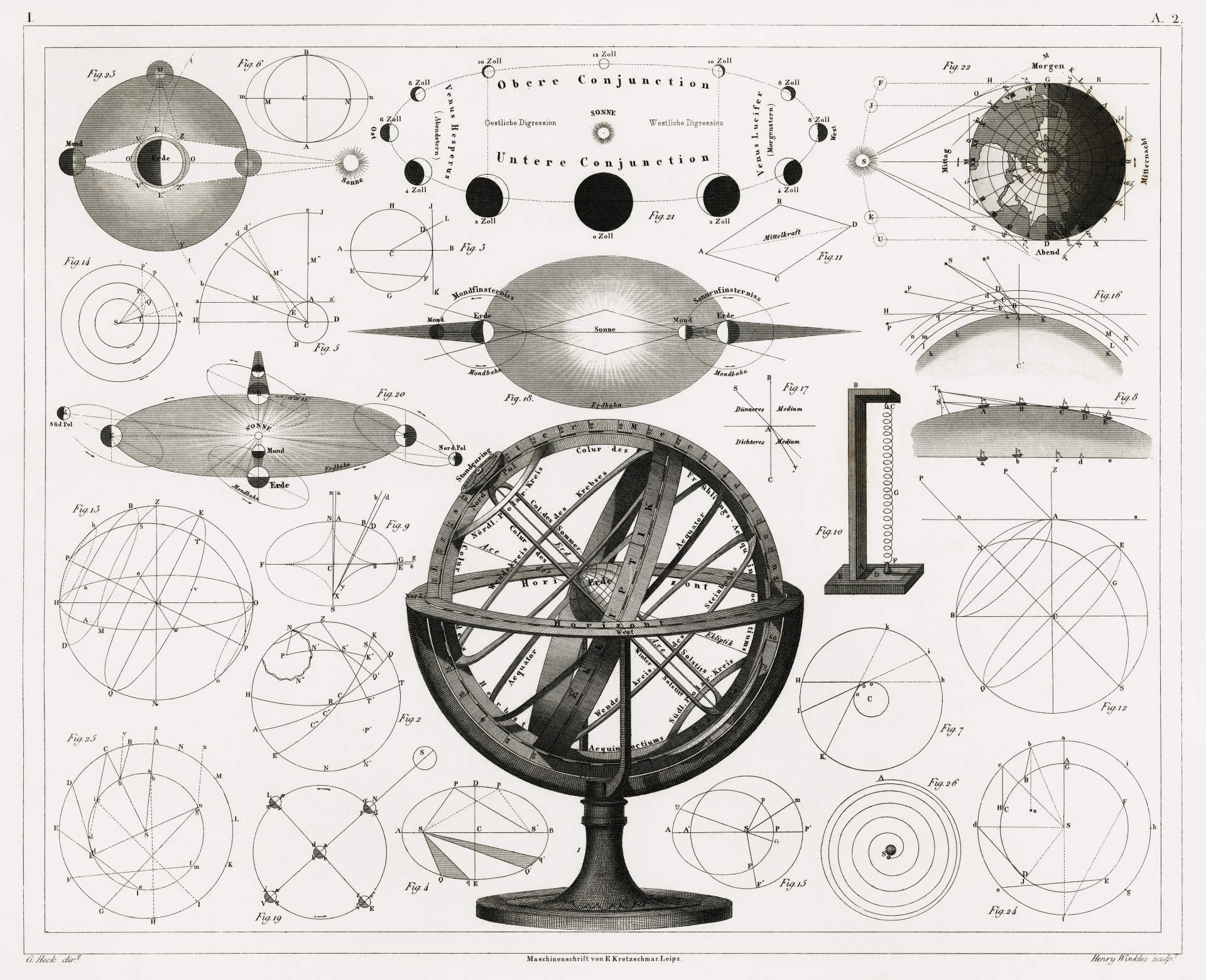
Duane Vorhees evokes natural beauty and romantic, sensual, and spiritual love in his poetry and Aminova O’g’iloy celebrates the lush floral beauty of a Central Asian spring. Graciela Noemi Villaverde highlights the singular moment of capturing a rainbow at the dawn of the New Year. Sterling Warner arranges symphonic bouquets around themes: waterfalls and rapids, a woman’s silk clothing, astronomy and cosmology.
Munnavar Boltayeva encourages compassion and unity among the world’s people while Maid Corbic details his personal quest for a world of freedom and mercy. Kristy Raines declares her holiday and New Year and perennial wishes for a world of kindness and tolerance. Jerry Langdon crafts a ballad asking Santa to bring him peace and hope as an adult, while in another piece paying tribute to personal heroes.
Diyora Kholmatjonova finds and claims her identity and self-esteem in a world where people can abandon and forget each other, as Jamshidbek Abdujabborov expresses her human insecurities and hopes for the future.
Michael Joseph comments on the journey through life, as our paths narrow and focus as we age and feel the impact of our choices and circumstances.
Noah Berlatsky reflects on how life goes off in its own directions regardless of our plans, while Devin Rogan probes the stories we tell ourselves and each other about our origins and existence. Bill Tope reminds us that physical and emotional attraction will take its own course, regardless of our plans and thoughts.
Christopher Bernard describes ways to subsume our small human consciousnesses into the larger, ever present Cosmos.
Maja Milojkovic writes of her desire to stop time and preserve a moment with her lover.
Ian Copestick suggests that not everyone needs to reminisce about their pasts and some should happily move forward into the future.
Peter Cherches’ vignettes add some whimsy back to our existence and Jim Meirose crafts a fanciful deck of cards with surreal conversations and images.
Isabel Gomes de Diego comments on the passage of time with photos of small children in front of the skeletons of extinct prehistoric animals. Daniel De Culla renders the trip to the Museum of Human Evolution (Burgos, Spain) into poetry.
Daniel De Culla illustrates love and nature in ways that are at once exotic and commonplace, and also remarks on death through a skeleton’s fanciful trip to the dentist. Robert Fleming “reports” on weather conditions in the Rocky Mountains through a set of photographs that bring up thoughts of climate change, chemistry, nature, culture, and humor.
Mark Young creates synthetic “geographies” of fictional lands that carry their own forms of symmetry and intricacy. Stephen Bett creates new metapoetry by riffing off of existing metafiction and postmodern novels. J.T. Whitehead probes and questions our senses of certainty with his poetry, destabilizing our perspectives and opinions, yet returning us to a sense of awe and wonder at the universe, symbolized by a majestic flock of birds.
Mitchel Montagna‘s poems lament the inevitable losses of our world and our lives, while Mukhlisa Safarova laments love’s losses to betrayal and death in lyric poetry. J.J. Campbell captures the chilly monotony of winter suburban loneliness while Sherova Orzigul laments cruelty and social isolation that can begin in childhood, and Zofia Mosur’s poetic speaker hides herself away in grief, taking solace from the moon.
Gabriel Flores Benard writes of life’s impermanence and our overwhelming universe through the metaphor of stellar death.
Henry Bladon probes our own minds’ shiftiness and confusion, sifting through the surreal landscape many find in our interior. John Grey probes the different layers of our existence, the assorted things, people, and experiences who together shape our identities. J.D. Nelson conveys scenes from everyday life and develops a narrative around a person’s developing bond with nature in the form of an old crow.
Faleeha Hassan’s speaker expresses how she is only a normal woman, not as reminiscent of the scriptural figure of Maryam as the people around her seem to hope and believe.
Adolatxon Shermuhammedova looks forward to the time after death when she believes she will be forever free from sin and temptation.
Brian Barbeito’s poetry expresses how “the world is too much with us” and lets us escape into nature, as Skye Preston recollects a visit to their aunt’s home and colorful garden and Gulsevar Khojamova compares the beauty of her country to the colors of the rainbow. Mahbub Alam writes with grace of his tender love for and intimate knowledge of both the winter and spring seasons in his country.
Meanwhile, Azemina Krehic crafts evocative language on how human bodies and minds adjust to darkness.
Blue Chynoweth illustrates the difficulties of being feminine and vulnerable and dealing with society’s insults to the female body and mind.
Mesfakus Salahin grapples with the question of how to be a good man when visiting sex workers where there is clearly an economic and power imbalance.
Z.I. Mahmud explores the role and social position of women in Victorian times through an analysis of novels by Charles Dickens and Charlotte Bronte.
Mykyta Ryzhykh’s pieces highlight the absurdity of wars, especially those waged by the powerful for abstract reasons, as Aituvova Khurshida outlines the need for and ways to purge Uzbekistan’s government of corruption and Akhmadjanova Muslimakhon urges Uzbek leaders to make rooting out bribery a priority on moral, cultural, and pragmatic grounds.
Odina Xonazarova outlines Uzbekistan’s friendly cultural relations with other countries in the region and the importance of embassies and diplomacy.
Manzar Alam renders his hopes for a more peaceful, socially just, and ethically managed nation through the very personal metaphor of a tiny baby. He wants a better future for the small child, whom he sees as uncorrupted.
Ahmad Al-Khatat reflects on the nurturance and comfort people find in each other in a healthy relationship. Stephen Jarrell Williams illuminates the beauty of a romance between people who find unity despite their differences.
Baratov Quvonchbek translates a poem by Rumi that reminds us that true love requires caring action. Annie Johnson crafts multi-layered morning and evening moments of perfect stillness and communion between people in long-term love and with nature.
Wazed Abdullah sends up a simple, heartfelt tribute to his friends, and the importance of friendship.
As a teacher, Sitora Mamatqosimova relates an experience of encouraging and befriending a shy student, while Madina Abdullayeva reminds us of the preciousness of children and encourages compassion for orphans.
Surayyo Xolmurodova describes the mixture of care and guiding discipline she received from her father and Zuhra Ruzmetova reflects on her mother’s constant care and nurturance. Munisa Narzulloyeva finds joy and comfort in the love of her family.
Eva Petropoulou Lianou pays tribute to the mothers of Gaza who are going on with parenting in difficult wartime conditions, in a piece translated into Swahili by Charles Lipanda Mahigwe, a refugee from Congo resettled into Malawi and part of the African Youth Artistic Poetry organization.
Lilian Dipasupil Kunimasa gently encourages people to retain hope, especially at the turn of the year, because one’s circumstances can always change and there is still beauty in the world.
Nasiba Kamalova explores what a person needs to feel happy and suggests that joy comes through contributing to one’s society and achieving one’s goals, rather than just through wealth or comfort.
Behruz Toshtemirov urges Uzbek youth to live up to their ancestors’ ideals, while Lobarxon Bazarbayeva outlines the history and architecture of the Grandfather Sultan Uwais Pilgrimage Complex.
Farrukh Amirov envisions his future literary career reading his own poetry to enthused audiences amidst the world’s despair. Jullayeva Sitora laments the inadequacy of her craft to inscribe the merits of her home country while Shahzoda Imomova reflects on her passion for poetry, developed at a very young age.
Abdunazarova Khushroy celebrates the poetic beauty of the Uzbek language while Lobar sings the praises of Uzbekistan’s centuries of literary heritage and Nigunabonu Amirova highlights the state of the literary, publishing, and journalistic scene in Uzbekistan.
Chexrona Pulatova extols the personal and professional benefits of learning a foreign language, particularly English as a second language. Sarvinoz Mamadaliyeva describes the intellectual growth she experienced through learning another language.
Qurbonova Shakhriyo describes the growing respect and societal support for and professionalization of teaching in Uzbekistan.
Aziza Amonova encourages educational leaders to incorporate and facilitate creativity in the curriculum alongside practical skills, as Shloka Shankar harnesses song lyrics from now and yesteryear to comment on the creative process.
Iroda Bahronova encourages Uzbek children and youth to make their country proud by excelling in academics and sports, while Farkhodova Nodira takes pride in her country’s athletic prowess and urges young people to take up sports and exercise.
Rosiyeva Gulbahor outlines new directions in Uzbek vocational programs while Maftuna Torayeva probes possible new directions for Uzbekistan’s primary school system.
Kadyrova Arofat Abdukarimovna explores the prospects for geothermal energy’s use in central Asia and encourages the development of renewable power. Muslima Najmiddinova points to the possibilities of privatizing oil and gas firms within Uzbekistan’s developing economy. Mashhura Ikromova looks at energy use in heating and cooling buildings and suggests what we have to gain through improved efficiency.
Hilola Hojimamatova explores how to define values in mathematics, and Akmalova Nargiza outlines the mathematical properties of square and triangular numbers.
Omondi Orony’s protagonist describes the complicated relationship he has with his brilliant father, whom he comes to respect over time as he grows.
Maftuna Yusupboyeva reminds us that we can’t expect to be wildly successful every minute of our lives and to achieve things in a moral way even if that takes longer.
This perspective may temper some of our ambitions, but it reflects wisdom and patience that comes through life experience.
We hope you will benefit from the thoughtfulness and insights within this issue.
Cosmos

Then Cosmos spoke:
“I have no end.
I have no beginning.
Nothing gave birth to me.
Nothing will bring an end to me.
I am everywhere.
I am all that was, that is,
all that will be.
I am Eternal Being
and Perpetual Becoming.
I am peace and I am war.
I am hate and love.

There are two roads to find me:
withdraw to the depths of your mind,
the darkness where nothing outside you enters,
and there we shall meet
and be One.
For you and I are One,
and have been for eternity.”

“But, Lord, you say there is a second road?”

“Yes. Look at a stone,
a flower, a leaf, a cloud,
and let it fill your mind
until your self has disappeared,
and stone and flower and cloud
fill you as though you were not there.
And there you will find Me,
and you shall know peace.”

“And when I am weary of peace,
and hunger for thrill and deed?”

And Cosmos smiled his deepest smile:
“Then you will find Me
in flexing body, ingenious mind,
in conquering will.
I am the god of tenderness,
and I am the god of power.
I am changeless stillness
and endless transformation.
Nothing is lost where I am,
nor is there any death:
there is only sleep
in dream’s eternal city.
All things I am.
Everything am I.”

Then the voice vanished in darkness
and silence of the night,
and I listened and wrote down
these words lest I forget.

_____

Christopher Bernard is a co-editor of Caveat Lector. His collection The Socialist’s Garden of Verses won a PEN Oakland Josephine Miles Award and was named one of “The Top Indie Books of 2021” by Kirkus Reviews. His two books for children – If You Ride A Crooked Trolley . . . and The Judgment Of Biestia, from the series “Otherwise” – are now available.
the sun has come out
one crow flies across the lot
& then another


—


on the 38
one block from Jack’s Lawson Park
sidewalks lined with tents


—


ol’ crow got sum’n
he takes it up to the roof
of the bus station


—


the year’s shortest day
the mailman knocks on my door
& postage is due


—


without a coffee
I walk back from Circle K
crow caws out hello!


—


bio/graf

J. D. Nelson’s poems have appeared in many publications, worldwide, since 2002. He is the author of ten print chapbooks and e-books of poetry, including *Cinderella City* (The Red Ceilings Press, 2012). Nelson’s first full-length collection is *in ghostly onehead* (Post-Asemic Press, 2022). Visit his website, MadVerse.com, for more information and links to his published work. His haiku blog is at JDNelson.net. Nelson lives in Boulder, Colorado, USA.
The Vanities


		*
In God We Trust.
– the Mint.


*
One Nation, Under God.
– the ribbon sticker on the car.


*
God, Guns & Guts
Made America Great.
Let’s Keep it that Way.
– the bumper sticker on the car.


*
God Damn me if this Defendant’s third victim isn’t my weekend.
– the Deputy Attorney General.


*
We thank God for our great victory today.
– the football coach.


*
We thank God for our great victory today.
– the terrorist.


*
We thank God for our great victory today.
– the Executive of the mortal nation.


A very short poem about Rubber Tree Plants
and the division of labor


What in the World would make any one black ant

think that it knows more about Earth than another

black ant, moving a similar amount of Earth, just

because of the specific kind of Earth –

	for example, a rubber tree plant –

that it moves?

	Its own self?  A song?  Something it heard?  Read?

*

Now . . . let us consider the red ants . . .


The Viennese Renaissance

	Max was driving to work.  He had recently finished a collection of poetry by Georg Trakl. After finishing graduate school, years ago, he read at least half a dozen books by Sigmund Freud. While in graduate school, he studied Wittgenstein, and the logicians of the Vienna Circle. When Max was an undergraduate, his “Cultures and Traditions” course included a component on the Viennese Renaissance. Max had also, in just the last week, finished a book of paintings by the artist, Egon Schiele. And the satellite radio station was playing a work by Schoenberg, to be followed by either Webern or Berg.  Stars were aligned in his mind. So Max thought about Vienna, and its wild and weird Renaissance.
	The Viennese Renaissance is the strangest, and most bizarre, renaissance, in the history of the West and all of its rebirths, Max thought.
	It consisted of a uniquely sordid, twisted, and literally incestuous cast of cultural figures. That, and some really dull, logical thinkers. At a time when Freud was writing about sons and daughters wanting to have sex with their mothers and fathers, making that his paradigmatic framework, the painter Egon Schiele and his younger sister were checking into an inn and selecting the same room their parents shared on their honeymoon. Trakl was also fucking his own sister. They were, apparently, in love. Unsupervised children on a large estate, complete with carriage houses. Wittgenstein, meanwhile, was probably frequenting the docks and dives where someone might humiliate him, anally or painfully, or both, sad and lonely man.
	What he could not speak about, he passed over in silence.
	None of this activity, mental or otherwise, was atonal.
	It had a tone, its own strange tone. Which sounded . . . off.
	Max sighed. Max shook his head. Max admitted to himself, as he passed tow trucks and police commissions on the side of the road, 65 South, following a terrible accident, one that probably included fatalities, that this one thing resembled the other.
	The sight of the accident led to a most logical conclusion, after Max had empirically gathered his data:
	“One shouldn’t study the Viennese Renaissance too closely,” he said out loud to himself, passing the carnage.
	“One should only look it over briefly, quickly . . . like the sight of this wreck . . . and pass it by slowly. Or risk distraction. And further damage.”


When Thorsten Veblen met your Grandpa


Some would have called it old-fashioned –
These signs of a pride that knows no end.

He would cut the grass, almost daring the dirt,
True to his class in his best white shirt.

As if every day was a chance to say –
To the World at large –

		“I don’t have to charge.
I pay outright.  I own my day. And also, I own the night.
I own your work and I own my play.
My Capital never has to shirk.  So look at me – neighbor –
What do you see?  I am the member of your bourgeoisie.”


You put me in a beautiful dizzy


So I think today I will address the birds
the way I might address a letter to you
in hopes of a return . . .

how they always fall in circles
through their sky
singing somber psalms
unwritten by tempted mortal us.

I will address their angelic comportment,
their holy apathy,
their tempestuous singing at our morning window
as I fall in circles in you . . .

or maybe hearing them
I will remain silent unlike them,
but for their beautiful dizzying spirals
& flight
	as I alight . . .

	J.T. Whitehead earned a law degree from Indiana University, Bloomington. He received a Master’s degree in Philosophy from Purdue, where he studied Existentialism, social and political philosophy, and Eastern Philosophy. He spent time between, during, and after schools on a grounds crew, as a pub cook, a writing tutor, a teacher’s assistant, a delivery man, a book shop clerk, and a liquor store clerk, inspiring four years as a labor lawyer on the workers’ side.

	Whitehead was Editor in Chief of So It Goes: The Literary Journal of the Kurt Vonnegut Memorial Library, briefly, for issues 1, 2, 3, 4, and 6.  He is a Pushcart Prize-nominated short story author, a Pushcart Prize-nominated poet, and was winner of the Margaret Randall Poetry Prize in 2015 (published in Mas Tequila Review).  Whitehead has published over 333 poems in over 125 literary journals, including The Lilliput Review, Slipstream, Left Curve, The Broadkill Review, Home Planet News, The Iconoclast, Poetry Hotel, Book XI, Gargoyle, and The New York Quarterly.  His book The Table of the Elements was nominated for the National Book Award in 2015.  Whitehead lives in Indianapolis with his two sons, Daniel and Joseph, where he practices law by day and poetry by night.
ANARKEN FROM A BENGLADESH POET!!!

Famous Bangladeshi poet-writer Abubakar Siddique passed away on 28/12/2023 at the age of 89. The poet, who devoted most of his life to culture, arts and literature, published many works, but was never at the forefront because he was modest and modest. However, we, the world of literature and art, knew that the works he wrote were the enlighteners of the dark world, but unfortunately, this genius person passed away at the medical faculty hospital in the city of Khulna, Bangladesh, at dawn on 28/12/2023, thus a turbulent and successful life ended.

His loved ones, including me, and the people of Bangladesh were very saddened by his death, but unfortunately, the reality called death cannot be prevented. When we think about it in this context, we cannot help but say, "May God grant him a beautiful death in his death." As one of our poets said, "death is a beautiful thing, it is the news behind the curtain, if it were not beautiful at all, would the prophet have died?"

None of the people who were born approximately four billion years old have lived forever. Therefore, although I see the famous Bangladeshi poet Abubakar Siddique as one of those world changers, I think that we will witness the immortality of the poet Abubakar Siddique by being remembered with his works that are beneficial to people in this world, the life of this great literary master Abubakar Siddique. He spent his last years at his younger sister's house in the city of Khulna. The poet Abubakar Siddique, who was born like a sun in Gotapara village of Nanabari city in August 1934, contributed to Bangladeshi Literature by publishing his first poetry book "Dhabhal Dudher swargram" in 1969.

We can list the works he wrote later as follows: Works such as Binidra Kale Vale"1976"Oloksabhyata"1984-"Hemanter Sonalata" 1995-"Manush Tomar Bikshat Din" 1986- are among his many published works, and we also see dozens of story books of the late poet among these works. Of course, people are born and die at an unknowable moment. Deaths reveal very important differences between people, some people are just born and die after a while, but some people are born, they just change the world, but they are remembered with the works they left in the world and live in hearts, just like the Bengladesh poet Abubakar Siddique we mentioned.

Of course, the Turkish poet Yahya Kemal As Beyatlı said in his poem "THE SILENT SHIP", if it is time to set anchor, a ship sailing from time to the unknown departs from this port. It sails silently, as if it had no passengers; Neither a handkerchief nor an arm is waved in that departure. Those who remain at the dock are saddened by this journey, To the black horizon for days. He looks at you with moist eyes, helpless hearts! This is not the last ship to leave! This is not the last mourning of the long life. The one who has been loved in the world and the one who loves waits in vain; He does not know that the departed lovers will not return.

Each of the many departed is happy, Many years have passed; Yes, as Yahya Kemal Beyatlı said, those who left this world will definitely never come back, but I think that if those who left this world left a work in their lives, it will live in the hearts of the people who read his works, just like the late Bangladeshi poet Abubakar Siddique, I remember him with mercy and gratitude. ..

Yahya Azeroğlu is the chairman of the Turkish World Art and Culture Center.ŞAİRİN ÖZGEÇMİŞİ

CURRICULUM VITAE OF POET AND AUTHOR YAHYA AZEROĞLU

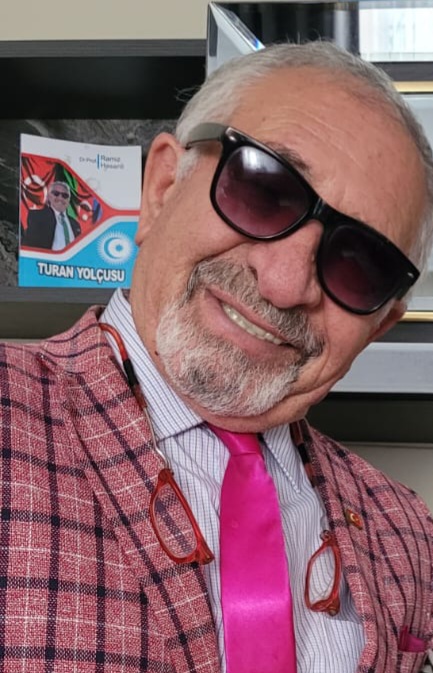
Yahya Azeroğlu, who was born in 1955 in Yukarı Topraklı village of Iğdır Ayrılık District, completed his education in Iğdır. Then he went to Germany. He took foreign language lessons (German) here for 2 years. He resided in various countries in Europe. He returned to Turkey in 1983. While Azeroğlu continued his cultural activities in Turkey and continued writing poems and articles, he was accepted to Eskişehir Anadolu University’s Department of Public Administration. Afterwards, he founded the Iğdır Poets and Writers Association in 1994. And he served as its President for 15 years. Azeroğlu, who is a member of the Professional Association of Scientific and Literary Works of Turkey, has published 7 books, including “CHIRPINIŞ”, “SILENT SCREAMS”, “Take an example from ATATURK”, TAKE UNDER THE FLAG”, THE EPIC VILLAGE IN THE AARAS VALLEY, “CYPRIAN WRITER HASAN ÇAKMAK”. He has published 7 books in Europe. He was invited to many conferences held in Antalya. His poems received first prizes in many poetry competitions he participated in. Due to his successes, he became the subject of news in the famous BILD newspaper published in Germany. Poet-researcher Writer Yahya Azeroğlu was awarded the poet of the year award in Antalya in 2020. In addition, Azerbaijani scientist prof. .dr. Ramiz Hesemli wrote a book called “Turan Yolcusu” about the poet writer Yahya Azeroğlu, the second book written about Yahya Azeroğlu was written by the poet-writer Banu Həsən Qızı Musayeva, and “On philology by the Azerbaijan science and education center” (F) Professor diploma was awarded. Yahya Azeroğlu currently resides in Antalya, Turkey.

Prof. Dr (F) Yahya Azeroğlu Turkey

BENGLADEŞLİ BİR MERHUM ŞAİRİ ANARKEN!!!

Bengladeşli ünlü şair- yazar Abubakar Siddique 28/12/2023/Tarihi itibariyle 89 yaşında vefat etti ömrünün büyük bölümünü kültür sanat ve edebiyata adayan şair çok sayıda eserler yayımlanmasını rağmen mütevazi ve çok alçakgönüllü olmasından dolayı hiçbir zaman kendisi ön planda olmadı halbuki bizler yani edebiyat ve Sanat dünyası biliyorduki onun yazdığı eserler karanlık dünyanın aydılatıcısıydı ama ne yazıkki bu dahi insan 28/12/2023/Tarihinde bir şafak vaktinde Bengladeşin Khulna şehrindeki tip fakültesi hastahanesinde hayata gözlerini kapadı çalkantılı ve başarılarla dolu bir ömür böylece son bulmuş oldu, onun ölümüne bende dahil olmak üzere sevenleri ve Bengladeşliler çok üzüldüler ama malesef ölüm denen gerçeğin önüne geçilmiyor, bu çerçevede düşündüğümüzde Tanrım Ölümünde güzelini nasip etsin demektende kendimizi alamıyoruz zira bir şairimizin dediği gibi  "ölüm güzel şey budur perde ardından haber,

Hiç güzel olmasaydı
ölürmüydü peygamber"
Takriben 4 milyar yaşında olan dünyaya gelenlerin hiç birisi ebediyete kadar yaşamamıştır.

Dolayısıyla Bengladeşli ünlü şair Abubakar Siddique de o dünya değiştirenlerden birisi olarak görmekle beraber şair Abubakar Siddique bu dünyada insanlara faydalı eserleriyle anılarak onun ölümsüzlüğüne şahit olacağız diye düşünüyorum,bu büyük Edebiyat ustası Abubakar Siddique ömrünün son çağlarında Khulna şehrindeki küçük kızkardeşinin evinde geçirdi, 1934 yılının Ağustos ayında Nanabari şehrinin Gotapara köyünde bir güneş misali doğan şair Abubakar Siddique  1969 yılında ilk şiir kitabı olan "Dhabhal Dudher swargram" adlı kitabını yayımlayarak Bengladeşl Edebiyatına katkıda bulundu daha sonraları yazdığı eserleri şöyle sıralayabiliriz,

"Binidra Kale Vale"1976
"Oloksabhyata"1984-
"Hemanter Sonalata" 1995
"Manush Tomar Bikshat Din" 1986-
Gibi eserler yayınlanan çok sayıdaki eserleri arasındadır ayrıca merhum şairin onlarca öykü kitabınıda bu eserlerinin arasında görüyoruz

Tabiki insanlar doğarlar ve bilinmesi mümkün olmayan bir andada ölürler bu ölümler insanlar arasında oldukça önemli farklılıklar ortaya koymaktadır yan bazı  insanlar sadece doğarlar ve bir süre sonrada ölürler lakin bazı insanlar ise doğarlar sadece dünya değiştirirler ama onların dünyada bıraktıkları eserleriyle anılırlar ve yüreklerde yaşarlar tıpkı söz konusu ettiğimiz Bengladeşli şair Abubakar Siddique gibi.tabiki Türk şairi Yahya Kemal Beyatlının "SESSİZ GEMİ" adlı
Şiirinde dediği gibi

Artık demir almak günü gelmişse zamandan
Meçhule giden bir gemi kalkar bu limandan.

Hiç yolcusu yokmuş gibi sessizce alır yol;
Sallanmaz o kalkışta ne mendil, ne de bir kol.

Rıhtımda kalanlar bu seyahatten elemli,
Günlerce siyah ufka bakar gözleri nemli,

Biçare gönüller! Ne giden son gemidir bu!
Hicranlı hayatın ne de son matemidir bu.

Dünyada sevilmiş ve seven nafile bekler;
Bilmez ki giden sevgililer dönmeyecekler.
Bir çok gidenin her biri memnun ki yerinden,
Bir çok seneler geçti; dönen yok seferinden.

Evet Yahya Kemal Beyatlının da dediği gibi bu dünyayı bırakıp gidenler kesin olarak birdaha geri gelmeyecekler lakin bu dünyayı terkedipte gidenler yaşadığı hayatta eğer bir eser bırakmışsa  onun eserlerini okuyan insanların yüreklerinde yaşayacaktır diye düşünüyorum tıpkı Bengladeşli merhum şair Abubakar Siddique gibi onu rahmetle minnetle anıyorum...

Yahya Azeroğlu
Türk dünyası sanat kültür merkezi genel başkanı.
FROM THE HEART OF A HOARDER

Stuff overflows the house –
to the disinterest onlooker, it is the house –
you may be able to live with the barest
minimum of items –
but I'm committed to purchases,
storing objects in previous empty places -

you are looking at a lifetime –
you can't say that in your house –
come inside, if you can find the space –
I will point to you the boy, the man
I am now, and everything in between –

wherever I live,
a museum wraps around me like a cloak –
every book, every toy,
every photograph, every piece of music -

I can show you my life history
in nothing but spoons –
my most cherished secrets in a filing cabinet –
interested in the real me?

come along - a sated closet awaits –
I was married once –
"it's either all this crap or me," she said –

take a good look - you'll find
report cards, bank statements,
comics, newspapers, razor blades,
ceramic horses, tin soldiers, baseball cards,
but ultimatums –   nada.


TO MAKE THIS WORK

I have no wings,
no gills –
can’t fly,
can’t live under water.

But I can
occupy a parlor chair,
put my feet up on an ottoman,
drink beer, munch chips,
and stare at football games
on a flat-screen television.

You’d be surprised
at what can constitute a pet.


THE DAY BY ROTE

The day glows yellow
in the clock radio face.
The day puts the kettle on
for coffee.
The day shaves the lower
half of my face.
The day dresses me
in what won’t embarrass
either of us
in the brightest of its light.
The day exits the house,
gripping my hand.
The day starts the car.
I grip the wheel
but the day is in the driver’s seat.


WHY I SAID “NO”

There’s no such thing as an innocent family picnic.
The food aims right for my craw.
The alcohol comes on like a compress.
Open the old hurts.  Cut through the insincere smiles.
It takes more than courage to take the hand of brothers.
To eat with them
To sit between those great boulders
and not call them bastards.

You urge me to set aside my differences
for the afternoon.
Sure, like green, given the occasion,
can convince itself that it’s really orange.
It’s okay for you. You’re only a family member
courtesy of the diamond on your finger.
My brothers and I drown in the same blood.

In my dream, I crash the event in my car.
In one great sweep, down goes the grill, the hotdogs,
the glowing coals, the ash.
No my dear, pretending I’m someone else won’t wash.
Won’t wash the words. Won’t wash the deed.
And if you think there’ll be some kneeling involved,
a little begging for forgiveness,
you’ve been watching the wrong drama.
The wounds cut deep.
The blades are still in me, still jiggling about,
in search of a more tender spot.

There’s no shared memories
to flutter a cooling breeze.
No ray of sunlight in a web of darkness.
No natural bond that will pull us all into line.
Just baggage. Just pain.
For me, one family ends here.
Only you and I can have a future.


EMMA REMEMBERS THE MAN OF THE HOUSE

He was Seagram 7 man.
He was Budweiser man.
Much of her childhood
was the stink of his breath.
But she loved him -
even when he drove that Chrysler
like a crazed demon,
with her bouncing in the backseat;
even when his slippery grip
once dropped her to the floor.

And he was rough hands man.
He was chest scar man.
Much of her childhood
was him up on a roof somewhere,
in searing sun,
hammering in tiles
or repairing chimneys.
High atop a house,
he was a god.
Then after work,
straight to the bar,
he would stumble home as the devil.

He was holy man.
He was nasty man.
But she loved him –
when he tore her heart out,
it refused to tear.


John Grey is an Australian poet, US resident, recently published in New World Writing, California Quarterly and Lost Pilots. Latest books, ”Between Two Fires”, “Covert” and  “Memory Outside The Head” are available through Amazon. Work upcoming in Isotrope Literary Journal, Seventh Quarry, La Presa and Doubly Mad.