
To deflesh,

the shaman,

the seer,

the mystic

lacerates,

purges,

starves,

punishes,

isolates

the body

of the self.


The poet,

inventor,

entrepreneur

concentrates

the body

of the self

on the solution

of a problem

like a laser

microscope,

to deflesh.


An ordinary,

to deflesh,

removes from

the flesh

of the body

by reading,

by dreaming,

by jogging,

by gaming,

by giving,

by loving.


SACRIFICES, ALL


That pilot brags about

the size of his payload

and he forgets about

chasing a horizon.


He imagines himself

to be a volcano.

Will you permit yourself,

then, to be the virgin?


Oh, those gladiolas

that brightened Pilate’s halls,

like those gladiators,

distractions from trials.


RICHARD FIRST


Across geographies

maintaining emperors

by cults and soldiery


has been a commonplace

matter of procedure

against the populace.


Richard had good PR

since he was popular

among the troubadours.


And today, presidents

who can stay in power

are liked by journalists.


SIGNS


The philosophers,

poets, and scholars,

workers of the mind,

invented Mankind.


They made Being firm

by creating terms

and categories,

the mythic stories,

right words and patterns:


They shaped God Saturn

and then mere planet:

Elements: Senates:

Beauty: Gram: Language:

Society: Beige:

History; Prisms:

Patriotism:

Sin: Geography:

Self: Heredity:

Time: The unconscious.....

The list is endless.


These concepts define

our world by their signs.


THE CONJUGATION OF AGING


Years are no series of jumps across gulfs.

We pass through life on a conveyor belt,

paying little notice to the timelets

that pace our course on the running machine.


We only slowly accept we're the guests

of Is, Are, Was, Were, Be, Being, and Been.

Our exercise machine slows then ends

before we realize we've reached the When.
Poetry from J.J. Campbell

------------------------------------------------------------------------------------------
the neon nights of my youth


listening to an

old elton john

song


thinking of the

neon nights of

my youth


where the drugs

lifted me to

endless heights


where the drinks

made me invincible


where women

seemed to still

be interested


where the yellow

brick road seemed

like it was still

possible it always

existed
-------------------------------------------------------------------
drink for courage


some people drink

for courage and

others are trying

to cope with the

pain of life


some like to unwind

and others think of

the magical powers

they suddenly posses


i find it more likely

these days that i'm

drinking to hopefully

end all of this way

sooner than the

powers that be

intended


plus, arthritis has

made it rather

difficult to hold a

gun or tie a fucking

noose


so, it's either the

bottle or a good

hose and some

duct tape


when the bottle stops

helping to write these

poems


be kind enough to

check my garage

if you don't hear

from me for a few

days
-------------------------------------------------------------------
the retired life


two cups of coffee


fall asleep in the

sun like a cat


i tell my mother

to enjoy the retired

life


she doesn't


can't come to terms

with getting older

and not being able

to do certain things

alone


i'm always there

to help


even though most

of the time she

doesn't bother

to ask


i tell her pride

will kill her faster

than any disease
---------------------------------------------------------
wars have been fought over less


soft brown skin


years of regret


a lover's lament


it was us against

the world


now we can't see

past each other to

accomplish anything


wars have been

fought over less


and no matter how

much either side

wants to give in

and let the calm

set in


pride and the ego

always get in the

way


a lack of

communication

will be the end

of us all
-------------------------------------------------------
the smallest nugget of joy


you ever noticed

the death poems

come easy


but how you

languish over

the page for

love


for happiness


for even the

smallest nugget

of joy


but death


that cold reality


the cruel mistress

that always laughs

at your pain


it's the old routine

or perhaps


you always

understood


that death was

always a part

of life


just a part that

most are unwilling

to talk about or

even consider
J.J. Campbell (1976 – ?) is old enough to know better. He’s been widely published over the last quarter century, most recently at The Rye Whiskey Review, Disturb the Universe Magazine, Carcinogenic Poetry, Lothlorien Poetry Journal and Horror Sleaze Trash. You can find him most days on his mildly entertaining blog, evil delights. (https://evildelights.blogspot.com)
Poetry from Judge Santiago Burdon
Bad Habits and Old Addictions


Just when I think I've finally lost them

Convinced they'd never find me again.

There's a knock at my door

Heavy fists pound harder and louder

Yelling for me to let them in

Bad Habits and Old Addictions

Constantly ringing the doorbell.

The Ding-dongs wakes up my weakness

The flaws in my willpower now exposed

To the uninvited influence wearing down my resistance

Bad Habits and Old Addictions

I buried them away years ago

Must've dug the grave too shallow

They've escaped and returned

My resolve losing faith to temptation

Bad Habits and Old Addictions

Our association never matured into a friendship

More of an acquaintance of inconvenience at best

Stained with bad blood

Not one breath of trust

Exhaling  air of incessant suspicion

Bad Habits and Old Addictions

Where do I find the courage

to tell them

I'm more than the sum of my mistakes

I'm not the man I once was

No longer devoid of self-respect

Or a festering scab on God's face

Bad Habits and Old Addictions

Now my subconscious is questioning my decision

Sending them away may be a mistake

What's the harm in extending some hospitality

After all they've come such a long way

I'll tell you why they've gotta get Because one is too many and a thousand is never enough

Now head on down the road

get your ass out of town

Don't ever think of coming back

I've fought a long fight to save my soul

Surrender no longer an option

Confidence in the faith to stay true to my convictions

Vete Lárgate

Bad Habits and Old Addictions
Denis Emorine’s new poetry collection A Step Inside, translated by Phillip John Usher and reviewed by Cristina Deptula
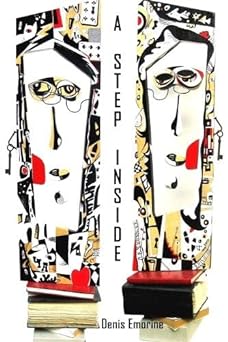
Denis Emorine’s new collection A Step Inside attacks, blasts, compels, disturbs, and ultimately enchants us with the (quite literal) power of language.
The first section’s poems evoke the psychological and emotional toll the creative process can take, along with its wonderment. We begin with an anecdote where the speaker stabs the disembodied voice of his creative muse when it asks him to write about the woman he loves, then finds blood on his pillow as he has destroyed part of himself (Metaphor). In another memorable piece, the letters of the alphabet literally assault a protagonist (A trap). Other pieces speak to acknowledging inspirations and aspirations one cannot fully reach (Nocturnal), to the havoc creative obsessions can wreak on one’s personal life (Disobedience), to the rejection an artist can face at the hands of the public (Fever) to the struggle to be able to create at all (Face to Face) to the solidarity creative writers can feel for each other (In Solidarity).
Yet, even with these tough-minded renditions of mental turmoil, the beauty, wonder, and ecstasy of the creative process still come through in A Step Inside. Emorine draws upon many of the traditional positive literary metaphors for inspiration: muses, stars, dreams, gardens at night, even in some of his most violent poems. Also, writer protagonists encounter magical moments others miss, including a lively visit with Kafka, climbing up to one’s flat.
The second section, From My Window, consists of longer narratives blurring the lines between artistic performance and seduction. In one, a former live theater tech invites his female neighbor to dress for him in the robes of Greek goddesses. At first reluctant, she embraces the role at the end and chooses to dress as Venus before they consummate their relationship (The Mural). Another story shifts the gender roles, with a male artist undressing in tune with the rise and fall of music and another man watching and discovering his passion for him (The Virgin and the Shadow). In another piece, an old and sick man who comes close to cheating on his wife at a literary conference finds himself instead taking comfort in the memory of her healing touch (Irina) and the final piece, Twenty-One Hundred Hours, involves a chaste intellectual friendship that develops between an older professor and a sex worker who turns out to be a literary student.
This new collection from Denis Emorine explores the different forms creative inspiration can take and the various ways it can shape and revamp our lives. Whether we are alone staring at a blank page in our bedrooms or encountering others at a symposium or theater, we can find ourselves wrestling with the angels of our art.
Poetry from Mesfakus Salahin
Poetry in the Clouds

The secret poetry of rain makes melody in the folds of clouds
The continuous flow of fountains painted on the mountains
Veiled nature's drunken invitation
 At this time, who will tie the mind floating in the air?

The reflection of the heart running in the raindrops
 Flowers' fragrance walks on a loose path
Like a bird that has lost its bond, it does not return to its nest
Can't you find love in the crowd of people?

A manuscript of a poem swirling in the breeze
 The notes of love float in the voice of the sky
 I extended both hands to the water of the horizon line
The mind just runs on the pull of who knows who.
Poetry from Mykyta Ryzhykh
***
people don't want to die either
in spring or summer
prisons are open all year round
(Reprint by Dreginald)

***
sad clowns
die with a smile
every time
performed on stage
(Reprint by Dreginald)

***
nightingale staged a night gala
every night he flies to my yard
even after my death
(Reprint by Dreginald)

***
torn faces
litter
torn tracks
(Reprint by Dreginald)

***
statues also die
and time is not easy to consider
among all that one
in memory of which one today
the bells are ringing in the church
(Reprint by Dreginald)

***
Roar of war
Garcia Lorca don't go back to Granada
(Reprint by Monterey poetry review)

***
summer is a mystery
the winter of nuclear war still
lives in the heart
(Reprint by Monterey poetry review)

***
Old-fashioned tragicomedy

armor protects the soul with the body
and the bombs are flying
(Reprint by Monterey poetry review)

***
The cemetery under the bed opens at the first request
Once upon a time in childhood we were taught to make little men from matches
Today we are taught to burn

My mother says that life was better under the Soviet Union
Someday the future will come, but not now
Today we are taught the word "later"
(Reprint by Star 82 review, 11.3)

***
doctor said
that i died
and i agreed

***
Cardboard Bird
Indignant
In a raspy voice

Doesn’t eat anything
Doesn’t drink anything
Protests

Doesn’t touch anyone
Рretending to be the wind
Handing out money right and left

Imagines himself
Image
A picture of the postmodern half-life

And something else very important
I do not remember
Maybe wings
Could be a beak
Maybe a soul

Exactly
I do not remember
(Reprint by Wise Owl)

***
I promise that I will take away my painful darkness
But not right now

I will be able to understand the meaning of this darkness in the future
Well for now

Give me a chance to die again
Cause freedom is loneliness
Love is a crime against loneliness
(Reprint by Wise Owl)

***
I play war games and watch scat on TV
My freckles are gone
And yes, I will have to pay back the loan for this
(Reprint by Corvus review)

***
Houston, you're in trouble
The gypsy's prediction did not come true
And a lot has happened
Ever since someone jumped off a bridge
The dew from under the eyes has not dried
Where did it all go
Where does it all go
Republic of the Dusk Star
Your cold palms sparkling in the sun
Whisper that it's very cold
The sun has completely faded
The universe is tensed up
And lives in constant tension
around you ever since
How someone jumped off a bridge
At the same time, they started selling
Watermelons have risen in price this year
Note:
Strengthening the internationalization of economic relations between states and the deformation of the economy are possible causes of inflation, causing food prices to rise
(Reprint by Corvus review)
Essay from Muhammad Ehsan
Robopathology in Supervisory Relationships: Embracing Osho’s Wisdom
Osho’s philosophical concept of “Robopathology” is a term coined to describe a phenomenon in which individuals, in their desire of conformity and obedience, become like robots in their conduct and thinking. It emphasizes the negative effects of blind compliance and the repression of distinctive qualities within society or organizations.
Osho’s Robopathology theory highlights the need for people to maintain their real selves and critical thinking abilities even in situations that require conformity, since the loss of personal autonomy can lead to a dehumanizing and robotic existence.
In the world of supervision, whether in the workplace or higher education, the concept of “Robopathology,” as coined by Osho, can gently infiltrate these relationships, impacting both supervisors and supervisees. Osho’s profound insights provide a way out of these mechanical tendencies, enabling a more conscious and meaningful supervisory experience.
Robopathology in supervisory relationships is frequently recognized as a preference for rigorous standards and protocols above genuinely meaningful interaction and discourse. In the workplace,
supervisors may favor strict adhering to protocols above open and constructive interactions with their team members. This approach can make employees feel like cogs in a machine, restricting
innovation and personal growth.
In academic settings, the mechanical mind can infect supervisory interactions between faculty advisers and graduate students. The pressure to publish and adhere to a strict research plan can
inhibit creativity and thoughtful exploration. Such an approach frequently leads to students feeling as if they are only judged by their research output, ignoring their entire well-being.
Osho’s teachings can be realistically applied in these relationships by encouraging open communication, empathy, and flexibility. Conducting regular one-on-one meetings that focus on
both work-related issues and personal growth are practical approaches. In a corporate setting, this might result in administration supporting flexible work hours or remote work, enabling
employees to balance work and life while retaining productivity.
In academia, faculty advisers can serve as mentors, assisting graduate students not only intellectually but also personally and professionally. This method supports a more dynamic, innovative, and holistic approach to study. Professors can provide assistance not only on research but also on personal and career development, assisting students in finding balance and purpose in their academic journey.
Organizations whose supervisors participate in active listening, provide regular constructive criticism, and are receptive to the particular needs and goals of their supervisees are examples of
real-world implementations of Osho’s wisdom. In a tech company operations, this could imply holding regular “check-in” sessions where staff discuss not only project progress but also personal and career ambitions. This promotes open discussion and makes employees feel noticed and valued beyond their contributions to the organization.
Academic advisers that use a mentorship approach rather than a strict direction approach generate more well-rounded, innovative, and satisfied graduate students. The emphasis is on developing well-rounded academics rather than merely research output. These strategies foster open communication, inventiveness, empathy, and personal growth in both supervisory and educational environments by embracing Osho’s teachings.
Misunderstandings between PhD students and supervisors can often be caused by differences in communication styles, expectations, expertise, and priorities. To address these issues, regular
communication, clearly defined responsibilities, requesting clarification, documenting decisions, and, if necessary, mediation can be beneficial. These concepts well align with Osho’s concept of
“Robopathology,” which emphasizes the significance of genuine, sympathetic communication and understanding in human interactions in order to avoid robotic or mechanical behavior patterns.
Moreover, misunderstandings and miscommunications between a supervisor and a supervisee can often be a result of cultural differences and diverse backgrounds. These gaps include not
only language barriers, but also differences in communication styles, hierarchical expectations, and cultural norms. For example, a supervisor from a hierarchical culture may appear authoritative and intimidating to a supervisee from a more egalitarian background.
Similarly, language nuances, such as idiomatic expressions or nonverbal clues, can also be easily misinterpreted and misunderstood. These differences can cause unintentional
miscommunications, undermine trust and cooperation, and prevent successful collaboration. To overcome these challenges, both the supervisor and the supervisee must build cultural sensitivity,
participate in open discussion, and create an environment that promotes cross-cultural understanding and flexibility.
In the supervisory world, whether in higher education or workplace, Osho’s thoughts on escaping the mechanical mind are more relevant and indispensable than ever. We can break free from the restrictions of robopathological habits by applying his wisdom to these circumstances with practical applications. This approach provides a more conscious, dynamic, and gratifying supervising experience, encouraging open communication, creativity, empathy, and personal
growth for both supervisors and supervisees.