Tired of the world’s deceptive games, At times exhausted, at times worn away. Through countless knots that life became, I set my heart aside one day.
Some spread carpets beneath our feet, Some dig deep pits along our way. Sometimes the friend we trust deceives, While foes may bear their own dismay.
And who are we within this boundless earth? Just travelers in a borrowed place. In this short life, this fleeting path, Why do we bring each other disgrace?
Like our elder Abdullah, we should proclaim: “My homeland, your pain is my pain!” When noble dreams arise within the heart, My homeland is my joy, my honor, my name.
I need no false devotion lasting years; One moment of truth is enough for me. If you stand with pride and live content, Even the coldest heavens will know your dignity.
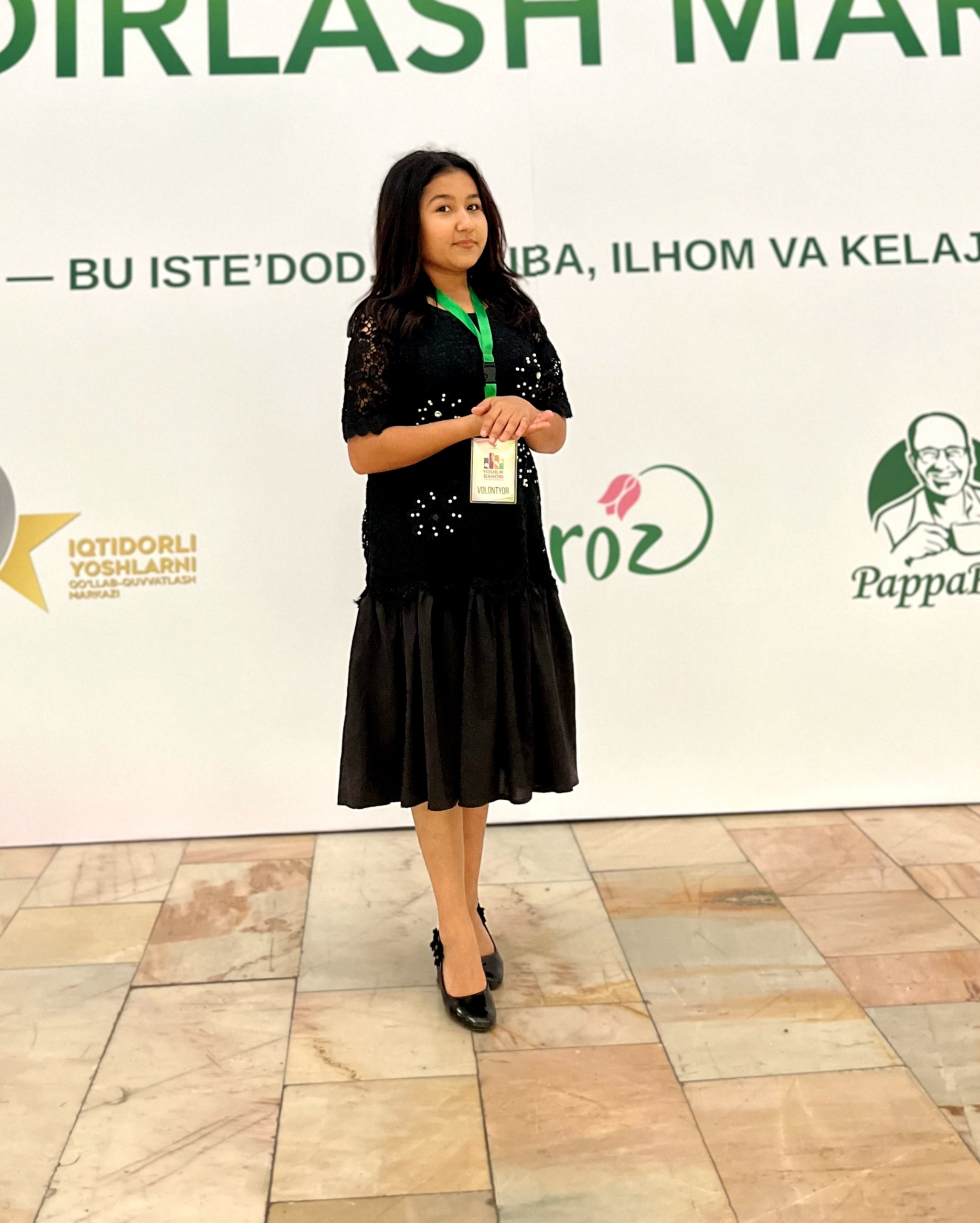
My name is Safarova Sabrina Fazliddin qizi. I was born on September 7, 2005, in Khatirchi District, Navoi Region, Uzbekistan. Since childhood, I have been passionate about learning, creativity, and the world of literature. The art of words, poetry, and literary works that reflect the human soul have always inspired me.
Currently, I am studying Russian Language and Literature at the Uzbekistan State University of World Languages. Studying the Russian language and literature, analyzing the works of writers from different historical periods, and expressing my thoughts through creative writing are among my main interests.
In my free time, I enjoy reading books, writing poetry, working on creative ideas, and exploring the world of art. For me, literature is the most beautiful way to express the human soul, emotions, and reflections on life. My future goal is to expand my knowledge and experience, become a highly qualified specialist in my field, develop my creative abilities, and make a meaningful contribution to society.
Long ago, nestled among towering mountains, there stood a remote village. The people who lived there were hardworking, resilient, and determined. Yet, like everyone else, they sometimes lost heart under the weight of life’s hardships.
At the highest point of the village, among the rugged cliffs, lived an old man. Everyone in the valley and the surrounding villages respectfully called him the Elder. He was a wise man who had traveled far and wide, gaining knowledge and experience throughout many years of his life.
Every evening after sunset, the Elder would light a lantern in front of his humble cottage. Its warm glow guided travelers who had lost their way during the night. To the villagers, that flickering light was more than a lantern—it was a symbol of hope.
Among the villagers lived a young man named Sanjar. He was energetic, talented, and hardworking. However, he was easily discouraged whenever life dealt him disappointment. Whenever he felt hopeless, he would look toward the small light shining from the mountaintop.
One year, misfortune struck him one after another. The crops he had worked tirelessly to grow throughout the year were destroyed by an unexpected frost. During his darkest days, even the friend he trusted most turned his back on him. Surrounded by people yet feeling completely alone, Sanjar believed he had lost everything.
Unable to bear the burden in his heart any longer, he decided to seek advice from the wise Elder. Before sunrise the next morning, he began the difficult journey toward the mountain peak.
The climb was exhausting. The narrow paths were steep and covered with sharp rocks. Bitter winds pushed against him with every step. Several times he stumbled and fell, scraping his hands and knees until they bled. Yet the thought of the lantern shining on the mountaintop filled him with strength. Gathering every bit of courage he had left, he finally reached the Elder’s cottage.
The old man welcomed him warmly and kindly at his doorstep. He served Sanjar a cup of fragrant herbal tea brewed from mountain herbs. As he slowly sipped the warm drink, Sanjar poured out every sorrow hidden in his heart. He spoke of life’s cruel disappointments, broken dreams, and the injustice that had left him exhausted and hopeless.
The Elder listened patiently without interrupting him. When Sanjar had finished speaking, the old man quietly stood up and pointed toward an old lantern standing in the corner of the cottage.
“My son,” he said gently, looking into Sanjar’s eyes, “do you see this old lantern and its tiny flame? It has burned here on these high cliffs for many years. Countless fierce storms have tried to extinguish it. Harsh winter blizzards have done everything they could to freeze its flame. Yet despite every hardship, this little light continues to shine.”
“Do you know why it has never surrendered to the wind?” the Elder continued. “Because as long as the pure oil inside it remains, no storm outside can put it out. The human heart is just like this lantern. As long as your heart is filled with hope, faith, and perseverance, nothing in this world can truly break you. Temporary hardships may surround you, but they are powerless to extinguish the light within your soul.”
The Elder’s words touched Sanjar deeply. He sat in silence, reflecting on their meaning. Slowly, the despair that had filled his heart gave way to renewed strength, courage, and hope.
When Sanjar returned to his village, he was no longer the same man. His spirit had grown stronger, and he no longer feared the obstacles life placed before him. He worked tirelessly day and night to overcome every challenge and achieve his dreams.
Years passed one after another. Sanjar married, raised children, and later welcomed grandchildren into his family. Through his honesty, hard work, and integrity, he became one of the most respected men in the village.Yet life never remains peaceful forever. One winter, an unprecedented and merciless cold descended upon the village. Snow several meters deep buried the land beneath a thick blanket of ice.All the roads connecting the village to the outside world were completely blocked. The villagers’ supplies of food and firewood, carefully stored for the winter, gradually began to run out. Before long, fear, despair, and hopelessness spread throughout the village. The people had no idea how they would survive the freezing cold and the growing hunger.
Worst of all, on one bitter winter night, the famous lantern on the mountaintop did not shine.
As darkness covered the valley, an even deeper fear settled in the hearts of the villagers.
“Has our wise Elder passed away?” the elderly whispered anxiously.
“If so, who will guide us through these dark and difficult days?”
While everyone remained inside their homes, surrendering to despair, Sanjar was no longer the inexperienced young man he once had been. Years of hardship had shaped him into a strong and wise man. He could not bear to watch his fellow villagers lose hope.
Without hesitation, he took out his old but sturdy iron lantern. He carefully filled it with the purest oil so that it would burn for a long time. Then he walked to the center of the village and spoke loudly to everyone gathered there.
“My dear friends, beloved brothers and sisters, and kind neighbors,” Sanjar declared with determination, “for many years our wise Elder has kept a light burning for all of us. We have become so accustomed to following his light that we forgot how to create our own. Today, that noble man may be exhausted or seriously ill. Perhaps, at this very moment, he is the one who needs our help.
Come, let us carry the light to him! Let us climb that great mountain together. Let us show that our village has not surrendered and that the flame of hope still burns within our hearts.”
Sanjar’s passionate words melted the frozen hearts of the people.
At first, no one dared to climb the mountain through the deep snow and freezing wind. But when Sanjar took the first step, several young men followed him. Soon afterward, the village elders also picked up their torches and joined the journey.
Every person carried a lantern, a torch, or a lamp from their own home. Together they pushed through the heavy snowdrifts and slowly climbed the rocky mountain paths. They bravely faced the icy wind and bitter cold as they continued their difficult ascent.
From afar, the procession looked like a magnificent river of fire flowing across the mountainside. That glowing chain of lights pierced the darkness and steadily moved toward the summit.
After a long and exhausting climb, the entire village finally reached the mountaintop.
They discovered that the Elder was indeed gravely ill. He lay weak in his bed, without enough strength even to stand up and light his lantern.
Hearing unusual sounds and seeing an unexpected glow outside, the old man gathered what little strength he had left and slowly opened the wooden door of his cottage.
Standing before him were hundreds of villagers, each holding a shining lantern.
The fear and hopelessness that once filled their eyes had completely disappeared. Instead, every face reflected gratitude, unity, and hope.
Sanjar stepped forward, approached the Elder, and carefully placed his bright lantern beside the entrance of the cottage.
Tears of overwhelming joy slowly filled the old man’s eyes.
Placing his trembling hands upon Sanjar’s strong shoulders, he spoke softly,
“My brave son, I have fulfilled my duty in this world completely. For many years, I believed I was lighting only a single small lantern on this mountain. But today, through your unity and courage, you have illuminated the entire mountain.Now I can leave this world peacefully and with a grateful heart, for the light I kept burning all these years has found its everlasting home within your hearts.””If you always remain united and continue to support one another as you do today,” the Elder said, “no hardship of this world and no darkness will ever be able to defeat you.”
That unforgettable night, the villagers lit a great bonfire on the mountain peak. Its brilliant flames illuminated not only the towering mountain but also the entire valley below.
On that night, the people of the village came to understand a profound truth about life: in times of hardship, true hope and salvation should not be sought only in the outside world. When people stand together in unity and help one another, they discover light and strength within each other’s hearts.
As time passed, a beautiful spring arrived. The snow melted, and the rivers flowed swiftly once again. The wise Elder, having grown old, peacefully passed away after leaving behind his final words and blessings.
Yet the sacred light on the mountaintop where he had lived never ceased to shine.
The villagers took turns climbing the mountain every day, making it an honored tradition to keep the flame burning. They believed it was both a privilege and a responsibility to preserve the light that had guided generations before them.
Sanjar became the village’s new leader, devoting his life to guiding his people with wisdom, honesty, and compassion. He taught every new generation to protect the light within their hearts—the flame of hope, faith, and perseverance—no matter how difficult life became.
Year after year, the village flourished and became the most prosperous and peaceful place in the valley.
Whenever the villagers looked toward the fire glowing on the mountain peak, they remembered that harsh winter and the extraordinary power of unity. They knew that as long as the light in their hearts continued to burn, no darkness could ever overcome them.
Tursunqulova Sabina Muzrob qizi
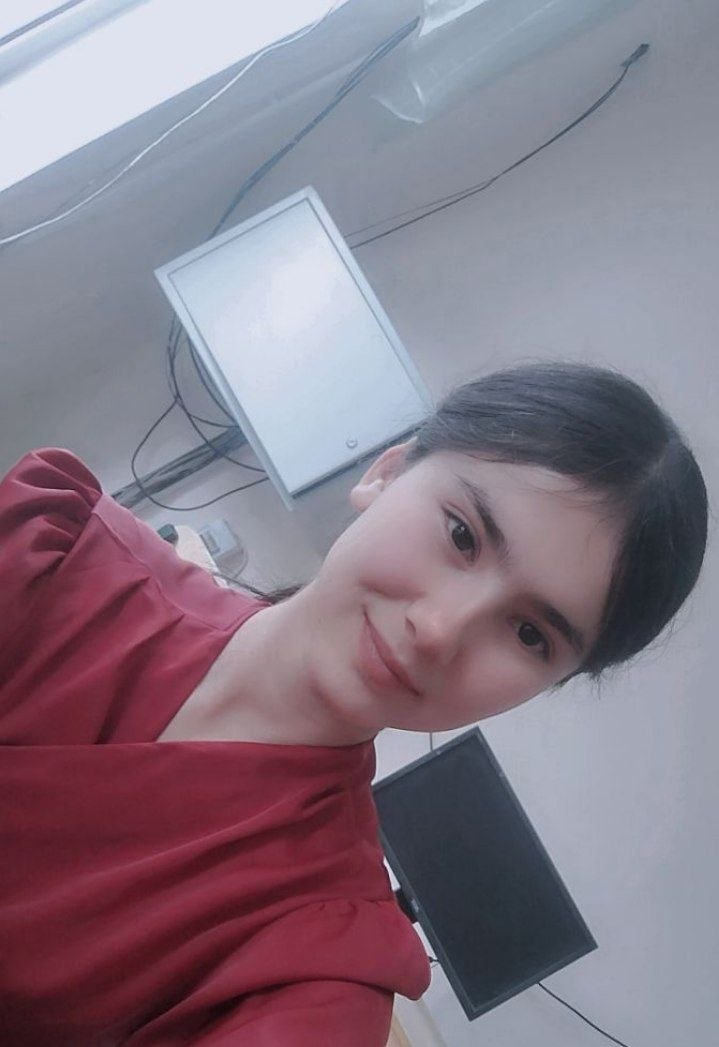
Every person’s life journey is shaped by their dreams, diligence, and noble aspirations. Creativity is a priceless gift that expresses the deepest emotions of the human soul and distinguishes an individual from others. One of the young writers who embodies such talent, dedication, and creativity is Tursunqulova Sabina Muzrob qizi.
She was born on October 15, 2006, in Kitob District, Kashkadarya Region, Uzbekistan, into an educated family. From an early age, she was raised in an environment filled with kindness, compassion, and a love for books. Since childhood, she has shown a deep interest in literature, poetry, and creative writing, spending her free time reading and expressing her thoughts and emotions through writing.
She received her primary education at Secondary School No. 3 in Kitob District. During her school years, she developed a passion for writing poems and short stories and actively participated in various educational, cultural, and literary events and competitions. The encouragement and support of her teachers and family played a significant role in nurturing and developing her literary talent.
Later, she continued her education at Technical College No. 3, where she further expanded her knowledge and broadened her intellectual outlook. Her passion for learning and her commitment to continuous self-improvement eventually led her to the Uzbekistan State University of World Languages. She is currently a fourth-year student at the Faculty of Russian Philology.
Sabina Tursunqulova has been actively involved not only in her academic studies but also in literary and public activities. She has participated in numerous national and international forums, conferences, competitions, and literary projects, demonstrating her knowledge, creativity, and intellectual potential.
Her poems and short stories have been published in international literary journals and anthologies in the United States, the United Kingdom, and Türkiye. Her literary works are distinguished by their exploration of humanity, patriotism, kindness, the philosophy of life, and the dreams and aspirations of young people.
Looking toward the future, Sabina aims to achieve outstanding success in the fields of science and literature, promote Uzbek literature on the international stage, and become a source of inspiration for young people through her knowledge, creativity, and dedication.
Shermamatova Dilnura Shavkat qizi Samarqand viloyati Narpay tumani charxin maxalasi The Pages That Awakened My Soul
“Some encounters change a person’s entire life. They do not arrive with noise, but in silence. They are invisible to the eye, yet they leave an everlasting mark on the heart. For me, such an encounter was hidden between the pages of a book.”
Life is a great school that tests us every single day. In this school, no one is born with ready-made answers. Every individual must find their own path, learn from their own experiences, and discover the meaning of their own journey. Sometimes happiness lifts us to great heights, while sorrow teaches us resilience. Yet regardless of the circumstances, the greatest challenge is to preserve our humanity and protect the purity of our hearts.
As I searched for the true meaning of life, I realized that a person’s greatness is never measured by wealth or social status. True greatness lies in wisdom, kindness, integrity, and an unwavering commitment to goodness. These qualities are not gained overnight; they are shaped patiently over the years, becoming part of one’s character and identity.
There are moments when silence becomes our closest companion. Sitting alone, we begin a conversation with ourselves. Questions emerge from the depths of our hearts: Who am I? What is my purpose? What kind of legacy will I leave behind? Finding the answers requires more than intelligence—it requires the courage to listen to the voice within.
The human heart is the most precious treasure we possess. It cannot be bought with money nor conquered by power. It grows richer through noble thoughts, sincere intentions, compassion, and knowledge. A heart filled with light remains strong even during life’s darkest storms because its strength comes from within.
Today’s world is changing at an extraordinary pace. Technology advances, opportunities expand, and distances grow shorter. Yet one thing never changes—the human need for kindness, understanding, and wisdom. These timeless values have always elevated humanity, and they will continue to guide future generations.
Every great achievement begins as a tiny spark within the heart. Dreams are born in imagination before they become reality through determination and hard work. No lasting success is achieved by chance. Every meaningful step forward is built upon patience, perseverance, and continuous learning.
I truly believe that when a person cultivates a noble heart, they transform not only their own life but also the lives of those around them. Kindness is contagious. One sincere act inspires another, creating a chain of hope that strengthens families, communities, and nations.
The greatest success in life is not fame but leaving behind a beautiful name. A person’s worth is measured not by how long they live but by how deeply they touch the lives of others. Sometimes a single kind word, a compassionate action, or a wise decision leaves a legacy that lasts for generations.
Life is not measured by the number of years we live, but by the values we leave behind. Every day offers an opportunity to become a little wiser, a little kinder, and a little stronger than we were yesterday. The choices we make today shape the person we become tomorrow. Therefore, every moment should be lived with purpose, gratitude, and sincerity.
There are people who illuminate the world through remarkable achievements, while others do so through quiet acts of compassion. A gentle smile, a helping hand, or a word of encouragement may seem insignificant, yet they often become unforgettable memories in someone’s life. True greatness is found not in seeking recognition but in making a positive difference without expecting anything in return.
As I continue my journey through life, I have come to understand that wisdom is not simply the accumulation of facts. It is the ability to see beauty in ordinary moments, to remain hopeful during difficult times, and to choose kindness even when life becomes challenging. These lessons become the foundation upon which a meaningful life is built.
Every page we read, every lesson we embrace, and every experience we cherish adds another piece to the story of who we are. Our character is written not only by our successes but also by the way we rise after failure, forgive after disappointment, and continue believing in a brighter tomorrow. It is this quiet determination that gives life its deepest meaning.
Shermamatova Charos Samarqand viloyati Narpay tumani charxin maxalasi Life Behind the Pages
There are some miracles in human life that cannot be fully seen with our eyes or touched with our hands. They live in our hearts, grow within our minds, and remain with us throughout our lives. One of these miracles is a book. Although a book may seem to be nothing more than paper and ink, every page hides an endless world filled with dreams, hopes, struggles, joys, wisdom, and the stories of countless people. For me, the phrase “Life Behind the Pages” represents not only books but also the spiritual wealth and experiences of humanity.
Ever since I was a child, I have loved holding books in my hands. The scent of their pages and the gentle sound of turning them always filled me with excitement. At that time, I did not realize that I was opening the door to a completely new world. Every book I read gave me new ideas, new dreams, and new goals. Through books, I learned to see life from different perspectives, to understand people better, and to appreciate kindness and compassion.
Behind every book stands an author who has poured years of experience, emotions, and wisdom into every sentence. When we read a book, we breathe life into those words once again. It feels as if we are having a heartfelt conversation with the author, even if they lived centuries ago. This is the true magic of books—they erase the boundaries of time and distance and connect one soul with another. Sometimes, a single sentence can change a person’s entire life.
Words have incredible power. They inspire hope, encourage courage, heal emotional wounds, and remind us never to give up. The lessons we discover in books remain in our hearts long after we finish reading. Years may pass, but unforgettable characters and meaningful stories continue to guide us.
Books do much more than provide knowledge. They shape our character. They teach us honesty, patience, respect, responsibility, love, and humanity. In today’s digital world, technology has become an essential part of our lives, yet nothing can truly replace a good book. The internet may provide quick information, but books teach us to think deeply, analyze carefully, and understand the true meaning behind life.
Life behind the pages takes us to different places and different times. One moment we walk through the streets of an ancient city, and the next we stand beside great scientists, brave leaders, or ordinary people with extraordinary stories. Without leaving our homes, we travel across countries, cultures, and centuries. That is the remarkable power of reading.
While reading, we celebrate the victories of the characters and share their pain and disappointment. We learn from their mistakes and grow through their experiences. In reality, we are not only discovering their lives—we are discovering ourselves. Every book becomes a mirror that reflects our own dreams, fears, strengths, and possibilities.
For young people, books are among the greatest teachers and the most faithful friends. Reading helps us gain knowledge, improve our communication skills, expand our imagination, and prepare for the future. A person who reads regularly develops a richer vocabulary, a broader worldview, and the confidence to overcome life’s challenges. Every time I turn a page, I feel as though I am opening a new chapter in my own life. Every book leaves a lasting mark on my heart. The person I am today has been shaped, in many ways, by the books I have read. They have taught me to dream without limits, to work hard for my goals, to rise after failure, and to keep believing in a brighter tomorrow.
For this reason, I believe that books are among humanity’s greatest treasures. As long as books exist, knowledge and wisdom will continue to live. As long as knowledge lives, society will continue to grow. A nation that values reading builds a stronger future because educated, thoughtful, and compassionate people become the foundation of its success.
In conclusion,Life Behind the Pages is a journey toward wisdom, kindness, and self-discovery. Every book offers a new lesson, a new experience, and a new source of inspiration. A person who loves reading is never spiritually poor because books fill the heart with light, enrich the mind with knowledge, and strengthen the soul with hope. Every page we read brings us one step closer to becoming better human beings. Therefore, loving books, developing the habit of reading, and discovering the life hidden behind every page is one of the greatest gifts we can give ourselves.
This hopeful green belongs uniquely to the spring earth
In summer, the earth wears a deep blue hat
The deep blue sea holds endless mysteries
This mysterious blue belongs uniquely to the summer earth
In autumn, the earth dons a golden fluffy coat
The golden fluff represents the harvest fields
This harvest gold belongs uniquely to the autumn earth
In winter, the earth wraps itself in a snow-white cape
The snow-white snow and withered trees form a poignant beauty
This poignant beauty belongs uniquely to the winter earth
2.无题
文/邹斯宇(小荷诗社,9岁)
大树伤心的时候
会落下一片叶子
但人类会觉得是一处美景
Untitled
By Zou Siyu (Xiaohe Poetry Club, 9 years old)
When a big tree is sad
It will drop a leaf
But humans will think it’s a beautiful scene
3.人生
文/雷雨晗(小荷诗社,10岁)
有些人的人生像苦瓜一样苦,
而有些人的人生像糖一样甜。
人生很苦的人想要人生变甜,
首先他得适应生活,
就像不喜欢吃苦瓜的人一样,
只要坚持下去他会变得很喜欢吃苦瓜,
那就代表坚持得了生话的各种苦。
所以,
一切都有可能。
Life
By Lei Yuhan (Xiaohe Poetry Club, 10 years old)
Some people’s lives are as bitter as bitter melons,
while others’ lives are as sweet as sugar.
Those who live a bitter life want their life to turn sweet.
First, they have to get used to life,
just like people who don’t like bitter melons—
as long as they persist, they will come to like bitter melons.
That means they can endure all kinds of hardships in life.
So,
everything is possible.
4.无题
文/张雨涵(小荷诗社,11岁)
老天这是怎么了
总是在流泪
让大地、河流都变成了汪洋
让大豆、棉花都在潜水
让鱼、虾都在遨游
农民苦不堪言
雨过天晴后
一切都恢复了平静
Untitled
By Zhang Yuhan (Xiaohe Poetry Club, 11 years old)
What’s wrong with the sky?
It keeps crying
Making the earth and rivers turn into a vast ocean
Making the soybeans and cotton seem to be diving
Making the fish and shrimp swim freely
The farmers are overwhelmed with suffering
After the rain stops and the sky clears
Everything returns to peace
5.花
文/胡裕乐(11岁)
她静静站在那儿
人来人往都夸她
美丽、清新
可我却说她不屈
你不信
那是你没有看见她
在淤泥里的挣扎
Flower
By Hu Yule (11 years old)
She stands there quietly
People come and go, praising her
For being beautiful, fresh
But I say she is unyielding
You don’t believe it
That’s because you haven’t seen
Her struggle in the mud
6.我不算谁的附庸
王韵瑶
也不是某段的支流河
比起这些
我更想成为一场顷刻间的滂沱
旷野间乍起的风波
又或是唐朝遗风外
悬着的唯一月色
人生本就是一首诗歌
而他们的文字浅薄
不该被潦草地印刷着
所以在我笔下
一重山有一重山的错落
我有我的平仄
I Am Not Anyone’s Appendage
By Wang Yunyao
I am not anyone’s appendage
Nor a tributary of some section
Compared to these
I’d rather be a sudden downpour
A gust of wind rising in the wilderness
Or the only moonlight hanging
Beyond the legacy of the Tang Dynasty’s style
Life is originally a poem
Yet their words are shallow
Not to be carelessly printed
So in my writing
One range of mountains has its own arrangement
I have my own rhythm
Su Yun’s Poem:
栅栏
我学会笨拙的飞
或是跳跃
我就去爬盯我千遍的栅栏
用我沾上的泥点记录
我所填过的格块
填满一面
包括尽头挤压变形的铁丝
我忘记笨拙的飞
或是跳跃
我就去走俯视我千遍的横杆
用我脱落的绒羽记录
我所歇息过的桩头
走满千寸
包括中间被冰雹敲掉的木板
当我已经无力,溃烂
就让我的骨头
凭着记忆粘在铁网十字的中心
凝视人巷学会苟活的人们
用混着羽毛捏的泥人
标记十字路口的空间
The Fence
When I learned the clumsy flight
or the leap
I went to climb the fence that had stared at me a thousand times
using the mud spots stuck to me to record
every grid I’d filled
Filling up an entire side
including the twisted wire at the end
When I forgot the clumsy flight
or the leap
I went to walk the crossbar that had looked down on me a thousand times
using the downy feathers I’d shed to record
every post I’d rested on
Walking a thousand inches
including the plank in the middle, knocked off by hailstones
When I’m finally powerless, decaying
let my bones
stick to the center of the iron net’s cross
staring at the crowd in the alley—people who’ve learned to survive by compromise
using a mud doll kneaded with feathers
to mark the space at the crossroads
Suyun, 17 years old, is a member of the China Poetry Society and a young poet. Her works have been published in more than ten countries. She has published poetry collections Yang Fa Wan Wu (Inspiring All Things) and Rui Yu Zhe Si (Wise Words and Philosophical Thoughts) in China, and WITH ECSTASY OF MUSINGS IN TRANQUILITY in India. She is the recipient of the Guido Gozzano Orchard Prize of Italy, the Special Prize for Foreign Writers of the City of Pomezia (with the organizing committee hailing her as “a craftsman of Chinese lyric poetry”), the “Cuttlefish Bone” Award for Best International Writer Under 25, and the Creative Award of the Naji Naaman International Literary Prize of Lebanon.
Mykyta Ryzhykh’s new collection tombboy depicts what Margaret Atwood pointed out in her famous quote, “War is what happens when language fails.”
Through repeated phrases, inverted words, special characters, checklists and tables, and italicized product specifications, Ryzhykh breaks language and meaning. He creates a mood of absurdity and confusion where we feel lost, without landscapes or place names or titles or even recognizable syntax to orient us. Like ee cummings, Ryzhykh eschews capitalization, but rather than representing a bold individual artistic statement, the choice reinforces the low status of nameless humans in this barren world.
Death and loss recur as motifs in tombboy, through the title poem and several others that mention cemeteries, sandcastles disappearing at high tide, checkmate at the end of a chess game, a coffin embedded in a birthday cake, bees separated from their hives. One piece consists almost entirely of blacked out text, illustrating the loss of the poem’s meaning as well as its narrator, and another is merely a blank page. Another describes a bird purely in the negative, listing everything the animal lacks, and wondering aloud how it will fly.
Most of the poems focus just on conveying the feeling of dislocation and disorientation without speculating on its causes. However, near the beginning, a few pieces suggest that violence of various sorts has ruptured the world. One piece references “bombs tears grenades grenades of tears” and a destroyed house, and another poem mentions a suicide. The poetic subjects are universalized: the description in the line following the first reference to ‘tombboy’ suggests he/she could be male or female. People have lost much of their individual humanity here and become an anonymous, alienated mass.
The collection ends on what is perhaps a note of kindness, although as tenuous and fragile as the world of this book. Poem #46 serves as a kind of lullaby to a child not yet born, with a repeated chorus urging them to sleep. We see the first glimmer of tenderness and hope in this poem, as the unborn will have ‘the strength of the stones we once were” and the speaker begs them to “kill me with your love.”
Although the object of the poem is mortal: “posthumous ants will eat you” and will come into a tenuous world “where they may be crippled for life,” they “were once fish/we should become birds.” They, like us, belong here, and despite war, violence, and the breakdown in human language and connection, still have a place in our broken world’s long history.
(‘It’s the nearest thing to pretending you’re dead’)
Smoking is a distraction
The smouldering cigarette end
A last star beneath the foredawn
Outcast to outcast
Neither relishing the coming hours
His head is the maquette of a skull
Gaining depth within the sculptural
Antechamber of his hands
As twilight’s pale reverse
Blisters into day
(‘Oh god, not another one’)
What god lacked in variety
The restless mind feels in malaise
Hell is only the endless now
An impossibly diminishing sameness
(‘And on the seventh day god rested,
And the eighth day drifted free,
And every iteration thereafter’)
Nothing at the End of the Day
Walking beneath the black bandage of night
I can feel the memories
Seeping through
The wounds of the waking world
As the first light of day threatens
To cauterise in reverse
I look up at where the stars should be
And consider leaving them behind
Funny how easily eternity
Can be overcome
If you really try
It’s an Inferno Out There
We were quick to express our sorrow
When the city skyline burned
To show solidarity in the face of disaster
As we gathered to watch the flames
Eating away at the facades
Exposing ourselves to the cancerous dust
Which filled the air like regret
A violent pornography
We took home for later
‘I never thought something like this could happen here’
A fellow onlooker said
Admitting to a life spent looking the other way
To a community extending no further than sight
The violence has always been here
Behind every door and curtain
A rage in thermal runaway
Which can never be put out
With bruises worn like scorch marks
Licked by flames of wayward desire
Ghostland
The fluorescent tube light strobes the shadows
With the jagged pulse of a heart monitor patient after the assault
A safety measure against the imminent dark
Down this shambles of an alleyway
Its broken cadence indicative of our failure
To inhabit the alien worlds we created
The indecipherable morse-code of that light
Keeps me awake, reminding me
Of the old BBC idents
When each new programme seemed preceded by
The ghostly chiming resonance
Of an angel’s wings in flight
When I was too young to understand
The images which followed as anything other
Than reports from a realm I could not understand
During the day the light is an annoyance
Somewhere between a lightning strike and a migraine
Once the night settles it reveals itself entirely
As just another human idea
Losing the battle against the dark
A Certain Kind of Happiness
‘It’s not altogether darkness’
So Malcolm Lowry said
Dictating into the echo-chamber
Between the bottom of two bottles
It’s a sentiment I stand beside
True, we’ve crucified ourselves at every opportunity
Made martyrs to our own misery
But there’s a stoicism to that
A street-level setting of the face against the wind
Like the brief moment of joy the fetishist feels
Before he’s choked into oblivion
Taryn Allan scribbles things into notebooks. Occasionally, these scribblings coalesce and have been known to appear in such places as the Horror Writers Association’s Poetry Showcase, Horror Sleaze Trash, A Thin Slice of Anxiety, The Beatnik Cowboy, The Pixelated Shroud and Disturb the Universe Magazine, amongst others.