Pricing Out


cream detachment

heard a blast within

the many

               and


          another antic


                                gone


         disaster commandeering


             reveals

             a digital scribble racket


                       *


dark songs

measured loose bits

             as sacred


          deeper, prescient

          of swollen definition


more ale along the water bars


         flavor bursts

        replenish filched steel


Invigorating the spat


                                  unlike no


                 *


the bars crack shut

their sea against marriage


     roaming acclamations

     across the surging gape

          against

                      the chronically nostalgic


                          as place

                                      colors

                                               drift


                                 no profit comes stainless


Cognitive Flight in the Day Cart


ontological waters

 ear from a mattress sea


     bubbling rise singing

          postulate shaft zero

               in monochord plan


bookmark  prophecy cautious

of the weary regret

                              her delay cold vibrations

     bleed

       the         scratched

     feats        precious militia culpas

   parroting

                            the sound of wringer memories

    rotor

 torment                           supple slavering wings

                                        turn the commissioned jitney

                        his lost waters punctuating rubric


          plastered cigars

          numbing forklift patterns

                   dark and strong


              every supposition doorway

              requires a widening alcove


                                            the slump no victory


                                     *


a speechless pent

scripted percussive exchanging


     tidal ratcheting reflects

     mitosis beans with membranes

     along the garbanzo torn


                   with age laundering

                   the mashed clasp margins

                   stemming

                                    rank turn juices


          the cavernous claims clunk and scratch


                                         the discerning frenzy installation


desecrated scattered truths


                                            the roving self escaped pleasures


Christmas Spirited


vocalist workbench climb

bearded the somnolent hydrant

     its fin stain

                       a wireless vacancy


          morbid curls

          motoring the gray inscription


                              portable volume gone menu


a past among therm

fetal homecoming revenue

manipulated

                     breath pageants


          (the ravenous breathe frequency mustard)


                                *


              a stateroom glower

       from past celebrant

boiled the dreamer

                                                                              the

          delivering                                                  shaver

                                                                        curriculum

                           palette temples

                                to spite swallowers

                                     only one getaway fired


                 repentance scoreboard a facet achievement


                     the hinterlands

                     a predicated nostrum


                                glimpsing


                                      a roast metallurgist

                                      cackle before disparity


                             a spectral typescript

                                                              dreamers ration


Current Events Downstream

cornered eyeballs

lost their mimetic vibrations


torn without swords

traffic vibrations transformed

atonal hamlets


while masked

the raisin hippies outlined

galloping rejection


its repression invisibly dentist


a pawned handbag

spilled their watercourse keep


iteration punctuating

a dead period darkening ooze


nitrous eyeballs

burnt a lava memorial forward


old crease brickading

darkened the stalkers

dipping the bloodbath


a weary mist welled

scattered stapled trickles


retrofit removed the newsman


A  Lost Season Coming Back


a sinking dock set flagons

steaming a leftward transit

lashed a nascent horsewhip


a fresco malfunction churning

fountains toward ruder color

turns the next night cautious


conjecture burns rumination

greatest hit payola memories


the jerk admonished to wait

silent over a nominal milestone

stowed a disconsolate elastic


in the ebb vat last welled out

fruition spinning from stucco

in dribbles traces their tingle


rudiments to fanlight colanders

spread through riot repression


an empty grip let bandwidth

ripple equinox emerges angry
tips the ether bottles round


billiard asset cruises a sleek

atrium habitat infernal meter

glints a habit lost to vacuum


simulacra subsidy scatters

skin play’s tingling symbols


BIO


Vernon Frazer’s latest poetry collection is Memo from Alamut.
Story from Leslie Lisbona (one of three essays)
Gummy Bears

Val and I were in Amsterdam.  Queen Elizabeth had just died, and no one was wearing Covid masks anymore. It was cold for September; I wished I had brought warmer clothing.  I wore my hoodie and a thin leather jacket, which wasn’t enough.

Walking in the Red Light District, Val put his arm around me. “Do you want to get high?” he whispered.  Val has a nice voice – deep and seductive – but he asked as if he were certain I would refuse.  We were on vacation, just the two of us, without our sons. When I said, “Okay,” he raised his perfectly arched eyebrows and smiled.
He bought a brownie edible and some gummies from a “coffee house.”  With the goods in the chest pocket of his flannel, we rode our rented bikes back to the hotel and locked them in the front courtyard.  If we were going to do this, we shouldn’t be on two wheels. On the way to dinner, we each ate a gummy, so innocent seeming, a candy in the shape of a bear.

Walking in Amsterdam was treacherous.  Bicycle lanes appeared seemingly out of nowhere, crisscrossed streets, and reappeared where we least expected them.  It made us apprehensive and jittery, swinging our heads around and stopping short, catching our breath.  We decided to walk in a quieter neighborhood, along the canals and residential streets, as we searched for a restaurant.
A few minutes later, Val said, “Do you feel anything?”
“Nothing.”
“Me neither.”
We each ate another bear while the canals twinkled in the night and the houseboats bobbed in the water.

Debi, my older sister, used to get high.  In the 1970s, when I was 6 and she was 16, we shared a room, a small space where I witnessed her teenage life.  When she was stoned, I hated her.  She laughed too much and was distant. I didn’t like the pungent odor of the smoke, different from cigarette smoke.  I needed her to be her usual caring self, someone who was responsible for me after school.  Instead, she and her friends spread out on our twin waterbeds, which were not more than two feet apart.  When I came home and smelled the pot, I folded my arms in front of my chest and asked her if she was high.  This made her laugh even more.  “I’m going to tell Mom,” I would threaten and march off to the living room to watch TV. She made being a teen seem like a disease I wanted to avoid.  When I was in high school, I experimented a little, but I never inhaled enough to feel any effects.  It had no appeal to me. When a joint was being passed around, more often than not, I just handed it along.
Val and I peeked into restaurant windows, looked at the menus posted on the street, and didn’t find anything.  Some were too crowded; some didn’t have enough ambiance.  Some needed reservations.  We walked some more.

“How about now?” he asked.
“Nothing.  You?”
“Not a thing.”
He broke off a piece of the brownie and gave it to me.
“Yum,” I said.  It tasted sweet and cloying. “I love chocolate.”

He took a bite, too, and put the rest back in his breast pocket.
Val and I finally found a restaurant that was neither nice, cool looking, nor appetizing.  We were running out of options, and closing time was near.  We took seats and wiped down our table with a napkin.
While we were eating, Val said something, I don’t remember what.  For some reason it made me laugh.  “What’s so funny?” he asked. “Nothing,” I said, and then we laughed so much that no sounds came out of our mouths, except for occasional gasps for air and a kind of whine from trying to suppress the laugh.  We were attracting attention. After we finished our food, Val paid the bill, and then I grabbed his arm across the table and said, “I don’t think I can walk.”  Either he didn’t hear me or he ignored me because he got up and left the restaurant.  I hauled myself up, willing my legs to function, knocked into the edge of the table, which didn’t even hurt, and followed him to the street.

I hooked my arm into his and followed his lead.  I knew I was walking but was not sure how.  As if emerging from a blackout, I was standing someplace new.  Then there were shouts and screams.  I hugged Val and realized that I couldn’t really see.   A bicycle swerved around us and then another.  We were standing in the middle of a busy bike lane. I tried to open my pink umbrella.  I was confused.  Was it raining?  Why did I have an umbrella in my hand? Val brought my arm down.
Time must have passed because again we were standing someplace new.  I felt afraid. I didn’t remember how we got there.  My mind was flashing on and off, like a slide projector with a missing slide.

Val was talking to someone on his phone.  It was our son in New Rochelle.  Aaron and Oliver were locked out of the house.  The key had jammed inside the lock of the front door and broken off.  Val was talking with them on the phone, trying to figure out what to do.  I said I could open the garage remotely from my phone, and I did.

Five minutes later, the boys called again.  I asked why they were calling.  “Are they okay?”
“Yes,” he said. “They got in the house.”
“They were locked out?”
“Les, we just talked about this.”  He looked at me, incredulous.
“Are they okay?”  I felt panic mounting, almost a sense of hysteria.  “What happened to them?”
Val told me how I had already let them in with the remote garage code on my phone.
“I can’t remember,” I said.

But then, like recalling an elusive dream, I did kind of see myself unlocking my phone and punching in a code.  “Did I do that?”
I was in a fog that was dense, and I couldn’t see my way out.
Val said something to me.  His sentences seemed so long.  I couldn’t follow.  I could only absorb a few words at a time.  “Can you say the first part of the sentence again?”
Suddenly I was standing near the reception desk of our boutique hotel.  My mouth was so dry.  I felt like coughing. I saw Val grab a beer from the cooler.  I asked him for water.   Or I thought I did.

“Am I talking?” I said.
“Huh?”
“Am I asking you for water out loud, or am I just thinking it?  Am I talking now?”
The slide projector brought me to blank slide. When I came to, a bottle of water was in my hand, and we were in the tiny glass elevator going up up up.

“Don’t lose me,” I said. And I clutched his arm with both hands.
Then we were miraculously in our 129-square-foot room that didn’t have a closet.  Our clothes were strewn on a chair and a deep windowsill.  I contemplated undressing.  As I stood staring at our bed that took up most of the room, Val opened the beer and it sprayed all over my leather jacket that I loved so much.  I looked at my suede boots and said, “Oh shit.”  I kicked them off along with my socks, took off my gold hoop earrings, and fell into bed.

“Please let me wake up okay,” I said as I drifted into unconsciousness.
The last thing I heard was Val saying, “Who knows how we will wake up.” His jokes weren’t funny anymore.  He wasn’t funny; he was mean.
The next day I opened my eyes.  The room smelled like beer. The floor was wet, and my boot was resting in a beery puddle. My foot was cold from not being under the covers.
“Say something,” I commanded.
“That was interesting,” he said.


I showered, washed my hair, wiped down my jacket with a cloth, tried to clean my boots, brushed my teeth, and put my gold hoops back on.
We went to get breakfast. Val still had the rest of the brownie in his shirt pocket.  “Wanna bite with coffee?” he asked.  I shoved him.
We sat on a bench overlooking the canal.  The buttery croissant melted in my mouth, and the warm coffee restored me. I zipped my leather jacket up to my neck and gave him a kiss. “Thanks for getting us back home in one piece.”
We got on our bikes and did not return to the Red Light District.  We went to the Van Gogh Museum instead.
Poetry from Beth Gulley
Snow drip
washes winter memories
archived on the sidewalk


Don’t analyze
crickets
cast a spell


No room for panic
across the lake
don’t let him drown


Regeneration

It takes time to know a place.
In a day we lose 330 billion cells.
The new ones born
in this new place
smell these new smells
and recognize
they belong.
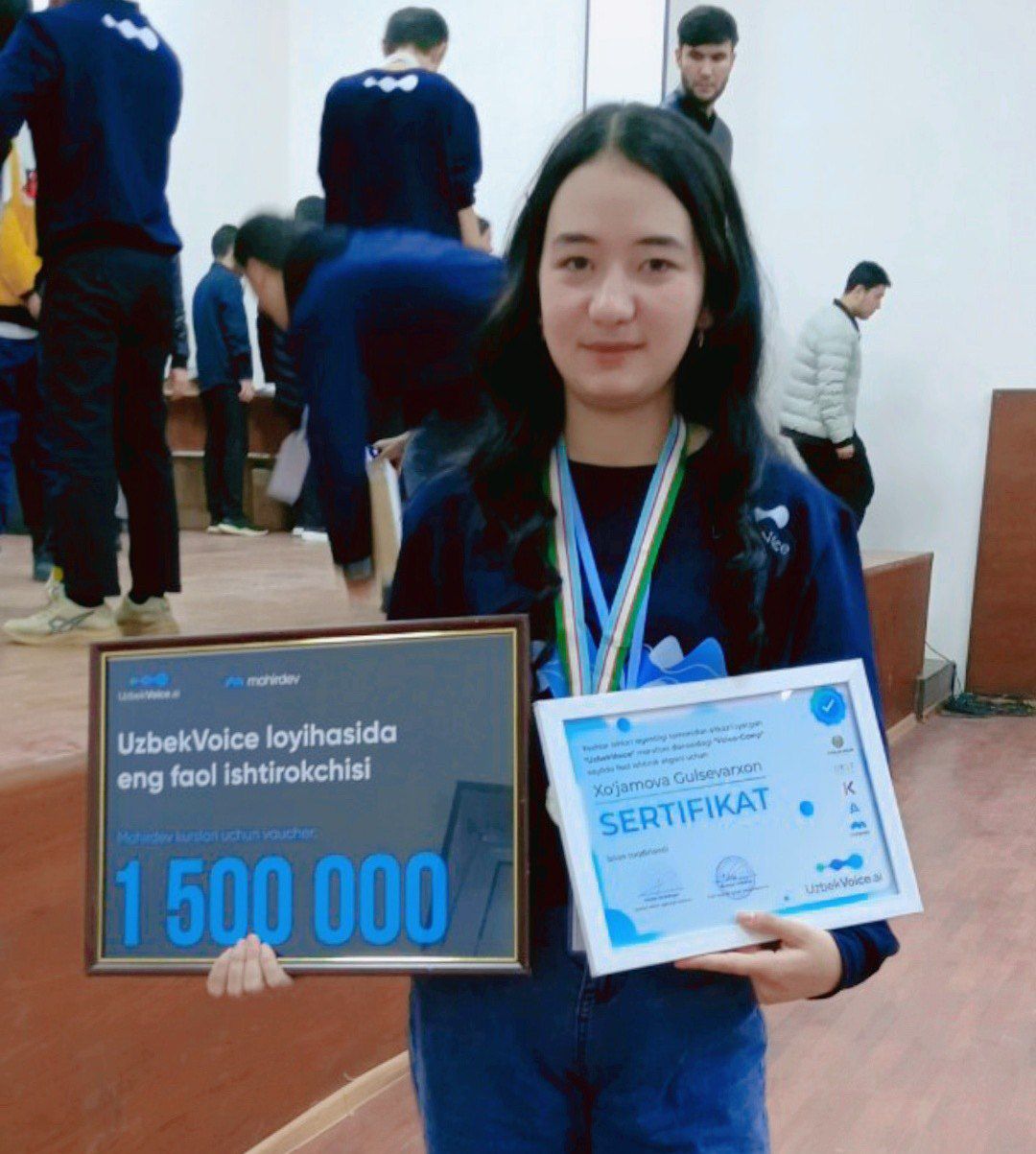
Poetry from Gulsevar Xojamova
SWEET ANXIETY OF MOTHERS

      A piece of children's heart always lives in the hearts of our mothers. So long as he is still a child. We children always make mothers think and worry. Although there is really no need to worry, you always care for us with motherly love. Your imagination is always busy wondering if my child is calm, has a full stomach, and is not covered. Mothers, your hearts are white, your love is a river, your wishes are abundant, and your prayers are endless.
    We children will reach your value only by becoming mothers, and even then we will remain children for you, your worries and sorrow for us will not end, on the contrary, your time and life will increase for you, now our children - your sweet grandchildren.
  My mother, be happy that you consider these sweet worries to be the meaning of life! May you be healthy for our happiness, even though your dreams are busy with sweet worries, never let your eyes cry for my child!!!

Gulsevar Khojamova
Student of Andijan State Pedagogical Institute
Poetry from Duane Vorhees
OUR PLACE IN SPACE


Our egg and our girdle – from our toelines to stars’ beyonds,

edgeless sky occupies. Continents and constellations

indicate sky’s compass points in all directions.

Here, and there, it corrals our air. Sky’s only brake is our imagination:

We house our deities in this infinite bubble, map every manifestation

of this cosmic envelope. We extract our character and extort destinies

through constant observation, keen ingenuity, endless speculation

as we contemplate wonderingly at sky’s progress and creation.


AMERICSSON


Whores parade their hymens

and diplomats their swords.

Priests display their diamonds.


With confusion since birth

futures ignore their pasts.


Cowards hang their medals

and gluttons wear their fasts.


The sugar tastes bitter

from the sweat of the slaves.


All the stones and banners

can't cover all the graves.


The lame think they're dancers.

The blind behave like seers.

The deaf play musician.


Hiding behind paved mirrors,

the meek show ambition.


Our clear insight is blurred.


O NIGHT, THE DOMAIN OF OUR DREAMS


The full world by day

is a speckled shade,

but colors at night

all coordinate.


Our humanity

claims its sanity’s

enshrined in marble

but held together

by spirit and breath,

yet we live in dust

and we choose to starve

amidst much rich stock.


Only dark’s tattoo

clears checkered shadows.


THE SINS OF POETS AND PASTORS


When preachers and poets exercise

our metaphorical rhetoric

we much prefer the dramatic

--the pitchfork of lightning--

above the anticlimactic

--a blanket of sunshine.

The wrinkled and crippled shall arise

sooner than the smooth and the spry.

The salve is shadowed by the sting,

and Found, by Wandering.

The tornado and the torrent

and the volcano’s ring

are prized beyond plastic ornaments.

We tend to the tortured and the tried.


TELL ME. ARE YOU SURE?


I wonder if once half our limbs were wings, like a fowl,

or if they all had thumbs once. Or is that only now?

The asker wants to know.

Do we see us in mirrors, or need a fluoroscope?

Are lovers on the level or are they on a slope?

This doubter wants to know.

Was Tigris always Tigris or once was it Paradise?

Was Jesus a carpenter or always just a christ?

This skeptic wants to know.

Are the answers on the internet? Or in ourselves?

Or should I communicate with oracles and elves?

This searcher wants to know.

We learn through maturity? But ages are cages….

Or from these ancient books of fingered, faded pages?

Don’t we all want to know?


QUANDARY


Flatter me – Do I receive or repeat?

With contempt or reciprocity?


THE PROCESS


My appetite

is my engine.


I transubstantiate

the wine of night

to morning wind,

body to pulsed headache state.

And I might write

undisciplined

doggerel to celebrate.


I eat that shite.

I take it in

and digest it. I translate

rails into kites

and doubt to djinn;

vomit; and hope it pulsates.
Christopher Bernard reviews Cal Performances’ production of Octavia Butler’s Parable of the Sower in Zellerbach Hall
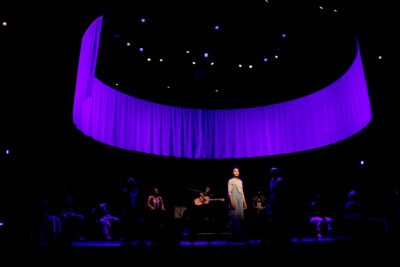
A Seed on Rich Soil
Octavia E. Butler’s Parable of the Sower
Cal Performances
Berkeley
Exactly thirty years ago, a novel appeared, with little fanfare or publicity, that would have disappeared under the ocean of similar books that die on the day they are born if it hadn’t been for the kind of chance that has saved more than one book from oblivion.
It found a handful of readers – just the right, lucky handful – who passed the word along to other readers, who did the same for others, until it created a union of enthusiasts who found its disturbing vision compelling and entirely too plausible, yet strangely beautiful. The author continued to work in obscurity for many years, and was just attaining recognition as a significant voice in American literature when she died, at 59, in 2006.
The book in question is Parable of the Sower, the author Octavia E. Butler. And the vision that commands it, and its sequel Parable of the Talents, is the basis of the gospel plus rockabilly opera written and composed by Toshi Reagon and Bernice Johnson Reagon and performed at UC Berkeley’s Zellerbach Hall that I saw on this year’s Cinco de Mayo.
The 1993 novel is set in Los Angeles in 2024, its sequel a few years later. And its vision, at the time it quietly entered the world, must have seemed at the margins of plausibility, a Mad Max version of California fed with cocaine, speedballs, and the rest of the paranoid arcana of the drug culture. Seeing the story play out in 2023 – after the bedlam of covid, the compulsive self-harming of San Francisco, capital of the worldwide technological empire that is shredding society while spewing billionaires like an army of combines across a field of ripe wheat, the descent of America into a cold civil war between the impossibly wealthy and the politically disenfranchised, culturally despised, and economically impoverished – makes one believe the notion of the oracular power of art may not be entirely a professor’s dream and a teenager’s nightmare, but mere palpable reality.
The opera the story has spawned, through the brilliant talents of the Reagons (a mother-and-daughter team of writers and composers – excuse me, but isn’t that the most inspiring and heart-warming thing ever?) and a much-talented ensemble of instrumentalists, singers and dancers (the two last often the same), created a thoroughly inspiring evening for a packed and extremely diverse audience in the heart of the UC Berkeley campus.
The opera plays without intermission for a little over two hours; a probably wise decision, since a lengthy break between the two parts may well have weakened the tension built up so skillfully in the first hour. Though the performance is called an “opera,” it feels more like an oratorio, since there is less emphasis on an involved plot and dramatized action than on a series of musical and dance numbers presenting states of mind, moments of crisis, experiences of trauma and loss, and brave attempts to make sense of them and take away, in the teeth of destruction and chaos, some shred of moral and spiritual guidance, some basis for faith and hope.
The plot insofar as there is one revolves around a young woman of color, named Lauren Oya Olamina (a luminous Marie Tatti Aqeel), who lives with her family in a poor community walled away from a collapsing outside world and trying to find meaning in an old-time religion under the leadership of the girl’s reverend father. Between musical numbers that fluctuate between the young girl’s fears and longings and the anguish (alleviated by a strenuous but sometimes forced optimism) of her community, she retreats to a notebook where she gathers her thoughts in search of a meaning her father’s faith has failed to give her.
The tensions within the community, exacerbated by having no escape to the outside world, explode at last, destroying the wall that has been both protection and prison, and scattering a group of destitute survivors, among them Lauren, wandering across a landscape devastated by the forces of the postmodern world, toward a nameless destination “to the north.”
When the wall falls, Lauren loses her family and, joining in destitution and poverty in her march across a California wilderness while hiding her vulnerable youthfulness and femininity behind a masculine cloak, she leads her group – a “chosen family” of the homeless, despairing and forlorn – with a new faith, a new religion that she calls “Earthseed,” with a text written by herself: “The Books of the Living,” and a central doctrine exalting “change” as the essence of the divine.
But there is desperation in her new faith. Indeed, it is a tragic doctrine, one that Lauren herself does not seem willing to face. Because to worship change for its own sake is to worship death. Those who exalt “change” seem to think that “all things change (but I’ll still be here).” But that is not so: if all things change, it is precisely you who will not be here.
The resemblances between the 2020s imagined in the mid-90s and their actualities today are often uncanny. And Butler’s vision, conveyed with both passion and enchantment by the Reagons and their ensemble, gripped this viewer with a persuasiveness, long after the last chord, that is rarely sustained for so long. Here indeed (to use Keats’s famously controversial phrase) beauty was truth, truth beauty.
The performance, despite the grimness of the story, ended on a note of hope that avoided both bromides and fraudulent optimism (a curse of much serious art with popular pretensions). It concluded with a rousing musical version of the biblical parable that gives the work its title. For those who don’t recall it, it amounts to the basic truth that, though many seeds of the sower fall on barren ground, on rocks and among thorns, some few fall on rich soil and fertile land, and these take root and thrive and grow to flower and fruit “a hundredfold.”
Toshi Reagon served as both introducer and guide into Butler’s world; she was also lead guitar and commenting “folk singer” bringing Butler’s vision up to date in a way the author would no doubt have enthusiastically approved. Toshi was aided by a strong singing duo, Abby Dobson and Shelley Nicole, and a backup band that sounded far larger than its five members.
After the show, there was a wide-ranging discussion with five of the performers. Toshi left us with much wisdom to savor, not the least of which was this: “There are those who believe what they know, and those who deny what they know. Whatever you do, believe what you know.”
Amen to that.
_____
Christopher Bernard is a co-editor and founder of Caveat Lector. He is also a novelist, poet and critic as well as essayist. His books include the novels A Spy in the Ruins, Voyage to a Phantom City, and Meditations on Love and Catastrophe at The Liars’ Café, and the poetry collections Chien Lunatique, The Rose Shipwreck, and the award-winning The Socialist’s Garden of Verses, as well as collections of short fiction In the American Night and Dangerous Stories for Boys. His children’s stories If You Ride a Crooked Trolley . . . and The Judgment of Biestia, the opening stories of the Otherwise series, will be published later in 2023.
Artwork from Mark Young