Poetry from Z.I. Mahmud

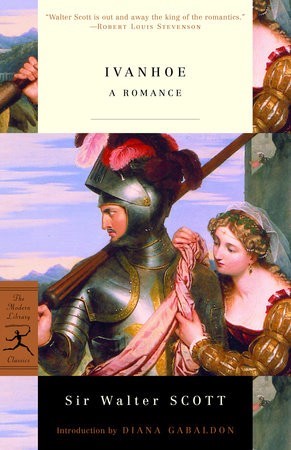
Christendom of Sir Walter Scott-the connoisseur and realm of Ivanhoe

Peevish abbotsford enchanted a woodcraft with holding a candle to the devil

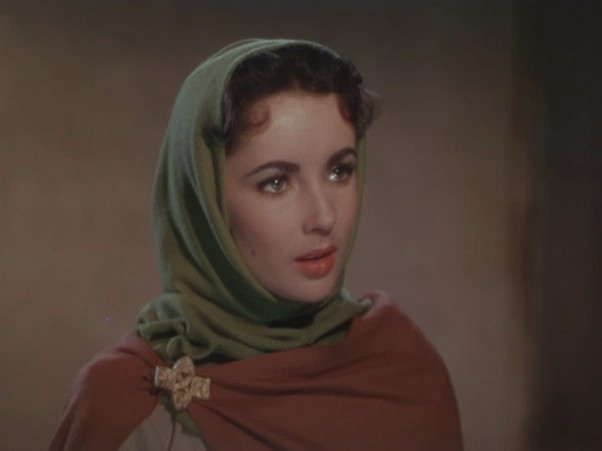
The fair Jewishness of the Maiden incumbent Rebecca’s life endangered in chastisement

O holy daughter of Rachael cried and lamented the Isaac of York in agony, grief and fear

Chivalrous Ivanhoe, forgotten and oblivious of of the atonement of the sylphlike Damsel?

Unflinching moral realism struck the heart of Sir Walter Scott adhering to the devastating plight

And indulgence in carnage of conflagration among the vainglorious; and fierce and haughty Templar’s temperamental outburst; and vehemence

The necromancy of witchcraft and wizardry, avaricious sorcery and gluttonous elixirs were the allegations the daughter of Isaac of York: beautiful Jewish Maiden being convicted,

Despite the precarious predicament she wasn’t dissolute, seduced or profaned!

Had had the fierce Brian De Bois-Guilbert in proclamation of misdemeanor; amidst irksome, wearisome and starvation and imprisonment, blows and strikes, journeys and indigestion; I profess this avowed and promised solemn ambition of entreating a relationship: succour and relish through consummation of nuptial and procurement

The valiant and renowned Ivanhoe’s fair and royal Christian Mistress Lady Rowena’s aphoristic relation

Didn’t give Ivanhoe a dirty look from Rebecca’s shimmering and, starkly starry eyes in the glimmering twilight

Exorcisms performed with the errand of obsequies towards apparition dwelling grotesquely in English blood and countryside and farmyards:

Deeming rectitude of Norman and English aboriginality

Wherefore minstrels, swineherds fools, chaplains and bishops

Singing the song in chorus of phantom delight in reverie;

The Black Knight restored to the monarchy whilst yonder venison bestowed in grace abounding :

Endowed amidst the Sherwood foresters anchorites Robin Hood, Friar Tuck and the merry men

Spellbinding merry men thus rejoicing and obliged in aura of disencumber and entwined enticement and delusion

Recurrence beams of the sundown dissolved in ecclesiastical importunities;

Apostle’s epistle enrolled and entitled to the sepulcher of Rebecca:

Sherwood forests blaze and romanticize a chakra and mantra in the nirvana as an incantations to bid adieu and farewell to thee: Rebecca The Blessed Virgin!

To the Drunken Spirit of William Blake- A poetry written as fiction in free and blank verse

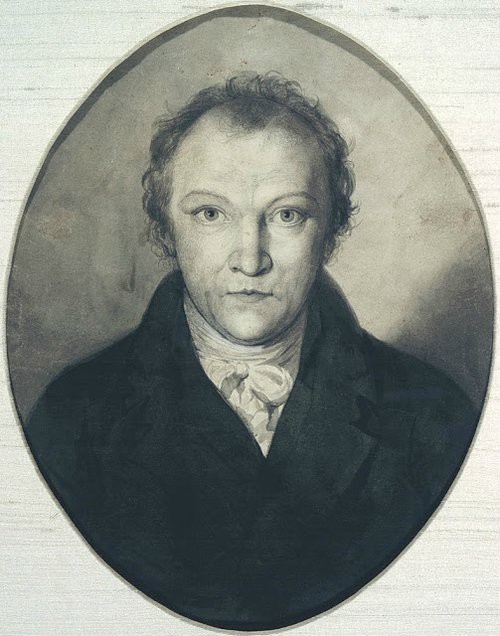
William Blake

Oh Blake with your drunken spirit you’ve adorned,

The everlasting grace and beauty of the Gospel.

You’ve illuminated mankind with your Poetical Sketches,

I love the Lamb and sympathize the ecstasy of a little kid.

With the proclamation of lifelong belief you have painted;

Through imagining The Marriage of Heaven and Hell.

Humanity burst into warring fragmented lamentations;

Ah! Milton and Jerusalem appeared in reconciled visions.

Your engravings sculptured, color drawings printed:

And the water color illustrations giving a feeble and tottering The Real Man The Imagination which liveth forever.

I read William Wordsworth’s commentary in the pleasantries exchange with the saying goes:

“There is no doubt that this poor man was mad, but there is something in the madness of this man which interests me more than the sanity of Lord Byron and Walter Scott.”

I narrate the gladdening and overwhelming tidings of:

Henry in a letter to the Damsel Dorothy-

He lives…enjoying constant intercourse with the world of spirits. He receives visits from Shakespeare, Milton, Dante, Voltaire etc..etc..etc and has given me repeatedly their words in conversations.

Have you been pondering in enchanted walks too Blake?

Might have nymphs and fairies in bewilderment.

Wherefore divine incarnations of Blake stare at distress

In stunning blasphemy thus Antichrist dwells in dismay.

Jesus voice thundering sounds in compelling spirits

As stones bleed John; Satan put sin in the cross and tomb.

You are a mental traveler Blake: preacher romantic

And here I present my farewell to your soul spiritual heal.

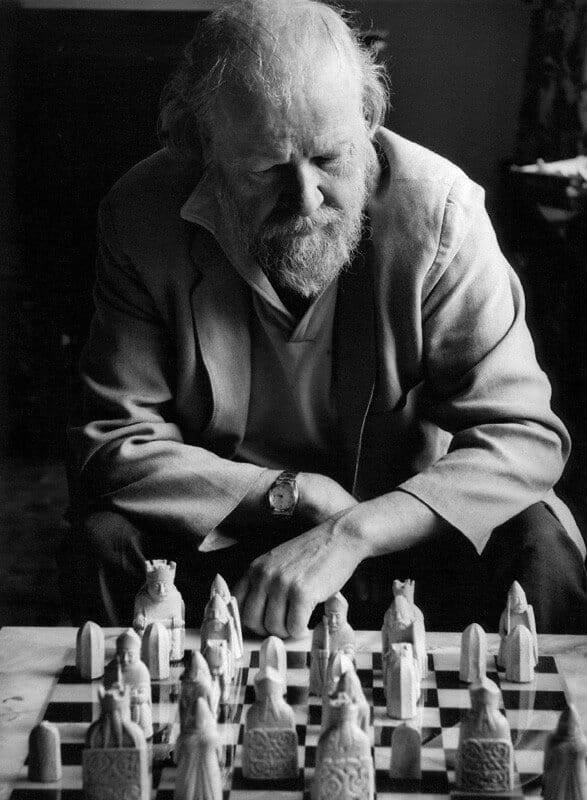
My Quill at Parchment Upon Reading Banquet Lecture of Lord of The Flies Laureate Novelist and Playwright William Golding

Golding’s holiday privilege -heyday castle of ‘Seashore’

Beached cavern where King David and King Solomon

Resigned at proverbs and psalms

A mermaid entombed of Julia of Norwich

Buried upon the banks of the Western seashore amidst rocky cliffs

Whereupon and hithertofore silvery greyed Golding’s ivory epitaph parchments

Gracing engraved magical spells-‘We need more humanity, more care and more love’

The Earth Mother Gaia washes away the flotsam jetsam along with her tresses of waving bluish splashing caresses

Quintessentially I have reached there and been starkly marvel

Wondering the blazing thought of mysteries sea creatures and marine life

We as children of the dear stars

What shine sparkling stellar wreaths of laurels

No sooner had I reached tumult and strife creeping pavements bleakish thoroughfares, than it became clear to me that the place I should be was the isle of seashore’s I had just forlorn

Aaaargh! Pity me my dearest soul!     

Had I but a glimpse of noon-time with my Julia Juliet upon the weeds and reeds

Serenading my beauty’s bosom, me and the  seashore’s flowering oasis purplish greenery

Being a universal pessimist forevermore; I shall detest fairy tales

Allegorizing ghoulie ghostie or weea beastie.

 Since these very spirits dehumanizing and denaturalizing

That drives my heyday temperance of sanity to formidable cauldron of vanity 

Foggy and frosty mournful snowman Golding’s threshold fireplace

Suppertime roaring howler alderman, corporations and liveries harangue

Disgracer supper a bad lobster thrown away into the gutters

In disenchantment sea butter feather fluttering in abysmal dismay

Abhorring in abominable spirits of phantom spectre chunk of undigested beef

Legions of goblins

Despising in admonishing guffaw of a fragment of potatoes undone

Essay from Christopher Bernard

8,000,000,000 Genders; Or, Why “Gender” Should Be Abandoned
And Why All Social Constructions Should Never Be Taken Too Seriously

By Christopher Bernard

A Personal Note

One day, coming into my bedroom with an unusually serious expression on her elegantly beautiful face, my mother sat me down and gave me a brief talk that turned out to be one of the most influential in my life. I was nine years old.
 
What she said, in her characteristically direct, even blunt way, was that I was a boy because I had a penis and testicles; my sister, on the other hand, was a girl because she had a vagina. (We were easygoing about nudity in our household, without making a fetish of it, so I knew precisely what she meant; I was only puzzled why she was making a point about something she knew I was fully aware of.)

At this point you might think, and dismiss, my mother as a biological determinist. But not so fast, because then she came to her main point. Men and women were not (according to her definitions) absolute categories; they were not walled off from each other in impenetrable silos: all men had some so-called feminine traits, and all women had some so-called masculine traits. This was essential, she said, to their “emotional balance” and psychological wellbeing.

She went on: Some men were excessively “masculine” (I was reminded of the Charles Atlas ads I had seen in comic books; the posturing muscleman had always struck me as ludicrous) and some women were excessively “feminine” (and I thought of Marilyn Monroe, who struck me, then and now, as almost a caricature of femaleness; both Atlas and Monroe were performing, theatrical, false; healthy men and women did not let themselves to be bound and throttled by appearances). In both cases, this was unhealthy for both males and females, to say nothing of their relationships. Gender excesses (she said) had a number of bad effects: they created a wall between the sexes, and locked both women and men away from parts of their own psyches, creating sometimes irresolvable emotional conflicts within them.

As she said this, I was thinking of both her and my father. My father, from a family that came to America from England in the early seventeenth century, with old Norman blood and later native American heritage (according to family legend), was a television director and producer and involved in the arts and literature (he was a gifted draftsman, musician, and writer; his own father had had literary ambitions in his youth, and his mother was a gifted poet). Dad was also the main, and an adventurous, cook at home and the main wit at our family dinners, often reducing the rest of us to tears of laughter. He had no interest in sports, automobile mechanics, or the sorts of things my friends’ fathers cared about, aside from shooting pheasant in the farm country where we lived during the hunting season each fall.

My mother had traits some might call masculine: the elder daughter of a Czechoslovakian father and a Welsh mother, she had a blusteriness and directness, and an impatience with insinuation and communicative hints, to say nothing of an irascible fearlessness that had no time for squeamishness and timidity (such as my own), that I didn’t see in my friends’ mothers or other females. She swore like a sailor and made no pretense of extreme sensitiveness, though she was a talented photographer and sculptor and had a gift for pithy phrases that was legendary in the family. I have often said that Polly had more testosterone than most of the men I knew.

So I felt I had examples right before my eyes of what my mother was saying. And since I loved and trusted both of my parents implicitly, and was convinced I had by far the best family that walked upon the green earth, her lesson met no resistance from me.

My mother gave me a serious look and asked if I understood. I nodded, though I was still puzzled why she had told me this at that particular moment. Then I recalled I was being referred to more and more as “a sensitive boy” and already showing signs of artistic interests and a complete indifference to sports and other traditionally boyish pursuits, so I guessed there might be some connection; my mother was doing this to reassure me, and I felt a warmth of deep gratitude such as I have rarely felt. It is only in the last few years I have come to realize what a profoundly wise and kind thing she had done for me. She died too long ago for me to have had the chance to thank her, and I can only wish I had had this realization sooner.

Her talk had the great benefit of allowing me never to doubt my “masculinity”; whatever I did or whoever I was, I was “male” by definition. I would have other problems to deal with – how, for example, to be a decent human being in an often indifferent and brutal world and what it meant to be a successful grownup – or merely how to talk to “girls” without offending them (a talent I have never quite mastered). But “gender issues” had no meaning for me. Who was a “real man”? I was. Next question.

Social Illusions and a Modest Proposal

What a difference a handful of decades can make.

What is “gender”? What used to be a convenient two genders has, in recent decades, morphed, according to some, into as many as 78 – a meaningless number. And the dazzling invention of pronouns confuses the matter further. In my more puckish moments, I claim that my own pronouns are “I/me/mine.” Or if I want to be really annoying: “we/us/ours,” though whether I am being royal or merely editorial depends on whose skin I am trying to get under.

I have come to suspect that “gender” may have no useful meaning at all.

The social construction “gender” has come to represent, for some, what no social construction, by definition, can be: an essence, an ultimate reality about a person, an “identity” (that other dubious and fashionable idea), when it is, at best, a rough intellectual model that, like any model, only approximates what it represents, and therefore must not be taken with complete seriousness and never, under any circumstances, literally.

One of the many pitfalls of the human condition is a perennial temptation to take our intellectual inventions and “social constructions” as well as the surrounding web of insights and projections, guesses and delusions that make up human culture, as ultimate realities; even among secularists, as somehow sacred. And any deviation in the real world from those imagined realities may find itself attacked as “false,” “inappropriate,” or “politically incorrect.” I recall the futile controversies during Obama’s first presidential campaign over whether he was “black” enough; one of the more ludicrous moments of that time. But it takes only a glance at recent history to see how such illusions, and the futile attempt to impose them on real human beings, can lead to psychological, social, and political pathologies of the most horrendous kind; to personal despair and mass violence.

Any concept, any idea we have about the world, is, of course, a more or less crude, more or less effective, tool for living in it. A useful concept grows and changes over time, adapting to circumstances and molding with the times; a useless concept is one that has frozen at a given moment and is now used as a weapon with which to hammer people who refuse to be paralyzed by fear of change. By the same token, every worthwhile concept is living, never to be completed because never a perfectly accurate picture of reality.

My favorite example is “house”: certainly we mean something very different when we say “house” from what was meant during Shakespeare’s time – our “house” is likely to contain dozens of devices and items of “infrastructure” that Shakespeare could only have dreamed about in his most exalted inspirations, and yet it retains the same function in the “real world”: a structure to keep out the wind and the rain; a shelter, a place to make a home.

But imagine if we had saddled the concept “house” with details irrelevant to its function: if we had said a “house” must be half-timber, or built of bricks, or have at least one chimney and hearth, or not be higher than twenty feet – and if we had taken these details with complete seriousness so that not only was any building that deviated from these “norms” not a “house,” but was some sort of threat to the community, to social order, even to human life – and one can imagine the (to speak charitably) violent lunacy into which we would have descended.

When taken literally, “gender” is a form of just such misapplied Platonism: it presents the idea as more real (a “real man,” an “ideal woman”) than the scrubby, scruffy reality of actual boys and girls, of men and women trying to live in the world. As soon as one says this, it is obviously true. But when it comes to gender, we seem to immediately forget it and become hypnotized by phantoms.

“Gender” is especially, even tragically, problematic because of the explosive emotions regarding sexuality and physical desire (different from gender though easily confused with it). This is true above all during adolescence, when young people have yet to learn that the “concepts” and “norms” of their society have no objective reality outside practical necessity and the dictates of power, and therefore they try, hopelessly, to conform to them, often down to the most exacting, and delusive, details. Indeed, their peers are often the worst offenders, as they seek to impose these illusions not only on themselves but also, through peer pressure, on their fellows. The violent dance of delusions and paranoia that makes up so much of human life often takes its first cruel steps in the corridors of high school.

The mistake we have made is splitting off the concept of gender from the biological reality of sex. This mistake has had disastrous consequences.

If we believe that “maleness” (to choose a glaring example) is reflected in a particular concept of “gender,” and then try to impose that concept, we are certain that, at some point, we will get wrong what actual boys and men do and what they really are. No concept of “maleness” can cover all the details of how actual men and boys behave and exist in the world; and many of those details are often conflicting and ambiguous and change over time. Many details regarding “gender” are illusory, though an illusion shared by powerful and influential figures, from parents to teachers, from peers to priests to presidents. The particulars of males will fall outside any concept of maleness and confuse people who cling to the concept no matter how much reality contradicts it. Most importantly, they will confuse the boy or man himself over who and what he “is.”

Whenever we take a concept as more true than the physical reality the concept represents, we become at best wrong-headed and at worst actively evil – both delusional and cruel, even murderous. The history of the past century provides more examples than many may be willing to fully absorb: the lessons, that is, of human delusions followed to the point of murder and mass murder.

All social constructions are illusions, socially shared will-o’-wisps, socially agreed plausible absurdities that are useful but have no ultimate reality; that have only the most tangential relationship to the reality we must deal with if we hope to live for moment to moment in the world. To take them seriously is to court madness and death, for an individual or a society. They should be handled, like any belief, lightly and ironically, and willingly discarded as soon as they cease to serve their purpose, which is to help us survive – no, thrive and know happiness in this world. As soon as they prevent that, they have become our enemy and must be mastered and conquered.

Speaking for myself (and I present this only as a catalyst for further discussion), I would define “masculine” as whatever physical human beings born with penises and testicles and the hormonal system that goes with them be and do.

And I would define the “feminine” analogously; that is according to sex, not gender.

In other words, I would abandon “gender” as a normative or even a useful term. It has done more damage than almost any other word or idea in the language in recent history. It is time to add it to such anachronisms as “phlogiston,” “phrenology,” and “bloodletting” – the obsolete social constructions with absurd or horrendous consequences in the real world that we abandoned long ago.

When asked my “gender,” I reply (puckishly!): myself.


Christopher Bernard is a novelist, poet and critic as well as essayist. His books include the novels A Spy in the Ruins, Voyage to a Phantom City, and Meditations on Love and Catastrophe at The Liars’ Café, and the poetry collections Chien Lunatique, The Rose Shipwreck, and the award-winning The Socialist’s Garden of Verses, as well as collections of short fiction In the American Night and Dangerous Stories for Boys. His new poetry collection, The Beauty of Matter, will be published in 2023.

Poetry from Sayani Mukherjee

Green
By Sayani Mukherjee

Awake to the surrounding-
The lime that freshly given, 
A sumptuous gift. 
Divine feminine and Universal harmony
Grazing luscious green tumbling
Forever anew. 
Fresh drops and confined circles
Turning grief rivers in white aromas 
Of Smell sniffing
Nature's basic instincts
Coupling harmony meadows deep inside
The Earth river flows through
Tiny bushes like thoughts sip of
Rejuvenation 
Soaking in the green wilderness
The link for unison. 

Understanding comes at the heart
Awakening swollen mid October
The lily mossed burnt cross 
Melts 
The river soakes it all
Salem haunts and fiery furnace
It smooths the rocks
Universal harmony 
The pasture the innocent invitation
Lamb grazed Christ consciousness
Of all embracing synchronized green
The feminine vastness
Bountiful art like 
Meadows deep down inside
It rains. 

Synchronized Chaos Mid-December Issue: Back and Forth on the River Styx

Welcome to mid-December’s issue!

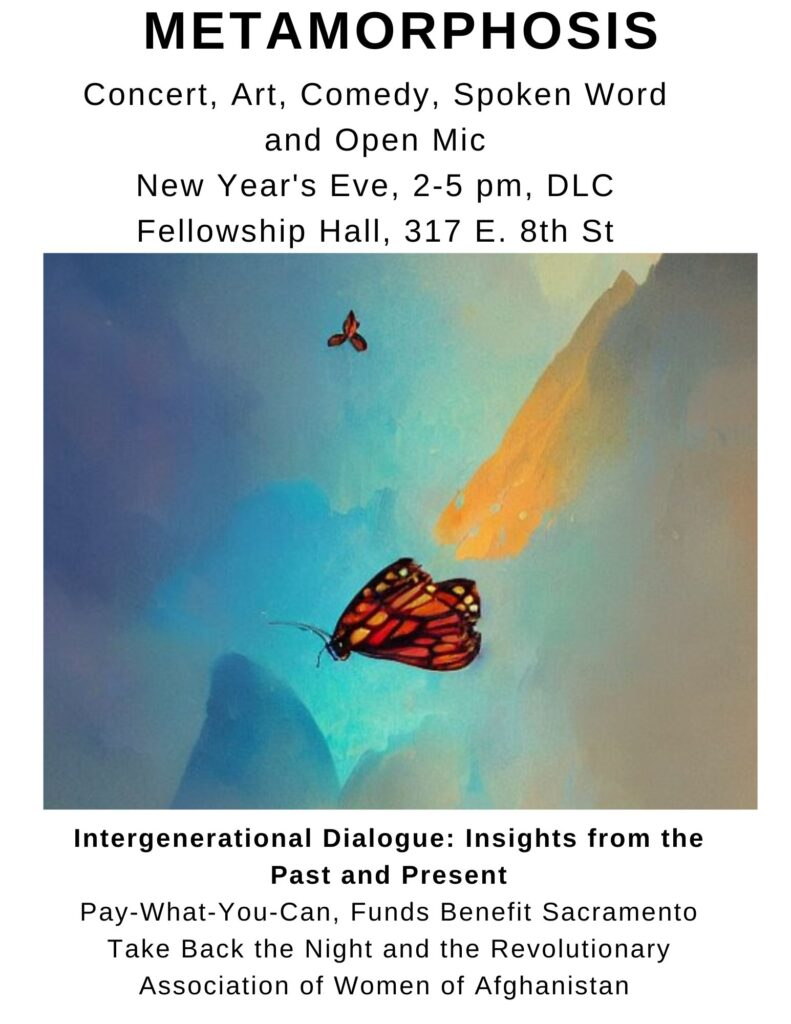
We encourage you to come on out to Metamorphosis, our New Year’s Eve gathering and benefit show for the Revolutionary Association of Women of Afghanistan and Sacramento’s Take Back the Night. This will take place in downtown Davis, CA, at 2pm in the fellowship hall of Davis Lutheran Church (all are welcome, we’re simply using their room as a community space). 4pm Pacific time is midnight Greenwich Mean Time so we can count down to midnight. Please sign up here to attend.

The theme “Metamorphosis” refers to having people there from different generations to speak and read and learn from each other, challenging us to honor the wisdom of our parents and ancestors while incorporating the best of the world’s new ideas in a thoughtful “metamorphosis.” We’ve got comedian Nicole Eichenberg, musicians Avery Burke and Joseph Menke, and others on board as well as speakers from different generations.

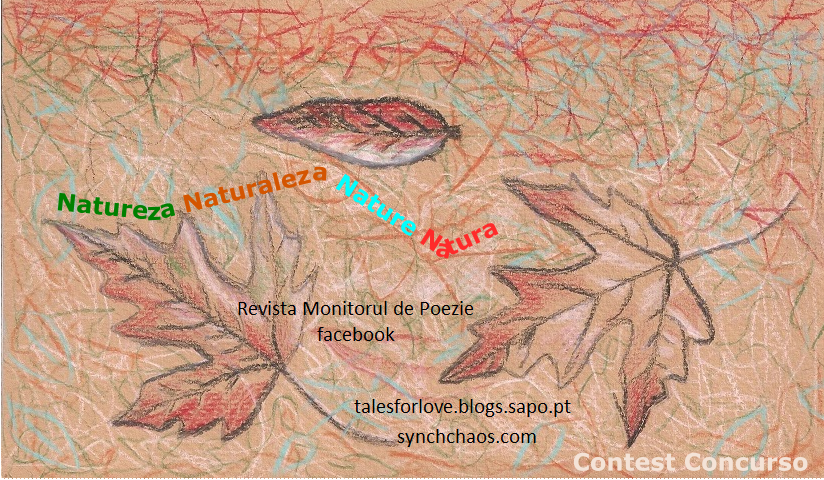
Second, our friend and collaborator Rui Carvalho has announced our Nature Writing Contest for 2022.

This is an invitation to submit poems and short stories related to trees, water, and nature conservation between now and the March 2023 deadline. More information and submission instructions here!

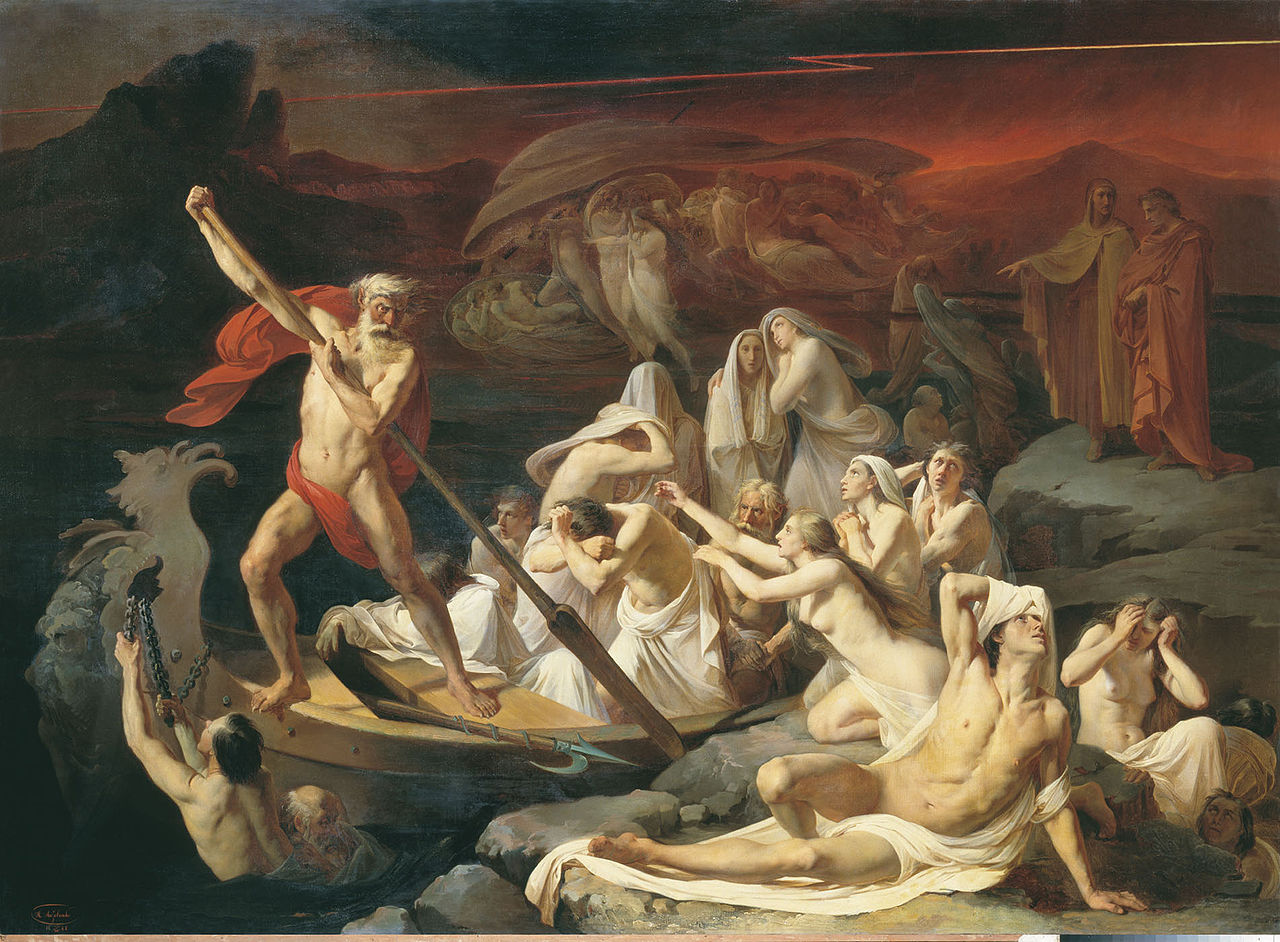
This month explores various forms of life and death, and how and when we pass through the veil or cross the famed Styx of Greek mythology. Our theme is quite appropriate for the solstice a week after this issue’s release, a time of natural passage from one season to another.

Alexander Dmitrievich Litovchenko( 1835 – 1890) “Charon carries souls across the river Styx”

Natasha Leung explores the impermanence of seasons and sensations through a meditation on a burn from a candle. Chimezie Ihekuna’s poem celebrates the festivities of Christmas along with the opportunity for renewal presented by the new year.

Sophia Fastaia shows the sun and moon finding each other’s light in a joyful, childlike encounter.

Mary Croy voyages through the vastness of nebulae in space and also fields and meadows here on Earth. Channie Greenberg presents images of trees, a mashup of vista shots of the whole tree and closeups of a few branches or trunks.

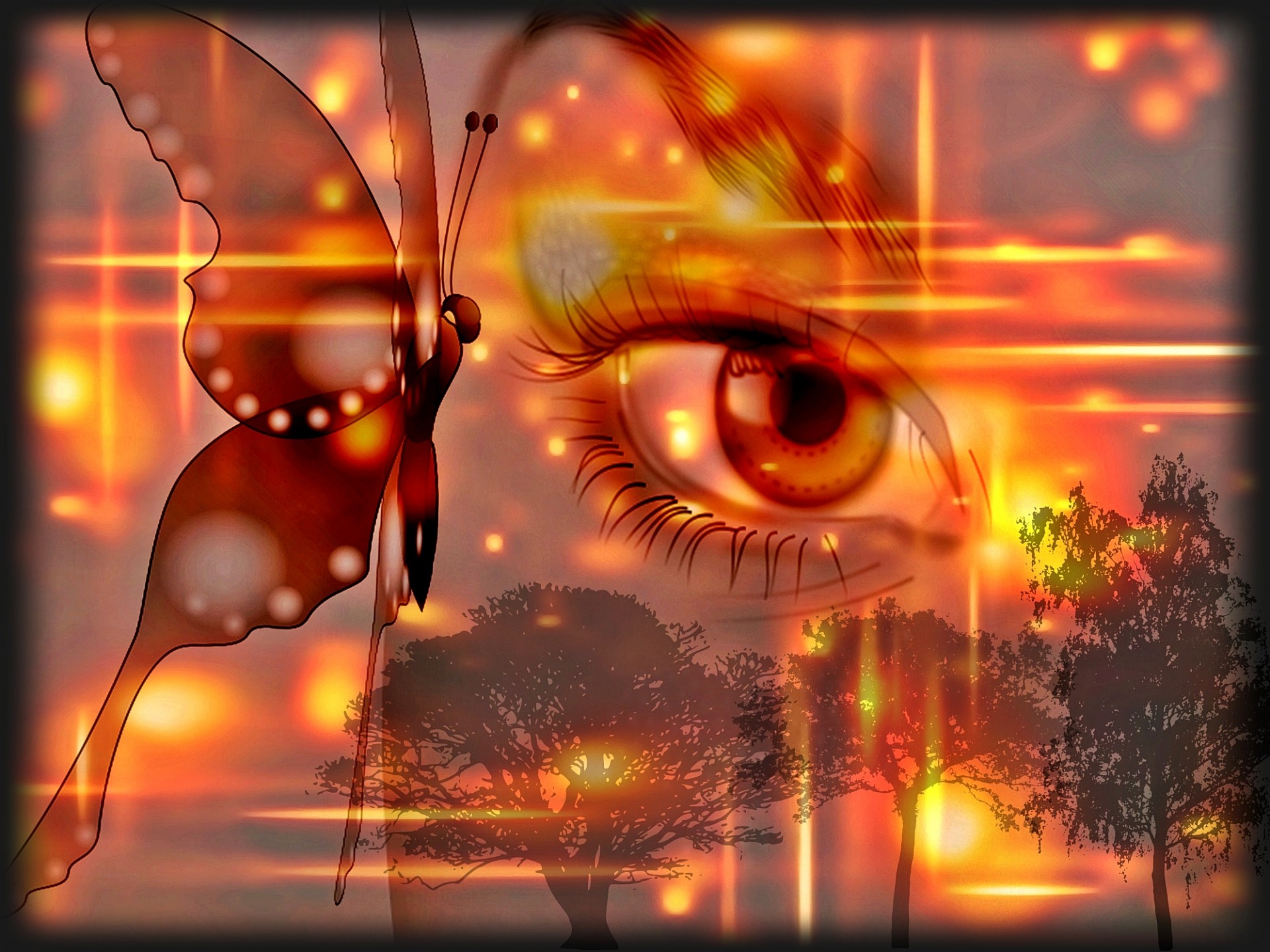
Image c/o George Hodan

Robert Stephens highlights the power of memory to contain a lush panoply of disparate scenes and to bring life to the dead. Norman J. Olson reflects on appreciating centuries of human history by traveling with his wife.

Lachlan McDougall sends us atmospheric moments of subtle natural or supernatural tension. Fernando Sorrentino crafts a compelling caricature of a man immobilized and slowly decimated by fear.

Ashley Mann’s pieces lament the artificiality of the culture that she sees as replacing whole natural foods and authentic human connection. J.J. Campbell reflects on the ways we anesthetize ourselves in an uncertain world: substances, eroticism, fantasy, perhaps even cynicism itself.

Image c/o Sabine Sauermal

Marley Manalo-Landicho mentally dissects himself, wondering who he really is under the constructions of his ego and his physical body. John Culp’s poem describes the dissolution of ego to make way for loving connection with another person.

Vernon Frazer’s poetry pans out to the edge of human consciousness with a dizzying array of linked words. J.D. Nelson arranges words and syllables to evoke and distill meaning and thought in pieces specifically designed for our publication. Sayani Mukherjee draws on mythology, fantasy literature and nature to conjure a wild dream. Alan Catlin’s characters and settings teeter in and out of sanity, drawing on Ouija boards, psychedelics, fevers and outer space.

Jim Meirose’s surrealist piece draws on a children’s trope, with an anthropomorphized rat and mouse loose in the library, but then goes in a more adult and ludicrous direction. Daniel De Culla contributes his signature earthy humor to the issue, with a story of a gentleman’s bodily functions.

Beth Gulley renders ordinary life in short haiku-like poems, exploring weather, public swimming, and home repairs through wit and careful observation. Damon Hubbs sends up scenes of imaginative speculation and drama within domesticity, characters who stand out in pink earmuffs or flowing robes amid their daily environs.

Photo c/o Larisa Koshkina

Peter F. Crowley harnesses only slightly exaggerated humor to describe the end of dysfunctional relationships.

Z.I. Mahmud laments the tragedies of both Creon and Antigone in Sophocles’ famous play, highlighting the quixotic quests of each character for law and order or romantic or familial love.

Exploring family tragedy in a different way, Jaylan Salah probes the power of the calm, understated themes of loss and mortality in Satish and Santosh Babusenan’s new film The Husband, The Wife and Their Dead Sons.

Mykyta Ryzhykh’s poem illustrates how war steals a society’s innocence as well as its people’s lives. Ahmad Al-Khatat’s dark piece also mourns wartime losses, so extensive the sun itself could lose its fire.

Photo c/o Circe Denyer

Alison Owings’ piece highlights the small and large hopes and dreams people have for a better world. Jeff Rasley looks to the work and lives of gifted but tortured writers and artists to explore how ordinary people might resonate and ultimately find their way to wholeness. Charley De Inspirator shares his journey towards spiritual healing and salvation through religious faith.

We hope that this issue represents a way forward for you, through curiosity, wonder, healing, dreams, connection, or transformation.

Poetry from Alan Catlin

673-

Sontag reviving Godot in Sarajevo.
An act of faith. Hope. Or madness.
Durrenmatt. Remember Durrenmatt. 
No. The Visit. “Better to watch than
think about later.” Applies to Beckett too.
The Physicists. Endgame. Life in a trash
can.  A domestic arrangement. Waiting
for the man to come. For. The. Nuclear 
winter.


674-

Writing in semi-trance. Like
Yeats. Like his wife, Georgie.
Who cheated at Ouija board. 
And what about James Merrill’s
paramour. Was he a cheat at
Windhover. At Sandover.  
Seemed awfully convenient.
Having that gift. Not a Nabokov.
This is. A Gift “An oak is a tree. 
A rose is a flower. A deer is an animal. 
A sparrow is a bird. Russia is 
our fatherland. Death is inevitable.”
 
	679-

A History of Present Illness
The Doctor Is Sick. Dr. No.
Fleming or Everett. Both.
Illness as Metaphor. Cancer.
Ward. Medicine for Melancholy.
(Again) Homesickness. Stories.
Subterranean Homesick Blues. 
Songs. Blue Bayou (Again and 
again). Dark as the Grave Wherein
My Friend Is Lain. Giving up the 
Ghost. Writer.


		680-

Operation Delirium. Wars without
Killings.  Clouds of physicochemical(s)
instead. Like the movie. The Fog.
Shadow and Fog. Like a frat party.
Seduction involving roofies.
Interrogation involving LSD.
Defenestration follies. Flexible flying.
Like a Leonard Michaels story. Wear
your Air Jordans and soar. Your Keds
treads. Hard landings happen.	 Go
ask Francesca. Woodman.	

 
					682-

Sex in outer space. The concept.
The practice. No shortage of male
volunteers. Not a Playboy presentation.
Not NASA sanctioned either. Yet.
Raunch-O-Rama. Presents. Trailers
and features. A sub-rosa media giant
in their chosen field. A real growth
industry. To pun or not pun that is
the question. In the morning. In the
evening. Ain’t, we got fun. Tits on 
the Moon. The poetry collection.


		683-

Meme wars.  Like chemically induced
paranoid thinking. Mass delusions.
Better than brainwashing. Social media.
Consciousness raising or consciousness
debilitating. Tactically induced seizures. 
Dizziness. Fear. Operation Delirium in action.
Twitter. Panic. Hysteria. Hallucinations.
Migraines. Suicidal ideation. Like planking. 
Only fatal. Virgin Suicides. What a waste.
C.I.A. Fucking C.I A. Living in the USA.

 
685-


Imagine a cocktail party of 1957 army 
officers. And their respectives.  And
an LSD punch. Not a moment in Fear 
and Loathing in Las Vegas. Book or movie.
In real life. Just to see what would happen. 
Imagine the whole base’s water supply
laced. Superiors “were pissed” when
they found out about the punch. It sounded like
a good idea in theory. At the lecture.
In the position paper. After the euphoria came
Severe depression. Anxiety. Abject fear(s).
“I feel like I’m fixin’ to die.”
With Country Joe. Take a trip with Peter
Fonda. Hare brained scientific experiment 
Or good clean fun. None of this is made up.


Poetry from J.D. Nelson


. . . urger (b)

roadside peaches
bro + ken androids


spock’s legendary green

ape
far-flung


the sound of the tree

machine box
momentary ember

one sparrow


barthroom

tart frog famished
rose hat head

santa fe
nm


2 eyes made

co    rn
co    b

p     i
p     e


-------------


bio/graf

J. D. Nelson (b. 1971) experiments with words in his subterranean laboratory. His poems have appeared in many small press publications, worldwide, since 2002. He is the author of ten chapbooks and e-books of poetry, including Cinderella City (The Red Ceilings Press, 2012). Nelson’s poem, “to mask a little bird” was nominated for Best of the Net. Visit http://MadVerse.com for more information and links to his published work. His haiku blog is at http://JDNelson.net. Nelson lives in Colorado, USA.

Poetry from Damon Hubbs

Not Another Holiday Poem

grandmother’s 
annual holiday poem
was nothing like The New Yorker’s 
annual holiday poem

the top bard of Walton, NY
poet laureate of St. John Street
wouldn’t think of starting a poem
with “Greetings, Friends!”

she was more 
Miss Havisham 
than Grandma Moses 
in those later years 

when the wraparound porch 
on her black & white Victorian 
collapsed like a poorly measured 
fruit cake 

and the delivery man 
who dropped off groceries 
& cases of Genny every Friday 
would find her 

on the old wooden swing 
kicking out 
over 
the abyss

noting the times & the season
hark, with each pump 
of her schoolyard legs. 


Suburb

such a fuss 
was raised last night 
by the chickens 
in the neighbor’s coop 

you would have thought 
kids were staging boxing matches 
in the foreclosure
on the corner 

or Mr. Connolly was finally 
putting the misery 
out of his sour puss 
wife

or a delivery man 
who knows that evil 
works against us
on a daily basis 

was fighting 
the high-casualty event 
of middle class 
life

by arranging 
a tufted boudoir chaise 
in a perfect pelt 
of moonlight. 

 
Mount Vision

it’s a small town
nothing to do
but fantasize
so when news 
cropped that the radio tower
on Mount Vision
had picked spectral music
out of the sky

the disappointment
was as sharp
as finding
a plastic toy saucer
at the bottom 
of a technicolor
cereal 
box
 
the rise and fall of the west

‘You’ve gotta’ be fucking kidding me,’ 
I say, half under my breath ‘are you 
sure that’s right?’ 
The woman 
behind the cash register 
is wearing pink earmuffs. It’s December 
but there isn’t a bite to the air 
or as much as a flake on the ground. 
The pink earmuffs are her way 
of saying ‘sorry, fucker 
I can’t hear you bitch 
about the cost of potatoes
because my ears are huddled 
in pink earmuffs.’ 
I’m so pissed
about the cost of potatoes
I wanna’ tell the woman 
that her pink earmuffs 
make her look like she feeds 
on the homeless.
But she won’t hear me anyway,
so what’s the point. 
Then, in a mock hospitable voice
she adds, ‘sir, potatoes fueled 
the rise of the West.’  
The last item scans, chirps. 
‘Paper or plastic?’ 
‘Plastic,’ I say 
doing my part to hasten the fall. 

 
the last roundhouse on dead end street

south 
of the rib, in the flatlands
dram shops & the 
roundhouse, upstate’s 
industrial colosseum 

the Canadian Pacific 
razed it in 93’ but demolition began earlier 
36 of 52 brick stalls 
scattered like a game 
of pick-up 

amongst the ruins 
& rotting Pullman mail cars 

a woman 
with a dismembered 
goat hoof between her legs 
says to an ex-con: 
tastes are becoming hard to satisfy.