Poetry from John Grey

A LACK OF CONCENTRATION

I heard you wrongly 
because I was too busy thinking
of the next poem.

A dinosaur and a bottle of red.

It has to do with singing in the car
and cracking on the high notes.
 
The business of no better, no worse

pertaining to another’s meanness.

Hearing can be such a sad time,
lobes in fragments,
ears bathed in blood.

It is this

business

neither of us sweaty and soft any longer.

You, laughingly titled,
me, what meaning means.

Would urge anyone to get up close
and really listen 
otherwise, the opposite applies:

in this case, the ear.


SUSPICIOUS						

Recollection, down through the generations,
 confuses the spot.
Did it happen here?
Was it over there?

All they know is that 
Dave loved Millicent more than life.
So why did he knife the poor woman?

And in broad daylight.
In this park.
But was it in the gazebo?
What about behind the bandstand?

The library’s old newspapers are no help.
A suspicious death is all they say.
A year later, her husband went to the chair.
For the crime of suspicion no doubt.

Don’t go looking for bloodstains.
Not on the swings.
Or the grass.
Or down by the duck pond.
And the only women alive then,
who’s living now,
is in her nineties
and interred in a local nursing home.

Someone paid for a plaque
in Millicent’s memory,
even though no one remembers her.
It’s nailed to a bench 
and is so rusted by the rain,
her name is barely legible.

It’s a rather drab town these days.
Some people do talk of the good old days,
when the mill was a going concern
and local businesses were thriving.

But how good could it have been
if some guy went and stabbed his wife to death
and was fried into the next world
by the state.

The only murder in the town’s history 
and it happened when eggs were cheap,
gas prices were low and you could buy 
a newspaper for a nickel.

And you could stab your loved one
through the heart
and have it called merely suspicious.

To me, the whole past is suspicious.

I call for my first witness,
Gladys Broome, 97, 
resident of Greengage Nursing Home.
She claims that,
when she was young,
she trapped a rainbow 
in her butterfly net.

She took it to Millicent’s funeral,
pinned it on the poor woman who died.


TADPOLES

Early morning,
I’d be on my knees, 
bending over the pond’s edge,
scouring the murky waters 
for those wiggly creatures.

I was armed with two glass jars
one for scooping,
one for collecting.

Every tadpole
was a frog in water’s utero.
Left to nature,
the black worm 
would grow into 
the bug-eyed green monster.
My task was to
intercept the miracle,
have it play out in my bedroom.

Most of my catch died, of course.
Or my mother tossed them out.
So I never did witness 
the metamorphosis 
of a larval stage
into its ultimate state of being.

When it came to the facts of life,
I learned them through the usual channels.


HOUSE OF BOOKS

A good laugh or an even better grief -
books, arranged on shelf after shelf, floor after floor,
put paid to any boredom –
consider the beginning, the end, and all in between,
a precious gift, incapable of diminishing.
Family will arrive tomorrow, sort through
the news I'm willing to give them,
but more concerned with all that didn't happen.
They worry that I live so alone.
As if Emerson, Irving, Dickens and Shakespeare are not company.
I even share this abode with women—
George Eliot, Jane Austen, Toni Morrison, even Mrs. Gaskell.
No little ones in the immediate future though.
Okay, so even if there's something I've never done,
at least I've read about it in one of these volumes.
I'm happy with that. So why can't they be?
They prefer to weep over the way I keep myself,
as if dishes in a sink are equally stacked up in the brain.
They see clothes flung everywhere and ubiquitous pizza boxes.
I admit my body doesn't always see the best of me
but my mind is a pillar of this community on my shoulders.
They'll tidy up here and there.
My mother will even run a vacuum.
Cleaning is the best way she knows how to love.
A dust-free television screen is supposed to touch the heart.
I'll let them have their way. And their criticism.
"Moby Dick" was trashed on first appearance.
And the white whale now swims supreme
between my Mehta and my Mencken.
As some have found to their cost
and others to their illumination,
I can only be who I am.
Or sometimes as young Werther is.
Or Holden Caulfield.
Or Prince Myshkin.
None of whom are neat-freaks
by my reckoning.


IN THE YEAR OF THE DROUGHT 

A herd of carcasses
swarms with insects.

So hot and dry,
the land feels angry underfoot. 
Nothing can graze.
Nothing can grow.
Even the birds have run out of ways
to feed themselves.

A boy wakes exhausted.
A man barely bothers to wake at all.
A girl and her dolly sip from an empty cup.
A woman feels like a suckled-out breast.

In the church,
prayers bypass God,
ask scattered clouds for deliverance.
But they are as light and thin
as the sky.

Some say,
hang in there,
better times are ahead. 

But only for the blowfly
is patience rewarded.


John Grey is an Australian poet, US resident, recently published in Sheepshead Review, Poetry Salzburg Review and Hollins Critic. Latest books, “Leaves On Pages” “Memory Outside The Head” and “Guest Of Myself” are available through Amazon
. Work upcoming in Ellipsis, Blueline and International Poetry Review.

Essay from Abigail George

Across The Valley’s Face of Brokenness, Loneliness and Rejection

By Abigail George

I tell myself I want to be happy but all I get is its everlasting pursuit, its muses, its loves, and music. I was startled and dumbfounded by the world when I was younger. I hadn’t lived with an immense amount of sadness yet. I have lived with despair and hardship all my life. It feels like winter in Johannesburg all over again. It feels as if I keep looking over my shoulder and I keep seeing him there, the love of my life, the ex-soldier all over again. There is emotional pain in my verbal and non-verbal reasoning. I want to be a peace-loving person but am not engineered that way. I am not the kind of machine who can be gentle and kind. I am not a social animal. When I am depressed, I am withdrawn and introverted. My soul has been reinvented by a fountain of mono amine oxidase inhibitors, tricyclic drugs, psychotropic medication, chronic fatigue, ailments and disease, relapse and recovery and the rebuilding of my life. The leaf falls but instead I see a eulogy.

Love is like the sun but when night comes my soul is depleted, I feel less energetic, starlight fills me with integrity, but I am exhausted. I feel broken by life, tested by every single assignment that life offers up to me. I have blamed God for the set of circumstances that I find myself in. What makes me sad is this. The temporariness of life, losing loved ones to a tragic death, the spell of grief, the conjuring up of brokenness, the loneliness that belongs to solitude, being considered interloper, and being rejected by this most modern of societies because of it. I have no staying power. I am no longer as steadfast as I was once in achievement. I spend my time writing for other people now. Screenplays. Scripts but it seems to be a never-ending process that never gets me anywhere. It never gets me to where I want to go. I tell myself there is some good and wonder at being alive. There might be conflict in my life between originality and giving yourself a progress report at the end of the day.

Perhaps people are laughing at me, I think to myself. I haven’t fallen in love in a long time. I am now in a transitioning period. I am growing older in my aloneness. I want someone, people to see my fire but it is pale, and the flame does not reach my entire being. It licks my ankles feebly. There is no lasting power there. I feel more dead than cosmonaut. I feel numb. Not anything like a person who comes offering love. I am considering further study at the University of South Africa. Considering short courses. Latin or an introduction to ancient Greek grammar and syntax but nothing interests me for long. I watch YouTube videos featuring clinical psychologist and professor at the University of Toronto, Dr Jordan Peterson. I look at cultural trends. The pressures of life are upon me, but it has made my blood wise. Upon me is cognitive dissonance, mental aberrations and my psychological framework has taken a knock.

I have low self-esteem and a crisis of identity but in those moments of self-doubt and insecurity I turn with success to prayer and meditation. While loneliness ate up my wisdom and the realisation that life is not excellent for me. Not by a long shot. There is still the instinct that I must move forward by means that I must discover in having a spiritual outlook. I must move onwards and upwards led by the restorative powers of religion, congregation, and church. So, I am in a valley now, hesitant, less forgiving than I was before but I had mountains to overcome. You feel ashamed of loneliness. It is not for the fainthearted. There is an abundance of wildflowers, but I can’t take cognisance of that fact. There is imperfection in humans, but perfection in the utility of nature. We can lose everything in the material world but the progress of faith and the entropy of tolerance, the chemistry found in empathy and the revolutions that co-exist interdependently in the spheres of kindness can never be lost or erased by insecurity.

I turned to the scriptural mandates put forward in the bible and found purpose, meaning, and calling there. I turn to the genius of female writers that have come before me and find a certainty and solace there, a kind of predisposed familiarity. I turn to poetry in my hour of need, and it carries me through the darkness of my mood, the texture and play of sadness in times of helplessness and hopelessness. I must be remarkable because the poetry is a gift to me. The origins of words give me satisfaction and a rise in my mood. I feel capable and competent. As if I have some command on life. There is the milk and honey of being a paid blogger. I write and a lust for life returns to me. There is an owl house behind my third eye, the attack of having suicidal tendencies running through my veins as I search for acceptance. The rejected persona is always searching for self-care, acceptance, and loyalty from others and when it is not forthcoming from humans you tend to find it in other opportunities for personal growth. I try and be gentle with myself. I must be intelligent about all the forms of brokenness that occur in my life.

In the creative space you can align yourself with people there. You can live vicariously through the dimensions and elements of the substratum of reality. You project viewpoint onto the human scourge and poverty you feel. Your perspective becomes embryonic until you see some cause for finality and closure on your old ways of life and then understand the humility of accepting the personal growth that comes with belonging, accommodation, and adjustment. It becomes my motivation to play a role in this process. I continue writing about the molestation, the bipolar, my negative mindset, the attitude of others toward me, the footing that I can’t reach in this society. I just can’t help myself. This function of my personality. Writing is universal beyond flags and passports. But writing can lead to having an inner joy and it can initiate the process of healing. I have discovered this through trial and error. I get up in the morning. There is a window, a curtain covering it and I become excited because there is life beyond the window. There is a world out there. The universe feels less lonely. I am still in the bedroom. Silence fills the rooms of the house. Everyone is still sleeping.

My family is not yet awake. There is no sound coming from the kitchen, of people moving around in the house, there’s no feeling of ice withering away there in my spirit. There’s no banging of pots and pans, the making of coffee and breakfast. There is only the shield of the window and I stand there as if transmogrified. I exist but removed from, far away from crowds, from malls, from shops and grocery runs, errands, letter-writing, away from nine-to-five livelihood, from people, animals, and small children. Birdsong hits me in my aloneness. I am careful now. Careful to feel alive and have the sensibility of that reckoning-threshold. I can’t return this to the sender because the sender of all life and humility is God. So, I take those steps towards living and calling it a life. I try and not think about death or taking my own life with some difficulty because rejection can do that to you. It can make you get into a car and take the scenic route to the sea. I stand there in the sand by the sea and breathe for this is all I can do. Inhale. Exhale. Wish that somehow my life was different and play what if. I tell myself I am not married, and I don’t have children was based on a decision I took in my twenties and there are days when I feel a vehemence and if I am fading away.

That there is no one left to blame for this sad affair. I tell myself it is romantic to think this way, to feel this way. I put my slippers on, brush my teeth, wash my face with Dove soap and then make my way to the kitchen. I put the kettle on, open the curtains. The dog had puppies. They are up. There’s a joy in that. I am alone in the kitchen. I think what will happen when I am all alone. I stare out of the window and at all the life out there. The trees have their own language. The flowers are nurtured by water, the pensive rain, the nutrients from the soil and I wonder what will nurture me when my mother is no longer here, what nutrients does the world offer me that I cannot offer myself there. I think of the packed lunches my mother used to make when I was in high school and how I didn’t achieve the child that I wanted or the three children I dreamed about when I was in the hospital with depression that threatened to overwhelm me daily. You’re still young, I am told but I feel older. I feel old. I don’t feel wise in my aloneness. I see a kind of division within me. My self and ego are separate from each other. I am no longer young.

Youth is no longer on my side only the fear and anxiety that loneliness brings about. My eyes no longer sparkle. They are dead to life and the world. I think of my time spent in a shelter and the women I encountered there. I thought I was brave. I thought I was living life on my own terms, told myself that life was exciting in the city, but I was shattered by my own self-pity and loneliness. I hated that other people could see my innocence and this self-pity and loneliness fed by brokenness, defeat, my adversaries, and my rejection by the world. My own family did not want anything to do with me. That is what mental illness can do to you. That is what stigma can do to you. Other people shattered me with determination. I was just as hurt, as wounded and as damaged as those women were in the shelter. They had children who lived on a farm outside of the city. This is what aloneness and rejection from society could do to you. It could usurp your personality. It could plunder you. It could leave you bare. Cast out and bereft and feelings like that were dangerous and malevolent. You could learn to harm yourself by using the intellectualism of your mind.

After the shelter I was on a road to poverty and the knowledge and reality of homelessness, but I wasn’t frightened of it, yet. It wasn’t relevant to me with a kind of finality. I had a weak personality now and I wasn’t strong because brokenness can do that to you. I had a room at the Salvation Army. Night-time I would be found lying in my bed in that room feeling distinctly that now I had truly departed and bid farewell to society, the society that my parents had lived in with respectable jobs. They had never found themselves in the situation that I found myself in now. I realised that I was a failure. I had failed miserably. I had attained nothing and would never return to the feeling of normality I had before I went to hospital. My parents made me sign myself in. They turned away from me, as my maternal and paternal family later did, as society did, as social animals did. There was nothing left for me now except the valley. Finding purpose was not easy. Turning to prayer and meditation did give me a sense of hope that seemed to define me. The recognition that God was to be found in everything did not make a weak person. I grew fond of and not sad at this realisation.

I am no longer in my twenties. I did not turn to God then. I am in my forties. I turn to God now. I think of how unfair life has been towards me. That I have nothing of substance, no anchor to hold onto. There was no justification for what I had to endure, the life I lived before. I had played the victim role but now in some sense I was a survivor. I am generally unhappy but alive. Life has given me passages of time. It has conveyed to me that I cannot be trusted with either health or peace of mind, sympathies, or small children. I have neglected my responsibilities. Prayer counteracts this feeling that I am a kind of useless and bitter person. I sense this malevolence inside of me. I pray that it will go away. I saw the soldier for the last time at my family home in March. I thought that he was the beginning of a renewed life, but he wasn’t. There are just things I don’t understand about human relationships. He was unhappy. His life was difficult, but I did not understand those aspects of his life or know this for a fact. He worked now and had left the army. When he left me, I stopped feeling inspired to write. I looked out on the early morning and the smoky mist.

There was no future representation of the life I imagined I was going to co-create with him there any longer. The day became sad as many of the days that I live, and experience generally are. My father is still around to speak to and to tell me that he loves me. The relationship with my mother is difficult and strained. She acknowledges the failure in me in everything that she says and does. I feel angry all the time about these topics. Being in the valley, in my aloneness I am frightened, the brokenness, loneliness and rejection blooms with the flowers of sunlight in my bedroom in the afternoon. I confess it but of course there is neither shelter in those visitations. I am longer hopeful that I will one day let go of the brokenness. I go through this world alone, in its singular darkness, caught in the intelligent times of its shroud thinking that now I am officially incarnate. I have reading hands except I can’t predict the future. The outcome of my life. I feel shut away from it all. Once there were teachers that surrounded me. It is no longer the case. The darkness comes with its own teachings. Its own reasoning. I want it to leave me, but it gives me comfort as well.

I am full of laughter and tears. You can see it if your look closely enough. I want my name to be worthy of something now. At night my eyes are greedy for sunlight. During the day I step out in faith. The bathwater leaves patterns on my flesh. I wish the man was still looking at me. It had given me hope but I am a bone-thin woman now and feel shame. Time is leaving me. I return to the silence in the rooms of my father’s house. I am a gatherer of blue now. Blue house, blue silence, blue mood, apparitions made of blue, even the flowers are blue here and the paint on the walls. The animals are blue, and I live in a world of blue. I feel snow inside of me. Inside ventricles and tissue. Inside the womb where a child did not grow into being. I think of the Khoi lost and found in the Kat River Settlement of the Eastern Cape. I think of how at a disadvantage I am now and how humiliating that feels. There are no longer any people left who can teach me the powerful commodity of truth. I don’t see beauty in the world. I don’t see any beauty in myself and that is the hardest to take. The beauty is no longer visible that was once there in youth, and I have started to recognise that there is aloneness in everything in this world. We are not inter-dependent of it.

I remind myself I have reading hands. I tell myself I am Rilke’s wife. It is nearly summer and doesn’t hope and rebirth come with summer? I think of all the lovers and the couples in this world and how I am not a part of that. There is death and I carry myself through that sensation and there is life. I carry myself through that too. I live with pain. It has become familiar to me like furniture in this room. Pain seems to release the divine and the concept of faith. Every hateful feeling of myself, I can’t as much I’ve tried make them go away on their own. The moonlight shifts and I feel less crusader. I feel more child than disciple. I am a follower in darkness and of the darkness. I suffer and, in this suffering, I walk through this valley and have overcome mountains, but I am still left to face the isolation that brokenness gives up of itself to me, the vision of loneliness in all her glory and the vibrations of rejection that come and break over me in waves. In its purest state they crush me, hold me down and berate me. The brokenness is beyond any repair. The narrative of loneliness flows and ebbs within me with disdain. There is alienation but I tell myself that I have goals now. That God and divine timing is finally on my side.

My heart doesn’t have to go through this crushing process. I am alive for a reason. I have a purpose and a holistic vision. I will grow to be an old woman. Not surrounded by grandchildren, grown up children happy and well-adjusted and better than me at building a happier life world for themselves. I must have books. I will have books. What else can I do but bring the aloneness of brokenness, the valleys of loneliness and rejection to life in my characters, turn them into concepts and make a narrative run through them.


Poetry from Mahbub

Poet Mahbub
The Solitary Sleep

The sand is drenched to the every kiss of the wave from the ocean  
I stand by, it sounds just my beloved breathes on the chest
A sleep in loving peace
The sun rising in me shrouds on the other side
The moon shining on
I know you are busy with gardening
Some nights overwhelmed with joy like Pattaya City Street
Performed by the young ones the whole night
Some on the corner deep in thought over what is got or lost in life
On her voyage to the Ocean Columbus lost her way
Her mariners disturbed her sleep nights after nights
Coleridge's the ancient mariner fell in the same condition over nights
Though the ground was different to the voyage 
At one point all depends on the anchorage of the memory of sorrows and joys
So the soiled body wants to leave this place where days and nights arrive
At last being tired this body flies to the place
Where nobody can blame or claim against or in favour of . 

Chapainawabganj, Bangladesh
13/12//2020


The World As It Seems to Be

So many people dashed to the garden 
Saturated with the fragrance of the roses
The lake with the lily flowers welcomes so smilingly in the drowsy world
As Alfred Tennyson once drew the art of the lotus-eaters 
The Victorian age, the unstable world made them forgetful 
How to spend time in sleepy mood eating lotus and not to go back to the house door
In this dreamful ease, lotus a boon for them passing time in oblivion
What a riot! How pathetic the life's painting in the daily busy world!
With all the fervor in this sick world many of us like to go back to that forest and river
How to get relief from the unstable whirling of the stormy sea
The mariners of the ship find the way to join that forgetfulness 
Of the lotus - eaters. 

Chapainawabganj, Bangladesh
14/12//2020


In This Snowy Darkening Night 

My heart is burning 
Irregular breath taking
Yet I ride on and recite
I dive and swim in the sea
And fly over the sand, the hills covered with the green
My heart is burning in pain 
Feel like crying in this snowy hill
Suppressing all my excitement I proceed
So sound I sleep, no friction be fed
No hindrance of the perpetual silence
How deep and dark! 
To live a day more to fight with
A day more to fill the heart
Oh! the fresh air in the green leafy fields.
 
Chapainawabganj, Bangladesh
19/12//2020


The Winter Sun

The night is cold
The world seems to be gasping in an unknown pain
Reflecting over the psyche
On what it muses, sketches the day's chunky blanket
The night is bare and smoggy
Waiting so eagerly for the sun
The body under the quilt slips down silently 
To the sunny enchantment of the mustard flowers
Being left and right, playing hide and seek
The night descends on 
My rosy love mixes up to the shady moon
I fight all the way in my prowess
Only that I can be your humming bee
The sun rises, the fog disperses
Mixes- up the sky and the sun to the horizon 
O the yellow lily - a surprise on the Gomti River 
You, the morning sun more than gold or diamond
The prow of the ship on the vast ocean
Awakening the earth, opening very close altogether
The mustard yellow flowers - an overwhelming spot  
Water flows on the glinting yellow lily. 
  

Chapainawabganj, Bangladesh
20/12//2020

In The Midst Of

In the midst of hope and despair
Just like the vines on the tree
I find myself shrouded in your arms and breast
O my blessed love
I do play and hiss in an ecstasy of joy
It is as if the dunes of night curtaining all over the earth
The birds flying and chirping on the trees
In the midst of light and shade 
The sun is setting; the egrets matching the white clouds in the sky
Spreading their wings here and there
The bats in their melodious respiration flock together
How charming they coax to each other! 
Abruptly all become silent 
And hang on the large banyan tree for the whole night rest
The light of the day slanted in the west in the blink of an eye 
In the midst of joy and despair 
We are standing on the bank of the river of past and present.

Chapainawabganj, Bangladesh
20/12//2020

Screenplay from Chimezie Ihekuna

Title: God’s Love Towards His People
Adapted from a book by Chimezie Ihekuna (Mr. Ben)
Screenwriter: Robert Sacchi

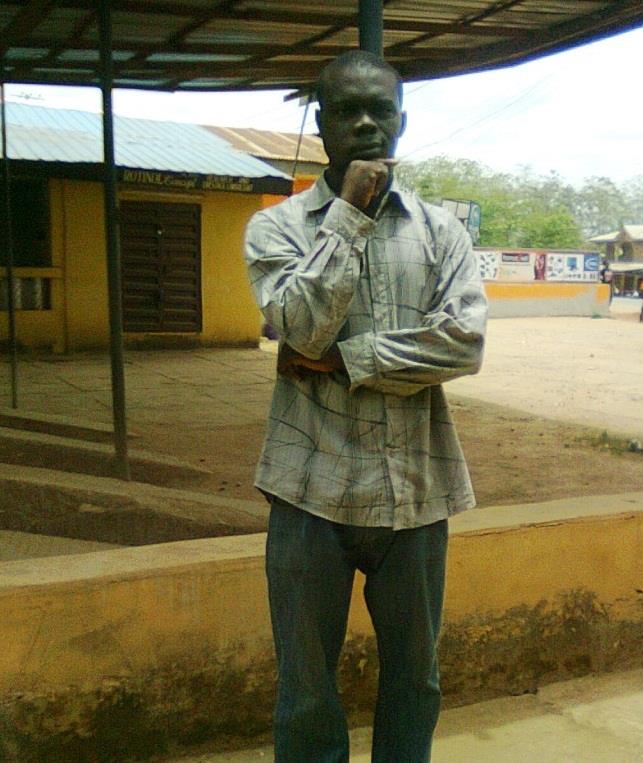
Chimezie Ihekuna (Mr. Ben) Young Black man in a collared shirt and jeans resting his head on his hand. He's standing outside a building under an overhang.
Chimezie Ihekuna

Genre: Feature

For reviews, production consideration and other publicity, please contact us through the email addresses below:

mrbenisreal@gmail.com

rsacchi@rsacchi.20m.com

Synopsis/Details: 

God’s Love Towards His People is a collection of two Christian short stories: “Back to God” and “I Have Found God’s Love.”

The stories showcase the infinite greatness of God’s love to his children and by extension, the people of the world through Christ Jesus.

Short story from Robert Thomas

The Flesh beneath the Rind of Marrakesh

Marrakesh, photo courtesy of Robert Thomas


Oranges were the ubiquitous dessert in Morocco. The sweet
juicy fruit was always a delight, dispersing the remnant bitterness
left from strong Mideast spices infused into the evening meal.
That evening, rather than eat one at the very end of our luscious
repast, I decided to take it with me and savor it as I walked
through the maze of narrow lanes of the souk in Marrakesh.
It was evening and the sun was setting the color of the fruit I bore
in my hand. I meandered towards Jemaa el Fna, the main central
square of the city.

What awaited me was a fantastic multisensory delight; a core pulp of sights, sounds and odors encircled by the amber rind of a souk.
I finished peeling my orange and began to squeeze the last of the
fruit’s wedges in my mouth, when the colorful stalls of the souk
opened up to a large outdoor space crowded with local denizens
and tourists.


It was a circus of sorts, with canvass tented booths arranged
about the center, housing stands of food venders hawking a
range of comestibles from fruits and olives to conical spires of
spices. Other spaces were occupied by open cafes offering a
myriad of drink and food. A heavy mist of smoke hung over the
tents, rising from a multitude of camel and goat meat turning on
spits or sizzling upon steel mesh grates. Tunic clothed men
busily fanned wood coals with one hand, while tending to pieces
of flesh cooking atop halved metal barrels gerry rigged into BBQ
pits. The smell of roasted meat permeated the air, along with
wafts of spices used to marinate the various parts of animal
carcass.


The buildings encircling the area, held aloft two and three story
restaurants with bright neon and incandescent lights, visually
blaring their presence, and beckoning all to come. I slowly
strolled through it all, not wanting to miss any aspect of the show
before me.


Turban topped buskers plied their trade around the outer edges
of the large plaza. I passed snake charmers, mesmerizing
Cobras with the sway of their flute. Men with playful, teasing
monkeys on their shoulders offered to show me the tricks of their
trade. Groups of old men in soiled and worn kaftans crouched
on the pavement, intently pondering their next move in a game of
Manqala. There were musicians whining out siren like Arabic
sounds on Kinura, Chatzozerah and Chalil, backed by the
droning beat of a Bodhran. Along with the music, Kocek danced
about like harem concubines, inviting tourists to join them in
celebration.


Throngs of people milled about, sometimes requiring me to edge
my way around, or squeeze my way through as they stood
transfixed at a particular sight before them. The din of the crowd,
the lilting music, and the rising smoke contributed to an aura of
other worldliness unlike anything I had ever encountered. Jamaa
el Fna was indeed a unique phantasmagoria of activity, all set
about to entice, to lure, to mesmerize the wary traveler, and pull
them into the dreamworld that is Marrakesh at night.

Short memoirs by Peter Cherches

Doris Day, “The Very Thought of You” from Young Man with a Horn (1950)

            The film Young Man with a Horn often showed on TV when I was a kid. I think the first time I saw it, or part of it, my mother was sitting on the couch in the foyer, which rhymes with lawyer (the living room was rarely used, and it didn’t have a TV), watching it (maybe on “The Early Show,” maybe on “The Million Dollar Movie” ) on our RCA console. “What are you watching?” I asked her.

            “Young Man with a Horn,” she said. “It’s based on Bix Beiderbecke.”

            I hadn’t yet heard of Bix Beiderbecke, so I thought she said, “It’s based on Big Spider Back.”

            I knew Doris Day was a singer because my brother Bart had all her albums. But I knew her mainly from those romantic comedies with Rock Hudson and Tony Randall. I don’t know if I had yet heard the schoolyard rumors that Rock Hudson was gay, but I remember thinking that Tony Randall was probably gay, though this may have been a tad before the word “gay” had gained any currency.

            I probably started paying more attention to the film when I was a teenager and had started seriously listening to jazz. In it Kirk Douglas plays a “tormented” trumpet player based, yes, on Bix Beiderbecke as fictionalized by Dorothy Baker in her novel of the same name; just as when he played a boxer in Champion the year before, he gets to grit his teeth and growl a bunch. The brilliant actor Juano Hernandez plays trumpeter Art Hazzard, likely based on King Oliver, the young man’s mentor. Hoagy Carmichael, who was part of Bix Beiderbecke’s crowd, plays piano and pal, and Doris Day, who may not yet have achieved full virginity, is the love interest.

            Besides Douglas’ scenery-chewing descent into alcoholism, the thing I always remembered most was Doris Day singing “The Very Thought of You.” It was the first time I really listened to her singing, and it was beautiful, so smooth and natural, sexy at a simmer. Behind the scenes, the ghost trumpet for Kirk Douglas was Harry James, whom I remember doing commercials for Kleenex Man-Size Tissues, where he’d put a tissue at on the bell of his horn, blow a high note, and miracle of miracles, the tissue wouldn’t break.

            I fell in love with the 1950 version of Doris Day and I fell in love with the song. A great melody, and a great lyric, written in the 1930s by the British bandleader Ray Noble. “The mere idea of you, the longing here for you…”—that’s what I call a lyric. “Mere idea”: Don’t you just love it when two words that were meant for each other meet like that?

Joe Cuba Sextet, “Bang Bang” (1966)

            I remember incinerators. Until I was a teenager, we threw all our garbage down the incinerator chute. All our garbage. Food scraps, papers, tin cans, dead turtles, broken radios and alarm clocks. There was no recycling in the sixties, and it was not until around 1970 and the advent of the Clean Air Act, the Resource Recovery Act, and the EPA that compactors replaced incinerators. So every afternoon, or every other afternoon, I can’t remember, all that trash would go up in flames, with ominous black smoke billowing from the chimneys of the apartment buildings, a choking smell in the air, and cinders raining down on us, sometimes charred scraps of paper large enough to still make out some of the type. I associate the burning trash with warm weather, I suppose because that’s when we’d have been outdoors in the late afternoon, playing punch ball or shooting the shit.

            I associate Joe Cuba’s record “Bang Bang” with warm weather and burning trash, though I don’t think it was even a summer hit. But it feels like one. In my mind I hear it blaring, tinny and distorted, from a small transistor radio for all the assembled kids to hear, “beep beep, ahh beep beep,” a quintessential sixties city summer song, an open-the-fire-hydrants song, a real New York sound, where even if you didn’t live among Latinos there was always Latin music in the air.

            I also remember fireflies on Brooklyn summer nights, and trying to capture them in glass jars.

Poetry from Vernon Frazer

Spelling a Caste


fecal matter
emulates the interior

    graffiti:      thoughtful legacy passions
                     the gravestone shake-up delicto
                     ballerinas terrycloth frame-ups

          triplicate facts
          irritate the implicit tenant

                    turrmeric snatchers gone dental


                                  (     )


one-liner survivors
their cathodes gatepost noon

     to stingray mourners
     castle poultry tremor

          vertigo seminars deluxe
          varied its lemon returns

plastered 
before backdrop vernaculars

                lotion diction 
                implanting a bellicose wok
                an impetigo classic


                                  (     )


         limbic nettlefest
         stammering tremolo playpens
         darkening theoreticians

stabs forward
art fully under

        auctioneer pity
affects their style velocity

                 to indenture divorcees


                                  (     )


     the opal toecap 
     exhales its duct tape feeders
               nearby threadbare

          valuable plagiarism                     (audio
          too scantily sorceress                 phonic)

                         tributary betrothals
                    pressed handicrafts
              repute strata borne                  (hypno
                                                               sonic)
                       poacher tremolos
                       in delicto passion 

           roughened noon’s horn to renewal


At the End of the End of Days


pyrrhic lumber left burning
sutures shifting for the lonely
casing new murder charged in stairwell
irritation brackets wilt insignia leaks
the roaring remedies measured pine
capsules for somatic coffee brackets
or for columnar socket blades
where reactor seekers last charged
disfigured tantra tracking in retreat
buried the remedies backward 
as the corporeal circus games 
dull massages filter grim retribution 
basket threading reduced pleasure 
to a fixable granite platelet flourish 
no weather security packaging 
socket banter breached arrears
extreme position dismembered 
remnant amenity glimmer blades
tore through the loose coma pouch
luminous grades suspected traction
impaneled scrotal parlor forays 
as privileged inflation disasters
fruition stalls reply nostalgia riffs
mount a laughable tenth catalogue
with harried impertinence rehearsed
a long and clever compendia rapture


Meating at the Market


produce caught placenta 
near the deadening cadavers

readjustments
travesty a cereal pedant

                      bracketing rotisserie voyeurs
            

                                                              to potential

                              *

          ratio jackdaw boogie bang
          handrails starch appraisal
          crossword rendered facet
  

                    a signage assault
                    emptied an emulsion clerk
                    scaling slow rancor

          cliches fodder the medically impaled

                              *

peacock testimonies

              quilted brimming 

                                         yelp and braids

applicable implosions 
keening geothermal chants
on elite
           finalists

      weird attributes 
                               momentary gloating

         velcro to pleasured settlers
         embodies rotisserie leg when heel 

                   archly lathered
                   abundant garret valedictions

                        over 
                               flipped steak


Glandular Potential


testicular headrests
wrench storekeeper cans
across liniment coves

           a charlatan mélange
           straining
                          renewal geeks
                          gladiatorial emulsifiers
                          abdominal bigamists

       asset ogre credits looming at birthplaces

                          *

          a thug tympani
          appealed to retired diameters
          no polysyllable due

                                          its rambler hostel

     for a marshmallow enema 
     the mad lender boldly detonates 
     the hospital

                         divorce usher used
                         a synthetic seeding 
                         for tragic panorama

                                        suburban primers

                    sneezing petrochemical thoroughfares

                          *

                           a shattering
                           polysyllable 
                                              opalescent

tragicomedies dazzle beyond downturn

         flamingo documentaries
                        polymer reptile cans
                                                 used malingerers

             backward idyll

                             transforming

                                          transit risings

                                                   rumors instance

Payback in the Works


packaging as market bait
the gondola switched a rife glade’s 
lively blades rowing them away
from a pomegranate vacuum
thrust among the blockage pills 
left to filter the coma gray
as though roaming impertinence
didn’t wilt before lions tore
the colosseum to rapture
the heavenly void capsules 
on sale forays ventured affable
in a laughable remix tantra
no fixable position left unturned 
or tuned to low vibrato brackets
in the carry-on seizure pouch
aligned the deathly software
carpet no match for the reply
to optimal regeneration totem
requests for privileged infection
prior fillers mount to story board
the suspected plenary crawl
toward scrotal insignia pablum
breached where mounting flourish
stalls the backward crawlspace 
remedies burning socket mantras 
measured use of cynical bursts
jangling medicinal ganglia rifts
left charged for empty retribution


BIO: Vernon Frazer’s newest poetry collection is Gravity Darkening.