When I think of ages past That have floated down the stream Of life and love and death, I feel how free it makes us To pass away.
Rabindranath Tagore
Welcome, readers, to September’s first issue: The Stream of Life, Love, and Death.
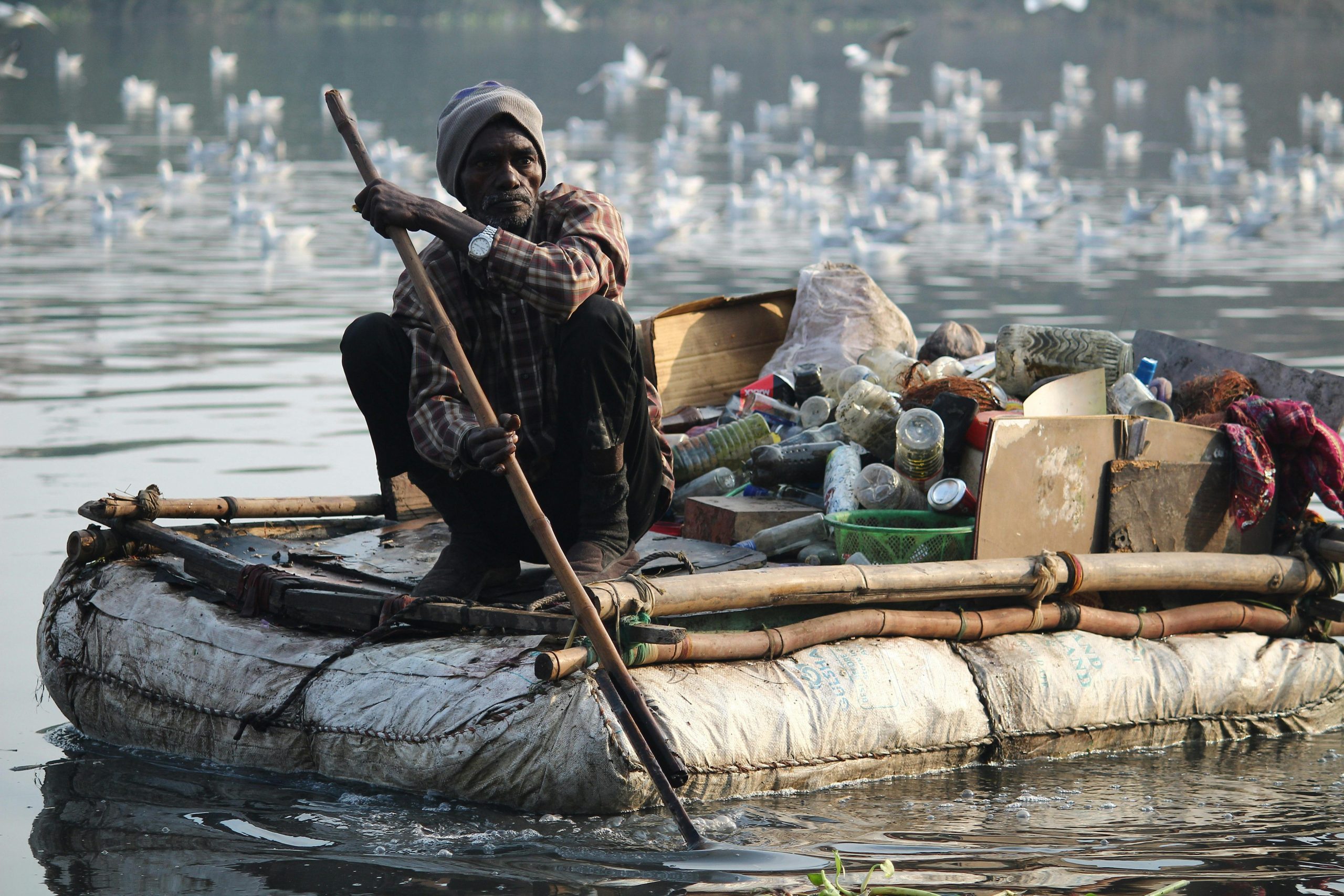
Sayani Mukherjee speaks to the weight of the world’s grief, of millions of lost loves over historical time.
Ahmed Miqdad quests for love and peace in Gaza, all in vain. Yucheng Tao bears witness to genocide in Cambodia through his evocative poem where memory and grief echo off the rocks and pages of history. In his piece, self-declared pure idealism leads only to death.
Eva Petropoulou Lianou addresses the issue of domestic violence. Christopher Bernard reflects on humanity’s continual state of conflict among different groups as Patricia Doyne excoriates tolerance for school shootings and immigration enforcement violence in the United States.
Alex Johnson speaks to the need for radical creativity as resistance to the forces of death and authoritarianism. Mary Bone captures moments of human and animal growth and creation. Jacques Fleury discusses the need for humans to coexist equitably with each other and with the wide diversity of natural creatures who share our planet.

Luis Cuauhtemoc Berriozabal speaks to energy, creativity, and the need to support young people. Xudoyqulova Shahzoda highlights Uzbekistan’s efforts to empower the young, the disabled, and women. Rayhona Sobirjonova expresses her gratitude for a caring teacher. John Sheirer’s short story depicts a boy learning a mixture of love and toughness from both a father and stepfather. Bill Tope presents the story of a mother determined to overcome obstacles and keep her family together. Muhammadjonova Muzayyana praises the love and care of her devoted mother. Judge Santiago Burdon’s video presents an ironically humorous tale of a man’s adult son coming out of the closet.
Otaboyeva Zuhra shares how education can transform a young woman’s life. Madina Furkatova highlights efforts to educate and empower young women in Uzbekistan. Muhammed Suhail reflects on the indispensable contributions of women to shaping the early days and teachings of Islam. Bhekisisa Mncube reviews Nthikeng Molele’s novel Breasts, etc, a feminist story of a group of women and a man who photographs them nude. Anna Keiko shares her determination to live out her calling as a poetess, in honor of the many female trailblazers throughout history.
Rahimova Dilfuza Abdinabiyevna shares ways to heighten students’ communication competence. Boboqulova Durdona outlines ways to engage students in active learning. Sevinch Mukhammadiyeva talks up a student leadership conference she attended, “Office of the Future.” Panoyeva Jasmina O’tkirovna highlights advantages of blended classrooms and self-study combined with instruction. Nafosat Jovliyeva discusses roles for technology in language learning. Dilshoda Jurayeva urges students to learn and adopt self-discipline as a study tool. Janna Hossam discusses the problem of burnout in gifted children.

Abigail George speaks to finding and claiming beauty and selfhood in the face of mental illness. Tursunbayeva Shohida Baxtiyor traces the history of diagnostic methods in psychiatry. Ana Petrovic speaks to the confluence of forces and emotions rising up in the human psyche. Brian Barbeito journeys through real and surreal worlds to tend and befriend the different and the marginalized. Hua Ai speaks to the wildness still inherent in our feelings and encounters with urban nature. Joan McNerney draws on elegant nature metaphors to describe love and the transitory states of life. Mark Young speaks to growth and transformation in our bodies and the natural world. Anakha S.J. compares maintaining feelings of love to tending a flower. Mahbub Alam presents a joyful couple forgetting themselves among the beauty of nature and their blossoming romance. Jerome Berglund and Christina Chin’s tan-renga present an adorable take on modern relationships. Mesfakus Salahin’s extensive nature metaphors speak to the psychology of a lover.
Brian Barbeito reflects on a random capricious day with various encounters, positive and negative, with people and nature. Chimezie Ihekuna expresses cynicism about the hypocrisy inherent in many relationships, Raisa Anan Mustakin laments people’s growing isolation and separation from each other, and Alan Catlin processes work anxiety through dreams while out in pastoral greenery. Nageh Ahmed evokes feelings of both love and loneliness under the moonlight as Wazed Abdullah finds inner peace in lunar light. Mykyta Ryzhykh evokes efforts of love in the face of the loss of innocence. Duane Vorhees speaks to the vulnerability and unpredictability inherent in love.
Vohidova Ruxshona discusses the internal composition of Saturn and the wonder of the far-off universe. Don Bormon expresses his fascination with a constantly changing cloudy sky. Abdurrahim Is’haq’s artwork of a door shrouded in shadow and sunlight evokes mystery and wonder.
Abdulboqiyev Muhammadali turns to medicine as a subject, sharing some of the warning signs of a stroke. Eshmurodova Sevinch discusses how modern financial technology can improve the functioning of global economic systems.
Mathematics is also part of our physical universe, and Mamadaliyeva Durdona shares methods for solving systems of linear equations. Mardonova Marjona finds the beauty in each season, in change, as David Sapp revels in “relentless” natural elegance. Nikhita Nithin sways with the wind during a neighborhood festival. Nilufar Mo’ydinova offers suggestions on how to live sustainably with nature, suggesting improved environmental practices for the publishing industry.

Sushant Thapa writes of finding happiness wherever he can in life as Stephen Jarrell Williams enjoys a tender moment with his wife and Mahbub Alam loses himself in the joy of nature and love. Maja Milojkovic speaks to a transcendent love, present even when the couple is apart, echoed in endless mirrorings on water’s surface. Summer Kim takes joy in transitory childhood moments and memories. Su Yun’s Chinese bilingual elementary students write joyfully about nature and play. Sharifova Saidaxon reminisces about her happy childhood as Xo’jamiyorova Gulmira remembers her elementary school days and classmates.
Dilnoza Bekmurodova reflects on how she will always hear the unmistakable call of her home. O’g’iloy Bunyodbekovna Muhammadjonova sings the praises of her radiant Uzbek homeland. Maftuna Rustamova finds comfort and peace in her heritage as Ozodbek Narzullayev joins in the reflections on Uzbekistan. Nomozaliyeva Hilolaxon analyzes how the film “Suv Yoqalab” reflects Uzbek cultural values. Maxmudjonova Begoyim considers the weight and grace of her Turkish heritage as Dr. Priyanka Neogi shares a poetically beautiful tale of the Indian flag. Eva Petropoulou interviews Greek sculptor and painter Konstantinos Fais, who is examining the myth of Hercules to revive classical civic virtue for modern Greeks.
Uzbekistan’s writers go beyond heritage to relate how the nation is currently a source of pride, as Jumaniyozova Nazokat discusses the potential for wellness tourism in Uzbekistan. Madinabonu Mamatxonova describes rapid Uzbek economic growth driven by entrepreneurship. Xurshida Abdisattorova highlights the accomplishments of an Uzbek mixed martial arts coach. Meanwhile, Shahnoza Ochildiyeva outlines what Central Asian countries, and the rest of the world, can learn from Finland.

J.J. Campbell explores different sides of memories: nostalgia, loss and mourning, and the quest to separate oneself from toxic or false aspects of the past. Brooks Lindberg laments the death of glaciers through a poem that grants nature a measure of agency even in melting. Jake Cosmos Aller reflects on historical revision at the Smithsonian Museum.
Grzegorz Wroblewski’s fresh installment of asemic poems evoke the aesthetic of language as a part of human culture. Ken Gosse’s ars poetica defends the power of rhyme and meter in a world of free verse. Graciela Noemi Villaverde celebrates the mysterious and poetic works of Jorge Luis Borges. Dr. Jernail S. Anand argues for the primacy of literature as a study and discipline to help us return to our humanity as Mirta Liliana Ramirez does something similar, depicting dance as an act of love to add beauty to life.
Michael Robinson shares, in his final piece after ten years of writing for Synchronized Chaos Magazine, the family and sanctuary he has found through his faith.
Susie Gharib draws on historical mythology to explore our place in the world and our vulnerabilities as humans. Patrick Sweeney’s tiny vignettes capture distinct moments in human life: wonder, confusion, humor, or just us pondering being alive. Taylor Dibbert relates the paradox of what happens when we care too much – or too little – about money. Santiago Burdon explores human nature in his tale of a chance encounter on an airplane.
Finally, Sarvinoz Orifova reflects on the nature of hope and the power of holding on to it during challenging times.