Synchronized Chaos March 2016: Life Energy

Welcome, readers, to March’s issue of Synchronized Chaos Magazine! This issue seems to center on energy in various forms, both literally as a power source and poetically as a metaphor for people finding the inner strength needed to spur them on to greater insights.

Jaylan Salah writes about finding solace and creative energy through the Finnish rock band Poets of the Fall. As a writer and artist and a young person, Jaylan found welcome, affirmation, and thought-provoking ideas in the lyrics and beauty in the voices of her favorite band.

Since ancient times music has punctuated our life journeys and lubricated our experiences, from early hide drums and wooden dulcimers and lyres and chants to modern sounds produced through technology.

Michael Robinson also writes of his poetic inspirations in taut, restrained free verse, using birds and nature as a motif. Seagulls and peacocks have been present during various seasons of his life and thus evoke various emotions.

Joan Beebe celebrates nature’s renewal and beauty during spring. Her work, written with joy and full sincerity, heralds the coming of warmer weather. She also encourages readers to keep track of their pleasant memories by holding onto mementos.

Peter Jacob Streitz contributes a short story on the loss of innocence and natural human life-energy due to repression and fear from people who moved too fast to control what they did not understand. Elizabeth Hughes, in her monthly Book Periscope literary review column, reviews novels from Hazel Boyd which describe how a group of people, friends and lovers, work to maintain the caring and energy in their relationships over time despite the complications and challenges they face.

And, finally, in a writeup from museum docent Cristina Deptula, there’s a discussion of Lawrence Berkeley National Laboratory researcher Dr.Adam Weber’s research into improving the efficiency of hydrogen fuel cells. While Weber affirms the promise of this form of energy storage within the next 50 years, the technology will require much thought and effort to bring it to the point where it can become commercially useful. He outlines some challenges researchers are facing and methods they are using to work around these issues.

We hope this issue serves as a kind of ‘muse’ for readers as they continue their own creative and personal journeys.


Poetry from Joan Beebe

MEMORIES IN A SHOEBOX

Shoeboxes are meant for shoes

Or pictures you don’t want to lose.

My shoebox is filled with stories of old

The pictures are warm with memories untold.

When I look at those days of youth and fun

The memories for us have just begun.

The years fly by and we don’t think of time

Until we find that shoebox of mine.

Those precious memories are like gold

And bring smiles and tears from those days of old

So don’t throw away that shoebox of yours,

It may bring you comfort from days gone by

Because that shoebox is where those stories lie.


A HEARTBEAT AWAY

Winter days are usually long and dreary

Depression can overcome us

We don’t seem to have the energy

Or a spirit that is positive

We look longingly for sunshine and warmth

But soon we find we are just a heartbeat away from spring

Trees budding forth with their new shiny leaves

The green shoots of flowers are poking their tiny

Heads up above the ground.

There is a sweet freshness in the air around us

Our senses have come alive and we

Drink in the breath of renewal in nature and ourselves.

Lawrence Berkeley Labs’ staff scientist Dr. Adam Weber discusses current state of hydrogen fuel cell technology in Oakland, CA talk reviewed by Cristina Deptula


Adam Weber, photo from http://eetd.lbl.gov/people/adam-weber

Adam Weber, photo from http://eetd.lbl.gov/people/adam-weber

Hydrogen fuel cells power city buses all over Oakland, CA, surrounding the Chabot Space and Science Center and transporting visitors around town. Guest speaker Adam Weber, staff scientist at Lawrence Berkeley National Laboratory’s fuel cell program manager, spoke at Chabot on future prospects of this technology during February’s enrichment lecture.

According to Weber, hydrogen fuel as a workable, commercial scale technology in the U.S. is at least 10-20 years in the future, as a minimum. However, he supports continued research and development into the area as the technology represents the promise of a 45 percent reduction in our country’s carbon emissions by 2050.

Hydrogen differs from other fuels as it cannot be mined or harvested directly, but must be produced on a large scale, usually by splitting water molecules through electrolysis. The energy to power the electrolysis can come from natural gas, coal, nuclear energy, or, as he hopes, ultimately from renewable sources.

Continue reading

Short fiction from Peter Jacob Streitz

MEN AND WOMEN—there’s a difference. At least that’s what Shields’ mom formerly decreed. It’s history. It’s science. It’s nature. It’s everything to do with equality and ONLY ONE HAPPINESS. And along with the laws of only one happiness, Shields also knew, by heart, all the other rules in Mom’s house. That’s why he waited a year after his 13th birthday to ask her about the man he’d met the previous Christmas, in his Grandma’s cellar. This was a terrible mistake. When Shields simply asked if the man she called “husband” loved him, his Ma threw a fit! The word LOVE was strictly verboten in or out of their home.

For it was his Mom’s belief that love, as a word, was worthless. “Gens de peu (the meaner class of people),” she’d crow with characteristic fervor. “Love everything from inanimate objects to gods, celebrities, and prime-time TV.” She’d quiz Shields: “And how can love describe the affections of men and women when we incessantly jabber, ‘I LOVE THE FLAG! I LOVE COKE! I LOVE NEW YORK! I LOVE JESUS! Have you ever seen a bumper sticker that says: I LOVE HUMAN BEINGS?'”

When Shields admitted to never seeing such a bumper sticker, or knowing what it actually meant to love, mom told him a story about a long forgotten, magical time when men and women were equally capable of love, because they both possessed The Lobe. God’s Lobe. The Lobe almighty.

Continue reading

Poetry from Michael Robinson

The Seagulls
Their wings spread above the ocean.
Their voices echo off the water,
Their white bodies full the morning sky,
I remember my mother when I see them,
For she was always gentle with me;
I was her only son.
She did not cry when I told her I was leaving for the war.
She simply said “come back to me.”

Sleep II

I cannot sleep in the wee hours of the morning when the muses come,
I cannot sleep when the dream is of colors —
When the moon is bright and the stars float above the water,
It is not easy to forget the goddess of poetry.
But I cannot rest in the wee hours of the morning when I hear the birds sing.

Another Day of Life

When the words appear on the screen,
Nothing else matters to me.
Hearing your voice,
Having you smile and that laugh of yours.
I’m happy when I look out at the mountains,
When the peacocks’ feathers bloom,
And the seagulls fly over the ocean,
I’m happy when the muses call on me to write.
A poem they understand,
That there’s more to life than death.

Elizabeth Hughes’ Book Periscope

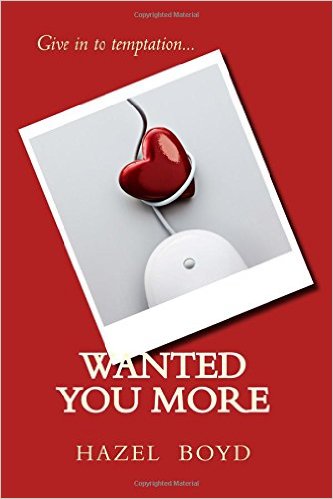
Wanted You More by Hazel Boyd

wantedyoumorecover wantedyoumorecover1
wantedyoumorecover
Wanted You More is a wonderful book about how the lives of people intertwine. It is about friends, lovers, caring, compassion and heartbreak. It is a wonderful story of how when two people break up they can still be loving and caring friends. This book reminds us of how love and compassion really can conquer many things that life can throw our way.

Enough to Keep You, also by Hazel Boyd

enoughtokeepyoucover
Enough To Keep You is a very good book following the relationships of several women. It explores the highs, lows, happiness and heartbreak of each one. It is about how good friends stick by each other and care for each other through happy times and most of all when one is hurting. It is a very deep and meaningful novel. I loved this one as much as I loved the sequel, Wanted you More. This is a must have for your home library. Don’t forget to get the second one along with this one.

Synchronized Chaos February 2016: Innocence and Maturity

Welcome to February, the month of Valentine cards and pink candy hearts and Cupids for some, and dark humor and hopefully self-love for others. Hopefully, this month will also herald warmer weather for those Northern areas besotted with blizzard snowfall.

Our issue this month focuses on innocence and maturity, with some submissions reflecting straightforward childlike enthusiasm and others presenting more complex, self-conscious thoughts.

Leticia Garcia Bradford regales us with a tale of the first time she saw snow, as an adult Californian traveling to South Korea in winter. Joan Beebe draws on the Valentine’s holiday for inspiration, describing a contented relationship and some different aspects of love. She also memorializes a pet parakeet who had become dear to her family.

Tony Glamortramp offers up poetry and a short story, both of which convey the thrill and joy of snow days, not for children, but for bohemian queer artistic types who have the day off from school and work to feast on poetry, art, drink and music. These pieces, somewhat reminiscent of Puccini’s La Boheme, express the treasure of eclectic community and show through nostalgia the value of a city’s remaining hospitable to these sorts of people.

Ogana Okpah celebrates love, both the childlike pangs of first crushes and the longer-term, committed love of adults. Jaylan Salah reviews the cinema of Canadian director Xavier Dolan, whom she appreciates for making films that show teenage boys’ maturing and the complexities of ‘human-human’ relationships, tender and nuanced regardless of gender configuration.

Other writers convey a sense of anxiety, a reflection of the growing pains of our society and planet. Michael Robinson, in his distinctive restrained, delicate verse, expresses the solitude and anguish of having only memories of love for comfort while undergoing mental health treatment. Christopher Bernard’s protagonist considers the weight humanity places on the planet, then looks into the faces of ordinary random folks of all ages waiting for a San Francisco bus, who seem incongrously vulnerable and harmless. Christopher Bernard also reviews Ernest Hilbert’s new poetry collection Caligulan, which expresses modern and timeless social and existential anxieties through formal poetic forms.

Vernon Frazer creates highly structured, precise, heady pieces through free verse forms, reflecting places that are underneath, behind, hidden from view. Readers are drawn by these geometric arrangements of words to peer within our physical and mental structures to examine their deeper natures. Akor Emmanuel expresses existential dissatisfaction through the image of a perpetually unsatisfied pregnant virgin, an echo perhaps of the Virgin Mary’s sorrow over our world.

Dramatic suspense can be a way we can face anxiety in small doses and vicariously, perhaps as a way to accustom ourselves to fear from a distance so that we might become stronger when confronting actual threats to our existence. Elizabeth Hughes, in her monthly Book Periscope column, reviews Joe Klingler’s film noir-esque thriller mystery Missing Mona, describing the tale of a detective’s quest for a missing hitchhiker.

Other writers this month describe the process of men’s coming of age, with all the angst inherent in that physical and psychological journey. Michael Robinson reviews Christopher Bernard’s Dangerous Stories for Boys, a collection reflecting what Bernard considers the ‘dangerous’ and volatile years of burgeoning adult masculinity, beginning at about age ten. Ryan Hodge, in his monthly column Play/Write, analyzes video games’ portrayal of male characters as they develop throughout game play, arguing that they earn worth and value in the eyes of others through service and sacrifice, but face the dilemma of finding a balance where they can assert individuality and not merely exist for the sake of others. Hodge argues for a complex, nuanced view of manhood on the screen, just as he did for femininity and female characters in his last column.

I hope that this issue inspires both childlike joy and wonder and thoughtful consideration of deeper concerns. Thank you for sharing the experience and growing alongside our contributors.

Public domain image from George Hodan, available here: http://www.publicdomainpictures.net/view-image.php?image=20273&picture=silhouette

Public domain image from George Hodan, available here: http://www.publicdomainpictures.net/view-image.php?image=20273&picture=silhouette