Introduction to Jacques Fleury’s new book Poked and WOKE: Prose and Poetry from a Haitian American Dreamer at the Intersection of Politics and Desire

From the “Introduction“:

Preliminary banter from the author..

Firstly, this is the very REAL Jacques Fleury, not ChatGPT or AI generated jargon and neither is this book!  With the advent of technology, these types of warnings, unfortunately, become necessary. This is my fifth time stepping up to the book podium, and what do I have to say to you that’s new?

Well, we will have to see… Let me start out by saying what I’ve learned since the last time I authored a book length letter. As a reminder, the last book I wrote was “You are enough: The journey to accepting your authentic self ” and that was about three years ago and a lot has changed in the world and in my life since then… Like it or not, we are all embroiled in the shark-infested tanks of a new type of reality… It is as if the whole world is at war; whether subjectively or objectively, and you are either a witness or a participant, directly or indirectly getting hit by the bullets of racialized socio-political and economic injustice while world leaders compete for political dominance at the expense of the shunned proletariat. Not to mention the persistence and pervasiveness of the continued healthcare crisis fueled by remnants of Coronavirus variants among other newly discovered viral threats, all at the monster’s ball of world chaos!


Among the most troubling of all is the banning of books for not adhering to the demands or the expectations of those in power positions, even heads of states! All while ignoring and/or challenging our constitutional rights to freedom of the press and freedom of speech in our United States of America! Hence why I am writing yet another book simply to “tell the truth”. Nevertheless, with a continuation of compassion, understanding and even more importantly a sense of necessary levity tethered with humbled humility and erotic sensationalism to mitigate our chaotic chasm.

Some of the stories come with screaming orgasms, some will come with gut wrenching laughter, some will evoke your sympathy; all in an artistic effort to combat the notion of cosmic unrest. Some will bring dignity to the disparaged, direction to the dislocated and directives to the disenfranchised members of our society. I also continued my studies of spirituality, history, and random facts for nerds, and I will present to you what I have learned hoping to distract and educate as political conflicts and interpersonal and societal relations conflate along partisan lines internationally and within the United States.

The state of the world sometimes puts me in a state of dysania every morning… making it hard for me to get out of bed…but then I think to myself “…at least we’ll always have PIZZA!” Just seeing if you were paying attention… I am not here to wag my fingers and harangue you about how bad THEY are or how good WE are. Or how “we” or |”they” are to blame for the way things are. The truth of the matter is, we are all capable of being fallible to the fragility of our humanity.


and it would be an exercise in futility to punish or blame each other for our predestined vulnerabilities. I am simply here to lay out the facts juxtaposed with the myths and hopefully mediate the conflation between the two… in brand new prose poetry. Some of the things I have learned since my last book will be evident in the following stories, essays, reviews, poetry and writing prompts in this book; where retro philosophy meets contemporary challenges, where politics and passion, lust and love, desire and danger collide! So grab your soon to be quivering “thighs”, your K-Y along with your political eye and enjoy!

When it comes to the ways of Earth dwellers, William Shakespeare said it best in his play Julius Caesar, “The fault lies not in ourselves but in our stars that we are underlings…” You may interpret that as you wish.


One must learn to cultivate and sit into their own sense of self-centered peace. “You were never promised ease. Life is not meant to be soft, it is meant to sharpen you, to break what is false and leave what is real…” (From Stoic Diary podcast on YouTube) The hits will come left and right top and bottom, as you endure, dents of wisdom will possibly strengthen you to your soul’s core viscera and when it comes to learned life lessons, wisdom and edification, the prose and poetry in this book will offer you a plethora of that.


These narratives in this publication promulgate the mobilization of progressivist ideologies rather than regressive antiquated notions of protracted inequality, that some see as “making America great” for some while “the others” stand on the sidelines with the scowl or chagrin grin of the miserable and the oppressed. Perhaps that,  in and of itself,  is the conundrum of a democracy: you can’t please EVERYBODY  while enduring the persistent and often pernicious governmental policies, arguably motivated by political partisanship rather than focusing on regulatory solutions to benefit ALL Americans regardless of political affiliations,  social class or ethnic identity.  

I looked up the opposite of “a great person” on AI and one protruding term that came up was “asylum seeker!” Why is a person “bad” because they’re seeking asylum due to circumstances brought on through no fault of their own in their home countries?! However, that is AI for you; it is a mixed bag when it comes to the answers you will get. My mother told me this Haitian proverb in Haitian Creole: “Se yon sitiyasyon ki fe yon aksyon” which translates to “It’s a situation that brings about an action.” The political and economic chaos being “the situation” and the asylum seekers being “the action.” Just like it was for the pilgrims and other European immigrants who sought and are still seeking “asylum” in America similarly due to religious, economic, and sociopolitical unrest in their home countries.

FYI or for your information, “K-Y”(as mentioned above) when used pertaining to sexual activity refers to K-Y Jelly, a brand of personal lubricant used to reduce friction and enhance comfort during sexual activity. While its original purpose was surgical lubrication…  But in Japanese slang: “KY” stands for “kuuki yomenai” (空気読めない), which translates to “can’t read the air.” It describes someone who is socially unaware or insensitive. 

In other words, someone who is NOT socially conscious, which, for this purpose, would be antithetical to this book’s mission as an exaltation of understanding, compassion, cultural-sexual-political awareness and social justice. It’s genre subversive and decidedly “different” which is totally my brand of serious yet facetious, bookish yet lowbrow series of stories, essays, reviews, poetry and creative writing prompts dripping with sexual fluidity and societal nonconformity. Social outcasts and weirdos will feel as if they belong for a change and that somebody somewhere out there “gets” them. So, what are you waiting for? Get to the reading…

Wake-up or get WOKE!!!

Jacques Fleury, 2025
Essay from Jasmina Rashidova

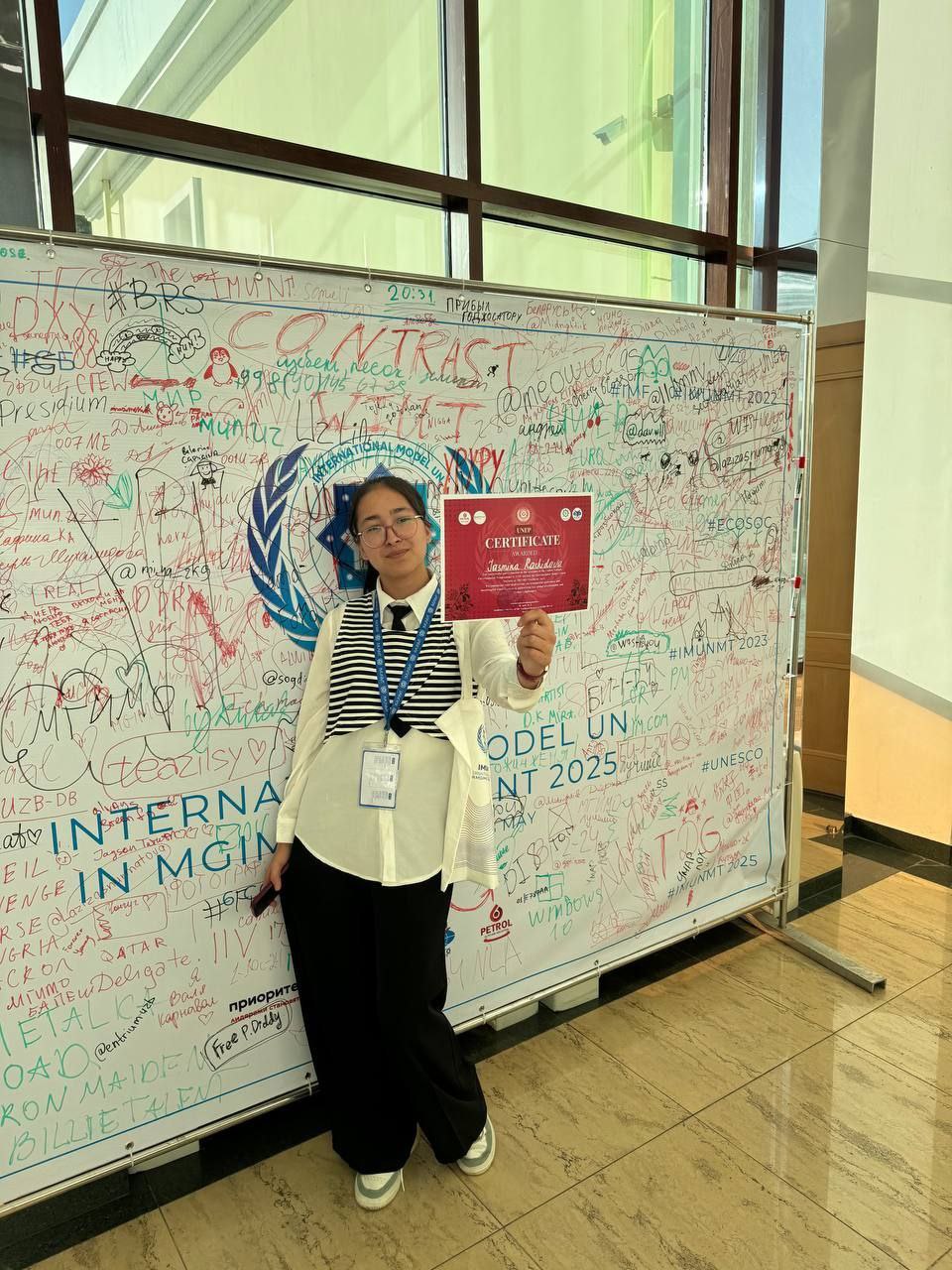
Central Asian woman with long straight dark hair, reading glasses, and a white top and black pants, holding a red certificate in front of a white board with a whole group of signatures from Model UN participants.

The Importance of Culture in Today’s World

Culture is the shared beliefs, customs, values, and traditions that define a society. It influences the way people think, behave, and interact with one another. From language and art to religion and social norms, culture shapes our identity and helps us understand the world around us. Every community, whether small or large, has its unique cultural practices that connect individuals and create a sense of belonging.

One of the most important aspects of culture is communication. Language, for example, is not only a tool for expressing thoughts but also a way of preserving history and traditions. Art, music, and literature reflect the values, emotions, and creativity of a society, allowing people to share experiences across generations. Festivals and rituals strengthen social bonds and bring people together, promoting unity and cooperation.

Culture also plays a vital role in education and personal development. Learning about different cultures encourages tolerance, empathy, and open-mindedness. It helps individuals appreciate diversity and reduces prejudice. In today’s globalized world, understanding other cultures is essential for international relations, business, and travel. Cultural awareness enables better cooperation and helps prevent misunderstandings between people from different backgrounds.

However, culture is constantly evolving. Globalization, technology, and migration influence traditional practices and introduce new ideas. While this can lead to cultural enrichment, it also presents challenges in preserving heritage and identity. Communities must find a balance between embracing modernity and maintaining their cultural roots.

In conclusion, culture is a fundamental part of human life that shapes our identity, guides our actions, and strengthens communities. By appreciating and respecting different cultures, we can foster a more inclusive and harmonious world. Understanding culture is not just about preserving the past but also about building a better future for everyone.

My name is Jasmina Rashidova, a passionate and ambitious student born on November 23, 2008, in Shakhrisabz district, Kashkadarya Region, Uzbekistan!I currently study at School No. 74. I have earned several educational grants and awards, and I am a finalist of competitions like BBG, FO, and VHG. I actively participate in international Model United Nations (MUN) conferences and lead my own educational channel — @Jr_extraWith a deep interest in leadership, public speaking, and writing, I continue to work hard toward achieving academic excellence and inspiring others in my community. A bright example for this can be about little Jasmine Rashidova — A finalist of StriveHub, LOT’2025, and CAMLP’25.

Synchronized Chaos November 2025: Sip and See

Lighter colored clouds and blue sky breaking through darker storm clouds.
Image c/o Lilla Frerichs

Welcome, readers, to the first Synchronized Chaos issue of November 2025. First, a few announcements.

This issue was edited by poet Tao Yucheng, who has been published several times in Synchronized Chaos and in several other publications.

Contributor Kelly Moyer has launched a blog-style journal, Circle of Salt, a simple blog-style journal for all things esoteric. Potential contributors are invited to send up to three unpublished pieces of magickal poetry (including esoteriku), prose, personal essay, original art, reviews, recipes, tips, etc. to Kelly Sauvage Moyer at unfazedmoon@gmail.com. The web address is https://circleofsaltmag.blogspot.com/.

Also, the Naji Naaman Literary Prize is now open to emailed submissions from around the world.

*********************

Now, for this month’s first issue: Sip and See.

Light skinned man of indeterminate race lying down sleeping next to a newborn sleeping baby under a cozy blanket.
Image c/o Vera Kratochvil

A sip and see is a meet and greet party popular in the southeastern United States where people enjoy light snacks, drinks, and the chance to meet a newborn baby. In a way, Synchronized Chaos Magazine’s issues are global ‘sips and sees,’ celebrations where we may meet newly emerged bursts of creativity.

As we would when encountering a new baby, Priyanka Neogi revels in life’s joy.

Teresa de Lujan Safar’s poem celebrates the delight a mother takes in her children’s appreciation. Graciela Noemi Villaverde remembers the daily love and care of her deceased mother. Rakhmiddinova Mushtariy Ravshanovna pays tribute to the presence and care of her mother.

Silhouette of a family walking off towards a lake at sunset or sunrise, pink sky and trees.
Image c/o Kai Stachowiak

Bill Tope and Doug Hawley’s short story “Evergreen” portrays quiet familial concern, capturing the subtle tension and affection between siblings as they notice their mother’s unusual, tender attachment to her garden.

Mahbub Alam takes joy in nature and the brilliant sunshine. Timothee Bordenave’s essay explores permaculture, advocating livestock grazing on fallow land and urban fruit tree forests. Genevieve Guevara playfully links weather patterns and emotions. Walid Alzoukani revels in how the rain enriches his spirit. Brian Michael Barbeito’s “What is the Meadow and What is Love?” finds love and presence in the quiet endurance of nature. Bekturdiyeva Nozima’s essay examines the urgent need to cultivate ecological consciousness among youth, emphasizing education, family, and practical engagement as keys to a sustainable future. Jack Galmitz’ poetry speaks to cultural memory and our connections with nature. Brian Barbeito’s work reflect the relationship between human beings, nature and animals, which is even more important in the current Internet age.

Paintings from Srijani Dutta reflect hope for the return of spring, drawing on images from an Asian mythological system. Eddie Heaton guides us on a surrealist romp through a colorful universe. Mark Young speculates through found and created poetry on how human art can coexist with science and technology.

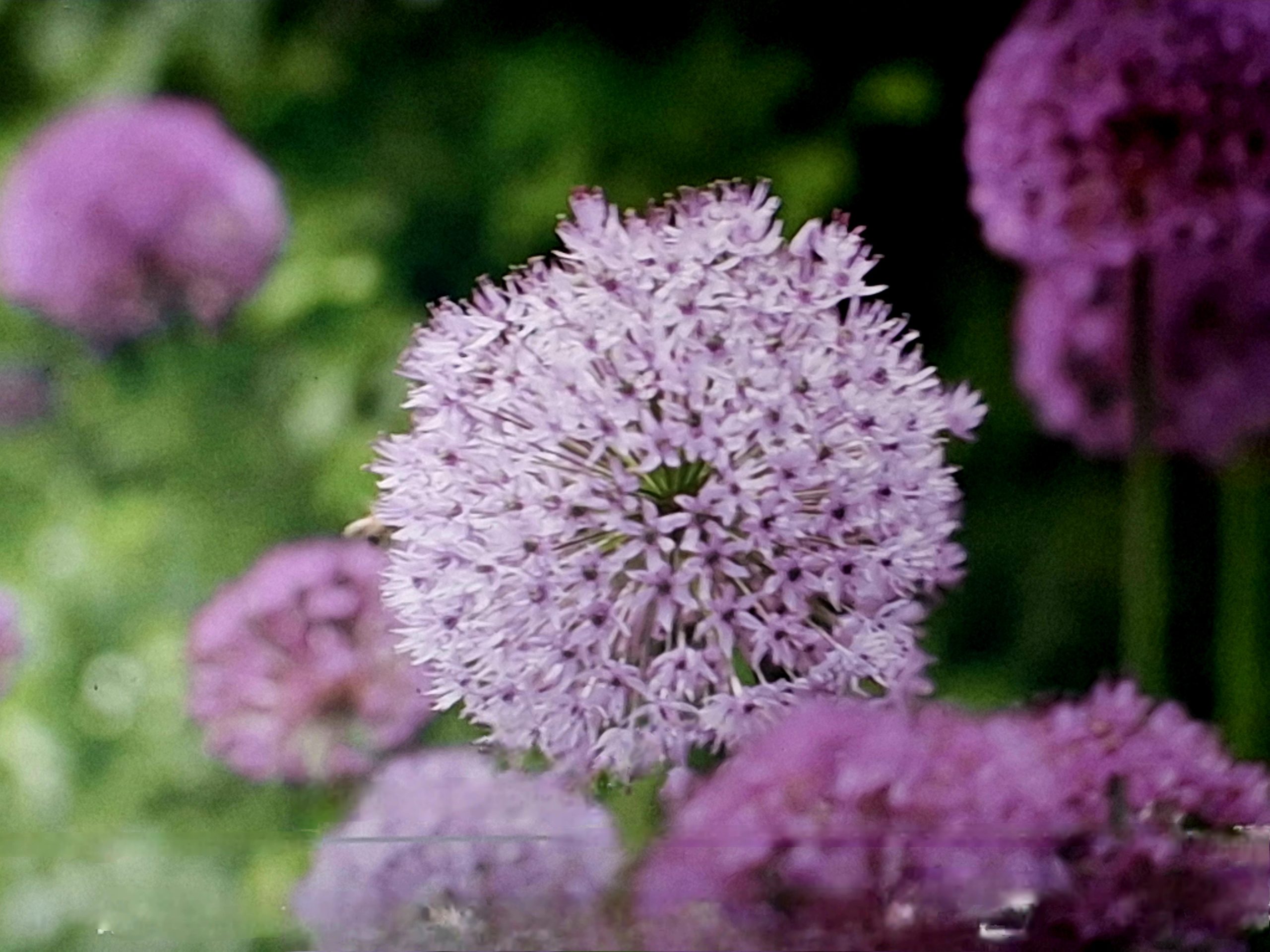
Closeup of umbels of brilliant purple flowers in various shades against green grass and stems.
Image c/o Jacques Fleury

Federico Wardal highlights the work of holistic physician Dr. Antonello Turco and how his medical practice is a work of art. Nidia Garcia celebrates the creativity and insight of a weaver who tells the story of her people in cloth. Taylor Dibbert shares an amusing anecdote about sartorial fashion choices and lost luggage.

Jacques Fleury’s “The Color Purple” is a vibrant meditation on heritage and symbolism, exploring how shades of purple evoke nobility, spirituality, emotion, and the richness of human experience. Normatova Sevinchoy reflects on the nature of beauty and finds it through elegant simplicity. Kelly Moyer’s films explore the relationship between life and all things through the disposal and dissolution of human-built objects.

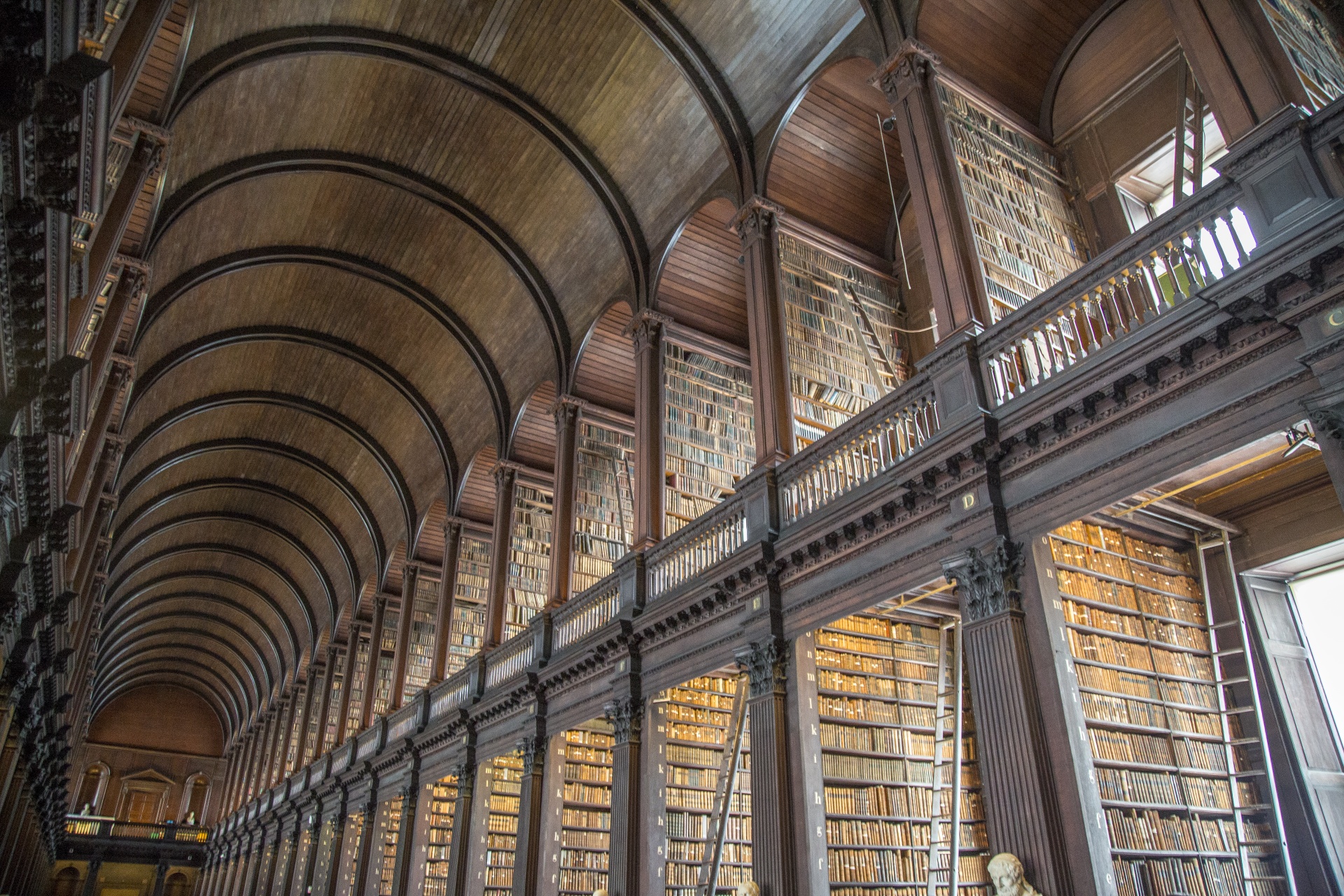
Literature and writing are integral parts of human creative culture. Contemporary Uzbek literature blends tradition and modernity, emphasizing national identity and the Uzbek language. Abdulazizova Nigina Faxriddin qizi’s article “Developing Speech Culture of Primary School Students” examines methods to enhance young learners’ oral and written communication, emphasizing interactive strategies, cultural awareness, and the link between speech skills and social participation.

Library at Trinity College, Ireland. Arched ceiling, many floors of books, open windows and sunlight, ladders.
Image c/o George Hodan

Zuhra Jumanazarova expresses that preserving the literary quality of the Uzbek language is integral to preserving Uzbek culture. Muhayyo Toshpo’latova’s essay explores how contemporary Uzbek literature balances tradition, national identity, and digital-age innovation. Nilufar Yusupova discusses advantages and challenges posed by online education. Masharipova Unsunoy outlines strategies for improving student public speaking competence. Dilafruz Karimova evaluates various methods for teaching English as a second language. Rashidova Lobar’s “Mother Tongue” is a heartfelt tribute to the Uzbek language, celebrating it as the nation’s soul, heritage, and eternal source of pride and unity.

Mickey Corrigan’s poetry honors the survival, grit, and literary mastery of novelist Lucia Berlin. Grant Guy’s artwork evokes the creative spirit of decades-ago absurdist No! theater. Christina Chin and Kim Olmtak’s tan-renga poems promise adventure on the horizon. Scott Derby’s poem draws on The Odyssey, exploring a journey of trials and self-discovery, ultimately evoking a return to faith. Inga Zhghenti reviews Armenida Qyqja’s collection Golden Armor, about the quest of the human spirit for survival amidst adversity.

Peter Cherches’ vignettes explore through gentle humor how we make decisions and set up our lives. James Tian reminds the faithful to use their God-given brains, even in church.

Stylized image that looks like strips of white paper of a woman with flowing hair in a white dress playing the violin surrounded by white flowers.
Image c/o Omar Sahel

Janna Hossam’s essay explores the fleeting nature of achievement and the trap of “fast dopamine,” urging a shift from chasing external validation to finding lasting fulfillment in steady, meaningful growth. Sharifova Saidaxon advocates for balance in the use of social media and online entertainment. O‘rozboyeva Shodiya’s essay “How Social Media Affects Young People” reflects on the dual impact of social media, highlighting its benefits for learning and reading while cautioning against distraction and over-immersion in the virtual world.

Brooks Lindberg’s poem wittily questions the nature of facts, blending philosophy, mathematics, and law with humor and skepticism. Candice Louise Daquin reviews John Biscello’s novel The Last Furies, which evokes themes of tradition, vaudeville, religion and mysticism.

Turkan Ergor reflects on how people’s strongest desires and best-laid plans don’t come to fruition. Dr. Ashok Kumar expresses the peace found through surrendering to what we cannot control.

Black woman in a painting, with short hair and her head on her hand, in a red tee shirt, lost in thought. Blue background.
Image c/o Circe Denyer

J.T. Whitehead’s Nocturnes are haiku-inspired reflections on art, history, and personal experience, capturing quiet joy and solitude. Christina Chin and Marjorie Pezzoli’s collaborative renga blends fragmented, stark imagery with a conversational, experimental flow, exploring tension, vulnerability, and the raw textures of experience. Derek Dew’s poems “To Come” and “What is Ours” delve into language, memory, and moral stillness, blending abstraction and lyricism to explore identity, silence, and the elusive nature of meaning. Sayani Mukherjee’s “God’s Hands” is a dreamlike meditation on time and memory, shimmering with blue skies and fleeting wishes. Vo Thi Nhu Mai’s “Harbour of the Changing Season” is a tender, reflective meditation on love, loss, and the passage of time, finding beauty and peace in the rhythms of nature and the flow of life.

Duane Vorhees’ poem “ORH” tenderly portrays love as cleansing and transformative, merging identities like rain washing away dust. Amina Kasim Muhammad advocates kindness and humanity. In a similar vein, Maja Milojkovic reflects on the value of a human soul as measured by the person’s compassion and integrity. Ruzimbayeva Quvonchoy Jamoladdin qizi’s essay highlights Uzbekistan’s national values as the enduring heart of the nation, shaping identity, unity, and moral life.

Yodgorova Madina also celebrates traditional Uzbek values such as diligence, hospitality, respect for the elderly, the young, and women, honesty, and compassion and urges modern Uzbeks to pass down those values. Jumanazarova Muxlisa’s essay highlights women as the vital foundation of Uzbek society, shaping history, education, and leadership. In the same vein, Egyptian writer Adham Boghdady’s poem portrays a woman as a radiant, inspiring presence who lights up hearts and the world. Dildora Khojyozova’s essay “Kindness and Humanity in the 21st Century” emphasizes the enduring importance of empathy and compassion amid technological and social change, arguing that true progress depends on how we treat one another.

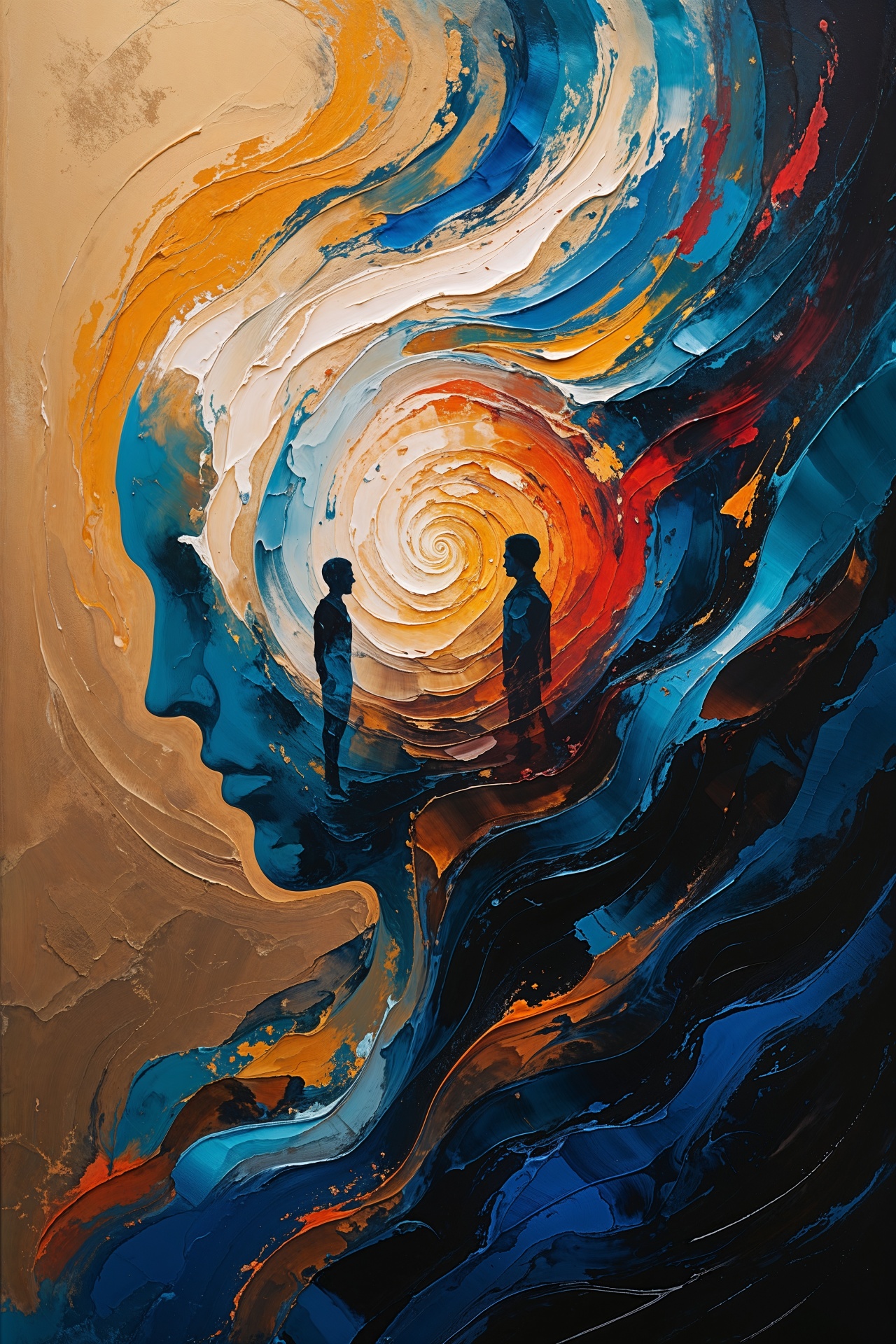
Stylized red and blue and yellow and white oil painting of two figures facing each other inside of a blue head in profile.
Image c/o Gerd Altmann

Abbas Yusuf Alhassan’s long poetic piece illustrates the different facets of love as expressed through grief. Elmaya Jabbarova’s poetry intertwines love and grief. RP Verlaine comments on what brings people together and what divides us. Eldar Akhadov ponders the mental distance that inevitably separates everyone.

Turdiyeva Guloyim’s “I’m Tired, Mother!” expresses profound loneliness and disillusionment, lamenting false friendships, cruelty, and the harshness of the world, while yearning for genuine human connection. Kandy Fontaine’s “Nepantla, The Tipping Point, Deep Time: A Conversation Between Worlds” examines the intersections of literature, identity, and planetary change, using the concept of Deep Time to reflect on societal fear, power structures, and the urgent need for transformation. Mirta Liliana Ramirez reminds us that powerful people exist who prey on the vulnerable. Patricia Doyne surveys the sentiments at a San Francisco Bay Area No Kings rally. Aubrey Malaya Lassen’s poem “The Call” confronts misunderstanding and oppression, using vivid animal imagery to explore awareness, resistance, and the refusal of power to recognize truth.

Bill Tope’s “The Gauntlet is a tense short story following Anais, a Haitian refugee, as she navigates an unsettling encounter with police in a small Ohio town, exploring themes of fear, vulnerability, and power. Ahmed Miqdad’s poem reflects on the horrors of violence and displacement, using stark imagery of blood and silence to evoke grief and loss. Emeniano Acain Somoza Jr. writes of humans eking out existence in the shadows of ageless deities and harsh weather. Stephen Jarrell Williams crafts a slow piece on calm preparations as an apocalypse looms.

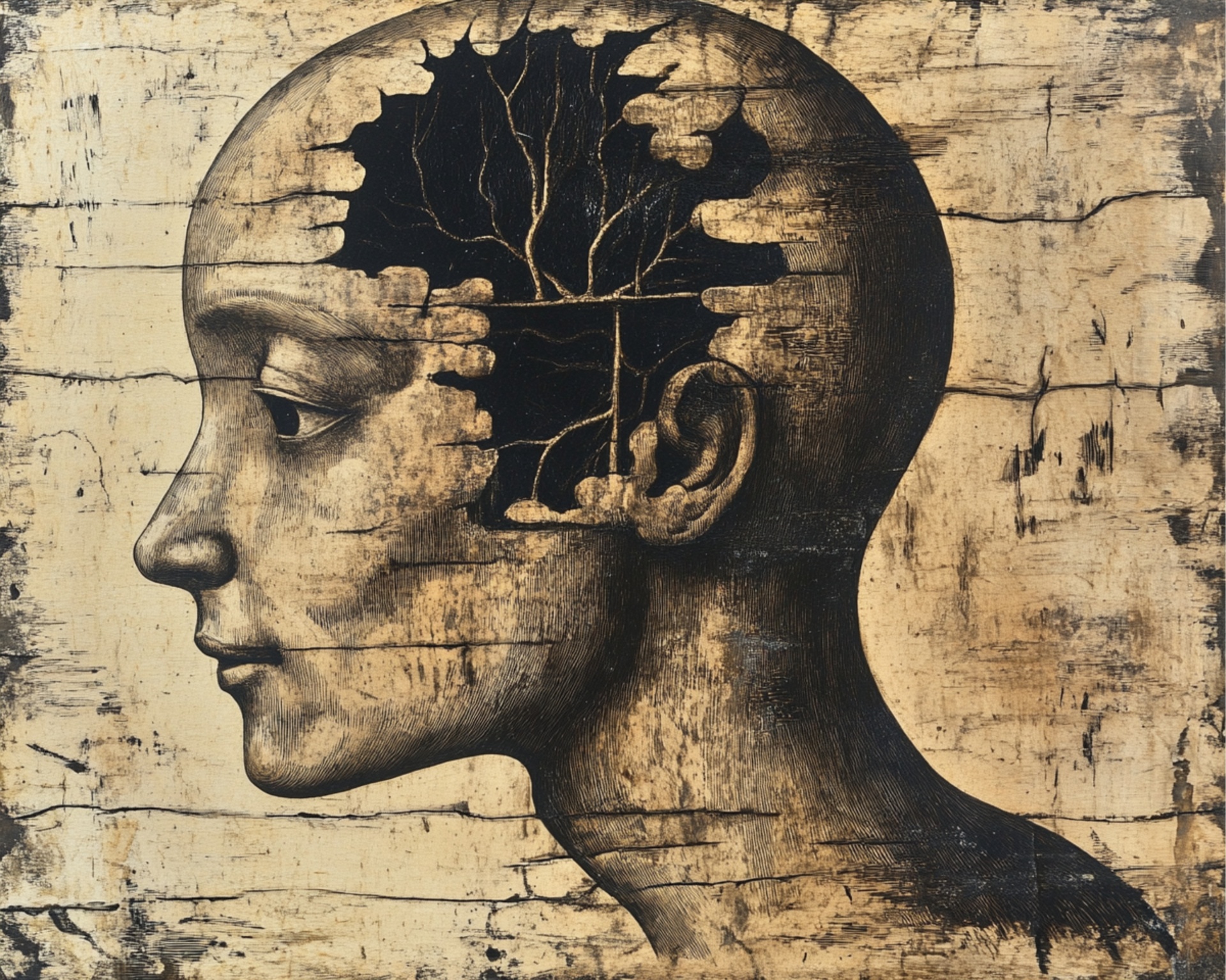
Sepia tone vintage illustration as if in stone of a woman's bald head in profile. Hole in her head with a barren tree.
Image c/o Linnaea Mallette

J.J. Campbell illustrates the lingering effects of trauma on a person’s life and psyche. Mykyta Ryzhykh’s poem juxtaposes stark, unsettling images with fragile signs of life, capturing the raw and abrupt entry of innocence into harsh reality. Alexa Grospe personifies the pain and terror of stage fright and writers’ block. Philip Butera views life from the panoramic perspective of one nearing death. Ablakulova Dilfuza’s essay “My child, if I leave, you won’t find me again” is a poignant meditation on solitude, aging, and loss, vividly portraying the emotional landscape of a woman left alone, clinging to memories as her world darkens. Adewuyi Taiwo’s short story “A Star Called Priye” explores themes of family secrets, grief, and quiet strength.

Duane Vorhees’ review of Taylor Dibbert’s On the Rocks explores his Bukowski-inspired style—plainspoken, raw, and grounded in everyday struggle—revealing a candid search for freedom from pain. Rizal Tanjung’s review of Eva Petropoulou Lianou’s “Freedom” highlights the poem’s haunting imagery of two wingless birds, portraying freedom as both a lost ideal and a visceral, human necessity.

Jabborova Vasila comments on how medicine can address psychological changes in some heart transplant patients. Melita Mely Ratkovic’s poem urges the speaker’s friend to heal and love themselves again after trauma. Ramona Yolanda Montiel wishes all her readers simple joys and gentle comfort.

White kaleidoscope style image in the center of a brown and off white pattern.
Image c/o Royal Innovation Stamp

Eva Petropoulou Lianou’s “Miracles” celebrates everyday wonders, human connection, and the light of faith amid darkness. Jeanette Eureka Tiburcio’s poem honors resilience and hope, invoking golden children as symbols of strength, growth, and the enduring light amid adversity.

We hope that this issue serves as a guiding light as you ‘sip and see’ the many forms of human thought and feeling from around the world.

Candice Louisa Daquin reviews John Biscello’s novel The Last Furies

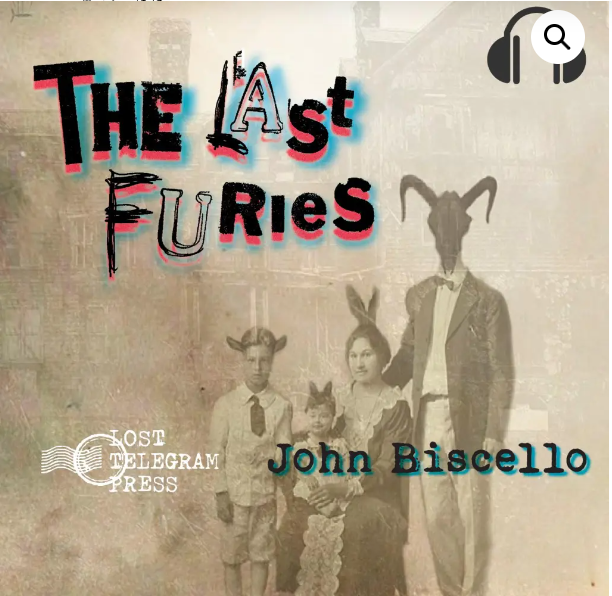
Letters in various fonts spell out "The Last Furies" on the cover of John Biscello's novel. The sepia toned background shows an old house and people of varying ages and genders dressed as demons, rabbits, or rams.

Did you notice that there aren’t any mirrors in here?

John Biscello’s 5th novel, The Last Furies, is a redolent, speculative box of matches; evoking his characters mosaiced spiritual reckonings; disjointed love triangles and haunted house of mirrors; in a taut avant-garde and hybrid-writing-form which boldly experiments with poetry and prose that is both lyric narrative and dreamscape, not unlike Elizabeth Smart’s surrealist prose poem novel By Grand Central Station I Sat Down and Wept.

With a background in screen-writing, these influences are Biscello’s nod to cinema and emphasis on art and visual components, often eschewing traditional formatting, in keeping with surrealist writer Mikhail Bulgakov’s style, to explore emotion and spiritual quests, without typical rule-book. The publishers, Lost Telegram Press, have created an artbook with interior postcard, to complement this fragmentary style, where cinematic-scene-play, sits with a lush dream-style, reminiscent of French New Wave in its refusal to explain itself.  A screen-play within a novel, permitting entry from our own ubiquitous world, to this discomfiting navarre.

Biscello utilizes elaborate world-building images; icons, tarot and psychological-affliction, to represent erasure by the passing and haunting of nonsequential time. His philosophical introspection engages readers to question abstractions of identity, with narratives taking inner journeys. Those phantasmagoric elements are not simply beguiling to consume, but serve as totems to explore more multiplex themes concerning society. A blurring of reality into dream state, permits Biscello to draw on less prosaic narratives and convention, to explore camouflaged-themes of reality and perception, not unlike Aldous Huxley’s eponymous book. This results in an unsettling atmosphere exemplifying humanities primal fear of chaos and instability, where we mislay our ability to comprehend truth; seeing instead, the fragility of reality through surrealism.

Viola felt as if she were watching a scene from a film that had never been made, in a time and a place that had never existed.

Surrealism in film attempted the same; film-makers endeavored to tap into the unconscious mind, harnessing the seeming illogic of dream state, to reject norms of rationalism and conventional storytelling. Biscello employs kindred jarring, symbolic imagery; borrowing film-techniques of non-linear editing in how he writes, to disorientate and provoke deeper consideration. His writing mirrors surrealists attempts to revolutionize cinema from passive diversion, into a tool exploring hidden desires, fears, and different layers of reality, beyond usual consciousness, much as writer/artist Leonora Carrington did. Biscello invites us to suspend time and merge histories, with less scene-breaks and; “intimately swapped semblances of reality.”

The Furies is part memory and nostalgia, part journey toward grasping identity and a powerful social commentary on the absurdity of the crushing weight of tradition, in a similar vein to Jorge Luis Borges and Gabriel García Márquez. “Why so much fear of masks? Because the tears we cry burns acid through em which devours our skin.” All writers consider ‘the unreliable selfhood’ whereby phantasmagoric storytelling skews perceptions of reality, based on mis-en-scene’s instability. These fantastical disparate elements and gathering of icons, mirror a deeper psychological break; considering trauma and madness as part in any stories tapestry.

Biscello’s startling evocation of spectral vaudeville alongside theater, draws these influences to break free of the mortal actors’ stage, weighing his character’s inner-lives beyond performance. Questions of where we go when we exceed our fictional-lives, can be applied to the reader as much as fictional-character, because as a universal question, in an increasing artificial reality, we’re already experiencing this disassociation. With a mystical radio that can defy time and space, through main protagonists, Viola, Evie and Arturo; an actress, playwright, and poet, Biscello engages phantasmagorical means to transcend history and ask germane questions.  Considerations of whether technology is dreamed into existence, or means of entering a private esthetic, creating an immersive atmospheric dreamworld and interfacing like radio-waves do? What was once disparate, permits us to see differently; against an allegorical shamanistic universe, seeking the unknown, in a collectivized unconsciousness.

Biscello possesses no literary canon or convention; his surrealist annotations stir in evocative desertscapes, whose inhabitants exist as characters from Tarot, poetry, Joan-of-Arc inspired suicide cults, mystics and artistic-outsiders. Carl Theodore Dreyer’s 1928 silent film The Passion of Joan of Arc, is one of the fundamental components in The Furies; intersecting narrative, whereby Artaud, claimed his ouvre; “was intended to reveal Joan as the victim of one of the most terrible of all perversions: the perversion of a divine principle in its passage through the minds of men, whether they be Church, Government, or what you will.” These metamorphic tours through the mutable wilds of persona, are backdrops for profound undertone, alongside an erudite exploration of unreality, mirroring the character’s inner-world. The novel’s atmosphere itself, becomes a character, with its own influence.

Phantasmagorical novels operate on the impossible and illogical, rarely explaining anomalous events within their narrative. Releasing the need for a clear set of rules for their magical system; magical realism can feature fantastical events, in the real-world, utilizing ghosts and prophecy in a philosophical, puzzle-like introspection They explore vertiginous intellectual conceits, not least; parallel realities, which permit the fantastical to be plausible. The bizarre metamorphosis of protagonists, slipping into a phantasmagorical realm, allow obscure magical elements like a radio, to be key tools in exploring more psychological themes of isolation and belonging.

Biscello’s reality is a threshold hallucination, considering individual perceived reality, against a shared universe outside the laws of time, ultimately begging us to imagine, what would we find? Both in ourselves and without.

Phaedra, Phaedra, was it all a dream?

I’m now sealed in and withering

Having lost the golden key.

Candice Louisa Daquin is the author of several poetry collections, and her debut novel, The Cruelty, will be released on November 25th, 2025 (FlowerSong Press).

John Biscello’s The Last Furies is available here.

Essay from Ruzimbayeva Quvonchoy Jamoladdin qizi

National Values The Heart of the Nation

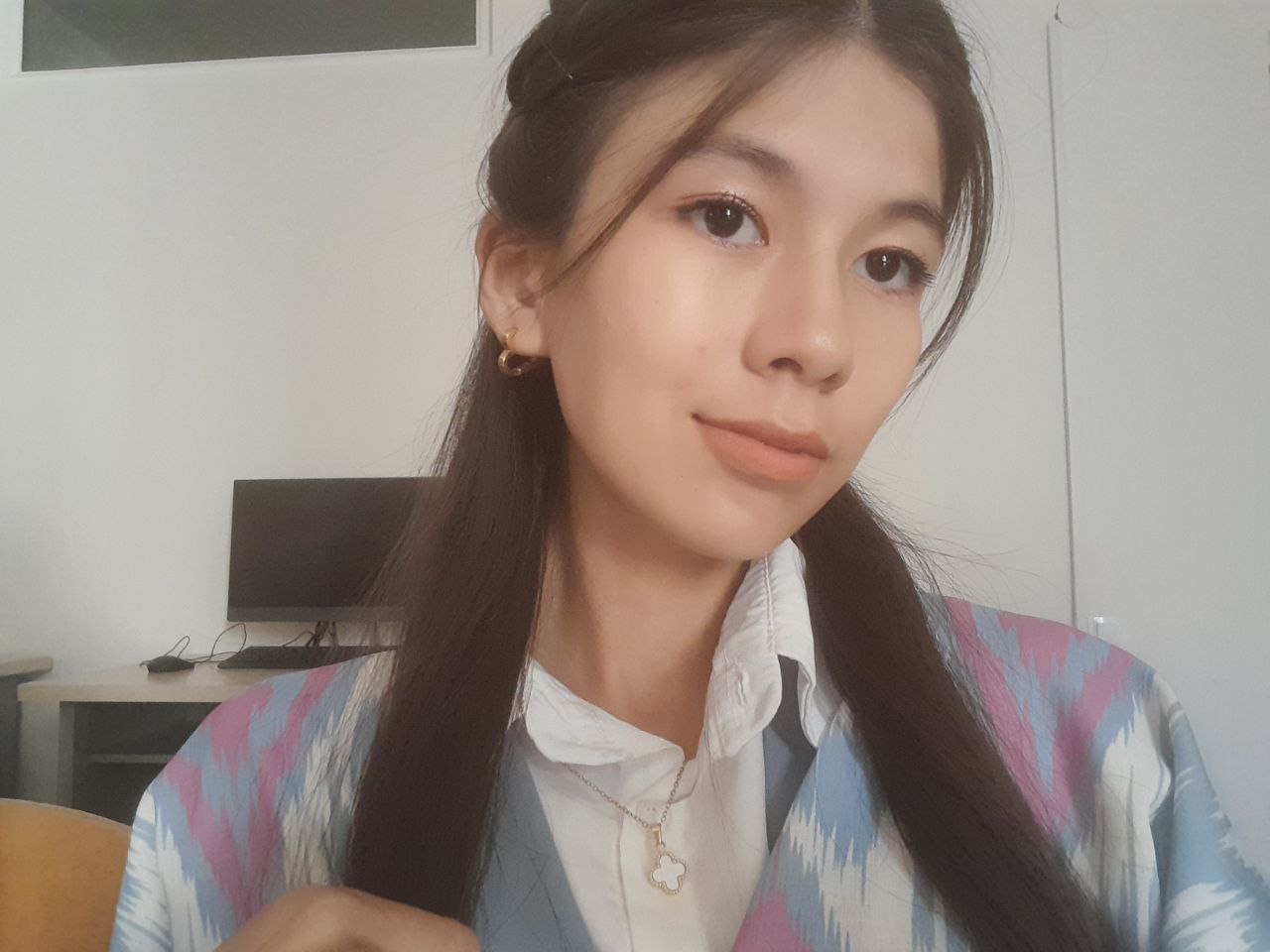
Central Asian young woman with long dark hair and brown eyes in a pink and blue and white vest and white collared shirt.

Every nation has a heart. As long as that heart beats, the nation lives, awakens, and endures. For the people of Uzbekistan, that heart is our national values. Values unite the people, bring them back to their roots, and awaken pride and love in their hearts. In today’s rapidly changing world, preserving and remaining faithful to national values means safeguarding spiritual independence. National values embody a people’s history, language, religion, customs, beliefs, and way of life.

Main Part

National values are the spiritual roots of a nation. Just as a tree cannot survive without roots, a person cannot live without values. The values of the Uzbek people have endured through centuries and never disappeared. In every era and generation, they have acquired new meanings and served as a mirror of our nation’s spirit.

From ancient times, our people have lived by the belief: “The homeland is sacred, parents are dear, and the guest is a blessing.” Traditions such as weddings, holidays, hashar (community work), Navruz, and Ramadan all teach kindness, compassion, and respect for one another. These customs reflect our people’s moral world, dignity, and love.

National values are not just historical heritage — they are a living part of our everyday lives. For example, greeting our parents every morning, beginning a meal with bismillah, and treating guests with honor — these simple acts represent the living expression of our culture, formed over centuries.

In the era of globalization, some young people are influenced by foreign cultures and tend to forget their own values. However, modernity must never contradict national identity. True progress is achieved by relying on one’s national values while striving for innovation. As President Shavkat Mirziyoyev stated: “National values are the soul of the people, and preserving them is our sacred duty.”

Indeed, our people’s hospitality, patience, tolerance, respect for women, and trust in youth all express our national pride. National values are also vividly reflected in folk art: love in our fairy tales, bravery in our epics, and life lessons in our proverbs. Sayings such as “He who is one with his people will be honored by them” and “Serve your people as you would honor your father” have long called our nation to unity. Today, national values play a vital role in the education of youth.

Because today’s youth are tomorrow’s leaders, scholars, teachers, and farmers — the future of the country. If they know and cherish their national values, they will never fall under alien influences. They will be proud of their land, language, and flag, and see service to their motherland as their sacred duty. Therefore, every educational institution and family should plant the seeds of values in young hearts. National values unite and strengthen a nation — they are the spiritual chain that binds generations together. By preserving and harmonizing our values with modern life, we can elevate our nation to new heights.

Each value carries within it our people’s historical memory, dreams, and honor. The heart of a nation beats within its values. If that heart stops, the nation loses its identity. Therefore, we — the youth — must love, protect, and pass down our national values in their purest form to future generations. National values are not only the memory of the past — they are the pride of today and the foundation of tomorrow. As long as they live, our nation’s heart will continue to beat — strong, proud, and eternal.

Ruzimbayeva Quvonchoy Jamoladdin qizi was born February 8, 2007, in Urgench District, Khorezm Region, Republic of Uzbekistan. The participant of the regional subject Olympiad in the 2023-2024 academic year.Currently a student at Urgench State University.

Poetry from Graciela Noemi Villaverde

C:\Users\user\Downloads\download (41).jpg

(Light skinned Latina woman in a shiny blue top with a stylized pink and purple background).

My Mom (In Memory) 

She wasn’t the rising sun, 

but the gentle breeze of dawn 

that caressed my face. 

A faithful companion, 

a sturdy oak tree in the storm, 

she knew how to console my childhood tears, 

transforming them into fresh dew. 

A mother of four, 

a juggler of time and love, 

while Dad sailed the seas, 

she was the safe harbor, 

the beacon that guided our dreams. 

She was the most beautiful flower in the garden, 

with the sweet scent of jasmine 

that filled our home in Concepción 

del Uruguay, Entre Ríos. 

Kind, generous heart, 

a mighty river of affection, 

loved by all, 

she left a trail of light 

with every step. 

My mom is not just a memory, 

but the constant melody 

that resonates in my soul. 

She is the star that guides my path, 

the warm hug that comforts me, 

the unconditional love that 

sustains me, 

even though she is no longer 

physically present. 

GRACIELA NOEMI VILLAVERDE is a writer and poet from Concepción del Uruguay (Entre Rios) Argentina, based in Buenos Aires She graduated in letters and is the author of seven books of poetry, awarded several times worldwide. She works as the World Manager of Educational and Social Projects of the Hispanic World Union of Writers and is the UHE World Honorary President of the same institution Activa de la Sade, Argentine Society of Writers. She is the Commissioner of Honor in the executive cabinet IN THE EDUCATIONAL AND SOCIAL RELATIONS DIVISION, of the UNACCC SOUTH AMERICA ARGENTINA CHAPTER.