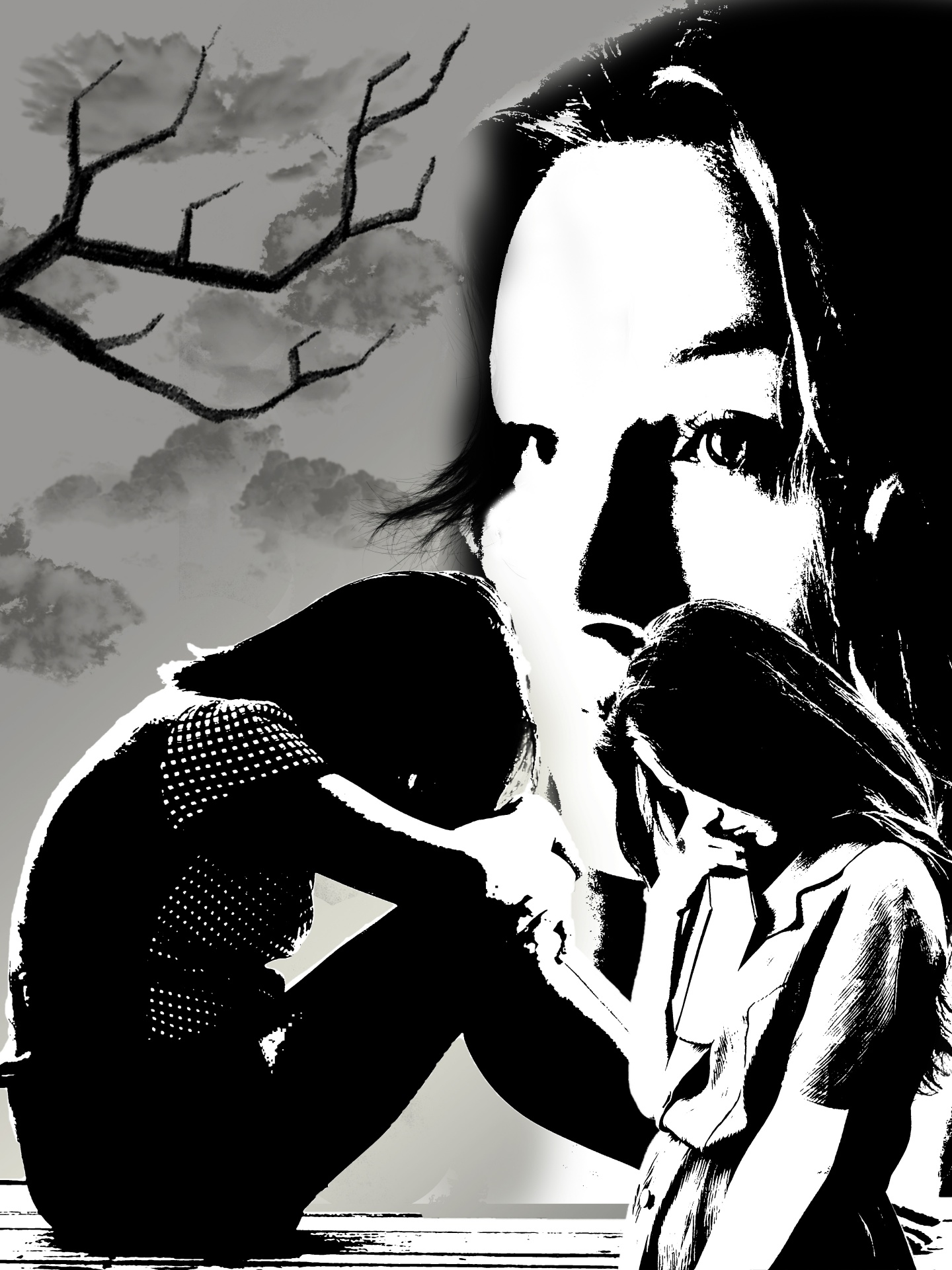
The heart, a scratched record repeating the same melancholic song,
a melody of regrets and missed opportunities.
Its needle, stuck in the past, prevents a new song from playing.
Hope, a small plant in a cracked pot,
struggling to survive in arid soil.
Its roots, weak and thirsty,
desperately search for a little water in the dry earth.
Life, an incomplete puzzle,
with missing pieces we’ll never find.
Its scattered fragments, disjointed memories,
prevent us from seeing the whole picture.
Silence, a heavy marble slab that weighs on the chest,
preventing emotions from flowing freely.
Its relentless cold envelops us in a profound loneliness…
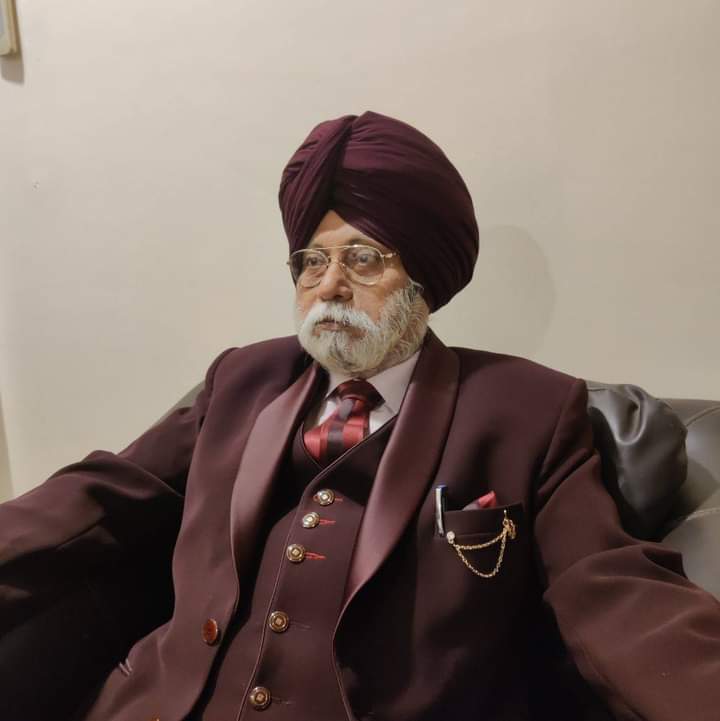
GRACIELA NOEMI VILLAVERDE is a writer and poet from Concepción del Uruguay (Entre Rios) Argentina, based in Buenos Aires She graduated in letters and is the author of seven books of poetry, awarded several times worldwide. She works as the World Manager of Educational and Social Projects of the Hispanic World Union of Writers and is the UHE World Honorary President of the same institution Activa de la Sade, Argentine Society of Writers. She is the Commissioner of Honor in the executive cabinet IN THE EDUCATIONAL AND SOCIAL RELATIONS DIVISION, of the UNACCC SOUTH AMERICA ARGENTINA CHAPTER.
The market does not support any idea which does not contribute to the further disintegration of the society. – Anand
Dr. Jernail S. Anand
Whatever is administered best, is the best was a highly misleading statement by Pope, but it is considered a gospel truth by the people who have never rested their faith in the best.
Let me first define the best. The unadulterated best of a society are the intellectuals who do not know politics, and who think of a society which is based on the principles of equality, shared affluence, power to each part of the body politic, and finally peace and harmony. But it is no more than a compulsive dream because the people think from the body, not from the mind.
The society moves forward with two basic factors: money and power. Power grows out of the coffers of a rich person. And power has a powerful sense of living with the second best only for whom higher considerations of life matter little. Money is the essential virtue of a society which believes in Power. The best of men, the intellectuals, the thinkers, the visionaries, the people who sit in their ivory towers, sculpting theories yield ground to people who sculpt strategems sitting in the kitchens cabinets. The second and third best, who grab power and the sources of wealth, now have a great responsibility to maintain status quo so that they can stay in power. And, it is here that the worst of the civilization rests.
The society moves forward. If you try to find the crop of the best among teachers, lawyers, professionals, politicians, bureaucrats, business men. you will be disappointed because the best have suicidal tendencies, and we find the second best, the third best, and then, even the worst, in the driving seat.
The society which believes in money and power, soon finds itself lost to the whims of the second best people and their dreams of power. Had the right people been in the driving seat, the world would have been a better place to live in. But because it is driven by insane passions and manipulated by crafty people, we now have a total confusion of values. This world never believed in the best. The best were grounded, ignored and even insulted, simply because they did not believe in pushing forward, or staying in power, by playing foul with their principles.
It is a murderous society, which has lost all sense of the moral and the ethical, and believes in nothing but power, wealth, fame and self-survival. The survival of the fittest means the fittest is the best. We are alive now, among the people who proved themselves the best and the fittest to survive. And it is an amalgam of power, craft and guile which helped people to stay in power, and rule the world. Can we expect joy and happiness in a world in which divine factors of existence were disregarded and disrespected?
The best values of this society are not goodness, kindness, love, compassion, and sacrifice. People are trained not to believe in any such thing, which smacks of medievality. Modernity lies in broken families and broken nerves, and a confusion and chaos, in which your own body parts find themselves in a state of rebellion. If this is not so, you are living in a society, which is not post-modern. As the real life thrust is found in the cities, the virus of postmodernity is spreading fast to the villages also, which believed in peace and tranquility.
What a man by default needs: a house, a wife, a job and an environment which supports life. What a man of wisdom requires: wealth and power. He does not believe in a house or a family. As such, he has no desire for peace either. He wants thrill in his life, even if it kills.
It pains me to think that everywhere, the society is being run by people who are second best. Who are best at their own survival. Who believe that the best men must be consigned to the libraries. The market does not support any idea which does not contribute to the further disintegration of the society. The world’s dadas want more confusion in social ranks, where men fail to find their feet, and their minds are lost in a maze of confusing passions, shorn of ideals. What finally describes this world is: There are no role-models. No examples to be set and followed. No men of character. No people who fight for their principles. The passion with which our elders fought for our freedom, we are fighting with equal passion for dissolution of that dream. The best people found themselves on the gallows, leaving their dreams to their own destiny, in the hands of the second best, who thrive on what they [the best] never thought of. A society minus all scruples. A society which believes in the second best. A society which exalts the worst. And a world which is run by men who possess no faith in essential values of life. By reverse logic, they are promoting the death of the divine, whether it is the divine will, remains to be seen.
[Dr. Jernail Singh Anand, [the Seneca, Charter of Morava, Franz Kafka and Maxim Gorky awards Laureate, with an opus of 180 books, whose name adorns the Poets’ Rock in Serbia]] is a towering literary figure whose work embodies a rare fusion of creativity, intellect, and moral vision. He’s not just an Indian author but a global voice, challenging readers to confront the complexities of existence while offering hope through art and ethics. His legacy seems poised to endure as a beacon of conscience in a turbulent world. If Tagore is the serene sage of a colonial past, Anand is the fiery prophet of a chaotic present. Anand’s genius lies in his relentless ambition and ethical depth. Anand may well be considered as the conscience of the 21st century, carving a unique niche among Indian English writers with a voice that resonates globally while remaining fiercely Indian.]
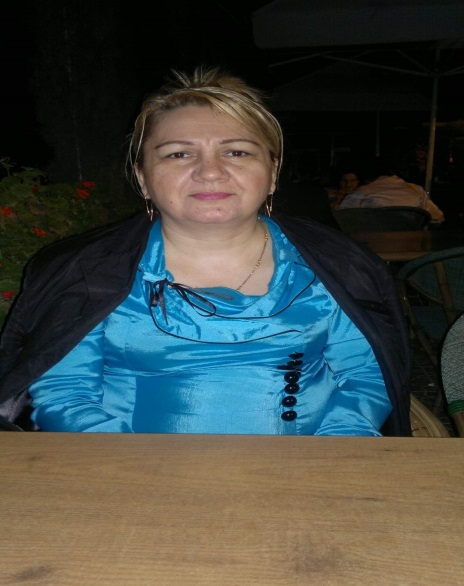
Nigar Nurulla Khalilova is a poet, novelist, translator from Azerbaijan, Baku city, currently in the Kingdom of Saudi Arabia. She is a member of Azerbaijan Writers Union. Nigar N. Khalilova graduated from Azerbaijan Medical university, holds a Ph.D degree. She has been published in the books, literary magazines, anthologies and newspapers in Azerbaijan, Russia, Saudi Arabia, USA over the years. Nigar N. Khalilova participated in poetry festivals and was published in the international poetry festivals anthologies. Conducted data in the Austin International Poetry Festival (AIPF), 2016-2017.
Poet and essayist Abigail George, whom we’ve published many times, shares the fundraiser her book’s press has created for her. She’s seeking contributions for office supplies and resources to be able to serve as a speaker and advocate for others who have experienced trauma or deal with mental health issues.
Also, the Educational Bookshop in Jerusalem, a store that has the mission of peaceful dialogue and education, invites readers to donate new or gently used books (all genres) that have been meaningful to them, with a note enclosed for future readers about why the books were meaningful. (The books don’t have to be about peace or social justice or the Mideast, although they can be). Please send books here. US-based Interlink Publishing has also started a GoFundMe for the store.
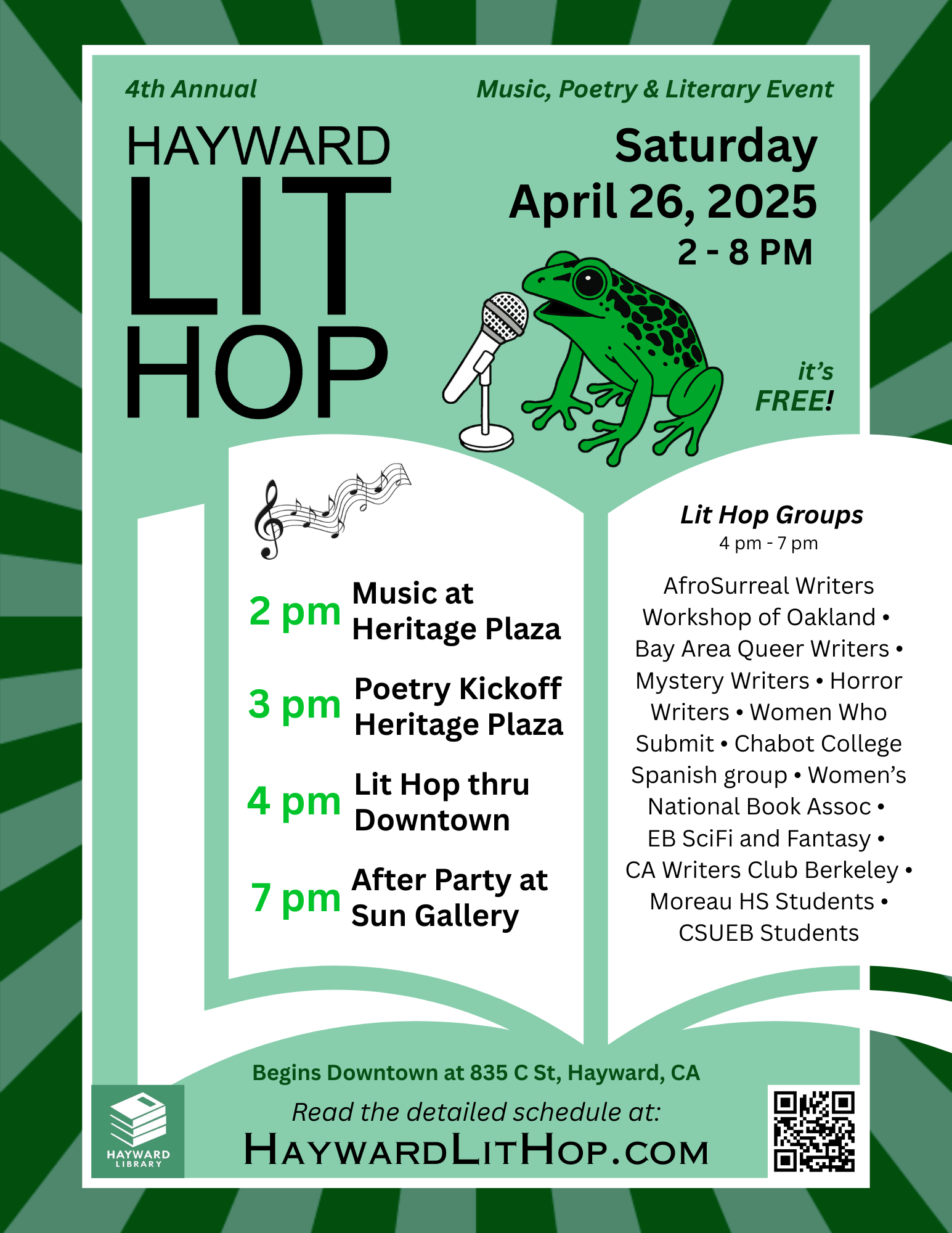
We’re also having a presence at the Hayward Lit Hop festival this year, and we encourage everyone to attend this free, all-ages event! Many local writers will share their work and we will also host an open mic.
This month’s theme is Journeying Inward.
Lidia Popa seeks her true self, believing in the value of her quest. Samira Abdullahi acknowledges her scant resources and the obstacles before her, yet bravely forges ahead towards her life’s goals. Xavier Womack expresses determination to stay free of a relationship that has turned controlling and toxic.
Maurizio Brancaleoni crafts bilingual English/Italian introspective vignettes. Philip Butera reflects on noticing different types of flowers throughout his life, paralleling his different moods. Christina Chin of Malaysia and Paul Callus of Malta collaborate on haiku resplendent with action and sensory detail about the minutiae of human life, highlighting how even smaller thoughts matter.
Charitha Jammala’s mystical poetry probes the depths of the human mind and soul, celebrating our inner essence and integrity. In elegant poetry, Haroon Rashid reminds us to look inward to find joy and peace rather than expecting it from the outside world. Alex S. Johnson revels in the dreamscape of human consciousness in his expansive poem.
Beatriz Saavedra Gastelum probes the power of dreaming to explore human consciousness in Alfonso Reyes’ writing. Christina Chin and Uchechukwu Onyedikam collaborate on haiku capturing the delicacy and deliciousness of creative tension and human spiritual journeys. Fatima Anisa Ibrahim depicts the peace she finds upon sleeping, waking, and beginning a new day.
Stephen Jarrell Williams’ poetic cycle drums up a sense of urgency, evoking human mortality and spiritual quests. Peter Cherches speaks of time and memory, incidents that make us, small puny humans as we are, question all that we remember. Mykyta Ryzhykh renders the dissolution of language and identity through creative poems. Alaina Hammond probes the effect of present experiences to shift memory and identity in her drama, set at an art opening. J.K. Durick’s poems also address identity in a way, pointing out human experiences we face individually, yet share with many around the world.
Philip Butera’s lengthy poem explores existence, seduction, and morality through a lens of mutable personal identity and the archetypes of Greek mythology. Two literary critics, Dr. Selvin Vedamanickam and Grock, explore the struggle of individual people in a world that seems indifferent in Dr. Jernail S. Anand’s epic poem Geet: The Unsung Song of Eternity.
Bhagirath Choudhary’s piece honors and includes the feminine as well as the masculine in what it means to be human, and divine. Jacques Fleury, a Black man from Haiti, asserts his belonging to the universal human family regardless of racial distinctions.
Patrick Sweeney writes disconnected short pieces with an element of whimsy that explore our curiosities and obsessions. Duane Vorhees’ poetry revels in earthy sensuality and explores questions of personal identity, reality, and fantasy.
Kylian Cubilla Gomez’ images focus on fun and imagination in his images of children’s toys. Ochilova Ozoda Zufar shares a children’s story about travel, friendship, and new experiences. Abigail George reflects on her life’s trajectory, how circumstances made her the mother of words rather than human children.
Elan Barnehama’s short story places us back in our early twenties, when many of us were still making major life decisions. Still, many people past that age express similar sentiments. Tagrid Bou Merhi affirms the drive towards personal and artistic freedom. Anna Keiko reflects on how she has followed the call of poetry in her life. Chad Norman’s brash poetry celebrates the freedom to do and say and love as he wishes in his native Canada.
Doug Hawley relates his experiences in the natural vastness of mountainous and lesser-known eastern Oregon. Maja Herman Sekulic’s speakers lay exposed in the city, under the weight of human emotion as much as the heat of the sun and the relentlessness of the rain.
J.J. Campbell conveys regret, despair, and the lingering effects of a broken past. Mark Young’s poetry presents with wry humor dreams pursued and derailed. Susie Gharib’s work reflects the anxiety and discomfort of the human condition and her desire to find and choose peace. John Dorsey’s speakers seek various forms of comfort and stability.
Brian Barbeito reflects on the life and death of his beloved dog, Tessa. Taro Hokkyo’s short poems speak to grief and loss, ending on a note of regrowth.
David Sapp speaks to the lingering psychological impact of physical and mental loss during the American Civil War. Dennis Vannatta’s essay explores the wartime inspirations for some of Chopin’s music and compares that with his own Vietnam experience.
Fadwa Attia reviews Mohamed Sobhi’s new play “Fares Reveals the Hidden” which explores identity, homeland, and belonging. Dr. Kang Byeong-Cheol speaks to loneliness, nostalgia, and empathy.
Atabayeva Gulshan examines loneliness through the lens of Chekhov’s writings. RP Verlaine’s work posits speakers surrounded by maelstroms of feeling, unable to do more than watch. Dr. Kareem Abdullah reviews poet Eva Petropoulou Lianou’s work on the power of human emotion and the power of the individual to transcend it.
Nigar Nurulla Khalilova implores deities, and her fellow humans, for compassion towards struggling people. Eva Petropoulou Lianou misses human kindness and simple pleasantries of life.
Graciela Noemi Villaverde speaks to the physical coziness of true and long-term love. Isaac Aju writes of first love between a generous young man and a strong young woman who doesn’t feel conventionally feminine. Makhmasalayeva Jasmina Makhmashukurovna encourages love and respect for the wisdom of parents.
Sayani Mukherjee rests within a Romantic poet’s verdant natural dreamscape. Bekmirzayeva Aziza’s tale reminds us not to forget as we grow up that we can find happiness through simple pleasures and days in nature. Maja Milojkovic reminds us to care for the planet, asking us some hard questions in the process. Writer and literary critic Z.I. Mahmud compares Michael Crichton’s Jurassic Park to Mary Shelley’s Frankenstein in its critique of humanity’s quest to micromanage and control nature.
Idris Sheikh looks to the awakening and rebirth of Nigeria from poverty and violence. Joseph Ogbonna mourns the Ottoman Empire’s genocide of the Armenian people. Marjona Bahodirova’s story illustrates the pain and loss many women in Central Asia endure, due to class prejudice and intimate partner violence. Bill Tope’s short story explores the evolution of a formerly open-minded person into a bigot and the long-lasting harm that does to his family and ultimately, himself. Taylor Dibbert recollects an encounter with an aggressive and clueless neighbor as Bill Tope and Doug Hawley’s collaborative short story humorously addresses social misunderstandings accentuated by our society’s prejudices. Patricia Doyne’s poem laments political aggression, power grabs, and the rise of autocracy as Daniel De Culla laments the political danger posed to democracies by a culture of brash ignorance.
Shahnoza Ochildiyeva explores the impact of literature on the lives of characters in Markus Zusak’s novel The Book Thief. Even though books cannot save them from the Nazis, they consider literature worth the risk of their lives. Lilian Dipasupil Kunimasa calls on humanity to seek knowledge and cultural advancement in the pursuit of peace.
Tarane Turan Rahimli speaks to the burgeoning literary scene and cultural heritage of her native Azerbaijan. Alex Johnson’s poem celebrates the enduring literary legacy of Patti Smith and William S. Burroughs and the Beat generation. Malika Abdusamat suggests possibilities for the role of artificial intelligence in language learning. Grock outlines the work and career of Indian poet Dr. Jernail S. Anand and considers his originality and suitability for a Nobel prize.
Dr. Andrejana Dvornic, in a presentation at the Belgrade Book Festival, explores themes of love, longing, and loneliness in the works of Umid Najjari. Teacher Liu Xingli sends in poetry from the elementary school students of the Xiaohe Poetry Society in China’s Hunan Province, which explores themes of nature and society, love and compassion, and heroism and sacrifice.
Vernon Frazer plays with splashy words and images. Rizal Tanjung situates the paintings of Anna Keiko in the developing history of world art. Scott Holstad probes Husserl’s philosophical understanding of phenomena and being.
Norman J. Olson evokes the wonderment and curiosity we can experience when we look at art and history. Isabel Gomez de Diego’s photography honors the Spanish heritage of faith and craft. Erkin Vahidov reflects on Uzbekistan’s proud cultural heritage. Toxirova Ruxshona highlights advances in modern world modern medicine in her piece on diagnostics and treatment for a variety of skin diseases.
Bangladeshi writer Mahbub Alam expresses his respect and humility before God in his Ramadan poem. Jake Sheff draws on mythology and history as he memorializes his family members and other figures from the past. Nilufar Anvarova’s poem tells the story of an elder encouraging modern people to remember the past.
Dr. Lalit Mohan Sharma reviews Dr. Jernail Anand Singh’s epic work “From Siege to Salvation,” comparing the battles of the Mahabharata with the siege of Troy and affirming commonalities of our human experience. Cristina Deptula interviews Nigerian poet Uchechukwu Onyedikam about transcending cultural barriers through his international haiku collaborations.
We hope that this issue will draw you out to peek at the world from different cultural and generational vantage points, then pull you inward to consider the value and wonder of your own thoughts and psyche.
Using artificial intelligence capabilities to improve the quality of professional training of students
Student of the Andijan State Institute of Foreign Languages
Tursunkhujayeva Malika
abdusamadovnamalika@gmail.com
+998932412315
Аннотация. В данной статье анализируется возможность эффективного использования технологий искусственного интеллекта (СИ) в процессе профессиональной подготовки студентов. Рассматривается роль обучающих платформ на основе искусственного интеллекта, виртуальных тренажеров и кастомизированных систем образования в повышении качества образования. В нем также подчеркивается роль технологии СИ в развитии профессиональных навыков студентов, создании индивидуализированных программ обучения и автоматизации процесса обучения. Результаты исследования свидетельствуют о том, что широкое внедрение искусственного интеллекта в сферу образования является важным фактором подготовки студентов как конкурентоспособных кадров.
Annotation. This article analyzes the possibility of effective use of artificial intelligence (SI) technologies in the process of professional preparation of students. The role of artificial intelligence-based learning platforms, virtual simulators, and customized education systems in improving the quality of education is examined. It also highlights the role of SI technology in the development of students’ professional skills, the creation of individualized training programs and the automation of the learning process. The results of the study indicate that the widespread introduction of artificial intelligence in the field of education is an important factor in preparing students as competitive personnel.
Keywords: artificial intelligence, vocational training, digital learning, individual learning, automation.
Today, artificial intelligence (AI) technologies are rapidly entering the educational process. They allow individualizing the educational process, assessing students’ knowledge and improving their professional skills. The use of AI tools is especially important in vocational training, which helps to connect theoretical knowledge with practical training. The modern education system must adapt to rapid changes and prepare students as competitive specialists. As a result of the integration of AI into the educational process, it has become possible to automate the educational process, strengthen the individual approach, and bring practical training closer to real life. AI technologies are of great importance in the process of vocational training, as they allow creating conditions for students close to a real work environment, making the educational process interactive and personalized.
1. Artificial intelligence and the educational process. The concept of artificial intelligence has a broad meaning, it includes the capabilities of machines such as human thinking, logical analysis, and decision-making. Currently, AI is widely used in the field of education in the following areas: Personalized learning systems – creating an individual curriculum for each student. Intelligent tutors – using automated educational programs to consolidate student knowledge. Virtual laboratories – conducting practical training in engineering, medicine, and other disciplines. AI-based analysis and monitoring – assessing student knowledge and monitoring the dynamics of their growth. AI is widely used in the education system in the following areas: Customized educational programs – AI analyzes the student’s level of knowledge and recommends appropriate educational materials. Virtual and augmented reality (VR/AR) technologies – allow creating experiences close to real life to develop professional skills. Intelligent tutors – AI-powered tutoring systems effectively increase student learning. Automation of the learning process – Test assignments, essay evaluations, and other learning processes are automated.
2. The role of artificial intelligence in professional training. Professional training should provide students with practical skills along with theoretical knowledge. Artificial intelligence offers the following advantages in this process: Simulation and training systems – Students in medicine, engineering and other fields can gain experience in a virtual environment. Personalization of the learning process – Each student is provided with educational material tailored to their needs. Interactive learning – Students consolidate their knowledge through chatbots, virtual teachers and other technologies.
3. Assessment and monitoring of results using artificial intelligence. Assessment systems based on AI allow for a more accurate and rapid assessment of student knowledge. For example: Test systems automatically analyze the student’s level of knowledge. There are systems for assessing essays and written work using AI. It is possible to monitor the dynamics of student learning during the learning process.
4. Problems and solutions in the introduction of artificial intelligence into education. There are some problems in the introduction of AI technologies into education: Technical and infrastructure problems – Many educational institutions do not have sufficient resources to introduce AI technologies. Pedagogical adaptation – Teachers must adapt to working with new technologies. Digital literacy of students and teachers – Students and teachers must have digital skills to use AI technologies. The following measures are proposed to solve the above problems: Development of digital infrastructure in educational institutions. Training teachers in the use of AI technologies. Creation of interactive courses based on AI for students.
Prospects for the use of artificial intelligence in Uzbekistan. The Resolution of the President of the Republic of Uzbekistan “On measures to develop artificial intelligence technologies” dated October 6, 2020 noted the need for the widespread introduction of AI technologies into the educational process. In this regard: New specialties in the field of artificial intelligence are being opened at universities. Electronic platforms based on artificial intelligence are being introduced into the education system. New projects are being implemented in collaboration with international organizations. For example, the Tashkent University of Information Technologies (TUIT) and the Muhammad al-Khwarizmi Specialized School have launched training in AI technologies. Distance and mastery-oriented education. Today, many universities and vocational centers are switching to distance learning. The creation of automated distance learning platforms using artificial intelligence will create convenience for students. These systems allow for the delivery of learning materials, automatic checking and grading of homework, and the development of interactive curricula.
In conclusion, the use of artificial intelligence technologies is of great importance in improving the quality of students’ professional training. It helps to effectively organize the educational process by creating personalized learning, virtual laboratories, automated analysis systems, and interactive learning environments.
A number of reforms are being implemented in the education system of Uzbekistan to introduce the capabilities of artificial intelligence. In particular, new specialties are being opened at universities, distance learning platforms are being developed, and international cooperation is being established. This will serve to train qualified, modern technology-savvy, and competitive personnel in the future.
Therefore, it is necessary to continue consistent measures to further introduce artificial intelligence into the educational process, enrich curricula with innovative approaches, and prepare students for modern professions. This will have a positive impact on the sustainable development of the economy and science of our country
Used literature
1 .Russell, S., & Norvig, P. (2021). Artificial Intelligence: A Modern Approach. Pearson.
2. Luckin, R. (2018). Machine Learning and Human Intelligence: The Future of Education for the 21st Century. UCL Press.
3. Kaplan, A., & Haenlein, M. (2019). Rethinking AI: How Artificial Intelligence is Changing the World. Business Horizons.
4. UNESCO (2022). Artificial Intelligence and Education: Guidance for Policy-Makers.
5. Woolf, B. P. (2020). Building Intelligent Interactive Tutors: Student-Centered Strategies for Revolutionizing E-Learning. Morgan Kaufmann.
6. Anderson, J. R. (2020). Cognitive Psychology and Its Implications. Worth Publishers.
7. Decision of the President of the Republic of Uzbekistan, October 6, 2020.
8. S. K. Kenjayev, “Information Technologies and the Educational System”, Tashkent, 2021.
9. M. A. Usmanov, “Digital Education and Artificial Intelligence”, Tashkent, 2022. Luckin, R. (2018).
10. AI for Learning: The Impact of Artificial Intelligence on Education. Routledge.
11. Woolf, B. P. (2020). Building Intelligent Tutoring Systems. Morgan Kaufmann.
12. OECD (2021). AI in Education: Challenges and Opportunities. Paris: OECD Publishing.